If you don’t press your tear ducts shut for a least two minutes, to stop the drops from getting into your system, the resulting skin pigmentation is known as “panda eyes”.
If you do press your tear ducts shut – and you should – you’ll end up with skin pigmentation that makes you look tired.
You may also end up with tiny lashes growing in the corner of your eyes, as a result of your eye drops. They can be tiny and colorless so they can be very hard to spot, but they’ll make you feel like you have something in your eye. I remove them with tweezers, in front of a magnifying mirror and plenty of light.
I have a combination of two tips for how to deal with the skin pigmentation.
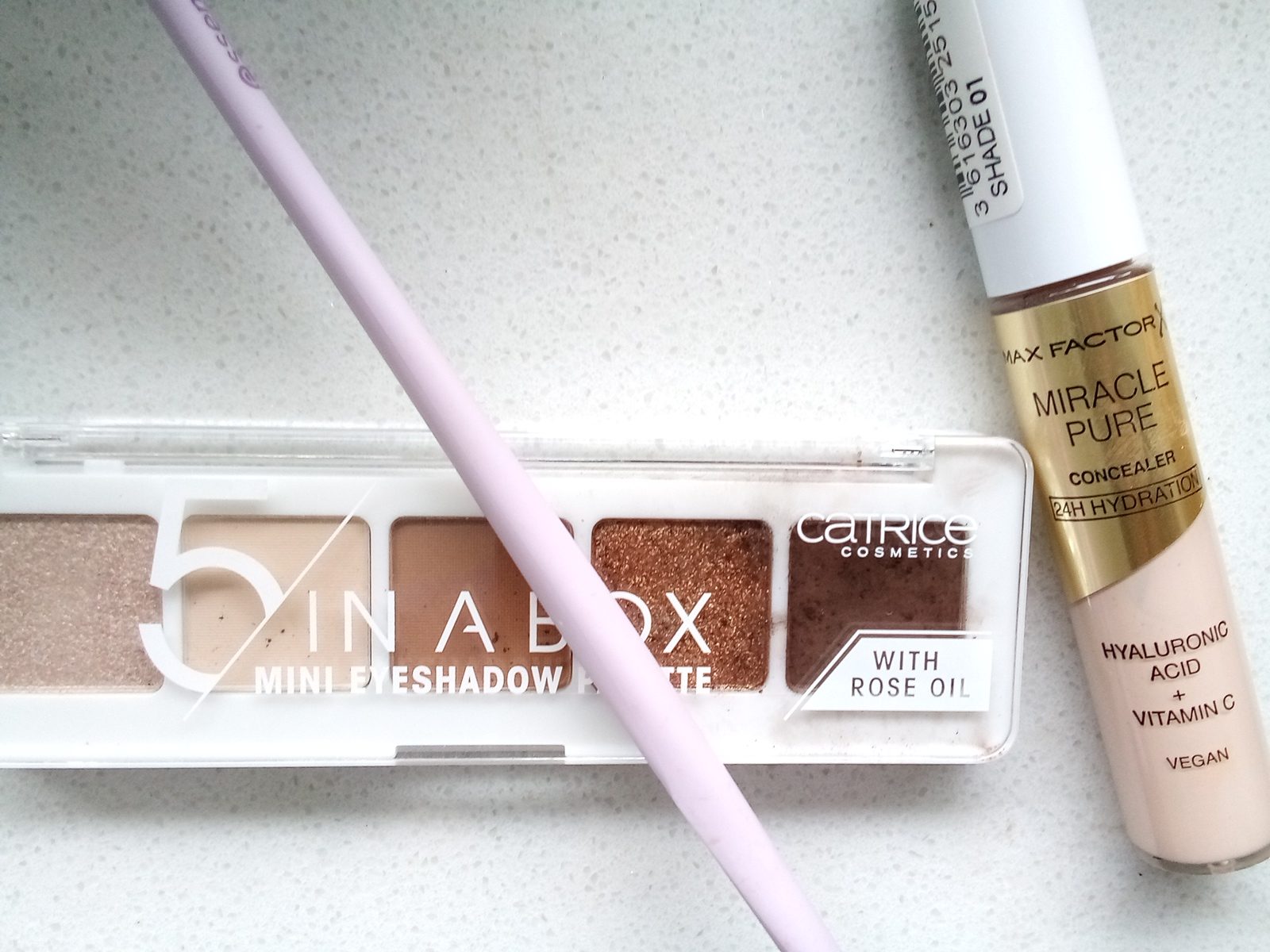
- If you use dark brown or slate grey eye shadow, part of the skin pigmentation will look like it’s eye shadow and be much less noticeable.
(As you’re likely to be a little older, the eye shadow may make your eyes look more expressive again, too, less beady. Then again, I have dark brown eyes so you may have to experiment with the color if you have light-colored eyes. Dark-brown eye shadow as shown in the photo below, matches the color of my skin pigmentation and likely yours too, however.)
- Use a good concealer, such as Max Factor’s Miracle Pure, for the area near/side of your nose and the area under your eye. I think that it also helps reflect light, unlike regular makeup, and that is why you then notice the dark patches and streaks much less than when you use regular makeup as concealer.
- (I use a thin line of black eyeliner, too, btw.)
Also, the eye drops can dry your cornea, which can cause streaky blurry vision that is not permanent, so you may need to use artificial tears.
Eye drops that have a preservative tend to dry your eyes more and some people have an allergy or sensitivity for the preservative.
Two examples. Monoprost does not contain a preservative. Xalatan does.
This too – whether you need to use eye medication or not – is an expression of diversity.
I have (very mild) pigment dispersion syndrome. Use of the eye drops may have made it almost disappear, but then, I also used to run on a treadmill every day and I no longer do.
Impact exercises have been said to make pigment dispersion syndrome worse, but exercise supports your health, so don’t let it hold you back unless your doctor tells you otherwise.
It does not apply to everyone.
Walking, on the other hand, is very good. Just going for a brisk walk is tremendously beneficial for various aspects of your eyes, including your eyes if you need to watch your IOP.