- When I called them in August, the menu required you to choose between young birds and “meldkamer” (desk). That is done from within their own perspective and does not keep the public in mind. Members of the public often can’t see the difference between a duck, a Canada goose and an Egyptian goose. I suggested the division “birds” and “anything else” to them in August, among a few other things, such as having people all over town who can very quickly walk to a bird and check out the situation.
- They should give talks at schools etc. It’s true that many people do not know that for example a gull can have a drooping wing without there being anything wrong with it whatsoever. Pigeons even often use one wing to rest on, as if it is a bed.
- A major problem at the location where I found the gull (which, by the way, I think I had already spotted a few days before), is dog owners who allow their dogs to chase birds and give neither a toss nor a rat’s ass. Those dogs can easily surprise a juvenile bird and grab such a drooping wing, for example, causing a dislocation or worse.
- In 2018, Dierenambulance wrote the following to me after I saw a duck with a damaged bill. I think it was using a small and shallow pond near an apartment building to feed itself. (Mind you, someone else had already asked me if I had managed to catch it.)
This is what they should also educate the public about.
If you do that at schools, the kids will tell their parents and aunts and uncles.
“Wanneer de eend zichzelf nog weet te redden, dan is het misschien beter hem/haar te laten en de stress niet aan te doen van het vangen en brengen naar dierenarts en/of opvang. De vogel weet niet beter meer, dat zien wij wel vaker. Zo is er een groep eenden bij ons om de hoek waarvan 1 eend een gebroken vleugel heeft. Maar ze laat zich niet vangen, kan in en uit water en wordt niet verstoten door de groep. Ze leeft gewoon zo verder en vind dat prima. En dus wij ook. Een goede graatmeter om te zien of de vogel het gaat redden is of hij/zij zich laat vangen. Wanneer niet, dan redden ze zichzelf vaak (nog) wel. Laat een vogel zich vangen, dan is het helaas goed mis.”
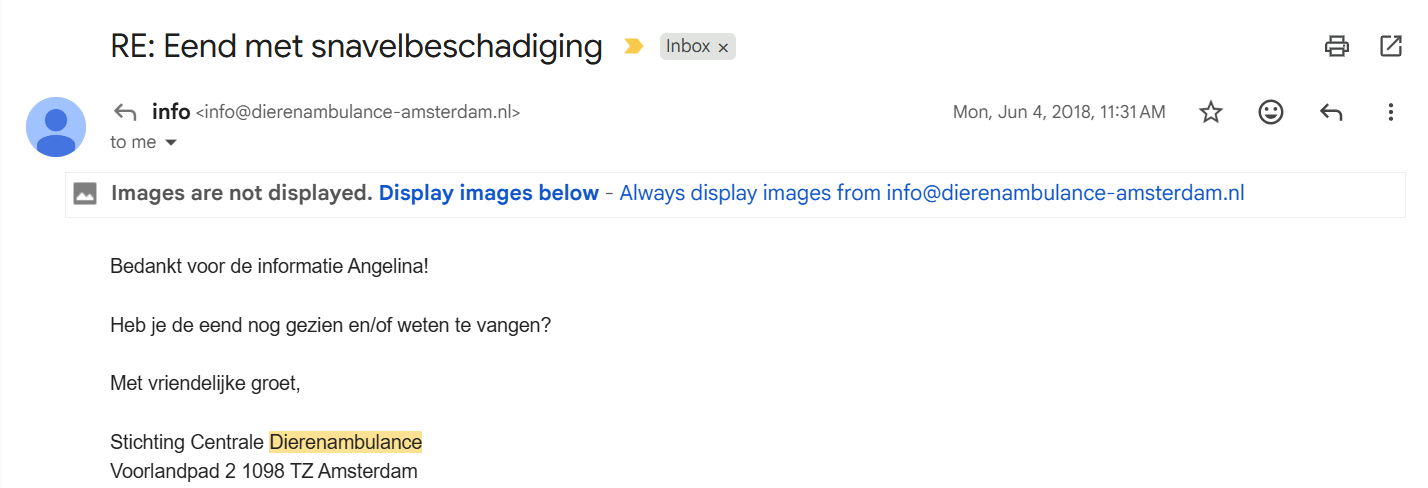
“Dank je wel voor al je hulp Angelina!”
“Wanneer de eend zichzelf nog weet te redden, dan is het misschien beter hem/haar te laten en de stress niet aan te doen van het vangen en brengen naar dierenarts en/of opvang. De vogel weet niet beter meer, dat zien wij wel vaker. Zo is er een groep eenden bij ons om de hoek waarvan 1 eend een gebroken vleugel heeft. Maar ze laat zich niet vangen, kan in en uit water en wordt niet verstoten door de groep. Ze leeft gewoon zo verder en vind dat prima. En dus wij ook. Een goede graatmeter om te zien of de vogel het gaat redden is of hij/zij zich laat vangen. Wanneer niet, dan redden ze zichzelf vaak (nog) wel. Laat een vogel zich vangen, dan is het helaas goed mis.”
Grotendeels helemaal mee eens!
I agree with Dierenambulance that wildlife often adapts, just like humans do. Certainly in an urban environment where there is plenty of food, birds with disabilities can survive. In my previous post, I mentioned that John Chitty told me that birds with a dislocated wing often still manage to fly.
Below a geese story, from the same location as where the gull was left behind in a laundry basket. The poor thing was PARCHED, btw. That happened on 5 November 2025, so just a few days earlier.
What exactly occurred here?
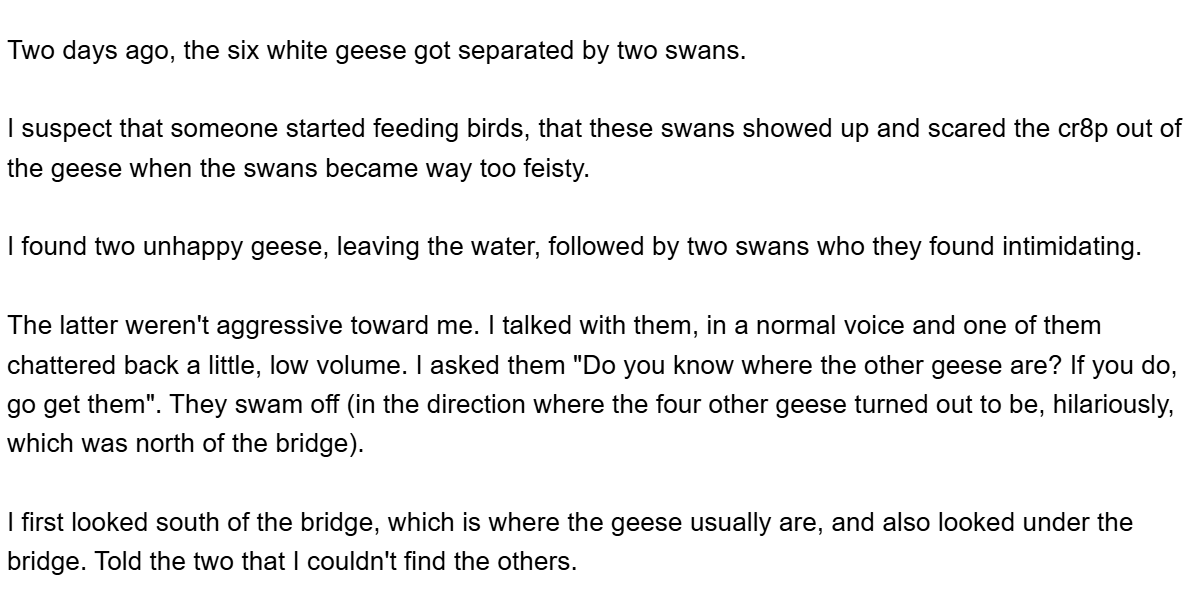
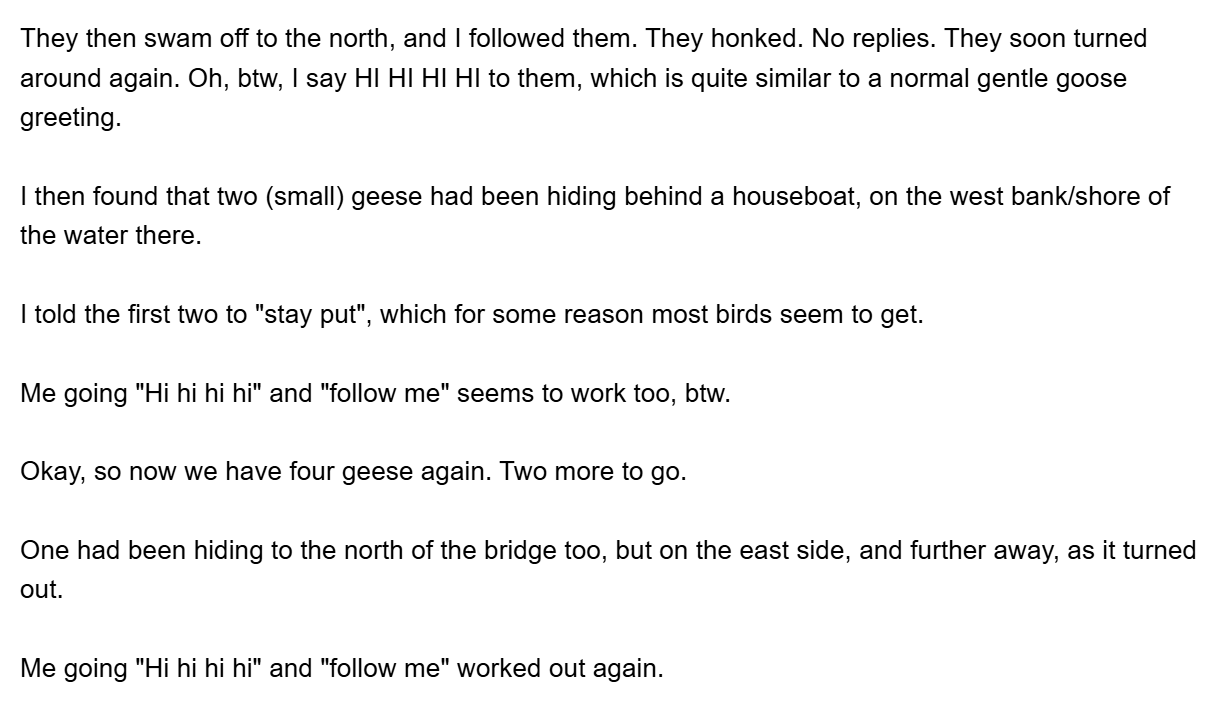
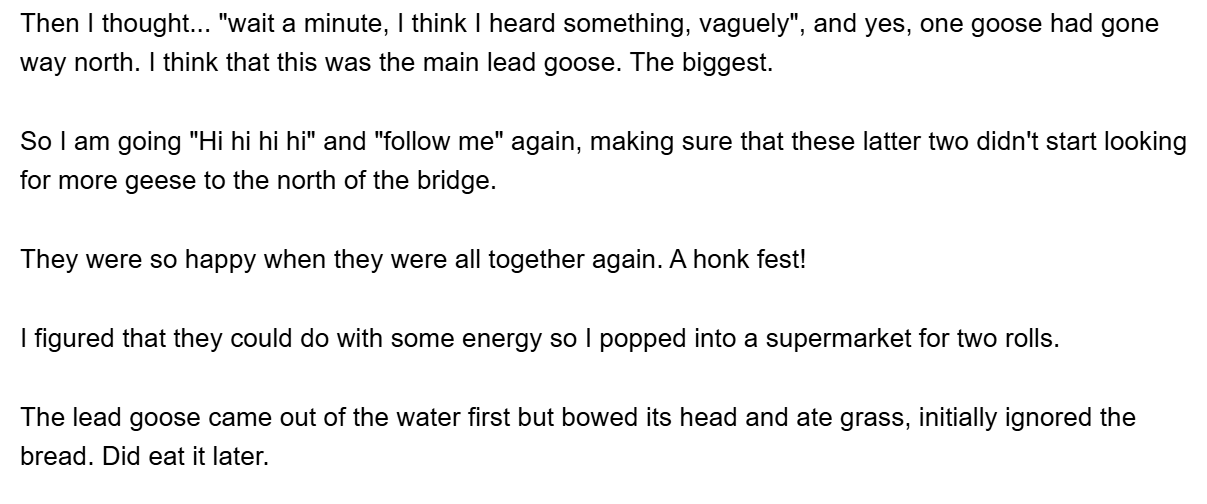
For the record, I have brought these geese escarole (andijvie) a few times, mostly in the summer when there was almost no grass etc. I’ve known them for about 8 months and I mostly talk with them. On this occasion, I thought that giving them a bite to eat might be good. I brought them escarole the next day.
