Ableism is one of the ways in which people dismiss or even hate other people on the basis of ONE difference between them. In the past two decades, I unexpectedly received so much contempt on the basis of so many differences (nationality, age and so on) that I became increasingly aware of how this works for people who experience this kind of othering all their lives. It is awful. How do for example black people put up with it and still stay whole? It is so damaging to receive so much hate throughout one’s life. Neuroscience research is finding this too. Racism affects the human biological organism in so many ways.
Something similar goes for so-called impairments or disabilities. The phrases that are being used are often discriminatory in themselves; they put the blame for how societies marginalize some people on those people instead of on society. (I’m particularly thinking “afstand tot de arbeidsmarkt” now. It makes me want to punch people. No, I am not disabled. I have a regular average body and am neurotypical.)
Let’s zoom in.
It is an error to see being deaf as only a disadvantage. How do I know that? Because I lived in an often extremely noisy environment in 2023 and 2024, in which it was impossible to make a phone call and sometimes my ears would start to hurt. I would then resort to musicians’ earplugs to protect my hearing.
More importantly, even with those earplugs, it was completely impossible to function in any capacity. I usually recorded the noise and then went on a long walk until the end of the work day.
I also applied three curtains to block out other noise sources that otherwise made it very unpleasant to be in the room.
That is what I realized when I read this paper: Is it morally justified to create disabled designer babies? by Shampa I. Dev. It simply popped up on ResearchGate one day.
I have written the following in response. I feel that the section about legal implications distracts from the discussion, so feel free to skip that. I included it because JGLR asked me to add it, before. Heck, why not.
When does a disability constitute harm?
Angelina W.M.G. Souren
14 March 2026
Third version of a paper submitted to Jindal Global Law Review in 2024,
which was rejected twice
Abstract
This paper examines the role of ableist biases in assessing what might be harmful within the context of modifying our offspring. To that end, it first seeks to define what would constitute harm and makes a distinction between causing a loss and not causing a loss. It attempts a logical approach, as unbiased, neutral and least discriminatory as possible. It also looks at the conditions under which modifying our offspring could be morally permissible, taking a similar approach, as devoid as possible of personal opinions and feelings. In order to do so, it explores what might constitute a ‘life not worth living’ and it ties that to the concept of dignity, which it defines as well. It finds that harm is a change that is done to us against our explicit wishes, with as only exceptions changes that would either prevent our death or that would prevent physical pain or an increase in physical pain or prevent a life not worth living. It also takes the position that we must assume that doing something to an embryo is against this embryo’s and the future child’s and future adult’s explicit wishes because of the distinction between doing something and doing nothing and because an embryo cannot express the future adult’s wishes. In addition, I look at the legal context (wrongful conception, wrongful birth and wrongful life cases).
Keywords: ableism, designer babies, diversity, harm, impairments
1 Introduction
In 2008, Kirsten Rabe Smolensky published the article ‘Creating Children with Disabilities: Parental Tort Liability for Preimplantation Genetic Interventions’[1]. A year later, Glenn Cohen presented his response titled ‘Intentional Diminishment, the Non-Identity Problem, and Legal Liability’[2]. These two papers mainly but certainly not exclusively focus on parental tort liability. In 2021, Shampa Dev asked ‘Is it morally justified to create disabled designer babies?’[3] It was the latter paper that prompted me to write this response, while attempting to keep the legal realm in mind too. All three papers essentially hinge on what constitutes harm, in my view.
Although I take a very different approach, I too base my approach on the avoidance of harm. As someone with a natural science background, I prefer to work with clear definitions or arrive at ‘if – then’ rules that in theory can be easily applied in a legal setting. This means that I must do my best to leave my personal biases out of my reasoning and only apply dry logic. I also try to be as non-discriminatory as I can be because it is clear to me that I am not in a position to judge the value of someone else’s life. The only exception to the latter concerns the lives of people whose lives are not worth living, but who do not have the ability to decide this for themselves and cannot communicate whether they consider their lives worth living.
From Rabe Smolensky’s abstract I can summarise her article as focused on children’s rights to have as many options as possible available in life. The problem with this is that what constitutes an open future tends to be seen from ableist viewpoints, but we often are not aware of how ingrained our own biases are. In this paper, I try to open up a broader view of what it means to experience life to the fullest.
If I try to summarise them briefly and incompletely as well as inaccurately, merely so that readers do not feel the need to have to go find these papers, then I could say that Glenn Cohen’s response appears to focus on the question why we should treat the intentional creation of deaf babies as wrongful and that this is also the topic of Shampa Dev’s paper.
If you see deafness as harm on which children can base parental liability tort suits, wouldn’t children then also become able to sue their parents for having been born at hospital A instead of hospital B or at home instead of at a hospital or having spent their early years near a heavily polluted site instead of in a relatively pristine environment? Any of these conditions can have negative health effects, but that is not a given on the basis of those conditions. The question is then whether you can hold parents liable. (Cases brought against negligent chemical companies that caused pollution or against negligent hospitals that may or may not have impacted the lives of children severely and demonstrably are a different matter.)
I am not going to discuss cost aspects of supporting the lives of people with impairments, other than to say that the financial and environmental costs associated with the lives of mainstream people who for example commute by car every day for 30 years are usually conveniently overlooked. To add even more perspective, I also point out that the fact that women’s healthcare becomes more expensive than men’s healthcare as women age – because women live longer than men – is not considered a valid argument against the birth of females[4]. This cost argument if taken into account would then also be a hypothetical reason for selecting embryos with lower life expectancies. So the question arises as to why costs only appear to be mentioned when it concerns minority populations? I’ll leave it at that.
2 Treating all lives as equal as a principle
I start with the principle that we should consider all lives as equally valuable. I take this as a baseline. (Here, I have to argue that embryos should have partial legal personhood, namely the right not to be discriminated against unless the resulting child would have a life not worth living.) Next, I make an important distinction, namely whether we are dealing with an embryo that is selected because the resulting child will be deaf or whether the embryo was modified in order to take away the resulting child’s ability to hear.
I must see the first example as discrimination, namely of discrimination of embryos that would result in hearing children, but non-existing people don’t bring tort suits, so I consider this of no practical relevance, but I do consider it wrong because it is selection on the basis of personal preferences. I’ll come back to this. I definitely see the second example as harm. Now I need to show how I arrive at this conclusion.
First of all, there is general agreement on the principle that allowing someone to be created does not harm that person (unless the person would have a life not worth living). On the basis of that, and if I accept that the lives of a hearing child and a deaf child are equally valuable, I would have to say that it does not constitute harm to allow a child to be born without hearing or to allow it to be born with a condition that will eventually render it deaf. I’m initially slightly less clear on the second, as it can be seen as involving a loss. However, to become deaf rarely constitutes progressing to having a life not worth living and a child can also contract an infectious disease that causes hearing loss.
However, I then run into the problem that if a hearing child (or adult) would deliberately be injured in such a way that the child loses its hearing, there is generally agreement that this is would constitute harm. As there is a loss involved, perhaps this is when we can genuinely speak of diminishment. More importantly, there is an action involved. There is a difference between doing something and doing nothing. Harm as a result of negligence when there is a duty of care is different from deliberately doing something harmful. The main difference seems to be intent in most though not necessarily all cases.
If I explore that further, then the following becomes clear. We consider it harm when someone else changes us against our wishes, particularly with regard to physical changes. For example, as a parent, we may either forbid or allow a child to get ear or nose piercings, but we should not forcefully subject a child to ear or nose piercings. We can, as a parent, allow the child to be subjected to injury, but only if that injury is intended to save the child’s life or prevent increasing pain. Think of an inflamed or burst appendix or a broken or abscessed tooth; these are exceptions to the rule. Another example is that we don’t generally think that a surgeon harms a person if that person decides to undergo cosmetic surgery for purely aesthetic reasons – no matter how biased – but we would consider it harm if this were to happen against the person’s wishes.
As a society, we still seem to be less clear on psychological changes. That is because they are still harder to identify and quantify. If this were objectively measurable, many schools might become the target of tort suits and go out of business. In a growing number of countries, causing psychological harm is increasingly incorporated in criminal law, however. (An example is coercive control.) I’m going to expand on this for a moment because psychological and economical harm can be done to us by others for example through otherisation, which can result in marginalisation, dehumanisation and even outright cruelty. This, however, is not a direct result of explicitly that which makes a person different. As an able-bodied white Dutch woman, you can live in different countries or in different cities in those countries or under different governments and find that your otherness can be experienced positively or negatively, depending on the circumstances. So it is not really the exact nature of the otherness that disadvantages people who are different, regardless of whether they are Dutch, deaf, Goth, Polish or merely older adults, are able to speak the same language or not.
To come back to trying to define what harm is, the crux really appears to be that we should not change another person (physically) if that change isn’t in accordance with that person’s explicit wishes. The right to integrity of the body also plays a role in this.
A child who doesn’t exist yet can neither express nor have wishes yet. I then see myself forced to conclude that we should assume that any change we would carry out to that future child is not based on that future child’s wishes but against its wishes. That’s because there is a major difference between doing something to an embryo and doing nothing to an embryo. Doing something to an embryo implies intent to change it.
That is a potentially problematic conclusion. Should this then also for example include PGD, certainly as PGD itself can do damage? No, because actions to detect and identify conditions or diseases – just like exploratory surgery – are excluded from what constitutes harm, as they are – or should be – applied to prevent harm, for example, to prevent a life not worth living or to enable a life that would not be viable without intervention. It can also make it possible to treat a baby from birth as opposed to letting the parents take the baby home, only to have it diagnosed later with a condition that could have been treated from the start, which might have spared the child a great deal of pain or discomfort.
So if I reason very logically, I have to find that any changes carried out to an embryo should be considered harm, unless they are done to prevent a life not worth living, enable a life that would otherwise not be possible and/or detect, treat or prevent developing health problems. I’ll come back to the latter, but let me say right now that to be born deaf does not qualify as a health problem within this context. For the sake of clarity, let’s associate the presence of physical pain with the idea of what constitutes a health problem, even though pain is hard to quantify, particularly in newborns. This way, however, I can deal with the diversity angle and it enables me to avoid applying ableist biases. Attaching pain to the concept of ‘health problem’ helps me avoid hidden ableism. Facts such as that children with Down often need multiple surgeries in their early years should not play a role either because a child that happens to fall down the stairs or falls on the playground in a very unfortunate manner can require multiple surgeries too, for rather similar reasons.[5]
I have made an attempt at defining what a life not worth living might be. I start with the following principle: ‘Every human being has the right to a life in dignity’; this is the so-called principle of humanity.[6]
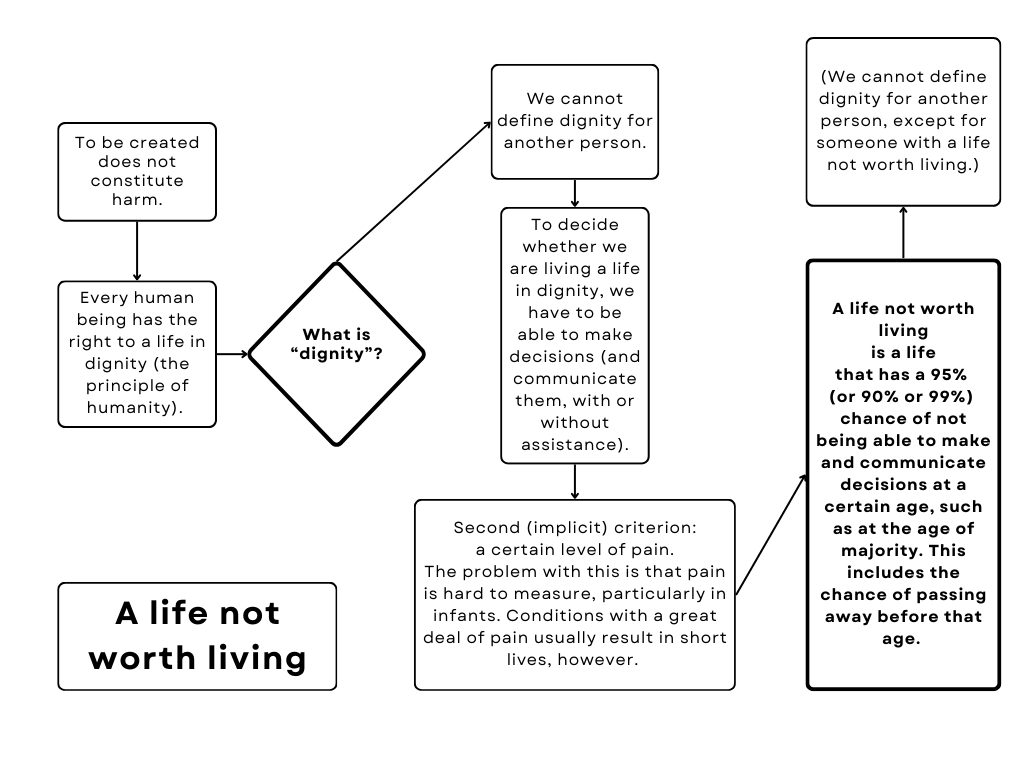
Fig. 1 Flow scheme that guides the decision as to whether a life is not worth living
We probably agree on this principle of humanity worldwide, no matter where we are from or what our religious background is. So this offers me the first step toward a definition of ‘a life not worth living’. But what is dignity? As it turns out, it is not possible to decide what constitutes dignity for someone else. We can only define it for ourselves. Consider that nudity equals a lack of dignity for many people, but not at all for many others. Being too ill to eat and use the bathroom without assistance can constitute an unbearable lack of dignity for one person, but be acceptable to someone else. Being unable to breathe and needing a ventilator may be where the latter person draws the line, while someone else may still find that acceptable but would, on the other hand, like to avoid being in a coma. (Physical forms of loss of dignity are not the only ones imaginable, of course.)
This takes me to the next step. To be able to decide whether we are living a life in dignity or not, we have to be able to make decisions. For practical purposes, we also have to be able to communicate them, with or without assistance. This communication does not have to take the form of the spoken or written word. Many pets communicate with their owners these days by pressing buttons; the use of colours alone or selecting a type of music might suffice as communication in some cases. (This would need to be laid down too if I focus on removing as much arbitrariness as possible.)
So now I have the following:
- To allow a human being to come into the world does not constitute harm to that human being.
- To allow a human being to come into the world constitutes harm if that human being will have a life not worth living, if this was known in advance and if it was possible to prevent that.
- To implement physical changes (including genetic changes) against a person’s explicit wishes constitutes harm.
- As unborn children are not yet able to express wishes, any changes (including genetic changes) carried out to unborn children must be seen as being against the explicit wishes of those children, with the exception of a change that would render a non-viable life viable or take care of a health problem, the way we would also try to heal appendicitis or a potentially fatal yet fixable heart problem in an adult, or prevent a life not worth living.
- All humans have a right to a life with dignity (the principle of humanity).
- It is not possible to define dignity for another person.
- To be able to decide whether a person has a life with dignity, that person has to be able to make and communicate decisions, with or without assistance.
- A person gains the right to make his or her own decisions at majority (full age, coming of age). In many countries, this is the age of 18 years. This is therefore a logical age to attach to this (and attaching a fixed age limit helps rule out arbitrariness, although that comes with its own problems).
With the above, I now arrive at the following, workable definition of ‘a life not worth living’:
A life not worth living is a life that has at least a 95% probability of not making it to the age of 18 or that has at least a 95% probability of the person not being able to make and communicate his or her own decisions at that age, with or without assistance.
An implicit criterion is pain. Pain is hard to measure, particularly in infants, so I cannot use it as a direct criterion, but it seems a fair assumption that conditions with great pain in newborns usually result in short life spans.
The percentage of 95 is arbitrary. It may need to be 99% or 90%; the medical profession can tell us how accurate such estimates can be. The age is somewhat arbitrary too. If I allow personal feelings, then I would prefer attaching a lower age because most children will be capable of making decisions at the age of 10 or 12. Whether they would have the life experience required to be able to assess what they would value most in the future is not of great importance in these specific circumstances of severe illness or limitations. Another consideration could be that the onset of puberty will likely lead to a greater potential for sexual abuse of young people who cannot make and communicate decisions.
It is necessary to point out that this does not represent my personal preference. I feel repulsed by the idea of declaring that someone who passes away at age 4 or 9 or 15 does not have a life worth living, unless this would prevent a great deal of pain. What I am presenting is a theoretical exercise for the sake of arriving at greater clarity. It looks like it might be a workable definition in practice. This definition also appears to diminish harm as much as possible while not at the same time promoting discrimination or ableist prejudice, hence it respects diversity.
Of course, my definition of a life not worth living should also be tied to the right to euthanasia for people who decide that their lives are not worth living when they reach this particular age. Forcing someone to come into the world morally obliges us to allow that person to reject life.
Again, I emphasize that this is not my personal opinion. I am trying to leave my personal opinion and feelings out of this paper as much as possible. In fact, I am having a lot of trouble with a recent development in the Netherlands, where a bill was proposed that would allow euthanasia for healthy people aged 75 or over on the basis of the “completed life” idea. This appears to be a genuine slippery slope. After all, what is to stop euthanasia on account of teen angst, hitting 30 or a midlife crisis next? As an older adult myself, I know too well that the idea that one’s life is over and feeling miserable over this tends to be tied to gerontophobia in society and some societies’ tendency to separate and isolate older adults from people in other age group.
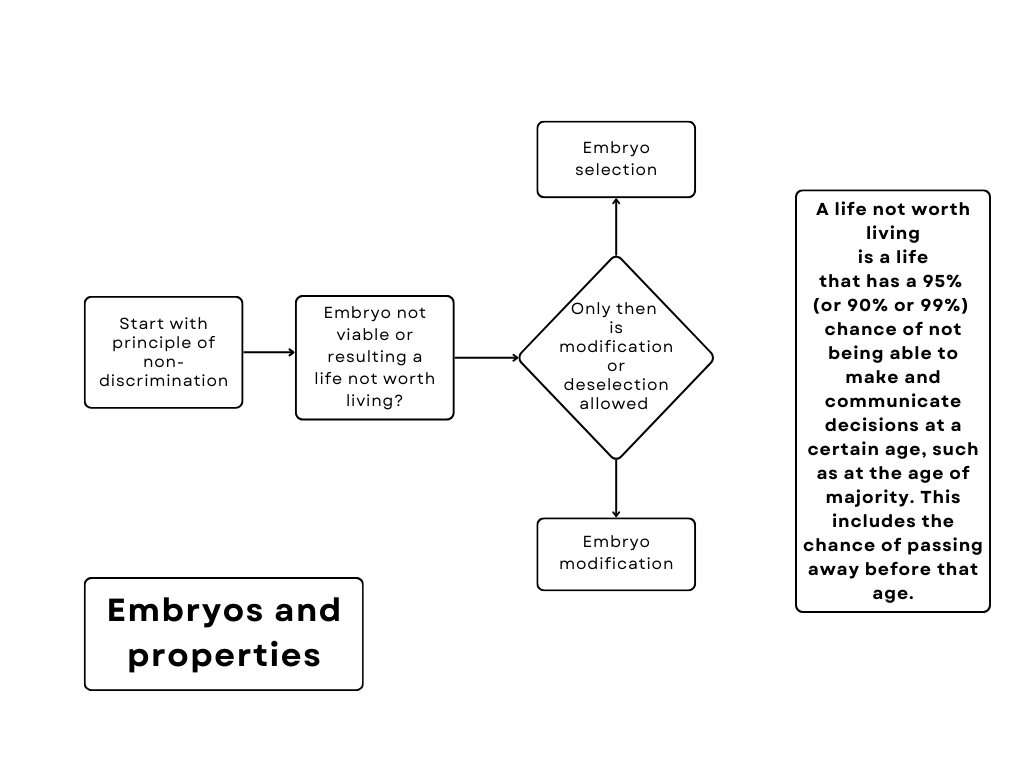
Fig. 2 Flow scheme showing when embryo deselection or modification would be allowed on the basis of the principle of non-discrimination and my definition of what constitutes a life not worth living; embryo ‘modification’ (interference) in the sense of for example PGD to be able to identify a condition that will result in a life not worth living or must be treated from birth is not mentioned in this scheme because it is implicit
3 Implications for wrongful conception, wrongful birth and wrongful life cases
Three kinds of lawsuits are particularly relevant for what I propose. Wrongful conception and pregnancy, wrongful birth, and wrongful life cases are currently all based on the idea of negligence on the part of labs, hospitals or medical professionals.
Wrongful pregnancy or wrongful conception cases imply that the parents who bring such a case didn’t want a child. Think of unsuccessful voluntary sterilization as an example. This does not clash with what I propose. There is no element of discrimination here.
Wrongful birth cases are lawsuits by parents who have had a child with a significant disability or impairment. These cases can have an element of discrimination. These are cases against, for example, doctors who should have informed the parents about a medical condition in the (pre)embryo or foetus, in which the parents claim that they would have opted for abortion in that event. Usually, the parents claim damages due to psychological upset and financial damages related to extra costs involved in caring for the child. In practice, these claims usually contain an element of medical malpractice (negligence) and/or an element of the need to find financing for a child’s care.
As Ronen Perry[7] pointed out in his 2008 paper, in these cases (as well as in wrongful life claims), the medical professionals (or labs) involved tended to have provided reassurances, rather than having for example amputated the wrong leg. Of course, one of the problems medical professionals face is that the public wants to receive a 100% guarantee from them, which is impossible. That, however, usually isn’t at the heart of the matter here. Rather than having provided reassurances too lavishly, labs or medical professionals tend to have made mistakes in these cases. They for example mixed up samples, sent the wrong results, omitted to do a test or carried out a test incorrectly. Understandably, parents may end up feeling badly wronged and it is also understandable that parents seek redress through the courts rather than through the medical regulatory authorities. However, there is also always the question of how these parents would have responded if the condition of their child had been the result of a traffic accident or a fall down the stairs at the age of 1.
In 2014, Mpaate Owagage published a clear analysis of the developments with regard to wrongful life cases[8]. ‘A wrongful life claim’, he wrote, ‘is one brought for or on behalf of a usually extremely disabled plaintiff who claims recompense on the basis that but for the defendant’s negligence, they would not have existed at all.’ When courts do award damages, these cases essentially become wrongful birth cases, except that the damages are awarded to the claimant (plaintiff) and not to the claimant’s parent(s), thereby essentially safeguarding the claimant’s care. Ivo Giesen analyzed the ins and outs in an article published in 2012 and held that ‘most notably the cultural background and/or the legal policy reasons within a certain tort law/medical liability law system’ decide the issue in practice[9].
Wrongful life cases are problematic. They are started by or on behalf of a child or resulting adult. They tend to hinge on three factors. The first one is the question of whether the defendant had a duty of care toward the claimant. If so, the second question is whether this duty has been breached by the defendant and, third, whether this resulted in demonstrable damages for the claimant (for which damages may be awarded).
There are two different types of wrongful life cases, as well as two different legal approaches (see article by Owagage), but these two do not fully overlap. The difference in the cases rests on the principle of harm as I have identified it in this paper, namely the occurrence of a physical change that can easily be assumed to occur against a person’s will.
In cases in which the child has for example Tay-Sachs disease or any other genetic condition, the child has this condition irrespective of what a physician, hospital or lab did. Nobody caused this condition. The condition is not the result of an action (other than the creation of the zygote from which the child developed)[10]. So it cannot be said that the defendant caused any damage to the claimant. This becomes muddled when we consider the creation of a zygote in the lab, but in that case, why not sue the parents too, as they are primarily responsible for the child’s existence? But even for such cases, the world seems to be arriving at the consensus that to be alive does not constitute damage in itself.
In cases in which the child’s mother for example had rubella during early pregnancy, however, physical changes did occur. These changes would not have occurred if rubella had not been present. At first, this seems significant, but in these cases too, all logic leads back to one overriding question, namely whether the child would have been better off if it had not existed. This could have allowed a different child to exist that would not have been affected by, for example, rubella, but this is irrelevant.
However, in these cases, the claimants ‘do not contend that the defendant caused the deformity’, Owagage pointed out in his analysis. The claimants pose that the defendant was negligent in making information available to the parents.
To understand the dilemma, it is helpful to compare the situation with that of a five-year-old child being hit in traffic by a drunk driver. Is the driver’s liability greater when the child ends up paralyzed relative to when the child dies? Can the child (or the parents) sue the driver because the driver did not kill the child, but paralyzed the child instead? No. Is a child better off when it falls down the stairs and dies than when it falls down the stairs and becomes a paraplegic? [11]
Now consider the case in which both parents are blind and deaf and have just moved to a different neighbourhood. Can the professional who sold them the house be held negligent if he or she has failed to inform the parents that a busy road runs past the property if the child subsequently walks into traffic and gets hit by a car? The real estate professional was in possession of vital information that the parents did not have. Had they had that information, the parents might have arranged for a better gate to be installed, so that the accident would not have occurred that affected the life of this child. But would the child (or the parents) sue the real estate professional because the child didn’t die?
Such a hypothetical case seems very relevant with respect to the wrongful life scenario, particularly if the real estate professional provided a statement in writing that the house was in excellent condition, whereas someone else took photos at the time that clearly show that it wasn’t.[12] If a house has a brick chimney that is about to fall off, the real estate agent fails to mention this to the blind parents, and their child is injured by the falling bricks from the chimney, that would be like a health professional withholding information from a pregnant woman as a result of which the foetus is affected by rubella. This child, however, would not sue the real estate professional because it is still alive, but the child could bring an action for the damage done by the falling chimney.
Then it begins to look like the distinction between the two different kinds of wrongful life cases is important. It also becomes clear that being alive is clearly not considered ‘damage’ as the child would not take the driver or real estate professional to court on the basis of the claim that it is still alive. It then becomes clear that some wrongful life cases do seem to have a sound basis, whereas others don’t.
In the cases of genetic conditions, when the mother claims that she would have terminated the pregnancy had she had the correct information, the child cannot claim that it would have been better to be dead (with the exception of a life ‘not worth living’).
If you want to draw a parallel with non-existing versus existing or of a different child existing instead, you could consider the fact that one child may get hit by a car while a child standing at a distance of 1 meter does not. Someone who gets hit by a car cannot claim that if he or she had stood in another person’s position, the car might not have hit anyone. Someone who does not get hit by the car cannot bring a lawsuit against the driver, claiming that the driver hit the wrong person. Who gets hit by a car or not, that is almost always a similarly philosophical question as occurs when courts are asked to consider wrongful life cases involving genetic conditions.
It is impossible to know whether the car might have swerved or spun out of control differently if the person had stood in a different position or if the sun had been shining or the sun had not been shining.
In wrongful life cases in which the mother contracted rubella, it makes more sense for the child to sue the mother than the physician, but not for the fact that the child or resulting person exists but for the fact that a physical change was caused against the child’s explicit will. This, however, is currently not a reasonable course of action. A mother has no control over whether someone who for example happens to be on the same train happens to infect her with rubella or not. A possible exception could be when the mother knew she had rubella, and then deliberately became pregnant.
A different exception would be when a lab, hospital or medical profession, for example, has advised a mother that she does not have rubella (or is immune to rubella), after which she then goes ahead and becomes pregnant almost instantly, after which the foetus becomes affected by rubella after all. There can also be cases in which the mother, for example, uses medication and is incorrectly informed told that it is safe for the child, should she become pregnant, after which the medication turns out to have some teratogenic action after all. Such a pregnancy could have been prevented, so the negligence did actually lead to the ‘damage’ in such cases.
Talk about obliging mothers not to smoke, not to use any drugs and not to consume any alcohol during a pregnancy, and criminalizing breaches of such a duty does crop up from time to time.[13] Lawsuits of a child against the mother for negligence during the pregnancy are not allowed in many jurisdictions. In Britain, the Congenital Disabilities Civil Liabilities Act 1976 makes it impossible, for example. It is generally thought that the relationship between a mother and her unborn child is so special that to make the mother liable for anything that happens to the foetus would infringe on her rights as an autonomous person. Negligence claims for careless driving with the child in utero have on occasion been upheld, but seem to be covered by motor insurance, in practice. Other than that, these cases are just are controversial as wrongful life claims, as to hold a mother liable would essentially stop women from leading their lives while pregnant. Here too, the cases centre on the need to finance care for the resulting children; see for example the British case CP (A Child) v First-Tier Tribunal (Criminal Injuries Compensation) & Ors.[14]
So far, in wrongful life cases in which courts awarded damages, the essence of the claim is usually wrongful birth, with the difference that the award is made to the child instead of to the parent(s). This can help safeguard the child’s care in case the parents die or separate. Questions such as about the parent’s right to an informed choice are wrongful birth, not wrongful life considerations.
These cases are often clearly not only linked with the topic of medical malpractice but also with any nation’s duty to assist its citizens. That is often the real motivation for wrongful life (and wrongful birth) lawsuits. Perhaps this problem should be addressed through class actions, where possible.
In France, the Perruche[15][16] case led to new legislation (in 2005) that ensures financial support for families in the event of the disabilities of children, albeit only toward covering basic needs. In Britain, for example, the British government was found to be ‘blatantly discriminatory’ against certain groups of disabled or chronically ill citizens by the High Court in December 2017[17].
This entire discussion also seems to force us to have a discussion about the rights of embryos and foetuses again. Does a foetus have a right to life or not? Does a foetus have the same rights as a five-year-old child? Does a foetus have a right not to be harmed? Does a foetus or embryo have the right not to be discriminated against? Can a foetus have a right to be killed?
What does the law say when someone kills a pregnant woman in such a way that the child dies too? Is this one homicide or are these two homicides? Different jurisdictions deal differently with this question, but a common view appears to be that killing a foetus that is viable outside the womb constitutes foetal homicide. The right to abortion is also often tied to this viability question. This is about to become muddled, as Glenn Cohen has pointed out[18], with the advent of artificial wombs.
Generally speaking, we do not seem to assign the full set of human rights to foetuses as a prevailing view appears to be that if the mother’s life is endangered by the pregnancy, ending the pregnancy is permissible. This is certainly not true in all countries, however. In some countries, such as El Salvador, there are currently problems with the criminalization of women who have had a miscarriage or stillbirth because these women are suspected or accused of having caused the miscarriage or death of the foetus.
What, however, about children who end up with a life not worth living if this could have been prevented? If I follow my own definitions, such children would have a cause of action in wrongful life cases, as in such cases, life itself could be considered ‘damage’. The ‘immoral’ quality of this conclusion implies that we have a moral duty to apply CRISPR toward the remediation of the related conditions.
Ample support should be provided as a rule, including counselling after the birth of the child if the child turns out to be a non-mainstream child that requires extra support. Ideally, all parents should receive whatever level of support they need. As I’ve mentioned, I think we’ll see a shift in professions in the future that will enable this, for example, considering the immense support males have had in the past, from their spouses, which allowed them to be fully dedicated to their work to a degree that most women still don’t have.
Many countries already have support like this in place. If you picture parents having to lift a child all the time and someone needing to be around all the time, you can quickly see that such parents deserve practical and psychological support, not in the least for the child’s sake. Such parents require lifting equipment and common sense says that they also need to able to take the occasional evening off and the occasional vacation despite needing to provide the physical care for their child, for instance. In many cases, they would likely require a dedicated carer who is familiar with the child and the circumstances, instead of having to face a new carer every time.
The concept of wrongful life is connected to the idea that this non-discriminatory guideline for the new eugenics obliges us to couple it with euthanasia legislation. Indeed, I believe that we would need to complement such a restrictive (non-discriminatory) eugenics practice as I propose in this book with matching legislation for euthanasia and physician-assisted suicide (see also Appendix D). If we allow someone to come into the world – particularly if that person would have passed away naturally if we hadn’t interfered – and that person considers his or her life not worth living as an older child or adult, we must also allow that person to act on that belief. That is only fair. Moreover, I believe that this, too, is part of giving someone the right to live his or her life in dignity.
Keep in mind that even if a person feels that his or her life isn’t worth living in the present moment, the hope that this will change in the future, for whatever reason, is usually enough to keep someone from exercising any right to euthanasia or assisted suicide. This is also linked to the moral obligation to use techniques such as CRISPR first to address conditions that currently still lead to lives ‘not worth living’ and other conditions next.
An example of wrongful life case is that of Curlender v. Bio-Science Laboratories[19] in the US. This concerned a normally conceived child with Tay-Sachs disease, with a life not worth living according to the definition that I propose. The child’s parents had undergone blood testing with the specific purpose of assessing whether their offspring was likely to have this condition. Apparently, the lab was somehow negligent in how the blood tests were conducted.
Turpin v. Sortini et al.[20] was a very different case that came before the US courts. The Turpins’ first daughter had been examined and tested and incorrectly declared to be of normal hearing, whereas she was actually completely deaf as the result of a genetic condition. The Turpins then had a second daughter who had the same condition. The Turpins stated that had they known about their first child’s hereditary deafness, they wouldn’t have had the second child.
According to the reasoning I present in this paper, it would have been okay for these parents to decide not to have any further children at all because it cannot be called discriminatory. If the parents tested for the condition in an embryo or foetus and found it present, however, then this should not be a reason to deselect the child as the child would have a life worth living. To decide differently would be discrimination.
To seek damages for emotional distress suffered by these parents (which the Turpins did, among other things), because their child was deaf is also a form of discrimination. A high-IQ child would demand a similar level of care. And who is to say that a hearing child with a normal IQ would require less care? Would the parents have sought damages for emotional distress caused by the fact that they unexpectedly had a child with a high IQ?
In Germany, wrongful life claims are unconstitutional, as such claims would imply that the life of a disabled person is less valuable than that of a non-disabled one. The judiciaries in England and Wales, Ontario, and Australia mostly feel the same way.
The Netherlands, on the other hand, has had the case of Kelly Molenaar[21]. This concerned a nine-year-old girl who was born with a serious chromosomal condition, as a result of which she appears to be in constant pain. I think it is fair to see particularly pain as a real impairment as opposed to impairments resulting from hindrances created by society. The child has other problems as well and, for example, has had several heart surgeries. At age two-and-a-half, she had already been admitted to hospital nine times for incessant crying alone, and this was believed to be caused by pain. Kelly’s chromosomal condition runs in the family, as a cousin of the father had the same condition and the mother had already had two miscarriages. The medical profession did not follow up on that information, even though the mother had made it available. No family history was taken and there was no consultation with genetics experts. The child’s condition was therefore detected too late.
The Court of Appeal in The Hague refused to see a disability as ‘damage’. However, not only were the parents awarded costs of care and upbringing until the child’s 21st birthday, and costs of psychiatric care for the mother after the birth, the court also made the child a party to the case. The case was referred to the Supreme Court (on points of law), which upheld the Court’s of Appeal’s finding. Kelly was awarded compensation for emotional damage, which would not have occurred if the medical professionals had done their job properly. The court stressed that it had based its damages on the fact that the medical profession had made serious mistakes, not on Kelly’s existence as such. After this case, there was a call to ban wrongful life cases in the Netherlands, but no change in the law appears to have come from that. It remains a very difficult topic. In the case of Kelly, one can argue that Kelly’s pain could have been prevented and that this is what the Dutch courts mainly based their judgments on. This child is suffering, objectively seen.
France has had the already mentioned successful wrongful life claim of Nicholas Perruche. This concerned a boy born to a mother who contracted rubella during her pregnancy after one of her other children became ill with rubella. In spite of two lab tests and symptoms, the mother was informed that she didn’t have rubella and she continued the pregnancy. The French boy’s parents brought proceedings on behalf of the boy when he was 6.5 years old. Apparently, he has a heart condition, is deaf as well as blind and may have other neurological conditions. The family first went to court in 1988 and was awarded approximately USD 13,000 (for wrongful birth). The parents, however, also felt that Nicholas himself had been harmed by the laboratory and the physician. Nicholas was awarded damages four times, which was reversed on appeal four times until the case made it to the Cour de Cassation. In this case, too, the medical profession made serious mistakes, but the crux of this case appears to have been financial support for its care and in this case, the award to Nicholas was for the disabilities, in contrast with the Kelly Molenaar case.
France banned wrongful life cases in 2002, but it also created a law in 2005 that arranges basic care for children like Nicholas Perruche. That is a very important change. Many of these situations hinge on whether or not the parents can look after the child well, in terms of financial means. In the U.S., the parents of Juliana Wetmore[22] not only are looking after their daughter wonderfully well, but they also adopted a child with the same condition (namely Treacher Collins Syndrome), from another Ukraine[23]. Allegedly, it is their Navy-based insurance that makes this possible.
I feel that I do not have enough information to be able to assess whether the cases of Kelly and Nicholas concerned lives not worth living, according to my definition. It certainly appears to be the case for Kelly, but the situation of Nicholas is much less clear and I am not convinced that his life is not worth living.
The cases of Kelly Molenaar and Nicholas Perruche make clear that not only can there be major differences between individual cases, they also often have a punitive element. This is for clear professional negligence (medical malpractice), similar to mistakes like amputating the wrong leg or failing to diagnose cancer that could have been cured if it had been treated instead of misdiagnosed. I think that we have to deal with this separately, however. We should not tie it to the lives of the children and more nations should step up with regards to the provision of care, the way France has done. Parents should not be forced to go to court to secure care for their child if that child requires more care (such as multiple surgeries, in the case of Juliana Wetmore) than the average child. Parents should not have to deal with that immense stress. Children (even if only theoretically, considering that the knowledge may remain out of reach of the mental capacity of these children) should never be burdened with the knowledge that their parents felt that they should not have been born.
4 Can we use Bentham’s views to help us determine what is harmful?
Now I get to the problem into which almost all these discussions run. We usually decide what is in a child’s best interest on the basis of our own biased opinions and preferences. Almost by definition, we are usually not aware of how biased we are and in which ways we are biased.
Shampa Dev’s paper demonstrates this beautifully. In Section 2, she writes that she enlists the help of Bentham in examining whether deafness in itself is harmful. She sees Bentham’s list of pleasures and pains as steering clear of societal perspectives and then seeks to place deafness in this ranking. She connects ‘deafness’ to ‘sense’ and applies Bentham’s account of ‘pleasures of sense and the pains of privation’ to assess whether ‘deafness’ constitutes harm.
I can just as easily rely on Bentham’s views to refute this. Bentham proposed to round up the beggars because he felt that their visible presence decreased the happiness of the more fortunate[24]. He wanted beggars to be assigned to workhouses in an order that he felt would reduce unhappiness. He wanted the deaf and dumb ‘next to raving lunatics, or persons of profligate conversation’, aged women next to ‘prostitutes and loose women’, and the blind next to the ‘shockingly deformed’.
Here we see that the senses do not only bring pleasure and that to be deprived of a sense is not always bad. To be able to see and to be able to hear can also be harmful. It is easy to be blinded by the view that to be able to hear is good, by definition, when in fact it isn’t. We, as society, create an enormous amount of noise, particularly in urban environments. It imposes a constant strain that many of us wish we could switch off from time to time. Noise can be very stressful. Anyone who remembers the bliss of the silence during the COVID-19 lockdowns in urban Britain and other traffic-rich locations will surely know what I mean. Worse, if you are subjected to extremely loud noise levels for days, so loud so that your ears may even start to hurt, you will definitely quickly realise that to be able to hear is not always good. Similarly, if you pay attention to all the warnings about graphic images at the start of televised news broadcasts or YouTube videos, you can conclude that to be able to see is not always good either. Sound – including music – has been used in torture. The ability to see and hear what is happening to others is also used in torture. The ability to hear sounds can also lead to sleep deprivation. So it is indeed at least to some degree a personal view, a personal preference, based on personal experiences, that to be able to hear is good.
Shampa Dev writes that hearing the sound of a car horn from the rear alerts a person to its presence before it can be seen. That’s true. However, the ability not to hear sound enables deaf humans to feel sound much better than hearing humans. This is also how deaf people can enjoy music and dance to it. So while they would not hear the car horn, they might feel a train or a herd of elephants or hippos long before hearing people would become aware of it.
Something similar can be concluded when we look at non-human animals. Hearing humans have relatively bad hearing. Seeing humans can only see what we call visible light. They cannot see UV, but many birds can and almost all cats and dogs as well as birds have much better hearing than humans. Is it better to be a cat than a bird? Is it better to be a falcon than a pigeon? Most pigeons are able to accelerate faster than most of the fastest cars. Is that good or bad? It depends on your objective. Are you trying to catch a pigeon or do you want to see it avoid getting hit by a car? Is it better to be a dog than a cat? Are humans happier than cats? Do cats suffer more pain than humans? Is giraffe good? How about an elephant? Is it better to be a giraffe than an elephant?
It cannot objectively be said that something is good or bad, as Zen Buddhism teaches. Good and bad are judgements that we humans attach to things in relation to how other things are. It relies on one’s own personal reference frame to a greater degree than we realise. In some circumstances, rainfall is good. In others, it’s not. It’s the same with water in general. In some circumstances, deafness is good. In others, it’s not. Finding a small piece of dry bread is of no significance if you are well-nourished. You may not even notice it. If you’re going hungry, you will see that piece of bread very differently. So whether something is good or bad also definitely depends on how we respond to the thing that we consider good or bad. In many instances, if we just shift our mental position slightly, this affords us a different perspective. Sometimes, the thing that we thought was bad is not so bad after all. Kant made admirable efforts to arrive at definitions of what is good and bad while taking himself out of the equation, far more so than Bentham.
Dev, quoting Kant, writes about the ‘jewel shining for its own sake’ and not because of the beautiful setting of the stone. I argue that gems shine by the grace of light and that when you can’t see gems, something is blocking the light. Move that out of the way if you want to see gems shine. In this context, it is often our own biases that are blocking the light. It’s the specificity of our own position in life and of our own experiences. It is impossible to detach ourselves from that specificity.
(Virtual Reality Perspective Taking may be useful for making people more empathic toward people who they view as very different from themselves, for example because they are deaf.)
I can explore this further by looking at non-human animals again. The ability to see UV would help seeing humans avoid getting sunburns. The ability to see IR would alert seeing humans to the fact that a pot is overheating before the food starts to burn. Should seeing humans become enhanced in a way that enables them to see UV and IR?
Relative to many non-human animals, seeing and hearing humans are ‘disabled’ too. Thinking about this can help those of us who are not disabled detect our own ableist biases. It helps us realise that, yes, these are mere differences, not bad differences, in almost all cases. Bad differences – bad health conditions– are accompanied by physical pain, but the judgement that something is a bad difference is often based on the view that a good life is one in which we keep up with the Joneses and for example commute to work for 30 years. If you live on your own and work from home as a mature adult, in some neighbourhoods, there will be people around you who will automatically assume that you are on disability benefits.
So it cannot simply be said that to be deaf is bad, that to be deaf is harm or even that there is some harm in being deaf. In some circumstances, deafness equals impairment and in other circumstances, it confers benefits.
Dev also writes that a hearing person who has only learned to communicate in the ways of Deaf culture who then ‘visits a world of hearing people’ ‘would find himself crippled in not being able to communicate’ and ‘would need to learn the language of the hearing community’, which she then compares to the situation of a newborn child. A hearing person who grew up exclusively in Deaf culture, however, is not at all like a newborn child and seeing it this way overlooks the other ways of communication that we have. Dev calls is a harm or incapacity ‘when there is a communication gap on account of parties speaking different languages.’
The harm in the type of situation that Dev paints occurs as a result of otherisation of the minority in that type of situation, however. In the past, before mobile phones and the internet, when a Dutch geology student did fieldwork in various countries of which the student didn’t speak the language, the student could find herself sometimes pointing at things in shops when her speaking ability did not connect with the shopkeeper’s ability to not only hear but also understand what the student was saying. There was no harm or incapacity as the shopkeeper and the student were equally willing to try to understand each other and both the student and the shopkeeper got what they wanted. There is no harm when both parties are equally willing to try to communicate and are equally accommodating. To the contrary, to be allowed to have and exchange natural curiosity about how other people communicate and live is an enriching experience, not one of deprivation.
The danger of using Bentham and his disciple Mill to show that something is bad also lies in the inherent bias or even selfishness encapsulated in utilitarianism. Both men were anything but average British citizens. They were extremely privileged and had prosperous influential fathers. They ended up with independent incomes and did not need employment, Bentham a little later than Mill. Mill reportedly started learning Greek at the age of 3, among other things. Mill assigned values to pleasures and pains on the basis of his personal needs and experiences. He for example considered reading Shakespeare a higher pleasure. Couldn’t you just as easily defend that food is a higher pleasure, as food sustains life whereas Shakespeare and chess do not?
As others have pointed out before, Bentham and Mill unintentionally created a theoretical instrument that allowed people to do harm. This is because Bentham and Mill may not have been sufficiently aware of their own biases. You could probably even argue that utilitarianism is based on otherisation followed by dehumanisation. After all, the reasoning goes more or less as follows:
- All my actions are allowed unless they cause harm (Mill in On Liberty[25]).
- If my actions cause harm, then a simple calculation usually suffices to justify my actions in spite of that (Bentham and Mill jointly).
- If my calculation doesn’t seem to add up in my favour, then I can assign higher values to some effects of my actions relative to other effects, for example by declaring myself more important than someone else who may for example have a physical deformity. Then I can still get away with doing harm because it allows me to claim that I still do more good than harm (Mill, in Utilitarianism[26]). It’s a matter of weighting one’s own accomplished pleasure, gains or happiness in order to be able to dismiss someone else’s discomfort, loss or pain, which is viewed as less important.
Two examples of how society has harmed groups of people simply because they were viewed as less important – as not having the right to flourish in their own way and according to their own wishes – are autistic people and people with Down syndrome. It is true that people with Down syndrome often require a great deal of medical support including surgeries until roughly their early twenties, but it is undeniable that people who are not autistic and people who do not have Down syndrome have been hampering these two groups of people badly for a very long time. (Many mildly autistic people have learned to mask so well – forced by the lack of empathy from neurotypicals who kept demanding from them that they fit in and do and feel exactly as neurotypicals do – that the neurotypicals around them usually have no idea that they are autistic.)
Non-speaking autistic people are now allowed to attend universities, if they can and wish to, whereas they used to be kept locked up and isolated.[27] This isolation along with the abuse they tended to be exposed to caused a great deal of the perceived impairment. Also, whereas some nations – such as Iceland – have eradicated people with Down syndrome from their population, in other nations, people with Down syndrome are now sometimes found in employment, attending and graduating from college or university or active in local government.[28]
Similarly, otherisation of poor people in countries like the Netherlands also often includes the assumption that they must be suffering from character weaknesses or cognitive deficiencies – such as an imagined inability to complete forms or beginning dementia – instead of a lack of sufficient income, which is usually the main problem.[29][30] Within this context, whether the person has enough food is not often considered. One of the current poverty alleviation practices in the Netherlands, called ‘vroegsignalering’, tends to be punitive rather than caring and supportive; it’s mostly a collection agency approach. Also, just like we have seen Down syndrome disappear from the population in countries like the Netherlands and in Iceland, we know that preferential selection of male babies appears to have taken place in China when China had its one-child policy. A United Nations report published in 2015 states that the ‘standard biological sex ratio at birth is around 104 to 106 boys per 100 girls’ and that ‘sex ratios above this range indicate the use of practices and methods, including sex-selective abortion, to realise strong preferences for sons’.[31] It lists such higher ratios for China, Azerbaijan, Armenia, Viet Nam, India, Georgia, Maldives, Taiwan, Pakistan and Samoa. So here too we see an assignment of a lower ‘value’ or ‘ability’ to humans on the basis of properties; this has nothing to do with the avoidance of harm other than that the assessment that women or poor people are less capable or less valuable is harm in itself. This is quite similar to how lower capabilities and less value are habitually ascribed to the lives of people with disabilities.
5 Moral harm versus professional negligence
I feel the need to point out (again) that in cases such as Turpin v Sortini (1982)[32], in my view, the question is not whether deafness is a harm, but whether a company or professional carried out the expected duties and provided the promised services or was negligent. Consider the following comparison. If I hire a builder to construct a garage for me, but end up with a swimming pool instead, it does not matter what the quality of the swimming pool is. The costs for removing the swimming pool to have the desired garage built are obviously part of this, but this does not constitute a judgment about the pool – or the quality of the child – but of the quality or nature of the provided services, or lack thereof. I do not believe that this should include costs for emotional damages as such emotional upset is part of being a parent. A child can stumble and fall down perfectly fine stairs and be severely injured in the process. This too would be very upsetting, but there would usually be no negligence or some other form of culpability be involved (unless for example the child escaped from an au pair or from supervision at a childcare facility and was not even supposed to be at the top of the stairs, but even then, if the fall happened at home, there is the question whether the parents had childproofed the staircase).
6 Diversity as something to be strived for
Dev’s paper starts from the hypothetical case of the deliberate creation of a deaf baby for the sake of giving this human being the gift of experiencing the richness of Deaf culture. She considers it important to protect cultural diversity, but diversity is of course not merely a cultural construct. If society does not allow the selection of embryos on the basis of hearing ability or lack thereof, it also preserves this variety of natural human diversity in itself, besides the cultural aspect alone.
There are other, practical arguments for having as much diversity as possible. One is that a genetic propensity for something like deafness may be accompanied by a genetic propensity for something else. A comparable example is the well-known link between sickle cell disease and malaria resistance.[33] A second argument is that we do not know whether our society may develop a future need for skills that we currently barely use and which may be skills that are for example associated with autism (or deafness). Autistic people – also often considered disabled instead of merely different in many cases, in spite of the autistic spectrum encompassing such a huge range – appear to receive and process information differently than neurotypical people.[34] Neurotypicals currently use mainly the spoken and written word to communicate. It’s possible that there may come a point in the future from which we begin to communicate in images, perhaps directly between brains. The development of the use of AI to turn brain scans into visual information hints at that, as does the advent of brain implants along with the idea of artificial seeing.[35] A third argument is that exposure to as much diversity as possible makes it easier to have empathy for those with looks or circumstances that we are not familiar with. This explains why segregation is bad for societies. Neuroscientists have found that it is metabolically costly for the brain to make predictions about what it is not familiar with.[36] This is related to whether we can have empathy for people who are different from us. In other words, exposure to as much diversity as possible makes it easier to have empathy for many different types of people. In line with this, it’s been shown that companies with greater diversity fare better.[37]
With regards to disabilities, there is also the strange matter of fashion effects. As we look around us, we can see that opinions as to what constitutes beauty, hence also with regards to what constitutes damage. What is beautiful and what is considered undesirable with regard to the textural appearance, shape and size of various body parts varies greatly over time[38]. This too can lead to views that are basically an expression of ableism.
Freely allowing a wide range of human diversity means that humans across the entire spectrum of humanity occasionally may have to help each other when this is useful, just like for example younger people sometimes help older adults cross busy streets in rush hour, but this is not a bad thing. On children’s report cards, ‘plays well with others’ used to be praise. Maybe adults, too, need to learn how to play well with others. Lifting each other up, helping each other flourish, results in better communities, but when national and local government does things like making it illegal to give food to homeless people or help refugees who are in danger of drowning at sea, it sends off the wrong signal.
8 Disabled people as a health disparity population
In the United States, the National Institutes of Health (NIH) has finally designated disabled people as a health disparity population.[39] If you see harm in deafness and other disabilities, then one of the results is how this affects healthcare for deaf people and people with other disabilities. The mechanism is similar to how health disparities for other disadvantaged populations such as Black people and females come about. Particularly in medical settings, they all suffer testimonial injustice because their lives and opinions are still frequently automatically assessed as having less value than the lives and opinions of white able-bodied males.
Within this medical disparity context, parochial empathy (of which seeing some harm in deafness can be an expression) would be a problem as parochial empathy renders passive harm – doing nothing when something should be done – more acceptable.[40] This goes for a variety of other conditions, some of which are merely considered undesirable because they don’t fit well into a lifestyle of working a 9-to-5 job for 30 years, but are perfectly fine in different settings. There is more than one way to live one’s life.
9 Conclusions
I conclude that it cannot be said that being deaf constitutes harm, but that to do so does. However, I also argue that the lives of deaf people and hearing people are equally valuable and that neither should be discriminated against. If this is true for adults, then it must also be true for the selection or engineering of embryos. Thus I cannot justify and defend the selection or engineering of embryos on the basis of hearing ability or lack thereof. I also find that what constitutes good health cannot be solely defined by those who hold the majority position, particularly not if it concerns the health of others who are not in that majority. I agree with Shampa Dev’s Kantian reasoning that the explicit creation of deaf babies would be based on personal desires, just like someone might pick the colour of a dress, but along the same lines, I deduce that the explicit creation of hearing babies would also be based on personal preferences, and not be done for the sake of avoiding harm, even if the latter is what the parents thought that they were doing. This is where I depart from Kantian reasoning and appear to side with Sandel.[41] So I answer the question whether disability is impairment or enhancement, good or bad, harm or benefit with ‘it’s merely part of natural human diversity, to a large degree’. It’s part of life.
Statements and Declarations
The author does not have any relevant conflicts of interest to declare and did not receive any funding to assist with the preparation of this manuscript.
[1] Kirsten Rabe Smolensky, ‘Creating Children with Disabilities: Parental Tort Liability for Preimplantation Genetic Interventions’ (2008) Arizona Legal Studies Discussion Paper No. 08-15.
[2] I. Glenn Cohen, ‘Intentional Diminishment, the Non-Identity Problem, and Legal Liability’(2009) 60, Hastings Law Journal, Harvard Public Law Working Paper No. 09-11. https://papers.ssrn.com/sol3/papers.cfm?abstract_id=1330504
[3] Shampa Dev, ‘Is it morally justified to create disabled designer babies?’ (2021) 12 Jindal Global Law Review 311–335. https://doi.org/10.1007/s41020-021-00152-7
[4] Berhanu Alemayehu and Kenneth E Warner, ‘The Lifetime Distribution of Health Care Costs’ (2004) 39(3) Health Serv Res 627–642. doi: 10.1111/j.1475-6773.2004.00248.x
[5] Elizabeth A Geelhoed et al. ‘Direct health care costs of children and adolescents with Down Syndrome’ (2011) 159(4) J Pediatr. doi:10.1016/j.jpeds.2011.06.007
[6] Maggie Buchanan-Smith ‘How the Sphere Project Came into Being: A Case Study of Policy-Making in the Humanitarian Aid Sector and the Relative Influence of Research’ (2003) Working Paper 215. Overseas Development Institute, London, U.K., 34 pages. ISBN 0 85003 665 8.
[7] Ronen Perry ‘It’s a wonderful life’ (2008) 93 Cornell Law Review 93, 329-399. Available at https://papers.ssrn.com/sol3/Papers.cfm?abstract_id=977852
[8] Mpaata Owagage ‘Wrongful life: An analysis of cross-jurisdictional approaches’ (2014) 11(February) Melismata, 1-33. Available at http://law.unimelb.edu.au/__data/assets/pdf_file/0008/1595501/MELISMATA-ISSUE11.pdf
[9] Ivo Giesen ‘Of wrongful birth, wrongful life, comparative law and the politics of tort law systems’ (2009) 72 Tydskrif vir Heedendaagse Romeins-Hollandse Reg (THRHR) 257-273. Available at https://papers.ssrn.com/sol3/papers.cfm?abstract_id=1424901
[10] This will change in the future when a duty may develop to carry out procedures like CRISPR on such an embryo, but it will change in the opposite way.
[11] It is hard to find an exact parallel among cases with five-year-olds, with similar relationships between professionals, child and parents as in wrongful life cases. That said, there is a duty of care toward the child on the side of the driver, and road traffic accidents too are mainly negligence cases. So the comparison seems a valuable exercise.
[12] We have to ignore that there may be an element of ill will in this example.
[13] Gradin v Gradin was a case in Michigan, in which a child sued his mother for having taken drugs during the pregnancy, but the mother was unaware that she was pregnant.
[14] Royal Courts of Justice (2014) CP (A Child) v First-Tier Tribunal (Criminal Injuries Compensation) & Ors [2014] EWCA Civ 1554 (04 December 2014) Case No: C3/2014/0775. Available at http://www.bailii.org/ew/cases/EWCA/Civ/2014/1554.html
[15] M. Therese Lysaught ‘Wrongful Life? The Strange Case of Nicholas Perruche’(2002) 129(22 March) Commonweal 9-11. Available at http://ecommons.luc.edu/ips_facpubs/8/
[16] M. Spriggs and J. Savulescu ‘The Perruche judgment and the “right not to be born”’ (2002) 28 J Med Ethics 63-64. Available at https://jme.bmj.com/content/28/2/63
[17] RF v Secretary of State for Work and Pensions [2017] EWHC 3375 (Admin) Mostyn J, 21 December 2017
[18] I. Glenn Cohen ‘Artificial wombs and abortion rights’ (2017)
47(4) Hastings Cent Rep DOI: 10.1002/hast.730 https://onlinelibrary.wiley.com/doi/pdf/10.1002/hast.730
[19] Curlender v. Bio-Science Laboratories [Civ. No. 58192. Court of Appeals of California, Second Appellate District, Division One. June 11, 1980.]
[20] Turpin v. Sortini [S.F. No. 24319. Supreme Court of California. May 3, 1982.]
[21] Tony Sheldon ’Dutch Supreme Court backs damages for child for having been born’ (2005) 330 BMJ (2 April). Available at http://www.bmj.com/content/330/7494/747.1
[22] Jeannie Blaylock ‘Girl born without a face has undergone 45 surgeries’ (2015) First Coast News/USA Today https://eu.usatoday.com/story/news/nation-now/2015/06/30/girl-born-without-face-surgeries-florida/29504043/
[23] David Schechter ‘Girl born without a face finds ‘sister’ across the world’ (2015) WFAA/USA Today https://eu.usatoday.com/story/news/humankind/2015/07/27/humankind-sisters-girl-without-face/30729305/
[24] Jeremy Bentham, ‘Tracts on Poor Laws and Pauper Management’ (1797), in John Bowring, ed., The
Works of Jeremy Bentham, vol. 8 (New York: Russell & Russell, 1962).
[25] John Stuart Mill, ‘On Liberty’ (1859), essay.
[26] John Stuart Mill, ‘Utilitarianism’ (1879), essay.
[27] Nicolas Joncour, a university student in France, has written an article and directed a video, had to fight to get an education; Ido Kedar, United States, wrote two books, had to fight to get an education, graduated high school with a 3.9 GPA, went on to college. He communicates by typing on an iPad or a letter board.
[28] Examples: Katie Apostolides, Becker College, PA, 2008; Ángela Bachiller, sworn in as city councilor for the Spanish city of Valladolid, 2013; Ezra Roy, magna cum laude, Texas Southern University, 2014; AnneCatherine Heigl, accepted to George Mason University, 2017; Jonny Peay, accepted to Utah State University, 2018.
[29] Rutger Bregman, ‘Poverty isn’t a lack of character. It’s a lack of cash’ (2020) The Correspondent, adapted from Rutger Bregman ‘Utopia for Realists: and How We Can Get There’( 2018). ISBN-13 978-1408893210 https://thecorrespondent.com/283/poverty-isnt-a-lack-of-character-its-a-lack-of-cash
[30] Angelina Souren, ‘Household debt assistance the Dutch way’ (2024). Essay. ISBN-13 979-8324065881.
[31] United Nations, Department of Economic and Social Affairs, Population Division, ‘World Fertility Patterns 2015’ – Data Booklet (ST/ESA/SER.A/370) (2015). https://www.un.org/en/development/desa/population/publications/pdf/fertility/world-fertility-patterns-2015.pdf
[32] Turpin v. Sortini (S.F. No. 24319.) Supreme Court of California. May 3, 1982.
[33] A.C. Allison, ‘Protection afforded by sickle-cell trait against subtertian malarial infection’ (1954) 4857 British Medical Journal 290–294.
[34] Henny Kupferstein is a so-called high-functioning autistic American woman who helps (notably non-verbal) autistic children express themselves through music. In a KQED podcast interview, she has talked about how she became an outcast in her family (https://www.kqed.org/news/11426329/s2-episode-5-an-unorthodox-life). In a presentation titled ‘My Autistic Fractals in the 4th Dimension of Consciousness’ (shared on YouTube: https://www.youtube.com/watch?v=Dp1nCir5uh8) which she gave in Brazil in 2019, she explained how she receives information. It was only then that I became aware that she is autistic, even though I had been following some of her work from a distance for some time. Autistic people often spend a lot of energy on trying not to appear different; it’s called ‘masking’ and many so-called high-functionning autistic people are very good at it. Another resource is the YouTube channel @silentmiaow which also presents the lives of autistic people from their perspective. See also for example Sandhya L Kumar, ‘Examining the characteristics of visuospatial information processing in individuals with high-functioning autism’ (2013) 86(2), Yale J Biol Med 147-156.
[35] Kamal Nahas, ‘AI re-creates what people see by reading their brain scans’ (2023) Nature doi: 10.1126/science.adh4932
[36] See for example J. Benjamin Hutchinson and Lisa Feldman Barrett, ‘The Power of Predictions: An emerging Paradigm for Psychological Research’ (2019) 28(3) Current Directions in Psychological Science 280-291.
[37] L E Gomez, Patrick Bernet, ‘Diversity improves performance and outcomes’ (2019) 111(4) J Natl Med Assoc 383-392. doi: 10.1016/j.jnma.2019.01.006
[38] Henry T. Greely ‘Remarks on human biological enhancement’ (2008) 56 Kansas Law Review 1139-1157.
[39] Joel Michael Reynolds, ‘National Institutes of Health Designates Disabled People a Health Disparity Population’ (2024) JAMA Health Forum 5(6):e241185. doi:10.1001/jamahealthforum.2024.1185
[40] Emile G. Bruneau, Mina Cikara, and Rebecca Saxe, ‘Parochial Empathy Predicts Reduced Altruism and the Endorsement of Passive Harm’ (2017) 8(8) Social Psychological and Personality Science 934-942. https://doi.org/10.1177/1948550617693064
[41] Michael Sandel, ‘The Case Against Perfection’ (2004) The Atlantic. April. https://www.theatlantic.com/magazine/archive/2004/04/the-case-against-perfection/302927/
