I watched a film last week that turned out to be based on true events. A textile worker befriended a guy in prison and helped him escape with the aid of a helicopter which she hijacked and forced to land in the prison yard. It happened in 1985. It struck me that not much in her life changed when she went to prison.
People’s worth
I’ve never been driven by money. I was driven by what interested me, in what brought me joy, and by curiosity. I was not well-to-do but I was doing alright.
Then I moved to a country in which people’s value was solely determined by how much money they had in their bank accounts. At least, that’s what I thought at first. Then it dawned on me that there are now two groups of people in western countries, namely those that put money in their own pockets and those that put money in the other people’s pockets. (Let’s forget about people who live outside of this dynamic, for now, because that has a lot to do with the specific country such people happen to be in.)
The second group is much larger and it means that the people in that group are easily replaceable. They donate their time to put money into other people’s pockets and in return for that, they are rewarded with a smaller amount of money. They are required to put that money, the money that they receive, into other people’s pockets in return for housing, utilities, food, healthcare and other necessities.
(No, this is not a zero sum game, but it comes ridiculously close. Particularly the part where so many people sacrifice their time and joy and freedom is really strange. It’s an oddly punitive system that doesn’t make much sense, particularly if you consider that this same system is essentially also putting our future on the planet in danger. This is essentially the western capitalist system that I seem to be describing. It’s not how for example a kibbutz works or a Buddhist convent or a community deep in the Amazon or on an isolated Pacific island, but it is the only system I know from my personal experience.)
We are increasingly living in a world in which people’s value is determined by how much money they put into other people’s pockets. I was self-employed for a long time, but I still was putting a lot more money in other people’s pockets than into my own and as soon as I stopped doing that, I lost my value in the eyes of those other people.
I just watched part of a documentary about ex-influencers. Some now have courses about how to stop being an influencer, but all the content that they created made them enough money so that they no longer need to worry about supporting themselves. That is how AI will eventually somehow put money into our wallets. A lot of influencing is a lot like AI content creation. It has little real meaning.
Friendship too seems to have become a hollow concept, mostly. An old-style friend is now like a handbag or a car, isn’t it? New-style friends are people who follow you on social media because they like your content. That content does not have to have anything to do with who you really are as a person.
In my self-employment, I used to say that if anybody could do the job, they didn’t need me, but that changed at some point – because of circumstances that made it harder to do certain things such as travel to my clients. It made me replaceable, first by other humans and then by AI.
Now AI is taking over the roles of many other people, too, and what we all do is increasingly dictated by the requirements of technology, not the other way around.
Where is this going?
This morning I watched an artist very skillfully create a wonderful painting and it was with some horror that I realized that AI is doing these kinds of things too. All it needs to do is study this artist’s work and extract what exactly leads to the end result. I can’t do that. AI can.
There is very little left for us humans to do. This means that the economic system is collapsing. Governments will have to start paying everyone a certain monthly amount that covers their monthly costs for housing, food etc. Oddly enough… I suspect that this will actually be far cheaper for governments because it would erase the need for the huge machineries that are currently in place to check and double-check and control and monitor us and punish us for silly typos.
The alternative is that everything becomes free, but I can’t see how that can be sustainable unless AI starts replacing governments and administrations too. Wait a minute… If you go back to what created money in the first place, well, it was the exchange of favors and skills and goods. If all those things are taken over by AI, would there still be a need for money?
Why can’t housing be simply free after all? Why can’t food simply be free?
If everyone receives enough money to be able to support themselves, there is no longer a real need for people to put money in other people’s pockets (other than the latter’s greed) after all.
This is an interesting conundrum.
Does it mean that most people simply would not know what to do if they had to stop donating their time toward putting money into other people’s pockets? No, they could then do more meaningful things, such as go for walks with people who have Alzheimer’s, maintain local parks (gardening and painting and carpentry) or provide free healthcare. The biggest expense in any larger undertaking is always staff cost.
It was the “tit for tat” attitude, the accounting, the bookkeeping, that caused the need for money. Where is it written that a person cannot maintain a thousand apple trees whereas someone else who may be less strong, physically, or who looks after a chronically ill relative or who tells stories to kids, only looks after ten apple trees and is equally secure? Why is the former more valuable than the latter? Can AI take care of this for us?
I can’t change any of the above, including the crazy fact that employees now can be required to go on courses where they can learn how to appear more authentic without being genuine, but I would love to find a way to shift the balance a little.
More money-laundering nonsense
While decent people’s bank accounts can get closed out of the blue because their personal accounts can become suspected of money-laundering activities even when there aren’t any suspicious transactions, anyone can place and operate cash machines. It requires no license or anything. Nobody even knows how many there are and where they are.
This is probably the weirdest thing that I’ve heard in my life.
https://nos.nl/artikel/2521798-hoog-witwasrisico-geldautomaten-door-gebrek-aan-toezicht
Supermarkets sometimes have one so that they don’t have to take the money from the cash registers to the bank. They save money that way. Others may have one because it increases footfall and thus turnover.
It may also help explain why it is so easy for some people to pretend that they are from the bank and know so many details about where people have their bank accounts. Just this morning, I read that one bank has a remarkably high percentage of successful fishing attempts and one case was mentioned in which the scammers knew that the clients had an account with which other bank. https://nos.nl/artikel/2521727-phishing-aanvallers-opvallend-succesvol-bij-bunq-veiligheid-geen-thema
This is what’s wrong 😞
This is what England has taught me.
It makes zero sense for one third of the population to sacrifice their time and health and joys just to put a lot of money in other people’s pockets, people who are considered more valuable than the people who make them so “valuable”. It’s repulsive.
That’s part of what’s gone wrong in the western capitalist or industrialized, consumerist model of society and unless governments increasingly start taking daring innovative steps, this is going to escalate badly.
If you consider that it’s cheaper for governments to pay off people’s debts than to lecture them and talk down to them during debt counseling, which still doesn’t change the fact that people simply have no way of making enough to pay basic bills, the insanity of it hits you in the face really hard.
It’s amazing that this guy and his son in Hastings – at the start of this documentary – are allowed to live in tents on the beach. Criminalization of being without a brick or concrete home is far too common. It translates into criminalization of being alive and human. It’s flat out wrong.
In Amsterdam, a group of students got together and designed a plan for housing built and managed by them, and to serve them, not designed for putting a lot of money in other people’s pockets. To their surprise, the plan has now been approved by Amsterdam’s city council. In Germany too, there are groups who bought the buildings that they were living in so that they no longer are forced to finance other people’s fancy lifestyles. This is one option. I think it’s a really good one, but it requires the support of city councils and others.
Governments simply paying everyone 1000 bucks a month toward housing might be another one. It’s probably even cheaper overall as it will for example lead to lower healthcare costs. Currently, any support mostly increases inequality and takes agency away from people on low incomes. They also often get treated as if they are either learning-disabled when they’re not or dishonest when they’re not. It’s not helpful.
Let’s face it, how on earth can a McDonalds worker on 5.35 an hour support himself? On 20 hours per week, that’s not even 500 bucks a month. On 40 hours a week, it still isn’t enough. It’s unsolvable and it is not the fault of the people who earn that little. They are not to blame. It’s governments. They impose this on them.
If foreign cleaners in luxury car dealerships where cars can cost 300,000 pounds are on 7.50 an hour and ask for more because living in London requires at least 10 bucks an hour to support yourself get suspended without pay (while the English cleaners of the cars get 20 bucks an hour), that is supported and enabled by the government.
It means that people don’t have anything real left to fight for. They are vassals, and most have no way out of that position. (Some accidentally run into some kind of charity, some kind of foundation, that does things like front the sums that people need to get out of their situation, but it doesn’t change the overall status quo.)
This is what many other nations are headed for too now, I think, in view of so many right-wingers taking over governments.
(Me, I have developed a tendency to stay away from well-to-do people nowadays because I find it too hard to have to listen to their naive assumptions about how the world works for people who are less well off. Maybe, I shouldn’t. Maybe I should educate them instead.)
“At Teesside we put students at the heart of everything we do.” Clearly not!
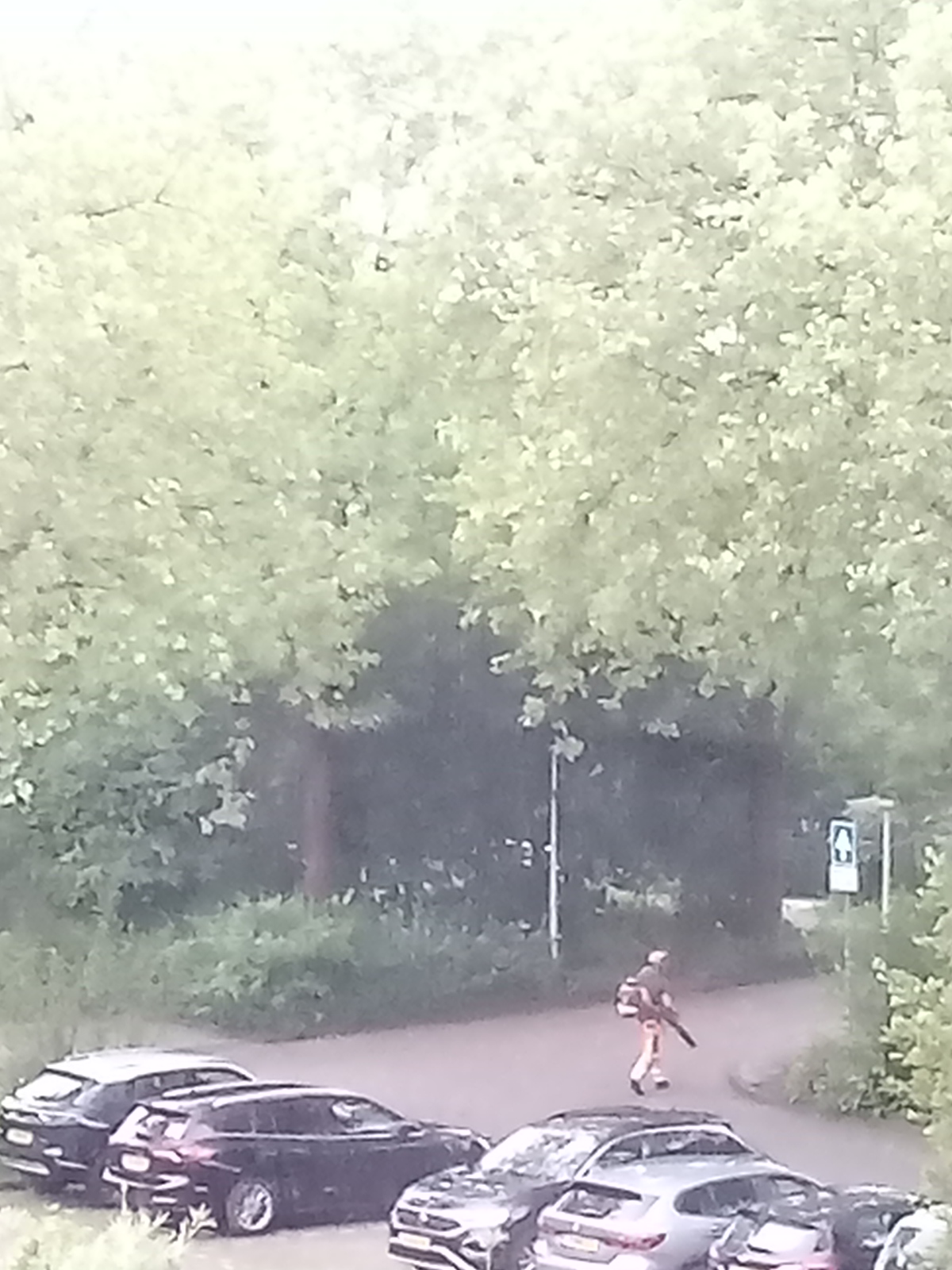
Leaf blowers
I can’t believe that the Dutch use them to clear leaves from the edges of parking lots (in combination with a regular street sweeping machine!).
Want more climate change, anyone? Need more noise pollution, anyone?
The first time I heard those things was in Florida in 1994. They sounded so ominous.
Silly remarks about Nvidia
While enjoying my morning coffee I ran into the following.
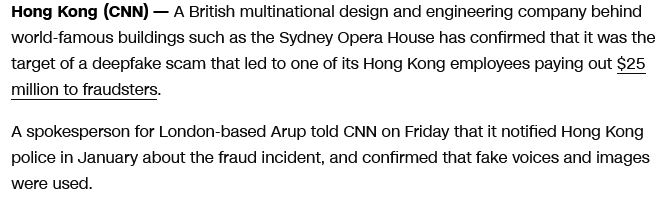
If you’d invested $1,000 in Nvidia on 15 April 2005, you’d now have $566,624.
Sure.
If I had been a little boy on 15 April 2005, I’d be a man in my twenties now.
If you’d invested $1,000 in different stock than Nvidia, you might be left with nothing now.
Had you even heard of Nvidia back then?
People who do things like build their own computers did know about it. Come to think of it, yes, I built my first computer around that time, in a super sleek, fully lockable blue case that was great to work in.
The right questions to ask are “what do you base your investment decisions on?” and “how much risk are you willing to take?”
(Along with “what tools do you use to invest?”)
(I’m talking investments now, not trading, obviously, although if you aren’t into it for dividends and to help enable the company in question to function, but plan to sell your shares later, you can see it as long-term trading.)
Continue readingNPD, what he says and what I say
Watch this video. When asked about the benefits of being a narcissist, he says – true to nature – that his lack of empathy enables him to see things more clearly than people who have emotions.
That’s the problem. People like him are usually so convinced about who they are relative to who others are – superior – that they can’t see others for who they are. They are convinced that other people make all their decisions on the basis of emotions and personal vulnerabilities and also that nobody sees through them.
They can be like gnats in their misconceptions. They don’t realize that a lot of people just shrug about their convictions and actions, maybe not at first but certainly eventually.
As they are so convinced of things being a certain way, they can also easily convince other people of how flawed you are. (They can engage in smear campaigns to undermine you.) That’s because they often truly believe what they are saying about you. They are also convinced that when they do stuff like that, the way you respond confirms their “diagnosis” of you.
They don’t get that it can be just really exhausting to have to deal with this kind of nonsense. They don’t get how it can undermine you in practical ways (and then you not getting anywhere because people believe you are flawed because that is what he has told them is just another confirmation to them and it all just becomes too exhausting).
You ironically end up in an oddly similar situation as the narcissist (a tension between insecurity and a belief in your capabilities, I mean), but because you aren’t a narcissist, you’ll likely just give up. That is, you may find ways of doing things that don’t depend on other people and on what they get told about you. Because the harder you try to convince people that they’ve been fed hogwash about you, the less inclined they are to believe you anyway. It hampers you in practical ways.
When I was in secondary school, a local well-known lawyer taught some of our classes, the ones about how society works (“maatschappijleer”). He gave an example of how hard it can be to defend yourself. How does a man deal with the question: “Do you still hit your wife?” There is nothing he can do or say that won’t make him look guilty of hitting his wife.
I don’t hate people with NPD. To the contrary, I can find them entertaining and likeable, certainly from a distance, but I also often find them exhausting. Some have plenty of good things that make up for it, and that can make them valuable to you, just like this guy to his wife, in this video below. That’s personal, clearly.
What’s also very good to hear from this guy in the video is that people with NPD often have like a switch in their brain that they flip after which they lose all interest in you. You can feel the need or duty to try to patch things up, because they can be so vulnerable and insecure, but there’s no point because you simply no longer exist. (If they feel they need something from you, they’ll contact you again.)
I’ve found that if I can see people with NPD as mischievous children, if I can see the small child inside them, at least their potential for making me feel hurt declines dramatically. It’s like he says… they’re just trying to make themselves happy and that you can get hurt in the process is just a side effect. They often are not aware of it at all because it is not material in their eyes. You don’t really feature other than perhaps as a tool within this context.
It’s complicated because it’s all about interaction to a large degree. (There must also be a potential for a solution in that.) When you get hurt, you’ll shout at the person with NPD and you get a shitload of abuse back. In my case, I may notice something and post about it which then can be taken as criticism and result in revenge or whatever and when I write something positive about anyone else, it is also often mistaken as as a secret message.
You basically have to tell them who to be, tell them who they are and tell them a lot of positive things about themselves so that they can be that positive person. (Oh! It’s a form of neurofeedback!) But how do you do that without 1) making things worse, 2) eroding your own boundaries and 3) undermining yourself, erasing yourself in the process? I don’t have the answers. AI might be able to come up with a very good neurofeedback solutions for people with NPD.
We are our brains to such a large degree
Spoiler: it was a form of encephalitis that landed her on that psychiatric ward and meds for psychosis
Got scammed with the aid of technology? It’s not your fault.
Besides the fact that we’ve now passed the point beyond which technology is no longer helping us speed up, but also slows us down because we’ve become enslaved to it, everybody and their brother and sister are falling for scams these days.
Here’s another example.
I have a good example of of how technology is now starting to slow us down. In the past, people applied for jobs that they wanted and to companies where they wanted to work and that was that.
Because it’s mostly done through giant websites now, people are told, obliged or enticed to apply to many different firms and for many different jobs. Now we need technology – algorithms – to help us deal with the flood of applications. As those algorithms are problematic too, we now also need to learn to deal with those.
In the video below, you can learn how a smart woman with a PhD got tricked into losing 150,000 dollars.
But there is something fun to report too:
A post for light-skinned women whose eye drops cause skin pigmentation (latanoprost)
If you don’t press your tear ducts shut for a least two minutes, to stop the drops from getting into your system, the resulting skin pigmentation is known as “panda eyes”.
If you do press your tear ducts shut – and you should – you’ll end up with skin pigmentation that makes you look tired.
You may also end up with tiny lashes growing in the corner of your eyes, as a result of your eye drops. They can be tiny and colorless so they can be very hard to spot, but they’ll make you feel like you have something in your eye. I remove them with tweezers, in front of a magnifying mirror and plenty of light.
I have a combination of two tips for how to deal with the skin pigmentation.
- If you use dark brown or slate grey eye shadow, part of the skin pigmentation will look like it’s eye shadow and be much less noticeable.
(As you’re likely to be a little older, the eye shadow may make your eyes look more expressive again, too, less beady. Then again, I have dark brown eyes so you may have to experiment with the color if you have light-colored eyes. Dark-brown eye shadow as shown in the photo below, matches the color of my skin pigmentation and likely yours too, however.)
- Use a good concealer, such as Max Factor’s Miracle Pure, for the area near/side of your nose and the area under your eye. I think that it also helps reflect light, unlike regular makeup, and that is why you then notice the dark patches and streaks much less than when you use regular makeup as concealer.
- (I use a thin line of black eyeliner, too, btw.)

Also, the eye drops can dry your cornea, which can cause streaky blurry vision that is not permanent, so you may need to use artificial tears.
Eye drops that have a preservative tend to dry your eyes more and some people have an allergy or sensitivity for the preservative.
Two examples. Monoprost does not contain a preservative. Xalatan does.
This too – whether you need to use eye medication or not – is an expression of diversity.
Continue readingOne of the hardest things to deal with
For me, that’s people who mean well but who keep making unrealistic suggestions that are based on wishful thinking.
Such remarks can come from people who are living privileged lives but aren’t aware of it. Their helpful suggestions usually only make you feel powerless and can drain your energy because there’s no point in saying anything about it. They wouldn’t get it.
If these are also often people who make odd, sneakily undermining negative remarks about your character, your confidence or your abilities, you have to wonder what is really going on. You have to avoid those people or at least limit (manage) your exposure to them.
The good thing? If you have lived long enough, you will be able to spot such patterns.
Reblogged: £20,000 Damages for Postal Summons Address Error Arrest
Interesting read. It’s giving me pause.
Reblogged: Holding a placard outside court isn’t illegal, judge rules: is that the best British democracy has to offer?
Holding a placard outside court isn’t illegal, judge rules – is that the best British democracy has to offer?
Steven Cammiss, University of Birmingham and Graeme Hayes, Aston University
The UK High Court recently dismissed the case against environmental activist Trudi Warner, who was referred for contempt of court in March 2023. Civil liberties campaigners hailed the decision as a “huge win for democracy”, but is it?
Warner had stood outside the Old Bailey, England’s most important criminal court in central London, with a sign that read “Jurors have an absolute right to acquit according to their conscience”. She did so at the start of a trial of climate activists who had been charged with public nuisance for obstructing traffic. Warner’s sign paraphrased the text on a plaque on display at the Old Bailey itself.
Known as jury equity, the legal principle evoked by this statement dates back to 1670 and is often cited, not least by leading legal figures and in the decisions of the higher courts, as a cornerstone of English democracy: juries can decide according to their conscience, and cannot be bullied into finding as the law dictates.
Indeed, many legal commentators saw the case against Warner as perverse. Since the threat of contempt proceedings was brought by the solicitor general (a government minister responsible for legal advice), Warner’s protest has been repeated outside courtrooms throughout the country at the instigation of campaign group Defend our Juries.
Why have juries became so important for protesters in the UK – and are they any more secure in their right to protest as a result of the High Court’s decision?
Jury equity and protest trials
Among recent protest prosecutions, Warner’s case is unique: as she saw it, her aim was to educate jurors on their rights.
For most non-violent disruptive protests being dealt with in English courts, defendants (like Warner) typically accept they did what they are alleged to have done, but argue they had a lawful basis for doing so. This is the case in many trials, from Extinction Rebellion to Palestine Action.
Over the last five years, this basis has been whittled away through government referrals to the Court of Appeal and decisions by that court which have removed the protection of lawful excuse and necessity defences in protest cases.
Meanwhile, new public order legislation has turned minor acts of disruption (such as occupying the highway) into serious acts of criminality punishable by prison sentences. The Court of Appeal endorsed long sentences for two non-violent activists who closed the Queen Elizabeth II bridge on the M25 in October 2022. Such is the parlous state of the court system following a decade of austerity that judges are under pressure to manage trials quickly.
Warner’s case brings each of these dynamics into sharp focus. Activists now regularly find themselves in court unable to present a defence in law for their actions, but remain committed to justifying them, because being publicly accountable is important to them. The only way they can avoid potentially severe punishments is by persuading juries not to convict them through the sincerity of their arguments and the public utility of their actions.
As such, jury equity is now often their only recourse. But judges, seeking to manage trials, regularly impose limits on what defendants can say in court, and for how long they can say it, particularly when they have no defence in law. In fact, Warner’s action stemmed from the widely publicised rulings of Judge Silas Reid in several Insulate Britain trials, who forbid defendants from addressing the jury on the climate emergency, and imprisoned two defendants for contempt for defying his order.
Restoring faith in British justice?
Does the High Court’s denial of permission to prosecute Warner indicate that the courts now seek to give greater protections to non-violent, disruptive protesters? Warner herself seems to think so, saying the decision “has restored my faith a little in British justice”.
The High Court ruled that Warner’s actions did not meet the threshold for contempt and that it would not be in the public interest to prosecute her. In fact, the court noted it would be “a disproportionate approach to this situation in a democratic society”. This can be read as affirming that protest is central to democratic life, rather than an irritant existing outside of it, and certainly gives some support to Warner’s faith.
But other elements of the court’s reasoning are less supportive. By noting that jurors swear an oath to make decisions according to the law, the court upheld a principle we have seen in numerous climate activist trials: defendants cannot invite a jury to apply the equity principle, nor even to inform them of it. This decision may allow people not involved in a case to do what Warner did, but in the courtroom itself, jury equity is to remain something of a dirty secret to be kept from jurors.
In deciding whether Warner’s actions were sufficient for contempt, the court also made much of her passivity in simply holding her sign; Warner did not attempt to engage with anyone entering the Old Bailey. She was, in both her own words and those of the judge, simply “a human billboard”.
Would the court have decided differently had Warner been more assertive? Where is the line between her permissible actions and those that would be deemed an unlawful hindrance of jurors entering the court?
A closer reading of the judgment suggests that, despite Warner’s victory, little has changed in the law’s view of protest. There is a good chance that Warner’s actions were tolerated for the very qualities that made her case so compelling: through her deliberate passivity, in the eyes of the law, she corresponded to the ideal of how protesters should behave. The court’s decision very much fits with a tolerance only of protest which is not disruptive (and, we might argue, not particularly effective).
It is unlikely then that the Warner outcome signals a return to a more liberal understanding of the role of protest as a democratic right. The court’s decision, if welcome, serves rather to underline how diminished the opportunities for real democratic agency are in Britain today.

Don’t have time to read about climate change as much as you’d like?
Get a weekly roundup in your inbox instead. Every Wednesday, The Conversation’s environment editor writes Imagine, a short email that goes a little deeper into just one climate issue. Join the 30,000+ readers who’ve subscribed so far.
Steven Cammiss, Associate Professor, Birmingham Law School, University of Birmingham and Graeme Hayes, Reader in Political Sociology, Aston University
This article is republished from The Conversation under a Creative Commons license. Read the original article.
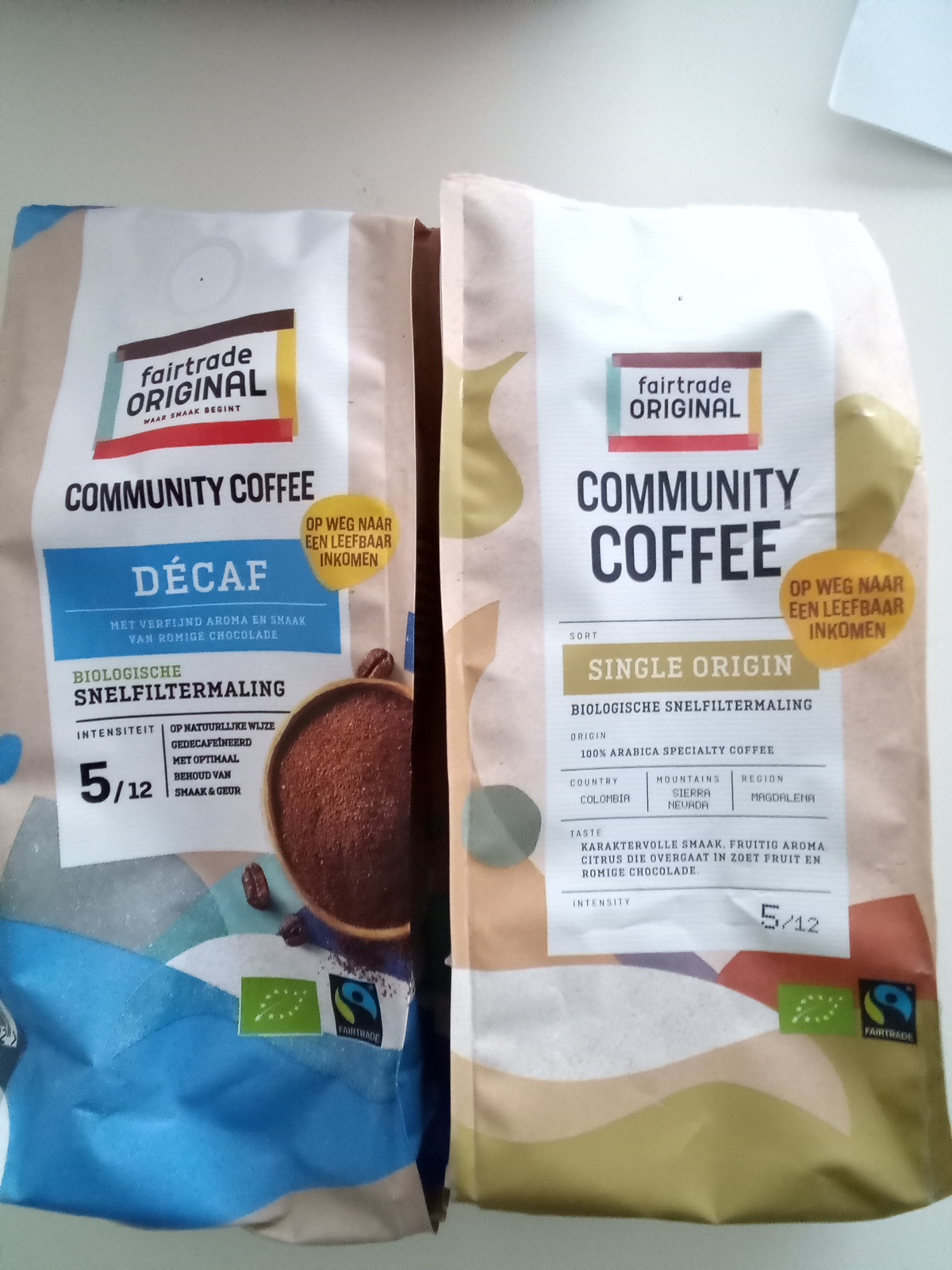
FairTrade bites
Links:
https://schools.fairtrade.org.uk/
https://www.chocolatescorecard.com/
https://www.fairtrade.net/news/five-ways-fairtrade-supports-workers-rights
https://www.fairtrade.net/issue/environment
Two things I learned today that I didn’t know yet
- The Rainforest Alliance pays farms a much lower premium than FairTrade.
(But they have – or started out on the basis of – different objectives.) - Tony’s Chocolonely is a very good chocolate brand, in terms of FairTrade.
(It’s Dutch.)
I’ve typed the Dutch below into ChatGPT and asked it to translate because it saved me a lot of time. I’ve edited it slightly.
“Tony” comes from Teun van de Keuken, the journalist who investigated slavery in the chocolate industry in the TV show ‘De Keuringsdienst van Waarde’ from 2002 to 2007. He discovered that there are still (child) slaves working on cocoa plantations in West Africa and tried to initiate conversations with various chocolate companies about this. When they failed to respond, Teun decided to start making slave-free chocolate bars himself. He feels very lonely in his fight against slavery in the chocolate world, hence ‘Chocolonely’. Want to know more about it? Check it out here.
Eleven years ago, journalist Teun van de Keuken conducted research into slavery in the cocoa chain on the TV show ‘De Keuringsdienst van Waarde’. He made the shocking discovery that much of the chocolate found in our supermarkets is made by slaves, often children. Is that acceptable? Teun therefore set out to question various chocolate makers about this situation. Many of them evade the issue. So, he decided to take matters into his own hands. In November 2005, the first Fairtrade Tony’s Chocolonely bars rolled off the production line. In 2006, we registered with the Chamber of Commerce, and Tony’s Chocolonely became a reality: a chocolate company with the goal of eradicating slavery from the chocolate industry.
If you’re on Dutch benefits, expect phishing emails, spoofed phone calls and scammers knocking on your door
Yesterday evening, the news was posted that 150,000 CVs – with DOB, email address, postal address, phone number and all – were illegally viewed and possibly downloaded from the system werk.nl in which people on benefits are required to post their CVs in the Netherlands.
(DOB? Yes. Age discrimination has been illegal in the Netherlands for a long time, but DOBs are still routinely requested in job applications and online CV forms usually force you to enter your DOB.)
It’s happened before. In 2019, 117,000 CVs were downloaded illegally.
Datalek bij UWV: 150.000 cv’s ingezien en mogelijk gedownload (nos.nl)
There’s a lot of stuff people get wrong about autism – until an iPad comes along, sometimes
Household debt assistance the Dutch way
In the news this morning is an item about debts among young people in the Netherlands. There appears to be an annual increase of 1 to 2% and the debts mostly concern the monthly obligatory health insurance premiums.
Ironic – and highly revealing – is that many young adults in the Netherlands do not apply for the related monthly receivable tax credits because they are concerned about having to pay it all back later. That would get them into much greater difficulty.
The Dutch tax authorities messed up big time with childcare tax credits when an algorithm started identifying people, notably those with foreign-sounding names or foreign backgrounds or foreign parents, as scammers. This resulted in huge financial difficulties for many. Families were even ripped apart over it, children sometimes removed from the home.
So here we have another clear indication that how a government rules a country is directly related to the financial challenges that its citizens deal with.
Blacklisting people who apply for exemptions and sharing those details with a range of other organization – both also done in the Netherlands – is another way to deter people whose financial circumstances actually do make them qualify for exemptions.
They rarely need more roadblocks, after all. They’re usually trying to clear roadblocks.
What also often goes wrong is that organizations such as health insurance companies do not inform their customers of threshold they should seek to avoid. The news item states that when health insurance clients are 6 months behind on their obligatory insurance premiums (with or without health care costs payments?), the insurers have to blacklist them and refer them to a government organization called the CAK (a collection agency, basically) and their customers’ health insurance premiums go up.
How is this helpful, Dutch government? Shouldn’t you, by contrast, for example start doing things like waive people’s “eigen risico” – if they have high healthcare costs but low incomes – to help them get back on track instead of push them into greater financial difficulty?
And instead of the tax credits that many people are now too terrified of to apply for, couldn’t you just give them an income-related discount on their premiums, based on the previous year’s income so that there won’t be any fear of a later clawback?
I’m also interested in why the premiums and “eigen risico” went up whereas those healthcare premium tax credits went down this year. Are the country’s coffers empty? Apparently…
The “eigen risico” will be applied differently next year. Instead of it being a one-time reimbursement threshold, there will then be a lower threshold each time someone needs care for which the “eigen risico” applies. Would this mean that people with certain medical condition will end up paying a fortune toward their healthcare? No, because the threshold stays in place. https://www.rijksoverheid.nl/actueel/nieuws/2023/01/19/vanaf-2025-maximaal-150-euro-eigen-risico-per-behandeling-in-medisch-specialistische-zorg
Should these things really be changing all the time? It’s a little bit like the “derdelanders” position among refugees that fled from Ukraine, haphazardly applied and constantly changing decisions that give people little to hold on to. It’s also a bit like future pension amounts being determined by how the stock market is doing instead of how capable the fund managers at the pensions funds are, isn’t it?
Is long-term vision a thing of the past?
Continue readingAquafaba
Update: it’s actually pretty good as it is, what I whipped up today. It wasn’t the vinegar of which I added too much, it was ground mustard seeds. They are pretty good.
In an attempt to lower the number of (plastic) jars of vegan mayo I purchase and throw less stuff away that is actually useful and nutritious, I just tried my first aquafaba recipe.
I didn’t get the proportions right as the recipe was on my computer in another room and I mixed up teaspoons and tablespoons – and I was using cups, anyway. I’m also not using a fridge. Instead, I placed the mixture in the microwave and heated it up; that too thickened it up really nicely. (That possibly was because I had resorted to adding some corn starch, which I may not do next time.)
I used a plain metal whisk, by the way, not a blender. (Bamboo whisks exist too.)

I used olive oil, but I didn’t want to use up all my olive oil because I didn’t see much thickening, likely because I had added to much vinegar.
A tip: If you heat olive oil, it can lose its super healthy properties that help protect your heart and vascular system (according to a BBC program that I watched a few years ago). I don’t know at what temperature that deterioration kicks in, but heating a bowl in the microwave for one or two minutes is probably very okay.
My very first mayo attempt is a little too tart – my fault – and to make up for that, I’ll add some ground almonds. Ground almonds, that’s my shredded cheese.
Next time, I’ll get it right. I can tell. I’m very pleased.
Did you know that you can also use tofu juice and the juice in a can of peas as aquafaba? Can, that’s tin, for Brits.
If I tin do this, so tin you.
What sparked this? I was eating courgettes and chickpeas yesterday and thought “Some mayo with this would be nice.” Chickpeas come with the best aquafaba. Courgettes, that’s zucchini, for Americans. (Ameritins?)

(Also, I am being ravaged by gnats in my sleep. Apparently, they hate the smell of vanilla. I don’t. So I’m going to try that too.)
Need more inspiration for what you can do better in terms of sustainable living? This may help:
I too really wrestle with the fact that the actions of the species Homo sapiens are often so harmful and so thoughtless.
I’ve seen a pigeon realize that mice, no matter how annoying mice can also be to pigeons, need food to survive, to my amazement. I had a pet pigeon who often spilled her food and I had a neighbor with mice who would sometimes venture into my place. It dawned on the pigeon what was happening and she stopped spilling food where she spent most of her time, and where she did not want to see any mice, but I also saw her spill food off a high shelf one day, very deliberately – and then look down to see what would happen.
I’ve seen another bird species have empathy for cats.
The difference may be how secure biological beings are, in terms of food and shelter.
If that is the case, then greater equality and facilities like universal income might make a huge difference in the long run. It’s not easy to have empathy when you are struggling to support yourself, when you struggle to feed and house yourself. It makes total sense, doesn’t it?
The step toward living more sustainably becomes easier too, then.
I’ve also recently realized that my life in the past two decades would have been much easier if I had owned a car. I’m still digesting that. The issue is actually a different one, but today’s world sometimes forces certain choices and limitations on us. Balancing them out is a bit like choosing between local loose apples that are not organic or organic apples or vegan products that are packaged in plastic and can have been shipped around the world. Not easy.
The solution is to find a local grower who does not use plastic to package organic fruits and vegetables in. In some regions, there are apps that make that possible, that allow you to connect with local organic farmers and order products from them.
Legal textbook case! (Titan missile silo fall)
An 18-year-old boy was injured when he fell 10 meters in a Titan missile silo in Colorado.
It is already having legal consequences for the injured adult in the group. The six minors have been passed on to their parents. Whether there will also be legal consequences for them and for the injured young man remains to be seen. That’s according to Dutch news (NOS) and one American source (KKTV).
USA Today, by contrast, reports that the 18-year-old injured person was charged with criminal trespass (3rd degree criminal mischief was how a third news source put it) and that seven minors were handed over into the custody of their parents, with possible charges pending.
When owners of a terrain do what they can to keep youngsters out to protect them against hazards that are present on the terrain, liability can shift. That’s the textbook case this may turn into. It has to do with whether it’s reasonable to hold a party liable for damages if that party has done enough to prevent the damages. These youngsters crossed a threshold.
(What’s more, these eight youngsters may have been on military territory. Doesn’t sound like it, though.)
Just because someone is a little quirky, it doesn’t mean that they’re not super bright
Older adults are getting smarter
|
From my own observations as a younger person, I know that the impression that older adults are “slow” can be merely the result of the declining near-sight of older adults. It can take them – us – slightly longer to spot things on screens, for example, just because most older adults’ vision is not as good as it used to be.
I remember making this snap judgement about someone else once, when I was much younger. I am fortunate enough to be near-sighted, so while my near sight has declined with age, I still don’t need reading glasses unless I am wearing contact lenses for far sight.
Are young people smarter than older adults? My research shows cognitive differences between generations are diminishing

Stephen Badham, Nottingham Trent University
We often assume young people are smarter, or at least quicker, than
older people. For example, we’ve all heard that scientists, and even more so mathematicians, carry out their most important work when they’re comparatively young.
But my new research, published in Developmental Review, suggests that cognitive differences between the old and young are tapering off over time. This is hugely important as stereotypes about the intelligence of people in their sixties or older may be holding them back – in the workplace and beyond.
Cognitive ageing is often measured by comparing young adults, aged 18-30, to older adults, aged 65 and over. There are a variety of tasks that older adults do not perform well on compared to young adults, such as memory, spatial ability and speed of processing, which often form the basis of IQ tests. That said, there are a few tasks that older people do better at than younger people, such as reading comprehension and vocabulary.
Declines in cognition are driven by a process called cognitive ageing, which happens to everyone. Surprisingly, age-related cognitive deficits start very early in adulthood, and declines in cognition have been measured as dropping in adults as young as just 25.
Often, it is only when people reach older age that these effects add up to a noticeable amount. Common complaints consist of walking into a room and forgetting why you entered, as well as difficulty remembering names and struggling to drive in the dark.
The trouble with comparison
Sometimes, comparing young adults to older adults can be misleading though. The two generations were brought up in different times, with different levels of education, healthcare and nutrition. They also lead different daily lives, with some older people having lived though a world war while the youngest generation is growing up with the internet.
Most of these factors favour the younger generation, and this can explain a proportion of their advantage in cognitive tasks.
Indeed, much existing research shows that IQ has been improving globally throughout the 20th century. This means that later-born generations are more cognitively able than those born earlier. This is even found when both generations are tested in the same way at the same age.
Currently, there is growing evidence that increases in IQ are levelling off, such that, in the most recent couple of decades, young adults are no more cognitively able than young adults born shortly beforehand.
Together, these factors may underlie the current result, namely that cognitive differences between young and older adults are diminishing over time.
New results
My research began when my team started getting strange results in our lab. We found that often the age differences we were getting between young and older adults was smaller or absent, compared to prior research from early 2000s.
This prompted me to start looking at trends in age differences across the psychological literature in this area. I uncovered a variety of data that compared young and older adults from the 1960s up to the current day. I plotted this data against year of publication, and found that age deficits have been getting smaller over the last six decades.
Next, I assessed if the average increases in cognitive ability over time seen across all individuals was a result that also applied to older adults specifically. Many large databases exist where groups of individuals are recruited every few years to take part in the same tests. I analysed studies using these data sets to look at older adults.
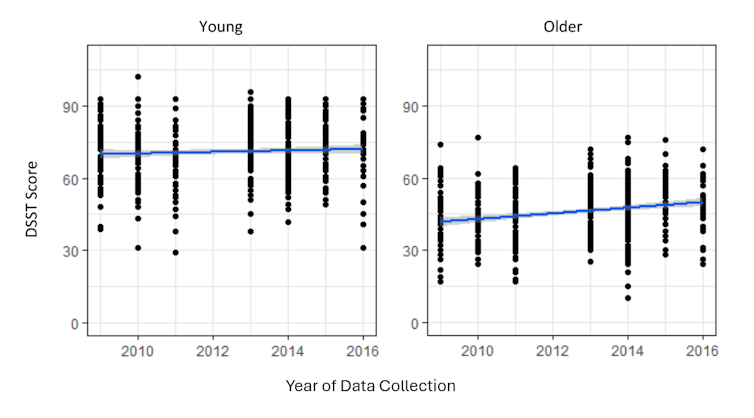
I found that, just like younger people, older adults were indeed becoming more cognitively able with each cohort. But if differences are disappearing, does that mean younger people’s improvements in cognitive ability have slowed down or that older people’s have increased?
I analysed data from my own laboratory that I had gathered over a seven-year period to find out. Here, I was able to dissociate the performance of the young from the performance of the older. I found that each cohort of young adults was performing to a similar extent across this seven-year period, but that older adults were showing improvements in both processing speed and vocabulary scores.
CC BY-SA
I believe the older adults of today are benefiting from many of the factors previously most applicable to young adults. For example, the number of children who went to school increased significantly in the 1960s – with the system being more similar to what it is today than what it was at the start of the 20th century.
This is being reflected in that cohort’s increased scores today, now they are older adults. At the same time, young adults have hit a ceiling and are no longer improving as much with each cohort.
It is not entirely clear why the young generations have stopped improving so much. Some research has explored maternal age, mental health and even evolutionary trends. I favour the opinion that there is just a natural ceiling – a limit to how much factors such as education, nutrition and health can improve cognitive performance.
These data have important implications for research into dementia. For example, it is possible that a modern older adult in the early stages of dementia might pass a dementia test that was designed 20 or 30 years ago for the general population at that time.
Therefore, as older adults are performing better in general than previous generations, it may be necessary to revise definitions of dementia that depend on an individuals’ expected level of ability.
Ultimately, we need to rethink what it means to become older. And there’s finally some good news. Ultimately, we can expect to be more cognitively able than our grandparents were when we reach their age.
Stephen Badham, Professor of Psychology, Nottingham Trent University
This article is republished from The Conversation under a Creative Commons license. Read the original article.
This is not a joke
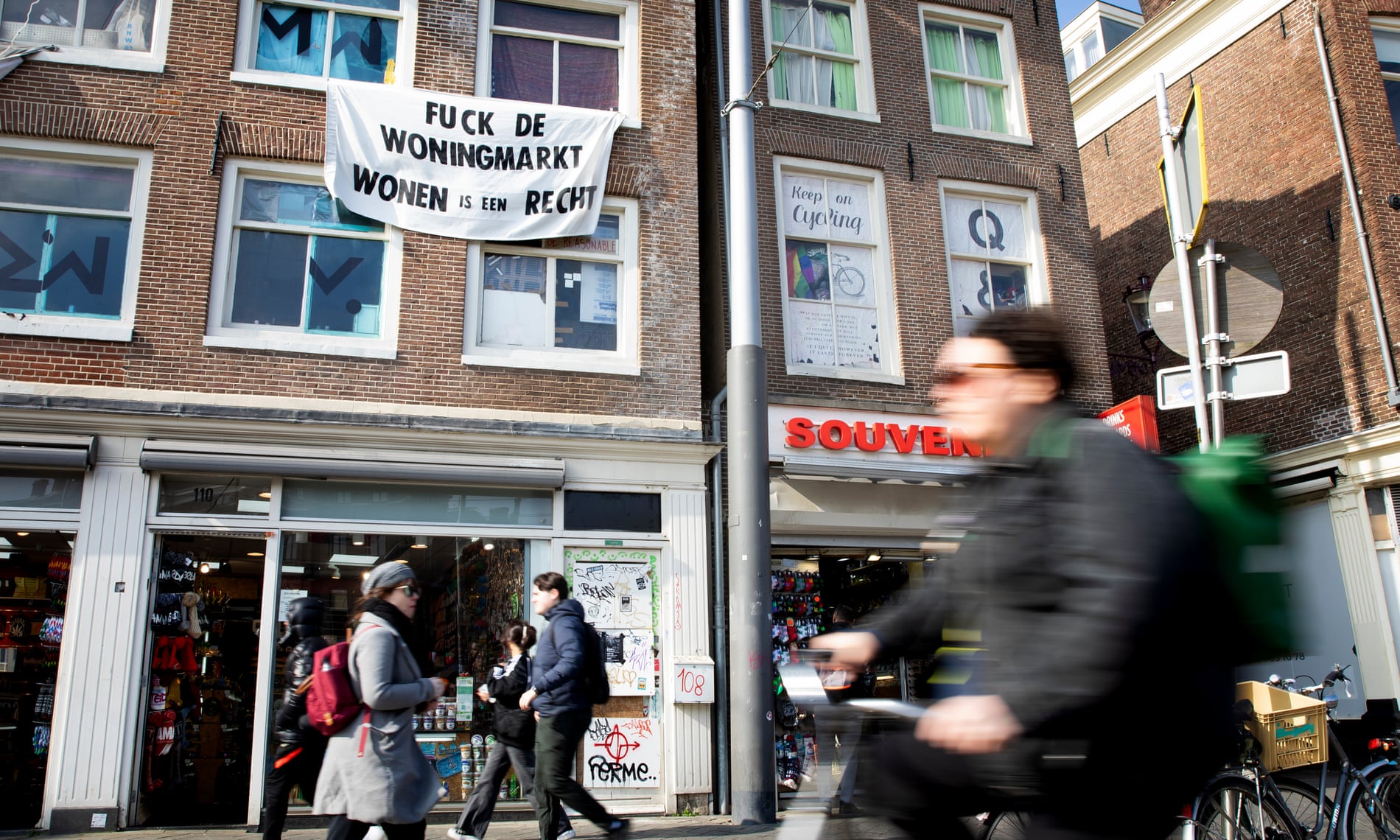
https://www.theguardian.com/news/article/2024/may/06/netherlands-amsterdam-next-level-housing-crisis
I remember receiving a communication from someone in Florida, asking me “where do you want to live?” when I was about to relocate to Florida. “Where do you want to live? Which neighborhood?” was not an option I was familiar with. You live wherever it is where you find a place to live.
Things have been getting much worse recently, however, and apparently it is the fault of successive Dutch governments.
Don’t dismiss the role that sheer good luck and bad luck play in life
Here is an example.
Decades ago, as I was emigrating to the US in the winter holiday season, a courier I had arranged was supposed to collect the paperwork in the US that I needed for my visa. After several days, nothing had happened.
The university in the US engaged FedEx, their regular courier, and I rented a car, drove to the airport (Schiphol) where FedEx allowed me to collect my paperwork straight from the plane (desk), after which I drove to the American consulate and got my visa right before the consulate shut down early because of new year.
My flight was leaving, pets and all, when the consulate was still closed.
The fact that everything else worked out too… that was great. There could so easily have been a snag on my way back from the airport.)
But if it hadn’t been for FedEx…
So whenever I can, if I need to use a courier, I will use FedEx. (I’ve held an account with them once or twice.)
This is how it’s done
What is gossip?
Some people fascinate me so much that I end up talking about them with others but I sometimes can’t escape wondering whether I am gossiping when I do that. I now try to keep things as vague as possible so that the people in question remain unidentifiable – it’s a small world, after all – but that’s not always easy.
Nice surprises
Those who know me or follow me closely are probably aware that I still get royalties for work that I did before I moved from Southampton to Portsmouth. This concerns books published by “real publishers”, as opposed to “by myself”. I get royalties over the purchases as well as lending fees (libraries).
(I also occasionally get Amazon royalties and Udemy royalties, but that’s still relatively rare and this is not what I am talking about here.)
Through sheer coincidence, I discovered that e-book versions have meanwhile appeared of many of those works. As I was not aware of their existence up to that point, I hadn’t submitted any of those e-books to the Dutch organization that processes and pays out the royalties for those books.
I’ve recently added them to my portfolio. The related payments slowly started to come in after I did that. I just received three more specifications. Particularly the pandemic seems to have made a difference for e-lending.
There’s one book of which I wrote a small portion and that I haven’t added yet. As I don’t remember having made sure at the time that my contribution was going to be mentioned in the book, I don’t think that trying to submit it to my portfolio is going to be worth my while.
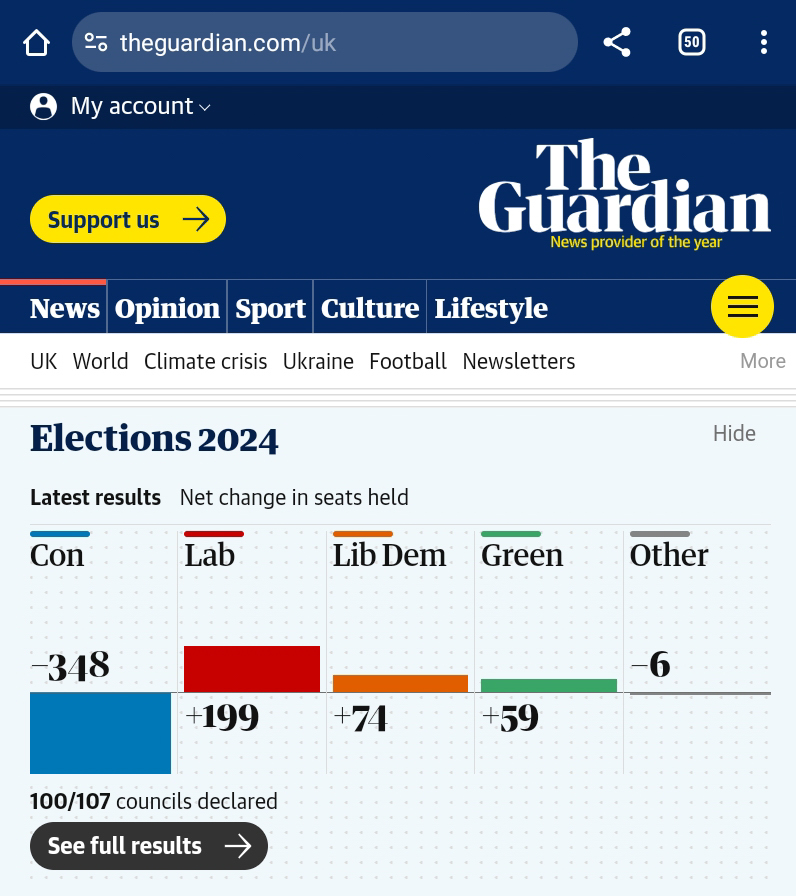
Holy cow, has Britain come out of 15 years of hibernation?

Does someone have a problem with who you are?

One exception: If your behavior is hurting others, then you still do not have to sacrifice who you are, but you’ll have to learn how to modulate your behavior. That’s also for your own sake, to stay out of trouble.
This sounds easier than it is. Behaviors can have become part of someone’s identity and when someone’s any kind of artist, the idea of modulating one’s behavior surely has to feel like a potential threat to one’s creativity.
Baby steps is all it takes. No big leaps or major transformations are needed.
I’ve actually been shocked to see how being mistreated – or even merely dismissed – in England started to change me into someone I no longer liked much at all. This began happening to me when I was in my forties. So I understand very well how certain behaviors can come about. We do not live in a vacuum, no matter what people may say, and what happens around us and to us – particularly when it concerns children – can change us. Neural pathways get reinforced; this happens beyond our control, before we know it.
(Just consider how TBIs and brain tumors can change someone’s personality. Then you see how true this is. We are biological organisms, not separate from nature but part of it.)
Some people are lucky enough to be able to reclaim the power to be who they want to be. Others need a bit of compassionate support to be able to do that, a guide. Not everyone can change their behaviors, but there are ways to limit its impact on others.
Poverty policies
If writing off household debts – the government buying the debts and then paying them, which boils down to having the debts written off, for households – is much cheaper than the government providing household debt assistance, isn’t a big part of the solution to shift the household debt amount toward the income of the people who get into household debt?

