And then again, it wasn’t genuine either.
Agreed
I used to vote for them. And then I stopped.
“All those posh boys think we’re stupid”
(Posted on YouTube 3 days ago.)
What on earth is going on in Dutch trains?
Last night, two boys aged 13 and 14 attacked a train guard in Purmerend. He needed medical treatment after that.
https://nos.nl/artikel/2518846-twee-jongens-van-13-en-14-jaar-mishandelen-conducteur-in-purmerend
Just a few weeks ago, another train guard was attacked, and even thrown down a staircase by a bunch of youngsters. That happened between Delft and The Hague. The woman broke her arm.
https://nos.nl/artikel/2516813-conducteur-ns-mishandeld-in-trein-van-trap-gegooid-geschopt-geslagen
I have just spent fifteen years in an English town that has a LOT of violence and intimidation and harassment and I’ve stood up against bullies a few times. Fairly recently, I’ve even stopped two people who were high on meth from pulling a driver out of his car in rush hour, for example, but that is very different.
This violence in Dutch trains is really worrisome and I wouldn’t want to deal with that at all.
What is behind this? Is it still an aftermath effect of the pandemic? I don’t think so.
Particularly the trains between Zwolle and Emmen are seeing a large increase of incidents. What is different about that part of the country?
https://nos.nl/artikel/2518815-grote-stijging-van-het-aantal-incidenten-in-trein-zwolle-emmen
This article mentions that it mostly concerns people without a valid ticket and talks about a large number of refugees who got stuck in that part of the Netherlands because the country where they came from is considered safe enough.
Is that the whole story? It’s very hard to talk about this without risking upsetting anyone if you ask about the backgrounds of the youths in question. But if you want to resolve this, you need the context.
- One obvious solution appears to be gates at stations, to keep people without ticket from boarding the trains. Then you shift the problem, however. If the violence is mostly associated with people not having tickets, then the real issue is a lack of enough income.
- So, another solution might be to issue free train passes to for example youths for a while and see how that affects the number of incidents. Free train passes might make a real difference. It might make people feel a lot less defensive. Scared people can easily become aggressive.
Why are so many people needing to travel between Emmen and Zwolle, though?
https://nos.nl/artikel/2496457-nog-altijd-veel-incidenten-in-overlasttrein-zwolle-emmen
The source appears to be Ter Apel, a former military base where my dad had part of his military draft training, which now houses refugees and other asylum seekers.
https://nos.nl/artikel/2481573-politie-mee-op-de-trein-bij-maarheeze-na-overlast-asielzoekers
- A third solution, then, is to employ some of these asylum seekers on some of these trains, in uniform, but also perhaps in plain clothes. You need to bridge that gap. You need people who understand what is happening.
The presence of police agents in uniform can be provocative and does not necessarily increase the sense of safety among the public. I am in my sixties, and I do not consider the sight of police officers reassuring. To the contrary, I associate police with violence (from whatever source). It depends on the situation, however.
Generally, you can’t fight fire with fire (though it’s basically what I did in the case I mentioned above because I needed to distract them from the driver whose wife and kids were also in the car, by the way).
You have to take away the source of the problem, not fight its results.
Continue readingFlying cars, flying homes, flying monkeys
Somewhere, someone may still have a copy of an essay that I wrote in primary school… about the year 2000.
The kids in my class laughed. (No, that didn’t make me angry.)
Now these things are starting to happen, a little later than I anticipated.
I’ve also predicted that we’ll be using CRISPR and fish genes so that we can change the color of our skin like putting on new clothes and be done with so-called racial discrimination. (So-called because race is a cultural concept. There is only one human species and a wide range of diversity, which is the spice of human life.) It’s already been done with cats and other mammals, making them fluorescent in the dark, though the ability to change the color is going to be a challenge.
I’ve been looking back at my life and was astonished to see how often I was hit by sheer bad luck, mere negative coincidences, things that happened, sometimes without me being aware of at the time. I’m wondering what I can still do with that, and what it all means, if anything, whether I could have done some things differently, responded differently.
And then I see this and I despair. What is going to become of the over 50,000 children who disappeared within the EU within a period of three years? The actual number is likely much higher, researchers say.
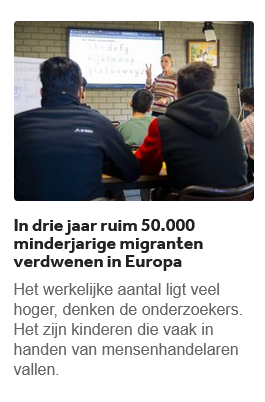
Then this.

Yes, I know that the news makes us depressed these days. There is so much negative news that people now apparently do things like consider education in their own country very bad – but not their own children’s education – and consider the economy very bad – but not their own situation. (Surveys reveal this.) They seem to be basing their opinions on negative news that they read, not on their own experiences.
Headaches… (and coincidences)
They’d been plaguing me for far too long (a few weeks now) but are slowly starting to go away…
(Yes, they’ve hampered me recently. What can I say? I am merely human.
Having a bad headache usually doesn’t result in brilliant thinking.)
I was – am still – dealing with gallbladder congestion, massive sinus congestion and esophagus issues. (It’s all related and in turn can affect circulation.) I know how to deal with this. We all have our weaknesses. My body needs to be working like a race-horse’s because if it isn’t, it really starts to buck to get my attention. That’s the non-conscious part of the brain kicking in, trying to get through to the conscious part.
Also… I just wrote the following… (see below). Then, when I was looking for an address to send a book to, I discovered that I have a niece who’s just completed a BA in psychology (though her thesis calls it a BSc, likely as per Dutch university instructions). Topic? Bullying in care homes (among residents). That’s an interesting coincidence. (I took a quick look. I suspect that I might really like you, niece, if we ever were to meet.) It’s made me smile.
I think that I should mention now that because of the housing situation and the plethora of regulations and registration requirements in the country that I am currently in, I am living in an actual nursing home – care home – in a small municipality surrounded by agricultural land, miles away from anything, far away from places where I would like to be and need to be.
I thought I’d be content (and resourceful) enough to make it work. I was completely unprepared for the lack of privacy – which I have found some solutions for – and the fact that when nothing is physically wrong with you and you are much younger than most other residents, almost everyone assumes that you either have dementia or must be learning-disabled (“except most of the residents,” I should probably add).
I’d also not at all considered the fact that people who go live in such places go live there to die there. Ambulances are frequent visitors as are undertaker vans (and removal lorries), along with the daily tides of carers. The hopelessness and emptiness is often overwhelming and the lack of respect and consideration with which you get treated is not really cheering me up either.
That’s partly my fault because I feel so out of place here. (That’s for other reasons, too, including having lived abroad for so long.)
At first, strangers who didn’t know that I was living here too even sometimes made remarks along the lines of all people who live here no longer being interested in anything whatsoever, everything passing them by. To almost everyone else, you become a thing when you live in a place like this. You’re seen as frail, by definition.
I had really underestimated how incredibly hard this would be.
(Don’t worry, not everything is bad.)
Hundreds of people – all kinds of staff and other visitors – walk in and out throughout the day and because there are also people with dementia here, you have to go through a set of sluice doors – that’s a lock – of glass doors. After hours, you need to tap in a code to be able to leave. During the day, you have to wait for the other doors to have closed but there is enough staff and a receptionist to keep on eye on wandering dementia patients.
Nonsense!
There’s no such thing as hacking. That’s just something old women make up to hide that they can’t handle modern technology.
https://www.theguardian.com/technology/2024/apr/29/devices-with-weak-passwords-to-be-banned-uk
And another productive day
From this bundle, which contains poems and one short story, you can read the short story below.
Berry-picking
(September 2011)
He tiptoed around the toadstool and knocked on the door. “Are you up yet?” “Depends on who you’re asking, the toadstool or me,” she yelled and opened the door in the angled toadstool, tiara in hand. “Yes?”
“I thought maybe we could go berry-picking today.” “You’re right, it’s a marvelous day for it. Let me put some shoes on and I’ll join you.” When she came back to the door, he was no longer at her toadstool’s doorstep. Where’d he gone off to? She looked around and spotted him, when he yelled from the garden around his parents’ toadstool. “My mom wants me to have a decent breakfast first.” “Okay,” she hollered back. “Meetcha in an hour!” And she went back inside, did the dishes, brushed the cat and checked her e-mail because she’d already had breakfast.
“Are you ready?” he asked an hour later, impatiently jumping up and down on her doorstep. “Yes, but let me quickly close the kitchen window,” she replied, and went inside to close the window. When she stepped outside, he was nowhere in sight. Where’d he gone off to this time? She looked around and then spotted him when she heard him yell from the garden around his parents’ toadstool. “My dad wants me to go fly-fishing with him. Shall we go berry-picking this afternoon instead?” “Okay,” she hollered back. “See ya at two!” And she went back inside, posted an update on Twitter, did her bookkeeping, and made a mushroom omelet for lunch.
“Come on, come on!” He was pacing up and down and around her toadstool impatiently while she wrapped up an exchange in one of her Facebook groups, and paused the new track she’d been listening to on MySpace, grabbed her berry-picking satchel and walked toward the door, where she was met with an icy silence. She turned her hands into fists and put them on her hips. Where the devil had he gone off to now? She looked around and spotted him, yelling from the garden around his parents’ toadstool. “My mother wants to teach me how to bake cookies. I suggest we go berry-picking tomorrow.” She grumbled and didn’t holler back “Okay!” but “Enjoy your cookies!” and went berry-picking all by herself. The pattern repeated itself day after day, until one day, her toadstool was gone and the door no longer there to knock on. She had turned the berries into jam, used the jam in cakes, and started selling cakes from her toadstool. But she had remembered the “Location, location, location” chant from her college days and had the toadstool moved to a prime location in town, while preserving its precarious yet precious angle, as it made her toadstool so easy to recognize from a distance. He had to go on Twitter to find her, and found she had thousands of followers, all wanting to go berry-picking with her.
Schrikbarend beeld
Okee, Nederland is officieel kapot. Stuk.
Het goed georganiseerde land dat ik kende bestaat niet meer.
- DIT – medische Kafkaesque nachtmerries – is één gevolg van betalen voor verrichte handelingen en het loslaten van zorg.
- Het schokkende toeslagenschandaal waarvan de klap over de hele wereld echoode.
- De Orwelliaanse vroegsignalering
Hoe dit komt, deels? Technologie dient de mens niet meer maar andersom. De dictatuur van wat kan is ontspoord.
A productive day
I have been plagued by bad headaches for about ten days now and today is no exception. So I am pleased to be able to say that I just wrote 30 pages for a new booklet anyway. Related to inequality and poverty.


By the end of the day, I had published the first version. That gets it into the system. I expect to start expanding on it as of Sunday. In the past, I used to print everything a few times and edit/rewrite on the basis of the printed material. That usually leads to the best results, but is not really doable – or done – any longer. The main thing to do first is getting rid of these stupid headaches.
Also, I am hoping to get my eyes lasered soon; there are three different options for me in theory. This would solve several issues, including looking perpetually exhausted because of the pigmentation around my eyes. That pigmentation is reversible.
Priorities, priorities. (My current challenges all take priority. That forces me to play a game of juggling and gambling and guessing.)
UK leading these developments
I had spotted these or similar headlines on the CNN website a few days ago and was vaguely surprised. They just popped up again and this time, I paid more attention. Turns out that they’re advertisements.

Women and agency
When misfortune strikes strong women, afterward, they will want to process it as soon as possible, reclaim their agency and move on with their lives.
If instead you tell them to do nothing at all for a while, it becomes impossible for them to take you seriously. They will dismiss you and probably never listen to you again.
“When I hear a foreign accent, I hear effort; where I see difference, there is courage; where I see discrimination there is resilience; where I see denied dignity, I see strength and survival.”
Guy Pierre Tur
When I see poverty, I see all of that.
Explainer: How to spot five of the fossil fuel industry’s biggest disinformation tactics
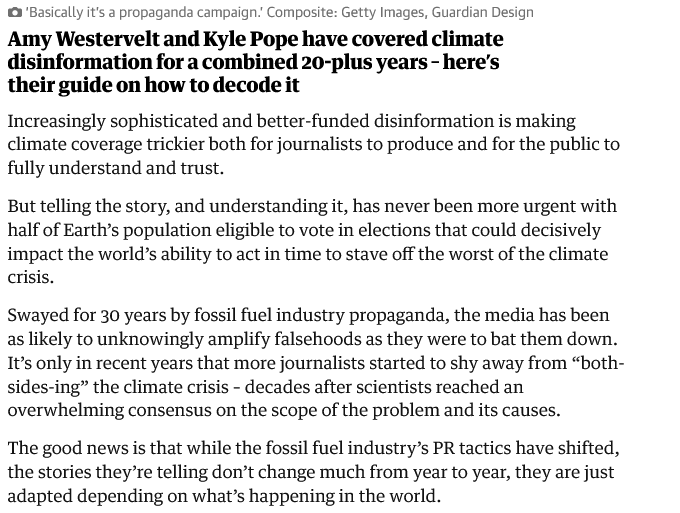
https://www.theguardian.com/us-news/2024/apr/14/climate-disinformation-explainer
It’s an interesting read and it remind me of this:
https://www.theguardian.com/business/2022/may/23/shell-consultant-quits-environment-caroline-dennett
A food development that I really like!
I’ve been wondering why we’re so behind on this, why we are still dependent on the exploitation of other species, for example, for our food supply. Doesn’t sound very advanced and sophisticated to me.
Also, “food and agriculture is responsible for about a quarter of all planet-heating carbon emissions. Its share of pollution is likely to grow as other industries shift to using green electricity, and ever-expanding middle-classes demand more meat for their tables. Up to now the focus for some climate campaigners has been to try to persuade people to eat less meat and more plants. Non-farmed proteins such as solein might make that approach more appealing.“
Solein sounds like a real change-maker.

https://www.theguardian.com/business/2024/apr/19/finnish-startup-food-air-solar-power-solein
This is also more or less – tubs of microorganisms – how we may generate electricity in the future. I realized that when I sat in a presentation by Craig Venter at Oxford, back in 2007. We are all – that is, our metabolism – electrical currents and some soil microorganisms even run thin wires to one another.
Scaling that may be the biggest challenge; it’s going to require some major ingenuity. If you can use organisms that take carbon dioxide and methane for example from the air, you might have a bonus side effect.
I can’t see any negative effects of a development like that yet (which would depend on species and process) and that is always the problem with anything that is new. It’s very hard to see negative side effects of something that you don’t know yet. Runaway is the first risk that comes to mind, after contamination and mutation.
It would likely have to be a synthetic organism and CRISPR could play a major role here. In building it, too, but you might be able to have CRISPR repair unwanted mutations. I don’t know if it is possible to prevent mutations. I doubt it. But you can usually predict them (anticipate them). (The latter is something I learned from watching the COVID research for a while. These weren’t exactly the kind of developments I used to be on top of.)
In case you don’t know who Craig Venter is: https://en.wikipedia.org/wiki/Craig_Venter
Continue readingOh my. Oxford University shuts down institute run by Elon Musk-backed philosopher. That’s Nick Bostrom.
Update 28 April 2024: “eugenics on steroids”? It’s reassuring to learn that I wasn’t the only one who felt a little uncomfortable reading some past papers… https://www.theguardian.com/technology/2024/apr/28/nick-bostrom-controversial-future-of-humanity-institute-closure-longtermism-affective-altruism
https://www.theguardian.com/technology/2024/apr/19/oxford-future-of-humanity-institute-closes
The name Bankman-Fried also features in this article.
When I clicked:


Fact check and feedback: Drosophila suzukii aka spotted wing drosophila and cherry orchards in the Netherlands
Update 26 April 2024: https://nos.nl/artikel/2518221-tweede-kamer-wil-toch-bestrijdingsmiddel-voor-door-fruitvlieg-geplaagde-kersen (So maybe these Dutch cherry growers will get to help pollute the world a little bit more after all as maybe these insecticides are allowed in Germany after all? The panic over not being able to use them seems exaggerated if I look at what that Wageningen University experiment found. These cherry growers need to stick to a best practice approach. They also failed to do that when they were granted an exemption for these pesticides and ignored the conditions for their use, which is why the Dutch state pulled the exemption.)
This morning at 04:45 BST, the Dutch version of the BBC – it’s called NOS – published an article in which Dutch cherry growers lament about no longer being allowed to use the insecticides Tracer and Exirel to combat Drosophila suzukii.

Drosophila suzukii aka spotted wing drosophila is a fruit fly that originated in Asia and of which the females lay eggs in ripening fruits, such as berries, grapes, plums and cherries. It was first spotted in the Netherlands in 2012.
It likely arrived in Europe in imported fruit, according to this study: https://www.ncbi.nlm.nih.gov/pmc/articles/PMC6681294/ (It also talks about the use of cladding and netting to combat this fruit fly. I’ll come back to that.)
Dutch cherry growers had an exemption that allowed them to use Exirel and Tracer, but because they weren’t keeping their side of the agreement, the Dutch government canceled the exemption. It wants to improve water quality instead of worsen it and it does not want to cause more harm to bees. The cherry growers weren’t cooperating.
Continue readingGo
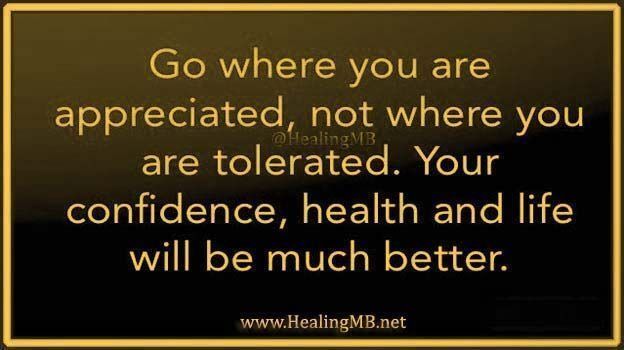
But how can you tell that you are appreciated? It’s not always that easy to tell…
We are extremely uncomfortable with being uncomfortable
Portsmouth in practice – or life
Years ago, I observed a young man with what I assumed was his son. So nice. This was in Victoria Road South. I said something to him, I don’t remember what. I was on my way to the seafront, or back.
It turned out that it wasn’t his son but his little brother. His parents ran an enterprise in Palmerston Road; I’d been there once. Keeping the business afloat was challenging at the time, he said. He was a student, in Birmingham, or in Manchester. Economics, I think.
At some point, he asked me what I did. I said that I hadn’t worked in years and left it at that. (That’s what it felt like anyway. 😁) That was maybe ten years ago. Just about everything I undertook in Portsmouth was thwarted systematically, no matter what, from the get-go. (Reality was more complicated.) As a result, I spent far too much of my time there as if I was chained to a basement wall. Well, almost. I found it very hard.
So now, if someone suggests that I should live my life as if I am chained to a basement wall, I dismiss them as a nincompoop who either is biased or hasn’t been around.
Why do so many bright and inspiring people die young?
(I need entrepreneurial inspiration. I’ll have to become my own.)
I will soon be meeting with someone who I used to know, though, and I’m really looking forward to it. It’s not exactly a run-off-the-mill, a-dime-a-dozen person and I like that. I like the person. We may be very different in many ways – probably, but I don’t even know for sure – but we also certainly like a few of the same inspiring and enjoyable things.
I’ll need to leave soon. I really have to.
You are the only expert on you. I’m the only expert on me. Don’t chain me to a basement wall.
Read some of my flash fiction.
Crazy Dutch weather and headaches
If you are in a lousy place right now, your life sucks and you don’t know how to make things better, watch this
But first of all, do an internet search on “Elizabeth Smart” who was an executive producer on this film, telling Kara Robinson’s story. After you’ve acquainted yourself with what these two teenage girls went through, separately, you’ll suddenly realize how much you still have to be grateful for.
When life sucks, it’s hard to see the little rays of sunshine. I know.
But realizing that things could have been so much worse can help.
This is this guy’s story: https://en.wikipedia.org/wiki/Richard_Evonit
When he was a child, his dad apparently drowned his dog in front of him and when he was only six years old, his dad tried to drown him.
Someone once said that it is easier to build strong children than to repair broken men.
In all the places in the world where we are waging wars or ruthlessly dehumanizing and exploiting people, where children get so see and experience things that they should never have to, we are creating tomorrow’s Richards.
Many children’s brains will be able to protect themselves and somehow develop still relatively normally, but not all children’s brains will when these children witness and experience too many atrocities as young children.
It is not a choice to turn into someone like Richard Evonit. It really isn’t.
Don’t let them
There will always be people who want to hold you back. Don’t let them. Don’t ever let them disempower you.
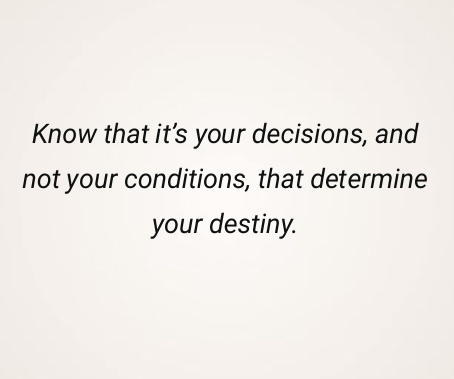

(Tony Robbins, Awaken the Giant Within)
In this book, Tony Robbins talks about breaking wood with your bare hand, karate-style, as he calls it. He says that instead of taking 18 to 24 months to learn how to do it, he took a different approach. Oh really, Tony?
” One of the things that most powerfully changed my life was something I first learned years ago. In Canada I found a man who was breaking wood karate-style. Instead of spending a year and a half to two years to learn to do it, with no martial arts training, I simply found out what he was focusing on, how he was focusing (the brightness and so on) in his head, what his beliefs were, and what his physical strategy was— how he specifically used his body to break the wood.I practiced over and over his physical movements identically with tremendous emotional intensity, sending my brain deep sensations of certainty. And all the while, my instructor coached me on my movements. Barn! I broke through one piece of wood, then two pieces, then three pieces, then four. What had I done to accomplish this? 1)1 raised my standards and made breaking the wood a must, something I previously would have accepted as a limitation; 2) I changed my limiting belief about my ability to do this by changing my emotional state into one of certainty, and 3) I modeled an effective strategy for producing the result.“
There’s probably no better indication of having healed after rape than forgetting when it happened. When I was just into my earth science journey, I got raped by an intruder. A few years ago, I realized that I no longer know when exactly that was. It had been etched in my mind for a long time but life never stands still and a lot of other things have happened since.
After the rape, I tackled the matter heads on. I for example signed up for self-defense classes for women. I was the first person asked in the group to tell the others why I had enrolled in the class. That broke the ice, if there ever was any.
Well, Tony, break wood is simply something we all did one evening. We all just did it. It took one woman – I remember her face but not her name – three to four tries, but she did it too. Whether you believe you can or believe you can’t, you’re right, regardless of what it is that you believe. That’s the secret of breaking wood.
Sure, the grain and the type of wood matter too. It was plain pinewood for us, and the grain was likely favorable, but still, we all just did it.
If you have a thorn in your foot, you can either leave it in to remind you of the long road you have walked or you can pull it out (and take care of your foot).
A negative belief can also be like a thorn in your foot.
Radical candor. Sounds like a snack. A chocolate bar? Try it.

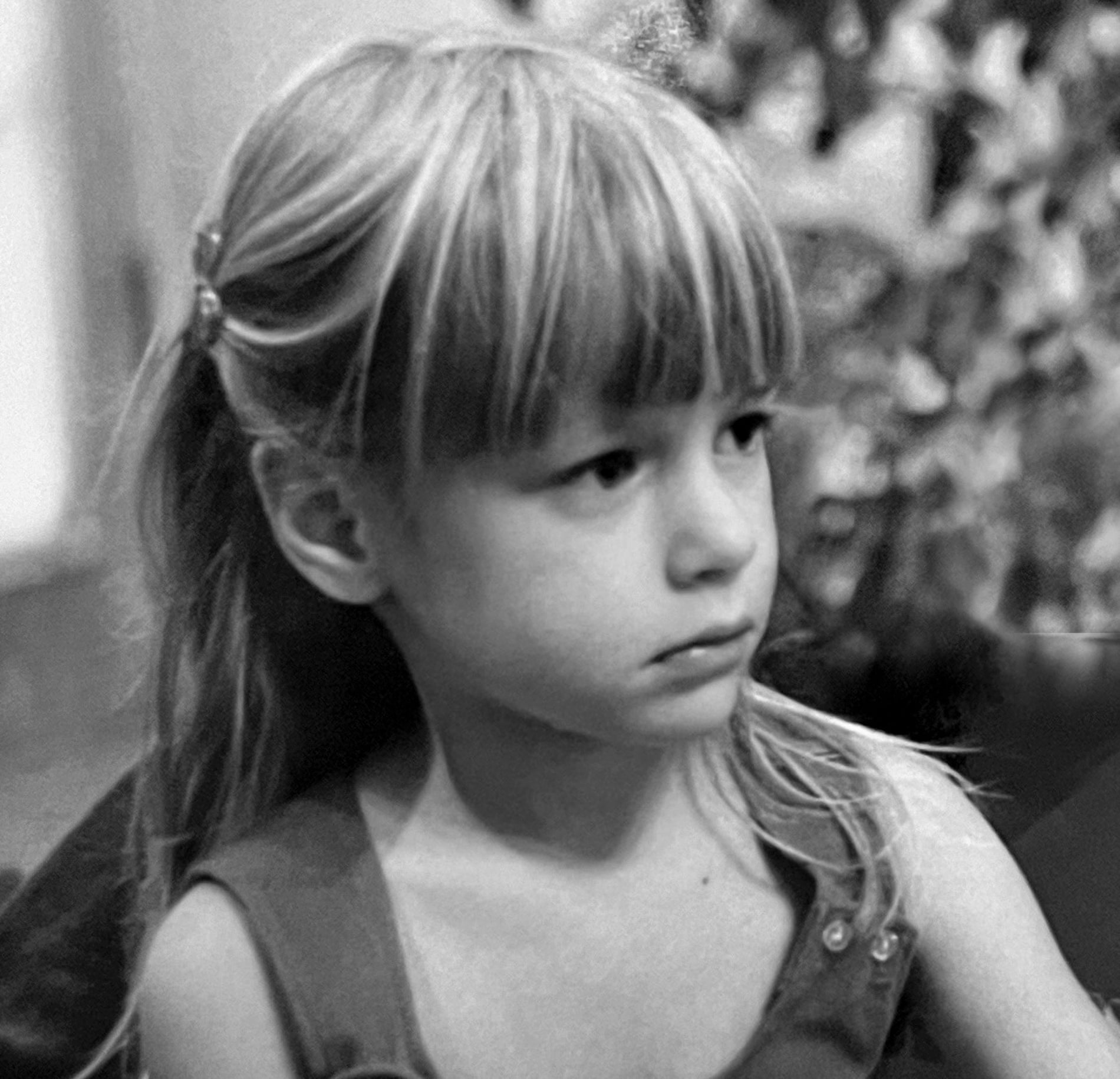
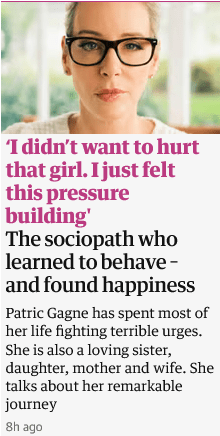
This person does not exist
That’s what other people have been telling me for years, that people such as this person do not exist, that they are just made up by feeble-minded women with an “anxiety” problem.
But this, too, is part of natural neurodiversity. Her brain structure is different and SHE did not cause this.
Contemplating such realities is also part of bioethics.
https://www.theguardian.com/lifeandstyle/2024/apr/08/patric-gagne-sociopath-fighting-urges
Elizabeth Smart, about the impact of fear
Portsmouth made the Guardian again
This time it’s not about Portsmouth having the highest number of forced prepaid meters or rejected blue badge applications for non-visible disabilities or impairments such as autism or certain neurological disorders.
It looks like the Guardian went to the high street in fairly fancy Cosham – which is on the mainland, not on Portsea Island – and asked random shoppers how they would vote. They also went to poorer Paulsgrove – also on the mainland – and spoke with candidates who aren’t Penny Mordaunt.
I’ve heard her speak at the Guildhall. I understand why people vote for her.
Did the Guardian actually manage to miss most of the constituency Portsmouth North? It starts at around New Road. That’s in the middle of Portsea Island.
Also, they should have taken a photo from the ridge (the cliffs over Cosham). That way you can get not only the Spinnaker Tower but almost all of Portsmouth in the shot, complete with its geographic location. You need good weather for it, but the weather on the south coast is almost always good.
Instead, they used a stock photo (Alamy) that’s was taken as far south as you can get in Portsmouth South.
If Portsmouth wasn’t so extremely insular, it would be a lovely place. Penny Mordaunt gets that insularity, too. Not only did she come across as seasoned* from the start, and highly capable, people there see her as “one of us”. That’s why they vote Conservative.
Her swimsuit stunt and the challenge she undertook of saying the word “cock” (dick, pecker, bell) as often as she could in a speech in Parliament, that appeals to many of the locals. It cemented her popularity.
She is local. She was in the Navy and her mother died of breast cancer when Penny was a teenager. She’s dyslexic, if I’m not mistaken.
She’s very appealing and she has matured enough for people to be able to see her as a future PM now. They would love that.
(Someone from self-declared underdog city Portsmouth as PM? Hell yes.)
(Even Boris Johnson has mentioned Portsmouth and described it as having nothing but a big drugs problem and too many Labour MPs. If anything that will have made people more determined to vote for Penny Mordaunt, won’t it?)
Go one town to the west (Fareham), and you run into Suella Braverman. Can you hear me sigh?
(*She worked on the elder Bush team in the States.)
Continue readingPeople in New York got rattled, I hear (4.8 earthquake)
Believe it or not, I’m a fully qualified geologist and I was intrigued by this, so I asked the Google Meister whether it could dig up something on USGS and faults and New York. That’s how I stumbled upon this map of historic earthquakes in this 2020 article.
This does not show the fault that runs through NYC, obviously, but it’s likely undoubtedly part of the same system.

Today’s Scientific American has the skinny, so to speak (but not really, at 18:09 BST, but they are promising to keep updating the article): https://www.scientificamerican.com/article/earthquake-shakes-new-jersey-new-york-state-pennsylvania-and-more/
USGS info: https://earthquake.usgs.gov/earthquakes/eventpage/at00sbh3yv/region-info
General info at Cornell, based in Ithaca, visible in the above map as well as the one below: https://deepgeothermalheat.engineering.cornell.edu/cubo-science-intro/earthquakes-in-new-york-state/
To sum it up, it’s not as rare as most people assume, but most earthquakes in the area are a lot less noticeable.

A book for lawyers, activists and homeless teenagers
“Bringing Down Goliath: How Good Law Can Topple the Powerful”

The paperback was released on 4 April 2024. You can order it from your local independent bookshop at Bookshop.org:
Bringing Down Goliath is Jo Maugham’s first book. Initially released in 2023, it tells Jo’s story – from homelessness at 16 to first Queen’s Counsel, next King’s Counsel and then campaigning lawyer.
(I still feel that QC has a much better ring to it than KC.)
Jo’s book also provides you with the inside story of the origins and successes as well as future of the Good Law Project.
With the rule of law in England under threat like never before, “Bringing Down Goliath” struck a chord, became a Sunday Times bestseller as well as a 2023 highlight in the Guardian.
Jo Maugham has also argued before the Dutch courts. I remember him taking on a case within the Brexit context, concerning British citizens in the Netherlands.
Peacefulness and clarity
For the past four months, there’s been something really disruptive in my life that wasn’t initiated by me but that admittedly, I should have dealt with in a better way.
Yesterday, I decided not to pay any further attention to the party that’s been causing this distraction. Because the matter was draining my energy and gobbling up my attention, while the party was making quite clear that they aren’t interested in establishing a dialogue.
They initially wouldn’t take no for an answer. I held my ground.
I woke up to a markedly increased level of peacefulness and clarity. Serenity.
I did the right thing.
I can breathe again.
People who are immensely intent on “helping” you, certainly if you did not ask for their help in the first place, often merely want to hamper you and hold you back, even if they aren’t even aware of it.
The funny coincidence is that I had actually intended to ask these people for assistance in January. I’ve changed my mind about that. I now see the chaos that they voluntarily started adding to my life as of some time last year as a sign that it is better not to engage with them at all.
They showed their hand.