Watch this DW documentary about emotional manipulation, in commerce, politics, and other areas
This, the scientific experiment with the puzzles shown in this video, this is how prolonged narcissistic abuse works, how stalking or domestic violence often affects victims, and it’s also how the English class system works.
https://youtu.be/u4SIlJE0Qs0?si=OdxG5St0yPNHgPa5
To be precise, the rigged, impossible-to-solve puzzles result in a form of gaslighting. They deny people their own view of reality (such as “I am reasonably smart so I can easily solve such a puzzle”) and thus start distorting it.
They also distort reality for anyone observing what goes on and who does not know that three of the puzzles are rigged. They trick them into believing that these three candidates are so “stupid” that they can’t even solve a simple puzzle that was designed for 10-year-olds.
(31 August 2023, 23:44: Yet now the new URL for the video makes a bird video show up in this post when I look at it on my phone instead of on my tablet? Come to think of it, I also had technical troubles while posting the original post.)
(Below is what it looks like while I am editing the post on my tablet, tethered to my phone.)

This is how some psychopaths and narcissists operate. Because (other) people tend to associate certain behaviors with properties like kindness, they tend to assume that these latter properties are present when they are in fact absent as soon as they see the behaviors. They let themselves be fooled because they prefer pleasant emotions or ideas over threatening ones.
In this example, imagine wat might happen if the man conducting the experiment does not reveal that half of the puzzles are rigged. Imagine what might happen if someone goes through his entire life like this. People will fall for the superficial charm and perceived authority of the person who is conducting the test and they’ll dismiss the three “victims” as losers.
(Afterthought: I think that psychopathic and autistic people are equally bewildered by how the rest of us function and can feel equally lonely and misunderstood, rejected even. They both find emotions challenging but in opposite ways. So they study others to figure out how to make the best of life and fit in as well as they can. I think that autistic people often have a problem associating certain words, conclusions and behaviors with specific contexts; they make different associations or none at all. Context is challenging for them.)
(This reminds me of a woman who once told me that when she was a child, she thought that only she was having thoughts. Then one day, she was observing a boy and realized that he was thinking too, to her surprise. And that surprised me.)
This is what my phone shows the next day:

People with disabilities are more likely to experience human trafficking. Why?
The following appeared in my inbox today.
People with disabilities are more likely to experience human trafficking than their peers. Why is their risk greater and why are they not being adequately protected?
This new mini podcast series explores research into the intersection between trafficking and people with disabilities. We learn that people with disabilities face greater difficulty finding living wage employment [1] and increased healthcare costs,[2] and how this is associated with increased trafficking vulnerability.
“Applying disability critical race studies in the trafficking field is important as it allows us to get this intersection between trafficking, disability and race that is so prevalent, where survivors of color, especially disabled survivors of color, are being ignored or marginalized by the law-and-order framework trafficking.” Rachel Rein, Attorney at law
Because people with disabilities are more exposed to vulnerabilities such as poverty,[3] it drives risk-taking that traffickers are ready to exploit. In addition, traffickers deliberately target those they think they can isolate and control.[4]
Law enforcement, emergency responders and the public, are often not aware of these increased risks that results in nothing being done, even when exploitation is clear.[5]
To unpack this, today we are launching a 3-part podcast series to explore this topic together with our new partner Human Trafficking Search. In each episode, we talk with a different researcher who shares their perspective and learning on the intersection of disability and modern slavery
(Listen here: http://campaigns.freedomunited.org/q/RZmtP4J7lXiz0XwWRmDkKm_CP4I23_OfI30ZcLOJYW5nZWxpbmFzb3VyZW5AZ21haWwuY29tw4gXDggFb-zebVpHirLnVPgfFo-Jg).
Episode 1: Andrea Nichols is Professor of Sociology at Forest Park College and a Lecturer in Washington University in St. Louis’s Women, Gender and Sexuality Studies Department
Episode 2: Dr. Chris Carey is Associate Professor in the Department of Criminology and Criminal Justice at Portland State University
Episode 3: Rachel Rein is an attorney and author of multiple law review articles as well as a student note on applying disability critical race studies to human trafficking in the U.S.
Brendan Hyatt, our podcast host, has written an accompanying article published on Human Trafficking Search titled “Disability and Modern Slavery: lack of attention can be as harmful as deliberate malice”. An abridged version is published on Freedom United: https://www.freedomunited.org/disability-and-modern-slavery/
[1] https://www.tandfonline.com/doi/abs/10.1080/23322705.2021.2016268
[4] https://www.ndrn.org/resource/human-trafficking-and-the-disability-community/
[5] https://www.nytimes.com/interactive/2014/03/09/us/the-boys-in-the-bunkhouse.html
A girrrl’s gotta eat
And this following one I have added for dessert. Particularly the first bit is hilarious as well as amazing.
Chronic stress is bad for your health
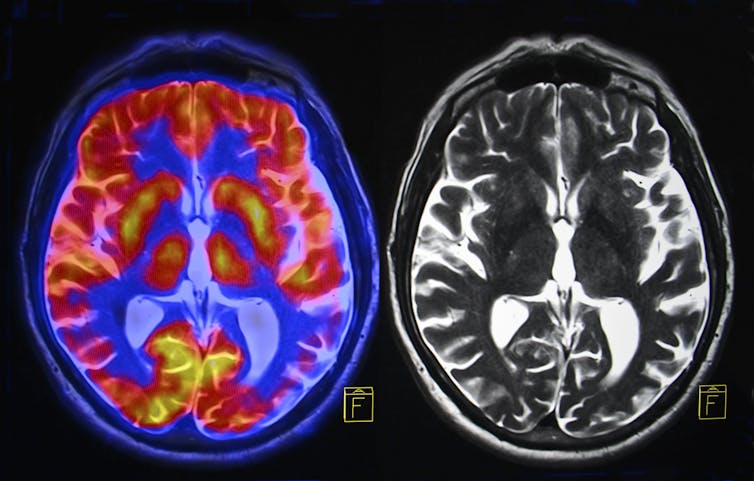
How chronic stress changes the brain – and what you can do to reverse the damage
Semnic
Barbara Jacquelyn Sahakian, University of Cambridge; Christelle Langley, University of Cambridge, and Muzaffer Kaser, University of Cambridge
A bit of stress is a normal part of our daily lives, which can even be good for us. Overcoming stressful events can make us more resilient. But when the stress is severe or chronic – for example caused by the breakdown of a marriage or partnership, death in the family or bullying – it needs to be dealt with immediately.
That’s because repeated stress can have a huge impact on our brain, putting us at risk of a number of physical and psychological problems.
Repeated stress is a major trigger for persistent inflammation in the body. Chronic inflammation can lead to a range of health problems, including diabetes and heart disease. The brain is normally protected from circulating molecules by a blood-brain barrier. But under repeated stress, this barrier becomes leaky and circulating inflammatory proteins can get into the brain.
The brain’s hippocampus is a critical brain region for learning and memory, and is particularly vulnerable to such insults. Studies in humans have shown that inflammation can adversely affect brain systems linked to motivation and mental agility.
There is also evidence of chronic stress effects on hormones in the brain, including cortisol and corticotropin releasing factor (CRF). High, prolonged levels of cortisol have been associated with mood disorders as well as shrinkage of the hippocampus. It can also cause many physical problems, including irregular menstrual cycles.
Mood, cognition and behaviour
It is well established that chronic stress can lead to depression, which is a leading cause of disability worldwide. It is also a recurrent condition – people who have experienced depression are at risk for future bouts of depression, particularly under stress.
There are many reasons for this, and they can be linked to changes in the brain. The reduced hippocampus that a persistent exposure to stress hormones and ongoing inflammation can cause is more commonly seen in depressed patients than in healthy people.
Chronic stress ultimately also changes the chemicals in the brain which modulate cognition and mood, including serotonin. Serotonin is important for mood regulation and wellbeing. In fact, selective serotonin reuptake inhibitors (SSRIs) are used to restore the functional activity of serotonin in the brain in people with depression.
Sleep and circadian rhythm disruption is a common feature in many psychiatric disorders, including depression and anxiety. Stress hormones, such as cortisol, play a key modulatory role in sleep. Elevated cortisol levels can therefore interfere with our sleep. The restoration of sleep patterns and circadian rhythms may therefore provide a treatment approach for these conditions.
Depression can have huge consequences. Our own work has demonstrated that depression impairs cognition in both non-emotional domains, such as planning and problem-solving, and emotional and social areas, such as creating attentional bias to negative information.

Andrey_Popov
In addition to depression and anxiety, chronic stress and its impact at work can lead to burnout symptoms, which are also linked to increased frequency of cognitive failures in daily life. As individuals are required to take on increased workload at work or school, it may lead to reduced feelings of achievement and increased susceptibility to anxiety, creating a vicious cycle.
Stress can also interfere with our balance between rational thinking and emotions. For example, the stressful news about the global spread of the novel Coronavirus has caused people to hoard hand sanitisers, tissues and toilet paper. Shops are becoming empty of these supplies, despite reassurance by the government that there is plenty of stock available.
This is because stress may force the brain to switch to a “habit system”. Under stress, brain areas such as the putamen, a round structure at the base of the forebrain, show greater activation. Such activation has been associated with hoarding behaviour. In addition, in stressful situations, the ventromedial prefrontal cortex, which plays a role in emotional cognition – such as evaluation of social affiliations and learning about fear – may enhance irrational fears. Eventually, these fears essentially override the brain’s usual ability for cold, rational decision-making.
Overcoming stress
So what should you do if you are suffering from chronic stress? Luckily there are ways to tackle it. The UK Government Foresight Project on Mental Capital and Wellbeing has recommended evidenced-based ways to mental wellbeing.
We know, for example, that exercise has established benefits against chronic stress. Exercise tackles inflammation by leading to an anti-inflammatory response. In addition, exercise increases neurogenesis – the production of new brain cells – in important areas, such as the hippocampus. It also improves your mood, your cognition and your physical health.
Another key way to beat stress involves connecting with people around you, such as family, friends and neighbours. When you are under stress, relaxing and interacting with friends and family will distract you and help reduce the feelings of stress.
Learning may be a less obvious method. Education leads to a cognitive reserve – a stockpile of thinking abilities – which provides some protection when we have negative life events. In fact, we know that people are less likely to suffer from depression and problems in cognition if they have better cognitive reserve.
Other methods include mindfulness, allowing us to take notice and be curious of the world around us and spend time in the moment. Giving is another – volunteering or donating to a charity activates the reward system in your brain and promotes positive feelings about life.
Importantly, when you experience chronic stress, do not wait and let things get the better of you. Early detection and early effective treatment is the key to a good outcome and good wellbeing. Remember to act in a holistic manner to improve your mood, your thinking and your physical health.
And you don’t have to wait until you are overwhelmed with stress. Ultimately, it is important that we learn from an early age to keep our brain fit throughout our whole life course.
Barbara Jacquelyn Sahakian, Professor of Clinical Neuropsychology, University of Cambridge; Christelle Langley, Postdoctoral Research Associate, Cognitive Neuroscience, University of Cambridge, and Muzaffer Kaser, Clinical Lecturer, University of Cambridge
This article is republished from The Conversation under a Creative Commons license. Read the original article.
Haunting
This can be about losing your sister or mother to cancer or Alzheimer’s, your live-in lover silently leaving in the middle of the night, your best friend moving to Siberia, or even your health having taken a bad turn.
(video has disappeared)
What in the world are you doing, Rishi Sunak, with Mohammed bin Salman? (Saudi Arabia)
🚨 Stop the visit 🚨 ️
In my inbox, from Reprieve.
This Autumn, the Crown Prince of Saudi Arabia Mohammed bin Salman will be back in the UK rubbing shoulders with this Government despite his horrendous human rights record. It’s important that we stop this visit – there are grave consequences when we give the green light to dictators who commit horrendous human rights abuses.
Just six months after Mohammed bin Salman last visited to the United Kingdom, in 2018, the journalist Jamal Khashoggi was murdered in the Saudi Arabian consulate in Istanbul. US intelligence concluded in 2021 that the Crown Prince approved the murder. [1]
We’re fearful for our client Salman Alodah, a Saudi Arabian scholar who like Khashoggi, doesn’t echo the Saudi Arabian government’s position. He has been detained in solitary confinement for six years and faces the risk of a death sentence for expressing his opinions.
Mohammed bin Salman’s leadership is throwing billions of pounds into fixing its reputation and trying to appear progressive but we know that is far from the reality. This is why this visit cannot go ahead – lives are at risk.
With the support of powerful governments allowing him on the world stage, the Crown Prince will believe he can do anything without consequence. Say NO to the death penalty. Say NO to the British government’s ties to the death penalty. Say NO to Mohammed bin Salman’s visit to the UK. There is no place for dictators like him in our country.
Add your name to the petition today if you agree >>> https://secure.reprieve.org/page/133847/petition/1?locale=en-GB
[1] “Assessing the Saudi Government’s role in the killing of Jamal Khashoggi”, Office of the Director of National Intelligence (February 11, 2021). https://angelinasouren.com/wp-content/uploads/2023/08/assessment-saudi-gov-role-in-jk-death-20210226v2.pdf
This
Heal the world. Make it a better place. For you and for me and the entire human race.

Algorithm use in healthcare
In my inbox:
Continue readingRest in peace, Tineke Beishuizen
I spoke with you over the phone, in 1980, or maybe it was 1981. You encouraged me to write. You said I wrote well.
Lucy Letby’s motivation
Isn’t it obvious?
She was delivered by a difficult birth. She’s always been motivated to become a nurse by the desire to help babies who arrived on the world after a difficult birth, her friends have said.
That struck me as strange.
So I did a web search.
If you do a quick internet search, without actually clicking on any links, you will already notice that difficult births can affect the babies not only through effects on physical health including brain development but also on their psychological well-being, sometimes because the mother too is profoundly impacted by the difficult delivery.
(Keep in mind that affected brain development can also have effects on the development of the personality.)
Lucy Letby is an only child so she may have been under a tremendous amount of pressure to be the perfect child, always smiling, always saying hello to everyone, appearing to be very kind, working hard and being called geeky and awkward but also dancing salsa. Trying hard to fit in and look perfect?
She seemed to be a blond woman in all the photos, but her hair’s actually medium brown. A police officer called her “beige”.
She’s apparently had thyroid problems since age 11 and the fact that she was able to graduate at all apparently was such a major and to some degree unexpected accomplishment for her that her parents supposedly placed an advert in the local newspaper to congratulate her.
- She wanted to stop babies who had difficult births to have to go through what she went through.
(NO, I am NOT trying to excuse her.) (Yes, the medical crises she caused may also have given her an opportunity to shine but that does not strike me as her main motivation.)
It also explains why she did things such as talk about the happy time of a baby’s bath after the baby had passed away and the parents were overwhelmed with grief.
Yes, her notes show that she was highly conflicted over what she did. The brakes in her brain – the brakes that modulate behavior – weren’t working properly.
It’s oddly connected to the bioethics idea of what constitutes a life not worth living, in two ways: https://angelinasouren.com/lives-not-worth-living/
Continue reading
Cormorant creativity
Authoritarian animal-loving England
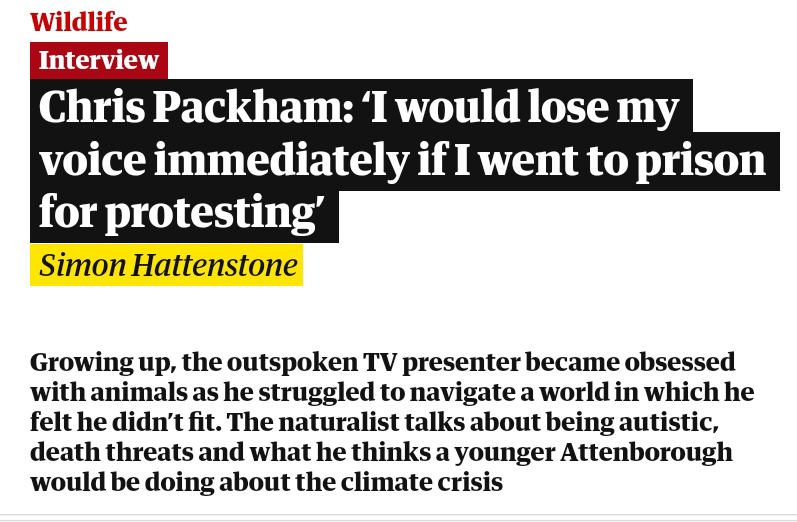
Like badgers? Foxes? Don’t like seeing them killed just because? If you stand up for them, you may be branded a domestic terrorist. Yes, in today’s England, protesting means that you may go to prison.
You may also receive threats.
“We could organise a car crash, we could organise poisoning you, we could organise all of these sorts of things.”
Dutch traffic etiquette
Besides that there are many more electric vehicles here, hence considerably less noise, than where I spent the previous fifteen years, I am also noticing other differences.
What does it mean when you’re walking on the pavement and a car that approaches and passes on the other side honks and the driver holds up his index finger?
Is there any standard zebra etiquette? If so, does it involve that thank-you gesture that I’ve never mastered and seems to resemble the tipping of an imaginary hat or is that something that only men do?
The many faces of dementia

https://www.statnews.com/2023/08/10/dementia-ftd-rare-visual-creativity-painting/
Frontotemporal dementia
“If neurodegeneration begins on the right side of the frontal or temporal lobes, patients tend to struggle with compulsive or inappropriate behaviors and emotional regulation. These symptoms include loss of empathy for others, disregard toward social and legal norms, loss of drive, overeating, and repetitive behaviors like tapping a pencil incessantly.
But if it starts on the left side, patients have difficulty with understanding and communicating language. They lose the meaning of words, leading them to speak nonsensical gibberish, or lose the ability to form words, making it difficult to converse.
As the disease progresses, behavioral and linguistic symptoms eventually overlap.”
The many sides of the brain.
Join in on some Verdi, and some life lessons
Now have this for dessert:
And might this be suitable as seconds?
I added the latter without having read the book or watched the video. After having watched the film, I can say that it’s very suitable.
I’ll add the following too.
This Dutch eatery owner and her husband were attacked; her husband was stabbed and died. Now she can no longer support herself. Thankfully, people around her started a crowdfunding campaign for her to keep her afloat.

https://nos.nl/l/2486394 (Dutch news article)

You see the connections between the above, I trust.
The Maastricht Principles
In addition to the Groningen Protocol, we also have the Maastricht Principles. Both are named after Dutch cities, one is in the north-east and the other in the south-east.
Critically, the Maastricht Principles state that: “Human development must be decoupled from the destruction of Nature and the overconsumption of natural resources to achieve the realization of the human rights of present and future generations and the integrity of nature and natural systems.”
I have copied and pasted the above from the following essay:

You can read it here: https://theecologist.org/2023/jul/31/future-what-future
For Americans who believe that the British NHS healthcare system is ideal
For some procedures, Brits depending on the NHS wait years. Some therefore go abroad. Others go private within their own country.
Medications usually aren’t free either if you rely on the NHS, is my understanding.
(NHS = national health service)
In the Netherlands, you pay a monthly public insurance premium of around 130 euro or more. That’s not all. There’s a threshold amount which the public insurance doesn’t cover and so you have to cough up it yourself. My understanding is that the latter doesn’t apply to everything medical; some things apparently don’t have the threshold and are fully covered. Also, if you’re on low income, you can apply for tax credits in support of your monthly premium payments.
In the Netherlands too, as in the UK, there are backlogs. They appear to be Covid-related. It can also be hard to find a primary care physician whose practice still accepts new patients, just like in the UK.
No country currently seems to have an ideal healthcare system, perhaps with the exception of Cuba. I’ve read that the French healthcare system is pretty good, too, but I have no experience with it.
Worrisome
I too helped out as a child. I helped out my dad in his business, I picked fruits and vegetables at home, and I picked fruits at my grandmother’s (pocket money). I also dusted and cleaned at home in the weekend and did dishes and so did my sisters (and this was when my mother was still alive).
Child labor??? Trafficking??? Modern slavery?
In this case: neocolonialism. Why not focus on real modern slavery, in the US and in the UK and so on?
Shameful
Flexible
Parliament’s will


Health equity (equality) in practice: new study in JAMA
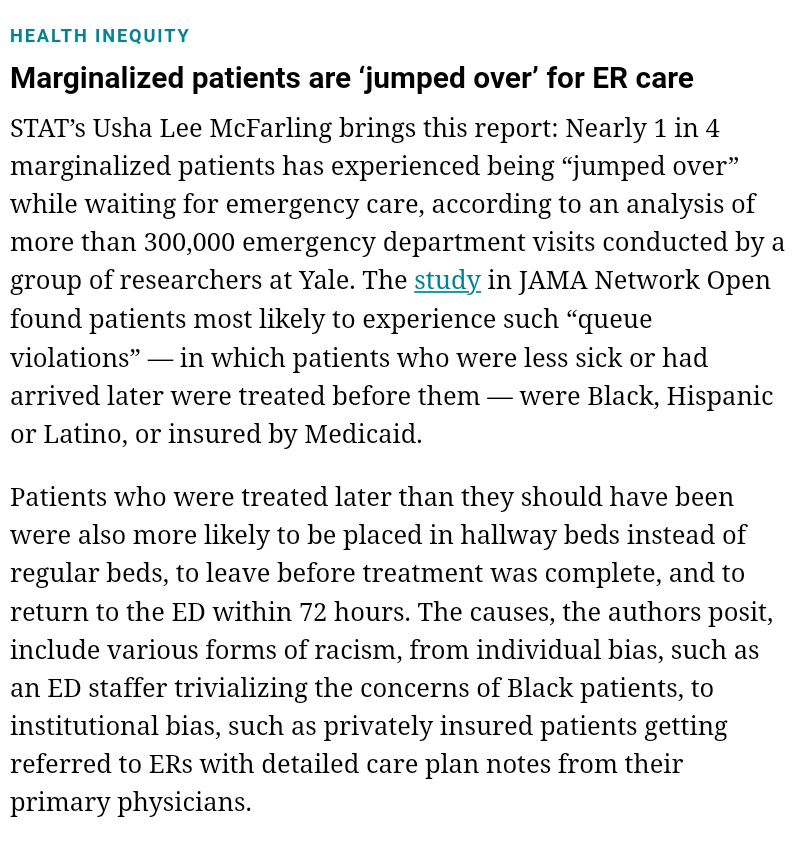
https://jamanetwork.com/journals/jamanetworkopen/fullarticle/2807707
Another example of how health inequity comes about is when older adults are ridiculed and seen as fussy attention-seekers if they want to be in good health. Bad health is not a must for older adults.
US Supreme Court vs. Ethics
A comparison with other branches of the US government:
https://campaignlegal.org/update/supreme-court-must-be-held-higher-ethics-standards
Over 45? Disabled? Dismissed as a nincompoop for other reasons, such as your skin tone or genitals?
Here is what I suggest you say to any medical professional (or other person) who treats you as if you are a 3-year old, just because you are disabled or over 45, black or female or indigenous or lower class.
- “You are committing an epistemic injustice.”
- “You are depriving me of my epistemic agency.”
[or “taking away” or “eroding”]
Feel free to add the word “dear”, “son”, “child”, “sweetie”, “Madam” or anything else that you think fits well, but does not distract too much from the main message. (You want the person to feel puzzled or surprised, off-balance but not personally insulted.)
They won’t expect that and it will likely shut them up for a moment. It may give you a chance to speak and be heard instead of getting tossed out with the trash again.
You have unique knowledge and that knowledge is as valuable as the doctor’s or the nurse’s.
The word “epistemic” is often used in the field of bioethics.
Bioethics is a combination of law, science, medicine, technology and philosophy. (Mentioning philosophy is overkill to some degree as philosophy is part of the foundation of law as well, but few people know that and there is a lot of philosophy in bioethics.)

Let them garden!
Landlords, city councils, please, no more of this:

Don’t dump your rubbish on tenants. Don’t force tenants to enjoy their summer weekend barbecue surrounded by your rubbish. They can’t afford to have it removed for you.
And no more accidental pulling up of flowers sowed by tenants.
Let them garden!

“You’re being paranoid.”
I just had an e-mail from Adam at the UK charity Sense, for disabled people, about the parents of autistic children.
Autistic people experience the world very differently from mainstream people. They interact with it very differently. The sensory information their brains receive and how their brains deal with that input, it is all very different from what happens in the brains of mainstream people.
Autistic people see, hear and feel differently.
In my opinion, it is wrong to call all autistic adults and children “disabled” unless you stress that the “disablement” mostly refers to the constraints that society imposes on the lives of autistic children and adults.
Society expects all of us to think and behave in a certain way and make largely the same choices. That means that society is flawed because this is an irrational expectation. Ask any digital nomad or vanlifer how traditional “get a job” (“for a lifetime so you’ll have a good pension, too”) people respond to their decision to live life differently and you’ll get a sense of what I mean.
When parents of autistic children state that their child is different, believe them and accept that as a fact. Dont call them paranoid. Don’t tell them that they are just bad at parenting.
But there’s something else that we have to remember.
Autistic people are all different, too. No two autistic people are the same.
Until very recently, I knew nothing about autism and was convinced I had never known anyone who’s autistic. After I started reading up about autism, I discovered that I had in fact since 1982 known a woman who’s autistic. She’s meanwhile confirmed that and she too had only learned recently that she is autistic. Then, to my astonishment, I discovered that I know another person who’s autistic, someone who I first met in 1984. Both people are university-educated and have what is called “high-functioning autism”.
The first one deals with auditory overload from people talking by filtering out that external input, shutting off the gateway to the input internally some way. (This causes frustration for mainstream people because nothing they say gets through. They simply cannot get through to her.) The second one responds with irritation and deals with it by walking away and going into a separate room, shutting the door to external auditory input quite literally. (This too can cause frustration, but also and probably mostly in the autistic person.)
Until you spend enough time with autistic people in private, you rarely get to see that – and in which ways – they are different, because they have learned to “mask” from a young age.
Almost like with DID (dissociative identity disorder, which is something very different), the person who goes out into the world to interact with it is not necessarily the same “person” you’d get to see if you were to observe an autistic person relaxing at home. Masking = trying to look like everyone else and hiding that you are different. (Why? To avoid friction.)
If you want to have some idea of how masking works, just picture yourself interacting with the CEO of the company at which you work versus interacting with your two-year-old or your husband or wife at home or at the supermarket when you’re out shopping. Your behavior toward the CEO will be quite different from how you deal with your child, your husband or your wife.
Don’t tell the parent of an autistic child that he or she is a bad parent or just plain paranoid. That would be you making an ass of yourself.
Read Karla’s story: https://www.sense.org.uk/blog/four-things-you-shouldnt-say-to-a-parent-of-a-disabled-child/

If you want to take your understanding one step further, think about whether wanting to eradicate autism from the world could be like wanting to eradicate giraffes because you like cattle and are used to dealing with cattle.
We are all Andrea
I just had this e-mail from Calum at Crisis. I was replying to him, and then I remembered that I was asked to share the story. Calum already knows what’s what. It’s other people who need to hear this.
This is what I had typed up for Calum:
Continue readingSister, stand up for what you believe
Sister stand up
For what you believe
I hear anarchy
in the way you speak
Teach her not to give up
Only how to seek
Ain’t no anarchy
in the way they cheat
Sister stand up
for what you believe
Fight the power
Or die at their feet
I know they don’t see what you see
But don’t fight the people
For being sheep
God are the men who make you pay
God are the men who force your way
Play God is the image that he made
To make you obey
Play God Play God
He plays god
He plays god
Brother stand up
Admit to what you do
This complex ain’t helping me or you
Changing the world starts with you
Don’t tell me you don’t know what you do
Brother listen up
She’s tryna tell you
This system’s failed us both it’s true
Time to wise up
You know it’s overdue
Stuck in limbo can’t follow through
God are the men who make you pay
God are the men who force your way
Play God is the image that he made
To make you obey
Play God Play God
He plays god
He plays god
Advancing health equity
A report by the Hastings Center.

