Missiles for Tel Aviv again

This is in essence the same kind of nonsense as is going on here locally, but I doubt that these folks realize it.

Sigh.

Scud missiles. Chemical warheads. My friend who happened to be on a sabbatical working at the university there arriving at Schiphol Airport, the gas mask with her.

When are the Putins and Trumps (and the huppelkutjes met slaapmutsjes op) going to pack it in and pack up? When will they stop their stupid wars that affect real people but barely touch them in their ivory tower castles? When can I stop being angry because I have to, because how can I not be angry?

I’d like to be able to stop thinking of some men and women as ‘huppelkutjes”. Okay, I admit it’s the ring of the word and it’s also quite funny. (Youp van ‘t Hek came up with it?) They’re more like piranhas and snappers and snooks and groupers and catfish. Sharp-teethed civil servants with little real life experience but big agendas.

Did I just unequivocally prove 4chan involvement in the pestering of me?

I just discovered that I was accessing Amazon via 130 “apps”. Yes, 130.

I guess I can explain up to roughly 30 logins. One login each for .com, nl, .de, .co.uk, one for my author profile, one for my KDP account, one for my associates account and maybe one or two more countries such as Japan and France and for a browser on one phone (nope) and one browser on a tablet (yes) and one browser on a computer, but 130 is more than four times that. Amazon logins have always been messy, however. I used to hate that I needed a different login each time and they’ve streamlined it.

But there definitely has been a lot of messing with my Amazon account in recent years and there currently seems to have been some messing in my KDP account again. (That was intended to draw my attention to the fact that one of my book blurbs was either out of date or had been changed by them, probably the former, but I can’t tell for sure.)

I think I’ve just unequivocally proven 4chan involvement in the pestering of me.

Why I sometimes attend meetings that some people may frown about

Agrochemical manufacturers and related companies are focused on maintaining and increasing their grip, according to the first speaker in this video, from Humboldt University. I can accept that. The use of simply more technology is often blindly touted as the roadmap toward greater sustainability. I can accept that too. Yes, that would be tunnel vision.

That said… Below is my running commentary while I was watching this video (so I don’t always know at the time of typing where the speaker is headed, but as you can see below, Angelika Hilbeck’s approach really started to concern me at some point).

Interestingly, I registered for this event, but I couldn’t get access when it took place. I kept receiving emails asking me to provide the organizer with more information, but I had already provided that. This meeting was announced on EventBrite, after all; it was supposed to be open to the public. I attend a lot of meetings, often because I genuinely really want to attend them, but sometimes out of mere curiosity, to see what new knowledge I might acquire from it. Learning that something is not of sufficient interest to me is also valuable knowledge.

20:23 Shouldn’t these lock-ins become regulated – and in part prohibited – as was introduced for for example Windows computers in the past? Why aren’t they?
30:00 Hear hear. More of the same is not the answer. Digital technology has passed the point up to which it helped us speed things up; after that, it started to slow us down simply because of everything that became possible and then humans started to cater to it instead of the other way around.
31:30 There is greater awareness of these complications in particularly the bioethics world and also among others who look at applying technologies like CRISPR on humans.
36:00 You seem to state on the one hand that we don’t know how genome-editing works out in real life, yet then you proceed to say that CRISPR has been around for 10 years and that it is problematic that there is no CRISPR’d food at the supermarkets. That appears to be in contradiction. (You say that we shouldn’t rush this and then you seem to criticize the developments for going too slowly.) There have also been patent battles and decisions and the matter of whether countries allow CRISPR’d foods. (One solution for our exploitation of non-human animals, for example, is lab-grown meat, but some countries and states are banning that.)
In 2018, the USDA said that it was not going to regulate CRISPR’d foods. (Doesn’t that mean that we don’t know whether there are CRISPR’d foods in our supermarket basket, in the US?) https://www.wired.com/story/crisprd-food-coming-soon-to-a-supermarket-near-you/
The European Commission only tabled a proposal for a regulation for NGTs (plants, food etc) as recently as 5 July 2023. https://www.europarl.europa.eu/RegData/etudes/BRIE/2023/754549/EPRS_BRI(2023)754549_EN.pdf Just a quick web search gives me the impression that most of us are all still in the middle of figuring this out and thinking about how we should proceed.
37:50 Here you are quoting a stock analysis firm… https://seekingalpha.com/ I think it is important to keep in mind that in that world, all sorts of messages get spread that do not necessarily hold a lot of value. I would do my best to find at least one reputable source for the information first, if I found myself contemplating whether it might be a good idea to short – or buy – the stock. (Something similar goes for Bonitas Research at 39:33. Apparently, it’s a short-seller.)
I also find it a little odd that you seem to find it worrisome that Calyxt and Cibus decided to merge and concentrate on what they felt that they were better at. (If you are a hairdresser but then discover that you are not a great hairdresser and are much better at creating shampoos, it could be logical to focus on creating shampoos.) But… I am still listening and I still don’t quite know yet where this is going.
39:17 The phrase “Trait Machine” as used by Cibus is a red flag, in my view, but maybe this kind of language goes with the field of agriculture. At this point, I am taking a look at the transcript, scan a little bit ahead, and it appears that this may be an example of a bad company? (I’m not familiar with Cibus or Calyxt.) Such things happen. There are other examples. I didn’t follow the early developments with Elizabeth Holmes but when the fraud came to light, I was astonished that people had fallen for it, with the benefit of hindsight, admittedly. There also was the case of Nikola and its founder. These are just two examples. (But that is not quite what this was about…)
Okay, 39:33 is the point at which I have serious doubts as to whether I want to listen to the remainder. (I will, later.)

Hilbeck – of whom I had never heard before – had lost her credibility as an academic researcher by this point in the video, in my view, even though she used to be based at ETH Zürich (retired now). I can’t take her seriously any longer. I will listen to the remainder of these presentations, but only later. It is always good to see how seemingly reputable sources can lead to misinformation and even conspiracy theories. this can happen in all sorts of ways.

Payments are going awry again

Update 2 September: I may be having other unusual payment issues too all of a sudden. (Too early to tell.) I’m having trouble accessing PayPal, among other things.

UPDATE 29 August 2024: I just logged into my bank account to check, on my computer, and indeed, that scheduled VGZ payment had NOT gone out. (As you can read below, I decided to make a manual payment, but that usually takes VGZ ten days to two weeks to process, if not longer.)

Continue reading

The concept of the hive mind explains so much!

It’s related to otherization and also to the focusing illusion.

I think that this is something you often see in small, relatively isolated municipalities but also in certain other situations and organizations. Individuals are no longer supposed to form their own opinions but follow the group think.

Groups like 4chan suffer from it too. They may engage in massive negative action without even spending a thought on the immense damage that it may do. Collectively, they decide on an opinion and take action on the basis of what is often a completely unfounded mere opinion or myth.

If you speak with such people as an outsider, they can come across rather robot-like and it’s almost impossible to have a proper dialogue with them.

Being and a Trolling State of Electronic Hive Mind: (1) Organically Emergent/Evolved Troll Groups and (2) Created/ Instrumented Troll “Armies” (PDF)

In England, an example of municipal group think is the opinion that Travellers constitute a danger and must be chased away asap. Nobody ever questions this in such a setting.

“Wij stellen u in de gelegenheid om voor langere tijd nog meer van dit soort gelazer over u heen te krijgen. Vanuit het oogpunt van compassie, weet u. Wij hoeven dit helemaal niet te doen.”

Godsamme, Adirio en Tahir, het zal je maar gebeuren

Ik krijg de indruk dat de technologie steeds meer onze vijand aan het worden is.

Gisteren of eergisteren las ik dat premier Schoof zeer terecht bij allerlei vergaderingen de aanwezigheid van mobieltjes verbiedt en over hoe mensen als Adirio onterecht maar zeer publiekelijk zomaar tot vrij vuile misdadigers werden gebombardeerd. Vanochtend zag ik een kort interview met deze man (Adirio) en zijn advocaat.

https://nos.nl/video/2534339-adirio-kwam-onterecht-als-verdachte-op-tv-ik-durfde-niet-meer-over-straat

https://nos.nl/artikel/2534271-mannen-die-onterecht-als-verdachte-op-tv-kwamen-eisen-schadevergoeding

https://nos.nl/nieuwsuur/artikel/2534341-afluistergevoelige-smartphones-verbannen-uit-ministerraad-had-veel-eerder-gemoeten

https://nos.nl/nieuwsuur/artikel/2523301-gaten-in-beveiliging-videocalls-ministers-vergaderinformatie-in-te-zien

Deel van het probleem is dat de meeste mensen nog steeds denken alsof we allemaal vulpennen en typemachines gebruiken en zich dat totaal niet bewust zijn.

“Het is digitaal, dus klopt het.” “IT is onpartijdig en heeft geen emoties.” “De computer liegt niet.”

“Het werd op TV uitgezonden, dus het klopt.” “De computer laat zien dat hij geld heeft verduisterd, dus moet hij de gevangenis in.” “Het algoritme meldt dat zij fraudeert en daarom moeten we haar nu het leven enorm zuur gaan maken” “Ik krijg een heel raar mailtje of appje van Pietje of Marietje dus Pietje of Marietje is gewoon gek.” “Mijn leverancier mailt met me en stuurt me een factuur, dus maak ik het geld gewoon over naar boef XYZ want ze zeggen allemaal dat nepmails makkelijk te herkennen zijn en ik kan niets aan deze mails zien dat erop duidt dat ze nep zijn of dat iemand de inhoud ervan heeft gewijzigd.”

Ik roep al jaaaaaren over wat er allemaal kan maar waar mensen niets van willen weten. Ik ben meestal “dus” “gewoon een oude taart die niets van moderne technologie snapt”.

https://nos.nl/nieuwsuur/artikel/2534365-plagiaat-met-chatgpt-studenten-vallen-maar-moeilijk-door-de-mand

Nu worden zelfs universiteiten als het ware onderuit gehaald want kennis en inzicht worden synoniem met alle onzin die er op het internet te vinden is en zelfs compleet door chatbots bij elkaar kan zijn verzonnen.

Dat laatste betreft misschien vooral misdaden die mensen zouden hebben begaan, zoals de Canadese hoogleraar die op een studiereis vrouwelijke studenten zou hebben lastiggevallen. Het reisje had zelfs nooit plaatsgevonden. Soms wordt er zelfs daarbij verwezen naar niet bestaande maar solide klinkende bronnen zoals niet bestaande artikelen in The Guardian.

Ook dit moet Adirio aanpakken. Hij moet nu al contact opnemen met ChatGPT, Bing etc.

De Duitse journalist Martin Bernklau deed jarenlang verslag van strafrechtzaken en wordt “dus” door chatbots beticht van een enorme serie misdrijven. Want chatbots denken niet. Ze kunnen zich gedragen zich als iemand die door het gebruik van meth doordraait en op hol slaat. Waarom denken wij dat chatbots de waarheid verkondigen, maar verklaren we de schreeuwende man op de hoek van de straat voor gek?

Omdat de meeste mensen nog steeds denken alsof we allemaal vulpennen en mechanische typemachines gebruiken en zich dat totaal niet bewust zijn. Een vulpen en een typemachine kun je niet hacken. Er zitten geen programmeerfoutjes is (en ook geen vooroordelen).

Met IT is er een cruciale verandering in technologie opgetreden die de meeste mensen nog niet in hun hersenen hebben verwerkt.

Het probleem is nu dus dat er soms ook niet meer goed wordt gekeken naar wat er nou precies op camerabeelden staat want de automatische aanname is dat het wel allemaal zal kloppen.

Ook die camerabeelden zijn nu digitaal. Er komen geen handen meer aan te pas, dus je kunt niet zien waar precies camerabeelden vandaan komen. Er loopt niemand meer een winkel in om de tape van camera A te halen en de tape van camera B te laten zitten.

We see this as an objective and reliable source of information

Image of a chatbot going crazy on meth
(generated by ai)

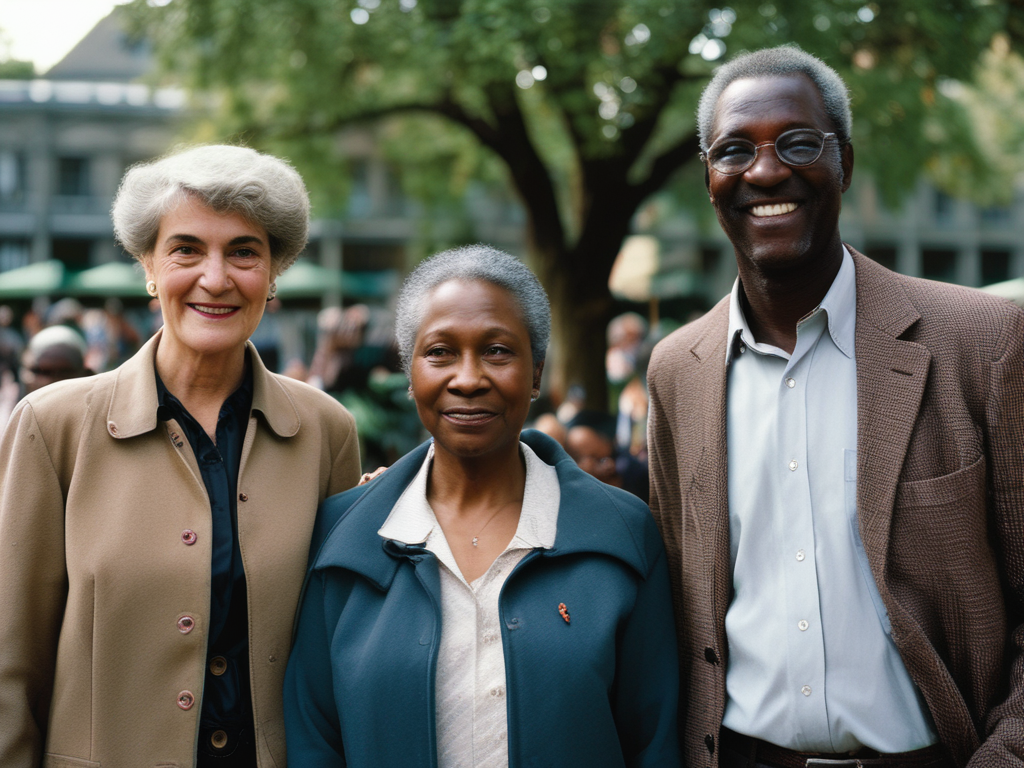
We see this as an unreliable source of information

Image of an intelligent older woman and man and a dark-skinned person
(generated by ai)

“Wat zeg je op het internet over ons?” is belangrijker geworden dan “Heb je genoeg te eten?”

What constitutes a good conversation?

Some people believe it’s when they get to do all the talking and you listen and say little in response.

During that conversation, they may even state, in a threatening tone, that they need to see inside your! (temporary) home, for no reason at all, and then when that has no effect, follow it up by having someone else (who probably believes that he has more authority) send you an email from a different town that he needs to see inside your home, also for no reason at all.

Where on earth do such people get the gall from?

That is NOT what I consider a good conversation.

I cannot give (=confer to it) any organization trustworthiness if it doesn’t want to be trustworthy… That works both ways, yes!

My CV should not have to play a role in this. Everyone deserves respect, regardless of CV or age or income or parents.

The earth still isn’t flat, no matter how many times anyone says that it is.

Wait. Haven’t people gone to prison in the past for saying that the earth isn’t actually flat but fairly sphere-shaped?

There was also the shock revelation that the earth isn’t the center of the universe. Someone certainly went to trial over that and was almost crucified, literally. For telling the truth.

I guess I am sometimes like that person. Sometimes you have to be strong and not let yourself be pushed in a direction you absolutely do not want to go into.

PS
Lisa Woods, among many other things, you picked my locks for over 13 years. End of.

Okay, thank you.
I acknowledge that life the world is challenging constitutes or creates many challenges for you. The experiences of the past year have taught me a lot about what that can be like.

And, yeah. Sorry. Sorry sorry sorry. I had no idea. Yikes. This is totally not the country that it used to be, unless maybe I was really really lucky before. And even that was already pretty throttling to me. (Mustn’t want to excel in what I do, even if only for the mere joy of learning to excel at something.)

Dutch plumber has died. His last years were a little like my last 16 years.

He was targeted for years, with arson and bombs, instead of supported was banned from living in his own home repeatedly. The stress got to him and his heart gave out. That’s not unusual in stalking cases either.

His age, you ask?

45

But guess what? He’s gone but there has been more malicious activity at his home. (Two arrests made.)

That makes it likely that this comes from 4chan/8kun.

It’s like Pizzagate – lees hier, Dutchies: https://decorrespondent.nl/7938/de-zaak-pizzagate-of-hoe-nepnieuws-en-complottheorieen-hun-weg-vinden-naar-een-breed-publiek/f3960fbb-6232-0b39-3607-9bf871c74fec – where they went after a random pizzeria in NYC with rumors about child sex abuse rings, causing someone else to turn up with a gun, even, or like this:

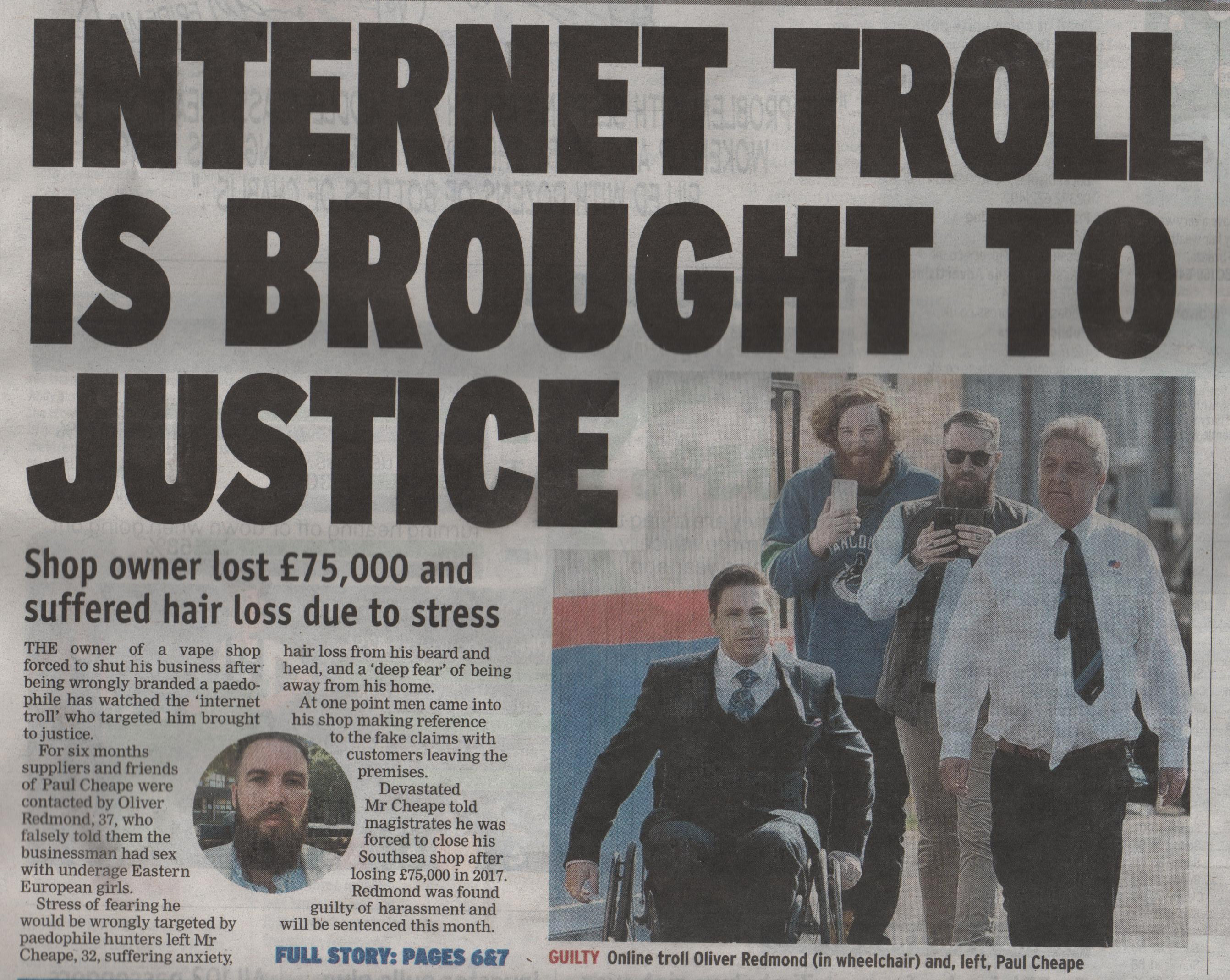
Paul Cheape was targeted with a xenophobic campaign – as he is Scottish, not English – about abuse of eastern European girls and lost his successful business which had previously been featured by the BBC
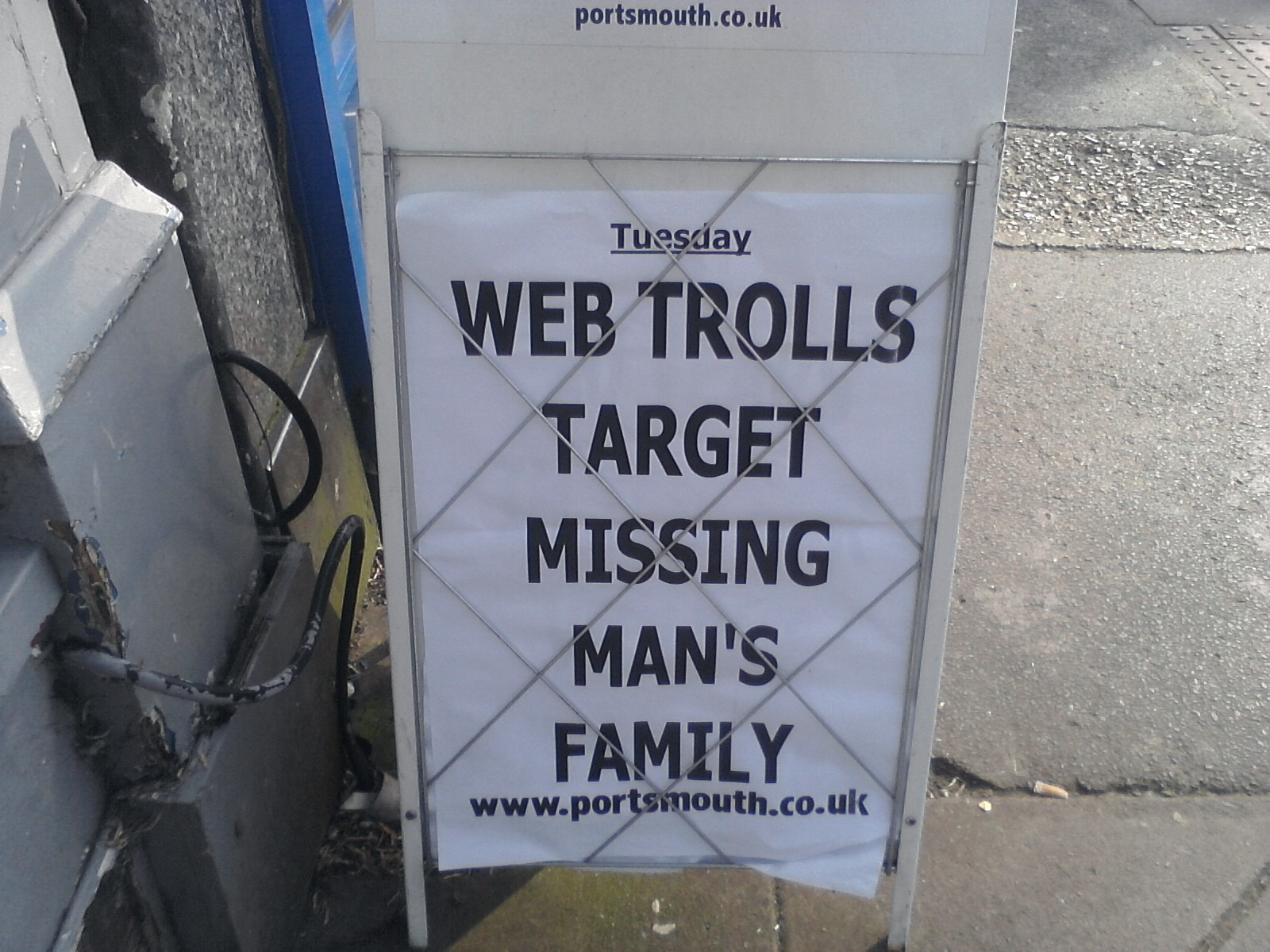
Targeting the family of a missing man is like targeting the family of a deceased man, isn’t it? There’s been some research about psychopathy among trolls:

https://www.nature.com/articles/s41598-024-60203-6

https://www.psychologytoday.com/intl/blog/your-online-secrets/201409/internet-trolls-are-narcissists-psychopaths-and-sadists

https://www.sciencedirect.com/science/article/abs/pii/S0191886917304270

https://www.ncbi.nlm.nih.gov/pmc/articles/PMC10004561/

Why nobody can figure this out even if police officers etc are monitoring communications? Because whoever this is uses innocent-sounding code words.

And the mayor of Vlaardingen nicely played into their hands.

It’s all likely arranged through a combination of digital communications and IRL meetings (or paper post). It’s a mistake to assume that 4chan and 8kun types never interact in real life.

They can also communicate by just having someone walk past someone else and say something to him or maybe even just whistle a tune. They can do things like place empty bottles in front of someone’s home or draw some innocent looking thing such as a stylized bird on a wall.

It’s also a mistake to think that all these folks are unemployed “losers”. They might work at your bank, your post office, your insurance company or your internet provider. You can’t tell.

(Me, as of roughly yesterday, my location’s been Malta again, btw, after first briefly Ireland again.)

Instead of helping him, people vilified Ron van Uffelen. They said that he was into drugs and god knows what else.

In my case, it wasn’t explosives and stuff. In my case, the locks were picked for over 13 years. The weapon of choice in my case was IT along with manipulation. Just about everything I did was sabotaged. I’ll stop there. I’ve said it plenty of times before.

Just like with Ron’s case, instead of helping me, people victimized me further. This kind of thing isn’t even possible without the profound otherization of the victims.

Because nobody got killed or seriously injured, the police couldn’t justify I investigating what happened to Ron van Uffelen properly because that would have been very expensive.

I know how this works. I know what this feels like. I wish that Ron van Uffelen’s last years didn’t need to have been what they were like.

In my case, one of the potential outcomes was my suicide. It was part of the game. Eventually, it became the only solution but eventually I also got so determined because of my immense powerlessness that I promised myself that I wasn’t going to do that.

It doesn’t matter what people think of and about you once they have made clear that they are not going to help you and instead vilify you and victimize you even more.

They become pawns in someone else’s game, but they can’t see it.

Demonized

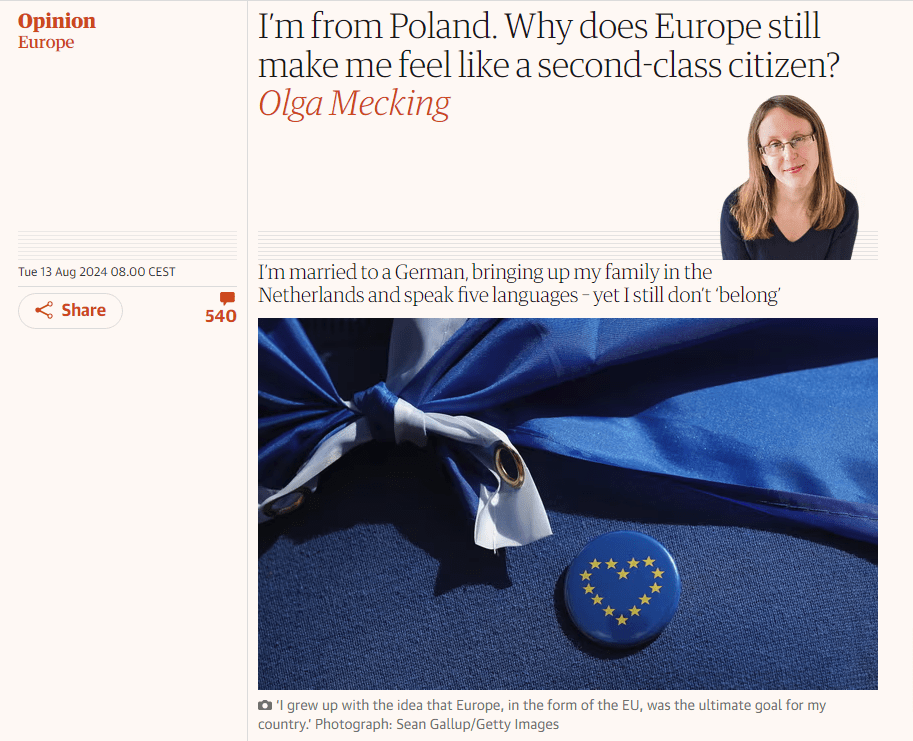
https://www.theguardian.com/commentisfree/article/2024/aug/13/international-student-britain-tory-nigel-farage-immigration
https://www.theguardian.com/commentisfree/article/2024/aug/13/poland-europe-citizen-germany-netherlands

Olga: “I moved to the Netherlands after having lived in Germany with my husband for three years. Together, we’re raising our three children and I work as a freelance writer. But Dutch people have made it clear that they will always see people from countries that formerly found themselves behind the iron curtain as second-rate Europeans. When my eldest daughter was two and her sister only a baby, a Dutch woman called the police because she heard me speak Polish to my children. Later, a daycare nanny asked the three Polish children in the group, including my eldest daughter, not to speak their own language to one another.”

Joyce: “The political climate for international students over the past year (I’ve been here for four years, but I feel like the situation has been especially tense since parties began their election campaigns) has been extremely bleak. The Tory government and Reform leader Nigel Farage demonised international students in their bid to win votes in the election this summer.

Farage and some Conservative ministers implied we are the driving force behind surging immigration (a byword for “bad” for all parties this election season) – even though it is debatable whether students actually contribute to net migration to the UK. Many countries, including the US and Canada, choose not to count international students in their figures because most of us are temporary migrants who will return home after course completion.”

Continue reading

What Exactly Are ‘Nature-Based Solutions’?

In my inbox today, from Global Citizen

By Victoria MacKinnon

August 8, 2024

The fight against the climate crisis has sparked a host of ambitious ideas, some seemingly straight from science fiction. From technologies that directly capture carbon dioxide from the air to the planet-bending goals of geoengineering, no idea seems too far-fetched in the race to cool down our burning planet. With good reason: the accelerating climate and biodiversity crises impact the world’s poorest countries hardest, and urgent action is necessary.

But what if the answer to climate change was as simple and timeless as nature itself? That’s the philosophy at the heart of nature-based solutions. If supported properly, nature could hold the key to stabilizing the climate, all while addressing socio-economic challenges such as food security and pandemic prevention

That’s why supporting them is a key part of Defending the Planet. Let’s dig into the concept so that we can identify the solutions that will work best to protect people and the planet. So, what are nature-based solutions, and how can we unlock their full potential?

Let’s Nail Down the Basics: What Exactly Are Nature-Based Solutions? 

Simply put, a nature-based solution is a project that works in harmony with the natural forces of an ecosystem to strengthen it, creating positive ripple effects for people and the climate. When successful, these projects protect, manage, and restore the environment. While nature-based solutions can take many forms, they all share a core principle: by working with the Earth rather than against it, we can build a more resilient and sustainable world. That’s why Global Citizen is calling for $1B in investments to protect and restore the Amazon, including investing in regional Indigenous-led, nature-based solutions. 

Projects that focus solely on minimizing human impact, like recycling or conserving water, are not considered nature-based. Instead, nature-based solutions encompass a more proactive, holistic approach to enhance a healthy ecosystem, like land conservation or wildlife habitat restoration.  

Why Have I Been Hearing So Much About Them Lately?

The truth is, nature-based solutions are far from new. Indigenous communities have successfully safeguarded the Earth’s ecosystems for centuries using conservation methods that work with nature; today, Indigenous people protect 80% of the world’s biodiversity. Now, more and more countries are incorporating nature-based solutions into their national climate, biodiversity, and restoration goals.

Nature-based solutions have gained momentum in both the public and private spheres. Companies have recognized that integrating them throughout their supply chains offers not only environmental and economic advantages, but also reputational benefits. This is significant, as private investment will be needed to secure the additional capital to bridge climate financing gaps.

Can You Give Some Examples of Nature-Based Solutions?

Here are just a few inspiring ones we love: 

Bringing Nature into Cities

Creating green spaces in cities moderates heat waves and improves air quality, which is critical for the health of an increasingly urbanized world where an estimated 4.2 million premature deaths can be attributed to outdoor air pollution. Megacities are incorporating more green infrastructure projects, such as Mumbai’s initiative to create a 3.2-acre urban forest to mitigate its urban heat island effect. These green spaces also offer additional and much-needed recreational space for residents. 

Restoring Coastal Wetlands

Wetlands provide many services such as flood protection and water filtration, and deliver an estimated $47 trillion in economic benefits annually. For example, a lake and marshland restoration project in Chennai, India, boosted the city’s water storage capacity​​, offered residents flood damage prevention, and improved water quality for native wildlife. 

Natural wetlands are also cost-effective: Restoring wetlands naturally can be 2 to 5 times cheaper than building artificial barriers, like sea walls, against wave impact. 

Mangrove wetlands are also superstars for cheaply and effectively preventing storm surges and sequestering carbon. In the Seychelles alone, they store about 2.5 million tons of CO2 (the equivalent of removing 500,000 cars from the planet for an entire year). 

Although the rate of mangrove loss is declining, more than half of all mangrove ecosystems are still considered vulnerable to collapse by 2050. But there are reasons to be hopeful — in some countries, such as Pakistan, the number of mangroves are increasing after successful widespread community planting and conservation efforts took root. 

Planting Trees

It may sound simple, but ambitious tree-planting programs are critical in ensuring the world’s forests can continue to function as a carbon sink. 11 countries across Africa are backing the “Great Green Wall, a regional initiative to expand arable land in the Sahel and reduce desertification. As an added benefit, it’s projected to create 10 million local jobs by 2030. National-level projects include this one in Burundi, where intentionally built tree terraces combat soil erosion on steep hillsides, reducing landslides while improving carbon storage and local agricultural productivity. 

Are There Any Drawbacks?

Like any intervention, nature-based solutions need to be designed thoughtfully to avoid unintended harm. Researchers and activists have raised alarms about greenwashing, arguing organizations might exaggerate these solutions’ benefits without properly monitoring their actual impact.

For example, without careful planning, large-scale tree-planting initiatives could actually harm native ecosystems and local communities. This happened in Somaliland after fast-growing, drought-tolerant mesquite trees from Central America were introduced in the 1980s to combat deforestation. The program worked a little too well: the foreign species outcompeted local vegetation, spreading quickly and depleting water sources across the country. Now, the Food and Agriculture Organization (FAO) and other groups are working to reverse the damage by assisting local communities in managing these trees at more sustainable levels.

How Can We Best Support Nature-Based Solutions?

We can’t hope to halt and eventually reverse global warming without embracing natural climate solutions. If used to their full potential, nature-based solutions could cut carbon emissions by 12 gigatons each year (the estimated equivalent of all coal-fired power plant emissions). 

Delaying investments in nature will only diminish its capacity to heal and recover over time, yet many countries have only slowly integrated them into their climate plans. Rapidly expanding nature-based solutions to fight climate change requires site-specific assessments to best identify community needs and the leadership of local and Indigenous people to steer planning and implementation. 

More funding for these solutions is also needed. Policymakers tend to favor resource-intensive engineering projects — in 2022, less than 10% of climate adaptation funding in least-developed nations went to nature-based solutions. 

The good news? Nature can be forgiving. We’ve seen how when given the chance, rewilding can reverse the damage caused by pollution and human activity. Governments must prioritize what’s good for the planet by incentivizing investment in nature — before it becomes too little, too late.
Sandwiches, UK!

I tell ya, hand them sandwiches!

  1. It will confuse the heck out of them
  2. An automatic sense of gratitude will kick in whether they want it or not
  3. It will distract them
  4. Ya can’t fight when you’re eating
  5. There is something REALLY WEIRD about then still wanting to fight. Something biological, perhaps? There is a big incongruence, a resistance. Is it some kind of postprandial effect?
  6. And, a food fight is still better and cheaper

WHAT HAVE YOU GOT TO LOSE?

More upheaval? Hopefully not

Those around them should do what they can to keep them away, even lock them in their rooms if necessary.

The riots in 2011 didn’t surprise me as tension had been brewing for a long time, but they were far more spontaneous, and initially sparked by the police killing a black man.

For the record, Portsmouth remained quiet back then too. (Police officers were exhausted, though. All had been recalled.)

This, this seems to be very different beast. Or is that just my impression and incorrect?

Last time, I don’t think that politicians were whipping up division and the Conservatives hadn’t been in charge for over a decade yet.

People like me

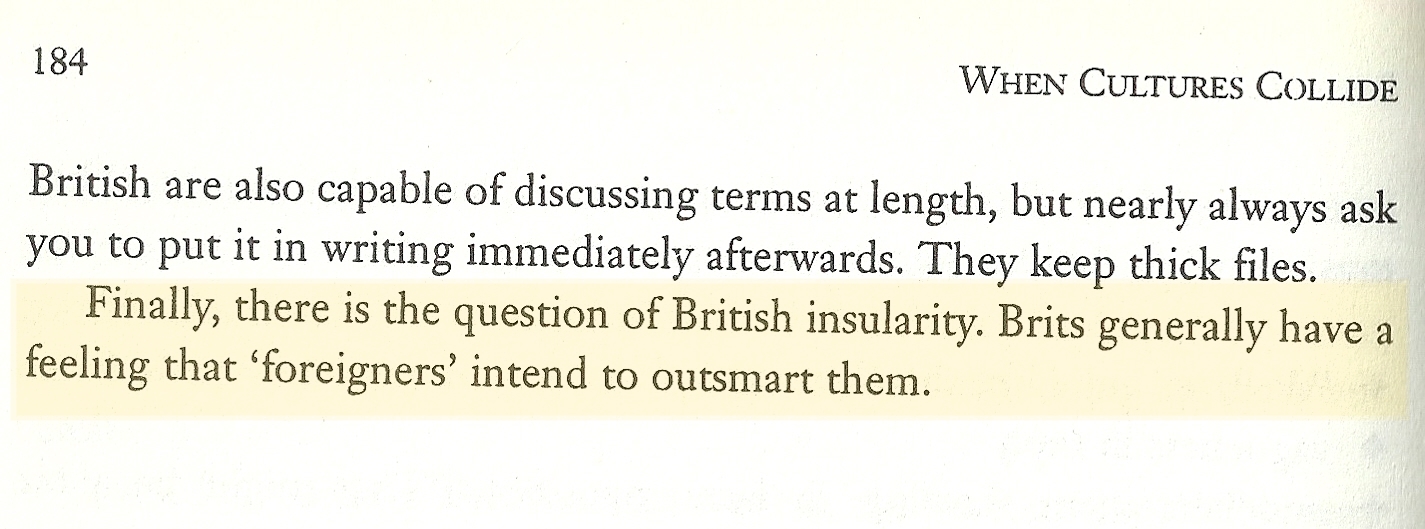
Apparently, there was a lot of rioting about people like me again in the UK. While there’s definitely a particularly strong resistance against people of color and people who appear but don’t even need to be Muslims, the main sentiment behind this shit is anti-immigrant and anti-foreigner. It’s part of the cultural makeup.

A walk in the park

I decided to treat myself to a walk this afternoon, which turned out to be a wonderful idea.

As I was shooting a video, a bird called out in a panic, possibly a crested grebe whose peace I had briefly disturbed.

Next, I encountered a basket with a sign “Free bay leaves” at a houseboat (which happens to be for sale).

Some recently purchased dried bay leaves for comparison

Then I caught a great blue heron admiring itself in a glass facade (but my phone had run out of space).

And after that, I observed a young man on a moped, with a black helmet and dressed in black protective clothing (in case of a fall) yet… singing. In hot weather.

EDL-style troublemakers at it again? Also in Portsmouth…

Violent clashes… but none in Portsmouth https://www.theguardian.com/uk-news/article/2024/aug/03/government-warns-that-rioters-will-pay-the-price-as-wave-of-violence-sweeps-uk

😊

There was a very small police presence only, in Portsmouth. There were verbal exchanges, and some apparently were ugly, but there was nothing else. Fairly peaceful, all in all.

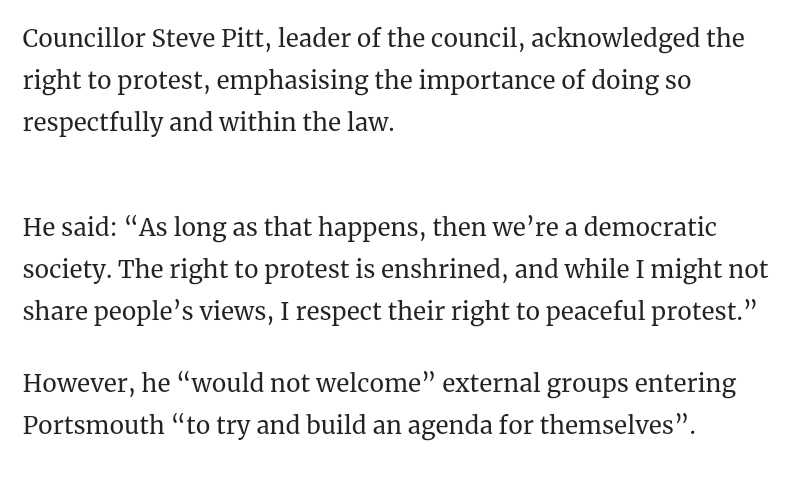
7 August 2024: Oh! Looks like the current city council leader and I appear to be on the same page! (Or have I been led onto another goddamn a fake page on another goddamn mirror on that Portsmouth-based hacker’s computer once again?)

https://www.portsmouth.co.uk/news/people/portsmouth-councillors-emphasise-right-to-protest-after-peaceful-demonstration-at-guildhall-4730708

What happened in Southport is like what happened on a tram in Utrecht, the Netherlands, a few years ago. At the time, the BBC – regrettably – was quick to write about links to islamic terrorism but there were none. This was like a guy shouting that he wanted to defend the planet against unicorns from Mars while unfortunately shooting people at the same time.

Continue reading

Bioethics in fiction

I just went to see if I could find an extra (used) VGA cable. Instead, I found three books (in English), to my delight, two of which are related to bioethics. One involves infertility and a sperm donor and the other one a couple who are trying to avoid a serious genetic disorder and end up at a veritable “designer” of babies.

Interesting coincidence.

The third one is a detective (Adam Stubo).

The rest on the shelf was non-fiction.

Hacking activity

As of the previous weekend, so since about ten days ago, there’s been quite a lot of it again. So annoying!

There is no point in talking about it with anyone. People – most of them, not all of them – keep responding with their insistence that the earth is flat. What can I say? Let them believe what they want to believe. I am not going to tell them that it isn’t. No point.

hand holding a small earth globe
Photo by Porapak Apichodilok on Pexels.com

(It’s not a perfect ball either, of course. But it’s not flat. You don’t fall off its edges. Even if your map makes it look that way.)

map of the earth
Photo by Pixabay on Pexels.com

The “completed life” concept

Some years ago, Dutch political party D66 raised the worrisome idea of euthanasia for people who are old and fed up.

It infuriates me because the feeling that life is no longer worth living is too often the direct result of being treated as if your life is no longer worth living and you no longer hold any value.

  • I too am over 55 these days and soon I will be over 75, which is the age limit in that proposal.
  • Yes, I often really feel like giving up on life too.
  • This happens when I am being (mis)treated as if I am no more than trash that is in the way, when my life is rendered devoid of meaning and substance when I am marginalized, shoved away, as if I am no more than trash that is in people’s way! It’s atrocious!
  • Heck, I was in my 30s when Dutch people already started telling me that it was time to make way for younger folks, professionally. Up to that point, I often got overlooked (dismissed) because I looked so much younger than I actually was.

Wijngaarden, Els van, Leget, Carlo and Goossensen, Anne (2015) Ready to give up on life: The lived experience of elderly people who feel life is completed and no longer worth living. Social Science & Medicine 138, 257-264. Available at https://ac.els-cdn.com/S0277953615002889/1-s2.0-S0277953615002889-main.pdf?_tid=80f432e0-edcd-11e7-993c-00000aab0f26&acdnat=1514685434_0b38f23b28ec70c2cd53776218c61c43

Humans are the greatest threat to life on the planet

I’ve said that a few times before. It’s even truer than I thought. Yesterday, someone sent me the following.

Elephants had lots of relatives. Then humans came along

Today, three kinds of elephants walk the Earth. But hundreds of thousands of years ago, they had many kin. Nearly 200 species in the order Proboscidea, including mastodons and mammoths, have been described. Paleontologists have long wondered why so few of these usually massive mammals are still around. Now, a reexamination of fossil data suggests another group of mammals played a major role in dooming elephants’ relatives to extinction: humans.

With a little help from AI, researchers explored possible explanations for changing speciation and extinction rates of proboscideans over the past 35 million years, as estimated from fossil data. While their analyses, which leveraged neural networks to rank possible factors, identified connections to major environmental changes, the effects of humans were enormous. Extinction rates jumped five-fold when early humans emerged some 1.8 million years ago and climbed even more sharply—17-fold—when our species started spreading around the world roughly 129,000 years ago.

“The primary driver of proboscidean extinction was inferred to be the overlap with the human lineage, aligning with the growing body of evidence indicating humans’ severe impact on recent extinctions and on megafauna in particular,” the team concluded. “If early humans had not appeared, the number of species would probably still be increasing,” first author Torsten Hauffe told New Scientist.