I am required to tell you that, as an Amazon Associate, I earn from qualifying purchases. It does not affect your purchase in any way. You’d be supporting me a little, that’s all. Not all book links on this page are Amazon Associate links.
Below you will find my book tips, for books about various topics, including business and culture, but also zen and trauma.
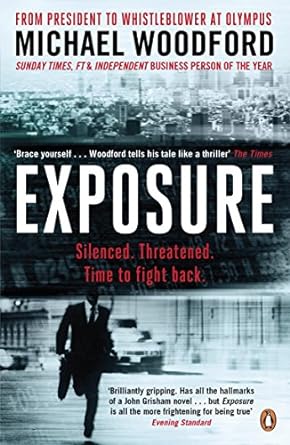
Some scientists will want to read “Exposure”, about the bookkeeping etc scandal at Olympus, exposed by a British whistleblower: https://www.amazon.co.uk/Exposure-President-Whistleblower-at-Olympus/dp/0241963613/
A book for activists!
“Bringing Down Goliath: How Good Law Can Topple the Powerful”

The paperback was released on 4 April 2024. You can order it from your local independent bookshop at Bookshop.org:
Bringing Down Goliath is Jo Maugham’s first book. Initially released in 2023, it tells Jo’s story – from homelessness at 16 to first Queen’s Counsel, next King’s Counsel and then campaigning lawyer.
(I still feel that QC has a much better ring to it than KC.)
Jo’s book also provides you with the inside story of the origins and successes as well as future of the Good Law Project.
With the rule of law in England under threat like never before, “Bringing Down Goliath” struck a chord, became a Sunday Times bestseller as well as a 2023 highlight in the Guardian.
A fascinating book about the past
I read this around the time I enrolled as a full-time student in earth science. I was thrilled.
The Road to Jaramillo, by William Glen
An impactful book about meaning and courage
The fearful void, by Geoffrey Moorhouse
A book about the future
This link keeps popping up on my screen, about a book that I happen to have reviewed for a book site in January 2022. (It was my only review for that site and I cannot recommend the site in question.) This is what I wrote:
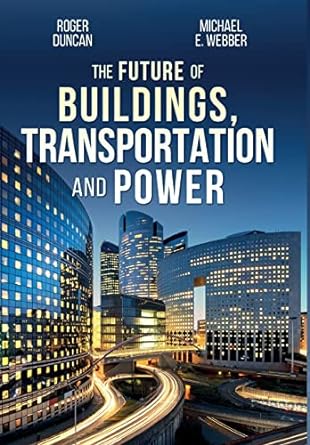
The Future of Buildings, Transportation and Power provides the reader with a very thorough discussion of the developments in construction, transport and energy. The authors – Roger Duncan and Michael E. Webber – are clearly highly knowledgeable and have researched any details that they may initially not have been intimately familiar with so well that readers cannot tell.
This book is very well-written and clearly carefully edited. That makes it a pleasure to read. It is accessible and while it contains a lot of information that many will be already familiar with at the authors have attempted to be as complete and thoughtful as possible, there are enough sudden surprises to make a person want to keep reading.
For example, I had not been aware yet of the option of 3D-printing homes and other buildings from construction waste, to create homes and buildings that themselves are recyclable too. Neither did I know that the mining of REEs and lithium mining at this point in time is still cheaper than recycling. That’s astonishing. This is important for policymakers; the recycling of these materials needs to receive a big push and this can be done through grants and subsidies.
I would have liked to see more information on the process of converting construction waste into feedstocks for the 3D printing process, in other words, on what exactly happens in the WinSun factories mentioned on page 39. Also, there are one or two style flaws in the foreword and the Covid preamble. The phrase “as best as” (page V) is grammatically incorrect though its use is becoming increasingly common and the second word “as” is missing. The paragraphs about the IEA and the EIA alphabet soup (page XIV) are slightly clumsy.
In addition, I failed to see anything mentioned about the future of salinity gradient energy (also called “blue energy” or ”osmotic power”), which is a very elegant way of generating energy at any location where freshwater meets saltwater. The two flows are fed past each other and separated by a membrane; either water molecules or salt ions then start migrating. The technology still has its challenges, but is certainly not without merit. Norway, the Netherlands and Australia are example of areas where researchers have looked into this form of power production.
What I also missed with regard to the impact of wind energy harvesting on particularly birds is the information that newer wind turbines have technology in place that can prevent bird strikes such as happened in the Netherlands in May 2021 (causing the death of a bearded vulture). This is perhaps because The Future of Buildings, Transportation and Power is a book about technological developments rather than about their environmental impacts. It is necessary, however, to look at technological developments from every conceivable angle because we can no longer afford to do otherwise. The future of the planet, hence of the human species, is at stake. This is part of the reason why there is now also research into the decommissioning of wind turbines, which is a brand-new field with challenges of its own; I happen to know that a PhD student at the University of Portsmouth, England is working on that topic.
That said, I have no hesitation in giving The Future of Buildings, Transportation and Power4 stars out of 4. It is not only well written and a pleasure to read, but it is also very thorough (in spite of what I say about environmental impacts; that is simply not the main topic of the book that the authors set out to write). I commend the authors (along with the publisher) for their thoroughly professional approach.
The Future of Buildings, Transportation and Power is a fascinating book and suitable for all readers interested in the world around them, academics and lay people alike. It is not necessary to have detailed existing knowledge of the construction world, the field of energy or the transportation realm. I, for example, have an earth and life science background. While I know some things about transportation from having edited papers on the topic, know a little about energy generation and take an interest in learning about new building styles such as the “Passive House” approach, I am by no means an expert in any of these areas.
Books about equality
The Spirit Level: Why Equality is Better for Everyone
by Richard Wilkinson and Kate Pickett
The Inner Level: How More Equal Societies Reduce Stress, Restore Sanity and Improve Everyone’s Well-being
by Richard Wilkinson and Kate Pickett
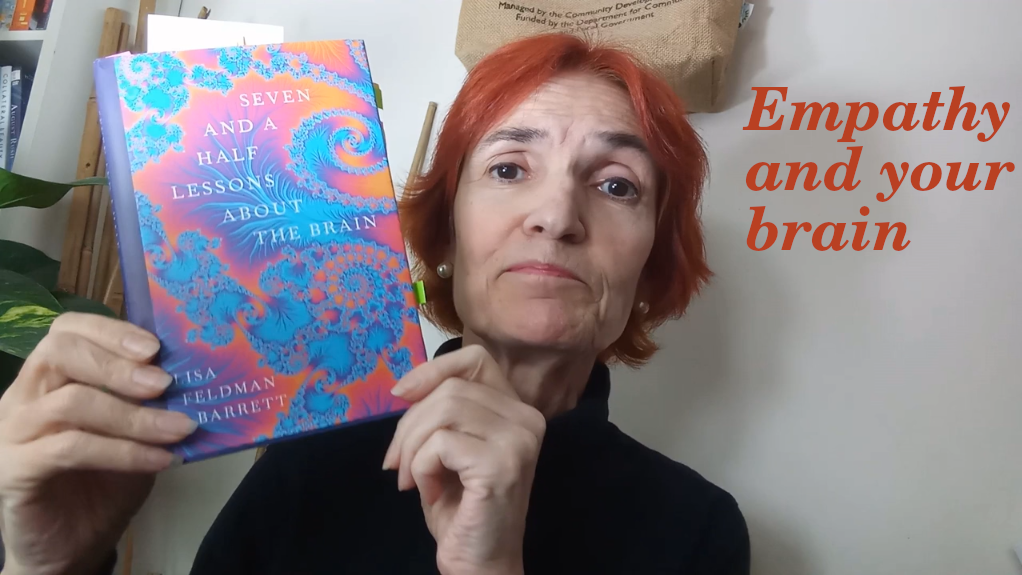
A book about how your brain works
Seven and a Half Lessons About the Brain
by Lisa Feldman Barrett
Two books about mental health matters
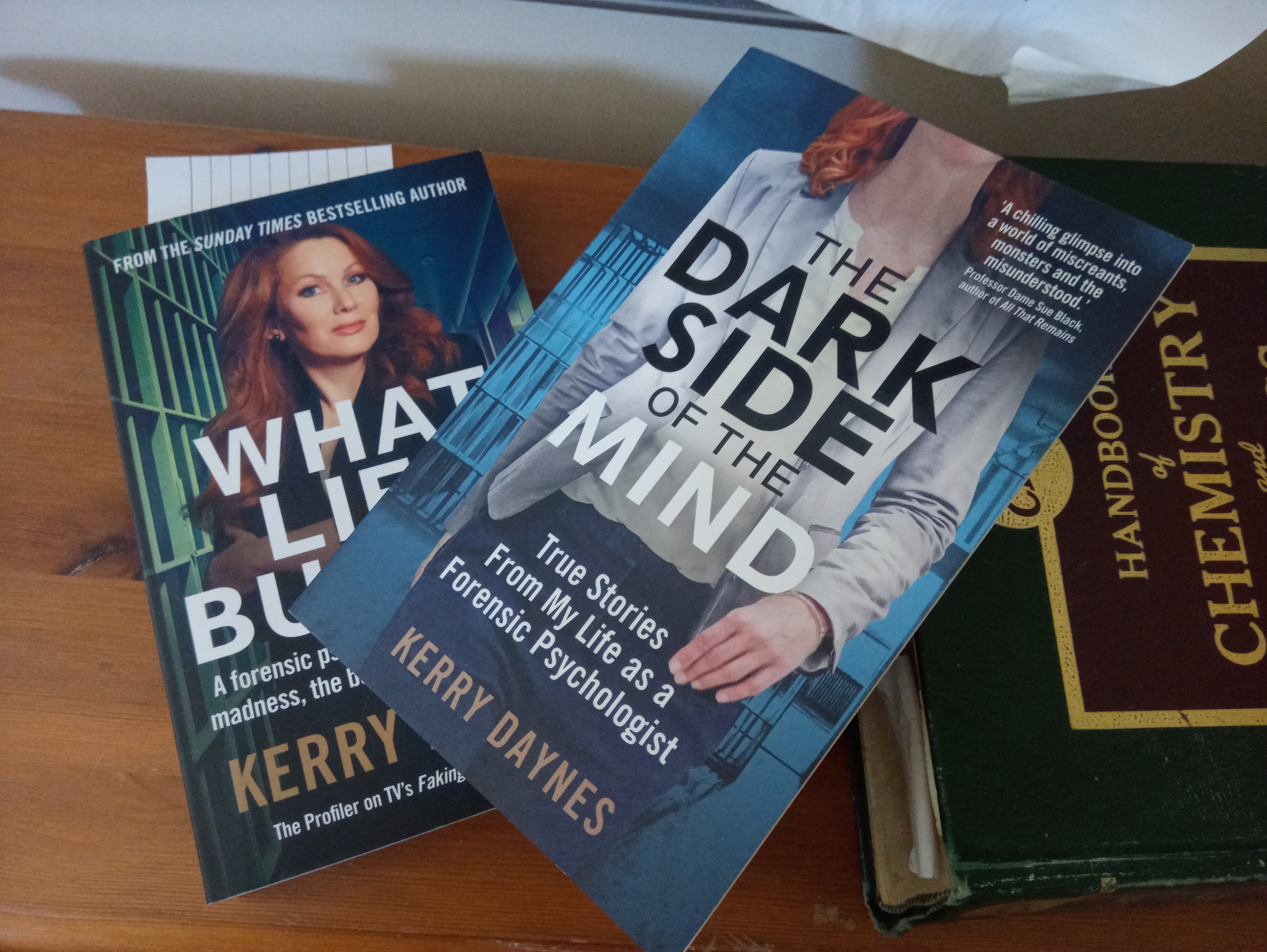
Both by Kerry Daynes:
A book that I bought after I saw an online talk by him
The Body Keeps the Score: Mind, Brain and Body in the Transformation of Trauma.
By Bessel van der Kolk
An accessible book about zen
By John Tarrant
#zen
A tough book brimming with valuable insights
Cruelty: Human evil and the human brain
By Oxford neuroscientist Kathleen Taylor.
Books about justice, business and cultural differences
- By Neil Woods: Good Cop, Bad War (About the war on drugs. I think he drew the right conclusion.)
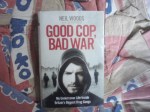
- Followed up in 2018 by Drug Wars: The terrifying inside story of Britain’s drug trade.
- By Linda Polman: War Games: The Story of Aid and War in Modern Times (About the humanitarian aid sector. You may no longer be willing to donate to aid organizations after you’ve read this book.)
- Justice: What’s the Right Thing to Do?
by champion Michael Sandel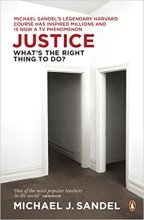
- Trust: The Social Virtues and the Creation of Prosperity
by Francis Fukuyama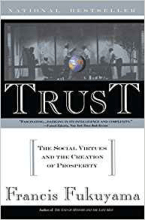
- When Cultures Collide, 3rd Edition: Leading Across Cultures 3rd by Richard D. Lewis (2005)
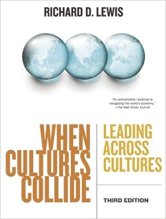
Click here for the: most recent edition of “When cultures collide”.
Books about business, finance and trading
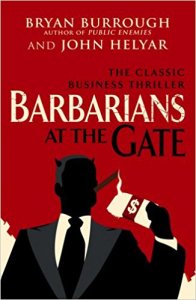
These are business books that contain a few life lessons as well. The story about RJR Nabisco is a fast-paced account – it’s been called a thriller – about business and banking practices (junk bonds and whatnot) and of course a portrayal of Ross Johnson and others. (It’s not for everyone, and not for every moment because it requires enough time.)
The book about Greggs gives you the inside view of how Greggs came about and grew into what it is today. It’s a good read and may change how you think of Greggs, the big chain it is today that started as a mom & pop undertaking not unlike my own parents’.
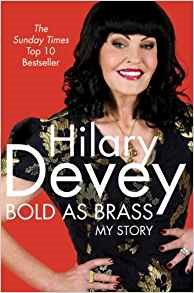
Hilary Devey’s Bold as Brass is suitable for everyone – unless you happen to be a misogynist. It’s a touching book, showing you how Hilary grew up in Britain, the many personal and professional challenges she had to overcome and how she developed Pall-Ex. Throughout her life, Hilary climbed many steep cliffs and was pushed off a few too.
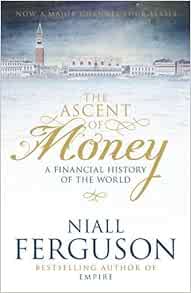
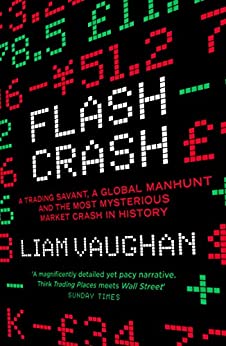
Niall Ferguson’s book is surprisingly fascinating and very well-written. It also tells you why life insurance is such a big thing in Britain. Liam Vaughn’s reads like fast-paced fiction and introduces you to the world of forex and online trading.

Flash Crash: A Trading Savant, a Global Manhunt and the Most Mysterious Market Crash in History
The ascent of money : a financial history of the world