Hi. My main background is in the earth & life sciences, but I now predominantly explore topics in the broad area of bioethics. That's about equality, fairness, justice, diversity and inclusivity. It's also about people's biases, the associated otherization and everything that this can result in. That includes poverty, homelessness, poor health, shabby looks, shrinking personal bubbles, exposure to chemical and noise pollution and lots more. It's also about law, philosophy, speciesism, science & technology, forensic psychology, politics and public policy (governance). Diversity and inclusivity are much bigger challenges than I used to believe. I for example now think that society's lack of genuine acceptance and support for people whose brains work very differently can among other things result in destructive behaviours for which the forensic psychology term is sadistic stalking or resentful stalking.
Human rights – diversity – neurodiversity – equality – inclusivity – discrimination – otherisation – speciesism – planet – consumerism – bioethics sensu lato
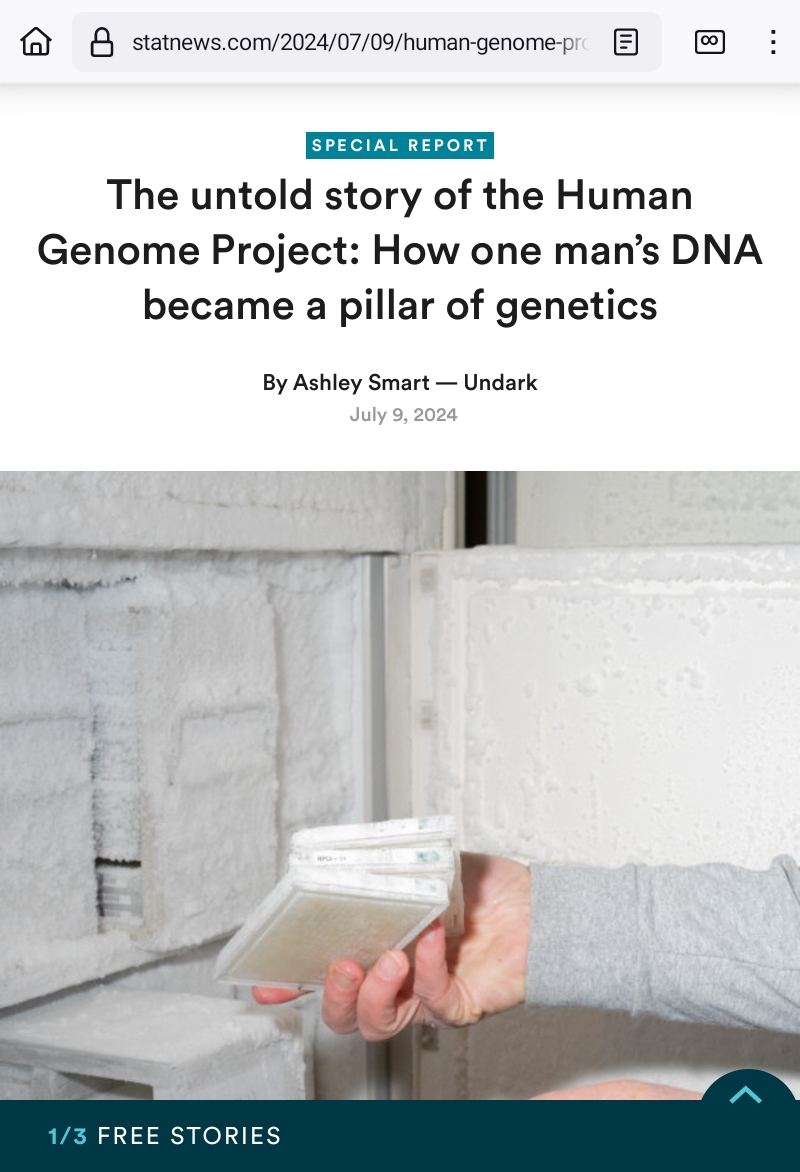
I just went to see if I could find an extra (used) VGA cable. Instead, I found three books (in English), to my delight, two of which are related to bioethics. One involves infertility and a sperm donor and the other one a couple who are trying to avoid a serious genetic disorder and end up at a veritable “designer” of babies.
Some years ago, Dutch political party D66 raised the worrisome idea of euthanasia for people who are old and fed up.
It infuriates me because the feeling that life is no longer worth living is too often the direct result of being treated as if your life is no longer worth living and you no longer hold any value.
I too am over 55 these days and soon I will be over 75, which is the age limit in that proposal.
Yes, I often really feel like giving up on life too.
This happens when I am being (mis)treated as if I am no more than trash that is in the way, when my life is rendered devoid of meaning and substance when I am marginalized, shoved away, as if I am no more than trash that is in people’s way! It’s atrocious!
Heck, I was in my 30s when Dutch people already started telling me that it was time to make way for younger folks, professionally. Up to that point, I often got overlooked (dismissed) because I looked so much younger than I actually was.
I’ve said that a few times before. It’s even truer than I thought. Yesterday, someone sent me the following.
Elephants had lots of relatives. Then humans came along
Today, three kinds of elephants walk the Earth. But hundreds of thousands of years ago, they had many kin. Nearly 200 species in the order Proboscidea, including mastodons and mammoths, have been described. Paleontologists have long wondered why so few of these usually massive mammals are still around. Now, a reexamination of fossil data suggests another group of mammals played a major role in dooming elephants’ relatives to extinction: humans.
With a little help from AI, researchers explored possible explanations for changing speciation and extinction rates of proboscideans over the past 35 million years, as estimated from fossil data. While their analyses, which leveraged neural networks to rank possible factors, identified connections to major environmental changes, the effects of humans were enormous. Extinction rates jumped five-fold when early humans emerged some 1.8 million years ago and climbed even more sharply—17-fold—when our species started spreading around the world roughly 129,000 years ago.
“The primary driver of proboscidean extinction was inferred to be the overlap with the human lineage, aligning with the growing body of evidence indicating humans’ severe impact on recent extinctions and on megafauna in particular,” the team concluded. “If early humans had not appeared, the number of species would probably still be increasing,” first author Torsten Hauffe told New Scientist.
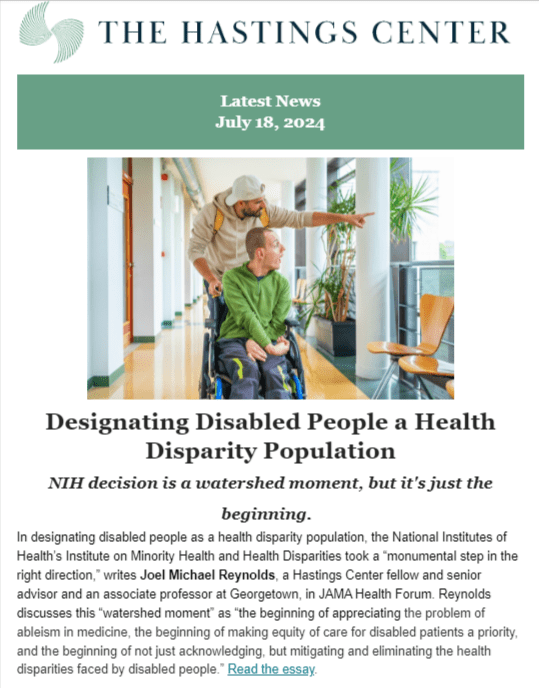
I lean toward applauding any move that seeks to address ableism. Biases – with regard to any property, whether it is a physical difference, poverty, age, skin or hair color or anything else – do so much damage.
Partly at work is the focusing illusion:
Someone is of a certain age, “hence” probably has dementia.
Someone has a physical disability, “hence” is already in bad health and does not deserve the same level of care and consideration as others.
Someone has a physical disability, “hence” is miserable all the time.
Someone is of a certain age, “hence” is no longer interested in anything and needs to be warehoused, wither away and be enabled to pass away out of sight of the rest of society.
Someone is black, “hence” is extra-ordinarily strong and does not need the same level of healthcare as whites.
Someone does not talk, “hence” is of low intelligence.
Someone is poor, “hence” is genetically flawed and/or mentally impaired.
And so on and so forth.
All other aspects of someone’s life and personality are casually dismissed, usually not even looked at.
Whether you agree with their approach or not, our future on the planet is very uncertain and these are the kinds of protests that I’ve heard about since my teenage years.
Back then, it was mostly missiles (and apartheid) that people in my native country were protesting against, I remember, and back then… because of the OPEC Oil Crisis, we actually had Sundays with complete DRIVING BANS! Emergency services excepted.
Rollerskating and cycling in the streets was so much fun on those days.
Isn’t it crazy that we insist on ruining our own future on the planet for the sake of making money?
No, I am not planning any protests, no worries. But I often shake my head at the foolhardy stupidity of humankind and am also astonished to have to admit that I didn’t used to see either that the way in which we are living and behaving in the west is pretty crazy.
It’s not just about oil. It’s just about everything.
“Yesterday, the new Government announced their plans for the year in the King’s Speech. We are pleased to hear they plan to finally go ahead with reforms to the Mental Health Act. This inclusion is an opportunity to change the law so autism is no longer defined as a ‘mental disorder’ and autistic people will not be detained in mental health hospitals just for being autistic. Last year, over 18,000 of you signed an open letter to Rishi Sunak saying its #TimeToAct on the Mental Health Bill but despite this huge demand for action, it was shelved. We’ve been campaigning on this for years and we want to take the time to celebrate this success with everyone who has campaigned to end the human rights scandal of autistic people being stuck in mental health hospitals. We will work with this parliament to strengthen the Mental Health Bill before it is passed into law to make sure we have better mental health and social services in the community to prevent autistic people from reaching crisis point in the first place. The Government also announced plans for a new Education Bill which will include a focus on teacher recruitment. Only 26% of autistic pupils say they feel happy at school, so it is vital that this comes with proper training on autism for both school and council staff so they can fully meet the needs of autistic children being let down by insufficient support.”
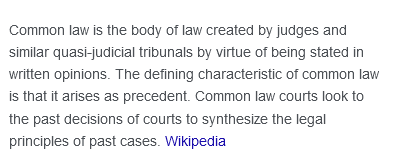
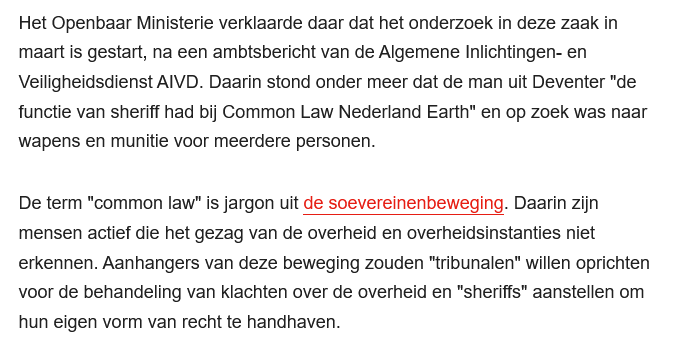
I just spotted an article in the Dutch news about groups of people who want to overthrow the government or whatever – called “soevereinen”. In the article, “common law” is described as jargon exclusive to these Dutch circles.
That’s incorrect.
This is a potentially dangerous mistake by this journalist, in my view.
You can for example be someone’s common law wife and that has nothing to do with wishing to overthrow the government.
I notice that I have a tendency to mix up AIVD and IND. Probably a good thing.
“Common Law Nederland Earth”? Really? These particular Dutchies sound like nutcases to me. Unfortunately, apparently they’re also dangerous nutcases. They must be folks quite like the crazy lunatics who still continue to pester me, for whatever reason. These dangerous Dutchies use code words, such as “bananas” for “weapons”. The lunatics who are after me do that too.
About people who have lost their way and pester, abuse and sabotage others to death, perhaps?
I had the Fela Kuti documentary on DVD. Just one of the handful of things I had dared treat myself to again. I found it in the British Heart Foundation charity shop. I’ve now lost just about everything (and everyone, sort of) that I had four or five times. I’ve lost count. I’m done.
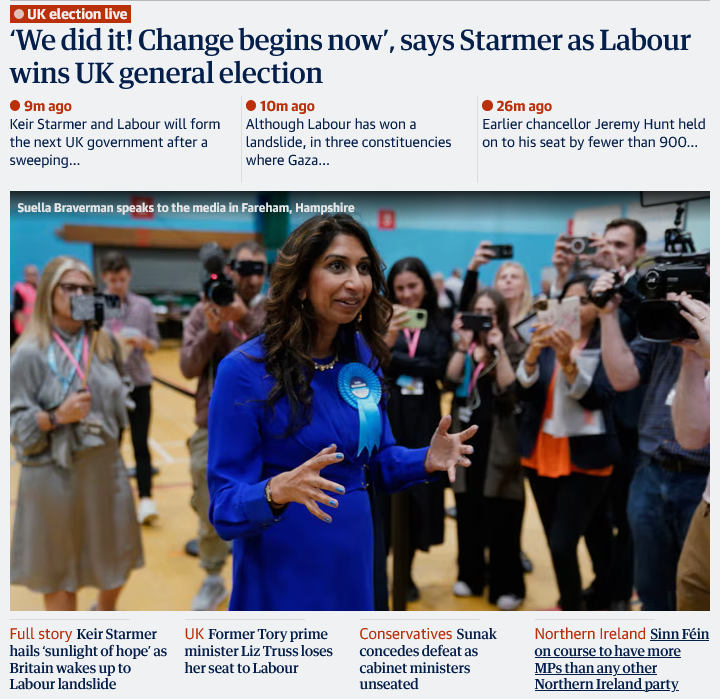
I hope that the horrific vilification of foreigners in the UK will now finally start to subside again. I’m not a fan of Labour but it’s better than the Tories.
Fareham MP Suella Braverman still MP? Hopefully not. (Fareham is the next town to the northwest of Portsmouth.)
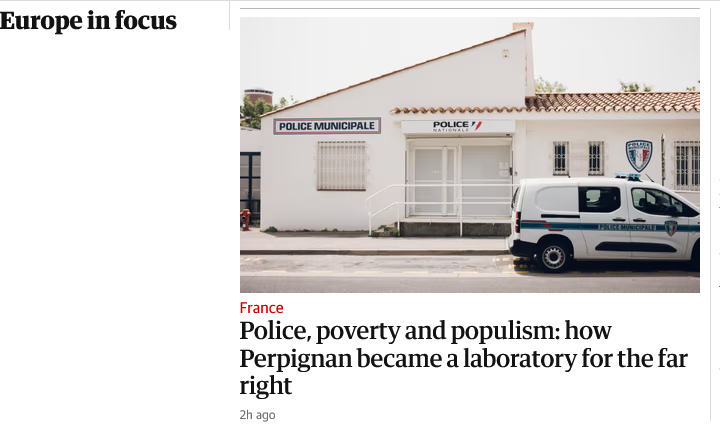
In the 1980s, on my way to fieldwork, I stayed in Perpignan for a few days and walked around a lot. I found a lovely little museum with Picasso’s, but I also picked up on ethnic tensions. It has a far-right government now.
Does “walking the dog” have a sexual connotation? I first wondered years ago when this kept cropping up in Portsmouth. I was also called a cat once and there was a lot of talk about cats at times.
(Almost everything that was flung at me in Portsmouth had a sexual meaning and if not, then it was just regularly abusive or even plain sadistic.)
I want this horrible nightmare to be over. I want my life back.
It’s definitely got nothing to do with this, in any case:
Most of my ancestors on both sides of the family are from there. I still have close family there on both sides of the family. Our department head was from there (Jacques Touret). I’ve spent time in the geology there. I’ve interviewed a scientist and former minister there (Claude Allègre). I traveled through it. I’ve been at hotels and other facilities in places like Paris, Perpignan and Toulouse. I know two Dutch women who live there.
I started learning French when I was still in primary school.
Don’t do this. Please don’t do this. Get your act together.
The world’s become a really shitty place. Don’t make it even shittier.
Also, my tablet currently thinks it’s in Malta again. Or Google feeds it Malta stuff, to be exact. The Malta stuff that I recently posted about was on my computer. Different SIM card, different phone.
I’m a geologist, among other things. That’s also how I know that asbestos is not invisible and that it doesn’t have a smell. You can’t remove invisible asbestos; that only exists in some people’s imagination.
I remember sitting in an office at the Westergasfabriek while the terrain was being remediated. We were talking about the cyanide pollution on the site. The guy I was talking with clearly knew that I knew what’s what because when someone came in and hesitated, he got the nod. They’d found an asbestos pipe. It was under water.
Btw, some cardboard pipes look like asbestos, but aren’t.
(There was a major panic at the Westergasfabriek one summer day, when the sunshine caused the release of actual cyanide gas. I missed it. I think I was in the States at the time. See https://www.researchgate.net/publication/259841685_Living_with_cyanide/ Cyanide and manufactured gas plants or MGPs go hand in hand, but people were very sensitive about it.)
My dad had a cooling facility that was clad with Eternit plates sheets (siding, cladding). I remember that the plates sheets were cut into shape on site. At our home. We didn’t know much about asbestos yet in these days, so I doubt that protective measures were taken.
I’m sure I would have remembered, you see. There is a photo of the huge garage being built, years earlier, with me standing there in a red-and-white knitted – or crocheted – dress, sticking my nose into everything, wanting to know what was going on. I was what? 2, or 3? That curiosity is also how I once burned my hand. My dad was showing an uncle how well the fire was going in the wood stove in the kitchen and I wanted to see what was going on and put my hand on the stove surface to prop myself up so that I could see for myself.
I was born with a great deal of scientific curiosity. I observe. I analyze. I’ve always asked questions. Why this, why that? My dentist of many years sometimes had to laugh because I kept asking questions to which he didn’t always know the answer. To me, that is part of the fun in life. Finding out how stuff works. Finding out what is going on.
To come back to asbestos and Eternit, which some people might freak out about… there is a lot of cancer in my family on my mother’s side, but it’s all very different cancers. There’s no heart disease, only some high blood pressure, and no dementia. One uncle had a fatal stroke, I think, and another one had or has Parkinson’s, both on my dad’s side. Health-wise, our family is truly blessed. None of the “youngsters” have a huge chance of getting anything specific. We are all going to die eventually, but in our family, we have a lot of control over how healthy we are, because of the choices we are free to make and because no genes are destined to mess things up for all of us.
Some of us, in our family, have a negligible deformation in our spine. I have it too. It comes from my mother’s side.
I’ve worked with toxic substances (bromoform and osmium tetroxide) as well as with very hot acids in the lab. I’ve had training for how to deal with radioactive substances in the lab, both in the US and in the UK. Asbestos does not freak me out, invisible or real.