Fresh weekend, fresh start, fresh new life.

Fresh weekend, fresh start, fresh new life.
That’s good. I must still be alive somewhere under it all.
The owners received a call. “We’ve got your dog Luca here.” They thought it was a joke. “No, no, we’ve just read the data in her chip.” The dog even remembered the owner’s voice. Miracles do happen.

25 September: here we have a missing cat returned after 11 years. The poor thing lived as a stray.
https://www.bbc.co.uk/news/uk-wales-66913831
I also read about American birds being blown across the Atlantic by a hurricane (with many more likely having drowned). Here is a photo of one. You can see the hurt, confusion and shock in its eyes. It’s not likely to make it. It feels vulnerable.

… I sat in my room one evening and watched a BBC Young Musician final. Headphones on, as always. https://www.bbc.com/news/entertainment-arts-36279467
There was Jess Gillam. I ended up completely in tears – as in “I died and went to heaven” – when she played “Where the bee dances”.
The rest of the world had disappeared. There was just this piece, this performance. Nothing else.
Portsmouth and its relentless ugly hate, greed, utter misery, violence, its stupid glorification of hate, greed, corruption and violence and all the rest of it had disappeared completely and no longer mattered in any form, way or shape. It no longer existed.
And this, this exactly probably is the perfect embodiment of the explanation why Portsmouth and I never got along. Something like this is so many trillion lightyears away from the place, it’s completely irreconcilable.
I don’t know what made that performance so stellar, so immensely moving, but nothing else comes to mind that comes close. She played her heart out, Jess did.
The orchestra outdid itself too, obviously inspired by her.
I can no longer listen to it, and watch it, but some of you can. Nobody in Portsmouth will. That I know.
https://www.bbc.co.uk/programmes/p0443pnj/player
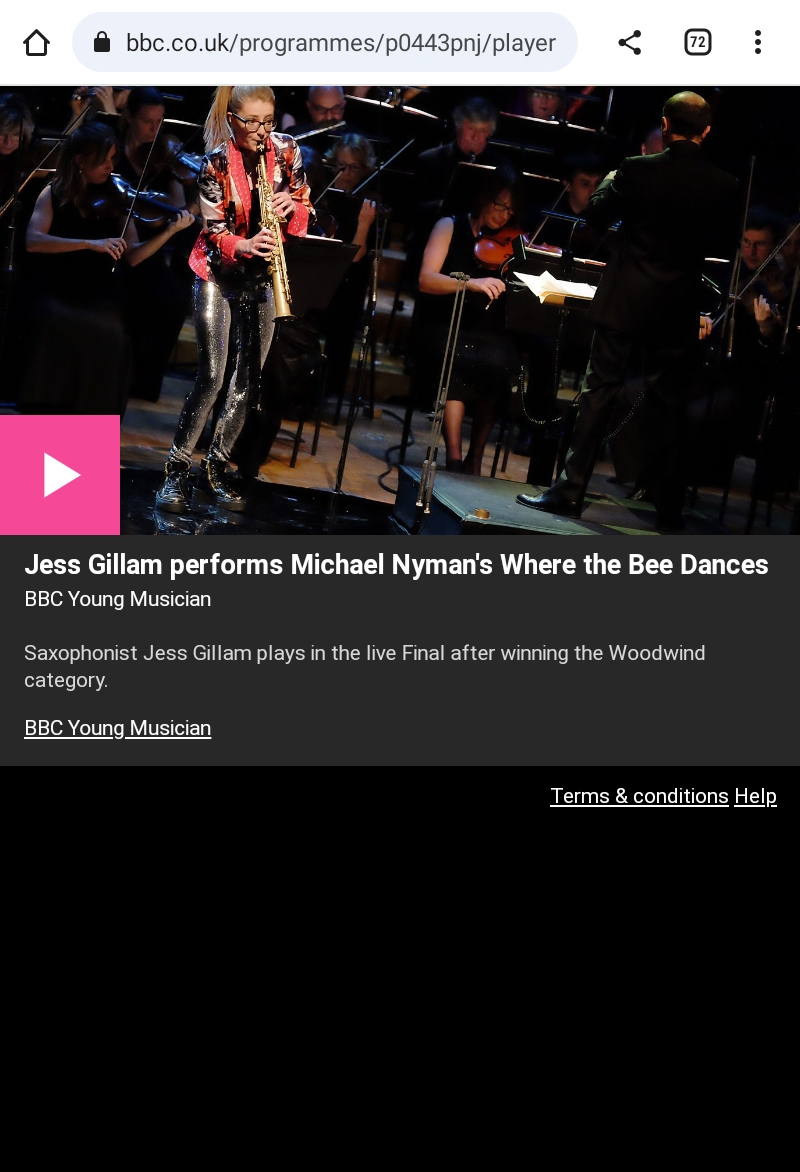
(Jeez, just the memory brings me to tears.)
Continue readingAnd this following one I have added for dessert. Particularly the first bit is hilarious as well as amazing.
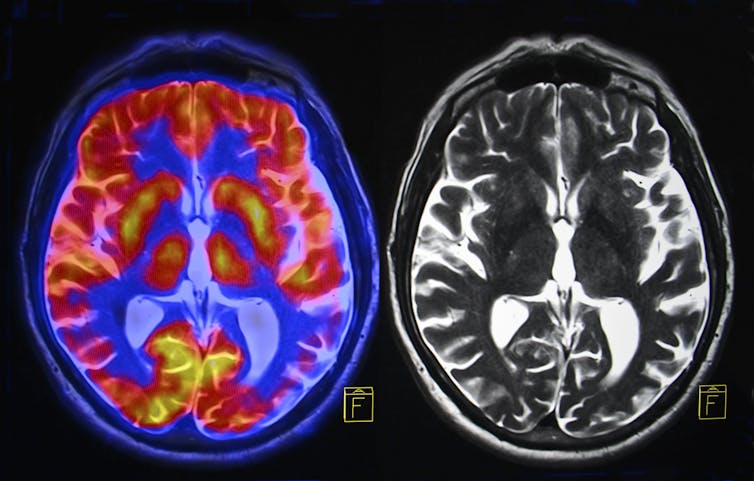
Barbara Jacquelyn Sahakian, University of Cambridge; Christelle Langley, University of Cambridge, and Muzaffer Kaser, University of Cambridge
A bit of stress is a normal part of our daily lives, which can even be good for us. Overcoming stressful events can make us more resilient. But when the stress is severe or chronic – for example caused by the breakdown of a marriage or partnership, death in the family or bullying – it needs to be dealt with immediately.
That’s because repeated stress can have a huge impact on our brain, putting us at risk of a number of physical and psychological problems.
Repeated stress is a major trigger for persistent inflammation in the body. Chronic inflammation can lead to a range of health problems, including diabetes and heart disease. The brain is normally protected from circulating molecules by a blood-brain barrier. But under repeated stress, this barrier becomes leaky and circulating inflammatory proteins can get into the brain.
The brain’s hippocampus is a critical brain region for learning and memory, and is particularly vulnerable to such insults. Studies in humans have shown that inflammation can adversely affect brain systems linked to motivation and mental agility.
There is also evidence of chronic stress effects on hormones in the brain, including cortisol and corticotropin releasing factor (CRF). High, prolonged levels of cortisol have been associated with mood disorders as well as shrinkage of the hippocampus. It can also cause many physical problems, including irregular menstrual cycles.
It is well established that chronic stress can lead to depression, which is a leading cause of disability worldwide. It is also a recurrent condition – people who have experienced depression are at risk for future bouts of depression, particularly under stress.
There are many reasons for this, and they can be linked to changes in the brain. The reduced hippocampus that a persistent exposure to stress hormones and ongoing inflammation can cause is more commonly seen in depressed patients than in healthy people.
Chronic stress ultimately also changes the chemicals in the brain which modulate cognition and mood, including serotonin. Serotonin is important for mood regulation and wellbeing. In fact, selective serotonin reuptake inhibitors (SSRIs) are used to restore the functional activity of serotonin in the brain in people with depression.
Sleep and circadian rhythm disruption is a common feature in many psychiatric disorders, including depression and anxiety. Stress hormones, such as cortisol, play a key modulatory role in sleep. Elevated cortisol levels can therefore interfere with our sleep. The restoration of sleep patterns and circadian rhythms may therefore provide a treatment approach for these conditions.
Depression can have huge consequences. Our own work has demonstrated that depression impairs cognition in both non-emotional domains, such as planning and problem-solving, and emotional and social areas, such as creating attentional bias to negative information.

In addition to depression and anxiety, chronic stress and its impact at work can lead to burnout symptoms, which are also linked to increased frequency of cognitive failures in daily life. As individuals are required to take on increased workload at work or school, it may lead to reduced feelings of achievement and increased susceptibility to anxiety, creating a vicious cycle.
Stress can also interfere with our balance between rational thinking and emotions. For example, the stressful news about the global spread of the novel Coronavirus has caused people to hoard hand sanitisers, tissues and toilet paper. Shops are becoming empty of these supplies, despite reassurance by the government that there is plenty of stock available.
This is because stress may force the brain to switch to a “habit system”. Under stress, brain areas such as the putamen, a round structure at the base of the forebrain, show greater activation. Such activation has been associated with hoarding behaviour. In addition, in stressful situations, the ventromedial prefrontal cortex, which plays a role in emotional cognition – such as evaluation of social affiliations and learning about fear – may enhance irrational fears. Eventually, these fears essentially override the brain’s usual ability for cold, rational decision-making.
So what should you do if you are suffering from chronic stress? Luckily there are ways to tackle it. The UK Government Foresight Project on Mental Capital and Wellbeing has recommended evidenced-based ways to mental wellbeing.
We know, for example, that exercise has established benefits against chronic stress. Exercise tackles inflammation by leading to an anti-inflammatory response. In addition, exercise increases neurogenesis – the production of new brain cells – in important areas, such as the hippocampus. It also improves your mood, your cognition and your physical health.
Another key way to beat stress involves connecting with people around you, such as family, friends and neighbours. When you are under stress, relaxing and interacting with friends and family will distract you and help reduce the feelings of stress.
Learning may be a less obvious method. Education leads to a cognitive reserve – a stockpile of thinking abilities – which provides some protection when we have negative life events. In fact, we know that people are less likely to suffer from depression and problems in cognition if they have better cognitive reserve.
Other methods include mindfulness, allowing us to take notice and be curious of the world around us and spend time in the moment. Giving is another – volunteering or donating to a charity activates the reward system in your brain and promotes positive feelings about life.
Importantly, when you experience chronic stress, do not wait and let things get the better of you. Early detection and early effective treatment is the key to a good outcome and good wellbeing. Remember to act in a holistic manner to improve your mood, your thinking and your physical health.
And you don’t have to wait until you are overwhelmed with stress. Ultimately, it is important that we learn from an early age to keep our brain fit throughout our whole life course.
Barbara Jacquelyn Sahakian, Professor of Clinical Neuropsychology, University of Cambridge; Christelle Langley, Postdoctoral Research Associate, Cognitive Neuroscience, University of Cambridge, and Muzaffer Kaser, Clinical Lecturer, University of Cambridge
This article is republished from The Conversation under a Creative Commons license. Read the original article.
This can be about losing your sister or mother to cancer or Alzheimer’s, your live-in lover silently leaving in the middle of the night, your best friend moving to Siberia, or even your health having taken a bad turn.
(video has disappeared)
I spoke with you over the phone, in 1980, or maybe it was 1981. You encouraged me to write. You said I wrote well.
Now have this for dessert:
And might this be suitable as seconds?
I added the latter without having read the book or watched the video. After having watched the film, I can say that it’s very suitable.
I’ll add the following too.
This Dutch eatery owner and her husband were attacked; her husband was stabbed and died. Now she can no longer support herself. Thankfully, people around her started a crowdfunding campaign for her to keep her afloat.

https://nos.nl/l/2486394 (Dutch news article)

You see the connections between the above, I trust.
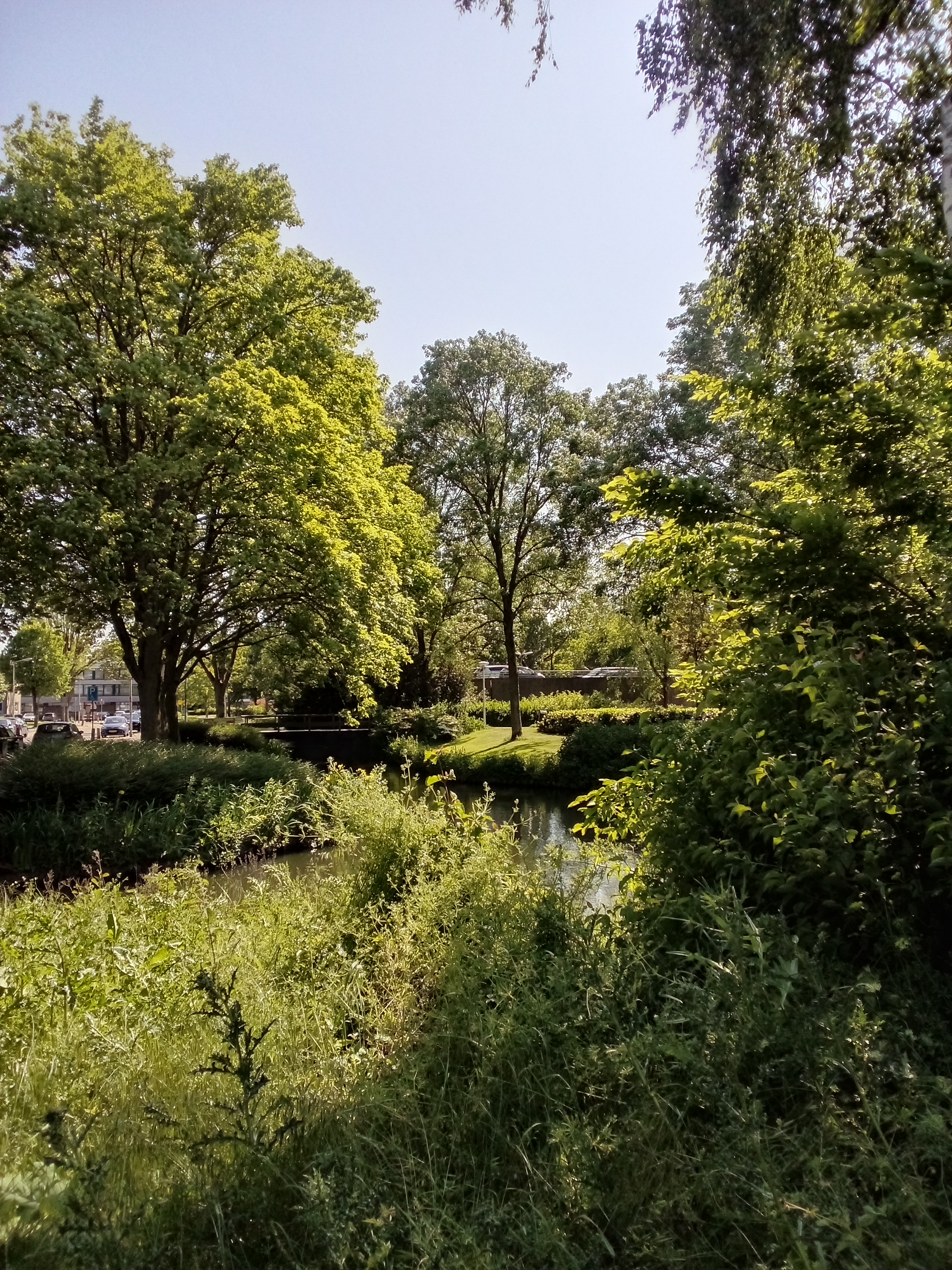
Sunshine, trees, flowers, a calmly preening great blue heron and Mr and Mrs Coot teaching their four toddlers what to do for food.
Very few pigeons here nowadays. Jackdaws have taken up their place.
Before, when I was growing up, sparrows were abundant. So we did what we could to eradicate them, after which the descendants of the pigeons that we once took from their sea cliffs flourished.


(vegan)
RIP.
I read about it in the Dutch news.
Haven’t seen it on the sites of CNN, the BBC and The Guardian. Weird!!!
Updated on 4 March:
Shorter was nominated for 23 Grammy Awards and won 12. His first nomination was in 1973. His most recent win was in January 2023, for best improvised jazz solo performance (“Endangered Species”).
However, CNN and The Guardian apparently did not consider his death world news or breaking news. By contrast, Dutch NOS news did and posted it on 2 March 2023. (It was one of the first things I read after I woke up on 3 March.) By this morning, on 4 March 2023, the BBC had put it on the front page of its site too, but it was not there yesterday.
The Guardian included it on the site on 3 March 2023, but you have to search for it in order to find it. Similarly, if you search on the CNN site, you can find the news too: https://edition.cnn.com/2023/03/02/entertainment/wayne-shorter-death/index.html
I usually visit the sites of The Guardian and the BBC about 5 times per day, if not more, and the CNN site 2 or 3, if not more. I visit the NOS site a lot because it often has more global and general news and a more neutral tone than the BBC site and the site of The Guardian.
(Everything is broken)
Let the chips fall
… drop to the ocean
Simulacra, that is.
(Except arrogance…)
As I couldn’t do much in the past few days, I did a lot of sitting in my lazy chair.
(I dug up some music CDs that I wanted to play but my 64-bit computer won’t play them and the speakers won’t work on the 32-bit computer that does play the CDs. The external harddisk that all this stuff was on is no more.)
I noticed some nice things that I took photos of. Colors, textures, that kind of stuff.
I just tried to upload the photos, but I can’t, for some reason.
(I later borrowed a few books from the library.)
