4 June 2024: Nature WorldView | Negotiating a pandemic treaty is just the first step — how will countries comply? by Tae Jung Park

The pandemic offered us wonderful opportunities. The lockdowns caused a marked drop in air pollution and people became more compassionate. Polls showed that for example in the UK, many citizens wanted to use the pandemic to make things better for everyone. Most didn’t want to return to the situation of before the pandemic. The peace and quiet enjoyed during the lockdowns was marvelous and wildlife benefited from it too.
Sadly, before the world had even fully recovered, Putin attacked Ukraine and from then on, everything went pear-shaped again. The opportunity we had was squandered. Instead, we allowed polarization to increase.
The goals of the manifesto drawn up in the Netherlands by 170 researchers (at Dutch universities but from all over the world) for grabbing this chance to green our economies (and absolve some countries’ debts) weren’t reached either.
On 4 June 2024, The Guardian reported that the debt payments of countries most affected by climate change were now the highest in over 30 years: https://www.theguardian.com/world/article/2024/jun/03/debt-payments-by-countries-most-vulnerable-to-climate-crisis-soar
Make a one-time donation
Make a monthly donation
Make a yearly donation
Choose an amount
Or enter a custom amount
Your contribution is appreciated.
It will be processed by Automattic, which is based in San Francisco. Automattic will send you an automated e-mail confirming your donation. Automattic and payment processor Stripe take up to 30% of your donation. Stripe is head-quartered in San Francisco and Dublin.
Your contribution is appreciated.
Your contribution is appreciated.
DonateDonate monthlyDonate yearlyOther than that I later looked like I’d spent two years chained to the wall in a basement (that is, pale), the pandemic was a blessing for me. The lockdowns meant that I could suddenly participate in all sorts of meetings in the States. The isolation and excruciatingly slow life that I’d gotten stuck into in England had always been agony for me. I’ve been climbing the walls for so long, and I couldn’t get away. Suddenly, that isolation was over and I had access to fast-paced developments on the cutting edge again. It was reassuring to see that the rest of the world still functioned the way I remembered it. Besides, stuff was happening! These developments were exciting! It was bliss.
I feel guilty typing that, knowing that so many millions have passed away. The pandemic did not touch me personally. I was blessed.
For many others too, however, the new and unexpected nature of the pandemic could not only be seen as frightening but also as exciting and as a marvelous learning opportunity. I am not just talking virologists.
The pandemic gave us a chance to do much better from then on.
The pandemic highlighted very well where the weaknesses in our society are, for example. We know now that we must improve this situation and start chipping away at the high marble thresholds in society that result in major health disparities.
The lockdowns also caused many people to reconsider and reorganize their priorities. They said they wanted less traffic, less noise, less air pollution.
Besides many deaths, the Covid-19 pandemic also brought us many precious gifts. Will we throw them away or will we use them?
170 researchers from all over the world, working at Dutch universities, wrote a manifesto for grabbing this chance to green our economies and absolve some debts. It’s a start.
The manifesto (PDF, at Leiden University)
I doubt that all the lessons the pandemic has taught us will be put into practice, but some will surely stick. A lot of people have had an opportunity to reassess their values and bring their daily practice in better alignment with those values.
It astonished me that governments around the world – except in Asia – were so ill-prepared, though. To learn the real lessons, however, we must also analyze what happened at the time of the swine flu scare.
It baffled me that the UK government was so slow and clumsy to respond to the pandemic. It wasn’t rocket science.
My mother used to say that it’s better to be safe than sorry. It’s better to be caught with an umbrella in bright sunshine and look like a clown than to be without one in a downpour. Political motives dictate something very different.
Did we know the scientific intricacies of the virus from the beginning? Did we know how quickly we would have vaccines? No. But we didn’t need to know that to be able to respond.
I didn’t know quite what to expect either, but I prepared three spray bottles with an antivirus-strength disinfectant. We knew that it was a coronavirus pretty soon, which was good news. I started wiping down door surfaces and door handles. For a while, I also sprayed packaged groceries, until it became clear that that was not really necessary (unless if you medically vulnerable).
The “protecting the NHS” approach made sense, but it is fair to wonder if the NHS was ever protected well enough in this crisis.
To my surprise, I predicted measures and provided certain advice and information ahead of the UK government, sometimes months before. It was reassuring to see that the UK government would eventually come around to my ideas. I don’t mean this as daft as it may sound.
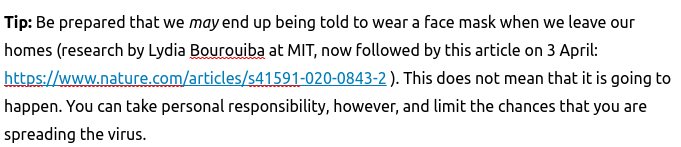
I wrote this in early April 2020. On 14 June 2020, I posted the text below.

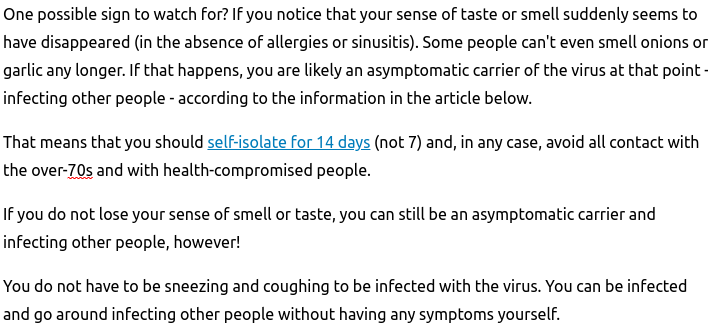
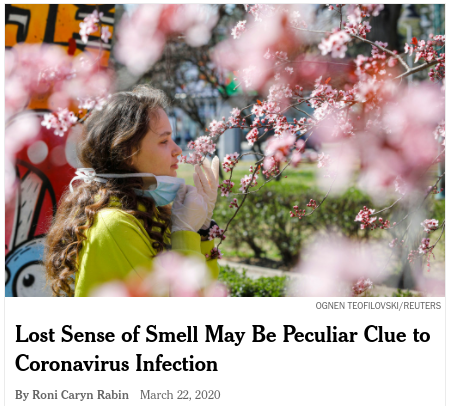
I wrote the above text very early on, based on an article published on 22 March 2020. It took the UK quite a while to start spreading that message.
I also mentioned asymptomatic spreading long before the authorities did.
I rejected an American scientist’s alarmist views about the virus being spread by the ocean surf (communicated by Yahoo News, sent to me by someone in the States) as very likely to be nonsense. For starters, Wuhan is nowhere near the sea. The missing link that this scientist was trying to identify was asymptomatic spread. Tunnel vision tripped her up.
Others and I also caught out two Californian doctors who spread misinformation. They gave a press conference that was recorded and uploaded to YouTube in two parts. These doctors were very likely financially motivated when they started giving news conferences, downplaying the pandemic and denying the need for any measures. They even went as far as to state that nothing much was happening on the east coast, while particularly New York City was getting overwhelmed at the time. They had a very different video on the website of their Covid-testing clinic that they had quickly built, however. The pandemic was not raging in California yet, so presumably, their new clinic was not doing well while their other, pre-existing clinics were seeing a marked decline in business. I was one of the people who reported their videos to YouTube. YouTube eventually decided to remove the two videos of their press conference.
What I was wrong about, at the very beginning, was the need to shut down international travel to the UK. I didn’t think it could be done, thought that it would be too impractical and I was also concerned about the xenophobia it might result in. In a way, though, I was right about that too. As in many other countries, a typical knee-jerk response was to close the borders to flights from China, while the infection cases were arriving from Italy unrestricted.
As soon as there were tests, I focused more on testing before departure, upon and after arrival as well as monitoring the indoor air at airports.
The latter was later partly taken over by monitoring sewage, as its non-infectious virus content reflects local infection levels. This is something we can quickly put into practice when the next pandemic hits, depending on its exact nature, because it enables you to direct resources to where they are needed. Testing, measures, vaccines, and other kinds of support. Think “support”, yes, instead of “battling” or “combating”. When you battle or combat something, you’re thinking from a position of weakness, from a defensive stance, whereas supporting comes from a much more empowering frame of mind.
What I was right about was to suggest privately – to two or three people in positions that would require them to stay as functional as possible if they caught the disease – that N-acetyl cysteine might help ameliorate Covid symptoms (and that it likely wouldn’t do any harm in any case, but to consult with their doctors, as they might have conditions I was not aware of). Several studies – such as this review – were later carried out into that; clinical trials were started as well to quantify this effect.
I found it unfortunate that some scientists and scholars were unable to communicate well to the public what they meant by some statements, in everyday practical terms. There seemed to be no anticipation, for example, of the situation that people could end up living in a lockdown area but working in an area with fewer restrictions and be expected to show up for work. In theory, people could be intercepted by the police and arrested in England while driving to their workplace in Wales.
We did see police overreact in the US as well in the UK, though. I found that worrisome – and made a video about it – because of the risk of losing the public’s cooperation in the long run at a time when we thought that developing the vaccines would take much longer than it took in practice.
The latter shows…
…where there is a political will, there is a way!
Let’s remember that. For example, we have now seen the massive health impact that socioeconomic inequality has on all of us. The solution is not – Tory-style – to reject any measures that would increase such disparities, but to keep tackling the disparities at their roots.
In England, most so-called Tories (highly old-fashioned right-wing Conservatives) believe that great inequality is a wonderful thing because it puts more money in their pockets and in their wealthy mates’ pockets.
Increasingly incompetent and reactionary traditionalist Tories have been running the UK for over a decade. The British mostly survive in spite of their government, not thanks to it. This means that we all have to find ways to change that situation of excessive inequality without paying too much attention to what the UK government is doing.
Employers can do that, for example, by paying the Real Living Wage. Do not trip over the government’s attempt to take the wind out of the Living Wage Foundation’s sails by renaming the minimum wage the living wage. Tory governments do this kind of thing often, I have noticed.
We can do other things, on the local and regional level. It will take guts and insight and lot of learning, the guts to make mistakes and learn from them.
You empower poor people by lifting them out of poverty.
Those with ample income – locally – could voluntarily decide to donate part of their income towards a poor family’s electricity bill or internet access, effectively leaving that family with more income.
They could also – individually or collectively – decide to pay a poor family’s council tax bills. Even after council tax benefits, that would still leave the poor family better off. A council could install such a scheme without needing to violate or carefully work around privacy laws, simply by offering such a scheme and making its existence well known.
You do not empower poor people by making them shuffle through the rain and letting them wait in line for a hot meal, while repeating to them that they must behave. After all, they are poor so they do not know how to behave, right? Only the well-to-do know how to behave. The hot meals are wonderful, but all they do is maintain the status quo and keep people feeling helpless. In fact, they emphasize people’s helplessness.
Councils also could also set up a scheme that allows the well-off to send a supermarket gift card to families on benefits.
While it might be better to get the well-off to connect with the poor, to expose the poor to a world that has more opportunities and show the well-off that the poor are nowhere near as dumb as they perhaps assume, privacy concerns would make this too labor-intensive.
However, a council that can send out council tax payment reminders can do more than that and can use the same system towards accomplishing some real change.
Councils could also decide to give a few benefits recipients the entire sum that they would have received during a year as a lump sum, to enable them to get out of poverty, the way it was done in a televised project a few years ago. It worked very well for most people. This would need support, but this could be done by qualified volunteers with the expertise to advise people and the mindset that would bring them great joy to be able to do so.
We also must learn to listen to so-called anti-vaxxers. I had my Covid vaccines and briefly volunteered in the vaccination effort, but I was taken aback by how quickly some medical professionals online threw me to the wolves just because I pointed out that I’d had the measles as a child and that in those days, it was just something we children all got and all got over.
I do my best – a benefit of my ripe old age, maybe – to resist rejecting people on the basis of their opinions as well as their opinions and instead try to listen to them and make them feel heard instead of instantly rejected.
This also sometimes gives me the chance to show that some alarmist conclusions are merely the result of misunderstandings and thus to provide reassurance. Very unfortunate phrasing of information on the website of the European Medicines Agency (EMA) led many people to believe that the Covid vaccines were making large numbers of people very severely ill and that this was kept from the public.
Besides, history has shown that some of those who were ridiculed and sometimes even persecuted in the past because of their deviant views turned out to be right after all. Galileo, for example. That too, is a reason to listen.
- UK:

(link)
(29 June 2020) - UK:
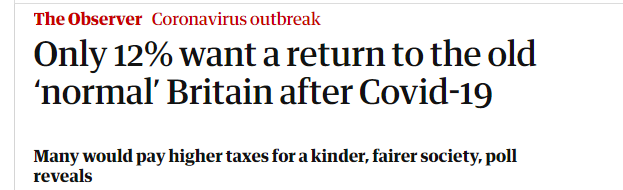
(link)
(12 July 2020) - Global:
“Please, let us pay by taxing us higher”, say 83 of the world’s richest.
(link)
(13 July 2020) - “Managers who suddenly discovered compassion in the pandemic need to make it permanent”
(link)
(27 February 2021)
I created this video at the time to reflect my opinion of Boris Johnson’s disgraceful handling of the pandemic. I didn’t know whether to laugh or cry about it and found myself doing both when I made this video.
