Chapter 2 from my book “Is cruelty cool?”
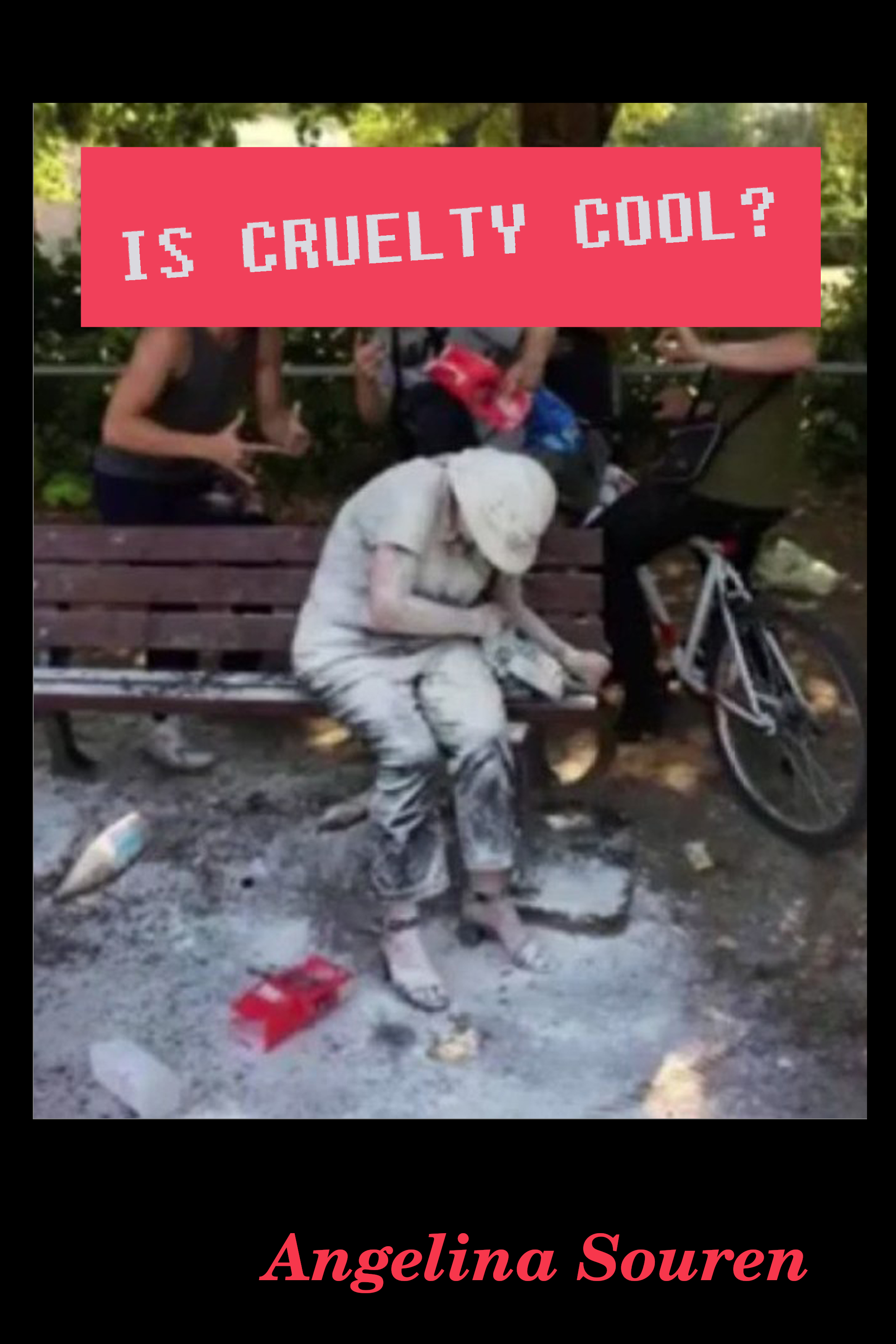
Now I need to tell you who the woman in the photo on the cover is. It’s Janice Morris. It’s also me. I’ll get to that.
Ms Morris was 49 years old when five young people poured water and flour over her and threw eggs at her while she was sitting on a park bench. She was spat at, too. One of the five attackers took the photo that I have used for the cover of this book and shared it online. It has since been shared so widely by the media that I consider it part of the public domain.
That specific attacker was also the only one whose name became known as he turned 18 shortly after the incident occurred. That is how I know that while he was lucky enough not to receive a custodian sentence for his attack on Ms Morris, he later still went to prison after he attacked someone else, namely Matthew Banks. The media described Matthew banks as a “vulnerable” man. They also called Ms Morris “vulnerable”. It is often used as a euphemism for learning-disabled, isn’t it? It is often used for someone who “isn’t right in the head”, isn’t it?
According to the media, most of Ms Morris’s five attackers supposedly came from “good” middle-class families. This in itself speaks volumes as it seems to convey a character judgement based on one’s socioeconomic status. The attackers’ parents all seem to have said that the attack was the fault of one of the other attackers.
It was one of them. One of them caused all this. It wasn’t one of us.
By the time that the fifth attacker, the eldest of the five, was sentenced for the next attack, he supposedly was “of no fixed address”. After the first attack, he‘d lost his job and his college place. Apparently his family kicked him out. This may have happened to him before as he was described as “back with his family” after the first attack. I am curious about his background, but haven’t been able to find out more.
Here’s the thing. If this guy and his buddies had not shared the image material on social media and if it had not gone viral, chances are that nobody would have given a damn. The attack would likely have had no repercussions for the attackers and Ms Morris might well have become the target of more attacks while everyone around her merely shrugged about it.
I was 47 when I was attacked while sitting on a bench, just like Janice Morris. Five thugs, younger than the ones who attacked Ms Morris as far as I can tell, threw water and sand over me and pelted stones at me. Two stones hit my head. This happened in Southampton, in Woolston.
Ironically, I had been sitting on a bench reading and annotating a report on the forensics practice in the Netherlands. See, I am not “vulnerable”. I am educated. In fact, my IQ has been assessed as 133. While it’s not stellar or extragalactic, it shows you that there is nothing “not right in the head” about me. I am quite capable and able. I was working on the Dutch version of Forensics for Dummies at the time.
The weather was lovely and I wanted to sit outside in the sunshine. I often went to the nearest Costa Coffee to work on the terrace there, but that was a long walk along the Itchen Bridge. This time, I decided to stay closer to home. There wasn’t anything even vaguely approaching a Costa Coffee in my neighbourhood, so I perched on a low wall on the left bank of the River Itchen. Starbucks hadn’t arrived yet in the UK back then, but even now, there still isn’t a Costa Coffee or Starbucks or anything like it in the streets around where I was living at the time. Nothing.
Three lads started to harass me. I told them off, but I didn’t feel comfortable with them hanging around – besides, they were distracting me – and I decided to relocate so that I could concentrate. I found a bench along a road. The location was not as good as the other one, but being able to work in peace made up for that.
The lads apparently had gone in search of me after I relocated – or maybe they even followed me – because shortly after, they showed up with two more buddies and attacked me out of the blue. I had not seen them arrive as I was concentrating on my report. The attack came completely out of nowhere. I felt fortunate that I had not been working on my laptop as it surely would have been ruined.
When I walked away from the scene, I encountered a woman about my age walking along the pavement in the opposite direction. I warned her that I had just been attacked. She scoffed at me. WTF!? She didn’t know me. I didn’t know her. Why on earth did she scoff at me?
The attack baffled me and scared me. It made me angry, too. I was fuming. Furious! What on earth could have motivated a bunch of youngsters to attack me while I sat working on a bench?
What concerned me even more was the degree of approval there appeared to be among a certain percentage of the adults in the community around me. Strangers evidently had been gossiping about me for a while without ever having spoken with me.
I didn’t see a doctor, but I stopped work for a week. I’d had a severe concussion before, so I knew that I didn’t have that, but it was clear enough that I had to take it easy for a little while. A physician would merely have told me the same: to take it easy. One of the bumps on my head was painful and interfered with my sleep.
The youngsters in question felt so secure that they parked their butts on the low wall surrounding the property in which I was living, one or two days later. I actually panicked. They had never done that before. They seemed to be making a point. They were part of the in-group and would be absolved of any wrongdoing no matter what they did. I was not part of that in-group. That seemed to be their message. That I had no standing.
What caused this? Well, a combination of things. Certain politicians had been going on about how foreigners only came to the UK to enjoy benefits there, cleverly concealing that this wasn’t even possible, that you had to have been in the UK for a number of years (five?) before you could become eligible for benefits. In fact, you had to supply ample proof of income – in person – in order to get a National Insurance number. I was in my mid forties. I was not married. (Marriage is still the highest attainable accomplishment for most English women.) I did not leave home to go to my place of work every morning and I didn’t return like clockwork every evening. I was working from home, but people around me must have assumed that I was “not right in the head” and on disability benefits. Does that really make it okay to attack someone?
One woman in a shop asked me if I was alright, however, with a concerned look on her face. (Thank you, stranger. I remember you with gratitude.) People had clearly been talking about what had happened.
The local police were aware but never came over. I had said that I didn’t want them to come over, but an Englishman in the Netherlands e-mailed me about two somewhat similar attacks that I fortunately had not been aware of at the time of the attack. Ernest Norton was attacked in a similar manner as I was when he was playing cricket with his son. He died. The youngsters even threw half a brick at Mr Norton. It broke his jaw. Sophie Lancaster was killed when her boyfriend was attacked and she came to his aid. They were both Goths.
I was in my fifties when stones were being thrown at me again. This time it was on the beach in Southsea in Portsmouth, near the South Parade Pier. While it had the semblance of coincidence, it also had the threat of something much darker as the rest of the entire beach was clear. Why throw stones in my direction? I decided to leave, just in case. I walked away calmly.
In the same town (Portsmouth), a bucket containing a liquid was emptied over me very deliberately along Kingston/London Road near Kingston Crescent one Sunday afternoon by two young men who first greeted me with a courteous and neutral “good afternoon” or something along those lines. I returned the greeting. Should I not have? Was that my mistake? Surely not. I acted as if nothing had happened, as I did not want to give them the satisfaction that they must have been after. I went home, took a shower and washed my hair, taking the possibility into account that the liquid thrown over me hadn’t been water.
These are examples of things that sober people do to complete strangers in England. This too is bullying. It’s cruelty carried out in public and accepted by far too many people as perfectly permissible.
I still have so much trouble wrapping my head around the fact that cruelty appears to be accepted by default in England. It’s glorified. Kindness is mistaken for weakness. This only changes within the context of an attack if public opinion swings against it, for example, when something goes viral on social media and other people speak out because they are appalled. It also occurs when someone happens to die such as when Ernest Norton was attacked while playing sports with his son in his own neighbourhood.
Like I said, I am pretty sure that if the photo that the attackers took of Ms Morris had not gone viral and there had not been subsequent online outrage, the police would not have done a thing. I heard about it from someone in the United States, in fact. He’d seen it on Facebook. That the case went to court and that the attackers were sentenced is unusual.
Now it is time for me to be very blunt. British Prime Ministers signal time and time again that this kind of behaviour is perfectly okay. When Boris Alexander De Pfeffel Johnson spouted verbal abuse at random groups of people who he considers inferior, he was whipping up hate against them. EU citizens. Gay people. People from Africa. People who study hard and work hard.
Does he believe that this sort of behaviour gives him edge? “Me superman, bwah-ha-ha. Me hurl abuse. Me eat lots of spinach and carry a baseball bat at all times. Me make abusive jokes that many people find embarrassing. Me likey likey insulting people.”
When others do this, it is hopefully usually considered ridiculous, but when a Prime Minister does this, it encourages incidents such as what happened to Chris Whitty in June 2021. Chris Whitty was the UK’s version of Anthony Fauci in the US after the pandemic hit.
Johnson is not the only UK PM who’s done that. In early December 2023, I saw that Rishi Sunak’s Number 10 had issued a chilling statement. I had not expected this from Sunak. It’s in the style of the rhetoric of Geert Wilders and Donald Trump, but scarier. Sunak is currently touting us foreigners in the UK as “undercutting British workers”. I find the use of the word “cutting” particularly concerning because it subliminally suggests that immigrants commit knife crimes. It also once again blames us for Britain’s low wages, and I’m not aware at all of any undergrads bringing their families to the UK (or any other country, for that matter).
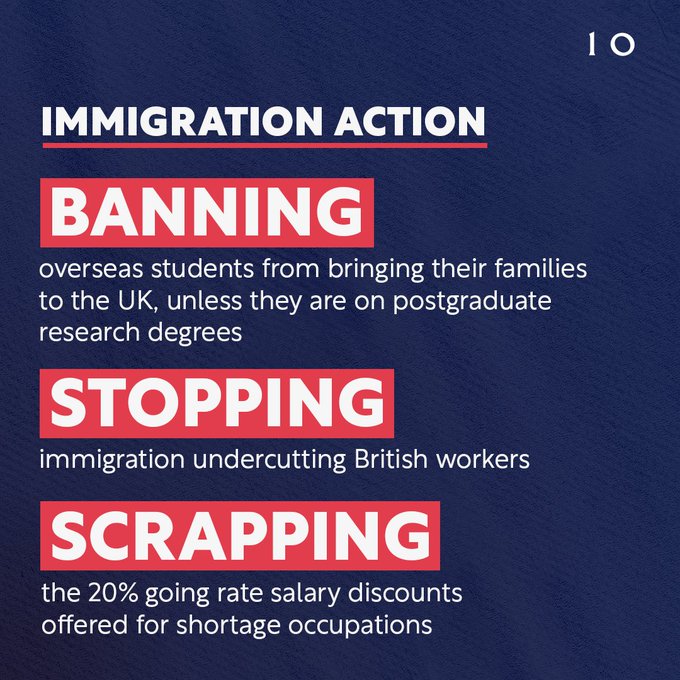
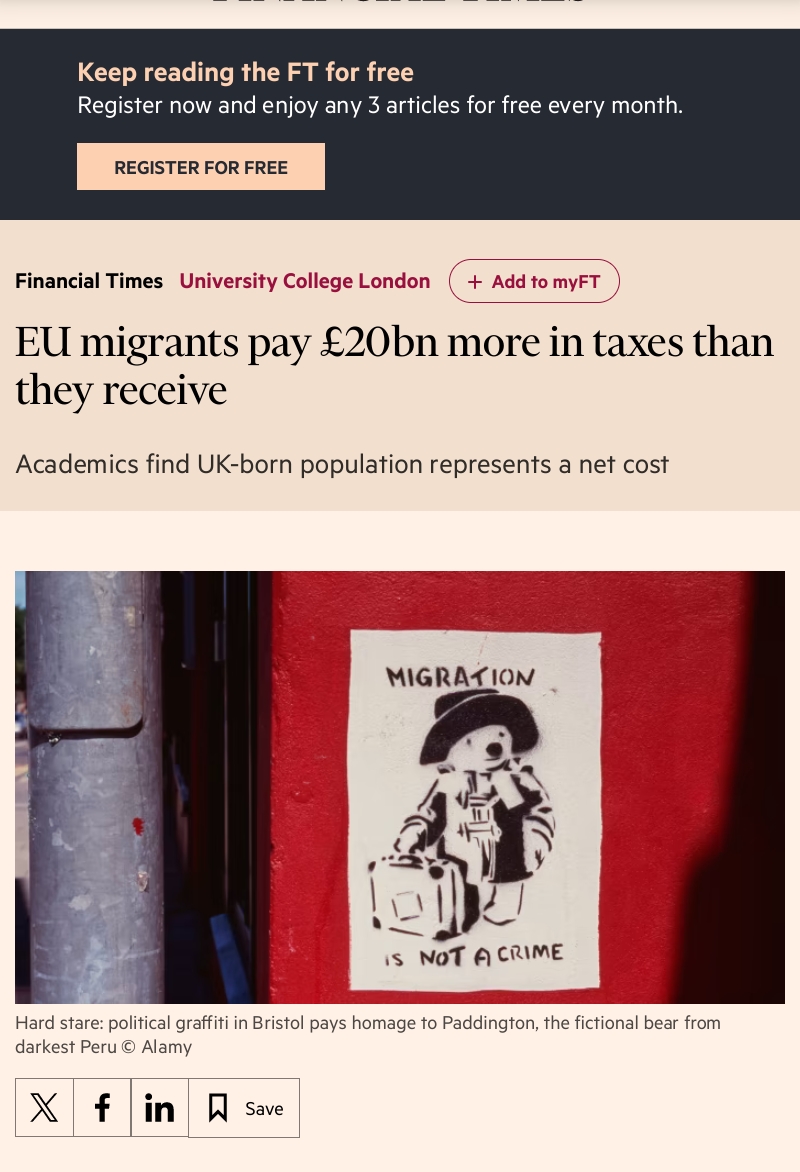
Of EU citizens wishing to live in the UK, Johnson’s Home Secretary Priti Patel claimed that we’re all “cheap, low-skilled labour” and that our numbers would be reduced. The latter sounded like Nazi rhetoric. I found it really creepy. Boris Johnson warned us openly that we shouldn’t dare feel at home in the UK, that it was outrageous that some of us had truly made our home there. In terms of tax contributions, EU citizens were in fact propping up Brits because the latter caused a net drain on the system whereas EU citizens were putting billions into the UK’s coffers. Can cold hard numbers trump cold hard false rhetoric (No.)
Many English people will disagree with what I am saying, just like most whites in England believe that there is very little racism in the UK. The experiences of non-whites here contrast strongly with that idea.
Large chunks of England are fiercely misogynistic and viciously gerontophobic and many folks here still harbour laughable colonial views about everyone and everything located beyond Dover. All you find over there are banana republics with fake universities and fake degrees. Diploma mills, that’s what they are, those foreign universities! Only England has real universities. They’re all thieves and liars who are out to get you, those foreigners. Dentistry in the Netherlands is of a pretty high level, though, I was once told. For a banana republic? It’s how British insularity often works out in practice. Yes, I am from the Royal Banana Republic of the Netherlands.
Xenophobia towards foreigners is not the whole story, not at all. There is after all also a high level of distrust against anyone else from anywhere else even if the latter is only 20 miles down the road, or even 5. This level of insularity often approaches complete paranoia towards anyone who is perceived as a stranger. It can express itself as xenophobia towards foreigners, but I think that it is often not discrimination of foreigners but much more generally of people who are perceived as “not one of us”.
The emphasis on group differences in England may also have led to a tendency to go after anyone perceived as “weak” or “vulnerable” in any way, such as people with any kind of physical disability, people with Parkinson’s and autistic people, or unaccompanied women sitting on a bench. It also applies to anyone who looks a little different, such as people with red hair. By the way, is that related to the idea that red-haired people are Irish? No Irish, no coloured, no kids.
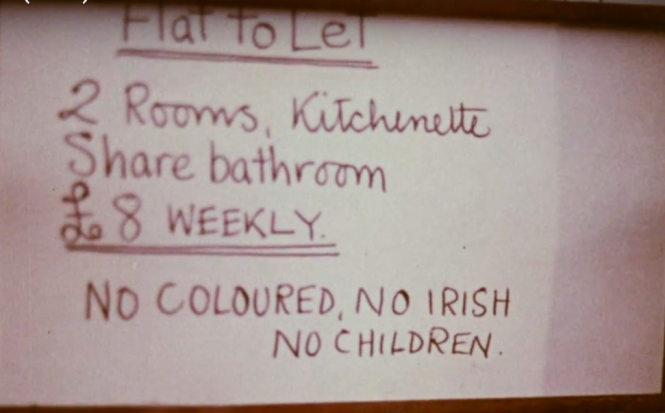
Credit: Race Relations Board (1969) BFI/Crown on BFI Player (https://player.bfi.org.uk/free/film/watch-race-relations-board-1969-online)
The above image is from London in the 1960s. Maybe one day someone will explain to me what the English had against Irish people. Was it the mere fact that they were immigrants? Could it still have to do with a medieval fear that strangers might be carrying the plague just like Boris Johnson talked about Covid “washing up on our shores”? Along with refugees, eh, Mr Johnson.
Does that photo also express cruelty? I think so. The children were possibly added to the list, as an afterthought, for the same reasons that many landlords don’t allow pets. Children and pets are seen as loud and messy. It is more or less also why you can’t run a pub from your home. Pubs are loud and messy.
But people of colour? Irish people? That’s otherization. Discrimination. Was this cruelty? Yes. Imagine that you wouldn’t be allowed a place to live just “because”. It’s cruel to be left outside in the cold and the rain just because.
Let’s go back to occurrences such as the attack on Janice Morris and the bullying of George Cheese, which I talked about in the previous chapter. As a highly educated woman who is not “vulnerable” (in practice often a euphemism for “mentally impaired or having a mental health condition”), I know all too well how impossible it is to stand up for yourself in such circumstances. The mere fact that you are being targeted seems to convey that you deserve to be, that you have earned it, that there is something wrong with you, that you are “vulnerable”. The fact that you are being abused seems to imply that you have been asking for abuse.
If you complain about what is being done to you, you are likely to find yourself being covertly assessed for how much there is wrong with you. I wish I were kidding. The mere fact that you are being interfered with is mistaken as a signal that there has to be something “wrong” with you, that you are “not right in the head”, thus best avoided and can be easily ignored without fear of (legal) repercussions.
I wonder if this may also have something to do with what psychologist Daniel Kahneman calls the focusing illusion. It creates a mismatch between what someone experiences and what others see. It’s when onlookers attach too much significance to one particular aspect of another person’s life. An example is that able-bodied people tend to underestimate the quality of life of people who we still often describe as “disabled”, a term that erroneously indicates that there is no ability left. Onlookers see that someone is disabled and that is all they can still see. On the basis of that tunnel vision, they conclude that disabled people must be miserable all the time and thus they deem the lives of disabled people not worth living. Just like other people, however, most disabled people experience life in all its aspects. Just like able-bodied people, different disabled people also have different characters and different ways of coping with life.
Could it be that getting bullied, abused and harassed, just like often happens with disabled people, leads to dehumanization? Observers associate the powerlessness of being abused, bullied and harassed with a complete lack of ability on the part of the victim. They may feel nothing but pity. They consider the victims pitiful and as very different from themselves. If Mr Whitty hadn’t been in the public spotlights because of the Covid pandemic at the time, he too would likely have met with mere pity, and little if any outrage. No action would have been taken.
Another example is that of poverty. Poverty is usually approached with the same narrow tunnel vision as being bullied, hassled and harassed or any kind of being different-bodied is. Homelessness is another example in which this plays an extremely limiting role. It also happens to refugees and to victims of sexual violence as well as to people who’ve been to prison. The focusing illusion wipes out the identity of people and equates them with one particular aspect of their lives. This can even be merely one event that happened decades ago.
Attacking someone, on the other hand, often gives you edge among your peers, among the people in your own group. Attacking someone who appears to be “vulnerable” and who is not expected to stand up for himself or herself and fight back is seen as relatively risk-free.
Does this actually express utter vulnerability – fear – on the part of the people who attack others? Is extreme insecurity their motivation?
This is a good moment to encourage you to look into the teachings of Thích Nhất Hạnh, if you haven’t already done so. He was a Vietnamese Zen Buddhist monk and international peace activist who passed away at the start of 2022 when he was 96.
This idea of it being considered okay to attack people who are seen as unlikely to fight back is strengthened by what I already mentioned, the fact that if the victim protests, it is often counterproductive.
The fact that you were attacked works against you, perhaps particularly if you are a woman yet aren’t crying gentle tears like a lovely young weak damsel in distress, but put your foot down and say “This isn’t right. In fact, this is plain wrong! This is a violation of my most basic rights! You have an obligation to help me, to support me!”
It does not earn you empathy. It often earns you disgust and rejection. It has to do with those perceived differences, those differences that do not even have to be real, but are often purely imagined.
I don’t like the way the media were harping on about Janice Morris’s supposed “disability” and “vulnerability”. I didn’t like the way in which surprised local people responded when they suddenly realized that I am not learning-disabled or “perhaps schizophrenic or something” either. (It did sometimes make me laugh because their “holy shit” response was often hilarious, for example when they spotted me on a train and observed me handling a smartphone and behaving like a proper adult.)
It should not make a difference. We all deserve to be treated with the same human respect. I don’t deserve greater respect because of my intelligence and because I went to university. I did nothing to earn my intelligence. It was handed to me on a platter when I was born.
At the same time, I deserve that people don’t instantly assume that I am either making it up or am delusional when I mention my professional background, however.
Just like Ms Morris, I also deserve breathing space and to be free from getting mollycoddled and fussed over and messed with as if I were a five-year-old who just tumbled down the stairs.
Similarly, the fact that I am not married does not mean that I am mentally impaired and therefore deserve to get hassled and don’t have the right not to get hassled. Hassled? Bullied! Abused! Terrorised! Sabotaged! Become impaired by all that interference!
The prosecutor in Ms Morris’s case apparently said in court “Effectively the whole world can see the photograph, which is quite humiliating for the victim in this case.”
That’s odd. This photo should have been seen as humiliating for the attackers. Why are these attacks considered “humiliating” for the victims? Is that because they confirm the victims’ lowly status in society? Why is it considered to be humiliating for the victims to come forward and be open about such attacks?
The photo of the men hassling Mr Whitty also went viral. His response was the same as that of Ms Morris and the same as mine when I was attacked. Whitty ducked. I ducked, Morris ducked. Our bodies responded in the exact same way. You shield yourself as well as you can, turn away from the attacker in any way that you can. Being attacked or otherwise accosted makes you feel acutely “vulnerable” physically.

Let’s look at another example. It did not matter to the attackers who exactly were present in the Twin Towers on 11 September in 2001. None of these people had done anything wrong. The attackers perceived them as representing a group of people that they saw as a threat to their values and to their own in-group.
You cannot say that because the people working in those buildings were perceived as being part of a different group than the attackers, they deserved to be attacked. It surely would have been wrong if any of the survivors first would have needed to prove that there was nothing “wrong” with them before receiving any kind of help.
So, what is different about these two situations? What is different about people who get attacked when they are sitting on a bench and people who get attacked when they are sitting at a desk inside a building?
It is all about whether the people around them are able to identify with them or not. Yes, it is about whether the victims are perceived as being part of the same group, their own group, whether they are seen as “one of us”. If onlookers are not able to identify with the victims, they assign blame because this enables them to reassure themselves and tell themselves that nothing as bad as that will ever happen to them or any of their loved ones.
If they are able to identify with the victim(s), however, this provides a very strong urge to help because it assures them that if something like this were to happen to themselves or to any of their loved ones, they would receive support from the people around them. It also provides a motivation to do something about it to ensure something like this will never happen to them or to any of their loved ones.
In 2015, Americans bombed a trauma centre operated by Médecins Sans Frontières in Afghanistan. This did not happen in retaliation for the 9-11 attack but in the mere course of doing what they were doing. There wasn’t a heck of a lot of media noise about those victims, was there? It happened to some of “them”. It didn’t happen to some of “us”.
Part of the tendency of people to reassure themselves so that they can continue to feel secure is this idea that there is a group of people who behave in a moderate and safe way and will thus be protected from certain kinds of harm and that there is another group of people who exhibit risky behaviours and are more vulnerable as a result.
I first became aware of this phenomenon after I was raped in my own bed by an intruder, decades ago. I found the responses from different people around me quite intriguing and I noticed them in spite of my state of distress. One woman said to one of my sisters: “But she’s such a nice well-behaved girl!” Those who were most supportive seemed to be people who had been through similar experiences of harm, misfortune or injustice, situations in which they bore no responsibility for what had happened to them, such as having developed a brain tumour and ending up with a partially paralysed face (and without husband – because he left). They were able to identify with me.
Up to that point, I too had probably never given a thought to the phenomenon of rape or how it might be experienced by the victims. I too had done a great deal of unaware victim-blaming up to that point. Rape was something that happened to other people. Not to me. Never to me. How could I ever be raped? I was, for example, very careful to walk on the well-lit side of the street if the other side was dark when I had to walk somewhere after dark. I didn’t engage in risky behaviours and I didn’t wear miniskirts.
I had, however, been molested on a train while commuting from Baarn to Amsterdam one morning and I had not seen that coming either. I had been dozing in my seat – it was between 5 and 6 in the morning – when someone suddenly grabbed one of my breasts and squeezed it, hard. He then swiftly left the carriage and jumped out of the train. I counted myself lucky that I had been wearing a bulky tweed blazer that day because it protected me. Still, my breast hurt. Women take these things in stride. It goes with being a woman. You don’t want to pay any more thought to it than you have to. You feel lucky that it wasn’t worse and you move on. I may never even have told anyone about that incident. It is part of the price you pay for being female. You take it for granted.
Again, I thought that I was safely asleep in my own bed when that rape occurred a few years later. I had quit my job and was into my Master’s. Another stranger suddenly fell on top of me, yanked away my panties and raped me. Hopefully that will shake up a few people’s beliefs about the kind of “risky” behaviours that get women raped.
Six months later, my rapist returned in the middle of the night but he must have made a sound because it woke me. I was well into women’s self-defence courses by then, grabbed a knife and walked to the door. I moved the curtains a little bit and sure enough, there he was, crouched. He had heard it when I grabbed the knife, though, and must have seen the movement of the curtain too. He rose and jumped off the balcony. It was not even considered trespass. The housing association allowed me to move to a different building then. I could not move elsewhere; my case wasn’t considered urgent. I was told that the likely response if I challenged this would be that I shouldn’t have moved into the building in the first place. I kid you not.
There is still a heck of a lot of victim-blaming in England with regards to rape too. We’ve been seeing it for decades. “If you didn’t exist, if you weren’t somewhere at a certain time or if you had not been wearing white socks instead of navy socks or black socks, it wouldn’t have happened.” But they’ll say the same thing about the person wearing the navy or black socks. ”If only you’d worn white socks.” If you keep in mind that people do this to reassure themselves and make themselves feel safe, it becomes easier to have empathy and compassion.
It’s not always that simple. Take Number 10’s current rhetoric. Currently, 40% of the British are in poverty. The UK government has a tradition of blaming that on foreigners. Supposedly, foreigners are forcing British employers to pay them low wages. I remember when a Dutch friend of mine added up her and her English partner’s salaries and hours and discovered that a friend of hers in the Netherlands made the same in 25 hours per week, for similar work, as they were making in 60 hours per week. Poland and Slovenia are about to overtake the UK.
So now the UK government is raising the minimum annual wage requirements for migrants by £ 20,000 to almost 40,000 for them to be eligible for a visa. It’s my expectation that this will make British workers even less happy about immigration because, if implemented, it means that they will be seeing foreigners live a lush lifestyle while they continue to rot away. It’s bound to make them feel even more strongly that migrants are taking something from them. After all, where are those extra 20,000 pounds going to be coming from? That’s how they are going to feel. They’ve always been told that we’re taking something from them, after all. We’re thieves and liars.
When I called around for volunteering opportunities in Southampton, as far back as 2005, I was already told one day “It’s not as if you’ll be allowed to handle money or drugs, you know.” I’ve run into other people who didn’t believe that I could speak English or that I was educated or that I even was who I said I was. “I don’t know you. We don’t know you. You are one of them. We can’t trust you. I can’t trust you.” Someone once even literally recoiled as if I was handing him a poisonous snake when I reached out to give him my business card. We were associated with the same university, but he clearly didn’t believe me. “We aren’t scientists. We’re lying thieving low-skilled cheap labour, all of us.” The real solution, of course, is addressing poverty by raising wages and benefits for the lower 40% of the British.
You need to address people’s real concerns, their real fears, such as that they won’t be able to buy food or pay the rent or mortgage. Blaming it on foreigners is a rather strange thing to do for a Prime Minister whose own very wealthy foreign wife wasn’t paying any taxes in the UK until the public became aware of it after her husband’s political career began to take off. That is when she changed her tax status.
Effectively, the UK government is currently priming people for physical attacks on foreigners again by declaring migrants the enemy of the British people. We foreigners aren’t “undercutting” Brits. That’s bullshit. The UK has a lot of very low wages and the reason for that is that wretched English class system that declares some people less deserving, less valuable. Just like all over the world non-whites and women tend to earn less for the exact same job, in England, people who don’t come from a higher huppity fluppity fluppity class also are paid substantially less.
When I was still living in Southampton, I wondered why so many people around me looked so gloomy all the time. Then I spotted a vacancy in a shop window. Store manager required. The salary was an insult. I also remember later seeing a vacancy in environmental research that paid very little (12,000 or so) yet asked the candidate to collect environmental samples by using his or her own car. Car ownership required to apply.
When the government declares foreigners the enemy, victim-blaming foreigners who are attacked becomes easy. The same mechanisms remain at work. It’s inconceivable that someone is attacked without good reason. If that were the case, it could happen to any one of us, after all. So we assign blame. So that we can continue to feel as safe and secure possible. It was that person’s fault, surely, that he got attacked.
You can perhaps even recognise it in a description of suicide within a bullying context (bullycide), which “often occurs with children who cannot cope with the chronic abuse of bullying, and seeing no other way to escape it, die by suicide to end the suffering.”
The phrase “cannot cope” assigns blame, suggests that the victims were flawed, doesn’t it? There is a complete disregard for the practical aspects of bullying. Children can’t relocate across the country. They can’t even take themselves out of the school. They can’t transfer to a different school all by themselves. Bullying can make your life impossible to live for purely practical reasons. Think of the boy whose schoolbooks or laptop just got taken from him and thrown into the pond because he comes from a poor family and wears cheap shabby-looking clothes. What is he to do now? How can he complete his homework?
Attacks such as the one on this imaginary schoolboy or the well-paid foreigner or on Ms Morris are not about the victims, but about how others perceive themselves and how they perceive their victims in relation to that.
When a rapist or a serial killer sits at a table in a cafe and observes the people walking by in order to pick his next victim, he often chooses the victim because her gait and posture convey a degree of vulnerability. However, the selection of targets for the infliction of cruelty in a public setting with witnesses is more complicated and is a matter in which we all play a role and bear some responsibility. It begins with how we talk about others at the breakfast table, over the heads of our children. Do you often get hassled? Telling people off in a stern voice and not giving an inch until they have retreated seems to work best. It requires courage. It requires that you do not give in to the fear, the physical vulnerability that you feel in such situations, and not showing any anger. Hold your ground. They don’t expect that and that alone can deter folks who harass you. You have to visualise this, however, practice it in your mind, imagine that you are being attacked or harassed and imagine how you will respond. Did you know that there are videos on YouTube with self-defence tips for people who use crutches and canes? They don’t teach you any of that at Age UK or the CAB.
