4 March 2026, from the US:
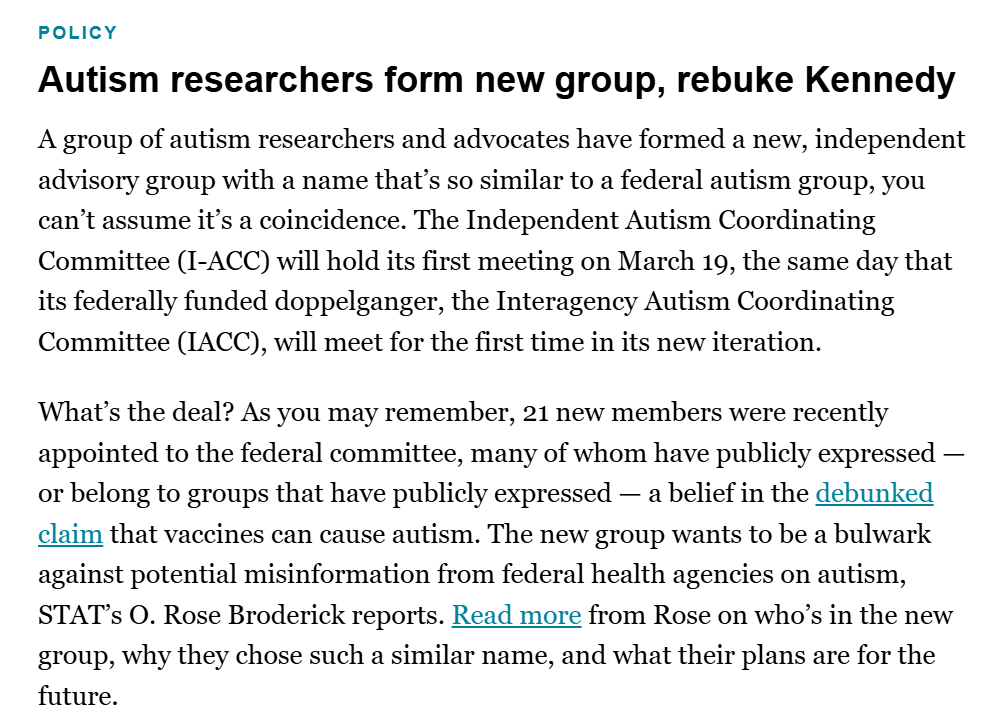
Here is a hint for so-called allistic people. This is not autism:


You can find the answer at the bottom of this page, so keep reading… 🙏😊👍
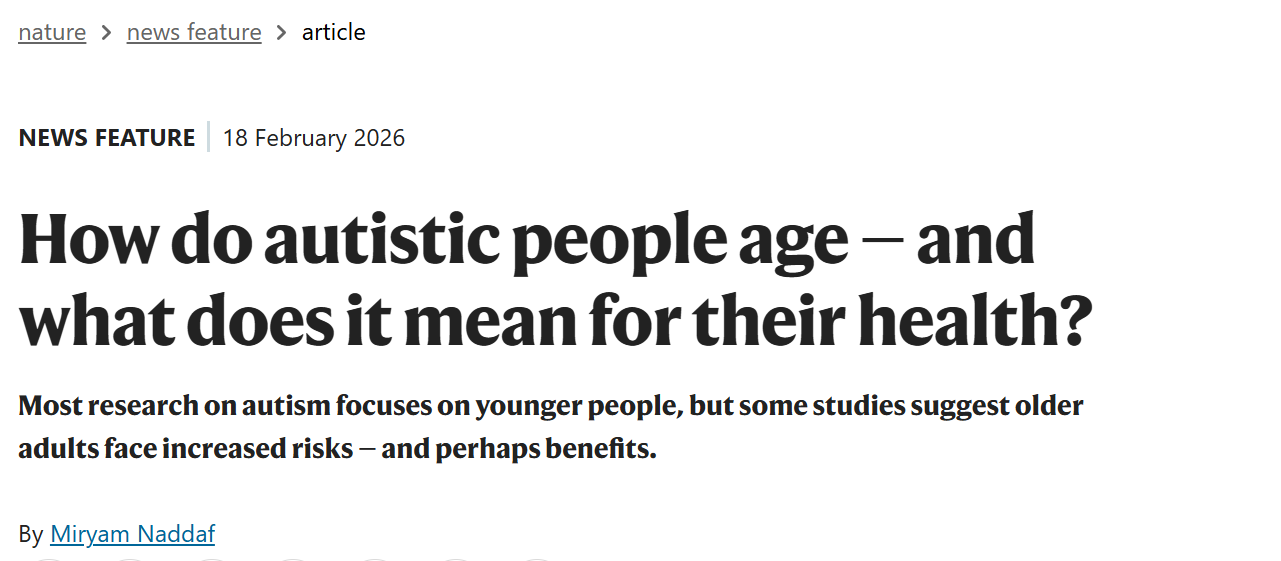
How do autistic people age — and what does it mean for their health? I find this very important because I’ve had some recent experiences in this area and it made me aware that there seems to be a huge knowledge gap. As autistic people can be super skilled at masking, they can also be very good at masking cognitive decline. On the other hand, what comes across as cognitive decline, if an autistic person is older, can actually be an expression of pathological demand avoidance.
My latest insights:
- People who are perceived as being narcissistic can actually be autistic, not narcissistic.
- Contrary to what I used to believe, autistic people can be quite mean (even sadistic) and manipulative as well as controlling. They also lie pretty easily, which is also contrary to what I used to believe. They can also do things like speak badly of other people behind their backs.
- My impression is that autistic people don’t really “see” allistic people and maybe that is also why they often don’t respect their boundaries. They see them as tools or accessories. They have empathy but it can be quite egocentric, not other-centered.
- Many autistic people hold the opinion – feel – that allistic people are out to get them and do all sorts of things just to upset autistic people, but the heart of the matter is that allistic people usually have no clue that someone is autistic. They can feel slighted by the slightest things.
- I used to think that autistic people simply experience the world very differently (much more exploratory or haptic, much more focused on the senses) and are often more playful.
- I used to believe that autistic people are not judg(e)mental. I have now learned that they can be extremely judg(e)mental (and can be quite obsessed with physical appearance and appearances in general), but perhaps they derive that from what they see in the allistic world. They often don’t get societal conventions etc and in that sense they certainly are not jugd(e)mental. Their logic works very differently.
- They can also punish you, in really childish ways that can leave you incredulous but they can also do it in really nasty and vindictive ways. This is also why I now think that so-called sadistic or resentful stalking often comes from autistic people (whereas I initially thought that it comes mostly from people with NPD because of how they are popularly portrayed). I’d already noticed that Anthony Burstow (who stalked Tracey Morgan) suffered from cognitive deficiencies; it shows up in one of the court documents. It was also evident in the case of Bruce Raines (who stalked Laurisa Anello). I can understand it and have empathy in these cases but that doesn’t mean that others – including myself – have to put up with abuse. There is huge gap in society, a lack in training and support, and that has a lot to do with this. This starts in childhood and there should definitely be support for autistic teenagers. It’s important to prevent a pattern of otherization and mockery as it can lead to a lot of resentment building up. Autistic people aren’t stupid. If they want revenge, they can be relentless and ingenious.
I really wish that I – or rather someone else – could create some kind of big breakthrough in this area. It’s hard to talk about this topic without running the risk of coming across as otherizing and demonizing people. That is not my intention.
Diversity is the spice of life. If you think about it, neurodiversity is what many fairy tales are about. The giants, the gnomes, the fairies and faeries, they are like regular people.
I’d always thought that all people have their quirks and issues, some just a little more or a little more obviously than others. I now believe that (neuro)diversity is a multidimensional space in which we all take up our own unique spot. It includes properties like color-blindness, having synesthesia, and being artistic or good at math and even being left-handed or right-handed or ambidextrous. I started looking into all kinds of neurodiversity including personality disorders after I became stalked. To my astonishment, I discovered that I had known two slightly autistic people for decades. Since the early 1980s, to be precise. One was a neighbour, the other one a colleague. Both have Master’s degrees.
At first, I thought that slightly autistic people were just different but actually quite cool. I thought that they never lied and were very much into honesty. Then I started to see how they can really twist the truth and gaslight you, but for different reasons than why people who have NPD engage in gaslighting. They can gaslight you so convincingly that you really start doubting what you thought you knew. It can be quite unsettling.
Autistic people can also really make you feel abandoned and alone. They have oodles of emotional empathy but often little to no cognitive empathy. They feel. They feel deeply. But very often, it seems, they don’t actually care. They do care a lot about how others perceive them and treat them and about keeping their real personality masked. Similarly, there is a lot of emotional empathy but it is rather egocentric in a way. It is not about how someone else might feel. It is about how something makes them feel.
Having pondered and experienced these differences for around five years now, I can see that there is a lot of overlap between NPD and autism, whereas I used to think that they were very different. I’d seen just one or two others say that (in videos, probably), but did not pay a lot of attention to it.
Next, I learned that they can also engage in puzzling behaviours that are known as pathological demand avoidance. That’s a big can of worms!
While discovering all of this is helping me understand better how autistic people tick, I am also finding that the way autistic people are essentially run by their nervous system can make them very trying to be around. If they vocalise a lot, their constant vocalisations can really put you on edge, possibly particularly when it reflects their inner turmoil. (Also, the way they interact with their surroundings can cause changes in mood and behaviour, I’ve noticed, but maybe I am overanalyzing now.) They can behave like petulant children, but they are not petulant children.
With NPD, you know where you stand once you know that a person has a narcissistic personality. It’s relatively easy to separate truth from fiction when you are dealing with someone who has NPD.
Autistic people can feed you a shit load of total hogwash without you having a clue that it’s hogwash. I suspect that a lot of this can be explained by pathological demand avoidance. They fabricate realities – truths – that are more palatable to them. They can be so convinced of these fabricated truths that it’s easy to believe them. (This is a rare instance in which the Dutch otherizing phrase “In hún beleving is dat zo” is appropriate. You need to work with their truths for as long as you need to, to avoid conflicts.)
I already learned pretty early on that it is helpful to know whether someone is autistic or has a narcissistic personality disorder (NPD). The distinction does seem to be important, yes, but knowing that someone is not mainstream neurotypical can already help a great deal too.
Why?
- Because then you will know how to interpret certain things that someone does or says. That enables you to take responsibility for how you respond to their words or actions. It can even help you avoid becoming upset.
- That way, you may also avoid upsetting them in turn.
- Or… you can avoid them altogether when you’re not in the mood and in need of, say, some peace and quiet.
Personally, I have noticed that once I know that someone is (mildly) autistic, I can start to see where they are coming from. I no longer occasionally get puzzled by a miscommunication or mismatch in understanding, I no longer hold something against the person that would have been intentional if it concerned a neurotypical person and I also think that I then become better able at avoiding confusing or making them feel uncomfortable.
There are many misunderstandings about autism, such as that all autistic people avoid your eyes or that they are stiff and rigid. It’s also not true that autistic people never lie.
I suspect that the general public’s impression that mildly autistic people are stiff actually reflects autistic people’s masking behaviors. Masking = mimicking how autistic people feel that other people behave like – masking what they are really like – so that they fit in better. Because of this desire to fit in and avoid drawing attention and criticisms, they may also pay more attention to social conventions (and status symbols), even though they may not actually value those things.
Autistic people are probably often more playful than the general public. They are often highly experiential, in the sense that they enjoy interacting with the physical environment, but this emphasis on the senses can also cause sensory overload.
I think that you can probably think of the ego of autistic people like a stream of water that is running downhill. It is constantly interacting with its surroundings and that interaction defines its boundaries.
There is a TED talk about a researcher who discusses how extremely altruistic people differ from psychopaths in terms of ego. The ego of highly altruistic people is not necessarily well defined, with diffuse barely discernible boundaries and they experience themselves as part of a whole whereas psychopaths have a strong ego with firm borders.
Autistic people usually have very high emotional empathy but can lack in cognitive empathy. They see the world through their own eyes.
No two autistic people are the same, however, just like no two non-autistic (neurotypical) people are the same. Some autistic people are able to filter out certain sensory signals and stop them from reaching their brain. Others can’t do that at all.
Autistic people often process information differently. Below, there is a video about this.
If you want to learn more about autism, consider taking one or more of the online training modules at the National Autistic Society UK: https://www.autism.org.uk/
My recently gained insights include the realization how challenging the world often is for so-called high-functioning mildly autistic people. They receive no support. They have what some of them may call “faulty software” (or a lack of certain software) while their hardware works fine.
They can build up a lot of resentment, frustration and anger over time. They can undoubtedly often feel very powerless. Professionally, they may find themselves sidelined without understanding what happened. This can lead to resentment and it can also push them into isolation.
An example of an autistic person driven by resentment and anger is perhaps the young Englishman who traveled to the United States and set out to kill Donald Trump. He went to a rally in Las Vegas and grabbed a security guard’s gun. He didn’t like Trump’s racist tendencies.
Like many other people, autistic people can become quite vengeful when they feel slighted or when they perceive someone as “evil”, but they usually tend to be positive thinkers, in my experience.
When should you wonder if someone might be autistic?
That could be if the person draws baffling conclusions, does baffling things or gives baffling explanations or excuses that seem to defy all logic but that contain no ill will.
If you’re dealing with someone who never apologizes, that too may mean that the person is autistic.
If you want to get a vague sense of how autistic people think, then artificial intelligence (AI) such as certain chat bots and customer service bots may give you an idea. The information is there, but there is no or little judgement (no right/wrong etc) and the context is often lacking. The information occasionally also gets combined into baffling conclusions or concoctions.
This lack of judgment in the zen buddhist meaning of the word can get autistic people at trouble at work.
On the other hand, autistic people may also fib a little and not fess up that something (a light, a sound) is bothering them and ask you to not do something. Instead, they may say that someone else has said to them that this thing is bothering them and ask you not to do that thing for the sake of that other person. (Autistic people can be pretty loud themselves without realizing that this might impact others, too.)
More information?
Autism
If you want to know more about autism, then following the wonderful Henny Kupferstein and her work is a good start. I also recommend that you discover part of her story in this KQED podcast. Her work includes helping (notably non-verbal) autistic children express themselves through music, also long-distance.
In this video, Henny explains in detail how the visual/mathematical world works for her and that it is a thing of great beauty.
Here are some resources that I have heard mentioned (by Leon Brenner) that may be useful to you as well.
Books by Donna Williams:
- Nobody Nowhere: The Remarkable Autobiography of an Autistic Girl
- Autism: An Inside-Out Approach: An Innovative Look at the ‘Mechanics’ of ‘Autism’ and its Developmental ‘Cousins’
- The Jumbled Jigsaw: An Insider’s Approach to the Treatment of Autistic Spectrum `Fruit Salads’
- Exposure Anxiety – The Invisible Cage: An Exploration of Self-Protection Responses in the Autism Spectrum and Beyond
- Somebody Somewhere: Breaking Free from the World of Autism
- Autism and Sensing: The Unlost Instinct
- Like Colour to the Blind: Soul Searching and Soul Finding
- Not Just Anything: A Collection of Thoughts on Paper
Book by Bruno Bettelheim:
Books by Temple Grandin:
- The Autistic Brain: understanding the autistic brain by one of the most accomplished and well-known adults with autism in the world
- Thinking in Pictures
- Visual Thinking: The Hidden Gifts of People Who Think in Pictures, Patterns and Abstractions
- Unwritten Rules of Social Relationships: Decoding Social Mysteries Through the Unique Perspectives of Autism: New Edition with Author Updates
- Navigating Autism: 9 Mindsets For Helping Kids on the Spectrum
- Temple Talks about Autism and Sensory Issues: The World’s Leading Expert on Autism Shares Her Advice and Experiences (Temple Talks about . . .)
- Different… Not Less
- The Way I See It, Revised and Expanded 2nd Edition
Photos at the top
No, it’s not autism. It’s fear. Anguish. Terror. These people have shut down. Their entire focus is on one thing only and just about everything else in their lives has dropped away. These people’s gazes are looking inward and their faces are bland and rigid because their loved ones had been violently taken as hostages. Context: Israeli – Palestinian conflict, 2023.