This page contains mostly information that happened half a century ago and is no longer material.

Although various people have either tried to drive me crazy or prove me crazy, they haven’t succeeded. Other than that I am highly intelligent, I am actually pretty middle-of-the-road normal (and that is even also the case as per MMPI). I’m like this:
- A goodie-twoshoes.
- Highly conscientious.
- I used to be a workaholic because I like to enjoy what I am doing and I enjoy doing a good job.
- I also have a crazy strong sense of responsibility.
- So, go ahead, You can call me boring, no problem. I couldn’t care less. I probably would consider you boring too. 🙂 If we were all the same and all would like the same things, the world would be a very boring place.
For years, however, whoever was on my tail since 2008 portrayed me as a horrible woman (whose life must be made hell), such that one day, I got the message “you are actually a really nice woman” and I thought to myself “no shit, Sherlock”.
There’s also been the constant bombardment of “you’re a loser, nobody likes you” and “you’re really really stupid” and other attempts at gaslighting and brainwashing (such as that I had been sexually abused as a child, had DID, had ADHD, autism and god knows what else) and spreading similar stories about me to people who don’t know me or barely know me or once barely knew me, such as that I had been in a bad car crash, was learning-disabled, didn’t know how to use a calendar and god knows what else.
However, I also got stuff like “I thought you were wrong, but the Grenfell tower fire changed my mind”.
Perhaps these were people who stumbled upon me in the middle of my perimenopausal grumpiness combined with chronic sleep deprivation caused by very heavy traffic with lots and lots of wheels going over a series of speed bumps right in front of my Victorian-age flat with its sloping floor, mould problems and old windows in Southampton. The traffic caused a painting to fall from the wall one day and the floors were so warped that bookcases fell over, too. I was often very grumpy in those days. I was miserable. I was isolated. I wasn’t liking Southampton much. I was a just another filthy lying thieving low-skill migrant to many Brits.
There is nothing to be embarrassed about in my past. Almost everything that happened that was not great happened so long ago that I already worked through it a long long time ago, too.
I am middle of the road. I have no personality disorder and am not neurodivergent either, other than that my intelligence is above average.
Yeah, I have been through a few things that most people never experience. Many people go through shit, however. Maybe reading about my shit will confirm the following to them.
“You’ll get through this. You’ve got this.”
I do often behave in a really weird manner – mostly highly aloof or playing the clown – these days (2025-ish), but that is because of my circumstances. I’ve been living in fear for over fifteen years now – it’s taken its toll – and made several escape attempts out of a crappy situation plus I now simply need to grit my teeth and get through a very tough period of survival in my life. A few years down the line, I’ll be somewhere else, happily living my life again, and almost nobody who knows my face right now (March 2026) will likely even remember me by then, let alone be socializing with me.
So, to a large degree, I couldn’t care less as to what people who don’t know me think of me. Of course, it sometimes hurts, and it certainly hurts to be THIS powerless, but it will pass. I don’t feel a need to educate anyone who currently might be making fun of me. Why bother? Again, I am not saying that it doesn’t sting at times. I’m only human. That said, there are still people who believe that the earth is flat. It doesn’t make the earth flat.
I do feel that I am still often on the defensive too much. That didn’t used to be the case, but it’s another result of recent and current circumstances, accusations and suspicions. I’m a little too reactive at times. It doesn’t feel particularly good, but it’ll pass. I’m merely human, is all.
As my very thorough, self-funded assessment at a career counseling agency in Amsterdam concluded in 1983, I could do just about anything that I wanted to and had no particular weaknesses, but I was not the social worker type, they added. That’s correct.
The more you learn, the more you discover that you don’t know.
I’ve always loved learning and there is never a point in your life at which you can stop learning. There is always a lot of stuff that you don’t know about yet, no matter how much you’ve learned and how many degrees you have.
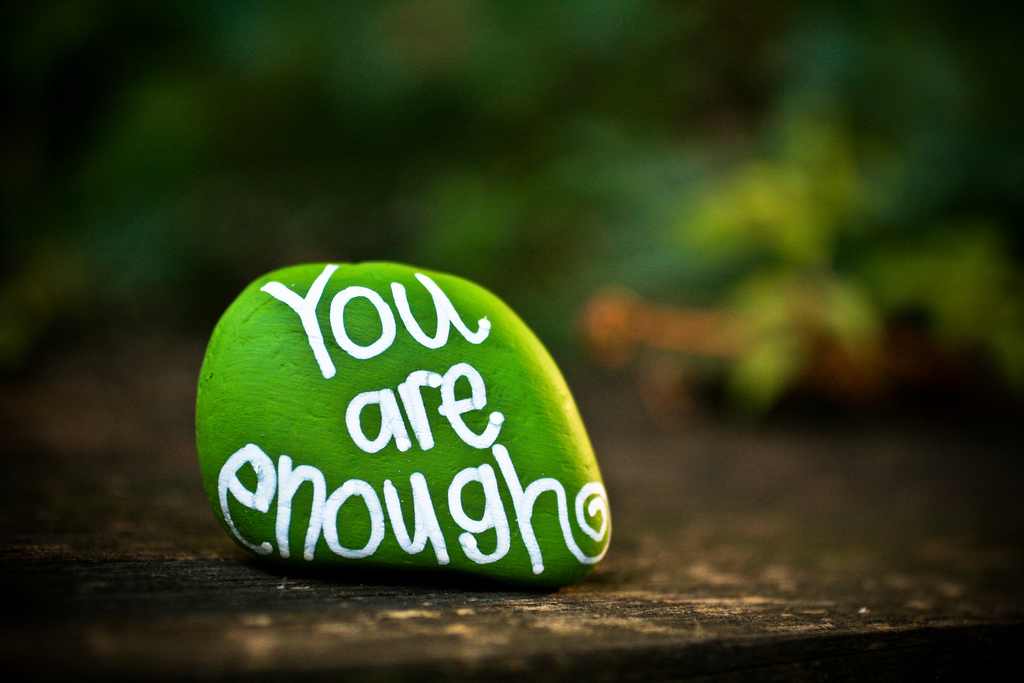
I know that it can be risky to talk about personal matters online, but I have reached a stage in my life at which that no longer is very important. I am enough. I am just right, exactly the way I am. I don’t need to be more like someone else to please that someone else. More materialistic, for example, or more consumerist or more obsessed with fitting in or more concerned with what people think of what I look like or whether I look feminine enough.
First of all, while I admit that the past 15, 16, 17 years of my life have largely been one big bizarre inexplicable mess, I cannot and should not and must not accept any responsibility for what unhinged or just plain nutty strangers out there do, whether to me or to anyone else (or to themselves). Ask Tracey Morgan, who went through a somewhat similar experience, first in Gosport and Fareham and then in the county where her parents were living where she went to after her marriage fell apart and her job at the Navy had disappeared too. It had nothing to do with anything that Tracey did. What she went through is called “sadistic stalking” in the classification of Lorraine Sheridan, the forensic psychologist who analyzed the case and supported her; it was not a figment of Tracey’s imagination. Other forensic psychologists call the phenomenon resentful stalking. It can last decades.
On the other hand, because of my age and because gerontophobia can be very scary and immensely abusive too, I also do my best to stay away from gerontophobes as much as possible and protect myself against them if or as long as it looks like I really have to. As many countries’ populations are ageing, there is currently a crazy focus on dementia, in my view. I call this “crazy” because it completely overlooks that most older adults do not have dementia at all. Too often, being over 55 is now equated with having dementia. This also depends on which culture you are in and on how much money you have in your bank account, however.
This is an example of a reason why many people keep their personal backgrounds to themselves and show only the rosy, shiny side of life to the public.
Ask Mandy van de Kerkhof, the Dutch woman who went to court in February 2025 after she discovered that 160 mental health professionals had looked into her files when she was being treated for depression. She’d been in a TV program to ask people to help her track down her birth mother.
However, I believe that when I feel the need to keep certain things from my personal background away from the public, I am often – not always – motivated by stigmas, thus might end up inadvertently perpetuating such stigmas by keeping my mouth shut.
This certainly applies with regard to my dad and his antics. What’s more, I share his physique and his colouring and when I was much younger, that made it too easy for some people to say that I was “just like my dad” even though I wasn’t. It’s dumb to draw that kind of conclusion on the basis of what someone looks like. It’s what racism is based on, too.
As my parents and my parents’ siblings are no longer alive and nobody who currently knows me knows any of my relatives, little I say about my personal family background can still impact anyone negatively. That consideration used to play a role for me in the past.
Also, be aware of the focusing illusion, a psychological phenomenon that makes people focus on one thing only, such as the fact that my mother passed away when I was 14. Yes, this is part of what shaped me, but it is not who I am. I am not “the girl whose mother died young” just like you are not “the guy who broke his leg in a skiing accident ten years ago” or “the woman whose purse once got stolen in Paris”.
The focusing illusion is often about one thing that people don’t have in their lives but would like or the one thing that strikes them about someone else, at the expense of everything else. This is also how ableism comes about, too. It is what happens when all that other people can see is the disability. They don’t see the person and they don’t see the wealth that may be in people’s lives in spite of the one thing that is missing. Money or the lack of it also has this effect.
Like most people, I have known a wide range of very different people who have all taught me a lot and I’ve encountered a lot of bad weather but also plenty of sunshine.
I don’t believe in keeping thorns in my foot just so that I can remember the road that I’ve traveled.
I left my childhood behind me a long time ago, but two things happened in my childhood that I should talk about because learning about it may benefit others.
- My mother pushed me into a caring and self-sacrificing role of little Ms Goody Two-Shoes that resulted into a habit of short-changing myself that I was not aware of for a long time. (I’ve forgiven my mother. I became her little soldier because she was ill with breast cancer and had a very needy husband so she needed someone who could help support her. She also often stood up for me in ways that really mattered and she always believed in me.) My self-sacrificing habit was not too evident, but I already sensed it when I was still in my twenties. When I was working on my MSc, I mentioned it to a psychologist, but he said that I was assertive enough. (I only spoke with him once.) When I was already in my forties, I discovered that I sometimes was angry with certain people, but that the anger was actually caused by some self-sacrificing thing that I had done to myself because I had unwittingly assigned a higher priority to someone else’s interests. Ouch! I do not think that it happened frequently, but I was not aware that I had been doing this, at all.
- Something that I only learned about when I was 50. It concerned something really stupid that my parents did when I was 4 or so and that traumatized me. My youngest sister had not been born yet. My middle sister had. It was a physical thing, but certainly not CSA. Simultaneously, my mother filled my head with lot of nonsense that I tucked away in my brain and then forgot about, but it was a set of instructions that I often followed without realizing it. It is the kind of thing that is healed or fixed or remedied the moment you remember and understand. My mother cut off my hair on that occasion and started to make me look like a boy. It caused a lot of anger in me. That is, I remember thinking the odd thought that I was secretly much prettier than my sisters. (Why “secretly”?) And I remember that we were in a playground and a girl asked me whether I was a boy or a girl. I didn’t like that. My mother later let go of this nonsense again, but it caused a lot of lingering confusion in me about what I was and wasn’t supposed and allowed to do. I remember feeling baffled and not liking it much when later, when I was a (very) young teenager, she wanted to make me pretty and put make-up on me at carnival. I also remember thinking that my middle sister was really stupid for liking a boy who smiled a lot, having no idea why on earth I thought that. It is a really odd thing to think for no reason. It seems that my mother had also warned me about guys who smile or who make you smile when I was still a mere toddler. When I got into my teens, I was not allowed to talk to boys either, at all, which is simply undoable for all sorts of practical reasons as I soon discovered and I’m sure that it also made me behave like a snotty jerk at times. I used to spend hours in front of mirrors fiddling with my hair. Later in life, I sometimes still cut off my hair without quite understanding why I was doing it. It’s because my mother had taught me that if I cut off my hair and made myself look unattractive, I’d be safe. The results of all of this have always made my sisters feel embarrassed and critical about me, but they later didn’t want to know how this had come about. They’ve always looked for excuses to reject me, it often feels like, rather than for reasons to embrace me, I say with a bit of exaggerated anger, but a great deal of that is simply because I was not just a sister but also to a degree their mother. (Anyway, the effect of this was nowhere near as destructive as the effect of the relentless abuse I became subjected to in England and beyond in 2008, I say in early 2026, but my life ain’t over yet.)
- My dad pushed me into the role of the family scapegoat. He used to tell me that I was a bad person because I was the eldest and he would sometimes refer to the story of Cain and Abel as “proof”. I thought to myself “whatever” because I knew that I wasn’t a bad person. Thankfully, I was blessed with high intelligence and I loved making observations, comparing them and drawing my own conclusions, regardless of whether people agreed with me or not. Scapegoating is a way of blaming one person for all sorts of things so that you don’t have to deal with it. After all, it has got nothing to do with you; it is the scapegoat’s fault. Scapegoats are also sometimes called “truth tellers”. We see it and say it as it is. We say it when we notice that the emperor isn’t actually wearing any clothes. That explains part of the anger that gets directed toward scapegoats.
- My two younger siblings adopted those patterns. I thought that they would eventually grow out of it as they matured, but this never happened. My youngest sister in particular seemed to think that I was born to serve her, but I take some of the responsibility for that because I shielded and indulged her a lot when she was still very young and moldable and I didn’t have the wisdom yet to see that my middle sister needed more attention. According to my middle sister, my aunt Margaret and uncle Harry offered to pay my youngest sister money in order for her to collect me from the airport in the 1990s when I returned from the States after my PhD funding had fallen through and everything went pear-shaped. My middle sister had to be at work that day. This was also when my youngest sister told me that I couldn’t stay with her “because you do things like want to drink coffee first thing in the morning”, I kid you not. (I suspect that she was actually afraid that _I_ would criticize her because of whatever morning habits she may have, but my sister probably never admits to being insecure these days and hides behind a slightly narcissistic facade instead.) Sadly and surprisingly, after my middle sister’s husband committed suicide, my middle sister seemed to blame me for that suicide. I felt heart-broken. Now I wonder if this too was a case of scapegoating. I suspect that the suicide simply broke her, however, and I suspect that she’s never really recovered from that.
Oddly enough, when I emigrated to the States, she fessed up to me that she then realised that she’d never made an effort to get to know me but that it was too late now. Of course, moving to Florida was glamorous enough for my sisters to approve of and talk about with their acquaintances and so was the fact that NATO called me to ask about workshops I offered through my business. But I should not have any needs; me having needs is too embarrassing for them. I should serve. The old pattern kept repeating itself over and over. “I don’t think that R needs anyone like that, to talk with about running a business etc” she once said and it never occurred to her that I might. I was always seen as the one without needs and wishes, as the one with duties. I got fed up. She kept pushing me into babysit duty for her eldest, didn’t want to talk with me. But when that eldest DID want to talk with me and needed ME, which was over a year after my brother-in-law’s suicide that was kept secret oh so emphatically within that family, my sister forbade her to talk with me. That was cruel (for my niece). Was I perfect? NO! There have been moments when I am sure I embarrassed my sister such as when I walked around naked in my apartment when she was visiting. (Easy for me, as I am nearsighted.) We were raised in an extremely prudist manner so in hindsight, I must have made her feel very uncomfortable, but hey, we were sisters.
- Unfortunately, this is also related to the habit that my extended family had of never talking about difficult matters and pretending that all is well. Status – the concept of appearances – is important for many of my relatives, and so is money. When my mother fell ill because she began developing breast cancer shortly after I was born, this was not talked about. If anything, people mentioned “C” (for cancer) or, rather, “K” (for “kanker”, the Dutch word for cancer) as one did in those days. My brother-in-law had been clinically depressed, another “family scandal” that was kept under the rug, apparently, though this was decades later. I didn’t even know about his death until I stumbled upon a newspaper announcement. That death too was being kept secret in the family.
- I believe that my dad probably had a severe borderline personality disorder, but there were no addiction issues. He had unpredictable wild mood swings, could suddenly fly into a rage, had abandonment and loyalty issues and unfortunately was not a very smart man whose IQ probably was not very high. He was far from stupid, however. He had his own business for over a decade and provided very well for me and my siblings (and our mother). He could be (emotionally) manipulative, but not for the sake of manipulation but out of this great hurt and despair that he had inside him. Both my parents had little more than a mere primary school education. Particularly my dad didn’t have a good understanding of how the world worked and I think that he was probably easily fooled. My mother was a home-maker. She passed away at such a young age that my siblings barely got to know her, certainly the youngest.
- I’m a fairly neurotypical and pretty average person, albeit with high intelligence and a strong drive for justice and fairness. Some say that the latter comes from having had the scapegoat role in one’s family. I, on the other hand, have had to take on a lot of responsibility from a young age. I think that it forces you to assess the world around you and decide for yourself what is wrong and what is right about things. I’m middle of the road, as per MMPI. I also had myself assessed pretty thoroughly at a career counselling agency in the course of a week prior to enrolling as a full-time earth sciences student. I particularly wanted to know what my weaknesses were after having had such a non-standard childhood. You can call me boring, if you want. That’s fine with me. My life, my values, my choices.
- For three to four decades, I have known two people who have so-called high-functioning autism (Asperger’s) and one person who has covert (vulnerable) NPD. I didn’t know that until fairly recently. Two of them have Master’s degrees in science and the other one has a Master’s degree in law. The one with NPD does have self-insight and was seeing a therapist some years ago, at around the time her partner left her. In fact, she was the one who first mentioned NPD to me. That made me look into it and recognize a few things, as I had had questions about her throughout the years. I then basically freaked out, I’m embarrassed to have to admit. Clinical psychologists said things like “these people want to destroy you”. What did that mean? So there you go. Out with the myths. It’s not about the labels, it’s about the people under the label. Some people are great, some aren’t. Some you click with and some you don’t. And some who you think you click with and who you appreciate can still suddenly turn on you and start making your life a living hell. You may not even be aware of it at first. Who knows what some people are doing when we aren’t looking. Unbelievable, how much hatred and contempt one small person can muster up. Where on earth do they get it from? 😧
- In addition, I know a woman with a PhD and bipolar disorder and a woman with DID and a Master’s.
Dementia does not run in my own family. Heart disease doesn’t either. Cancer certainly does, and I’ll come back to that, but it’s not one type of cancer, so even in that respect, we are very lucky. I will eventually succumb to either lung cancer or cancer of the esophagus, I expect.
While I still feel that (young) children shouldn’t have to figure out and then learn how to manage and support their parents (and even sometimes get them medical help), while many other adults look the other way because they don’t know what to do or misjudge the situation, it’s helped make me into who I am today. It is not who I am. I don’t regret my childhood. Some people have described it as “miserable” but I don’t agree with that characterization. I think that calling my childhood miserable is once again a manifestation of the focusing illusion. (If you want to know more about that, look into the work of psychologist and Nobel laureate Daniel Kahneman.)
So, no, my childhood certainly was not all bad. I got to eat well, build huts, ride horses, roam the moors and woods behind our home, hang out with calves at my grandmother’s farm, pick fruit, play music, sing in choirs, go to Greece and what not.
I didn’t keep anything from people, but talking about challenging situations like the ones I’ve run into tends to upset people and that usually serves no purpose. So, not too many people know that my dad tried to set me on fire one day when he’d flipped out again – he also quickly flipped back into his normal self and put out the fire – or that he used to floor the gas pedal and threatened to kill my siblings and me as well as himself – usually on a German Autobahn – and that I had to do a lot of talking to get him down from that roof top.
Yes, dealing with my dad has taught me how to negotiate in high-stress and life-or-death situations. That mechanism became second nature and has later kicked automatically in a few times. It for example resulted in me getting my driver’s license, passport and bankcards back from a mugger in Florida. I negotiated with him.
Later, I began to understand that people probably couldn’t always make sense of me. I sometimes must have seemed cold or naive to them, as if little affected me or as if a lot escaped me, or by contrast, occasionally overly sensitive, whenever I became stretched too thin. There wasn’t a lot of room for me, for my own emotions, when I was growing up, so I learned to stuff them away and appear unflappable, or… yes, cold, maybe.
This for example once prompted the question “But don’t you mind at all that your mother just passed away?” I thought “How can you even ask such a thing!” but calmly said “Of course I do.” This came from a girl in my class who didn’t know me well. Her name was Mariette, I think, and she wanted to become a librarian. Others may have thought it too, though. “Ik kom u even vertellen dat mijn moeder vannacht is overleden.” I’ll keep my tears to myself, thank you very much.
I often simply couldn’t afford to fall apart; I had to keep it together for the rest of the family. I think I learned that very early on, before my youngest sister was born, even. After my mother passed away, but when she had not been buried yet, two of my mother’s siblings managed to upset my dad so badly that I had to admonish them and remind them that he had just lost his wife. Then I had to go after him, collect him and calm him down. He’d bolted in his powerlessness and had run onto the moors beyond our house.
Certainly later, when I was in my teens, I also tended to serve as a buffer between my dad and my younger siblings. I already sometimes played the unobtrusive mediator when my parents quarreled, however, when they still did. That was before my mother became severely ill. It was often on Sundays, after noon.
I also grew into the habit of suppressing anger and keeping my mouth shut. I had to learn how to stand up for myself. I was much better at standing up for others. I had gotten into the habit of keeping my mouth shut, not daring to risk triggering my dad.
I dealt with most of the bad stuff of my childhood when I was in my twenties, after I got raped by an intruder, when I was into my Master’s. I was feeling quite raw, emotionally, and I saw that as an opportunity to tackle a lot of older stuff too. So I did that, then, besides take self-defense classes and process the rape pretty thoroughly by reading books on the topic and talking a lot. You need to be able to do your crying, and for yourself, too, not just for others, when it comes to dealing with negative experiences, whether in your childhood or later in life.
When my dad tried to set me on fire, my siblings stepped up. They had to because that was the one time in my life that I froze. They grabbed me and dragged me with them to the neighbors. They also rushed over to be by my side after I was raped. For the record, if I am accidentally giving off that impression on this page, no, it’s not as if my siblings were spineless. We were in this together. They were merely younger (and they were closer to each other than to me, for several reasons, each beyond their control, such as being in school together and sharing a room for years).

I suspect that my mother had spent a lot of time dreaming of “Camelot”. Jackie Kennedy sure got her attention. My mother had a sunny pastel yellow Chanel-style suit. I no longer have any photos of my mother, but I think that there is a photo of my mother in that suit, smiling her broad, infectious, happy smile, taken at a cousin’s wedding (Jeanne’s, probably, but possibly José’s).
My parents were a little disappointed that I didn’t have pretty porcelain-white skin (and rosy cheeks) (which they had probably seen in films). I had my dad’s skin and often looked pale, partly because of allergies that I didn’t know I had. My dad, hilariously, thought that I didn’t wash my face well enough. I scrubbed and scrubbed, but it made no difference, it didn’t turn porcelain-white, so I shrugged. He also later said that I didn’t have women’s legs. I had started running in primary school and had strong muscular calves and ankles, not the curved movie-star calves and thin ankles of women in high heels. Again, I shrugged. Whatever. He said some other stuff too. I just shrugged.
As I already indicated, my mother had her issues too. She too was a mere human; imagine that. She was a very nice woman and she was very supportive of me, and for example made sure that I didn’t have to spend a third year in kindergarten just because I was very young. She was right to do so; I had the best grades in all my primary school years in site of also being the youngest. I owe her for that.
She leaned heavily on me, though, certainly when her by then vastly metastasised breast cancer took over her life, but also already before that to some degree. She filled my head with some really silly nonsense about boys and men at some point when I was barely out of diapers and my youngest sister hadn’t been born yet. She taught me to make myself look as unattractive as possible in order to protect myself against the bogeyman. (Note that there was no real bogeyman.) I automatically often stuck to those instructions for years, without remembering where this actually came from. I remember my reluctance and confusion when my mother later wanted to put makeup on me one time at carnival, but I didn’t know where it came from. My mother kept me on a very short leash, too, but thankfully, my dad provided a strong counterweight. If it weren’t for him, I would never have learned to cycle.
My mother’s marriage wasn’t at all what she had hoped, but she could have seen that coming. I can say this on the basis of what both my parents told me about each other regarding their interactions before they got married. Her greatest quality, in my view, was the musical talent that ran in her family, which she passed on and that’s a precious gift. My dad was as musically inclined as a brick, but he was pretty good at solving practical challenges. He ran his own business and it is no coincidence that my siblings and I also started our own businesses later. There was a lot of small entrepreneurship on both sides of the family; this concerned farms, with as only exception my dad’s eldest brother who took him on as an apprentice before my dad set off on his own.
COPING HABITS
Along with many good things, notably my dad taught my siblings and me a few bad habits, particularly what I see as dramatic self-pity, but a tendency for drama – such as worrying about getting cancer from jeans or yogurt or about your eldest daughter getting taken by the bogeyman – runs in my mother’s side of the family too.
I used to do that kind of drama stuff too. When I was still in my twenties. I’d call one of my friends (a very strong person who was a physics professor) whenever I was feeling really crappy. I basically told her that I was suicidal and, looking back, I think that that was just because that’s more or less what my dad used to do. I suspect that I simply didn’t know what to do with it when I was feeling crappy. I had always only watched my dad be a slave to his moods, become completely sucked in by them and dragging everyone else around him down too. I did not know yet that there were better ways to deal with a bad mood. Another friend, from before I went into science, once said to me “You always turn it into such a drama when you’re feeling crappy. We all feel crappy from time to time. It’s normal.” I think that my dad had instilled the idea that if I was not happy, this was because I was a bad person and that it meant something was seriously wrong with me. No wonder I panicked whenever I felt crappy.
My middle sister used to get into really bad funks too. The only way, I discovered, to get her out of it was to start playing the clown and ridicule her mildly, but in such a way that she’d inevitably eventually could no longer contain herself and burst into laughter.
Your parents’ behavior, that’s largely how you are taught to cope until you slowly start realizing that there are other ways. Having learned bad coping mechanisms does not mean that you too have a disorder. I wasn’t being manipulative when I said that I was suicidal. In fact, I tended to keep a lot of stuff to myself as I didn’t want to burden people with serious stuff, even though I may have flooded them with trivialities.
There’s no point in beating yourself up over bad habits that you adopted from your parents. It is what it is. Nobody’s perfect. We’re all merely human. If you can’t accept and love yourself first, it’s impossible to accept and love others.
That said, I cut off contact with my dad a long time ago. He wanted me to be there for him and heal him, but I eventually had to admit that I had no positive effect on him, that I could not fix him. Continuing to interact with him would have become my downfall. I knew that. I also knew that I might never have recovered. He often made me responsible – blamed me – for almost everything in his life, no matter what. He wanted to be able to count on me, but I couldn’t count on him.
As a youngster, I once watched my dad with exasperation and thought to myself “Well, nothing is going change, get dealt with, for sure, if you just keep sitting on that chair there, moping like a five-year old.” He looked like a little kid, body language and all, sulking as if he’d skinned his knee or because someone took his candy. I later labeled this “dissociative” because it reminded me of what I thought DID might be like. It struck me at some point in my teens that my dad simply didn’t know how to LIVE. “He doesn’t know how to live.”
What my dad may have needed was was a manager, someone who calmly told him what to do and how to behave and who was strong enough to stand up to him.
(Unfortunately, taking on a role like that often escalates into punitive and controlling abuse, I’m sure, unless people get enough support and respite. Because dealing with people like this is not easy.)
One time – I was around 20, I think – when I was staying at the house, but no longer living there, I heard him go to my youngest sister in the middle of the night, rattle a box with pills and ask my sister whether he should kill himself. (“Shall daddy put himself to sleep, then?”) He used to do that to me, too. There was no particular reason for it; he was just feeling crappy and didn’t know what to do with his anguish, I now say with the benefit of many decades of hindsight.
When I heard him say that, I got angry, got up and told him to stop the nonsense and go back to his room. To my utter astonishment, he complied, like a little boy. That was a bit of a wake-up call for me. I’d had no idea that I could do that, that I could just tell him to cut the crap and that he would comply. In hindsight, maybe that was also all it would have taken to kick him out of his dark moods, who knows.
What I learned early in life is that it is good to surround yourself with strong people who are, ideally, smarter than you or at least have done a lot of living and built up some wisdom. You can learn a lot from them and they are much less likely to hold you back or drain your energy than weak and insecure people. People who’ve lived in different cultures often offer good insights too as they tend to see the bigger picture and are usually more broadminded.
I flew an airplane before I learned to drive.

I took a flying lesson once, yes, and I loved it. I was around 20 at the time. I loved the freedom of movement of it – three rotation axes – and the skills and knowledge it required, but my less-than-perfect eyesight meant that I couldn’t become a commercial pilot in my home country. That made flying a little too expensive for me at the time and the nearest airport for flying lessons was at quite a distance, too.
Somewhat amazingly, in hindsight, I had finished secondary school (high school) with great distinction (magna cum laude), and with a package with physics, chemistry, math and four languages. I knew that I could have done better and was adamant for a while that I was going to retake all my exams at some point.
After I graduated high school, I studied German language and literature for a semester, at the University of Leiden, which was founded in 1575. I was a whizz at languages and my level of German surpassed my level of Dutch in those days. I couldn’t picture myself as a language teacher, however, which would be my likely profession after having graduated, and quit after that first semester. I could picture myself teaching chemistry, by contrast.
I had had mineralogy as a hobby in secondary school and after some years in tourism and hospitality, I had myself tested very thoroughly for strengths, weaknesses and interests at a commercial career assessment outfit. That’s how I ended up enrolling as an earth science student. I’d already looked into studying geology when I was still in my teens, but the information I’d requested from a few universities stated that you had to be extremely fit, in fact should get a medical first, to be able to become a geology student and that you had to be very good at math and the sciences. This had put me off.
My German classes in Leiden had been going well enough and I was also making new friends there. Leiden, like Amsterdam, is a canal city, very pleasant, milder in nature than Amsterdam. I got along very well with my neighbors, too. I remember being invited to “Leidens Ontzet” with them, eating rolls with smoked mackerel and eel. I loved smoke eel. My dad used to bring it home with him occasionally, as a treat. (European eel is now critically endangered.) He also sometimes came home with “Pelle Pinda’s”, candied peanuts in a pointed white paper bag. They were often still warm, freshly candied, from the kermis, when it was in town.
I’d already started learning French when I was still in primary school, but my mother became severely ill with metastasised breast cancer and when her illness progressed, I had to cut my French classes. One of her breasts had been amputated; the wound wouldn’t heal so she never recovered from the surgery. She had some form of chemo – but not really chemo as there was no hair loss – at home (given intravenously if I recall correctly). It had as side effect that it made her white count go down, which therefore had to be monitored. When that got too low, the medication was stopped for a while.
The first chemo as treatment on its own approved by the FDA for use in breast cancer patients was Pfizer’s doxorubicin, in 1974. It definitely wasn’t that (because of the color), but I understand that adjuvant chemotherapy had already become standard in those days.
My mother’s “chemo” came in clear glass ampoules and was quite unstable, a clear, slightly yellowish liquid. I often went to get these ampoules from the pharmacy and sometimes had to tell the pharmacy staff that the stuff had already gone bad (flocculation).
My mother also had radiation therapy (cobalt).
But the cancer had already spread to for example my mother’s bones and her vocal chords.
My mother passed away when I was 14. One of her sisters contracted cancer too and passed away just before my mother and one of my mother’s brothers developed a brain tumor and passed away shortly after my mother. So, yeah, there was quite a bit of illness in my childhood.
What I haven’t mentioned yet is that my youngest sister almost died when she was about 5. She had appendicitis. Her fever went so high that she needed to be cooled with ice and they couldn’t operate on her right away. I remember it because it was pretty dramatic and siblings (minors) weren’t allowed onto that ward, at the hospital.
In 2023, I learned that my dad disinherited me in 2012. It did not make a real difference; it was just a statement, or an accusation. “You abandoned me.” “You failed to heal me.” “You should have fixed me, made me whole again!” “You didn’t even try!” “You just left! How could you do that to me? You went abroad!” There was no money left at this point and there may even have been debts; my relatives filed a formal joint statement that they all rejected the inheritance.
In 2010, my dad gifted my two sisters “a substantial sum”. He said to my youngest sister that he felt that I should have that amount too, and he had set it aside for me, but that I would surely refuse it and that he was considering making a small test payment to see how I responded. When he learned that my turnover had collapsed after I moved to Portsmouth, he started attaching conditions, namely that I return to the area where I grew up.
I don’t know what his last years were like. By then, when he died, my siblings had also cut off contact with him, though they still interacted with him in 2010, but apparently not in 2012, when he disinherited me. I have later emailed a few municipalities and made some calls. I wasn’t able to find out much.
According to one of my siblings, he was diagnosed with pneumonia one month, with lung cancer the next and he passed away the month after that, just a few days before Christmas. That’s not a bad way to go.
He died during a night when I was not only having a kind of candlelight wake of my own, but also found myself thinking of him for some reason. (I remembered that. So I am at peace with it all and I also feel that he is finally at peace now.) The following morning, there was a lot of light, literally.
It’s hard to have to abandon one of your parents. (This was a reason why I didn’t talk about my childhood and family. I had no use for any reproachful responses that I anticipated. In reality, I don’t think I’ve ever had one when I did tell people about it. Some people, however, would then go on being reproachful toward my dad instead of simply accepting things the way they were.) I had to let him go, for my own survival. I’d never have graduated from university, for example, if I hadn’t done that. I couldn’t fix him. I couldn’t make him whole again. I’m highly versatile, sure, but there is a lot that I can’t do
I’ve lost just about everything I owned several times. It goes with emigrating, for starters. You go through phases. First, it hurts, then you get used to it and develop a zen-like detachment.
I have learned that it really can do something to you, can start hollowing you out. It erodes your confidence – or maybe it’s your innocence. That fourth time, I caused that deliberately. I felt I had to, but it wasn’t really necessary, I know now. (I’m still chewing that over.) And then, you get up and move on again. We aren’t our possessions.
In the past fifteen years or so, I’ve also had to deal six or seven times with eviction proceedings. That’s fairly normal for anyone who rents in the UK. (Labour has promised to end the so-called no-fault evictions, but I am not aware of them already having done so. I may have missed the bit of news.) It’s exhausting and time-consuming on the receiving end, but often no more than just a stupid game for the other party, the asset-owning party, which instructs employees to do these things; they don’t get paid less or more because of it and it doesn’t cause them to work longer hours.
What all of this has taught me is that working hard for the sake of working hard is the stupidest thing you can do unless at least you also get a lot of joy out of it and it brings you a great level of freedom. Otherwise, the only thing that working hard does is put money in other people’s pockets and rob you of the good things in life. Working hard and paying your taxes does not mean, for instance, that the police will be there for you when you need them and it doesn’t necessarily bring you enough income to survive old age or cover your healthcare expenses either.
I’ve lost touch with my siblings. They kept pushing me into the caretaker role and they didn’t want to listen to my pleas, sometimes even tried to walk all over me. It was too exhausting, too disappointing. Twenty, thirty years ago, I figured that we might reconnect later in life, but I no longer seem to have much in common at all with my siblings these days. They’ve always been vastly more materialistic than I and seem much more focused on status and appearances. They instantly visited me when I moved to glamorous Florida, to their surprise, but they had only eyes for the yachts there and considered doing a PhD a pitiful pursuit. Those differences have only increased over time.
This is often just how things go, in many families, but I think I understand where it comes from, in the case of my sisters. They needed something to hold onto, some kind of value system to use as a compass through life, because they started out on wobbly floors on a crumbling foundation. Whether consciously or not, they could see that the example I showed – in my often self-sacrificing caretaker role – was not the best one to follow.
I myself knew that from an early age because I noticed that the only women who got to do things like travel and attend university were single women (spinsters and nuns).
I’ve let go of them now. My mother had made me promise to look after them, a duty that is hard to shed. I first started stepping back from that role when I was still in my twenties and I’ve recently made another, likely final, step away from them.
Also, while I am not at all a bad person, I am not as nice and pleasant as I used to think. I have come to terms with that.
The lessons I have learned
- Don’t sweat the small stuff. If big trouble is meant to find you, it will and you’ll have no control over that. Some people get hit by lightning twice, most never do, but if lightning strikes, you’ll have zero control over it. You may have some control over how you respond afterward.
- You are not what you encounter in life. Some people have this habit of equating you with one thing that you’ve encountered in life. (That’s part of a psychological phenomenon called the focusing illusion, I believe.) You are you, independent of anything you’ve encountered and sometimes even at least partly because of it, thanks to it. I know that – depending on what culture they are in – many people keep certain things to themselves and pretend that their lives have been all roses and that their successes came naturally. I find that boring. I also think that it can really discourage young people whose lives aren’t all roses. Because it’s not true. Luck has a lot to do with success, and also anger sometimes, the anger and need that some people feel to prove themselves, to show that they are worthy. That is sometimes behind people’s successes, but it’s often not what they talk about in public. Success is what you decide it is. It’s the freedom to do that, to live life the way you want.
- Don’t be afraid to take reasonable risks if you need to take those risks to bring you closer to your goals in life. Some things in life require sacrifices. Just think of the stories about people who move out of their rental home and live in their car for a while to have enough money to get a business off the ground and get themselves out of poverty.
- It’s (almost) never too late to start something new or start over.
- Look after yourself well. They say that what doesn’t kill you makes you stronger, but that is only true to some degree, namely in terms of what you can learn from your experiences, and there even are limits to that. Prolonged physiological stress can do a lot of health damage and this can build up over time. It can cause you to have a greater need for certain nutrients, too, as do various life changes, particularly for women. Listen to your body. If it begs you to take a day off or sleep in, take a day off or sleep in. Replenishing your energy timely can make an enormous difference. The human body does have its breaking point, you know, and if you push it too hard, recovery may take a long time. Do what you can to nourish yourself with good food and positive experiences. Take a zen approach. Learn to meditate. Start painting. Go on hikes or walks in nature. You get the idea. Don’t be too hard on yourself. You’re only human. Care about yourself. Look after yourself as well as you can.
- Avoid tobacco, excessive alcohol consumption and certainly highly processed foods, starting with industrial breads and fruit yogurts. Consume them in moderation. Look at the ingredients of anything you buy. If most of them aren’t things that can find their way to your kitchen cupboards, you’re dealing with something that’s been highly processed. Go organic as much as you can. Buy local. Look for apps that put you in touch with local organic farmers.
- You are the expert on you.
- Repurpose, repair, up-cycle, recycle. Try to make use of what you already have before you go out or online to buy something, preferably used.
- Forgive yourself.
- Make sure you can count on yourself. Try not to let yourself down because very often in life, you are all you’ve got. Sure, it depends on the amount of sunshine. The people you expect to be there for you are surprisingly often the first to abandon you in bad weather.
- If you need to make a difficult decision, picture yourself 5 or 10 years from now and ask yourself which choice you would regret not having made.