You can probably purchase some of my books as proper e-books and in print at places like Barnes & Noble and Waterstones and also bol.com because Amazon sometimes distributes to them or because I once uploaded a version myself. I no longer have access to those platforms myself, probably due to the hacking. Check the date on your version and compare it with what it says on the Amazon sites to make sure you have the most recent version.
You can also find most or all of my books on all Amazon websites (worldwide) and should be able to access them via my Amazon.co.uk author profile in any case.
There are free downloads below. This concerns PDF files (print proofs, mostly) so they are not true e-books but free content that I decided to make available for whoever wants it.
ABLEISM
In 2024, I wrote a paper in response to a paper titled “Is it morally justified to create disabled designer babies?”
by Shampa I. Dev in Jindal Global Law Review. People tend to see being deaf as a detriment by definition, but when you are living in a very noisy environment, so crazy that I actually made a series of recordings and had to wear ear plugs to keep my ears from hurting on one particular day, you realized how biased our thinking tends to be. In such circumstances, being deaf is a big advantage.
The original paper: Dev-2021-Jindal_Global_Law_Review.pdf
My response: Disability: Impairment or enhancement? (DOI: 10.13140/RG.2.2.10114.54721)
Properly formatted of course, I submitted it to JGLR, i.e., the same journal in which the paper was published that I commented on, which is the customary thing to do in the natural and physical sciences. I received a rejection with mostly completely bogus arguments; I’ve edited enough papers to be able to say this with absolute certainty. Nevertheless, I wrote a rebuttal and submitted a different version. That was rejected instantly. Pretty disgusted, I then let it go at the time.
In the natural and physical sciences, it is not unusual to publish a paper without having an active academic affiliation, but not having that affiliation must have been the real reason for the rejection. The ORCID link initially automatically inserted my previous academic affiliation, which was the University of Southampton’s National Oceanography Centre, which I then removed.
This statement from an American counterpart also appears to confirm that as a reason for instant rejection: https://bioethicsopenresearch.org/about/policies/#publicationcriteria JGLR did not list this requirement in its instructions to authors, however.
A problem with this is that it is discriminatory in the sense that it can be povertyist. A successful academic career does not only hinge on one’s ability to schmooze, one’s work ethic and one’s intelligence or brilliance. It also requires money, albeit more so in some fields, countries and circumstances than in others. Publishing a paper can be very expensive, particularly if you want to publish open-access.
(It is possible that the editor felt that a comment on a paper in that 2021 special issue wouldn’t fit in among the other current papers, but I doubt that that was the reason. That special issue certainly was a little different, however.)
Meanwhile been advised by Hank Greely not to worry about anything the Jindal Global Law Review does or says. I was not surprised to hear that. In the natural and physical sciences, it is customary to submit a comment on someone else’s paper to the journal in which the original paper appeared; this is why I submitted my comment to JGLR.
For the local (Bankastraat, Amsterdam) xenophobic gerontophobic lunatics, a screenshot of Hank’s response:
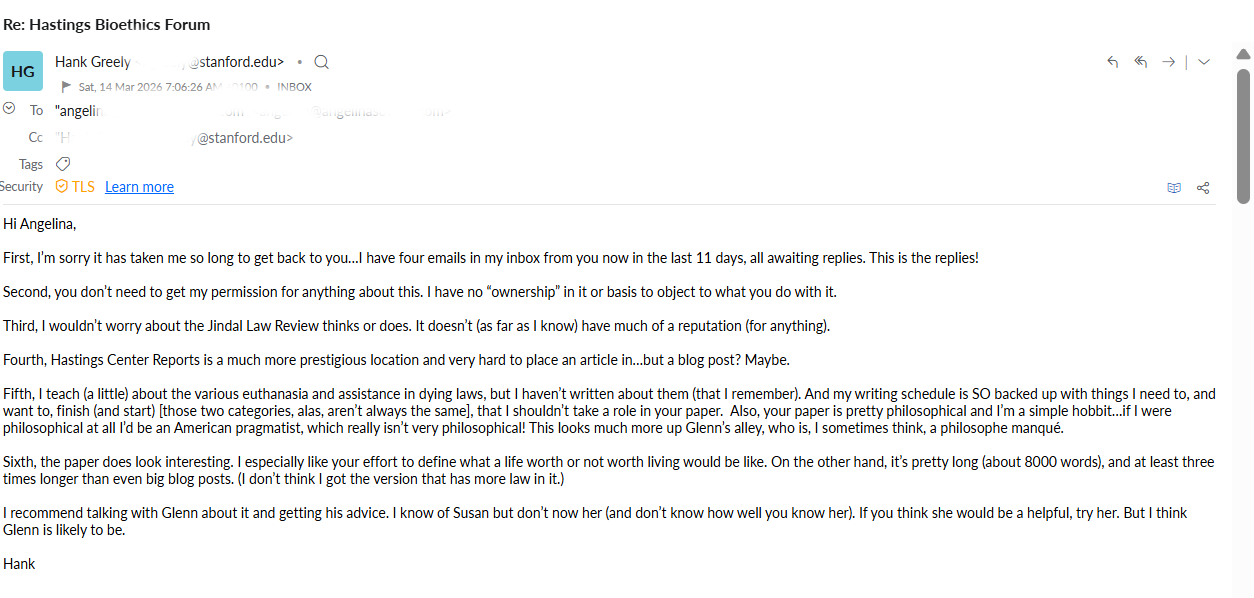
As you can see, this email arrived right before the second major theft took place on 15 March 2026. I had to let it go.
Here is the current version of this paper: https://angelinasouren.com/ableism/
POVERTYISM
“Household debt assistance the Dutch way” is mostly about povertyism and power abuse. It discusses the Orwellian monstrosity called “vroegsignalering” in Dutch, which targets people in poverty in the Netherlands. It often results in a punitive, disrespectful and nonsensical approach that violates poor people’s human rights including their privacy.
Human rights expert and legal scholar Olivier de Schutter has proposed that povertyism becomes punishable by law to the same degree that many other forms of discrimination already are. He found that poor people are three times more likely to be discriiminated against that any other category of people who experience discrimination.
He served as the United Nations Special Rapporteur on the right to food from 2008 to 2014 and was later appointed as the UN Special Rapporteur on extreme poverty and human rights.
IS CRUELTY COOL?
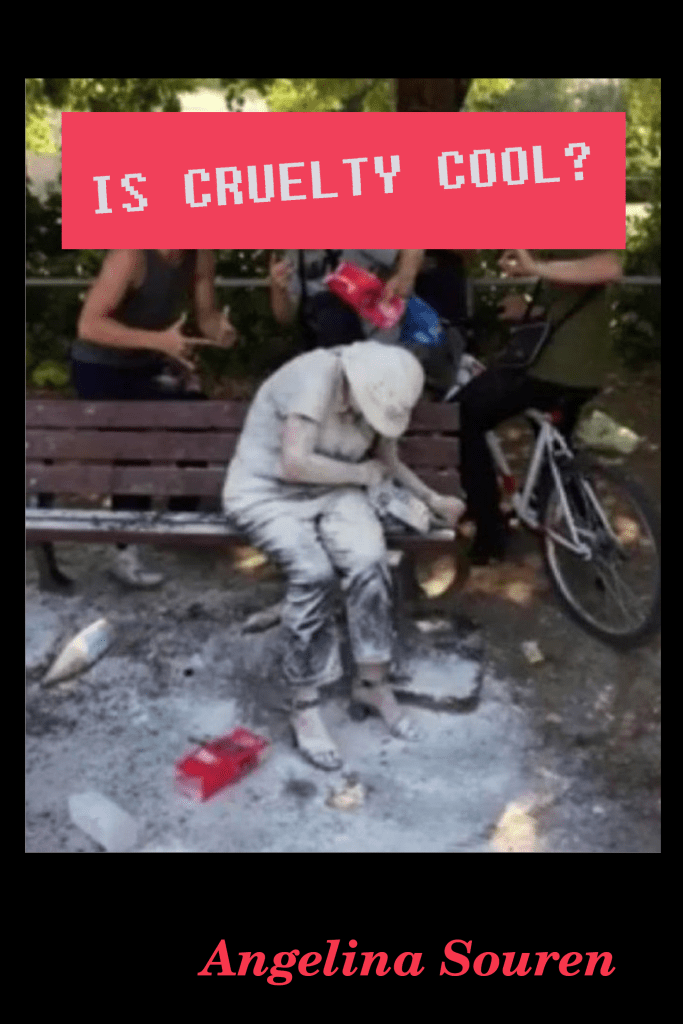
This book is about otherization, including workplace bullying. It discusses why there is so much otherization, hate and cruelty in society and what each of us can do to help stop some of it. You can purchase it from Amazon or download the print proof of latest version (opens in a new browser tab): PDF of 9 March 2026.
D E S C R I P T I O N
IS CRUELTY COOL?
Why does contempt feel contagious? Where does cruelty come from and why can it spread so rapidly? In my view, we’re all responsible for what happens in the world around us, you see. We are all “society”. We make up society, we aren’t separate from it. This book provides you with insights that can help you make the world around you more compassionate.
In this book, I look into the mechanics of othering, contempt, hate and cruelty. It begins with how we all talk about other people. It’s not just politicians who engage in othering and divide societies. Why is this important? Because othering precedes cruelty. Cruelty requires othering.
It really helps to know, however, that much of the othering that we do simply comes from how the human brain works. It enables us to forgive ourselves and also makes it possible to have more empathy for people who we don’t agree with at all.
Among other things, I discuss workplace bullying, women getting attacked when they’re sitting on a bench in the sunshine (which happened to Janice Morris in Bury St Edmunds and to me in Woolston, Southampton) and young trainees getting set on fire at work, just for fun. I also look into what humiliation is and where the words “humiliation” and “humility” come from.
This book is not a purely academic exercise, but it’s not a personal memoir either. It’s mix. It’s not devoid of emotion, but it acknowledges that we’re all merely human, myself included. I talk about my own experiences as a Dutch migrant in England, but in addition, this book draws heavily on the following resources:
- Kathleen Taylor’s “Cruelty. Human evil and the human mind”
- Lisa Feldman Barrett’s book “Seven and a half lessons about the brain”
- Rebecca Saxe’s talk on the neuroscience of hate, at Harvard Law School’s Petrie-Flom Center
Taylor, Feldman Barrett and Saxe are neuroscientists. They’re British, American and Canadian. Taylor coined the term “otherization” to describe the phenomenon for which most people now use “othering”. That’s when you declare someone “not one of us”, but “one of them”.
The references for the second edition are downloadable as a PDF file (references for second edition of the book IS CRUELTY COOL). I also talked about extremism in that edition, as extremism is just another expression of otherization, both ways, but I lost the file for that edition so I had to create a third one.
WE NEED TO TALK ABOUT THIS
This earlier book is about the so-called new eugenics, also called liberal eugenics, consumer eugenics and so on.
D E S C R I P T I O N
New technologies like CRISPR have the power to change the composition of populations, just like older technologies like PGD and chorionic villus sampling have already done in some countries. It’s sometimes called the “new eugenics” but also goes by various other names such as “consumer eugenics” and “liberal eugenics”. What it means is that today, we are determining what it may be like to live in tomorrow’s societies and how inclusive they will be.
This book is not a rant. It was sparked by Glenn Cohen’s first run of the course “Bioethics: The Law, Medicine, and Ethics of Reproductive Technologies and Genetics” in 2016. This debate is not about science versus nature or technology versus nature. In fact, this book is also specifically aimed at random scientists who are working on their doctorates, completing their post-docs or running grant programs at the various science foundations.
We all need to weigh in on this topic because if we don’t, others will make these important decisions for us. Even the people who many of us expect to have all the answers usually don’t. In China, a scientist spent three years in prison because of illegal CRISPR experiments on humans. Lay people, unfortunately, easily get mistaken for freaks or conspiracy thinkers. It’s usually lawyers and bioethicists who force scientists to contemplate the implications of what they’re doing.
Hank Greely, Stanford University, April 2018, about the first edition:
“I’ve just looked at the description and it sounds interesting – and I certainly agree that “we have to talk about this.” Changes in reproduction are coming; we can be unprepared or partially prepared but the latter will require a lot of talking. And reading, and writing.”
Hélène van Pinxteren (RIP), senior science policy advisor (EU, NWO), also about the first edition:
“The first thing that hit me is that you really write exceptionally well.”
Print proof of the entire hardcover: 4 February 2024 version.
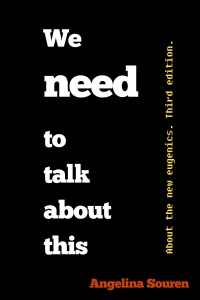
Available from Amazon and Barnes & Noble in print and as e-book, drawing attention to the so-called new eugenics in assisted human reproduction. So that’s largely about CRISPR. That’s a bioethics topic. Eugenics can be an expression of otherisation and hate, of course. The book also covers related subjects such as inclusivity (inclusiveness, inclusion) and diversity in society. If you click on the image, the link will take you to Amazon.
HOW TO SHIELD YOURSELF AGAINST STRANGER-STALKING IF YOU’RE YOUR OWN BOSS
A great deal of stranger-stalking has to do with neurodiversity, with differences in communication style and brain structure, hence also empathy, as well as with otherization and anger. Particularly if you are a kind person, you can be like a lovely warm blanket on which someone else gratefully starts to depend without you realizing it. They may claim you and expect endless kindness and understanding.
Such persons often have no idea of the impact that their actions can have on others. Their reasoning can be along the lines of “Getting flowers is nice, so if I send someone flowers every day, that’s a really nice thing to do.” If the person they send flowers to then gets angry or becomes afraid, it will cause a lot of confusion. It can also lead to anger and resentment.
It’s really a failure of our society and of our health care systems. That’s not easy to correct. Fixing it will take time, but if we all stop othering others, we’ll have made big strides already. Easy to say, hard to accomplish.
Of course, stranger-stalking isn’t always like this at all. You may for example also serve as someone to take revenge on in a form of displaced or redirected aggression.
There are lots of simple practical things that you can do to create a buffer around you, though. They can make a big difference.
I have a guide for how to do that, for to shield yourself if you’re your own boss.
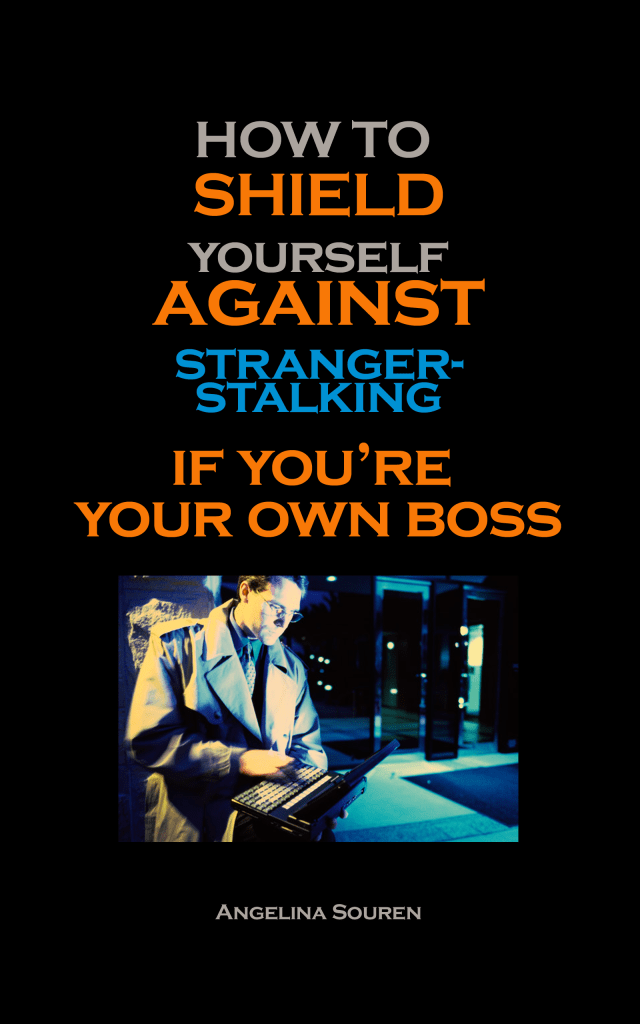
PDF available here.
I last updated it on Amazon on 10 February 2023. Check the title page in your Kindle and update the file if it still says “5 January 2023” or “17 December 2022”. The Kindle version on Amazon is only £2.99 and it’s free if you have Kindle Unlimited. The paperback is £4.25. On some Amazon sites, such as Amazon.nl, it may say that the title is not available for purchase. That’s incorrect. I ordered the book through Amazon.nl without any problems myself.
One of the things you will see at the end is this:
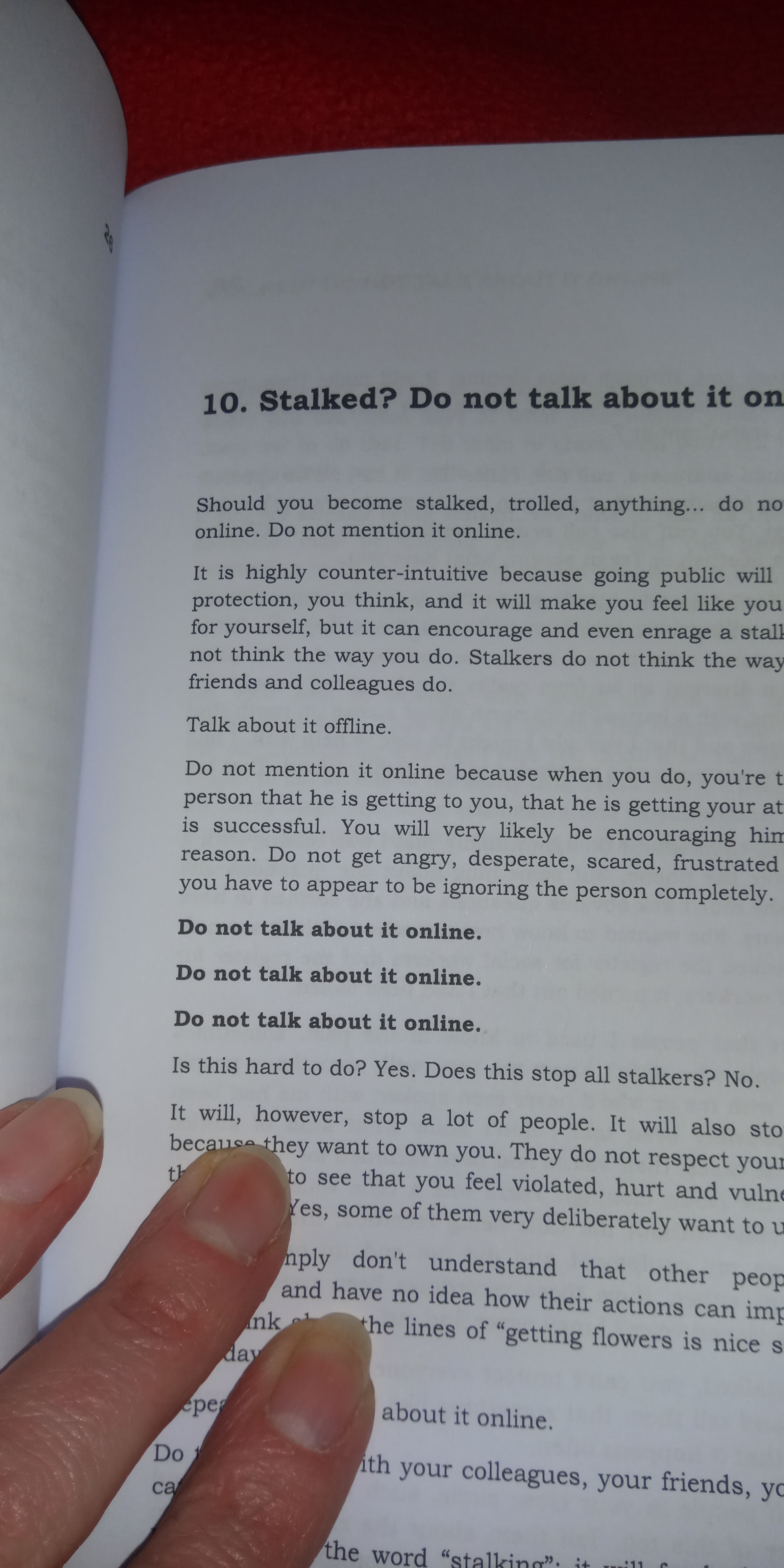
In addition, I have a whitepaper: “Solutions for dealing with stalking and harassment” which is also available on sites like ResearchGate and Academia.edu.
WHAT TO DO IF YOU ARE BEING STALKED
This is a later, more extensive, publication that includes a version of the former whitepaper is “What to do if you are being stalked”. It is also available from Amazon, as a Kindle e-book and as a paperback. Last updated on 24 February 2023.
PDF: click here
This booklet contains a critique of the current practice of how society deals with stalking and harassment as well as some practical tips for women with concerns. Those tips should serve as a wake-up call for some people in law enforcement.
“Stalking victim Helen Pearson rejects police apology over stabbing.”
“She had made 125 reports to Devon and Cornwall Police.”
– BBC News, 29 June 2017
There are also some suggestions for how we can make things better in the future, namely by setting up a specialized organization that examines each reported case on its risk and on what action to take (triage).
This fits surprisingly well within the current abolitionist thinking with regard to policing (see for example this article in the British Medical Journal https://gh.bmj.com/content/bmjgh/6/2/e004582.full.pdf, also included in the references in the booklet). In addition, I call upon the medical profession to address the healthcare gap that exists between purely physical conditions and brain-based conditions (including neurodiversity).
In this booklet, I mention a freedom of information request. I later did hear back in response to that. The police forces in England and Wales have no idea how much money they spend on dealing with reported cases of stalking and harassment. They keep no data on it; their spending is not categorized by type of crime. All the more reason to start changing things thoroughly, I say. (The reason for my freedom of freedom of information request was that I wanted to know whether the funds freed up by transferring such cases to a new organization would be sufficient to fund that new organization.)
You may also want to Google “Ina Steiner” or check out this Wikipedia page and find out about the ordeal she and her husband went through when very powerful staff at a very powerful company (eBay) didn’t like some of the couple’s critical blog posts. They resorted to sadistic stalking tactics.
FLASH FICTION AND POETRY
Besides non-fiction, I have also written some quirky poetry and flash fiction, the latter often in the style of people like Spike Milligan and Donald Barthelme or resembling a zen koan. The material is partly inspired by my stalking experiences (particularly “Crunchy Peanuts”). The bundle “FCQ is a selection from “Crunchy Peanuts” and “Mixed Spices”.


My writing background
Below is some info about my earlier writing background, which often provided me with information from all sorts of people and about all sorts of topics. In addition, I used to do a lot of scientific editing, which was another great way to learn what various people were up to and what goes on in the world.
As a component of my business activities, before I moved from Amsterdam to Britain at the end of 2004, I was part of the editorial team of Elements (@ 55 euros per hour, excl. of VAT). It was a print magazine published by the company Arcadis.
I particularly remember finally being able to catch up with a very busy person (Herb Dempsey) on his mobile phone at an airport somewhere in the US where he was waiting for a connecting flight. I needed to talk with him about the company’s involvement in the BioWatch program for an article of which you have just seen an image.
I also remember speaking with two highly sympathetic people who were based in China at the time, working for Arcadis: Thomas Kustusch who is German and Theo Tombeur who’s Belgian. Talking with Wim Verheugt and Ties van Kempen about the Black Sea particularly stands out as well, of course, in view of my professional background.
I have interviewed people all over the world, on location as well as by phone and e-mail, from China to Chile to Brazil and from Amsterdam to Paris to Oxford.
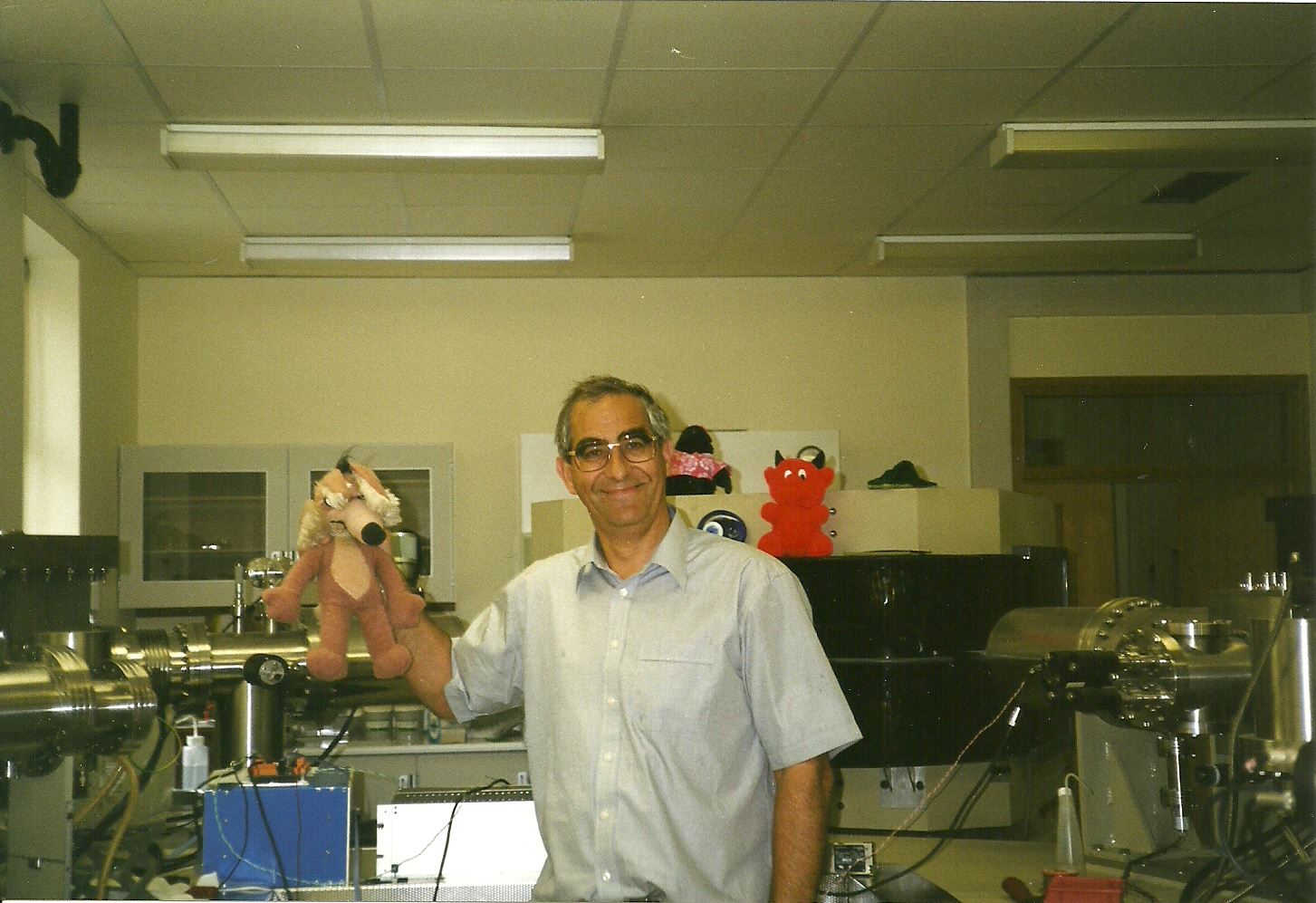
Of course, I particularly remember my interview with Keith O’Nions, who had just been knighted as well as been appointed to become the next Chief Scientific Advisor to the UK’s Ministry of Defence. He is a kind and highly entertaining person. I had a killer sinus headache when I interviewed him and it affected my conversational skills badly, but Keith patiently remained enthusiastic. I was still based in Amsterdam then and combined this interview in Oxford with giving a talk in Plymouth afterwards, at PICOIII (meeting report).
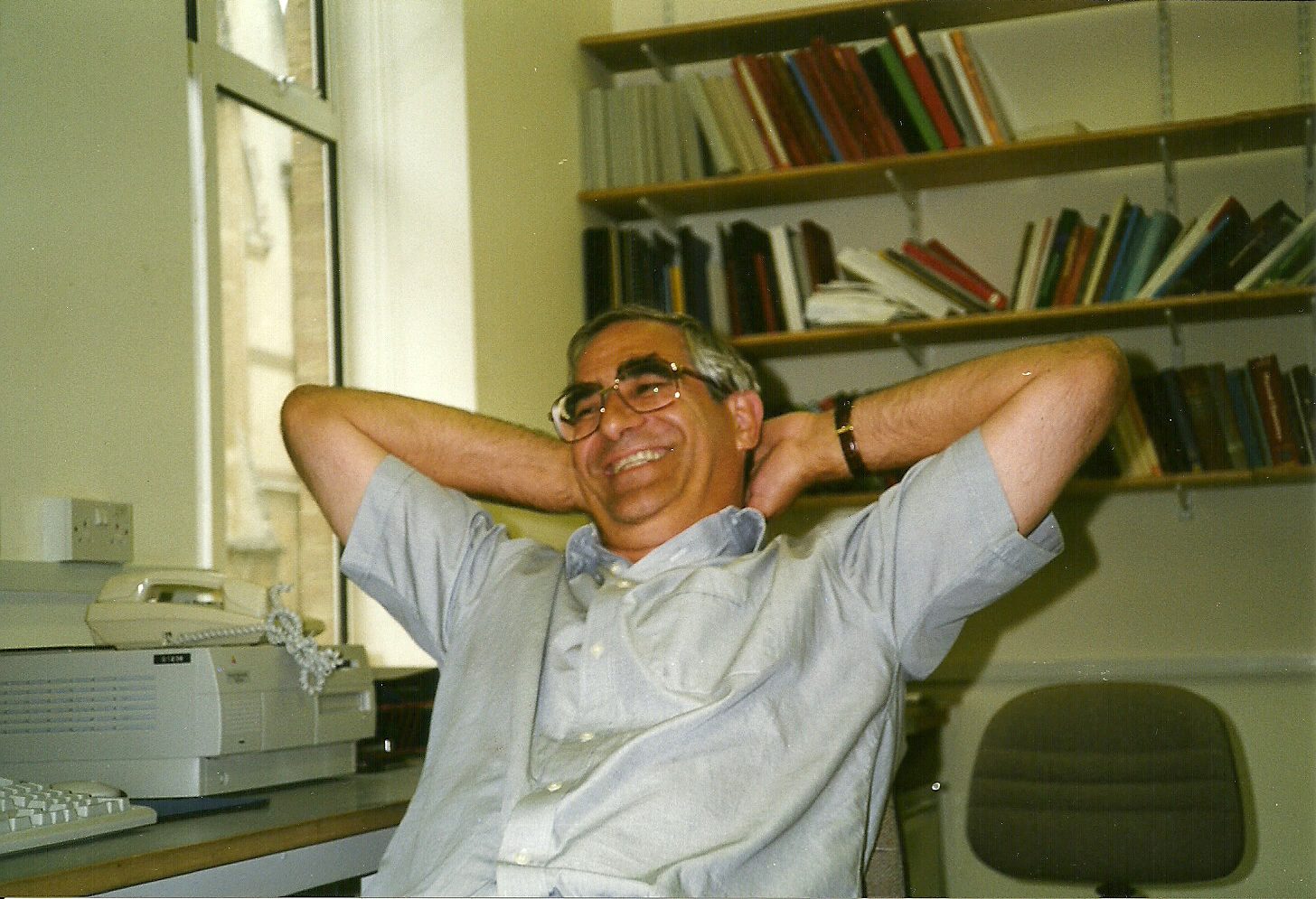
“They tell you to sit like this, for a photo.” (re government advisor role) and joking to someone who walks into his office that I am trying to get him to reveal secrets (“she is here to dig up dirt”).
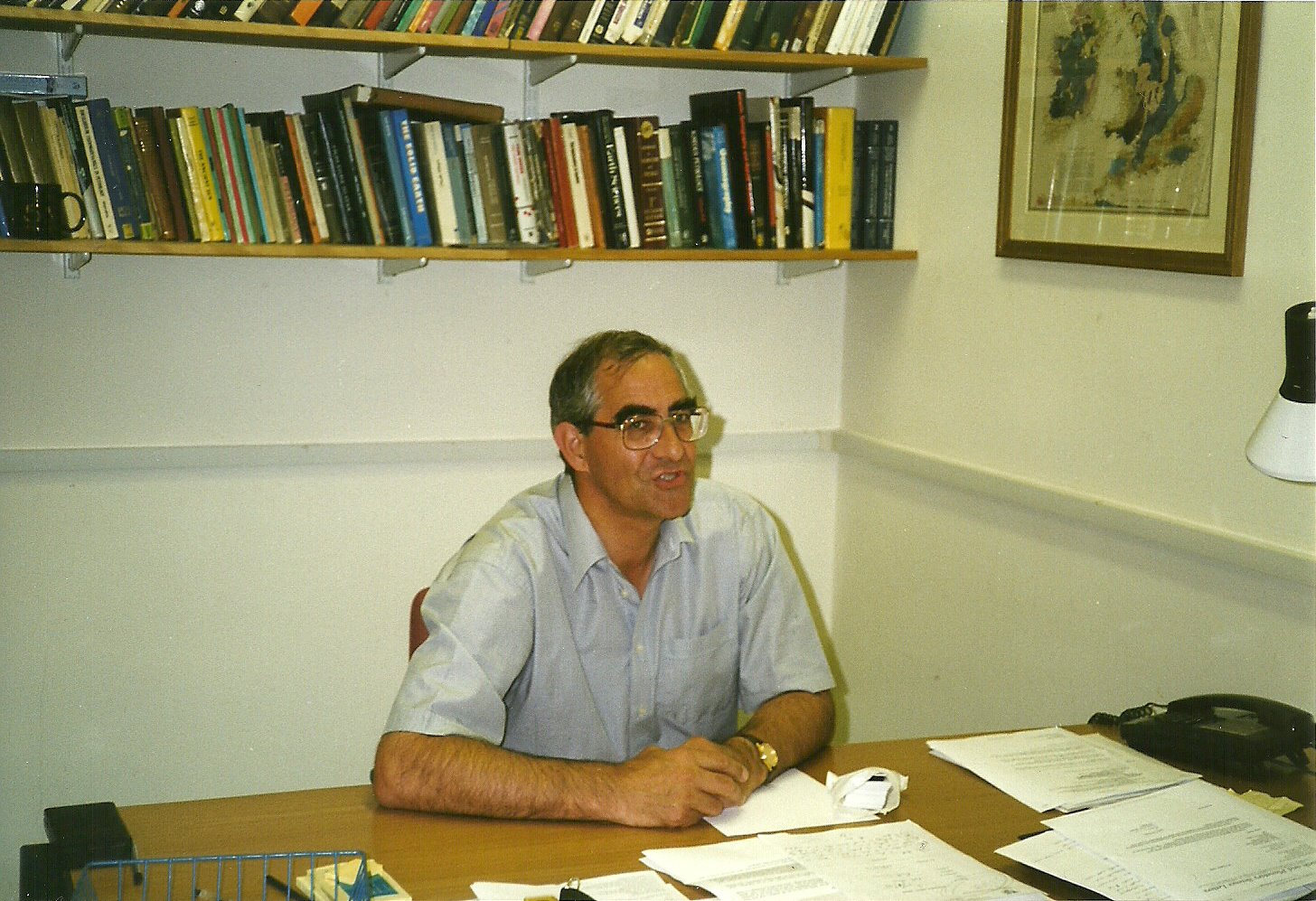
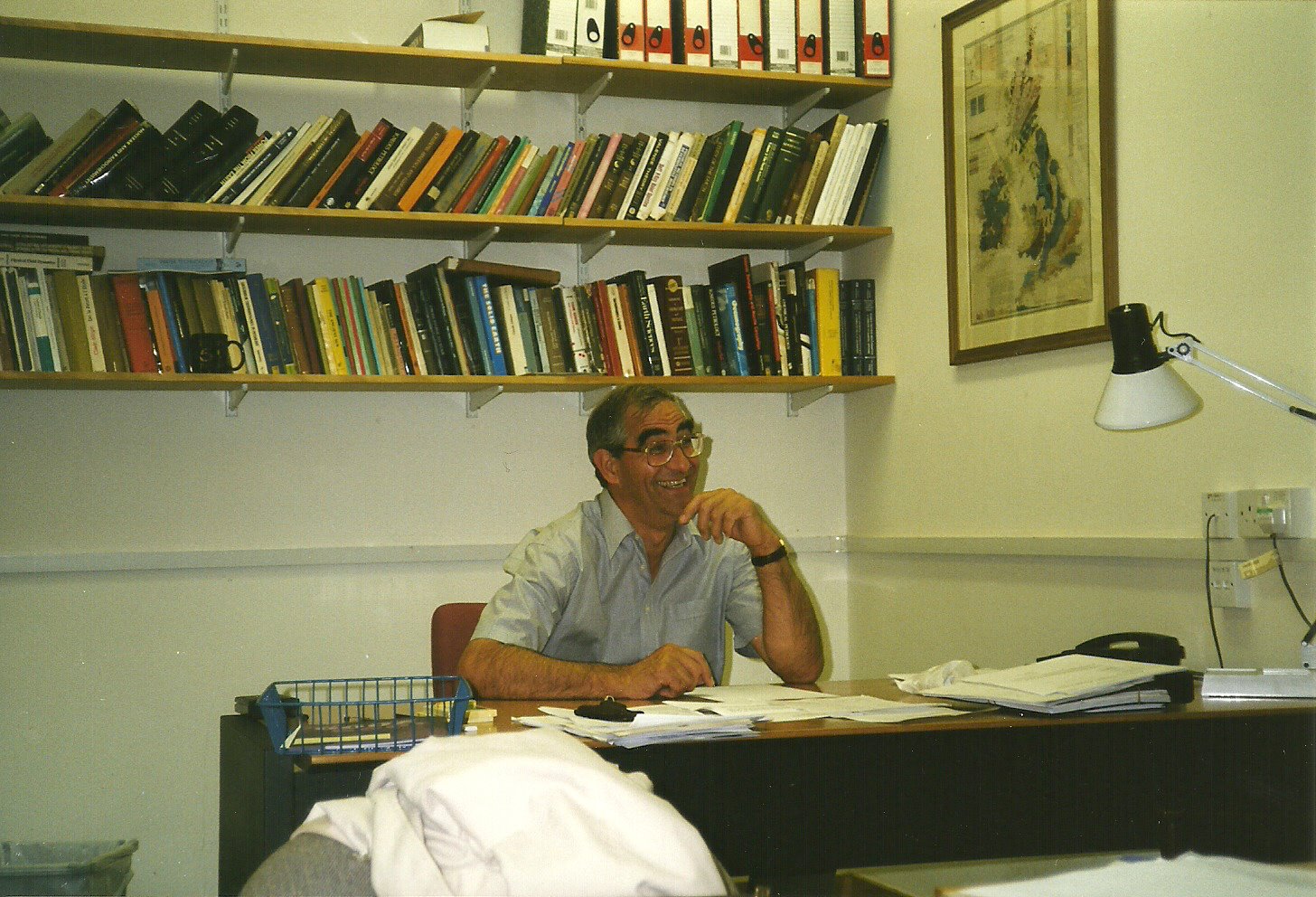
Keith with lab manager and holding up lab mascot Wile E. Coyote:
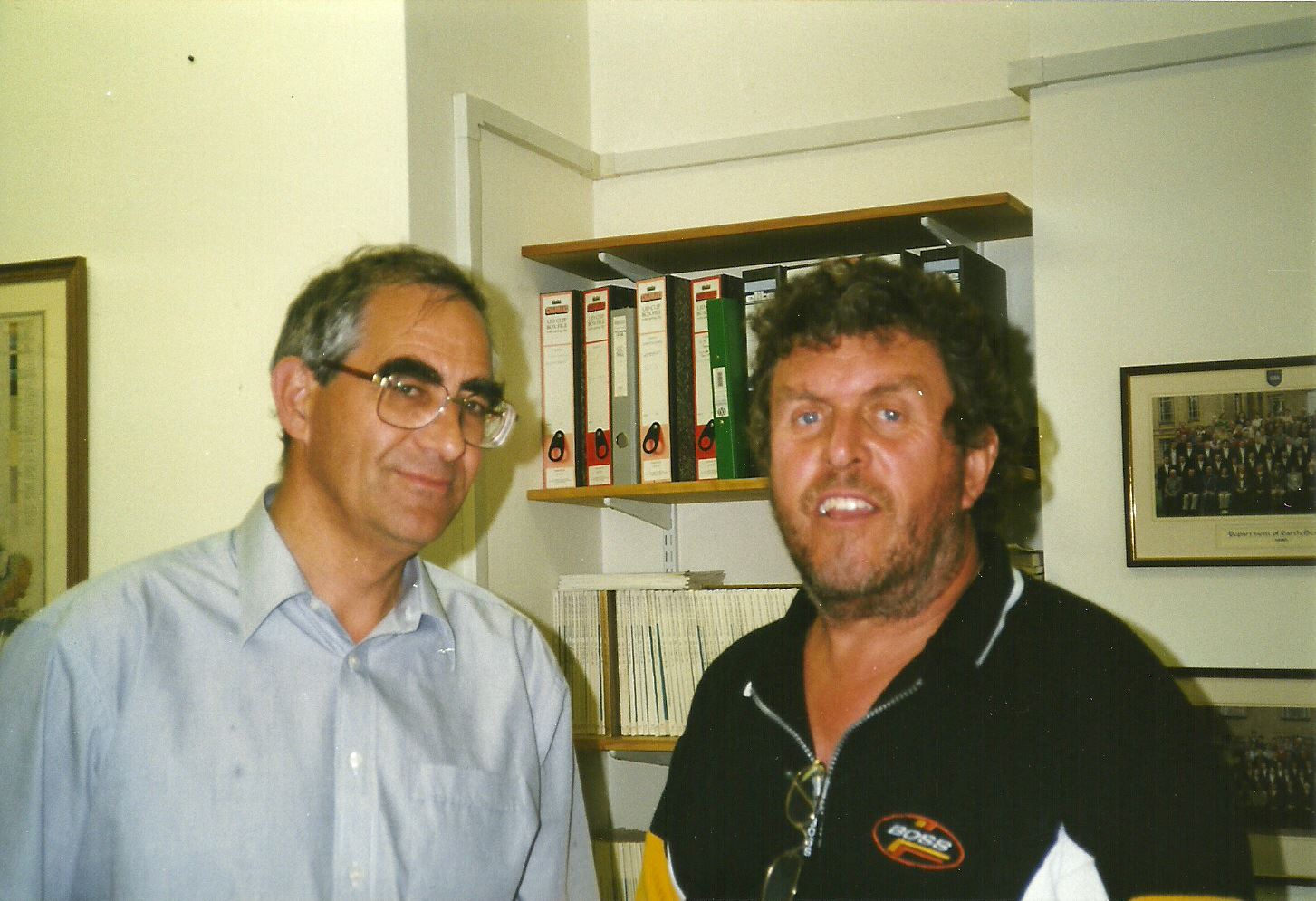
After that interview in Oxford, I travelled on to Plymouth, where I was scheduled to give a talk, thus killing two birds with one stone, so to speak.
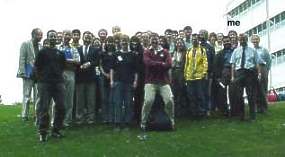
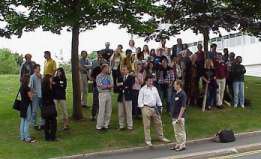
Interviewing Claude Allègre was an interesting experience as well.
I have also edited a large number or scientific papers and grant proposals. What that did for me was introduce me to and keep me in touch with all kinds of scientific research. This helps you develop a strategic perspective and enables you to connect people across disciplines, even though you’re not in a science policy advisory position, not working for the NSF, NWO or the EU.
Much later, while I was living in the UK, I wrote some flash fiction – as I mentioned above – that is somewhat reminiscent of the work of Spike Milligan, an Englishman who lives in Belgium told me.
Some of it is probably closer to Donald Barthelme’s quirky style.
Some of it is very simple. Some of it is as puzzling as a zen koan, with sometimes up to three different meanings possible.
My flash fiction is available from various online retailers.
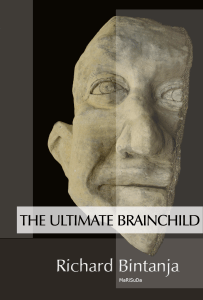
Later, I translated one of Richard Bintanja’s books into “The Ultimate Brainchild” of which the topic suits nicely within the context of the new eugenics.
It is a very well-crafted novel with a Gattaca-style theme even though it is very different from Gattaca. It features a form of neurodiversity, a two-tiered world in which those who can and those who can’t are at odds. One of the groups is persecuted. Guess which one?
I have also contributed considerably to more than a handful of popular science books in the Dutch “For Dummies” series.
My first academic publication, in marine biogeochemistry (in the Elsevier journal Geochimica et Cosmochimica Acta), had only me as author and was published as a tripartite discussion with a contribution from Jim Moffett, on whose work my article was a comment, and another one from Brad Tebo. It was accepted without any revisions. In part, it was a rewrite of a shorter article that I had submitted to Science in 1996 and after resubmission was deemed more suitable for a specialised journal.
At around the same time, I convened an AGU conference session in Boston on the role of fungi in the marine environment, supported by a grant from the Dr. Catharine van Tussenbroek Fonds.
That got me invited to a conference in Hong Kong, but I only submitted an abstract as I was unable to travel to Hong Kong at the time. Fortunately, I was able to participate in the PICO-III symposium in Plymouth later that year, which I combined with a trip to Oxford where I did the O’Nions interview.
(Lay people are quick to assume that scientists get paid to talk at conferences. Nope! They pay to be allowed to participate and present. Something similar goes for publishing. That does not mean that your work is accepted as long as you pay! This is where something called peer review comes into play. Thankfully, some scientific journals no longer charge scientists for publishing, but the natural and physical sciences remain a very expensive profession, also requiring a great deal of expensive fancy equipment. This is why grant proposals are the life blood of any decent scientist’s career.)
In 2000, I wrote a review on the environmental chemistry of cyanide, which was cited all over the world.
I also contributed a quote about the Mariana Trench for a book in Canada.

Other than that, I have written so many bits and pieces here and there (mostly on geochemistry and environmental chemistry, occasionally including health issues, and also on feminism and on women in science), that it’s impossible to list or even remember them all.
I had already started writing stories and articles when I was in primary school. I was on my school’s first newspaper team, went on a typewriting course when I was 18 and purchased my own typewriter shortly after.
As a teenager, I sent a letter to a national weekly – more or less a Dutch counterpart of RadioTimes – about a play by G.B. Shaw that had been aired. They published it.
In the early 1980s, I sent a letter to Tineke Beishuizen (a Dutch writer and columnist) about my mother’s illness and death in response to the passing of someone in Tineke’s vicinity (her mother in law, if I recall correctly). I received a letter back from Tineke, asking me for permission to use the letter as a column (adapted, of course) in the women’s magazine Libelle, as well as a lot of encouragement to write more. We spoke on the phone; I called her from a phone booth in Hilversum or Baarn as I didn’t have a landline in those days when we weren’t as connected yet as we all are today.
I also submitted an item to women’s weekly Viva, about my cat Tim who I’d adopted from the shelter around the time when I began working on my Master’s. Viva published the item and sent me a voucher in return. (I think it was for 25 guilders’ worth of flowers.)
A bit later in the 1980s, I sent about a dozen letters to the editor of Dutch national daily De Volkskrant, responding to articles in the newspaper. Almost all were published and all or almost all in the Saturday edition. Most were about violence against women and children.
I wrote these letters after I had been raped by an intruder who had climbed onto the balcony of my student flat while I was asleep. Writing the letters was part of my process of working through what had happened. I also signed up for a self-defence course for women at Vrouwencentrum Kenau in Amsterdam and I read books like Susan Brownmiller’s Against Our Will to try to understand what had happened to me.
Right after it happened, my friend Juul Everaars – who was a geology student as well – hopped on her bicycle to be with me to support me. I called Juul first, the police next. By the time I got back from the police station and the hospital, most of the day had already passed.
The rapist returned half a year later. I woke up, walked to the door in combat stance, but I grabbed a knife along the way and it hit a glass. The sound alerted the guy. When I moved the curtain slightly to be able to look onto the balcony, I found him crouched right there in front of me, at the glass door. He jumped up and disappeared over the balustrade. (The police officers who showed up after that told me I should have grabbed my geologist’s hammer instead of the knife as the knife was too dull according to them.) Building management then helped me move to a different flat in the complex after that. I later threw a party to celebrate that I was leaving it all behind me and moving on.
As eight or nine out of ten of my letters to De Volkskrant were published, and usually in the Saturday edition, I did not realise at all that it was quite hard to get letters published in that particular newspaper. I discovered that later, during an evening course at the Netherlands School for Journalism, when the instructor specifically mentioned it as part of the class one evening, as an exercise, to try this as a way of assessing one’s writing skills and as a challenge to set ourselves. In those days, newspapers were still print-only so editors had to be highly selective.
I also did a lot of writing for the NIMF foundation in those days and took some time out from my Master’s to focus on my work for it, including symposium organisation and PR, some of that with the amazing Hélène van Pinxteren (RIP) and the brilliant Kine Sittig as well as with Nanne Weber (RIP), Martje Roessing (RIP), Hadass Eviatar, Rineke Verbrugge, Elly Jeurissen and many others.
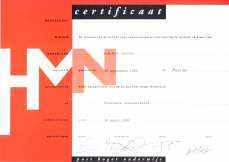
(Images: I took two evening courses at the Netherlands’ School for Journalism in Utrecht while I was completing my Master’s.)
In the mid-1990s, when I was living in the US, I wrote a letter to the editor of an American newspaper (the St. Petersburg Times, which won twelve Pulitzer Prizes since 1964, but later merged into a larger regional newspaper). That too was published, but its content wasn’t spectacular. It expressed enthusiasm about my experiences at the university there. Its title was something like “Sometimes the grass really is greener on the other side”.
