Partly from my book “Is cruelty cool”?
Could workplace bullying be linked to a country’s cultural style within Geert Hofstede’s classification, that is, the extent to which it is “masculine” or “feminine”?
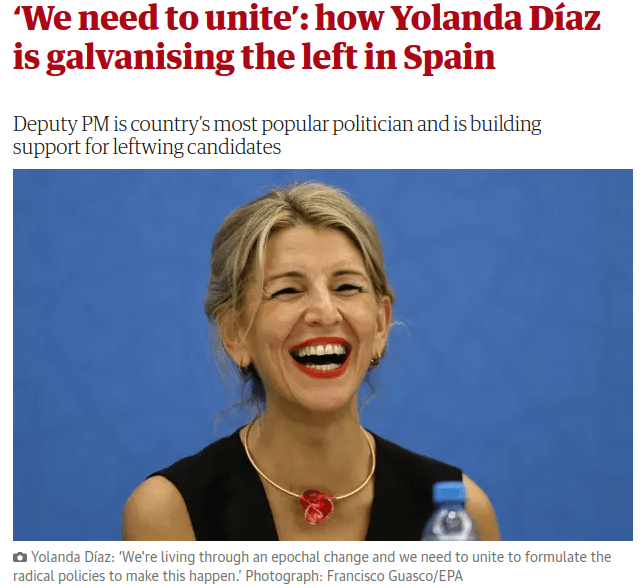
As the traditional views of masculine and feminine are changing and “masculine” may become synonymous with aggressive, obstinate, expensive and obstreperous and “feminine” may become seen as effective, efficient, results-oriented and smooth, maybe Jacinda Ardern’s style (and the style of Yolanda Díaz, Spain’s deputy prime minister) will take the world by storm next and set a new standard for leaders. What a wonderful ripple effect that might have.
New Zealand’s culture, however, scores high on the masculinity dimension. So that’s not it. What it does score low on, however, is “power distance” (inequality?), which I probably often also call “the English class thing”.
That clicks, doesn’t it? Cruelty, after all, is about the victim’s perceived place in someone else’s hierarchy, we’ve just discovered. About being put in your place, being perceived as not knowing your place and being punished for being seen as not knowing your place. About being considered a potential danger or as not worthy of life. It often comes from the bully’s own feelings of inadequacy. The cruelty and bullying are desperate attempts to gain, maintain or regain a higher rung on the ladder.
Is there a lower incidence of bullying in New Zealand, then? Data from Statistics New Zealand state that 11% of New Zealand workers reported being bullied or harassed in 2019, but other studies found a higher percentage.
Of course, when talking about bullying and comparing numbers between countries, it is important to define it properly and calibrate the data. Some professions have a higher incidence of bullying than others and what is considered acceptable in one country may not be at all in another. As workplace bullying is a costly global problem, there is increasing awareness and a growing understanding, however, and it is likely to have a very similar meaning in western English-speaking countries.
Wikipedia defines it as “a persistent pattern of mistreatment from others in the workplace that causes either physical or emotional harm”. That boils down to cruelty. As the setting is the workplace, workplace bullying could just as easily be called “workplace cruelty”.
In the UK, there does appear to be a much greater incidence of workplace bullying than in New Zealand, at a percentage of around 30 (2015, Trades Union Congress), with 71% of disabled women reporting some form of abuse and 91% of workers stating that bullying in the workplace wasn’t being dealt with appropriately.
The Chartered Institute of Personnel and Development (HR professionals) found a percentage of 15 for the years 2017, 2018 and 2019 yet added that more than half did not report bullying. That could add up to 30%, then.
Most bullying at work in the UK appears to take place in London and the South East (where I am based). Most bullying is carried out by someone higher in the hierarchy. In a study by Kew Law (employment law), 71% of the employees at 131 companies in the UK stated that they had either been bullied or witnessed bullying.
If employees were to stand up for each other and call the bully out on the bullying, a lot of the bullying might stop because the bullying would then likely be perceived as causing a loss of face by the bully. This is where that imaginary metric “power distance” becomes important because it probably determines whether fear has the ability to hold colleagues back, in view of the fact that bullying is often done by higher-ups.
There is more than financial (socioeconomic) and political power alone, though. There is also power in numbers. There is power in the number of colleagues who stand up against workplace bullying. We also see this when photos and videos of bullying are shared online and go viral, when the consensus swings against the bullies. It can even motivate the police to take action and lead to the prosecution of bullies.
Prosecution then becomes the act of putting a bully in his or her place. I can’t help but wonder if that is likely to exacerbate the problem in some cases and make the bully spin out of control later, which appears to have happened with one of the attackers of Janice Morris. If you let a cruel bully run around unchecked, however, he or she may do more and more damage as it is seen as confirmation of the person’s power and invincibility. We have seen that with Harvey Weinstein. Too many people protected him. Jeffrey Epstein’s may have been a similar story.
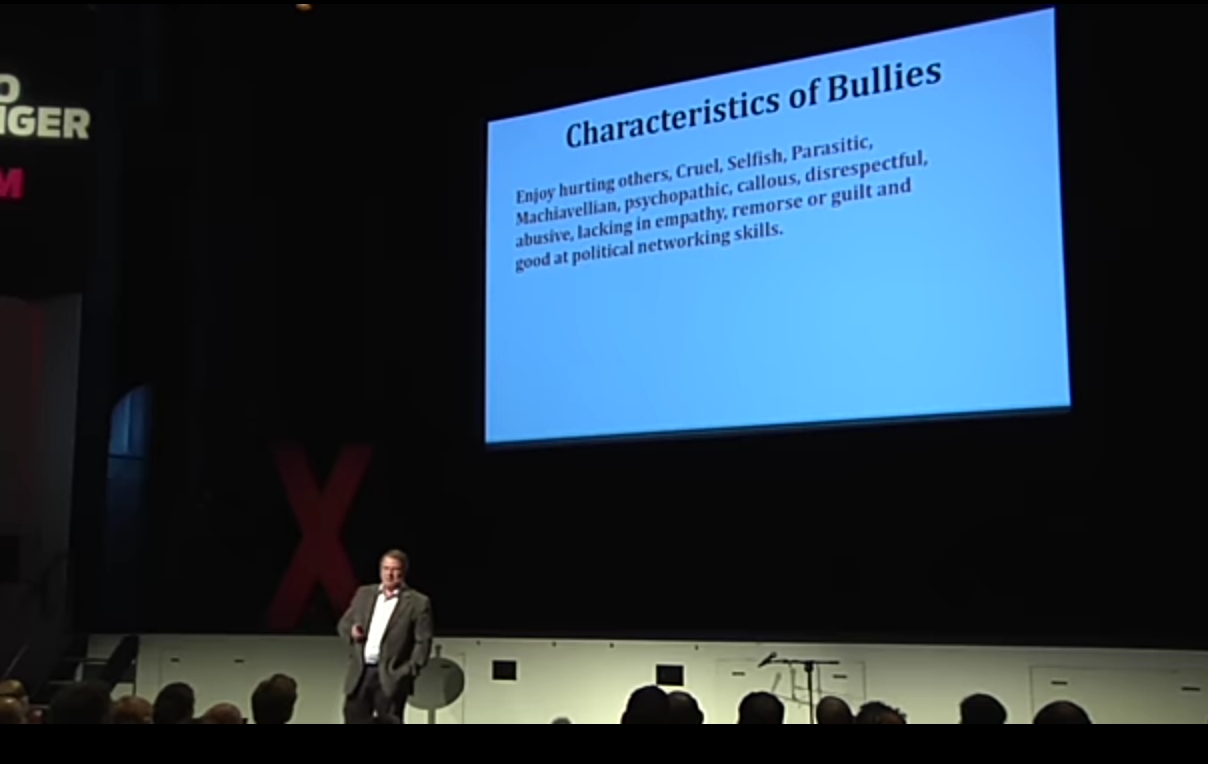
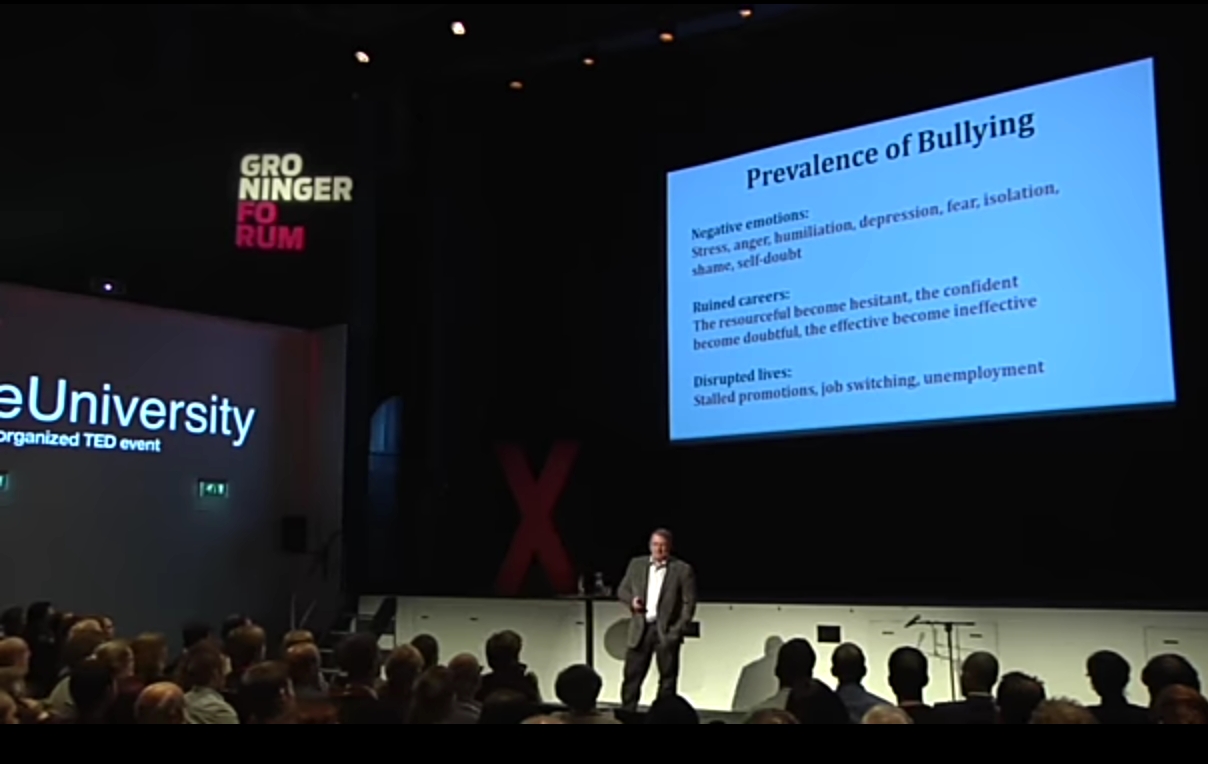
Bullying is the crude infliction of cruelty. It is linked to hierarchies and power imbalances, whether real or merely perceived. Bullying usually takes place in public and is intended to degrade someone in the eyes of others, whereas sheer cruelty can also take place in private. No witnesses.
Bullies often team up, too. Cruelty, on the other hand, can also be a secret indulgence by one person that the person may even be deeply ashamed about.
It is important to pay attention to that distinction between these two main kinds of cruelty, the kind of cruelty that is carried out by people such as George Cheese’s former colleagues within the context of bullying – let’s face it; it was bullying – and the kind of cruelty inflicted by a lone wolf who may torture individual animals and humans without anyone else knowing about it. Are they related? Sure, they are, but they may come about differently and they certainly usually seem to present very differently to the outside world.
Some bullies merely are after a sense of belonging.
In his book “This is marketing”, Seth Godin talks about the strange phenomenon that some people stick to wildly contrasting beliefs, such as believing that Princess Diana is still alive yet also believing that she was murdered. They appear to do this because it affords them membership of a very select club of people. This way, they gain significance, but it not the main thing they are after. They also want to feel that they are unique. This is also why some people believe in conspiracy theories about Covid. (Godin referred to research done at the Johannes Gutenberg University in Mainz, Germany, if you want to know more about that. Look for work by Roland Imhoff.)
You can achieve that uniqueness in a way that actually damages your sense of self-worth. It must be devastating to be aware that you are a bully, after all.
There are healthier, more effective and much more joyful and enjoyable ways to achieve greater significance than to bully someone else. Many people who were considered utterly worthless as children have gone on to change the world in very positive ways. The creator of Cats, now a happy, fulfilled and wealthy woman, was suspected of being learning-disabled when she was a child. She was lucky, in the sense that the psychologist she was sent to realised what was really going on.
If you are a workplace bully – and you will very likely know whether you are or not – go find the essence of your significance and pursue that. It does not matter if you are the only person who sees your significance at this point. It is entirely up to you to be who you want to be and who you deserve to be. If you keep pursuing that goal of becoming the true you, your actions alone will eventually show people who you are.
Further reading, watching and listening
Alston, Philip (2018) “Statement on Visit to the United Kingdom, by Professor Philip Alston, United Nations Special Rapporteur on extreme poverty and human rights.” https://www.ohchr.org/Documents/Issues/Poverty/EOM_GB_16Nov20 18.pdf
Alston, Philip (2019) “Visit to the United Kingdom of Great Britain and Northern Ireland. Report of the Special Rapporteur on extreme poverty and human rights.” United Nations, General Assembly. A/HRC/41/39/Add.1 https://undocs.org/pdf?symbol=en/A/HRC/41/39/Add.1
BBC (2007) “Red-haired family forced to move” BBC News. https://news.bbc.co.uk/1/hi/england/tyne/6714735.stm
BBC (2007) “Man ‘died at hands of young mob’” BBC News. http://news.bbc.co.uk/1/hi/england/london/6923987.stm
BBC (2007) “Boys sentenced for stoning death” BBC News. http://news.bbc.co.uk/1/hi/england/london/7052267.stm
BBC (2021) “Plymouth shooting: Jake Davison was licensed gun holder” BBC News. https://www.bbc.co.uk/news/uk-england-devon-58197414
Beaney, Abigail (2022) “The life of Sylvia Lancaster after the murder of her daughter Sophie” Lancashire Telegraph. https://www.lancashiretelegraph.co.uk/news/20076099.life-sylvia-lancaster-murder-daughter-sophie/
Bregman, Rutger (2017) “Poverty isn’t a lack of character; it’s a lack of cash.” TED. https://www.ted.com/talks/rutger_bregman_poverty_isn_t_a_lack_of_ch aracter_it_s_a_lack_of_cash
CIPD (2022) Bullying and harassment at work. Chartered Institute of Personnel and Development. https://www.cipd.co.uk/
Evans, Jules (2013) “Being a Stoic saved me from the curse of the British stiff upper lip” https://www.theguardian.com/commentisfree/2013/jan/30/stoic-stiff-upper-lip-feelings
Gamergate: https://en.m.wikipedia.org/wiki/Gamergate_(harassment_campaign)
Godin, Seth (2018) This is marketing. You can’t be seen until you learn to see. Penguin. ISBN: 9780241370148
Hill, Amelia (2019) “Older people widely demonised in UK, ageism report finds” The Guardian. https://www.theguardian.com/society/2020/mar/19/older-people-widely-demonised-uk-ageism-report
Jamieson, Alastair (2020) “Police warn of homophobic 4chan cyber attack on LGBT+ Pride month celebrations” The Independent. https://www.independent.co.uk/news/uk/crime/pride-month-4chan-cyber-attack-homophobia-lgbt-a9547456.html
Jones, Owen (2022) “Why homophobia against straight men matters” The Guardian. https://www.theguardian.com/commentisfree/2022/may/17/homophobia-against-straight-men-lgbtq
Kent, Lauren & Ritchie, Hannah (2021) “Plymouth shooter made misogynist remarks echoing the ‘incel’ ideology.” CNN. https://edition.cnn.com/2021/08/14/uk/plymouth-shooting-incel-jake-davison-profile-intl/index.html
Kew Law Kew Law (2020) See: https://www.kewlaw.co.uk/our-services/employment-law/ and https://www.fenews.co.uk/skills/over-a-third-of-employees-in-the-uk-have-been-bullied-at-work-in-the-last-3-years/
Leatherdale, Duncan (2022) “Jack Woodley: Why was the 18-year-old killed?” BBC News. https://www.bbc.co.uk/news/uk-england-tyne-60834187
Lloyd-Roberts, Sue (2017) “The war on women. And the brave ones who fight back.” Simon & Schuster. ISBN: 9781471153921
Lumby, Tommy and McMenemy, Rachael (2018) “‘Vulnerable’ woman attacked with flour and eggs speaks out” Cambridge News. https://www.cambridge-news.co.uk/news/local-news/vulnerable-woman-attacked-flour-eggs-14973146
Manjoo, Rashida (2015) “Report of the Special Rapporteur on violence against women, its causes and consequences, Addendum. Mission to the United Kingdom of Great Britain and Northern Ireland” United Nations, General Assembly. A/HRC/29/27/Add.2. https://www.ohchr.org/EN/HRBodies/HRC/RegularSessions/Session2 9/Documents/A_HRC_29_27_Add_2_en.doc
Mann, Tanveer (2018) “Boys who ‘attacked disabled woman with flour get police protection’” Metro News. https://metro.co.uk/2018/07/31/boys-attacked-disabled-woman-flour-get-police-protection-7779513/
Potter, Tom (2018) “‘Flour bombing’ teen sentenced for ‘nasty attack’ on woman” East Anglian Daily Times. https://www.eadt.co.uk/news/cohan-semple-court-flour-eggs-howard-estate-social-media-1-5806320
Press TV Documentaries (2015) “Murder in Bristol (The Tragic Case of Bijan Ebrahimi’s Murder)” Press TV. https://vimeo.com/149993525
Saxe, Rebecca (2019) “The neuroscience of hate” Talk given at Harvard Law School’s Petrie Flom Center for Health Law Policy, Biotechnology, and Bioethics. https://vimeo.com/333105887
Serani, Deborah (2018) “Bullycide When a bullied child dies by suicide” Psychology Today. https://www.psychologytoday.com/gb/blog/two-takes-depression/201806/bullycide
Statistics New Zealand (2019) “One in 10 workers feels discriminated against, harassed, or bullied at work” https://www.stats.govt.nz/news/one-in-10-workers-feels-discriminated-against-harassed-or-bullied-at-work
Taylor, Kathleen (2009) “Cruelty. Human evil and the human brain” Oxford University Press. ISBN: 9780199552627
TUC (2019) “Bullying at work” Trades Union Congress. https://www.tuc.org.uk/resource/bullying-work
Wainwright, Martin (2008) “Woman died after drunken gang attacked couple dressed as goths”. The Guardian. https://www.theguardian.com/uk/2008/mar/13/ukcrime
(See also https://en.wikipedia.org/wiki/Murder_of_Sophie_Lancaster
Younge, Gary (2017) “’It was pure racism’: the family of Bijan Ebrahimi on their fight for answers” The Guardian. https://www.theguardian.com/world/2017/jul/05/it-was-pure-racism-the-family-of-bijan-ebrahimi-on-their-fight-for-answers
(These passages come from my book “Is cruelty cool?”, about otherization and cruelty.)
