What do you say, later, to explain the strange twist in your CV?
Do you know?
Continue readingI can’t help but wonder HOW MANY TIMES the victims asked for help and were dismissed.
Because would you believe someone if they tell you that:
Father and son-in-law have just been sentenced to five years, and to pay damages to six of their victims (which is very rare and usually very modest in the Netherlands). Sadism, said the court. These are people who enjoy hurting people, said others.
People who are this controlling and sadistic often are also experts at spinning tales about the people they are abusing, which makes it even less likely that anyone will believe them.
Complaints about sadism are often ignored.
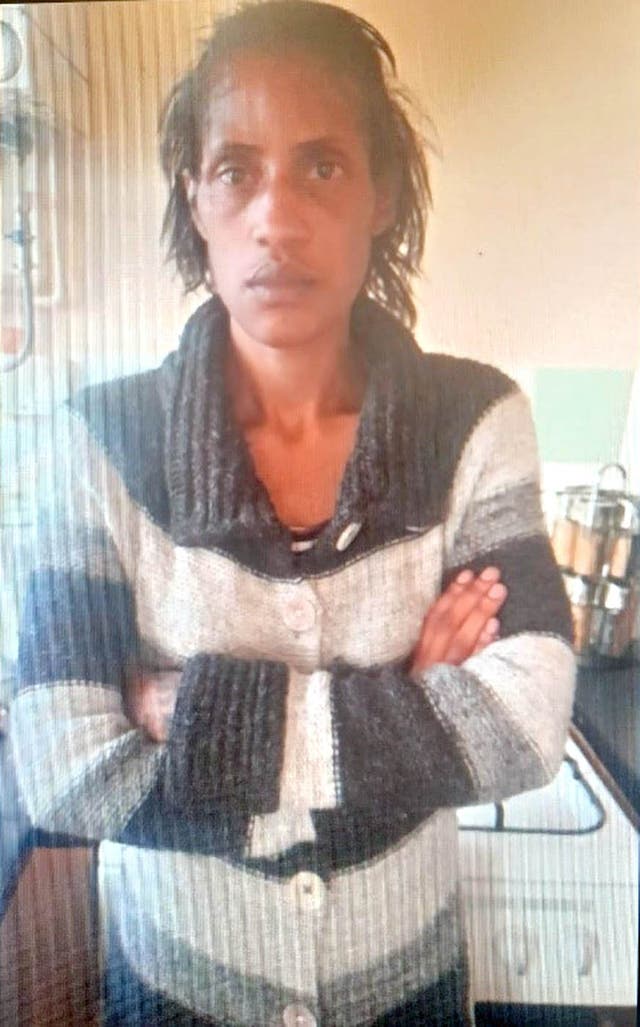
In England, many people WATCHED as they saw a radiant young woman change in front of their eyes as she became kept as a slave and inundated with sadism. She was eventually found in a cupboard, emaciated and dead.
I know very well how this works. If you dare talk about what is going on, people will experience you as unpleasant, and as making things up.
People see what is happening, because it is essentially happening in front of their eyes, they know that something is going on, they know that what is happening does not add up, yet they CHOOSE TO LOOK THE OTHER WAY and blame the victims.
Things like this can only happen with the full cooperation of people who witness it and choose to blame the victims.

Many people become abusive or controlling or sadistic when someone else depends on them and has no recourse. Never never never ask people for help (if that means that you’d then depend on them) unless you are one thousand per cent sure that they won’t abuse you. Because you might end up in an even worse situation, otherwise.
Having (mostly) been inundated with hate for two decades, I know how strongly it can affect a person, how it can change you. It does not require you to have been a mentally weak or cognitively impaired person at the start.
1. ‘I need more time’
2. ‘I’m not available’
3. ‘I need help’
4. ‘Please speak to me respectfully’
5. ‘I have a suggestion’
6. ‘I feel underappreciated’
https://www.cnbc.com/2024/06/12/harvard-psychologist-how-to-set-boundaries-at-work-what-to-say.html
Citizens need to start taking personal responsibility, says advice council.
In the Netherlands, people are extremely individualistic but they also rely heavily on local and national government and don’t necessarily like taking initiative. “Everything needs to be BIG. It can’t be small; that means that it doesn’t get taken seriously.” That needs to change. Every little step counts.
Most are still really into greenwashing themselves green as far as I can see, but people’s lifestyles need to change.
He seems to – may – have another stunt planned for today. Probably something like he did on Friday. If so, nothing I can do about it anyway. So it would be more of the same and wouldn’t make a difference either way.
13 June 2024, 11:16: The computer was offline for about an hour yesterday, at a crucial time. I have no way of telling whether there was something malicious at play or not. It was a little similar to what happened on Friday, but that could be a coincidence.
I keep getting references for Ireland, and they’re not for online purchases that can be shipped but for things that are local. This morning Google actually told me that on the basis of my activities, it thought that my location was Dublin. This stuff has been going on for a few weeks now. So I decided to ask ChatGPT.
Continue readingI agree. A brain scan should become standard. We already take fingerprints.
I argued for this in my book “We need to talk about this”. Now a professor in Forensic Neuro-pedagogy (Maaike Kempes) is saying something similar.
One third of young Dutch criminals have brain damage, she says. Brain damage can mean that someone may have little control over the person’s behavior. They can for example get into fights and traffic accidents more easily than people without brain damage. Stress such as caused by financial difficulties in combination with brain damage can aggravate this.
Neuro-pedagogy is an interdisciplinary field that combines neuroscience and education to understand how the brain learns and how to apply this understanding to improve teaching methods and educational outcomes. This field aims to bridge the gap between brain research and practical teaching strategies, providing insights into how cognitive processes such as memory, attention, and emotion influence learning.
https://nos.nl/artikel/2524033-hoogleraar-meer-aandacht-nodig-voor-hersenschade-bij-verdachten
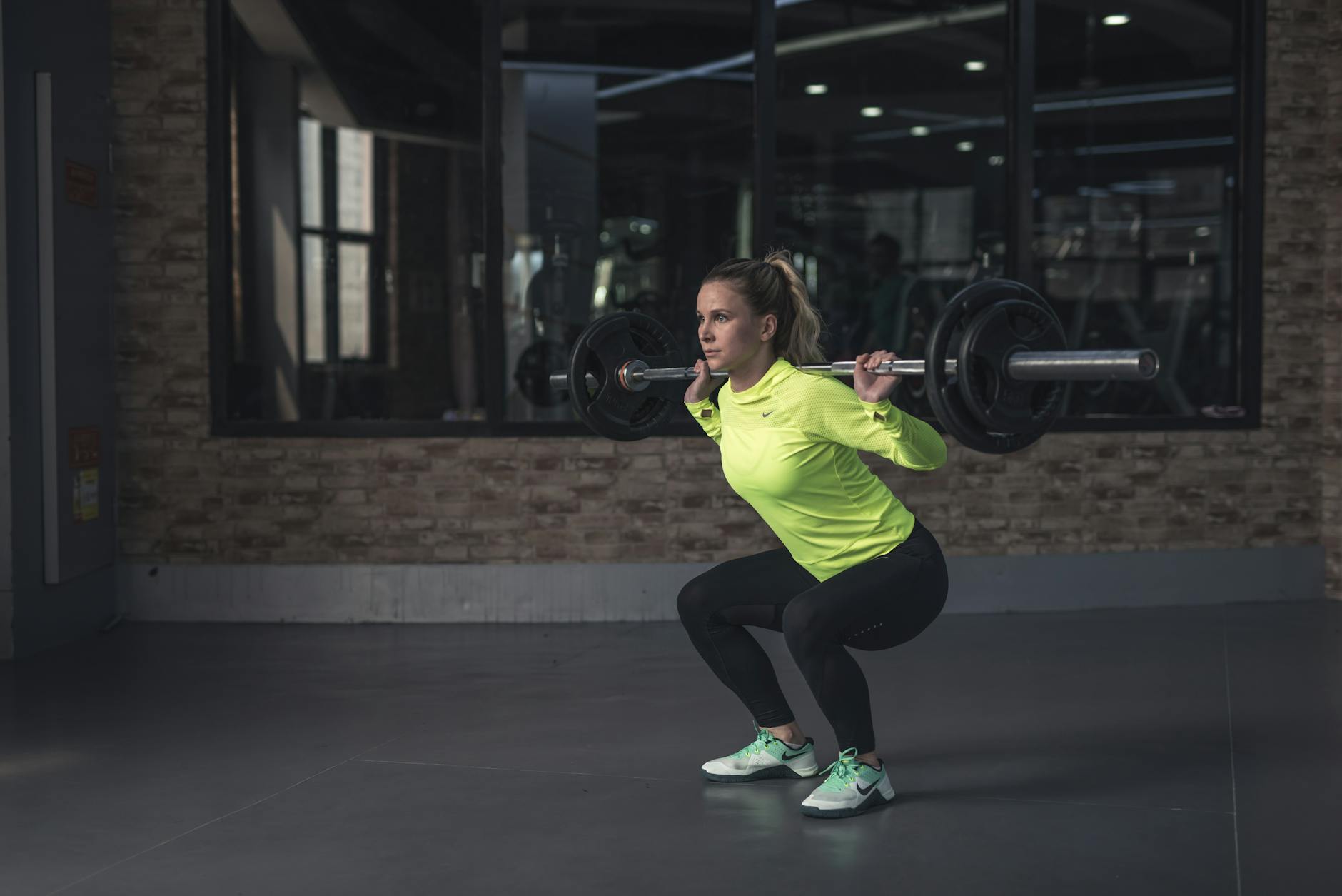
This is life. The weights never get lighter.
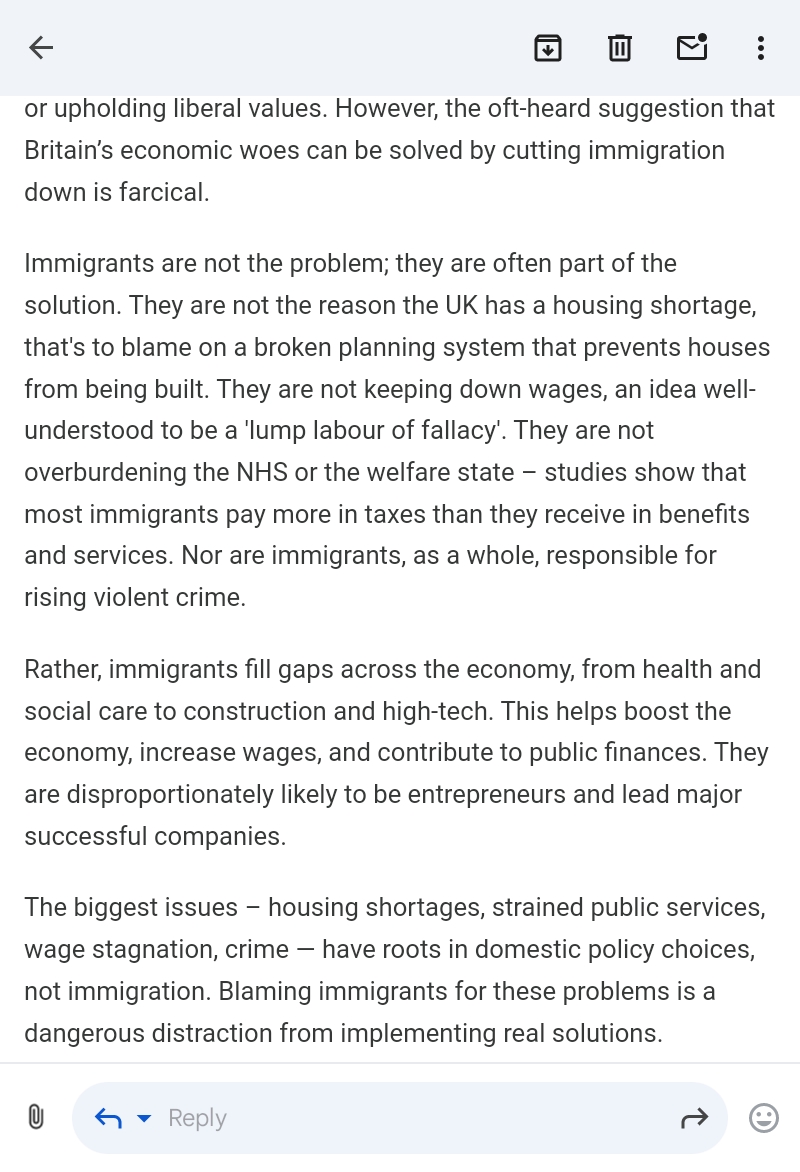
“Immigration is not the problem.”
That says even the supposedly right-wing think tank that calls itself the Institute of Economic Affairs.
Below is part of the email that it sent under that heading today.

Penny Mordaunt, MP for Portsmouth North and leader of the Commons, and I both lost our mothers to breast cancer when we were teenagers.
Continue reading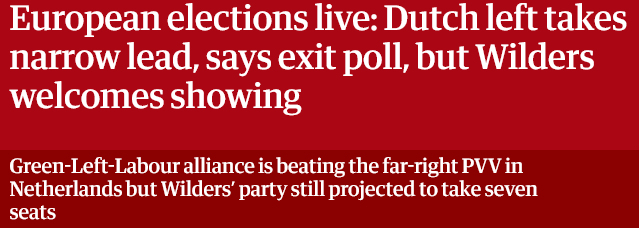
I’m glad I voted after all. The ones that did, like me, even if they considered not voting, like me, helped achieve that narrow lead. #notinmyname
Later followed by this, also in the Guardian:

This evening is also UK election debate. I wonder if the BBC will stream it on YouTube. Let’s find out…
Yes, streamed on site.
Yuck, weasel Farage, been hiding under a stone for so long, has popped up again. Mordaunt looks tired. Never seen her look this tired before.
Yes, Penny (Conservatives), re laughing stock.
Yes, Carla (Greens), this election – more than ever, perhaps – is indeed about what kind of country we want to live in.
No, Angela, bringing up the non-dom issue in response to questions about the NHS is bollocks. Shameful! That’s almost like Theresa May.
Malarkey, Nigel.
Oh, Penny messed up? Portsmouth already had a dentistry department at the university, but I may have misheard.
Angela is basically just as big a disgrace as the Tories. And she is modulating her accent on purpose. Wow.
Lorenzo Barba, member of the public, doesn’t want immigration? No, he wants responses.
Thank you, Stephen!
Malarkey, Nigel. Malarkey.
Thank you, Rhun!
Penny sayin’ this from a town that was and is built on immigration, also from within the UK, that migration is too high. Portsmouth would collapse without the money spent there by its high percentage/number of mostly very highly educated foreigners.
Thank you, Carla!
Side note: fact checking going on in the background.
By the sound of it, Wales and Scotland still remain the brains of the UK, which is reassuring.
There’s not enough difference between Labour and the Conservatives.
As evidenced by how similarly they went at eachother?
(Penny’s lost her edge. OMG. I’ve seen her at the Guildhall in 2010 or thereabouts. She was so much more impressive then. I had to admit that she came across as highly capable. She’s lost that. At least during this debate. Makes sense. Back then, the sky was the limit. Nothing to lose. Now she has nothing left to lose and nothing left to gain. She’s going nowhere.)
Nigel is just calculated hot air. It’s just words, no substance.
Wow. The applause so far goes for Green, SNP and Welsh views. (Welsh=Welsh Labour, Plaid Cymru)
Penny dodging the question, like so often.
Thank you, Mishal, moderator. (Repeatedly)
Apparently, Rishi Sunak makes 30 million from his investments, not 2. (Gary Stevenson initially thought it was 3, then corrected it to 30. I assume he’s correct.)
Nigel remains just another Boris.
Carla, yes, it’s called dithering and it’s bad for businesses when they can’t plan.
Penny, you’re lost. It’s hilarious how she deliberately tries to channel Theresa May and appear prime ministerial and then goes off the rails again.
There they go again. Angela and Penny show they cannot govern the country.
Carla, you should have had that number!
Dang, Nigel gets applause for stop and search.
Lower crime numbers do not represent less crime, just fewer people reporting crime.
Many young people don’t feel safe, agreed. Which is why many carry knives.
Many older adults don’t feel safe. Many women don’t feel safe.
Police have not been investigating most crimes for a long time. I doubt that job satisfaction among police officers has increased under the Tories.
Angela turns up her accent again during her final statement.
(It obviously plays no role for Wales and Scotland.)
Carla!!! You mindreader! 😁
(I suppose that’s why I was a member of the Greens for a while. I’ve been saying that Labour and the Conservatives are too alike for years. Yes, it’s gotten worse under Starmer.)
I agree with Wales needing to be taken into account.
Ha ha, Penny.
Nigel, fighting for ordinary people? Since when?
And that’s when I realized that I don’t think I have said anything about the Lib Dems…
Also, can people in England vote for Plaid Cymru or the SNP? I don’t know.
I assume that the BBC will have the video of it up soon and then I will post it below.
8 June 2024
The BBC has only published bits of it on its YouTube channel and so have other channels.
The Guardian calls Farage a confident speaker. Yes. It’s Boris Johnson’s style. It’s not suitable for anyone seeking to lead. Other than that, yes, indeed, he was on the fringes of the action, mostly piping up as if he were entertainment in a break.
So it’s still about who shouts the loudest? I hope not.

https://www.bbc.com/news/articles/clddkpy66eno

And here below we have a former political journalist from the BBC (Sr True Dedication) trying to achieve the opposite of what Rayner and Mordaunt seem to want. Apparently, half the world is having elections this year so half the world is determining what kind of leadership it wants.

On this website, I’ve mentioned a few times before that I sometimes have the impression that some people out there have lost the ability to distinguish between computer games and real life and that I find that worrisome.
So stunts as described in this CNN article do not please me and I am reassured to see that the guy behind it is being charged. Stunts like these normalize violence and destruction. That’s dangerous.

Remember what I’ve been saying lately? It’s simple arithmetic.


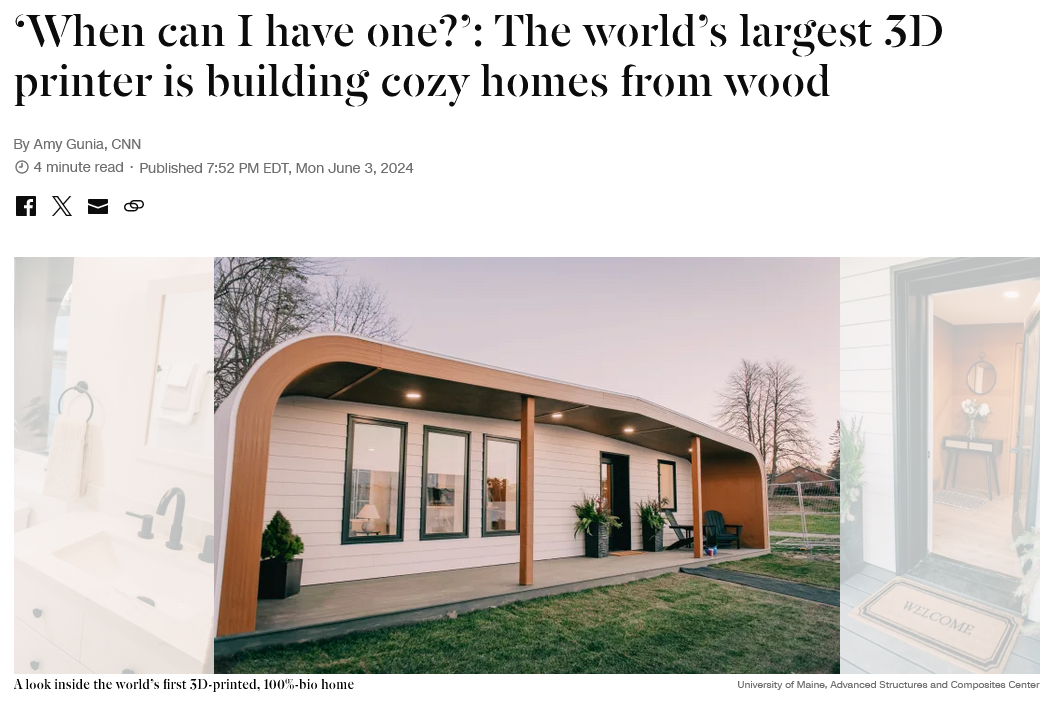
I’d want one if I had a patch of land in the US or some other countries where I could have one.
https://edition.cnn.com/style/worlds-largest-3d-printer-homes-maine-hnk-spc-intl/index.html
I wish that in the past decade or so, someone had clued me in to the fact that my vision problems were merely caused by DRY EYES. People have no idea how much it can interfere with working on a computer, particularly when it concerns work that isn’t really interesting (which makes it much easier to get distracted and annoyed by blurry vision).
I am not the only one who found this father of utilitarianism – and his disciple John Stuart Mill – cold and callously calculating, but there may soon be a little bit more insight into how this extremely privileged pampered person saw the world.
Spain and France are among the most opaque when it comes to declaring who party funders are, analysis shows.
Only Bulgaria, Czech Republic, Estonia, Greece, Latvia, Poland and Croatia require the source of all donations to be identified.
Years ago, when I was drafting documents for a lawsuit that I had started on my own and was carrying out on my own, I contacted a local lawyer to ask him about a term. (Well, technically, he was in Fareham, I think.) He didn’t understand why I was making such a fuss about one word.
Having worked at top law firm Clifford Chance (while also working at VU University and starting my small business and convening a conference session in Boston), where we drafted and printed and edited and printed and edited and printed and edited and edited and faxed and edited and edited agreements that were usually around one hundred pages, I knew that even a comma can make a crucial difference, and as I wasn’t dealing with small-time solicitors but with the lawyers for insurance companies (and a London-based barrister), I couldn’t afford to make a mistake that might accidentally undermine the point that I wanted to make. I wanted to avoid any ambivalence.
For those of you who think that I am exaggerating, read this article about how a single comma is deciding over the fate of so many humans:

What the ICJ should have written is the following.
Instead of writing that Israel should
“Immediately halt its military offensive, and any other action in the Rafah governorate, which may inflict on the Palestinian group in Gaza conditions of life that could bring about its physical destruction in whole or in part.”
The ICJ should have written that Israel should
a) Immediately halt its military offensive; and
b) Immediately halt any other action in the Rafah governorate, which may inflict on the Palestinian group in Gaza conditions of life that could bring about its physical destruction in whole or in part.
Why didn’t it?
Time to look into that ruling: https://static01.nyt.com/newsgraphics/documenttools/95964284e55d5c79/b0c539e2-full.pdf
Okay. It was definitely meant in the latter sense is my first impression after having taken a look, so this was sloppy writing.
Continue readingI watched a film last week that turned out to be based on true events. A textile worker befriended a guy in prison and helped him escape with the aid of a helicopter which she hijacked and forced to land in the prison yard. It happened in 1985. It struck me that not much in her life changed when she went to prison.
I’ve never been driven by money. I was driven by what interested me, in what brought me joy, and by curiosity. I was not well-to-do but I was doing alright.
Then I moved to a country in which people’s value was solely determined by how much money they had in their bank accounts. At least, that’s what I thought at first. Then it dawned on me that there are now two groups of people in western countries, namely those that put money in their own pockets and those that put money in the other people’s pockets. (Let’s forget about people who live outside of this dynamic, for now, because that has a lot to do with the specific country such people happen to be in.)
The second group is much larger and it means that the people in that group are easily replaceable. They donate their time to put money into other people’s pockets and in return for that, they are rewarded with a smaller amount of money. They are required to put that money, the money that they receive, into other people’s pockets in return for housing, utilities, food, healthcare and other necessities.
(No, this is not a zero sum game, but it comes ridiculously close. Particularly the part where so many people sacrifice their time and joy and freedom is really strange. It’s an oddly punitive system that doesn’t make much sense, particularly if you consider that this same system is essentially also putting our future on the planet in danger. This is essentially the western capitalist system that I seem to be describing. It’s not how for example a kibbutz works or a Buddhist convent or a community deep in the Amazon or on an isolated Pacific island, but it is the only system I know from my personal experience.)
We are increasingly living in a world in which people’s value is determined by how much money they put into other people’s pockets. I was self-employed for a long time, but I still was putting a lot more money in other people’s pockets than into my own and as soon as I stopped doing that, I lost my value in the eyes of those other people.
I just watched part of a documentary about ex-influencers. Some now have courses about how to stop being an influencer, but all the content that they created made them enough money so that they no longer need to worry about supporting themselves. That is how AI will eventually somehow put money into our wallets. A lot of influencing is a lot like AI content creation. It has little real meaning.
Friendship too seems to have become a hollow concept, mostly. An old-style friend is now like a handbag or a car, isn’t it? New-style friends are people who follow you on social media because they like your content. That content does not have to have anything to do with who you really are as a person.
In my self-employment, I used to say that if anybody could do the job, they didn’t need me, but that changed at some point – because of circumstances that made it harder to do certain things such as travel to my clients. It made me replaceable, first by other humans and then by AI.
Now AI is taking over the roles of many other people, too, and what we all do is increasingly dictated by the requirements of technology, not the other way around.
Where is this going?
This morning I watched an artist very skillfully create a wonderful painting and it was with some horror that I realized that AI is doing these kinds of things too. All it needs to do is study this artist’s work and extract what exactly leads to the end result. I can’t do that. AI can.
There is very little left for us humans to do. This means that the economic system is collapsing. Governments will have to start paying everyone a certain monthly amount that covers their monthly costs for housing, food etc. Oddly enough… I suspect that this will actually be far cheaper for governments because it would erase the need for the huge machineries that are currently in place to check and double-check and control and monitor us and punish us for silly typos.
The alternative is that everything becomes free, but I can’t see how that can be sustainable unless AI starts replacing governments and administrations too. Wait a minute… If you go back to what created money in the first place, well, it was the exchange of favors and skills and goods. If all those things are taken over by AI, would there still be a need for money?
Why can’t housing be simply free after all? Why can’t food simply be free?
If everyone receives enough money to be able to support themselves, there is no longer a real need for people to put money in other people’s pockets (other than the latter’s greed) after all.
This is an interesting conundrum.
Does it mean that most people simply would not know what to do if they had to stop donating their time toward putting money into other people’s pockets? No, they could then do more meaningful things, such as go for walks with people who have Alzheimer’s, maintain local parks (gardening and painting and carpentry) or provide free healthcare. The biggest expense in any larger undertaking is always staff cost.
It was the “tit for tat” attitude, the accounting, the bookkeeping, that caused the need for money. Where is it written that a person cannot maintain a thousand apple trees whereas someone else who may be less strong, physically, or who looks after a chronically ill relative or who tells stories to kids, only looks after ten apple trees and is equally secure? Why is the former more valuable than the latter? Can AI take care of this for us?
I can’t change any of the above, including the crazy fact that employees now can be required to go on courses where they can learn how to appear more authentic without being genuine, but I would love to find a way to shift the balance a little.
While decent people’s bank accounts can get closed out of the blue because their personal accounts can become suspected of money-laundering activities even when there aren’t any suspicious transactions, anyone can place and operate cash machines. It requires no license or anything. Nobody even knows how many there are and where they are.
This is probably the weirdest thing that I’ve heard in my life.
https://nos.nl/artikel/2521798-hoog-witwasrisico-geldautomaten-door-gebrek-aan-toezicht
Supermarkets sometimes have one so that they don’t have to take the money from the cash registers to the bank. They save money that way. Others may have one because it increases footfall and thus turnover.
It may also help explain why it is so easy for some people to pretend that they are from the bank and know so many details about where people have their bank accounts. Just this morning, I read that one bank has a remarkably high percentage of successful fishing attempts and one case was mentioned in which the scammers knew that the clients had an account with which other bank. https://nos.nl/artikel/2521727-phishing-aanvallers-opvallend-succesvol-bij-bunq-veiligheid-geen-thema
It’s amazing that this guy and his son in Hastings – at the start of this documentary – are allowed to live in tents on the beach. Criminalization of being without a brick or concrete home is far too common. It translates into criminalization of being alive and human. It’s flat out wrong.
In Amsterdam, a group of students got together and designed a plan for housing built and managed by them, and to serve them, not designed for putting a lot of money in other people’s pockets. To their surprise, the plan has now been approved by Amsterdam’s city council. In Germany too, there are groups who bought the buildings that they were living in so that they no longer are forced to finance other people’s fancy lifestyles. This is one option. I think it’s a really good one, but it requires the support of city councils and others.
Governments simply paying everyone 1000 bucks a month toward housing might be another one. It’s probably even cheaper overall as it will for example lead to lower healthcare costs. Currently, any support mostly increases inequality and takes agency away from people on low incomes. They also often get treated as if they are either learning-disabled when they’re not or dishonest when they’re not. It’s not helpful.
Let’s face it, how on earth can a McDonalds worker on 5.35 an hour support himself? On 20 hours per week, that’s not even 500 bucks a month. On 40 hours a week, it still isn’t enough. It’s unsolvable and it is not the fault of the people who earn that little. They are not to blame. It’s governments. They impose this on them.
If foreign cleaners in luxury car dealerships where cars can cost 300,000 pounds are on 7.50 an hour and ask for more because living in London requires at least 10 bucks an hour to support yourself get suspended without pay (while the English cleaners of the cars get 20 bucks an hour), that is supported and enabled by the government.
It means that people don’t have anything real left to fight for. They are vassals, and most have no way out of that position. (Some accidentally run into some kind of charity, some kind of foundation, that does things like front the sums that people need to get out of their situation, but it doesn’t change the overall status quo.)
This is what many other nations are headed for too now, I think, in view of so many right-wingers taking over governments.
(Me, I have developed a tendency to stay away from well-to-do people nowadays because I find it too hard to have to listen to their naive assumptions about how the world works for people who are less well off. Maybe, I shouldn’t. Maybe I should educate them instead.)
I can’t believe that the Dutch use them to clear leaves from the edges of parking lots (in combination with a regular street sweeping machine!).
Want more climate change, anyone? Need more noise pollution, anyone?
The first time I heard those things was in Florida in 1994. They sounded so ominous.
While enjoying my morning coffee I ran into the following.
If you’d invested $1,000 in Nvidia on 15 April 2005, you’d now have $566,624.
Sure.
If I had been a little boy on 15 April 2005, I’d be a man in my twenties now.
If you’d invested $1,000 in different stock than Nvidia, you might be left with nothing now.
Had you even heard of Nvidia back then?
People who do things like build their own computers did know about it. Come to think of it, yes, I built my first computer around that time, in a super sleek, fully lockable blue case that was great to work in.
The right questions to ask are “what do you base your investment decisions on?” and “how much risk are you willing to take?”
(Along with “what tools do you use to invest?”)
(I’m talking investments now, not trading, obviously, although if you aren’t into it for dividends and to help enable the company in question to function, but plan to sell your shares later, you can see it as long-term trading.)
Continue reading