Also, yesterday:
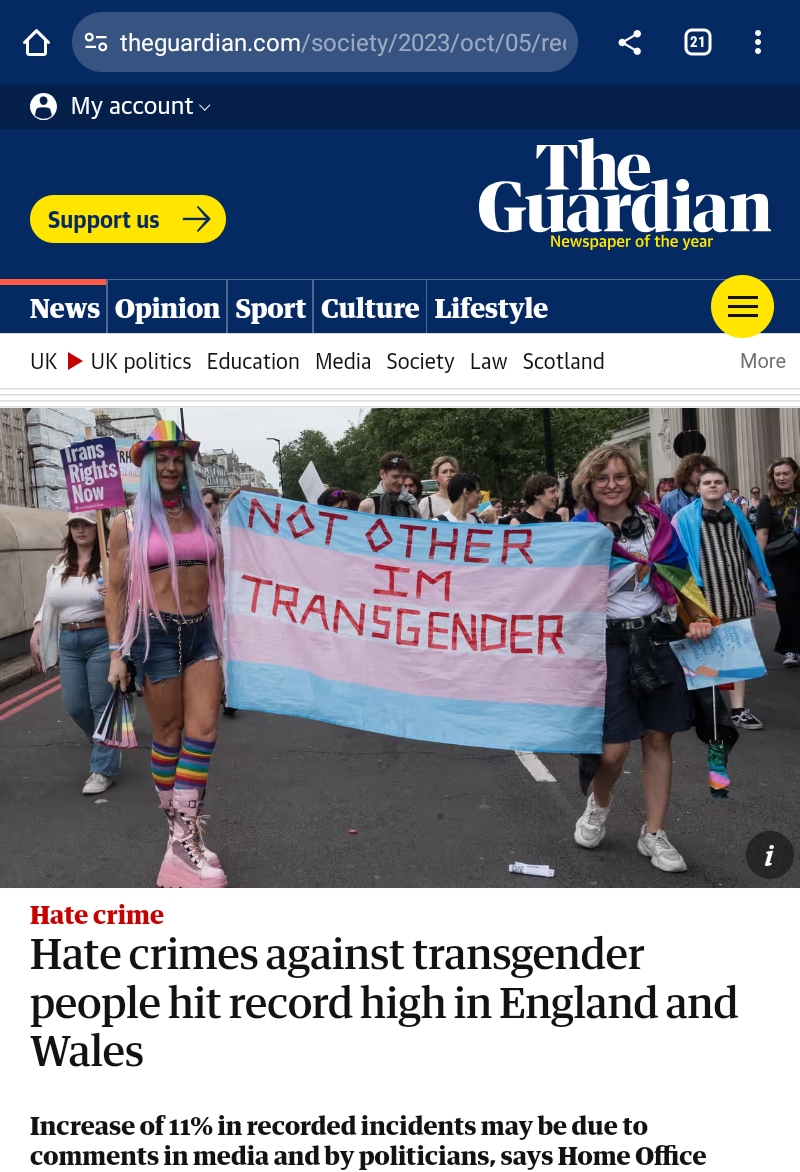
The Home Office assessment agrees with what neuroscientist Kathleen Taylor wrote in her book “Cruelty”, namely that even the mildest verbal otherization primes people for aggression.
Also, yesterday:
The Home Office assessment agrees with what neuroscientist Kathleen Taylor wrote in her book “Cruelty”, namely that even the mildest verbal otherization primes people for aggression.
I made a related video a few years ago. (A few hours later: Except, it appears that there is hackers messing with URLs again so maybe you’re not getting to see that particular video, below. It’s happened before. I’m currently getting some weird messages that I am choosing to ignore and my screen split up all of a sudden.)
This is a case I looked into a few years ago. I read the report and exchanged one or two tweets with her mother. I don’t know why but her case got to me more than others.
Now there is a documentary. The police response at the time was even more lackadaisical than was already known. (I’m still in the middle of watching the documentary at the moment.)
What I remember is that the police didn’t have the IT expertise at hand that would have determined that the other messages were coming from him too.
Her case particularly also is why I feel strongly that cases of stalking and harassment should be dealt with very differently.
(That reminds me. Does anyone know how that big legal action against the police in England is going? It made the news when it was filed but I haven’t seen any more news about it since. I know that a lawsuit can easily take one or more years.)
Lauren’s calls to the police, to me, sound like she was very concerned (afraid), but doing her best to stay above it.
Please note that the date on this post is incorrect. I don’t know why there is an incorrect date on this post.
Watch the damn videos. Both of them.
This is classic sadistic stalking, also known as resentful stalking. It’s intended to make someone’s life a living hell. To control someone else.
It can manifest in various forms.
Be warned. This is not a funny video to watch. Someone died.
The victim in this video relocated several times to try to escape the stalking. In the end, she went to the police. Thankfully, they believed her and set up a trap. When they caught the stalker, the police discovered several other victims, including a colleague of the victim who reported the stalking to the police.
Continue readingI am sure that I am not the only one who sometimes gets really disheartened when efforts and accomplishments clash with the callousness and destructiveness of cold old-fashioned capitalism. If you are feeling at a loss as to how to proceed and feel ready to pack it in, then you may find this Plum Village presentation really helpful.
She’s a former BBC journalist who worked on the politics newsdesk.
Also had convictions for animal abuse. Also possibly had Asperger’s? Problems with alcohol. Depression.
Someone who needed to receive medical care rather than to provide it.
Source: NOS
https://nos.nl/artikel/2492220-om-waarschuwde-erasmus-mc-voor-psychotisch-gedrag-en-veroordelingen-l
Continue readingUPDATE:
😍🥰👍
(The future of bioethics: Challenges, Visions and Opportunities)
Also, new president of the Hastings Center.
I love her vision! I so agree!!! Very challenging, sure. “Aspirational and inspirational” as she put it.
I e-mailed her and wrote the following:
Thank you. I am going to mull this over and let it inspire me.
I am a member of the public, have a background in earth and life sciences. I ran into the very first edition of Glenn Cohen’s EDX course and that’s what got me into bioethics.
I love the way – aspirational and inspirational, indeed – you are tackling – or should I say “approaching” – the field. It’s very challenging to take all views and angles into account – but we should, no matter how difficult this is – and I really love the way you fully embrace that. I also think that bioethics cannot keep being mainly restricted to the US and that it needs to go global, even though that is going to be so so challenging.
Having lived in England with its persistent class ideas, maybe I can contribute that housing and homelessness are part of the poverty topic, which is an inequity topic and the result of government policies and decisions. I agree with Philip Alston on that (NYU). 40% of Brits are currently in poverty.
Also, if you haven’t heard of them yet, then the IAPG – international association for the promotion of geoethics – might be useful to know about – connections to mining industry – and, with regard to the havoc that biased algorithms can cause, that’s not restricted to health, but also to tax-related decision-making, which also can have health impacts. In a pretty shocking Dutch childcare tax credit scandal, children were sometimes removed from parents, but I am sure you’ve heard of it.
Enjoy your weekend.
Also, when I wrote my book about “the new eugenics”, I looked for people to send it to and did my best to find scholars in Arabic and African countries too. I really was interested in how Islamic scholars and cultures see these issues.
Speaking of which: https://www.eventbrite.com/e/islam-and-bioethics-what-we-all-need-to-know-registration-713788158597
See also https://sps.columbia.edu/academics/masters/bioethics/events
Shouting match outside, Portsmouth-style. (Well, somewhat.)
I go onto my balcony, wish the guy a good evening, assuming that he just was the target of racism. There’s a little bit of that here locally, I’ve noticed. It’s horrible. Awful, just awful. People whose skin isn’t white and/or who speak a different language.
He shouts back, too angry to listen in detail to what I am saying. Oh, I know what that is like. After years of being showered with blind hate and contempt, you can end up very angry indeed. I know how it goes.
(He wanted to be heard. He was NOT in a mood to listen to me.)
He was merely angry. Controlled. But hurt.
Been there so many times myself in the English enclave of Hatesville. The hate knows no bounds and nobody wants to listen to you, about what is being done to you. I know what that is like. Boy, do I know what that is like.
Next, young women tell me to keep my mouth shut because there are people living here. What am I? A tomato?
Shortly after that, three low-flying helicopters pass, some kind of VIP. (They flew NW-SE. Heading 130, maybe.) I’ve seen something similar when Trump arrived in Portsmouth.
Some young woman under my window starts shouting that these are our liberators, that they’ve been preparing for 80 years. Or was it 60?
I’m so through with the human species.
I hope that the guy got rid of his anger by shouting at me. You can’t keep bottling it up but nobody wants to know about it, so you have no choice but to bottle it up. Every once in a while, it comes out, whether it’s convenient or not. Usually it’s not at all.
Fuck you, Portsmouth with all your hate, your relentless hate. Fuck. You.
That guy’s anger resonated with me.

For people like me, this means that we can now find ourselves deported as a result of having held up a sign to do with climate change. For example because it inconveniences someone who may now have to walk or drive around you.
Want a comparison of the legal reasoning in this case?
In a trial prosecuting someone who went berserk because he found his wife cheating on him, the latter cannot be mentioned while addressing the jury.
Another example could be that if you chased a burglar with a frying pan and the burglar ended up with a broken wrist and ripped clothes when he climbed your fence to get away, he can now force you to say nothing about the burglar part while addressing the jury in the trial in which you are prosecuted for having clobbered him with the frying pan.

I became curious as to what happened to people who came out of the Nazi concentration camps and how on earth they dealt with having become separated from loved ones, particularly children, and having no idea whether they had been able to survive or what happened to them. This inability to protect your loved ones from harm, particularly one’s children, it’s probably the worst thing that can happen to a human being.
This is what I just found: https://encyclopedia.ushmm.org/content/en/article/the-aftermath-of-the-holocaust
Maybe like this.


This is what the Dutch news looks like this morning and it struck me that the top headlines are about the United States and Canada on the left and California on the right, followed by headlines about Darfur, Ukraine and Russia and the magazine Rolling Stone.
Below that is a headline about Libya, one about Brazil and then finally the first Dutch news, about an explosion in Rotterdam.
Continue readingWhat to do with it, with all those glass-and-steel cubicles? That is what the Dutch “financial times” (FD) is asking. I get its daily emails, in case you have started wondering why I so often refer to it.
Simples.
House England’s homeless. The people whose income is so low that they can’t even get onto that housing ladder.
Who is going to write the proposal that will make it add up financially and approach all relevant parties? I’m sure it can be done. Where there’s a will, there’s a way.
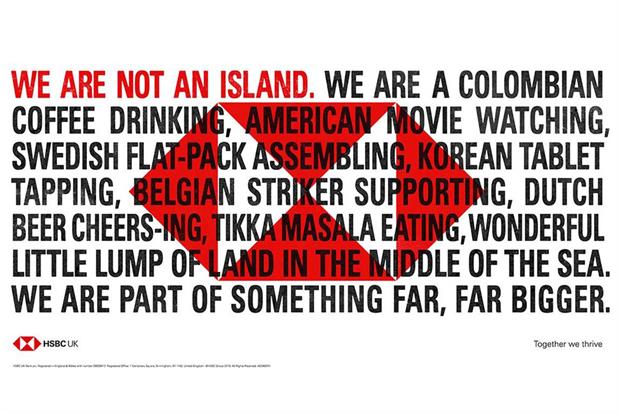
In view of the brilliant inclusive commercials HSBC has had in recent years, for example on a billboard along Lake Road in Portsmouth, certainly HSBC will want to listen and cooperate (unless it has a reason for wanting a PR disaster on its hands).

“Today, shed office. Tomorrow, head office.”
There you go.
(I have not seen that one in person. I remember a few that made me feel supported, as a migrant, however. They had a bold “keep pushing back against hostile Tory and Brexit sentiments, also post-Brexit” feel to them. I photographed at least one of them, possibly the one with the football photo. They gave off a strong message.)
The building is owned by the Quatar Investment Authority (QIA). It has a connection to the Canadian firm Brookfield. The Canary Wharf Group is owned by the QIA and Brookfield.
Who can step up?
Where there’s a will, there’s a way.
/cloudfront-us-east-2.images.arcpublishing.com/reuters/5WRZXEDK6ZI4BPFJCFTNRTWI4Y.jpg)
Here is one of those ads that I saw in Portsmouth pretty recently.
In my inbox, from Abigail Penny, Executive Director of Animal Equality UK:
Hi Angelina,
Last night was BIG.
BBC Countryfile investigated the Scottish salmon industry after Animal Equality shared undercover footage with them showing sick and dead fish.
People all over the country saw the footage supplied by Animal Equality to the BBC, showing the suffering behind the salmon products that they see on supermarket shelves.
And a lot of people have been reacting.
The Sun published an article this morning about the programme titled ‘Countryfile fans left sick to their stomach’.
We also saw comments from fellow animal protection organisations including OneKind, Compassion in World Farming, The Humane League, Animal Aid and more.
And more than 1,500 people have already signed our petition calling for the Scottish salmon industry to be halted from expanding any further!
There’ll be a lot of people thinking very differently about salmon today. I’m sure many have vowed never to eat Scottish salmon again and instead choose plant-based alternatives.
Supporters like you played a big role last night and I’m so thankful for everyone who’s fighting for fish right now.
Together, we’ve just pointed an enormous spotlight onto the Scottish salmon industry. Believe me, they’ll be feeling the pressure today.
But it wasn’t all positive.If you saw Countryfile, I’m sure you saw some of the coverage was not totally in support of fish.The Scottish salmon industry had plenty to say and they tried to play down the millions of deaths happening on its farms.
Angelina, we knew this would happen. We knew they’d try to defend their profits, even though millions of fish continue to suffer because of them.
That’s why I decided to record an interview with fish welfare expert, Professor Jennifer Jacquet, immediately after Countryfile aired.
In the video, we discuss the Countryfile episode and respond to some of the arguments made by the Scottish salmon industry.
I’ve also added this illustrative video below about fish welfare.
I’m currently playing music by another English hate-fueled establishment bastard. Another loser who got lost in the English class system.
Of course, he wrote and played the music before he became part of the same establishment that he apparently used to go on about in those days.
No more time for paupers now.
https://www.bps.org.uk/research-digest/inflammatory-response-may-influence-how-we-see-others
Also, there’s a link between inflammation (which can result after prolonged stress) and how we see others.
Continue readingYour skin doesn’t shape your health but it reflects it.
So if you look much younger than you actually are, you are probably in very good health and likely to live long. That leaves you plenty of time to cath up.
Besides, research has also shown that you are more likely to get hired when you have slightly rosy cheeks. It makes you look healthy. A touch of the blush brush can work wonders for those of you with allergies and other reasons for looking a little sallow (if you’re white).
https://www.bbc.com/future/article/20230823-the-curious-ways-your-skin-shapes-your-health

Video: https://nos.nl/l/2489150
Surely, this counts as torture. A horrific human rights violation.
I’ll ask you one simple question.
Would you like to be in prison for life?
…
Well, then. There you are.
This is a follow-up to my previous post about her, about her possible motive.
We tend to think of such people as clever, scheming and cunning, don’t we? Lucy Letby certainly was scheming, but her notes have revealed how utterly miserable she was, so she wasn’t feeling superior to others. The fact that she’s rotting in prison now tells us that she wasn’t very clever either.
Seriously criminal behavior almost always comes at a great cost to the people who commit these crimes, too. Just consider how this whole thing must have taken over her entire life.
When you think of the victims, you get overwhelmed by their side of the experience and all you see is evil-doing. But what is it, evil?
The people who get fooled by the easy smiles and eager helpfulness of the likes of Lucy Letby have a lot to answer for too.
That not all is well within the NHS at management level has been known for years as well.
Yet calling out things that aren’t right and should be remedied will almost always get you vilified. That’s because it is metabolically costly for the brain to consider opinions that upset one’s firm beliefs, if it’s not political.
Similarly, most of us have the tendency to believe that if a person smiles a lot and appears very eager to help, she must have a matching character.
(I got this latter bit of wisdom from a paper about psychopathy. We tend to associate certain behaviors with certain character traits, but there may be no correlation at all. We are too eager to take things at face value. We also tend to assume that children who smile a lot aren’t being abused at home, for example.)

Anyone seriously interested in the questions that new technologies like CRISPR force us to consider (except those of us who have no conscience and are not capable of remorse) and willing to put their teeth into it may want to dive into the following older publications to start developing a perspective on these issues.
These papers will make you aware of ableist bias and fashion effects as well as legal aspects, whereas scientist and technologists tend to have scientific constraints and consequences on their mind, such as off-target effects.
Cohen, Glenn: https://angelinasouren.com/wp-content/uploads/2023/09/intentionaldiminishment-ssrn-id1330504.pdf
Greely, Henry: https://angelinasouren.com/wp-content/uploads/2023/09/05-greely_remarks_final.pdf
Sandel, Michael: https://angelinasouren.com/wp-content/uploads/2023/09/sandel-the-case-against-perfection.docx
https://www.theatlantic.com/magazine/archive/2004/04/the-case-against-perfection/302927/
Rabe Smolensky, Kirsten: https://repository.uclawsf.edu/cgi/viewcontent.cgi?article=3719&context=hastings_law_journal
https://angelinasouren.com/wp-content/uploads/2023/09/rabe-smolensky-ssrn-id1158631.pdf
This, the scientific experiment with the puzzles shown in this video, this is how prolonged narcissistic abuse works, how stalking or domestic violence often affects victims, and it’s also how the English class system works.
https://youtu.be/u4SIlJE0Qs0?si=OdxG5St0yPNHgPa5
To be precise, the rigged, impossible-to-solve puzzles result in a form of gaslighting. They deny people their own view of reality (such as “I am reasonably smart so I can easily solve such a puzzle”) and thus start distorting it.
They also distort reality for anyone observing what goes on and who does not know that three of the puzzles are rigged. They trick them into believing that these three candidates are so “stupid” that they can’t even solve a simple puzzle that was designed for 10-year-olds.
(31 August 2023, 23:44: Yet now the new URL for the video makes a bird video show up in this post when I look at it on my phone instead of on my tablet? Come to think of it, I also had technical troubles while posting the original post.)
(Below is what it looks like while I am editing the post on my tablet, tethered to my phone.)

This is how some psychopaths and narcissists operate. Because (other) people tend to associate certain behaviors with properties like kindness, they tend to assume that these latter properties are present when they are in fact absent as soon as they see the behaviors. They let themselves be fooled because they prefer pleasant emotions or ideas over threatening ones.
In this example, imagine wat might happen if the man conducting the experiment does not reveal that half of the puzzles are rigged. Imagine what might happen if someone goes through his entire life like this. People will fall for the superficial charm and perceived authority of the person who is conducting the test and they’ll dismiss the three “victims” as losers.
(Afterthought: I think that psychopathic and autistic people are equally bewildered by how the rest of us function and can feel equally lonely and misunderstood, rejected even. They both find emotions challenging but in opposite ways. So they study others to figure out how to make the best of life and fit in as well as they can. I think that autistic people often have a problem associating certain words, conclusions and behaviors with specific contexts; they make different associations or none at all. Context is challenging for them.)
(This reminds me of a woman who once told me that when she was a child, she thought that only she was having thoughts. Then one day, she was observing a boy and realized that he was thinking too, to her surprise. And that surprised me.)
This is what my phone shows the next day:

The following appeared in my inbox today.
People with disabilities are more likely to experience human trafficking than their peers. Why is their risk greater and why are they not being adequately protected?
This new mini podcast series explores research into the intersection between trafficking and people with disabilities. We learn that people with disabilities face greater difficulty finding living wage employment [1] and increased healthcare costs,[2] and how this is associated with increased trafficking vulnerability.
“Applying disability critical race studies in the trafficking field is important as it allows us to get this intersection between trafficking, disability and race that is so prevalent, where survivors of color, especially disabled survivors of color, are being ignored or marginalized by the law-and-order framework trafficking.” Rachel Rein, Attorney at law
Because people with disabilities are more exposed to vulnerabilities such as poverty,[3] it drives risk-taking that traffickers are ready to exploit. In addition, traffickers deliberately target those they think they can isolate and control.[4]
Law enforcement, emergency responders and the public, are often not aware of these increased risks that results in nothing being done, even when exploitation is clear.[5]
To unpack this, today we are launching a 3-part podcast series to explore this topic together with our new partner Human Trafficking Search. In each episode, we talk with a different researcher who shares their perspective and learning on the intersection of disability and modern slavery
(Listen here: http://campaigns.freedomunited.org/q/RZmtP4J7lXiz0XwWRmDkKm_CP4I23_OfI30ZcLOJYW5nZWxpbmFzb3VyZW5AZ21haWwuY29tw4gXDggFb-zebVpHirLnVPgfFo-Jg).
Episode 1: Andrea Nichols is Professor of Sociology at Forest Park College and a Lecturer in Washington University in St. Louis’s Women, Gender and Sexuality Studies Department
Episode 2: Dr. Chris Carey is Associate Professor in the Department of Criminology and Criminal Justice at Portland State University
Episode 3: Rachel Rein is an attorney and author of multiple law review articles as well as a student note on applying disability critical race studies to human trafficking in the U.S.
Brendan Hyatt, our podcast host, has written an accompanying article published on Human Trafficking Search titled “Disability and Modern Slavery: lack of attention can be as harmful as deliberate malice”. An abridged version is published on Freedom United: https://www.freedomunited.org/disability-and-modern-slavery/
[1] https://www.tandfonline.com/doi/abs/10.1080/23322705.2021.2016268
[4] https://www.ndrn.org/resource/human-trafficking-and-the-disability-community/
[5] https://www.nytimes.com/interactive/2014/03/09/us/the-boys-in-the-bunkhouse.html
And this following one I have added for dessert. Particularly the first bit is hilarious as well as amazing.
Barbara Jacquelyn Sahakian, University of Cambridge; Christelle Langley, University of Cambridge, and Muzaffer Kaser, University of Cambridge
A bit of stress is a normal part of our daily lives, which can even be good for us. Overcoming stressful events can make us more resilient. But when the stress is severe or chronic – for example caused by the breakdown of a marriage or partnership, death in the family or bullying – it needs to be dealt with immediately.
That’s because repeated stress can have a huge impact on our brain, putting us at risk of a number of physical and psychological problems.
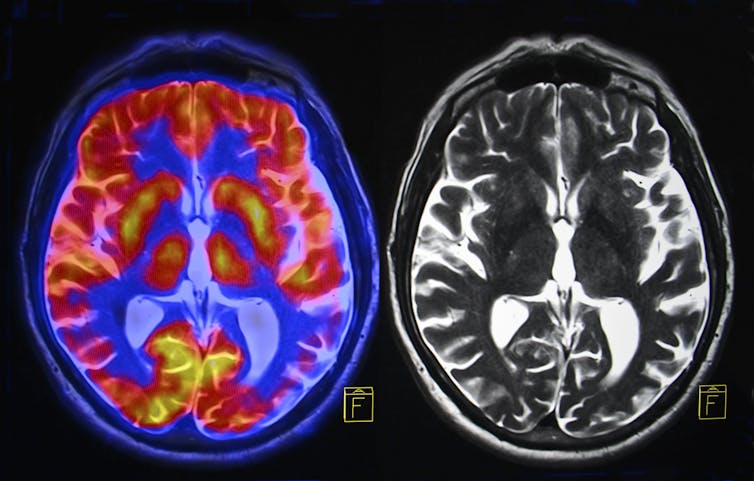
Repeated stress is a major trigger for persistent inflammation in the body. Chronic inflammation can lead to a range of health problems, including diabetes and heart disease. The brain is normally protected from circulating molecules by a blood-brain barrier. But under repeated stress, this barrier becomes leaky and circulating inflammatory proteins can get into the brain.
The brain’s hippocampus is a critical brain region for learning and memory, and is particularly vulnerable to such insults. Studies in humans have shown that inflammation can adversely affect brain systems linked to motivation and mental agility.
There is also evidence of chronic stress effects on hormones in the brain, including cortisol and corticotropin releasing factor (CRF). High, prolonged levels of cortisol have been associated with mood disorders as well as shrinkage of the hippocampus. It can also cause many physical problems, including irregular menstrual cycles.
It is well established that chronic stress can lead to depression, which is a leading cause of disability worldwide. It is also a recurrent condition – people who have experienced depression are at risk for future bouts of depression, particularly under stress.
There are many reasons for this, and they can be linked to changes in the brain. The reduced hippocampus that a persistent exposure to stress hormones and ongoing inflammation can cause is more commonly seen in depressed patients than in healthy people.
Chronic stress ultimately also changes the chemicals in the brain which modulate cognition and mood, including serotonin. Serotonin is important for mood regulation and wellbeing. In fact, selective serotonin reuptake inhibitors (SSRIs) are used to restore the functional activity of serotonin in the brain in people with depression.
Sleep and circadian rhythm disruption is a common feature in many psychiatric disorders, including depression and anxiety. Stress hormones, such as cortisol, play a key modulatory role in sleep. Elevated cortisol levels can therefore interfere with our sleep. The restoration of sleep patterns and circadian rhythms may therefore provide a treatment approach for these conditions.
Depression can have huge consequences. Our own work has demonstrated that depression impairs cognition in both non-emotional domains, such as planning and problem-solving, and emotional and social areas, such as creating attentional bias to negative information.

In addition to depression and anxiety, chronic stress and its impact at work can lead to burnout symptoms, which are also linked to increased frequency of cognitive failures in daily life. As individuals are required to take on increased workload at work or school, it may lead to reduced feelings of achievement and increased susceptibility to anxiety, creating a vicious cycle.
Stress can also interfere with our balance between rational thinking and emotions. For example, the stressful news about the global spread of the novel Coronavirus has caused people to hoard hand sanitisers, tissues and toilet paper. Shops are becoming empty of these supplies, despite reassurance by the government that there is plenty of stock available.
This is because stress may force the brain to switch to a “habit system”. Under stress, brain areas such as the putamen, a round structure at the base of the forebrain, show greater activation. Such activation has been associated with hoarding behaviour. In addition, in stressful situations, the ventromedial prefrontal cortex, which plays a role in emotional cognition – such as evaluation of social affiliations and learning about fear – may enhance irrational fears. Eventually, these fears essentially override the brain’s usual ability for cold, rational decision-making.
So what should you do if you are suffering from chronic stress? Luckily there are ways to tackle it. The UK Government Foresight Project on Mental Capital and Wellbeing has recommended evidenced-based ways to mental wellbeing.
We know, for example, that exercise has established benefits against chronic stress. Exercise tackles inflammation by leading to an anti-inflammatory response. In addition, exercise increases neurogenesis – the production of new brain cells – in important areas, such as the hippocampus. It also improves your mood, your cognition and your physical health.
Another key way to beat stress involves connecting with people around you, such as family, friends and neighbours. When you are under stress, relaxing and interacting with friends and family will distract you and help reduce the feelings of stress.
Learning may be a less obvious method. Education leads to a cognitive reserve – a stockpile of thinking abilities – which provides some protection when we have negative life events. In fact, we know that people are less likely to suffer from depression and problems in cognition if they have better cognitive reserve.
Other methods include mindfulness, allowing us to take notice and be curious of the world around us and spend time in the moment. Giving is another – volunteering or donating to a charity activates the reward system in your brain and promotes positive feelings about life.
Importantly, when you experience chronic stress, do not wait and let things get the better of you. Early detection and early effective treatment is the key to a good outcome and good wellbeing. Remember to act in a holistic manner to improve your mood, your thinking and your physical health.
And you don’t have to wait until you are overwhelmed with stress. Ultimately, it is important that we learn from an early age to keep our brain fit throughout our whole life course.
Barbara Jacquelyn Sahakian, Professor of Clinical Neuropsychology, University of Cambridge; Christelle Langley, Postdoctoral Research Associate, Cognitive Neuroscience, University of Cambridge, and Muzaffer Kaser, Clinical Lecturer, University of Cambridge
This article is republished from The Conversation under a Creative Commons license. Read the original article.
🚨 Stop the visit 🚨 ️
In my inbox, from Reprieve.
This Autumn, the Crown Prince of Saudi Arabia Mohammed bin Salman will be back in the UK rubbing shoulders with this Government despite his horrendous human rights record. It’s important that we stop this visit – there are grave consequences when we give the green light to dictators who commit horrendous human rights abuses.
Just six months after Mohammed bin Salman last visited to the United Kingdom, in 2018, the journalist Jamal Khashoggi was murdered in the Saudi Arabian consulate in Istanbul. US intelligence concluded in 2021 that the Crown Prince approved the murder. [1]
We’re fearful for our client Salman Alodah, a Saudi Arabian scholar who like Khashoggi, doesn’t echo the Saudi Arabian government’s position. He has been detained in solitary confinement for six years and faces the risk of a death sentence for expressing his opinions.
Mohammed bin Salman’s leadership is throwing billions of pounds into fixing its reputation and trying to appear progressive but we know that is far from the reality. This is why this visit cannot go ahead – lives are at risk.
With the support of powerful governments allowing him on the world stage, the Crown Prince will believe he can do anything without consequence. Say NO to the death penalty. Say NO to the British government’s ties to the death penalty. Say NO to Mohammed bin Salman’s visit to the UK. There is no place for dictators like him in our country.
Add your name to the petition today if you agree >>> https://secure.reprieve.org/page/133847/petition/1?locale=en-GB
[1] “Assessing the Saudi Government’s role in the killing of Jamal Khashoggi”, Office of the Director of National Intelligence (February 11, 2021). https://angelinasouren.com/wp-content/uploads/2023/08/assessment-saudi-gov-role-in-jk-death-20210226v2.pdf
