Hi. My main background is in the earth & life sciences, but I now predominantly explore topics in the broad area of bioethics. That's about equality, fairness, justice, diversity and inclusivity. It's also about people's biases, the associated otherization and everything that this can result in. That includes poverty, homelessness, poor health, shabby looks, shrinking personal bubbles, exposure to chemical and noise pollution and lots more. It's also about law, philosophy, speciesism, science & technology, forensic psychology, politics and public policy (governance). Diversity and inclusivity are much bigger challenges than I used to believe. I for example now think that society's lack of genuine acceptance and support for people whose brains work very differently can among other things result in destructive behaviours for which the forensic psychology term is sadistic stalking or resentful stalking.
Human rights – diversity – neurodiversity – equality – inclusivity – discrimination – otherisation – speciesism – planet – consumerism – bioethics sensu lato
This Autumn, the Crown Prince of Saudi Arabia Mohammed bin Salman will be back in the UK rubbing shoulders with this Government despite his horrendous human rights record. It’s important that we stop this visit – there are grave consequences when we give the green light to dictators who commit horrendous human rights abuses.
Just six months after Mohammed bin Salman last visited to the United Kingdom, in 2018, the journalist Jamal Khashoggi was murdered in the Saudi Arabian consulate in Istanbul. US intelligence concluded in 2021 that the Crown Prince approved the murder. [1]
We’re fearful for our client Salman Alodah, a Saudi Arabian scholar who like Khashoggi, doesn’t echo the Saudi Arabian government’s position. He has been detained in solitary confinement for six years and faces the risk of a death sentence for expressing his opinions.
Mohammed bin Salman’s leadership is throwing billions of pounds into fixing its reputation and trying to appear progressive but we know that is far from the reality. This is why this visit cannot go ahead – lives are at risk.
With the support of powerful governments allowing him on the world stage, the Crown Prince will believe he can do anything without consequence. Say NO to the death penalty. Say NO to the British government’s ties to the death penalty. Say NO to Mohammed bin Salman’s visit to the UK. There is no place for dictators like him in our country.
She was delivered by a difficult birth. She’s always been motivated to become a nurse by the desire to help babies who arrived on the world after a difficult birth, her friends have said.
That struck me as strange.
So I did a web search.
If you do a quick internet search, without actually clicking on any links, you will already notice that difficult births can affect the babies not only through effects on physical health including brain development but also on their psychological well-being, sometimes because the mother too is profoundly impacted by the difficult delivery.
(Keep in mind that affected brain development can also have effects on the development of the personality.)
Lucy Letby is an only child so she may have been under a tremendous amount of pressure to be the perfect child, always smiling, always saying hello to everyone, appearing to be very kind, working hard and being called geeky and awkward but also dancing salsa. Trying hard to fit in and look perfect?
She seemed to be a blond woman in all the photos, but her hair’s actually medium brown. A police officer called her “beige”.
She’s apparently had thyroid problems since age 11 and the fact that she was able to graduate at all apparently was such a major and to some degree unexpected accomplishment for her that her parents supposedly placed an advert in the local newspaper to congratulate her.
She wanted to stop babies who had difficult births to have to go through what she went through.
(NO, I am NOT trying to excuse her.) (Yes, the medical crises she caused may also have given her an opportunity to shine but that does not strike me as her main motivation.)
It also explains why she did things such as talk about the happy time of a baby’s bath after the baby had passed away and the parents were overwhelmed with grief.
Yes, her notes show that she was highly conflicted over what she did. The brakes in her brain – the brakes that modulate behavior – weren’t working properly.
Does it beat the young pelican that tried to steal an osprey’s catch and when that didn’t work out tried to eat the osprey instead? Captured by the same Florida-based photographer.Continue reading →
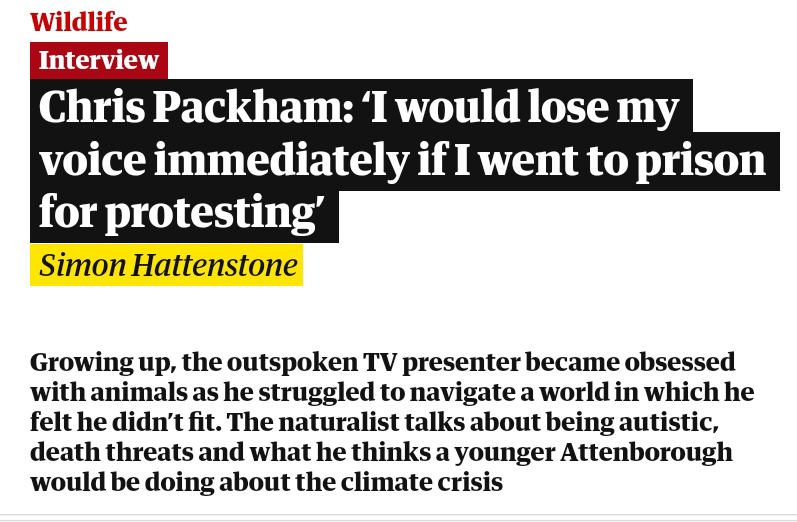
Like badgers? Foxes? Don’t like seeing them killed just because? If you stand up for them, you may be branded a domestic terrorist. Yes, in today’s England, protesting means that you may go to prison.
You may also receive threats.
“We could organise a car crash, we could organise poisoning you, we could organise all of these sorts of things.”
Besides that there are many more electric vehicles here, hence considerably less noise, than where I spent the previous fifteen years, I am also noticing other differences.
What does it mean when you’re walking on the pavement and a car that approaches and passes on the other side honks and the driver holds up his index finger?
Is there any standard zebra etiquette? If so, does it involve that thank-you gesture that I’ve never mastered and seems to resemble the tipping of an imaginary hat or is that something that only men do?
“If neurodegeneration begins on the right side of the frontal or temporal lobes, patients tend to struggle with compulsive or inappropriate behaviors and emotional regulation. These symptoms include loss of empathy for others, disregard toward social and legal norms, loss of drive, overeating, and repetitive behaviors like tapping a pencil incessantly.
But if it starts on the left side, patients have difficulty with understanding and communicating language. They lose the meaning of words, leading them to speak nonsensical gibberish, or lose the ability to form words, making it difficult to converse.
As the disease progresses, behavioral and linguistic symptoms eventually overlap.”
In addition to the Groningen Protocol, we also have the Maastricht Principles. Both are named after Dutch cities, one is in the north-east and the other in the south-east.
Critically, the Maastricht Principles state that: “Human development must be decoupled from the destruction of Nature and the overconsumption of natural resources to achieve the realization of the human rights of present and future generations and the integrity of nature and natural systems.”
I have copied and pasted the above from the following essay:
For some procedures, Brits depending on the NHS wait years. Some therefore go abroad. Others go private within their own country.
Medications usually aren’t free either if you rely on the NHS, is my understanding.
(NHS = national health service)
In the Netherlands, you pay a monthly public insurance premium of around 130 euro or more. That’s not all. There’s a threshold amount which the public insurance doesn’t cover and so you have to cough up it yourself. My understanding is that the latter doesn’t apply to everything medical; some things apparently don’t have the threshold and are fully covered. Also, if you’re on low income, you can apply for tax credits in support of your monthly premium payments.
In the Netherlands too, as in the UK, there are backlogs. They appear to be Covid-related. It can also be hard to find a primary care physician whose practice still accepts new patients, just like in the UK.
No country currently seems to have an ideal healthcare system, perhaps with the exception of Cuba. I’ve read that the French healthcare system is pretty good, too, but I have no experience with it.
I too helped out as a child. I helped out my dad in his business, I picked fruits and vegetables at home, and I picked fruits at my grandmother’s (pocket money). I also dusted and cleaned at home in the weekend and did dishes and so did my sisters (and this was when my mother was still alive).
Child labor??? Trafficking??? Modern slavery?
In this case: neocolonialism. Why not focus on real modern slavery, in the US and in the UK and so on?
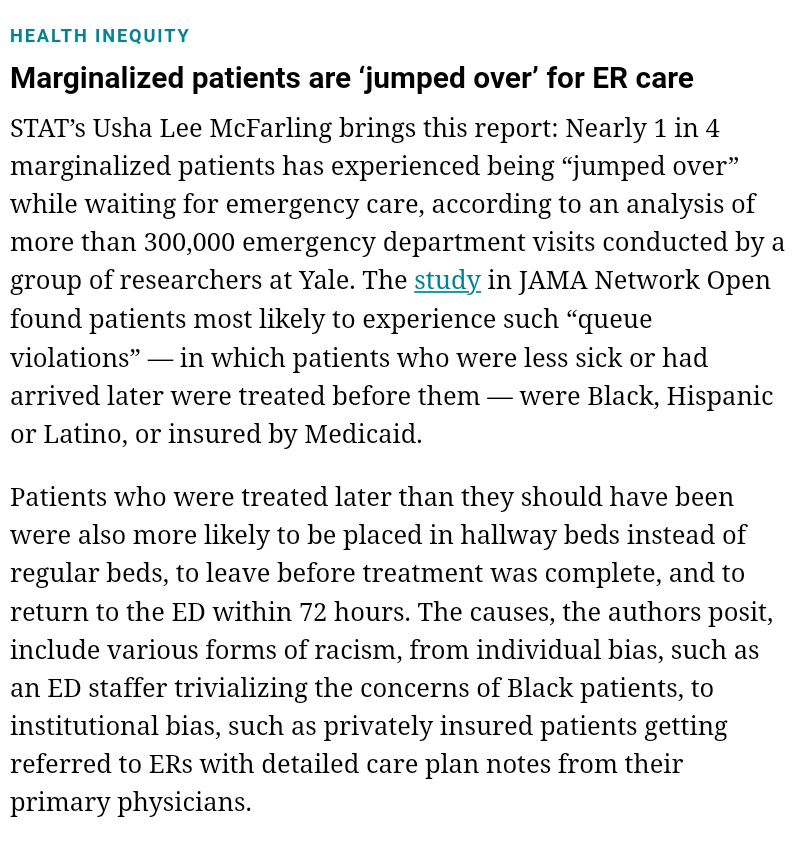
Another example of how health inequity comes about is when older adults are ridiculed and seen as fussy attention-seekers if they want to be in good health. Bad health is not a must for older adults.
Here is what I suggest you say to any medical professional (or other person) who treats you as if you are a 3-year old, just because you are disabled or over 45, black or female or indigenous or lower class.
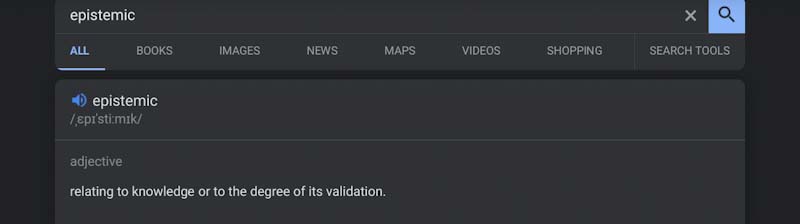
“You are committing an epistemic injustice.”
“You are depriving me of my epistemic agency.” [or “taking away” or “eroding”]
Feel free to add the word “dear”, “son”, “child”, “sweetie”, “Madam” or anything else that you think fits well, but does not distract too much from the main message. (You want the person to feel puzzled or surprised, off-balance but not personally insulted.)
They won’t expect that and it will likely shut them up for a moment. It may give you a chance to speak and be heard instead of getting tossed out with the trash again.
You have unique knowledge and that knowledge is as valuable as the doctor’s or the nurse’s.
The word “epistemic” is often used in the field of bioethics.
Bioethics is a combination of law, science, medicine, technology and philosophy. (Mentioning philosophy is overkill to some degree as philosophy is part of the foundation of law as well, but few people know that and there is a lot of philosophy in bioethics.)
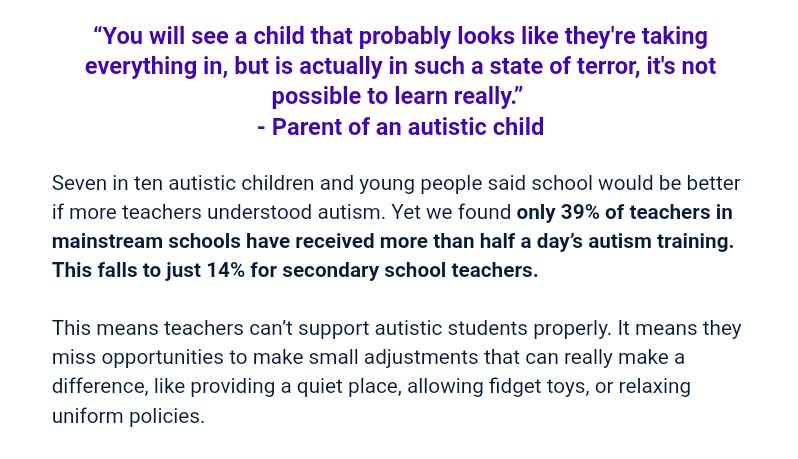
I just had an e-mail from Adam at the UK charity Sense, for disabled people, about the parents of autistic children.
Autistic people experience the world very differently from mainstream people. They interact with it very differently. The sensory information their brains receive and how their brains deal with that input, it is all very different from what happens in the brains of mainstream people.
Autistic people see, hear and feel differently.
In my opinion, it is wrong to call all autistic adults and children “disabled” unless you stress that the “disablement” mostly refers to the constraints that society imposes on the lives of autistic children and adults.
Society expects all of us to think and behave in a certain way and make largely the same choices. That means that society is flawed because this is an irrational expectation. Ask any digital nomad or vanlifer how traditional “get a job” (“for a lifetime so you’ll have a good pension, too”) people respond to their decision to live life differently and you’ll get a sense of what I mean.
When parents of autistic children state that their child is different, believe them and accept that as a fact. Dont call them paranoid. Don’t tell them that they are just bad at parenting.
But there’s something else that we have to remember.
Autistic people are all different, too. No two autistic people are the same.
Until very recently, I knew nothing about autism and was convinced I had never known anyone who’s autistic. After I started reading up about autism, I discovered that I had in fact since 1982 known a woman who’s autistic. She’s meanwhile confirmed that and she too had only learned recently that she is autistic. Then, to my astonishment, I discovered that I know another person who’s autistic, someone who I first met in 1984. Both people are university-educated and have what is called “high-functioning autism”.
The first one deals with auditory overload from people talking by filtering out that external input, shutting off the gateway to the input internally some way. (This causes frustration for mainstream people because nothing they say gets through. They simply cannot get through to her.) The second one responds with irritation and deals with it by walking away and going into a separate room, shutting the door to external auditory input quite literally. (This too can cause frustration, but also and probably mostly in the autistic person.)
Until you spend enough time with autistic people in private, you rarely get to see that – and in which ways – they are different, because they have learned to “mask” from a young age.
Almost like with DID (dissociative identity disorder, which is something very different), the person who goes out into the world to interact with it is not necessarily the same “person” you’d get to see if you were to observe an autistic person relaxing at home. Masking = trying to look like everyone else and hiding that you are different. (Why? To avoid friction.)
If you want to have some idea of how masking works, just picture yourself interacting with the CEO of the company at which you work versus interacting with your two-year-old or your husband or wife at home or at the supermarket when you’re out shopping. Your behavior toward the CEO will be quite different from how you deal with your child, your husband or your wife.
Don’t tell the parent of an autistic child that he or she is a bad parent or just plain paranoid. That would be you making an ass of yourself.
If you want to take your understanding one step further, think about whether wanting to eradicate autism from the world could be like wanting to eradicate giraffes because you like cattle and are used to dealing with cattle.
I just had this e-mail from Calum at Crisis. I was replying to him, and then I remembered that I was asked to share the story. Calum already knows what’s what. It’s other people who need to hear this.
Sister stand up For what you believe I hear anarchy in the way you speak Teach her not to give up Only how to seek Ain’t no anarchy in the way they cheat
Sister stand up for what you believe Fight the power Or die at their feet I know they don’t see what you see But don’t fight the people For being sheep
God are the men who make you pay God are the men who force your way Play God is the image that he made To make you obey Play God Play God He plays god He plays god
Brother stand up Admit to what you do This complex ain’t helping me or you Changing the world starts with you Don’t tell me you don’t know what you do
Brother listen up She’s tryna tell you This system’s failed us both it’s true Time to wise up You know it’s overdue Stuck in limbo can’t follow through
God are the men who make you pay God are the men who force your way Play God is the image that he made To make you obey Play God Play God He plays god He plays god
Ill health is not a crime. Neither is neurodivergence or being deaf or in a fugue state or just plain devastated and exhausted and too worn out to care about who can hear you cry in agony.
This is what England’s class system looks like in real life.
This is a private patio where people like to sit in the summer and enjoy a barbecue. Yes, literally.
But these are ordinary people without any clout. Lower class.
(This includes people like me too, yes, in England.)
Unable to get any support with this from Portsmouth City Council – including Gerald Vernon-Jackson, the Lib Dem city council leader – I eventually demolished the mattresses myself. Mattresses out in the open not only are an eyesore, they can get really moldy and smelly.
As it had become sheer impossible for me to do much high-end work, tackling the rubbish hands-on gave me something to do, too.
In case you still wonder, yes, Gerald Vernon-Jackson was fully aware of this.
I provided him with copies of photos and with copies of letters sent to Grant Murphy by recorded postal mail or special delivery.
I enquired here and there how much it would cost to get the fridges removed, but I couldn’t afford it, certainly not right away. (A hilarious fairly standard response to “I don’t have the money” is “no problem”. 😂)
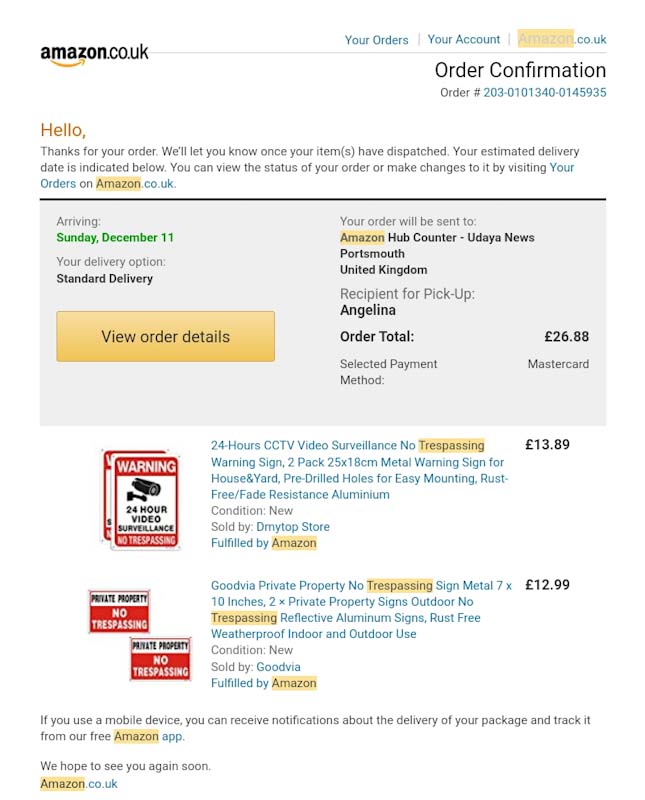
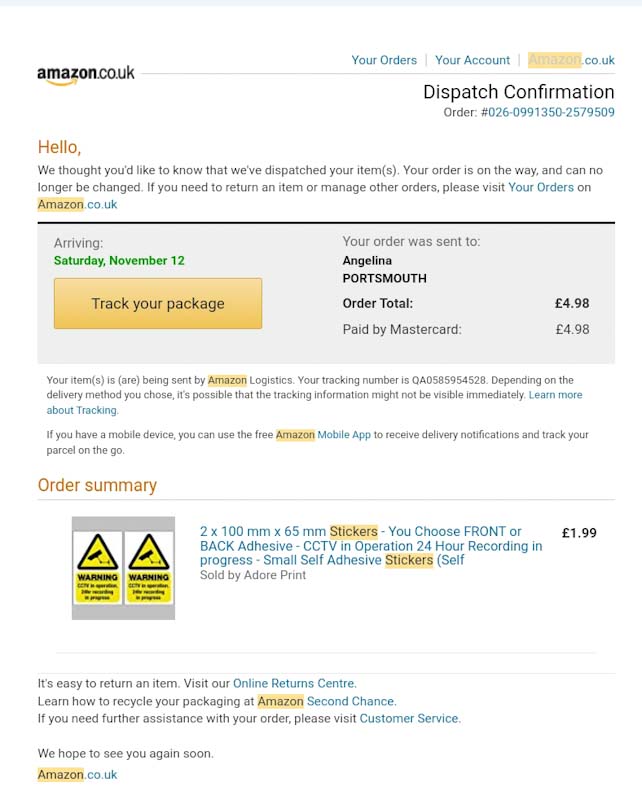
Next, I ordered a bunch of signs and stickers in an attempt to put a stop to the rubbish dumping. (It’s helped.) I also put a webcam in my office window. Below are screenshots of some of my order confirmations.
The rubbish dumping was actually started by Grant Murphy’s people after the police interfered when there was illegal drugs activity in one of the front three dwellings.
Once you dump rubbish, it encourages others to do the same. Everybody knows that.
I had been trying to address this for many years. I repeatedly had offered to help Grant Murphy’s people with this, too. To no avail.
This is a paper by a woman who couldn’t get a pupillage (traineeship), which she needed so that she could become a barrister – not even when a successful business man did his best to arrange one for her – because England’s class barriers ran too deep for both their humble beginnings.
(Until the entrepreneur stepped in and stepped up, she was actually working at a betting shop.)