NPD, what he says and what I say

Watch this video. When asked about the benefits of being a narcissist, he says – true to nature – that his lack of empathy enables him to see things more clearly than people who have emotions.

That’s the problem. People like him are usually so convinced about who they are relative to who others are – superior – that they can’t see others for who they are. They are convinced that other people make all their decisions on the basis of emotions and personal vulnerabilities and also that nobody sees through them.

They can be like gnats in their misconceptions. They don’t realize that a lot of people just shrug about their convictions and actions, maybe not at first but certainly eventually.

As they are so convinced of things being a certain way, they can also easily convince other people of how flawed you are. (They can engage in smear campaigns to undermine you.) That’s because they often truly believe what they are saying about you. They are also convinced that when they do stuff like that, the way you respond confirms their “diagnosis” of you.

They don’t get that it can be just really exhausting to have to deal with this kind of nonsense. They don’t get how it can undermine you in practical ways (and then you not getting anywhere because people believe you are flawed because that is what he has told them is just another confirmation to them and it all just becomes too exhausting).

You ironically end up in an oddly similar situation as the narcissist (a tension between insecurity and a belief in your capabilities, I mean), but because you aren’t a narcissist, you’ll likely just give up. That is, you may find ways of doing things that don’t depend on other people and on what they get told about you. Because the harder you try to convince people that they’ve been fed hogwash about you, the less inclined they are to believe you anyway. It hampers you in practical ways.

When I was in secondary school, a local well-known lawyer taught some of our classes, the ones about how society works (“maatschappijleer”). He gave an example of how hard it can be to defend yourself. How does a man deal with the question: “Do you still hit your wife?” There is nothing he can do or say that won’t make him look guilty of hitting his wife.

I don’t hate people with NPD. To the contrary, I can find them entertaining and likeable, certainly from a distance, but I also often find them exhausting. Some have plenty of good things that make up for it, and that can make them valuable to you, just like this guy to his wife, in this video below. That’s personal, clearly.

What’s also very good to hear from this guy in the video is that people with NPD often have like a switch in their brain that they flip after which they lose all interest in you. You can feel the need or duty to try to patch things up, because they can be so vulnerable and insecure, but there’s no point because you simply no longer exist. (If they feel they need something from you, they’ll contact you again.)

I’ve found that if I can see people with NPD as mischievous children, if I can see the small child inside them, at least their potential for making me feel hurt declines dramatically. It’s like he says… they’re just trying to make themselves happy and that you can get hurt in the process is just a side effect. They often are not aware of it at all because it is not material in their eyes. You don’t really feature other than perhaps as a tool within this context.

It’s complicated because it’s all about interaction to a large degree. (There must also be a potential for a solution in that.) When you get hurt, you’ll shout at the person with NPD and you get a shitload of abuse back. In my case, I may notice something and post about it which then can be taken as criticism and result in revenge or whatever and when I write something positive about anyone else, it is also often mistaken as as a secret message.

You basically have to tell them who to be, tell them who they are and tell them a lot of positive things about themselves so that they can be that positive person. (Oh! It’s a form of neurofeedback!) But how do you do that without 1) making things worse, 2) eroding your own boundaries and 3) undermining yourself, erasing yourself in the process? I don’t have the answers. AI might be able to come up with a very good neurofeedback solutions for people with NPD.

A post for light-skinned women whose eye drops cause skin pigmentation (latanoprost)

If you don’t press your tear ducts shut for a least two minutes, to stop the drops from getting into your system, the resulting skin pigmentation is known as “panda eyes”.

If you do press your tear ducts shut – and you should – you’ll end up with skin pigmentation that makes you look tired.

You may also end up with tiny lashes growing in the corner of your eyes, as a result of your eye drops. They can be tiny and colorless so they can be very hard to spot, but they’ll make you feel like you have something in your eye. I remove them with tweezers, in front of a magnifying mirror and plenty of light.

I have a combination of two tips for how to deal with the skin pigmentation.

  • If you use dark brown or slate grey eye shadow, part of the skin pigmentation will look like it’s eye shadow and be much less noticeable.

    (As you’re likely to be a little older, the eye shadow may make your eyes look more expressive again, too, less beady. Then again, I have dark brown eyes so you may have to experiment with the color if you have light-colored eyes. Dark-brown eye shadow as shown in the photo below, matches the color of my skin pigmentation and likely yours too, however.)
  • Use a good concealer, such as Max Factor’s Miracle Pure, for the area near/side of your nose and the area under your eye. I think that it also helps reflect light, unlike regular makeup, and that is why you then notice the dark patches and streaks much less than when you use regular makeup as concealer.
  • (I use a thin line of black eyeliner, too, btw.)
I use the eye shadow on the right

Also, the eye drops can dry your cornea, which can cause streaky blurry vision that is not permanent, so you may need to use artificial tears.

Eye drops that have a preservative tend to dry your eyes more and some people have an allergy or sensitivity for the preservative.

Two examples. Monoprost does not contain a preservative. Xalatan does.

This too – whether you need to use eye medication or not – is an expression of diversity.

Continue reading

One of the hardest things to deal with

For me, that’s people who mean well but who keep making unrealistic suggestions that are based on wishful thinking.

Such remarks can come from people who are living privileged lives but aren’t aware of it. Their helpful suggestions usually only make you feel powerless and can drain your energy because there’s no point in saying anything about it. They wouldn’t get it.

If these are also often people who make odd, sneakily undermining negative remarks about your character, your confidence or your abilities, you have to wonder what is really going on. You have to avoid those people or at least limit (manage) your exposure to them.

The good thing? If you have lived long enough, you will be able to spot such patterns.

FairTrade bites

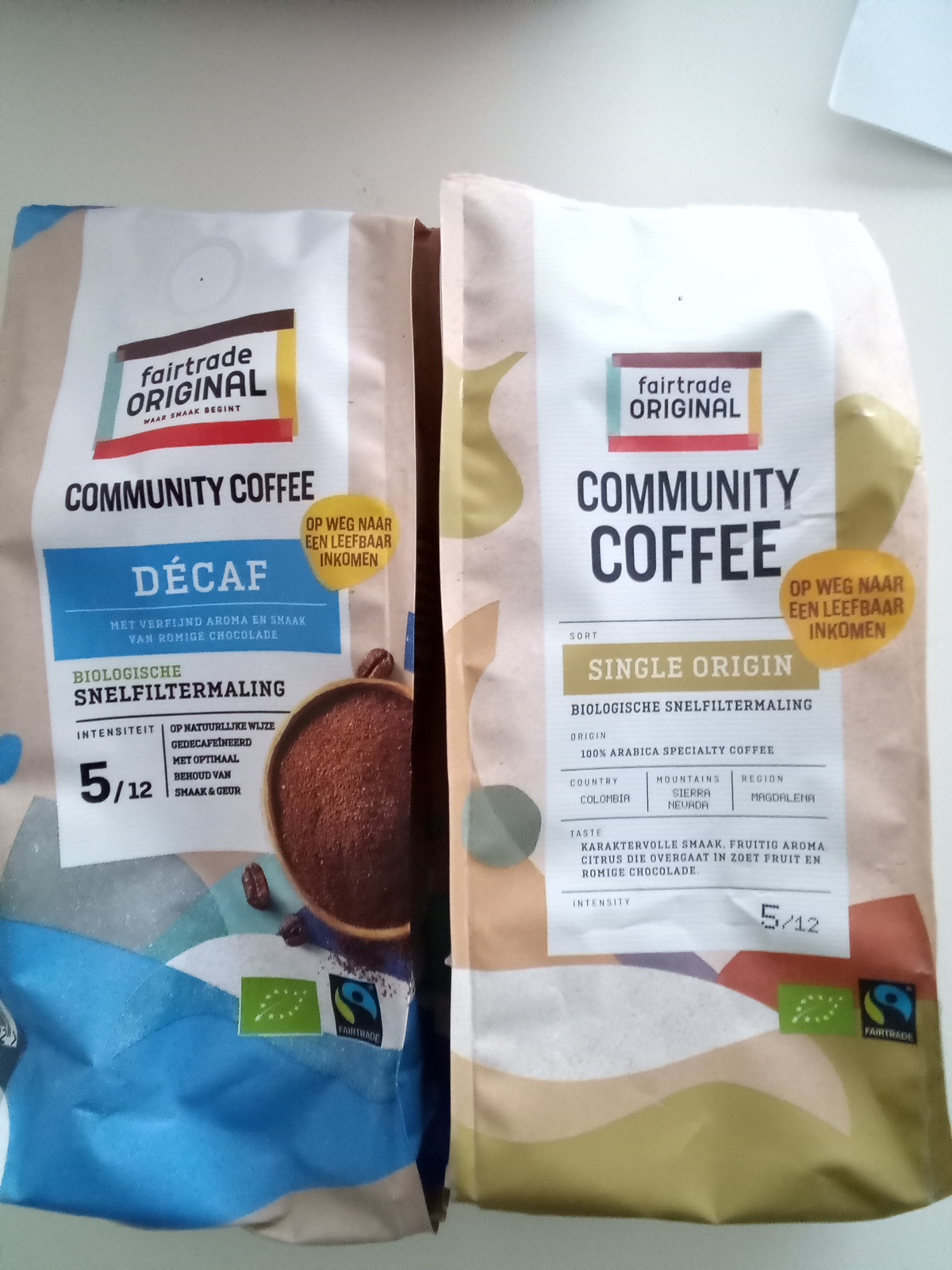
Organic and Fairtrade. 100% arabica. Available at larger Albert Heijn supermarkets.

Links:

https://schools.fairtrade.org.uk/

https://www.chocolatescorecard.com/

https://www.fairtrade.net/news/five-ways-fairtrade-supports-workers-rights

https://www.fairtrade.net/issue/environment

Two things I learned today that I didn’t know yet

  1. The Rainforest Alliance pays farms a much lower premium than FairTrade.
    (But they have – or started out on the basis of – different objectives.)
  2. Tony’s Chocolonely is a very good chocolate brand, in terms of FairTrade.
    (It’s Dutch.)

I’ve typed the Dutch below into ChatGPT and asked it to translate because it saved me a lot of time. I’ve edited it slightly.

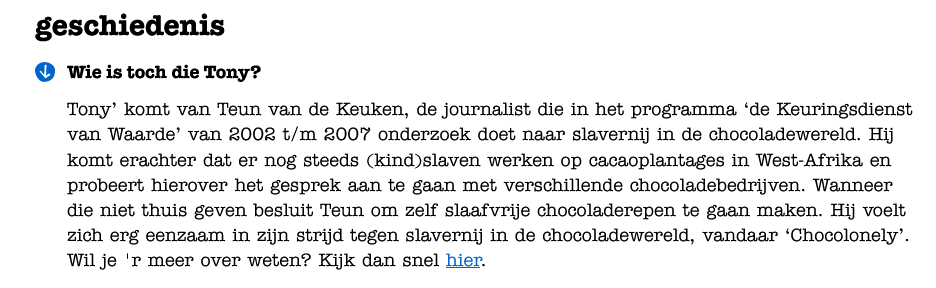
“Tony” comes from Teun van de Keuken, the journalist who investigated slavery in the chocolate industry in the TV show ‘De Keuringsdienst van Waarde’ from 2002 to 2007. He discovered that there are still (child) slaves working on cocoa plantations in West Africa and tried to initiate conversations with various chocolate companies about this. When they failed to respond, Teun decided to start making slave-free chocolate bars himself. He feels very lonely in his fight against slavery in the chocolate world, hence ‘Chocolonely’. Want to know more about it? Check it out here.

hier = https://tonyschocolonely.com/nl/nl/onze-missie/hoe-t-begon

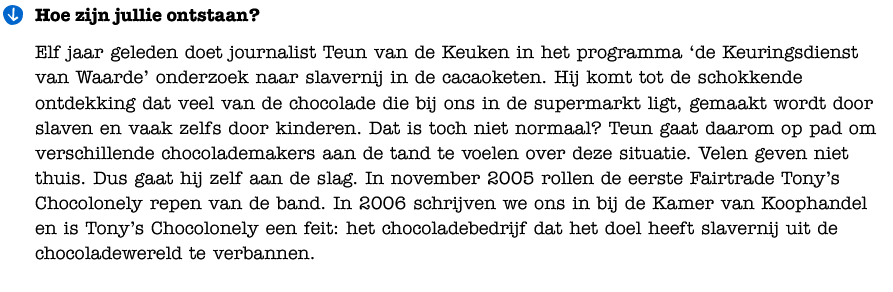
Eleven years ago, journalist Teun van de Keuken conducted research into slavery in the cocoa chain on the TV show ‘De Keuringsdienst van Waarde’. He made the shocking discovery that much of the chocolate found in our supermarkets is made by slaves, often children. Is that acceptable? Teun therefore set out to question various chocolate makers about this situation. Many of them evade the issue. So, he decided to take matters into his own hands. In November 2005, the first Fairtrade Tony’s Chocolonely bars rolled off the production line. In 2006, we registered with the Chamber of Commerce, and Tony’s Chocolonely became a reality: a chocolate company with the goal of eradicating slavery from the chocolate industry.

Household debt assistance the Dutch way

In the news this morning is an item about debts among young people in the Netherlands. There appears to be an annual increase of 1 to 2% and the debts mostly concern the monthly obligatory health insurance premiums.

Ironic – and highly revealing – is that many young adults in the Netherlands do not apply for the related monthly receivable tax credits because they are concerned about having to pay it all back later. That would get them into much greater difficulty.

The Dutch tax authorities messed up big time with childcare tax credits when an algorithm started identifying people, notably those with foreign-sounding names or foreign backgrounds or foreign parents, as scammers. This resulted in huge financial difficulties for many. Families were even ripped apart over it, children sometimes removed from the home.

So here we have another clear indication that how a government rules a country is directly related to the financial challenges that its citizens deal with.

Blacklisting people who apply for exemptions and sharing those details with a range of other organization – both also done in the Netherlands – is another way to deter people whose financial circumstances actually do make them qualify for exemptions.

They rarely need more roadblocks, after all. They’re usually trying to clear roadblocks.

What also often goes wrong is that organizations such as health insurance companies do not inform their customers of threshold they should seek to avoid. The news item states that when health insurance clients are 6 months behind on their obligatory insurance premiums (with or without health care costs payments?), the insurers have to blacklist them and refer them to a government organization called the CAK (a collection agency, basically) and their customers’ health insurance premiums go up.

How is this helpful, Dutch government? Shouldn’t you, by contrast, for example start doing things like waive people’s “eigen risico” – if they have high healthcare costs but low incomes – to help them get back on track instead of push them into greater financial difficulty?

And instead of the tax credits that many people are now too terrified of to apply for, couldn’t you just give them an income-related discount on their premiums, based on the previous year’s income so that there won’t be any fear of a later clawback?

I’m also interested in why the premiums and “eigen risico” went up whereas those healthcare premium tax credits went down this year. Are the country’s coffers empty? Apparently…

The “eigen risico” will be applied differently next year. Instead of it being a one-time reimbursement threshold, there will then be a lower threshold each time someone needs care for which the “eigen risico” applies. Would this mean that people with certain medical condition will end up paying a fortune toward their healthcare? No, because the threshold stays in place. https://www.rijksoverheid.nl/actueel/nieuws/2023/01/19/vanaf-2025-maximaal-150-euro-eigen-risico-per-behandeling-in-medisch-specialistische-zorg

Should these things really be changing all the time? It’s a little bit like the “derdelanders” position among refugees that fled from Ukraine, haphazardly applied and constantly changing decisions that give people little to hold on to. It’s also a bit like future pension amounts being determined by how the stock market is doing instead of how capable the fund managers at the pensions funds are, isn’t it?

Is long-term vision a thing of the past?

Continue reading

Aquafaba

Update: it’s actually pretty good as it is, what I whipped up today. It wasn’t the vinegar of which I added too much, it was ground mustard seeds. They are pretty good.


In an attempt to lower the number of (plastic) jars of vegan mayo I purchase and throw less stuff away that is actually useful and nutritious, I just tried my first aquafaba recipe.

I didn’t get the proportions right as the recipe was on my computer in another room and I mixed up teaspoons and tablespoons – and I was using cups, anyway. I’m also not using a fridge. Instead, I placed the mixture in the microwave and heated it up; that too thickened it up really nicely. (That possibly was because I had resorted to adding some corn starch, which I may not do next time.)

I used a plain metal whisk, by the way, not a blender. (Bamboo whisks exist too.)

Photo by Castorly Stock on Pexels.com

I used olive oil, but I didn’t want to use up all my olive oil because I didn’t see much thickening, likely because I had added to much vinegar.

A tip: If you heat olive oil, it can lose its super healthy properties that help protect your heart and vascular system (according to a BBC program that I watched a few years ago). I don’t know at what temperature that deterioration kicks in, but heating a bowl in the microwave for one or two minutes is probably very okay.

My very first mayo attempt is a little too tart – my fault – and to make up for that, I’ll add some ground almonds. Ground almonds, that’s my shredded cheese.

Next time, I’ll get it right. I can tell. I’m very pleased.

Did you know that you can also use tofu juice and the juice in a can of peas as aquafaba? Can, that’s tin, for Brits.

If I tin do this, so tin you.

What sparked this? I was eating courgettes and chickpeas yesterday and thought “Some mayo with this would be nice.” Chickpeas come with the best aquafaba. Courgettes, that’s zucchini, for Americans. (Ameritins?)

(Also, I am being ravaged by gnats in my sleep. Apparently, they hate the smell of vanilla. I don’t. So I’m going to try that too.)

Need more inspiration for what you can do better in terms of sustainable living? This may help:

I too really wrestle with the fact that the actions of the species Homo sapiens are often so harmful and so thoughtless.

I’ve seen a pigeon realize that mice, no matter how annoying mice can also be to pigeons, need food to survive, to my amazement. I had a pet pigeon who often spilled her food and I had a neighbor with mice who would sometimes venture into my place. It dawned on the pigeon what was happening and she stopped spilling food where she spent most of her time, and where she did not want to see any mice, but I also saw her spill food off a high shelf one day, very deliberately – and then look down to see what would happen.

I’ve seen another bird species have empathy for cats.

The difference may be how secure biological beings are, in terms of food and shelter.

If that is the case, then greater equality and facilities like universal income might make a huge difference in the long run. It’s not easy to have empathy when you are struggling to support yourself, when you struggle to feed and house yourself. It makes total sense, doesn’t it?

The step toward living more sustainably becomes easier too, then.

I’ve also recently realized that my life in the past two decades would have been much easier if I had owned a car. I’m still digesting that. The issue is actually a different one, but today’s world sometimes forces certain choices and limitations on us. Balancing them out is a bit like choosing between local loose apples that are not organic or organic apples or vegan products that are packaged in plastic and can have been shipped around the world. Not easy.

The solution is to find a local grower who does not use plastic to package organic fruits and vegetables in. In some regions, there are apps that make that possible, that allow you to connect with local organic farmers and order products from them.

Older adults are getting smarter


Ageism appears rampant in the UK, with the over-50s losing their jobs at twice the rate of younger people and finding it three times more difficult to find employment after months of job hunting. While there are many reasons for this, perhaps one is the assumption that older people aren’t quite as sharp as they used to be.


We know that older adults, those over 65, don’t perform as well as younger people, aged 18-30, on tests of memory, spatial ability and speed of processing, which often form the basis of IQ tests. However, there’s good news for us all. New research suggests that this difference in ability between younger and older generations appears to be shrinking over time – with older people catching up with their younger peers.

(from the email in my inbox)

From my own observations as a younger person, I know that the impression that older adults are “slow” can be merely the result of the declining near-sight of older adults. It can take them – us – slightly longer to spot things on screens, for example, just because most older adults’ vision is not as good as it used to be.

I remember making this snap judgement about someone else once, when I was much younger. I am fortunate enough to be near-sighted, so while my near sight has declined with age, I still don’t need reading glasses unless I am wearing contact lenses for far sight.


Are young people smarter than older adults? My research shows cognitive differences between generations are diminishing

AshTproductions/Shutterstock

Stephen Badham, Nottingham Trent University

We often assume young people are smarter, or at least quicker, than
older people. For example, we’ve all heard that scientists, and even more so mathematicians, carry out their most important work when they’re comparatively young.

But my new research, published in Developmental Review, suggests that cognitive differences between the old and young are tapering off over time. This is hugely important as stereotypes about the intelligence of people in their sixties or older may be holding them back – in the workplace and beyond.

Cognitive ageing is often measured by comparing young adults, aged 18-30, to older adults, aged 65 and over. There are a variety of tasks that older adults do not perform well on compared to young adults, such as memory, spatial ability and speed of processing, which often form the basis of IQ tests. That said, there are a few tasks that older people do better at than younger people, such as reading comprehension and vocabulary.

Declines in cognition are driven by a process called cognitive ageing, which happens to everyone. Surprisingly, age-related cognitive deficits start very early in adulthood, and declines in cognition have been measured as dropping in adults as young as just 25.

Often, it is only when people reach older age that these effects add up to a noticeable amount. Common complaints consist of walking into a room and forgetting why you entered, as well as difficulty remembering names and struggling to drive in the dark.

The trouble with comparison

Sometimes, comparing young adults to older adults can be misleading though. The two generations were brought up in different times, with different levels of education, healthcare and nutrition. They also lead different daily lives, with some older people having lived though a world war while the youngest generation is growing up with the internet.

Most of these factors favour the younger generation, and this can explain a proportion of their advantage in cognitive tasks.

Indeed, much existing research shows that IQ has been improving globally throughout the 20th century. This means that later-born generations are more cognitively able than those born earlier. This is even found when both generations are tested in the same way at the same age.

Currently, there is growing evidence that increases in IQ are levelling off, such that, in the most recent couple of decades, young adults are no more cognitively able than young adults born shortly beforehand.

Together, these factors may underlie the current result, namely that cognitive differences between young and older adults are diminishing over time.

New results

My research began when my team started getting strange results in our lab. We found that often the age differences we were getting between young and older adults was smaller or absent, compared to prior research from early 2000s.

This prompted me to start looking at trends in age differences across the psychological literature in this area. I uncovered a variety of data that compared young and older adults from the 1960s up to the current day. I plotted this data against year of publication, and found that age deficits have been getting smaller over the last six decades.

Next, I assessed if the average increases in cognitive ability over time seen across all individuals was a result that also applied to older adults specifically. Many large databases exist where groups of individuals are recruited every few years to take part in the same tests. I analysed studies using these data sets to look at older adults.

I found that, just like younger people, older adults were indeed becoming more cognitively able with each cohort. But if differences are disappearing, does that mean younger people’s improvements in cognitive ability have slowed down or that older people’s have increased?

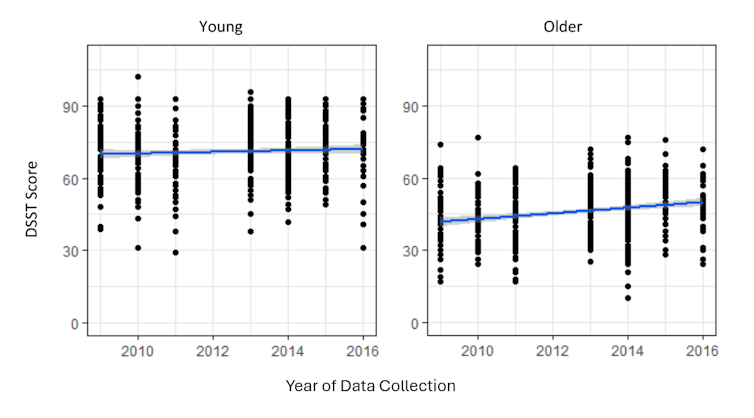
I analysed data from my own laboratory that I had gathered over a seven-year period to find out. Here, I was able to dissociate the performance of the young from the performance of the older. I found that each cohort of young adults was performing to a similar extent across this seven-year period, but that older adults were showing improvements in both processing speed and vocabulary scores.

The figure shows data for a speed-based task where higher scores represent better performance.
CC BY-SA

I believe the older adults of today are benefiting from many of the factors previously most applicable to young adults. For example, the number of children who went to school increased significantly in the 1960s – with the system being more similar to what it is today than what it was at the start of the 20th century.

This is being reflected in that cohort’s increased scores today, now they are older adults. At the same time, young adults have hit a ceiling and are no longer improving as much with each cohort.

It is not entirely clear why the young generations have stopped improving so much. Some research has explored maternal age, mental health and even evolutionary trends. I favour the opinion that there is just a natural ceiling – a limit to how much factors such as education, nutrition and health can improve cognitive performance.

These data have important implications for research into dementia. For example, it is possible that a modern older adult in the early stages of dementia might pass a dementia test that was designed 20 or 30 years ago for the general population at that time.

Therefore, as older adults are performing better in general than previous generations, it may be necessary to revise definitions of dementia that depend on an individuals’ expected level of ability.

Ultimately, we need to rethink what it means to become older. And there’s finally some good news. Ultimately, we can expect to be more cognitively able than our grandparents were when we reach their age.The Conversation

Stephen Badham, Professor of Psychology, Nottingham Trent University

This article is republished from The Conversation under a Creative Commons license. Read the original article.

This is not a joke

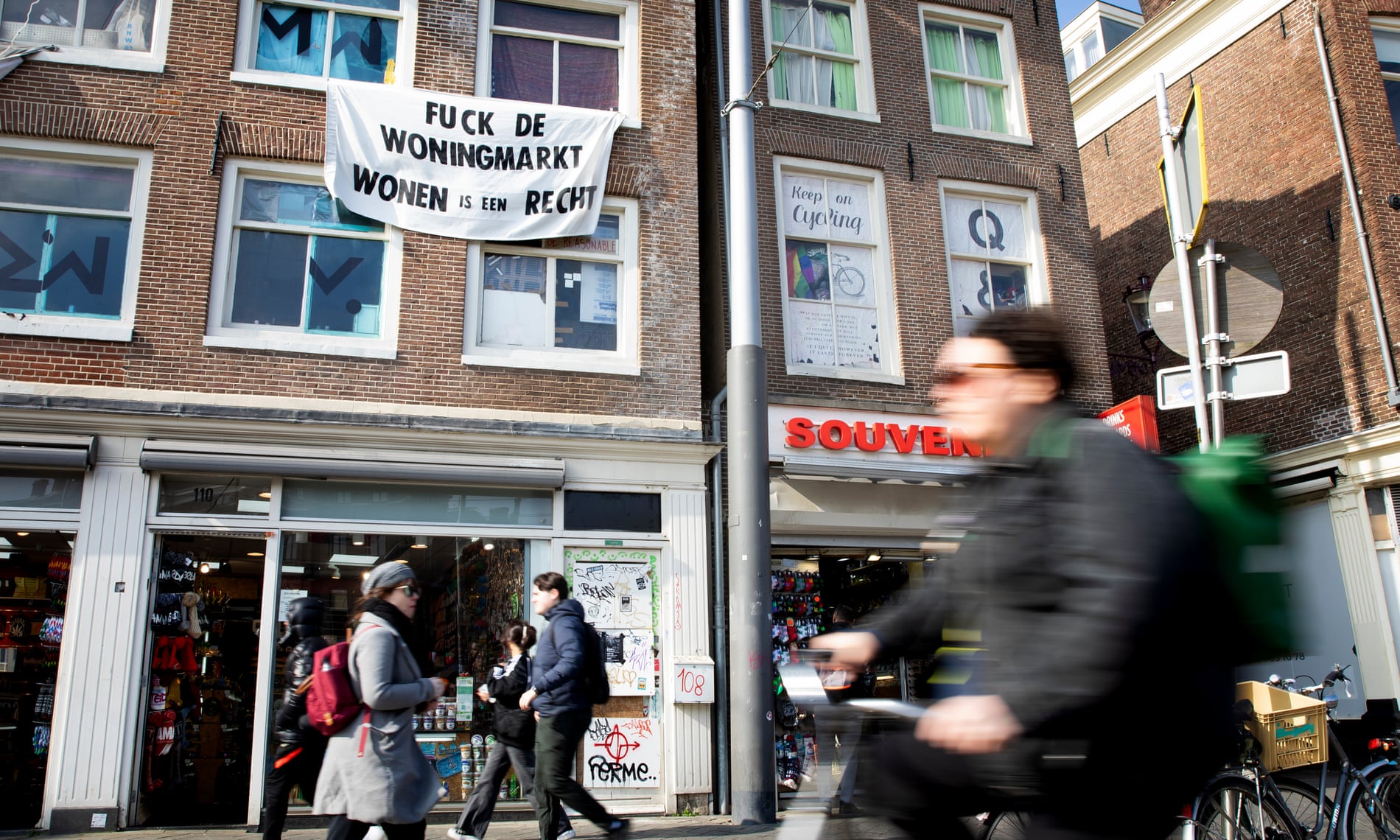
https://www.theguardian.com/news/article/2024/may/06/netherlands-amsterdam-next-level-housing-crisis

I remember receiving a communication from someone in Florida, asking me “where do you want to live?” when I was about to relocate to Florida. “Where do you want to live? Which neighborhood?” was not an option I was familiar with. You live wherever it is where you find a place to live.

Things have been getting much worse recently, however, and apparently it is the fault of successive Dutch governments.

Don’t dismiss the role that sheer good luck and bad luck play in life


Here is an example.

Decades ago, as I was emigrating to the US in the winter holiday season, a courier I had arranged was supposed to collect the paperwork in the US that I needed for my visa. After several days, nothing had happened.

The university in the US engaged FedEx, their regular courier, and I rented a car, drove to the airport (Schiphol) where FedEx allowed me to collect my paperwork straight from the plane (desk), after which I drove to the American consulate and got my visa right before the consulate shut down early because of new year.

My flight was leaving, pets and all, when the consulate was still closed.

The fact that everything else worked out too… that was great. There could so easily have been a snag on my way back from the airport.)

But if it hadn’t been for FedEx…

So whenever I can, if I need to use a courier, I will use FedEx. (I’ve held an account with them once or twice.)

What is gossip?

Some people fascinate me so much that I end up talking about them with others but I sometimes can’t escape wondering whether I am gossiping when I do that. I now try to keep things as vague as possible so that the people in question remain unidentifiable – it’s a small world, after all – but that’s not always easy.

Does someone have a problem with who you are?

never sacrifice who you are just because someone has a problem with it

One exception: If your behavior is hurting others, then you still do not have to sacrifice who you are, but you’ll have to learn how to modulate your behavior. That’s also for your own sake, to stay out of trouble.

This sounds easier than it is. Behaviors can have become part of someone’s identity and when someone’s any kind of artist, the idea of modulating one’s behavior surely has to feel like a potential threat to one’s creativity.

Baby steps is all it takes. No big leaps or major transformations are needed.

I’ve actually been shocked to see how being mistreated – or even merely dismissed – in England started to change me into someone I no longer liked much at all. This began happening to me when I was in my forties. So I understand very well how certain behaviors can come about. We do not live in a vacuum, no matter what people may say, and what happens around us and to us – particularly when it concerns children – can change us. Neural pathways get reinforced; this happens beyond our control, before we know it.

(Just consider how TBIs and brain tumors can change someone’s personality. Then you see how true this is. We are biological organisms, not separate from nature but part of it.)

Some people are lucky enough to be able to reclaim the power to be who they want to be. Others need a bit of compassionate support to be able to do that, a guide. Not everyone can change their behaviors, but there are ways to limit its impact on others.

Poverty policies

If writing off household debts – the government buying the debts and then paying them, which boils down to having the debts written off, for households – is much cheaper than the government providing household debt assistance, isn’t a big part of the solution to shift the household debt amount toward the income of the people who get into household debt?

Photo by Pixabay on Pexels.com
Available as paperback and Kindle e-book.

What on earth is going on in Dutch trains?

Last night, two boys aged 13 and 14 attacked a train guard in Purmerend. He needed medical treatment after that.

https://nos.nl/artikel/2518846-twee-jongens-van-13-en-14-jaar-mishandelen-conducteur-in-purmerend

Just a few weeks ago, another train guard was attacked, and even thrown down a staircase by a bunch of youngsters. That happened between Delft and The Hague. The woman broke her arm.

https://nos.nl/artikel/2516813-conducteur-ns-mishandeld-in-trein-van-trap-gegooid-geschopt-geslagen

I have just spent fifteen years in an English town that has a LOT of violence and intimidation and harassment and I’ve stood up against bullies a few times. Fairly recently, I’ve even stopped two people who were high on meth from pulling a driver out of his car in rush hour, for example, but that is very different.

This violence in Dutch trains is really worrisome and I wouldn’t want to deal with that at all.

What is behind this? Is it still an aftermath effect of the pandemic? I don’t think so.

Particularly the trains between Zwolle and Emmen are seeing a large increase of incidents. What is different about that part of the country?

https://nos.nl/artikel/2518815-grote-stijging-van-het-aantal-incidenten-in-trein-zwolle-emmen

This article mentions that it mostly concerns people without a valid ticket and talks about a large number of refugees who got stuck in that part of the Netherlands because the country where they came from is considered safe enough.

Is that the whole story? It’s very hard to talk about this without risking upsetting anyone if you ask about the backgrounds of the youths in question. But if you want to resolve this, you need the context.

  • One obvious solution appears to be gates at stations, to keep people without ticket from boarding the trains. Then you shift the problem, however. If the violence is mostly associated with people not having tickets, then the real issue is a lack of enough income.
  • So, another solution might be to issue free train passes to for example youths for a while and see how that affects the number of incidents. Free train passes might make a real difference. It might make people feel a lot less defensive. Scared people can easily become aggressive.

Why are so many people needing to travel between Emmen and Zwolle, though?

https://nos.nl/artikel/2496457-nog-altijd-veel-incidenten-in-overlasttrein-zwolle-emmen

The source appears to be Ter Apel, a former military base where my dad had part of his military draft training, which now houses refugees and other asylum seekers.

https://nos.nl/artikel/2481573-politie-mee-op-de-trein-bij-maarheeze-na-overlast-asielzoekers

  • A third solution, then, is to employ some of these asylum seekers on some of these trains, in uniform, but also perhaps in plain clothes. You need to bridge that gap. You need people who understand what is happening.

The presence of police agents in uniform can be provocative and does not necessarily increase the sense of safety among the public. I am in my sixties, and I do not consider the sight of police officers reassuring. To the contrary, I associate police with violence (from whatever source). It depends on the situation, however.

Generally, you can’t fight fire with fire (though it’s basically what I did in the case I mentioned above because I needed to distract them from the driver whose wife and kids were also in the car, by the way).

You have to take away the source of the problem, not fight its results.

Continue reading

Schrikbarend beeld

https://nos.nl/l/2518331

Okee, Nederland is officieel kapot. Stuk.

Het goed georganiseerde land dat ik kende bestaat niet meer.

  • DIT – medische Kafkaesque nachtmerries – is één gevolg van betalen voor verrichte handelingen en het loslaten van zorg.
  • Het schokkende toeslagenschandaal waarvan de klap over de hele wereld echoode.
  • De Orwelliaanse vroegsignalering

Hoe dit komt, deels? Technologie dient de mens niet meer maar andersom. De dictatuur van wat kan is ontspoord.

A productive day

I have been plagued by bad headaches for about ten days now and today is no exception. So I am pleased to be able to say that I just wrote 30 pages for a new booklet anyway. Related to inequality and poverty.

Photo by eberhard grossgasteiger on Pexels.com
Photo by on Pexels.com

By the end of the day, I had published the first version. That gets it into the system. I expect to start expanding on it as of Sunday. In the past, I used to print everything a few times and edit/rewrite on the basis of the printed material. That usually leads to the best results, but is not really doable – or done – any longer. The main thing to do first is getting rid of these stupid headaches.

Also, I am hoping to get my eyes lasered soon; there are three different options for me in theory. This would solve several issues, including looking perpetually exhausted because of the pigmentation around my eyes. That pigmentation is reversible.

Priorities, priorities. (My current challenges all take priority. That forces me to play a game of juggling and gambling and guessing.)

A food development that I really like!

I’ve been wondering why we’re so behind on this, why we are still dependent on the exploitation of other species, for example, for our food supply. Doesn’t sound very advanced and sophisticated to me.

Also, “food and agriculture is responsible for about a quarter of all planet-heating carbon emissions. Its share of pollution is likely to grow as other industries shift to using green electricity, and ever-expanding middle-classes demand more meat for their tables. Up to now the focus for some climate campaigners has been to try to persuade people to eat less meat and more plants. Non-farmed proteins such as solein might make that approach more appealing.

Solein sounds like a real change-maker.

https://www.theguardian.com/business/2024/apr/19/finnish-startup-food-air-solar-power-solein

This is also more or less – tubs of microorganisms – how we may generate electricity in the future. I realized that when I sat in a presentation by Craig Venter at Oxford, back in 2007. We are all – that is, our metabolism – electrical currents and some soil microorganisms even run thin wires to one another.

Scaling that may be the biggest challenge; it’s going to require some major ingenuity. If you can use organisms that take carbon dioxide and methane for example from the air, you might have a bonus side effect.

I can’t see any negative effects of a development like that yet (which would depend on species and process) and that is always the problem with anything that is new. It’s very hard to see negative side effects of something that you don’t know yet. Runaway is the first risk that comes to mind, after contamination and mutation.

It would likely have to be a synthetic organism and CRISPR could play a major role here. In building it, too, but you might be able to have CRISPR repair unwanted mutations. I don’t know if it is possible to prevent mutations. I doubt it. But you can usually predict them (anticipate them). (The latter is something I learned from watching the COVID research for a while. These weren’t exactly the kind of developments I used to be on top of.)

In case you don’t know who Craig Venter is: https://en.wikipedia.org/wiki/Craig_Venter

Continue reading

Oh my. Oxford University shuts down institute run by Elon Musk-backed philosopher. That’s Nick Bostrom.

Update 28 April 2024: “eugenics on steroids”? It’s reassuring to learn that I wasn’t the only one who felt a little uncomfortable reading some past papers… https://www.theguardian.com/technology/2024/apr/28/nick-bostrom-controversial-future-of-humanity-institute-closure-longtermism-affective-altruism


https://www.theguardian.com/technology/2024/apr/19/oxford-future-of-humanity-institute-closes

The name Bankman-Fried also features in this article.

When I clicked:

Fact check and feedback: Drosophila suzukii aka spotted wing drosophila and cherry orchards in the Netherlands

Update 26 April 2024: https://nos.nl/artikel/2518221-tweede-kamer-wil-toch-bestrijdingsmiddel-voor-door-fruitvlieg-geplaagde-kersen (So maybe these Dutch cherry growers will get to help pollute the world a little bit more after all as maybe these insecticides are allowed in Germany after all? The panic over not being able to use them seems exaggerated if I look at what that Wageningen University experiment found. These cherry growers need to stick to a best practice approach. They also failed to do that when they were granted an exemption for these pesticides and ignored the conditions for their use, which is why the Dutch state pulled the exemption.)


This morning at 04:45 BST, the Dutch version of the BBC – it’s called NOS – published an article in which Dutch cherry growers lament about no longer being allowed to use the insecticides Tracer and Exirel to combat Drosophila suzukii.

Source: https://nos.nl/artikel/2517437-kersentelers-vrezen-voor-hun-voortbestaan-nu-bestrijdingsmiddelen-niet-meer-mogen

Drosophila suzukii aka spotted wing drosophila is a fruit fly that originated in Asia and of which the females lay eggs in ripening fruits, such as berries, grapes, plums and cherries. It was first spotted in the Netherlands in 2012.

It likely arrived in Europe in imported fruit, according to this study: https://www.ncbi.nlm.nih.gov/pmc/articles/PMC6681294/ (It also talks about the use of cladding and netting to combat this fruit fly. I’ll come back to that.)

Dutch cherry growers had an exemption that allowed them to use Exirel and Tracer, but because they weren’t keeping their side of the agreement, the Dutch government canceled the exemption. It wants to improve water quality instead of worsen it and it does not want to cause more harm to bees. The cherry growers weren’t cooperating.

Continue reading

Portsmouth in practice – or life

Years ago, I observed a young man with what I assumed was his son. So nice. This was in Victoria Road South. I said something to him, I don’t remember what. I was on my way to the seafront, or back.

It turned out that it wasn’t his son but his little brother. His parents ran an enterprise in Palmerston Road; I’d been there once. Keeping the business afloat was challenging at the time, he said. He was a student, in Birmingham, or in Manchester. Economics, I think.

At some point, he asked me what I did. I said that I hadn’t worked in years and left it at that. (That’s what it felt like anyway. 😁) That was maybe ten years ago. Just about everything I undertook in Portsmouth was thwarted systematically, no matter what, from the get-go. (Reality was more complicated.) As a result, I spent far too much of my time there as if I was chained to a basement wall. Well, almost. I found it very hard.

So now, if someone suggests that I should live my life as if I am chained to a basement wall, I dismiss them as a nincompoop who either is biased or hasn’t been around.

Why do so many bright and inspiring people die young?

(I need entrepreneurial inspiration. I’ll have to become my own.)

I will soon be meeting with someone who I used to know, though, and I’m really looking forward to it. It’s not exactly a run-off-the-mill, a-dime-a-dozen person and I like that. I like the person. We may be very different in many ways – probably, but I don’t even know for sure – but we also certainly like a few of the same inspiring and enjoyable things.

I’ll need to leave soon. I really have to.

You are the only expert on you. I’m the only expert on me. Don’t chain me to a basement wall.

Read some of my flash fiction.

If you are in a lousy place right now, your life sucks and you don’t know how to make things better, watch this

But first of all, do an internet search on “Elizabeth Smart” who was an executive producer on this film, telling Kara Robinson’s story. After you’ve acquainted yourself with what these two teenage girls went through, separately, you’ll suddenly realize how much you still have to be grateful for.

When life sucks, it’s hard to see the little rays of sunshine. I know.

But realizing that things could have been so much worse can help.


This is this guy’s story: https://en.wikipedia.org/wiki/Richard_Evonit

When he was a child, his dad apparently drowned his dog in front of him and when he was only six years old, his dad tried to drown him.

Someone once said that it is easier to build strong children than to repair broken men.

In all the places in the world where we are waging wars or ruthlessly dehumanizing and exploiting people, where children get so see and experience things that they should never have to, we are creating tomorrow’s Richards.

Many children’s brains will be able to protect themselves and somehow develop still relatively normally, but not all children’s brains will when these children witness and experience too many atrocities as young children.

It is not a choice to turn into someone like Richard Evonit. It really isn’t.