So nasty. So destructive.
Human rights – diversity – neurodiversity – equality – inclusivity – discrimination – otherisation – speciesism – planet – consumerism – bioethics sensu lato
This gynecologist assaulted 700 women (Columbia University)
The riddle of Portsmouth, explained
Here it is: the self is suppressed
That’s why the “Pompey born and bred” cult is so destructive. (I have referred to it as Portsmouth’s ‘ndrangheta.)
This is directly related to my most recent book, but I’m not going to add it.
I saw that coming!
What does it mean? Did I spot it in the body language in a recent photo or was it the headline above that previous article? And what does that mean?
Now I’ll go read this article to try to get a feel for how worrisome this is or isn’t.
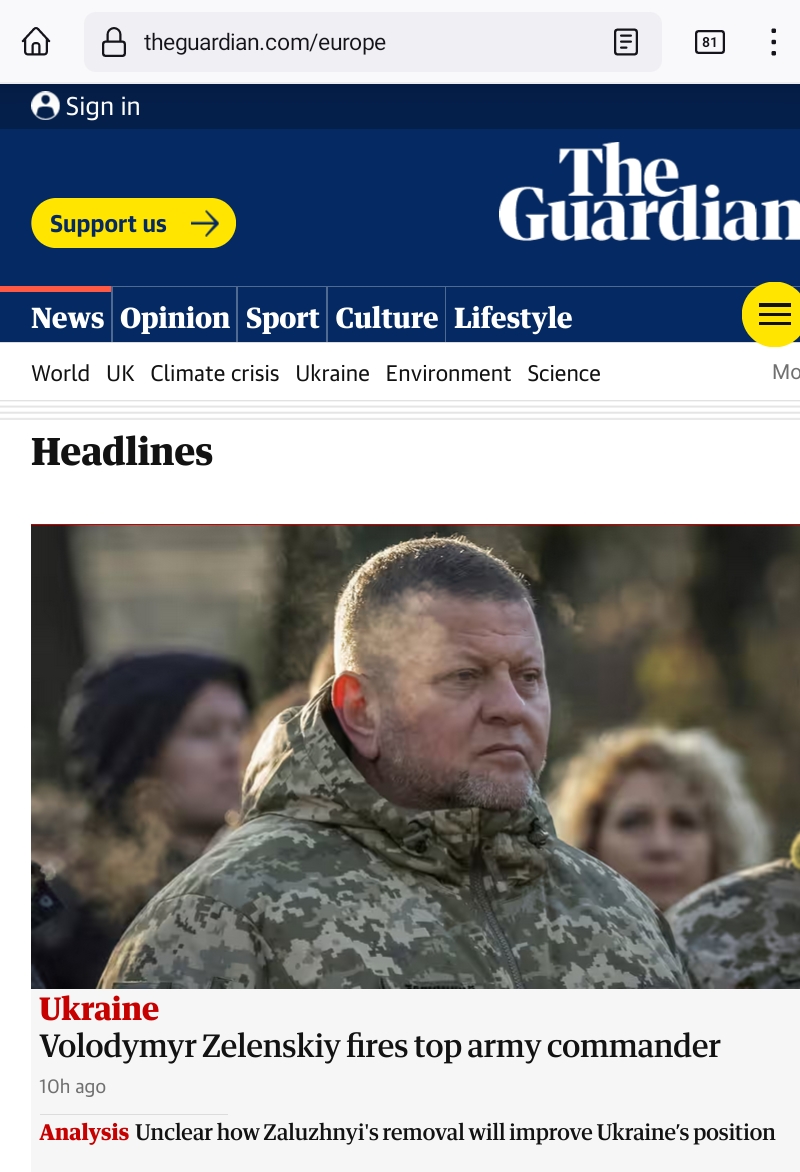

Turns out that I never read this article. I saw the headline and the photo. Did I catch some of the other words in spite of that or did I pick up on something in the body language in the photo? They just don’t seem to be at ease with each other but I can’t say why, specifically. (Any explanations in hindsight would be heavily biased.)
Fear versus opportunities
Most people are fear-motivated. They can really hold back opportunity-driven people who see the bigger picture.
I try to avoid them. It’s not always possible.
I hate being stifled. Shackled. Suffocated.

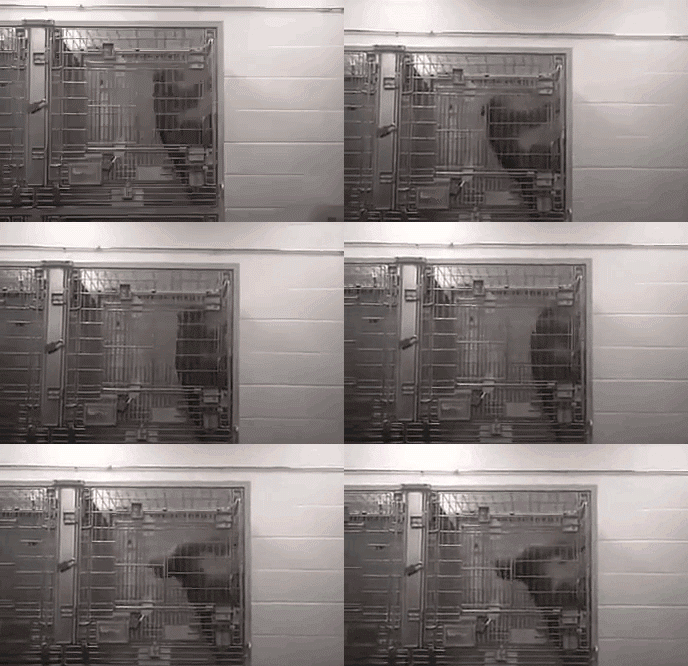
In Portsmouth, I was forced to live like that for far too long. #inhumane
Way to go!
“We find comfort among those who agree with us, growth among those who don’t.” – Frank A. Clark
Just sayin’.
Dutch people, can I please have your feedback on this?
I have been told – in person, but not by an employer – that it’s against Dutch law to remain employed beyond one’s legal pension age in the Netherlands. So, you get fired at 67. It’s mandatory. That’s what I had been told.
However…
Continue readingHow to go down stairs in a (suitable) wheelchair
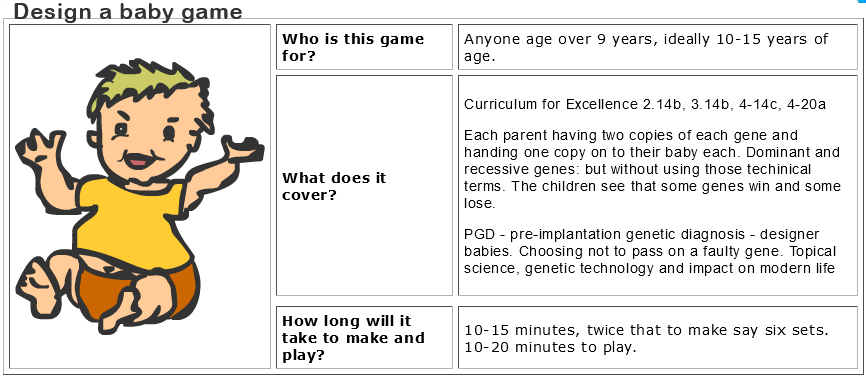
Design a baby
How to be less exclusive
PS
If you have a good command of Dutch, and a paid or free FD account, then you may want to read this too: Bureaucratie grootste struikelblok voor gehandicapte bij vinden van baan (fd.nl)
(Posted a day later.)
Burning question
When Mrs Sant became stalked, her husband left her because of it and she also lost her job with the Navy. Loss of job and loss of home is not uncommon in stalking cases.
Mrs Sant went back to being Tracey Morgan and moved back in with her parents.
What do women do who don’t have parents who they can move back in with and who will pay the bills for them and clothe and feed them? This almost NEVER gets addressed in any discussions of stalking. You’ve usually had your fill of men for the rest of your life after that so, no, these women do not move in with some guy.
(This is something that I had wanted to address in England the UK. There should be a network of safehouses for women. Women’s shelters, usually only intended for domestic abuse victims, are sparse and often struggling. I’m not aware of any country that offers support to women who are fleeing from stalking.)

No. Really?

Well done, me!
I’ve just updated (slightly) the Kindle edition and paperback version of a book that I first published in 2017, and I did that without having the original files! I may quickly whip up a hardcover edition of it this evening. (Yes, done.)
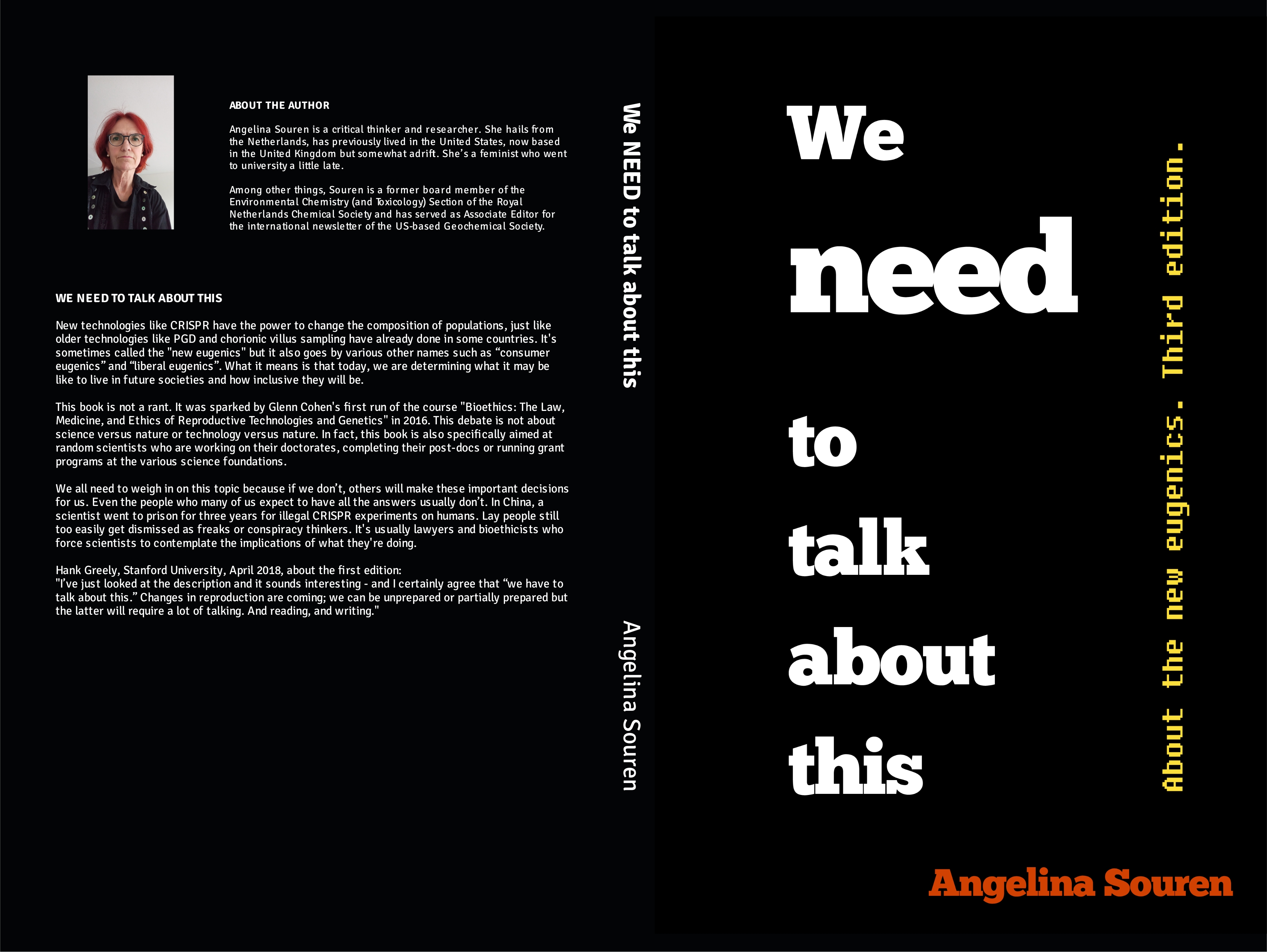
The previous two editions were still quite clumsily written here and there and I hope that I didn’t step on too many toes. Partly, they still are an exercise in logical reasoning – doodles – to arrive at various definitions, for example of what “a life not worth living” might be, and to come up with a guideline that I know is never going to be used in practice. That was true of the 2020 version of this edition and is still true of the present version too. Then a Chinese scientist called He Jiankui made the spotlights because he’d broken all the rules by creating real-life CRISPR’d babies. It changed things.
On 11 February 2023, Dr He attended his first public event since his release, namely ”Looking Back into the Future: CRISPR and Social Values” organized by Dr Joy Zhang at the University of Kent. What struck me during that meeting was not so much He’s perceived arrogance or deception, but the attitude of many scientists, particularly those in very early stages of their careers. I later also saw that reflected at two meetings that I attended in the Netherlands. The idea of pondering the potential consequences of their research does not seem to occur to many scientists. In addition, they often see ethics committees as no more than groups of pesky people who want them to tick boxes.
This worries me, but I understand it. I too used to be very enthusiastic about all science, particularly if it concerned my own favorite areas. I am sure that I never paid any thoughts to possible consequences of mining operations when I was much younger, not just in terms of pollution but also with regard to impact on communities and wildlife. This is probably a point at which I should interject that I went to university relatively late; the issue is not age-related but experience-related.
I could have called this book “The honey mustard chicken society” after the title of a video made by a chronically ill woman who is preparing honey mustard chicken. The woman in question is genetically different from mainstream people. The main differences are a gene mutation and a mitochondrial condition. This was diagnosed when she was about 15 years old. It has many practical consequences including the fact she can’t just eat anything she wants. That led to her video about her honey mustard chicken meal.
That title would have captured the duality of the questions surrounding the new eugenics. You could say that the central question in this book is whether non-mainstream people, like the woman in that video, should get to eat their honey mustard chicken or not. Should we weed them out from the human species as unwanted or undesirable or to spare them pain and discomfort? This may sound trivial but it’s not. When Glenn Cohen talks about intentional diminishment with regard to genetically deaf parents who want genetically deaf children, isn’t that ableism? This is the big issue.
Why is it objectionable to create genetically deaf children to allow them to experience the richness of deaf culture and make them feel included in their family and community but should it be okay to do the reverse? There is also the chicken. The chicken has rights too. Shouldn’t the chicken too get to live her life freely? How can a society claim to be advanced if it still depends on the ruthless exploitation of other species for its food supply? Shouldn’t we simply be able to produce clean, tasty, cruelty-free food instead? How can we reconcile some of the conflicting interests that come to the fore in these discussions?
This is why we need to talk about what kind of society we want our grandchildren to live in and we need to do this before we set ourselves on a course that may be hard to change later. Do we want a world that forces people to be a certain way, such as in the film “The Stepford Wives”? Do we want a society that divides people into separate superior and inferior classes such as in the film “Gattaca” and in the novel “The Ultimate Brainchild”? Or do we prefer one that embraces all diversity, in principle, and sees the good in the “bad”.
After He Jiankui was released from prison in China and the first CRISPR treatments such as Casgevy and Lyfgenia started receiving approval in countries like the UK and the US, it was time to tweak the book slightly and weed out any remaining typos. I also needed to define its audience more clearly. This is not quite a book for lay people, but I feel that it is suitable for interested researchers in any field.
That I don’t have a background in CRISPR research will become clear soon enough for anyone who is familiar with it. The purpose of this book wasn’t to start talking about off-target effects or discuss that making someone immune to HIV, the way He Jiankui did with Nana and Lulu and possibly a third baby, may make them vulnerable to other conditions.
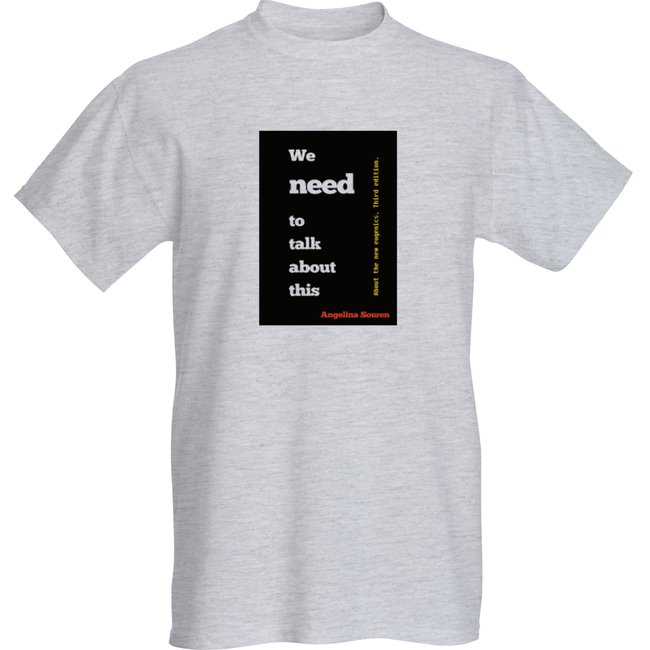
Sorry, the t-shirt sold out pretty quickly.
How I depicted my otherization in England (acrylic on paper, on scanner)

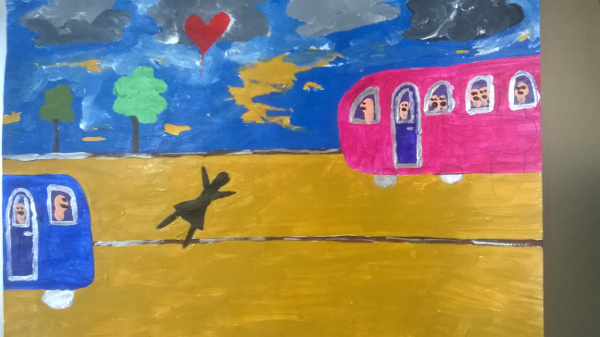

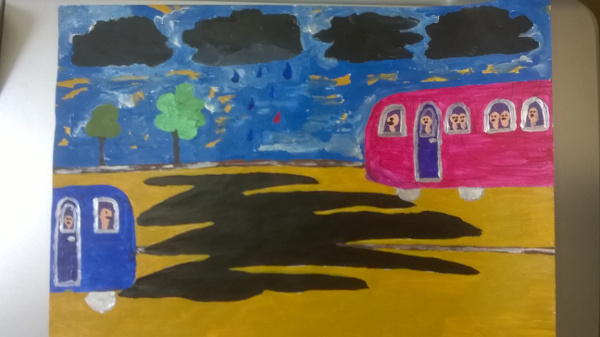
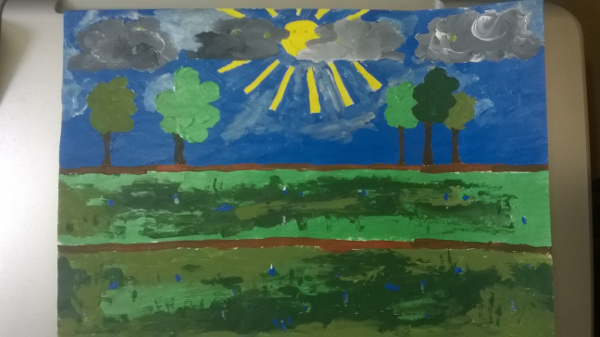
If you want to know more about how otherization works, read the last version of “Is cruelty cool”.
You can also see the above images as reflecting on the survival of the human species on the planet, come to think of it.
Continue readingFor all fans of Elon Musk (Neuralink news)
The news is not good. STAT:
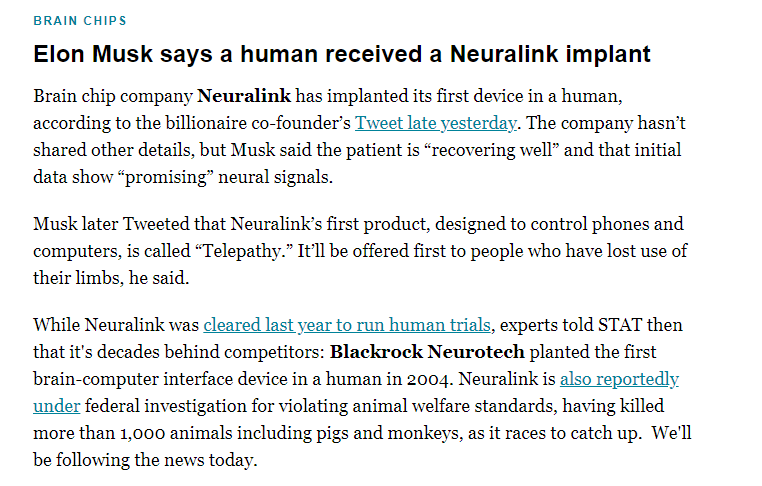
He’s not getting his 55 million dollar bonus at Tesla either. One of the shareholders sued and the judge agreed with the shareholder. It wasn’t just about the size of the bonus, also about how exactly it was awarded, namely by pals such as his divorce attorney, a close friend and even a brother.
Update Wikipedia account
Autism in the Dragons’ Den
Yikes

Nobody says it’s always easy but then again, it really is – or is it?

No, I am not going to let a sad and twisted sadistic and manipulative character out there who began targeting me on 9 June 2008 – and who, unbelievably, still hasn’t let go – destroy my soul.
Telling such people what’s in spite of all that is beautiful about them can have devastating consequences.
It’s an impossible balancing act.
Even telling him that I will eviscerate him if I ever see him again hasn’t scared him off. How many more horrible things do I need to say before I can convince him to let me break out of his lockjaw grip?
I’d noticed that every time I have a phone appointment, my phone and tablet would go warm in advance of that phone call. So before my next appointment, I took my SIM card and put it into a non-Android phone. We got disconnected, a few seconds into that call.
I haven’t been able to replace my phones yet, since I left Hatesville, but it probably would not have made much of a difference, if I had.
“She’s a friend of mine, I’m playing a little joke on her.” “She’s a friend of mine, she’s been in a bad car accident, I’m worried about her. ” “She’s a friend of mine, she’s severely autistic, I’m worried about her.” “She’s a friend of mine, she was sexually abused as a child, I’m worried about her.” “She’s a friend of mine, she has a learning disability, I’m worried about her.” “She’s no friend of mine, she’s been saying weird things about me for a long time, she’s crazy.” “She’s been posting things on Twitter using this program which I can see she is using but you can’t because I have hacked into her computers and you haven’t and I don’t like what she’s posting so let’s call the police and tell them to tell her to stop posting anything not “on Twitter” but in that program and thus have a little fun with them too because they surely won’t catch on.” ”She’s been posting things on her private Facebook page which I can see and her friends can but you can’t because I have hacked into her computers and you haven’t and I am worried that she’s going to name me so let’s call someone else and tell them that I’m the police and tell them to tell her to stop posting anything on Facebook.”
People really fall for all of that. There’s no point in pointing it out. The ones who think that they are involved in an innocent joke don’t realize that maybe nine others have been asked to do similar things at the same time and that this stuff goes on all the time.
To me, it’s been stuff like this: “You avoid wheat and sugar and you’re a vegetarian and you express sympathy for CSA victims so you were sexually abused as a child and you have multiple personalities which is why you don’t remember.” “You’re not a scientist, you just decided that you were going to save the world when you were a little girl.” (“Sure, whatever you say.”) And so on and so forth. Lately, apparently he’s been mistaking my fear and despair, powerlessness, anger and frustration for indications that I am autistic… (He also tried to convince my brain of my multiple personalities for a long time, nearly driving me around the bend.) He’s also suggested that I am narcissistic and have ADHD. (Sure, whatever.) He’s also always suggested that just about everyone I used to know has it in for me and that nobody likes me and what not. It goes on and on and on.
Years ago, I got “You’re actually a really nice woman.” I thought “No shit, Sherlock.” (But the abuse continued.)
He’s also pretty clueless with regard to how some things work in society.
(When I wrote “clueless”, he appeared to interfere, grab the controls and select “whatever”.)
(For example that for higher-level jobs and also many projects, there’s usually a lengthy selection process. In his mind, you always get hired in one day. Neither does he realize that most scientific knowledge is obsolete after five years. That was already the case in the 1980s; it may be even less now.) (He recently seems to have gotten it into his head that I must pretend to be and do and want who I was and what I was doing and wanted thirty years ago.)
He, they, whatever. In the digital realm, anyone can pretend to be anyone.
This stupid bullshit began on 9 June 2008… He’s so immensely cunning, so manipulative. Quite genius, really. Leaving people like me totally trapped inside his bullshit. You can’t talk about what is going on without sounding deranged. So you stop talking. But you also decide that you refuse to let him push or manipulate you into suicide. (He’s tried the latter before. Just for fun.)
I know he can’t help it. I know.
Accessibility of trains #inclusivity
I’ll be dammed. Some years ago (Feb 2018), I was pondering the accessibility of trains for people with wheelchairs, buggies (prams, pushchairs) or mobility scooters…
I contacted a train manufacturer that had just gotten a large UK order and asked them how they were addressing this. They never got back to me.
I thought that a ramp that automatically slides out and retracts should be possible.
A stranger in the Netherlands who spotted my post then helpfully e-mailed me this drawing:
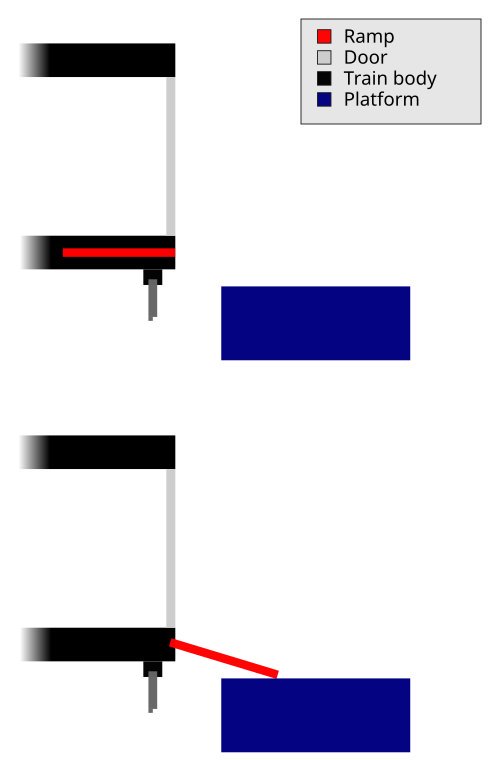
I just took a trip with a Dutch Sprinter train… And what did I see? A ramp that slides out and retracts.
This idea has actually been implemented and has been on these trains since 2021: https://www.bnnvara.nl/kassa/artikelen/alle-sprinters-ns-toegankelijker-voor-rolstoel
It may depend on the station how well it works. Newer stations have higher platforms; the slide-out ramp is flush with it.
My dream job
What’s your dream job?


Helping as many women as possible escape from sadistic stalking thus helping them get their lives back, at least to some degree.
So that they can breathe again.
There. 😊 Happy now?
Continue readingMünchhausen by proxy
Is sadistic stalking (sometimes) a form of Münchhausen by proxy?
Interesting application of AI (batteries)
This reminds me of using gaming to find solutions in science at a much greater speed than usual.
However, the biggest problem with batteries is recyclability and the cost of recycling.
Also, while yttrium is not a proper rare earth, where the yttrium comes from also has to be considered. China, mostly.
So while this uses 70% less lithium, and the needed sodium and chlorine are ubiquitous, it also requires yttrium.
We’re talking NaxLi3−xYCl6(0<x<3) series here, so it requires up to 3 times more lithium than yttrium and far more chlorine. So that’s okay.
Interesting development. Recyclability isn’t mentioned. Too early for that.
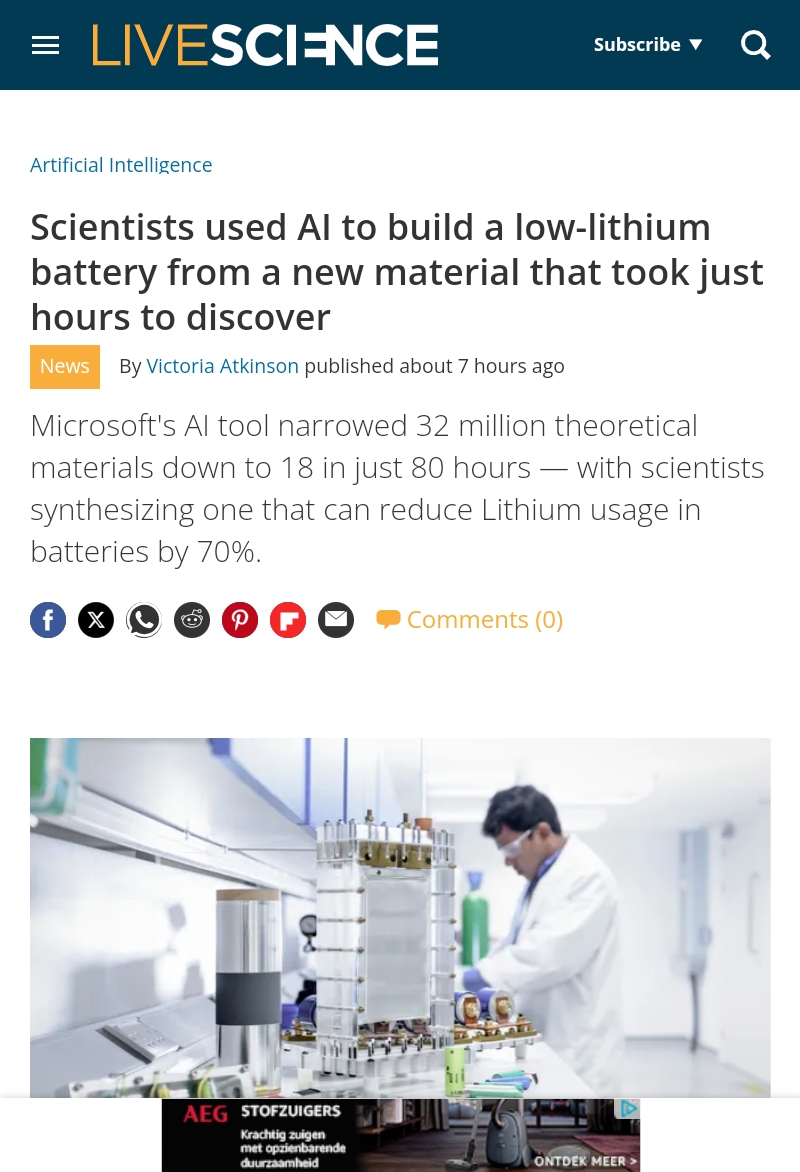
Reblogged, ’cause I like
Not going around deliberately hurting people is a good start (I’m in an Anastacia-kinda mood)
What makes a good leader?


Avoid making people around you sick and tired of feeling sick and tired
“Yo flippin’. There’s nothing wrong with the way I sing my song.” Make sure that you never force anyone to shout that at you.
Protecting Britain’s borders


Pondering inventions (reblogged)
Reblogged: the vegetable spiralizer
What I would un-invent if I could?
Herbicides, insecticides, and air-conditioning.
If you could un-invent something, what would it be?


