Why you need to get involved in the geoengineering debate – now

File 20171018 32378 1p7xxv4.jpg?ixlib=rb 1.1
Atakan Yildiz/Shutterstock.com

Rob Bellamy, University of Oxford

The prospect of engineering the world’s climate system to tackle global warming is becoming more and more likely. This may seem like a crazy idea but I, and over 250 other scientists, policy makers and stakeholders from around the globe recently descended on Berlin to debate the promises and perils of geoengineering.

There are many touted methods of engineering the climate. Early, outlandish ideas included installing a ‘space sunshade”: a massive mirror orbiting the Earth to reflect sunlight. The ideas most in discussion now may not seem much more realistic – spraying particles into the stratosphere to reflect sunlight, or fertilising the oceans with iron to encourage algal growth and carbon dioxide sequestration through photosynthesis.

But the prospect of geoengineering has become a lot more real since the Paris Agreement. The 2015 Paris Agreement set out near universal, legally binding commitments to keep the increase in global temperature to well below 2°C above pre-industrial levels and even to aim for limiting the rise to 1.5°C. The Intergovernmental Panel on Climate Change (IPCC) has concluded that meeting these targets is possible – but nearly all of their scenarios rely on the extensive deployment of some form of geoengineering by the end of the century.

Some geoengineers take their inspiration from supervolcanic eruptions, which can lower global temperatures.
patobarahona/Shutterstock.com

How to engineer the climate

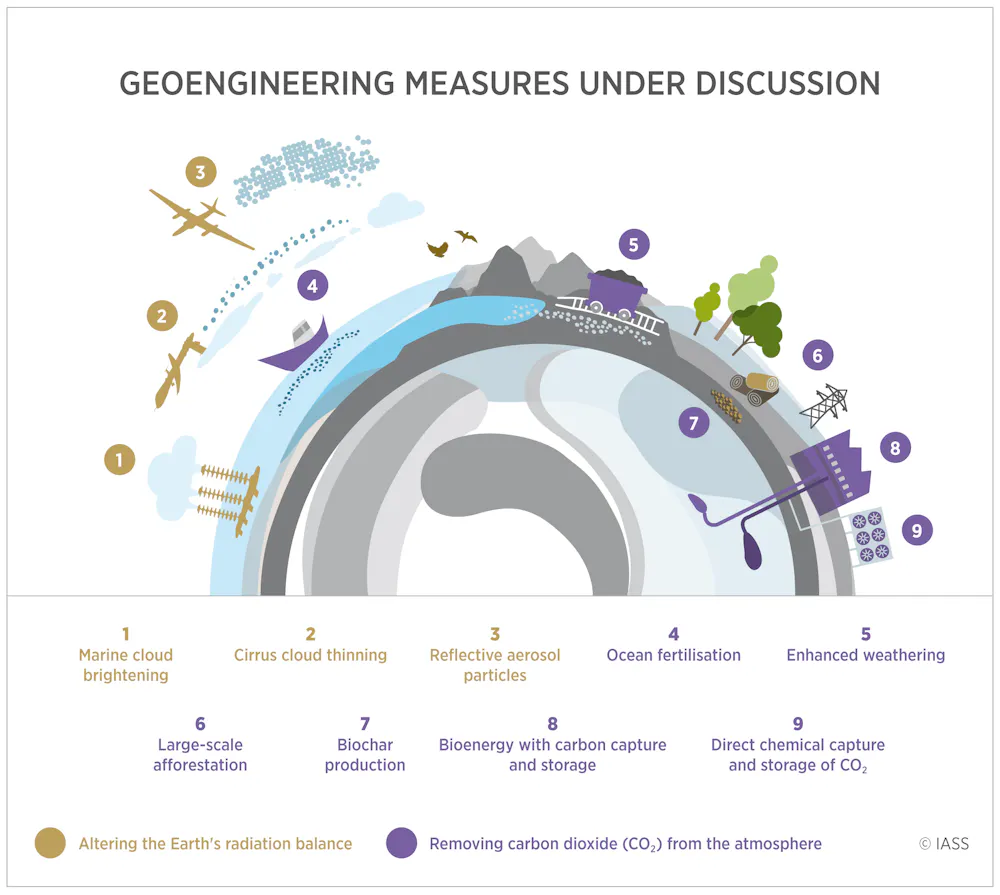
Geoengineering comes in two distinct flavours. The first is greenhouse gas removal: those ideas that would seek to remove and store carbon dioxide and other greenhouse gases from the atmosphere. The second is solar radiation management: the ideas that would seek to reflect a level of sunlight away from the Earth.

Solar radiation management is the more controversial of the two, doing nothing to address the root cause of climate change – greenhouse gas emissions – and raising a whole load of concerns about undesirable side effects, such as changes to regional weather patterns.

And then there is the so-called “termination problem”. If we ever stopped engineering the climate in this way then global temperature would abruptly bounce back to where it would have been without it. And if we had not been reducing or removing emissions at the same time, this could be a very sharp and sudden rise indeed.

Most climate models that see the ambitions of the Paris Agreement achieved assume the use of greenhouse gas removal, particularly bio-energy coupled with carbon capture and storage technology. But, as the recent conference revealed, although research in the field is steadily gaining ground, there is also a dangerous gap between its current state of the art and the achievability of the Paris Agreement on climate change.

The Paris Agreement – and its implicit dependence on greenhouse gas removal – has undoubtedly been one of the most significant developments to impact on the field of geoengineering since the last conference of its kind back in 2014. This shifted the emphasis of the conference away from the more controversial and attention-grabbing solar radiation management and towards the more mundane but policy relevant greenhouse gas removal.

Geoengineering measures.
IASS

Controversial experiments

But there were moments when sunlight reflecting methods still stole the show. A centrepiece of the conference was the solar radiation management experiments campfire, where David Keith and his colleagues from the Harvard University Solar Geoengineering Research Programme laid out their experimental plans. They aim to lift an instrument package to a height of 20km using a high-altitude balloon and release a small amount of reflective particles into the atmosphere.

This would not be the first geoengineering experiment. Scientists, engineers and entrepreneurs have already begun experimenting with various ideas, several of which have attracted a great degree of public interest and controversy. A particularly notable case was one UK project, in which plans to release a small amount of water into the atmosphere at a height of 1km using a pipe tethered to a balloon were cancelled in 2013 owing to concerns over intellectual property.

Such experiments will be essential if geoengineering ideas are to ever become technically viable contributors to achieving the goals of the Paris Agreement. But it is the governance of experiments, not their technical credentials, that has always been and still remains the most contentious area of the geoengineering debate.

Critics warned that the Harvard experiment could be the first step on a “slippery slope” towards an undesirable deployment and therefore must be restrained. But advocates argued that the technology needs to be developed before we can know what it is that we are trying to govern.

The challenge for governance is not to back either one of these extremes, but rather to navigate a responsible path between them.

How to govern?

The key to defining a responsible way to govern geoengineering experiments is accounting for public interests and concerns. Would-be geoengineering experimenters, including those at Harvard, routinely try to account for these concerns by appealing to their experiments being of a small scale and a limited extent. But, as I argued in the conference, in public discussions on the scale and extent of geoengineering experiments their meaning has been subjective and always qualified by other concerns.

My colleagues and I have found that the public have at least four principal concerns about geoengineering experiments: their level of containment; uncertainty around what the outcomes would be; the reversibility of any impacts, and the intent behind them. A small scale experiment unfolding indoors might therefore be deemed unacceptable if it raised concerns about private interests, for example. On the other hand, a large scale experiment conducted outdoors could be deemed acceptable if it did not release materials into the open environment.

Under certain conditions the four dimensions could be aligned. The challenge for governance is to account for these – and likely other – dimensions of perceived controllability. This means that public involvement in the design of governance itself needs to be front and centre in the development of geoengineering experiments.

A whole range of two-way dialogue methods are available – focus groups, citizens juries, deliberative workshops and many others. And to those outside of formal involvement in such processes – read about geoengineering, talk about geoengineering. We need to start a society-wide conversation on how to govern such controversial technologies.

Public interests and concerns need to be drawn out well in advance of an experiment and the results used to meaningfully shape how we govern it. This will not only make the the experiment more legitimate, but also make it substantively better.

The ConversationMake no mistake, experiments will be needed if we are to learn the worth of geoengineering ideas. But they must be done with public values at their core.

Rob Bellamy, James Martin Research Fellow in the Institute for Science, Innovation and Society, University of Oxford

This article was originally published on The Conversation. Read the original article.

Why is it so hard for the wrongfully jailed to get justice?

Linda Asquith, Leeds Beckett University

Imagine for a moment you are wrongfully convicted of a crime. You get sent to prison, where you start to serve out your sentence – every minute of every day knowing you are innocent. Then the unthinkable happens and you are released. You are elated – this is the moment you’ve been waiting for.

But those feelings of elation and happiness quickly turn to fear and despair as you realise you have nowhere to go. Your old life as you knew it is gone, you have no way of supporting yourself, your relationships have broken down and you have nowhere to turn to for support.

Sadly, this is the reality many exonerees face when they are trying to put their lives back together. Many of these people – who have in some cases spent years behind bars – find upon release that their problems are only exacerbated. Wrongfully wrenched from their families, homes and communities, they struggle to reintegrate into society when they return.

And things seem to be made worse because unlike prisoners who have access to support to help them resettle when they are released from prison, those who suffer a miscarriage of justice do not get this.

“Rightfully convicted” individuals are provided with a plan for release from prison – often starting months in advance. This involves a range of activities, all of which are aimed at helping the person to resettle back into the community. But exonerees have none of these preparations – and often receive very little notice of their release.

Victor Nealon, for example, served 16 years in prison after he was falsely charged with rape. He received three hours’ notice of his release, and ended up in a bed and breakfast on his first night as a free man – he had nowhere else to go.

An unfamiliar world

The wrongfully convicted don’t receive any preparation for their release because of the way the prison system works. Prisoners have to show they are “tackling their offending behaviour” to gain parole. But if you haven’t committed the crime in the first place, this is not possible. The end result is that a person may spend longer in prison than if they had committed the offence and admitted it.

Upon release, the wrongfully convicted are thrust into a world they are unfamiliar with – and they have zero support or guidance. It’s common for exonerees to develop PTSD as a result of their wrongful conviction, alongside other mental and physical health problems requiring significant support.

This in part happens because as soon as the conviction is quashed, these people are no one’s responsibility. They are no longer a prisoner, or an ex-offender. There is no standard programme of support which is triggered at the point of release. And while probation would be well placed to support the wrongfully convicted, they cannot as they are not ex-offenders – ex-prisoners, yes, but not ex-offenders.

Say I’m innocent

There are only two specific organisations that provide support to exonerees. They are the Citizens Advice Bureau (CAB) based at the Royal Courts of Justice, and the Miscarriages of Justice Organisation (MOJO). This was founded by Paddy Hill – one of the six men wrongly convicted of the 1974 Birmingham pub bombings. He set it up in an attempt to provide the support to others that he was not given when released in 1991.

But both services are restricted by funding and staffing limitations, and while both organisations do superb work against a backdrop of austerity measures and extremely limited resources, both are at best a piecemeal response to what is, in reality, a government responsibility.

A recent BBC documentary called Fallout highlights these issues. The the director of the documentary Mark Mcloughlin has launched the “Say I’m Innocent” campaign, and is now fighting for all the services that are available to guilty prisoners on release to be made available to exonerees. The campaign is also calling for a public announcement of a person’s innocence upon their release. As well as other measure including a transition centre in both the UK and Ireland to allow them time and help to reintegrate into society.

The ConversationThis is important because the key issue here is responsibility. The state assumed responsibility for these individuals when they were wrongfully convicted. It is therefore only right that the state continues to take responsibility for them once exonerated.

Linda Asquith, Senior Lecturer in Criminology, Leeds Beckett University

This article was originally published on The Conversation. Read the original article.

Whales and dolphins have rich cultures – and could hold clues to what makes humans so advanced


File 20171017 30422 eb1qx5.jpg?ixlib=rb 1.1
A pod of spinner dolphins in the Red Sea.
Alexander Vasenin/wikimedia, CC BY-SA

Susanne Shultz, University of Manchester

Humans are like no other species. We have constructed stratified states, colonised nearly every habitat on Earth and we’re now looking to move to other planets. In fact, we are so advanced that some of our innovations – such as fossil fuel technologies, intensive agriculture and weapons of mass destruction – may ultimately lead to our downfall.

Even our closest relatives, the primates, lack traits such as developed language, cumulative culture, music, symbolism and religion. Yet scientists still haven’t come to a consensus on why, when and how humans evolved these traits. But, luckily, there are non-human animals that have evolved societies and culture to some extent. My latest study, published in Nature Evolution & Ecology, investigates what cetaceans (whales and dolphins) can teach us about human evolution.

The reason it is so difficult to trace the origins of human traits is that social behaviour does not fossilise. It is therefore very hard to understand when and why cultural behaviour first arose in the human lineage. Material culture such as art, burial items, technologically sophisticated weapons and pottery is very rare in the archaeological record.

Previous research in primates has shown that a large primate brain is associated with larger social groups, cultural and behavioural richness, and learning ability. A larger brain is also tied to energy-rich diets, long life spans, extended juvenile periods and large bodies. But researchers trying to uncover whether each of these different traits are causes or consequences of large brains find themselves at odds with each other – often arguing at cross purposes.

One prevailing explanation is the social brain hypothesis, which argues that our minds and consequently our brains have evolved to solve the problems associated with living in an information rich, challenging and dynamic social environment. This comes with challenges such as competing for and allocating food and resources, coordinating behaviour, resolving conflicts and using information and innovations generated by others in the group.

Primates with large brains tend to be highly social animals.
Peter van der Sluijs/wikipedia, CC BY-SA

However, despite the abundance of evidence for a link between brain size and social skills, the arguments rumble on about the role of social living in cognitive evolution. Alternative theories suggest that primate brains have evolved in response to the complexity of forest environments – either in terms of searching for fruit or visually navigating a three dimensional world.

Under the sea

But it’s not just primates that live in rich social worlds. Insects, birds, elephants, horses and cetaceans do, too.

The latter are especially interesting as, not only do we know that they do interesting things, some live in multi-generational societies and they also have the largest brains in the animal kingdom. In addition, they do not eat fruit, nor do they live in forests. For that reason, we decided to evaluate the evidence for the social or cultural brain in cetaceans.

Another advantage with cetaceans is that research groups around the world have spent decades documenting and uncovering their social worlds. These include signature whistles, which appear to identify individual animals, cooperative hunting, complex songs and vocalisations, social play and social learning. We compiled all this information into a database and evaluated whether a species’ cultural richness is associated with its brain size and the kind of society they live in.

We found that species with larger brains live in more structured societies and have more cultural and learned behaviours. The group of species with the largest relative brain size are the large, whale-like dolphins. These include the false killer whale and pilot whale.

To illustrate the two ends of the spectrum, killer whales have cultural food preferences – where some populations prefer fish and other seals. They also hunt cooperatively and have matriarchs leading the group. Sperm whales have actual dialects, which means that different populations have distinct vocalisations. In contrast, some of the large baleen whales, which have smaller brains, eat krill rather than fish or other mammals, live fairly solitary lives and only come together for breeding seasons and at rich food sources.

The lives of beaked whales are still a big mystery.
Ted Cheeseman/wikipedia, CC BY-SA

We still have much to learn about these amazing creatures. Some of the species were not included in our analysis because we know so little about them. For example, there is a whole group of beaked whales with very large brains. However, because they dive and forage in deep water, sightings are rare and we know almost nothing about their behaviour and social relationships.

The ConversationNevertheless, this study certainly supports the idea that the richness of a species’ social world is predicted by their brain size. The fact that we’ve found it in an independent group so different from primates makes it all the more important.

Susanne Shultz, University Research Fellow, University of Manchester

This article was originally published on The Conversation. Read the original article.

‘You all look the same’: non-Muslim men targeted in Islamophobic hate crime because of their appearance


File 20171017 30406 7bq16h.jpg?ixlib=rb 1.1
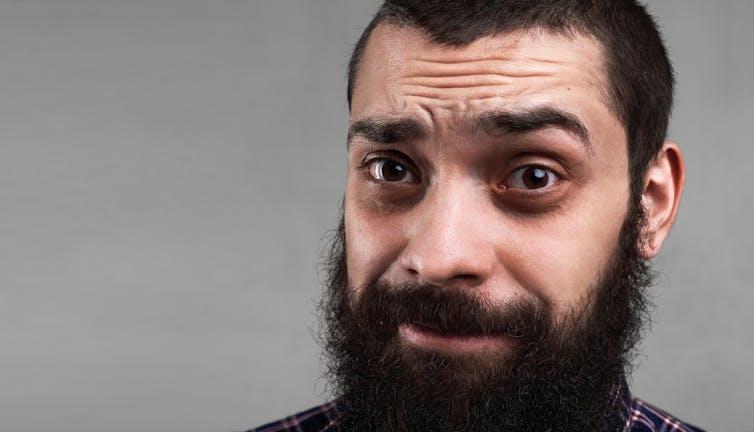
Men with beards have been called terrorists.
via shutterstock.com

Imran Awan, Birmingham City University and Irene Zempi, Nottingham Trent University

There has been a 29% rise in recorded hate crimes in the UK in the past year according to new figures released by the Home Office, which also showed a spike in offences following the EU referendum.

The consequences of hate crime are widespread. While Muslims in Britain are increasingly subject to Islamophobia, some non-Muslims are also being targeted because they are perceived to be Muslim.

In new research presented to the All-Party Parliamentary Group on British Muslims we looked at the experiences of non-Muslim men who reported being the target of Islamophobic hate crime.

We interviewed 20 non-Muslim men of different ages, race and religion, based in the UK. Our group included Sikhs, Christians, Hindus and atheists. Although their experiences were all different, they believed that their skin colour, their beard or turban meant that they were perceived to be Muslim – and targeted for it. We decided to only interview men in this study because we understand from our community work that men are more likely than women to be victims of Islamophobia due to mistaken identity.

Our findings backed up our previous research showing that a spike in hate crime is often triggered by a particular event. The men we interviewed, whose names we have anonymised here to protect their identities, described how they felt “vulnerable” and “isolated” after the EU referendum. Vinesh, a 32-year old, Indian British Hindu, told us:

People have been calling me names on Twitter like ‘You’re a p**i c**t’. I have also been threatened on Facebook like ‘Today is the day we get rid of the likes of you!’ I feared for my safety when I read this.

Some of the men noted how terrorist attacks including those in Manchester and London also triggered more Islamophobia. Others also noted how the Trump administration and its stance towards Muslims had promoted anti-Muslim sentiments globally.

https://datawrapper.dwcdn.net/XkO0U/2/

In some cases, hate crimes are targeted at people’s homes or workplaces, with property damaged with Islamophobic graffiti because the perpetrators believe the victims are Muslim. In a recent case in Liverpool, “Allar Akbar” (sic) was painted on a Hindu family’s future home.

One 37-year-old man, called Paul, a white British atheist who is perceived to be a convert to Islam due to his beard, told us how he had been targeted:

I live on a rough estate. I had dog excrement shoved through the mailbox. They also threw paint over my door.

Nobody stepped in to help

Some of those we interviewed felt that their beard was a key aspect of why they were being targeted for looking Muslim. One 19-year-old, called Cameron, who is black British, said:

It’s happened to me ever since I grew a beard. I’m not a Muslim but people stare at me because they think I am.

Many of those we interviewed reported that they suffered anxiety, depression, physical illness, loss of income and employment as a result of being targeted. Raj, a 39-year-old British Indian, told us:

We live in fear every day. We face abuse and intimidation daily but we should not have to endure this abuse.

Such feelings of insecurity and isolation were exacerbated by the fact that these hate incidents usually took place in public places in front of passers-by who didn’t intervene to help. Mark, who is white and Christian and perceived to be Muslim due to his beard and Mediterranean complexion, said:

I was verbally abused by another passenger on the bus who branded me an ‘ISIS terrorist’ while passengers looked on without intervening. In another incident, I had ‘Brexit’ yelled in my face … I feel very lonely. No one has come to my assistance or even consoled me.

Identity questioned

The men we interviewed constantly felt the need to prove their identity, and differentiate themselves from Muslims in an attempt to prevent future victimisation. Many described it as emotionally draining. Samuel, a 58-year-old black British Christian, said:

My identity is always questioned because I look like a Muslim. It does make me feel low but I got used to it. As a black man with a beard you always get associated as being a Muslim terrorist.

The men we interviewed said they wanted much more public awareness about hate crimes and better police recording of these kind of offences. They also called for training for bystanders and people such as teachers who may need to deal with more of these situations. They also thought that an app, through which all types of hate crime could be reported in real time, could offer support for victims.

The ConversationThe rise in Islamophobic hate crime has made many Muslims live in fear. But this kind of hatred is pervasive, and can affect anyone perceived to be Muslim. “You all look the same”, one man was told after explaining that he wasn’t Muslim to somebody who abused him on the train. British society needs to get a better grip on understanding this often “invisible” form of hate crime and what to do about it.

Imran Awan, Associate Professor and Deputy Director of the Centre for Applied Criminology, Birmingham City University and Irene Zempi, Director of the Nottingham Centre for Bias, Prejudice & Hate Crime, Nottingham Trent University

This article was originally published on The Conversation. Read the original article.

PS
Hate crimes against disabled children, however, are also on the rise in Britain. – AS

Why the Indigenous in New Zealand have fared better than those in Canada


File 20171005 15464 f7v6kb.jpg?ixlib=rb 1.1
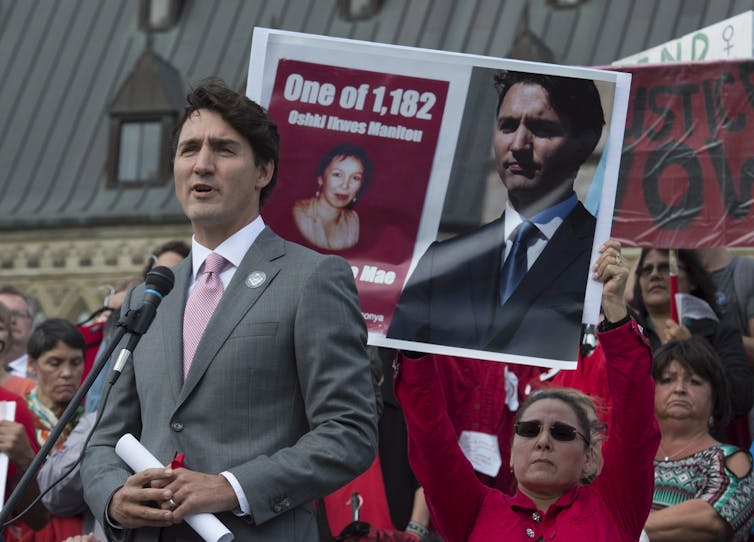
Maggie Cywink, of Whitefish River First Nation, holds up a sign behind Canadian Prime Minister Justin Trudeau during a summit in Ottawa in support of missing and murdered Indigenous women.
THE CANADIAN PRESS/Adrian Wyld

Dominic O’Sullivan, Charles Sturt University

Canadian Prime Minister Justin Trudeau’s recent speech to the United Nations brought Canada’s genocidal story to the world stage.

It gave historical context to an enduring colonialism.

The impact is widespread, but neatly summarized in a life expectancy differential between Indigenous and other Canadians of five to 15 years for men and 10 to 15 years for women. In New Zealand, by way of contrast, the differential between Maori and non-Maori is 7.3 years for men and 6.8 years for women.

These figures summarise the story of the power gap between Indigenous peoples and the settler state in both countries. Policy solutions lie beyond the liberal welfare state, beyond egalitarian justice. The origins of the persistent power gaps in each country are different, however, and reflect different understandings of relationships among sovereignty, citizenship, nationhood and self-determination.

The Indigenous peoples of Canada and New Zealand share similar experiences as subjects of British colonialism.

Yet there are profound differences both in the situation for Indigenous peoples in both countries and in the opportunities for resistance they’ve been able to pursue.

Maori have always held a greater share of the New Zealand national population than the Indigenous in Canada. Maori share a common language, and New Zealand’s smaller land mass makes resistance simpler to organize. Yet their place in the body politic is always contested, as state and public strategies of exclusion compete with the claim to self-determination.

‘Lead the lad to be a good farmer’

Historically, the greater Maori capacity for resistance did not dampen colonial resolve. But it did mean that assimilation, rather than genocide, was the intent of government policy. The purpose of New Zealand’s non-residential native schools, for example, was to “lead the lad to be a good farmer and the girl to be a good farmer’s wife,” as the director-general of education put it in 1931.

Following the Canadian Supreme Court ruling in 1997, Canada’s concern for “the reconciliation of the pre-existence of Aboriginal societies with the sovereignty of the Crown” was minimized by the previous Conservative government of Stephen Harper but rhetorically aligned with the “new beginning” that Trudeau spoke of at the United Nations.

Former Canadian Prime Minister Stephen Harper speaks with a Maori elder as he and his wife, Laureen, watch an official Maori powhiri during a visit to New Zealand in 2014.
THE CANADIAN PRESS/Adrian Wyld

Trudeau proposed that the UN Declaration on the Rights of Indigenous Peoples would now be Canada’s policy guide. It would rationalize stronger nation-to-nation, or government-to-government, relationships. Yet at the same time, the 2016 Canadian Human Rights Tribunal’s ruling, handed down a year after Trudeau’s election and urging the government to address discrimination against Indigenous children on reserves, has yet to be heeded.

Trudeau expressed concern at the UN about the self-determination of First Nations in Canada, but he didn’t speak of the individual Indigenous citizen’s self-determination.

He did not speak to the child on the reserve whose poverty is a direct result of lesser access to services that others in Canada take for granted as rights of citizenship.

Similar circumstances do exist in New Zealand where racism in schooling, health, the labour market and criminal justice compromise citizenship. However, Maori in New Zealand can demand better with reference to the Treaty of Waitangi and the “rights and privileges of British subjects” that it confers.

Maori protected under treaty

That treaty gave the British Crown the right to establish government. In return, Britain offered protection of Maori authority over their own affairs and natural resources.

The promise has not been consistently kept, but the treaty does give moral and increasingly political and jurisprudential authority to the Maori claim to self-determination. The treaty means that Maori do not contest the post-settler presence, but they do contest the Crown exercising a unilateral sovereign authority.

In 2015, the Waitangi Tribunal, which hears claims against the Crown for breaches of the treaty, found that the agreement was not a cession of sovereignty as the Crown had always claimed. While the government does not accept the finding, and it’s not legally binding, it affirms the Maori position on self-determination.

It also affirms a Maori way of thinking about contemporary politics. It raises possibilities for deeper introspection about Maori as nations, and Maori as citizens, in ways that are not apparent in Trudeau’s interpretation of the UN’s Indigenous declaration as it pertains to Canada.

There is an argument that nation to nation relationships respect the fact that sovereignty was never ceded. Perhaps an argument that indigenous Canadians claiming the full rights and capacities of state citizenship requires accepting the moral legitimacy of Crown sovereignty. However, if sovereignty means the capacity to function as a self-determining people one needs to think about the relative and relational character of political authority, and the sources of political possibility. These exist both inside and outside the state. They exist simultaneously. Neither is a site of political possibility for self-determination that can reach its potential without the support of the other.

Sharing sovereignty does not mean assimilation

Political authority and self-determination can’t reach their full potential without the support of each other. They exist both inside and outside the state. They exist simultaneously.

If the Crown is sovereign, it exercises that sovereignty only as the people’s agent. The UN declaration is insistent that, if they wish, Indigenous peoples have a right to share that sovereignty.

Sharing sovereignty is not dependent on the Indigenous person’s assimilation into an homogenous body politic, but on the capacity to contribute to society as an Indigenous person.

That could include the ability to receive public education in one’s own language, to be elected to Parliament by one’s own people (as is the situation in New Zealand) or to receive health care in ways that are responsive to cultural preferences.

In these ways, state sovereignty is not an authority that exists over and above Indigenous citizens. Nor does state citizenship exist at the expense of the Indigenous nation. It complements and supports self-determination.

In the only book-length comparative study of Indigenous politics in Canada and New Zealand, Roger Maaka and Augie Fleras imagine Indigenous peoples as “sovereign in their own right yet sharing sovereignty with society at large.”

New Zealand continues to work out the terms of this kind of system.

The ConversationCanada does not give it substantive thought, and that’s a serious constraint on the goal of self-determination for First Nations.

Dominic O’Sullivan, Associate Professor, Charles Sturt University

This article was originally published on The Conversation. Read the original article.

Why blaming ivory poaching on Boko Haram isn’t helpful


File 20171008 3228 10lazn2.jpg?ixlib=rb 1.1
Talking about ivory-funded terrorism overlooks the real sources of income for terror groups.
Author supplied

Mark Moritz, The Ohio State University; Alice B. Kelly Pennaz, University of California, Berkeley; Mouadjamou Ahmadou, and Paul Scholte, The Ohio State University

In 2016, as part of a ceremony in Cameroon’s capital Yaoundé, 2 000 elephant tusks were burned to demonstrate the country’s commitment to fight poaching and illegal trade in wildlife. US Ambassador to the United Nations Samantha Power gave a speech at the event linking poaching to terrorism.

The idea that terror groups like Boko Haram fund their activities through ivory poaching in Africa is a simple and compelling narrative. It has been adopted by governments, NGOs and media alike. But it is undermining wildlife conservation and human rights.

The problem is that such claims hinge on a single document which uses only one, unnamed source to estimate terrorist profits from ivory. The study hasn’t been backed up elsewhere.

Similarly, there is little evidence that terrorist activities are funded by wildlife poaching in Cameroon. We have studied wildlife conservation and pastoralism in the Far North Region of Cameroon in the last two decades. We have found that it is highly unlikely that Boko Haram is using ivory to survive financially. The elephant populations in the areas where Boko Haram operates are so low that this would be a faulty business plan to say the least. Only 246 elephants were counted in Waza Park in 2007.

Talking about ivory-funded terrorism overlooks the real sources of income for these groups. In Cameroon and Nigeria evidence shows that Boko Haram is using profits from cattle raids to support its activities. Boko Haram’s plunder of the countryside leaves cattle herders destitute.

The dangers of militarisation

The wrong focus has implications for conservation and human rights. Linking poachers and terrorists has led to a further militarisation of conservation areas in Africa. More guns and guards have been sent into parks to stop poachers.

The military approach has also led to serious human rights violations. These take the form of shoot-on-sight policies and other violent tactics carried out against local populations. Law enforcement in protected areas is important for controlling poaching and terrorism alike but it is not a perfect solution.

And wildlife conservation can suffer if well armed but underpaid park guards turn to poaching themselves.

It would be more helpful if properly paid and trained people provided security across the region rather than just in protected areas.

Consequences of the wrong connection

Ignoring the fact that cattle, not ivory, may be fuelling terrorism in places like Cameroon does a disservice to pastoralists. While livestock may compete with wildlife when pastoralists take refuge inside better-protected areas like parks, they do so only because their livelihoods are at risk.

Mistaking the true source of income for terrorist groups also means that their violent activities continue.

Finally, it diverts attention from corrupt conservation and government officials who may be complicit in poaching.

Of course, this is not to say that poaching is not happening. The dramatic declines in elephant populations in Cameroon and elsewhere in Africa indicate otherwise. The question is who is doing the poaching and why.

We challenge governments and organisations interested in wildlife, security and human rights to take a closer look at the evidence. Instead of sharing simple claims about terrorism and poaching, they should consider all the forms of economic support to terrorist organisations.

The ConversationIn Cameroon, this would mean offering better security for pastoralists and their cattle. Protecting cattle does not have the same appeal for Western audiences as protecting elephants. But it could be a way to conserve wildlife, protect human rights and stop funding for terrorism.

Mark Moritz, Associate Professor of Anthropology, The Ohio State University; Alice B. Kelly Pennaz, Researcher, University of California, Berkeley; Mouadjamou Ahmadou, Lecturer in Visual Anthropology, and Paul Scholte, Ecologist leading programs and organizations in conservation, The Ohio State University

This article was originally published on The Conversation. Read the original article.

The IQ test wars: why screening for intelligence is still so controversial

File 20170921 21016 ld7zty.jpg?ixlib=rb 1.1
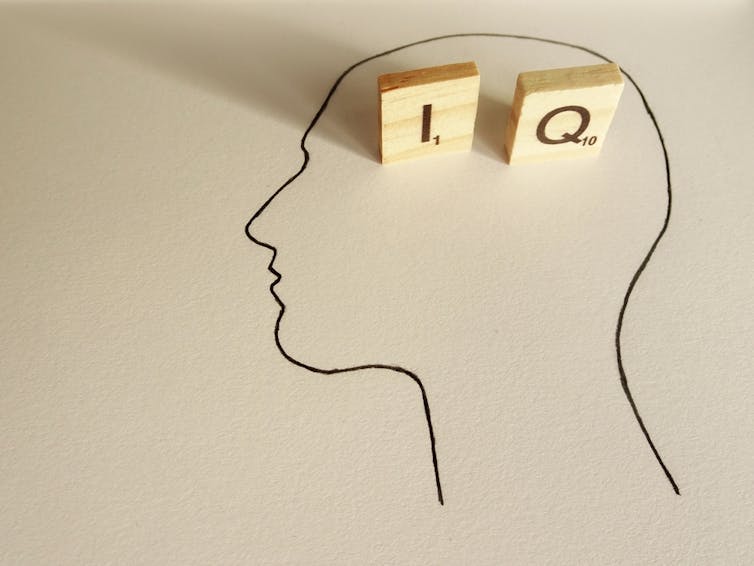
For over a century, IQ tests have been used to measure intelligence. But can it really be measured?
via shutterstock.com

Daphne Martschenko, University of Cambridge

John, 12-years-old, is three times as old as his brother. How old will John be when he is twice as old as his brother?

Two families go bowling. While they are bowling, they order a pizza for £12, six sodas for £1.25 each, and two large buckets of popcorn for £10.86. If they are going to split the bill between the families, how much does each family owe?

4, 9, 16, 25, 36, ?, 64. What number is missing from the sequence?

These are questions from online Intelligence Quotient or IQ tests. Tests that purport to measure your intelligence can be verbal, meaning written, or non-verbal, focusing on abstract reasoning independent of reading and writing skills. First created more than a century ago, the tests are still widely used today to measure an individual’s mental agility and ability.

Education systems use IQ tests to help identify children for special education and gifted education programmes and to offer extra support. Researchers across the social and hard sciences study IQ test results also looking at everything from their relation to genetics, socio-economic status, academic achievement, and race.

Online IQ “quizzes” purport to be able to tell you whether or not “you have what it takes to be a member of the world’s most prestigious high IQ society”.

If you want to boast about your high IQ, you should have been able to work out the answers to the questions. When John is 16 he’ll be twice as old as his brother. The two families who went bowling each owe £20.61. And 49 is the missing number in the sequence.

Despite the hype, the relevance, usefulness, and legitimacy of the IQ test is still hotly debated among educators, social scientists, and hard scientists. To understand why, it’s important to understand the history underpinning the birth, development, and expansion of the IQ test – a history that includes the use of IQ tests to further marginalise ethnic minorities and poor communities.

Testing times

In the early 1900s, dozens of intelligence tests were developed in Europe and America claiming to offer unbiased ways to measure a person’s cognitive ability. The first of these tests was developed by French psychologist Alfred Binet, who was commissioned by the French government to identify students who would face the most difficulty in school. The resulting 1905 Binet-Simon Scale became the basis for modern IQ testing. Ironically, Binet actually thought that IQ tests were inadequate measures for intelligence, pointing to the test’s inability to properly measure creativity or emotional intelligence.

At its conception, the IQ test provided a relatively quick and simple way to identify and sort individuals based on intelligence – which was and still is highly valued by society. In the US and elsewhere, institutions such as the military and police used IQ tests to screen potential applicants. They also implemented admission requirements based on the results.

The US Army Alpha and Beta Tests screened approximately 1.75m draftees in World War I in an attempt to evaluate the intellectual and emotional temperament of soldiers. Results were used to determine how capable a solider was of serving in the armed forces and identify which job classification or leadership position one was most suitable for. Starting in the early 1900s, the US education system also began using IQ tests to identify “gifted and talented” students, as well as those with special needs who required additional educational interventions and different academic environments.

Ironically, some districts in the US have recently employed a maximum IQ score for admission into the police force. The fear was that those who scored too highly would eventually find the work boring and leave – after significant time and resources had been put towards their training.

Alongside the widespread use of IQ tests in the 20th century was the argument that the level of a person’s intelligence was influenced by their biology. Ethnocentrics and eugenicists, who viewed intelligence and other social behaviours as being determined by biology and race, latched onto IQ tests. They held up the apparent gaps these tests illuminated between ethnic minorities and whites or between low- and high-income groups.

Some maintained that these test results provided further evidence that socioeconomic and racial groups were genetically different from each other and that systemic inequalities were partly a byproduct of evolutionary processes.

Going to extremes

The US Army Alpha and Beta test results garnered widespread publicity and were analysed by Carl Brigham, a Princeton University psychologist and early founder of psychometrics, in a 1922 book A Study of American Intelligence. Brigham applied meticulous statistical analyses to demonstrate that American intelligence was declining, claiming that increased immigration and racial integration were to blame. To address the issue, he called for social policies to restrict immigration and prohibit racial mixing.

A few years before, American psychologist and education researcher Lewis Terman had drawn connections between intellectual ability and race. In 1916, he wrote:

High-grade or border-line deficiency … is very, very common among Spanish-Indian and Mexican families of the Southwest and also among Negroes. Their dullness seems to be racial, or at least inherent in the family stocks from which they come … Children of this group should be segregated into separate classes … They cannot master abstractions but they can often be made into efficient workers … from a eugenic point of view they constitute a grave problem because of their unusually prolific breeding.

There has been considerable work from both hard and social scientists refuting arguments such as Brigham’s and Terman’s that racial differences in IQ scores are influenced by biology.

Critiques of such “hereditarian” hypotheses – arguments that genetics can powerfully explain human character traits and even human social and political problems – cite a lack of evidence and weak statistical analyses. This critique continues today, with many researchers resistant to and alarmed by research that is still being conducted on race and IQ.

But in their darkest moments, IQ tests became a powerful way to exclude and control marginalised communities using empirical and scientific language. Supporters of eugenic ideologies in the 1900s used IQ tests to identify “idiots”, “imbeciles”, and the “feebleminded”. These were people, eugenicists argued, who threatened to dilute the White Anglo-Saxon genetic stock of America.

A plaque in Virginia in memory to Carrie Buck, the first person to be sterilised under eugenics laws in the state.
Jukie Bot/flickr.com, CC BY-NC

As a result of such eugenic arguments, many American citizens were later sterilised. In 1927, an infamous ruling by the US Supreme Court legalised forced sterilisation of citizens with developmental disabilities and the “feebleminded,” who were frequently identified by their low IQ scores. The ruling, known as Buck v Bell, resulted in over 65,000 coerced sterilisations of individuals thought to have low IQs. Those in the US who were forcibly sterilised in the aftermath of Buck v Bell were disproportionately poor or of colour.

Compulsory sterilisation in the US on the basis of IQ, criminality, or sexual deviance continued formally until the mid 1970s when organisations like the Southern Poverty Law Center began filing lawsuits on behalf of people who had been sterilised. In 2015, the US Senate voted to compensate living victims of government-sponsored sterilisation programmes.

IQ tests today

Debate over what it means to be “intelligent” and whether or not the IQ test is a robust tool of measurement continues to elicit strong and often opposing reactions today. Some researchers say that intelligence is a concept specific to a particular culture. They maintain that it appears differently depending on the context – in the same way that many cultural behaviours would. For example, burping may be seen as an indicator of enjoyment of a meal or a sign of praise for the host in some cultures and impolite in others.

What may be considered intelligent in one environment, therefore, might not in others. For example, knowledge about medicinal herbs is seen as a form of intelligence in certain communities within Africa, but does not correlate with high performance on traditional Western academic intelligence tests.

According to some researchers, the “cultural specificity” of intelligence makes IQ tests biased towards the environments in which they were developed – namely white, Western society. This makes them potentially problematic in culturally diverse settings. The application of the same test among different communities would fail to recognise the different cultural values that shape what each community values as intelligent behaviour.

Going even further, given the IQ test’s history of being used to further questionable and sometimes racially-motivated beliefs about what different groups of people are capable of, some researchers say such tests cannot objectively and equally measure an individual’s intelligence at all.

Used for good

At the same time, there are ongoing efforts to demonstrate how the IQ test can be used to help those very communities who have been most harmed by them in the past. In 2002, the execution across the US of criminally convicted individuals with intellectual disabilities, who are often assessed using IQ tests, was ruled unconstitutional. This has meant IQ tests have actually prevented individuals from facing “cruel and unusual punishment” in the US court of law.

In education, IQ tests may be a more objective way to identify children who could benefit from special education services. This includes programmes known as “gifted education” for students who have been identified as exceptionally or highly cognitively able. Ethnic minority children and those whose parents have a low income, are under-represented in gifted education.

There is ongoing debate about the use of IQ tests in schools.
via shutterstock.com

The way children are chosen for these programmes means that Black and Hispanic students are often overlooked. Some US school districts employ admissions procedures for gifted education programmes that rely on teacher observations and referrals or require a family to sign their child up for an IQ test. But research suggests that teacher perceptions and expectations of a student, which can be preconceived, have an impact upon a child’s IQ scores, academic achievement, and attitudes and behaviour. This means that teacher’s perceptions can also have an impact on the likelihood of a child being referred for gifted or special education.

The universal screening of students for gifted education using IQ tests could help to identify children who otherwise would have gone unnoticed by parents and teachers. Research has found that those school districts which have implemented screening measures for all children using IQ tests have been able to identify more children from historically underrepresented groups to go into gifted education.

IQ tests could also help identify structural inequalities that have affected a child’s development. These could include the impacts of environmental exposure to harmful substances such as lead and arsenic or the effects of malnutrition on brain health. All these have been shown to have an negative impact on an individual’s mental ability and to disproportionately affect low-income and ethnic minority communities.


Identifying these issues could then help those in charge of education and social policy to seek solutions. Specific interventions could be designed to help children who have been affected by these structural inequalities or exposed to harmful substances. In the long run, the effectiveness of these interventions could be monitored by comparing IQ tests administered to the same children before and after an intervention.

Some researchers have tried doing this. One US study in 1995 used IQ tests to look at the effectiveness of a particular type of training for managing Attention Deficit/Hyperactivity Disorder (ADHD), called neurofeedback training. This is a therapeutic process aimed at trying to help a person to self-regulate their brain function. Most commonly used with those who have some sort of identified brain imbalance, it has also been used to treat drug addiction, depression and ADHD. The researchers used IQ tests to find out whether the training was effective in improving the concentration and executive functioning of children with ADHD – and found that it was.

Since its invention, the IQ test has generated strong arguments in support of and against its use. Both sides are focused on the communities that have been negatively impacted in the past by the use of intelligence tests for eugenic purposes.

The ConversationThe use of IQ tests in a range of settings, and the continued disagreement over their validity and even morality, highlights not only the immense value society places on intelligence – but also our desire to understand and measure it.

Daphne Martschenko, PhD Candidate, University of Cambridge

This article was originally published on The Conversation. Read the original article.

The Irony of Susceptibility to Manipulations: Grooming Neurotypicals for Social Ineptitude

Henny Kupferstein, Ph.D.'s avatarHenny Kupferstein

Printer-Friendly PDF

The stereotypes of autistic people perpetuate a myth that they are socially inept. Yet non-autistics, also known as neurotypicals, portray ineptitudes on the basis of their susceptibility to body language, communication, and perceptual manipulations. How we learn these signals opens the debate for nature versus nurture, and the acquisition of social skill aptitude. Who is more socially equipped? The one who is capable of surrounding himself with pretentious body language, or the one who is mindful of her full spectrum of awareness? A neurotypical who communicates with learned body gestures is currently considered evolved, while the acquisition of those skills are a direct result of the inability to survive otherwise. The autistic who remains authentic in order to adapt to the current environment is potentially most equipped to function in society.

The cycle of life requires attracting a mate, reproduction, and adaptations for exploitation to those who threaten…

View original post 1,590 more words

The murky issue of whether the public supports assisted dying

Katherine Sleeman, King’s College London

The High Court has rejected a judicial review challenging the current law which prohibits assisted dying in the UK. Noel Conway, a 67-year-old retired lecturer who was diagnosed with Motor Neurone Disease in 2014, was fighting for the right to have medical assistance to bring about his death. Commenting after the judgement on October 5, his solicitor indicated that permission will now be sought to take the case to the appeal courts.

Campaigners are often quick to highlight the strength of public support in favour of assisted dying, arguing that the current law is undemocratic. But there are reasons to question the results of polls on this sensitive and emotional issue.

There have been numerous surveys and opinion polls on public attitudes towards assisted dying in recent years. The British Social Attitudes (BSA) Survey, which has asked this question sequentially since the 1980s, has shown slowly increasing public support. Asked: “Suppose a person has a painful incurable disease. Do you think that doctors should be allowed by law to end the patient’s life, if the patient requests it?” in 1984, 75% of people surveyed agreed. By 1989, 79% of people agreed with the statement, and in 1994 it had gone up to 82%.

Detail of the question matters

But not surprisingly, the acceptability of assisted dying varies according to the precise context. The 2005 BSA survey asked in more depth about attitudes towards assisted dying and end of life care. While 80% of respondents agreed with the original question, support fell to 45% for assisted dying for illnesses that were incurable and painful but not terminal.

A 2010 ComRes-BBC survey also found that the incurable nature of illness was critical. In this survey, while 74% of respondents supported assisted suicide if an illness was terminal, this fell to 45% if it was not.

Wording counts.
from http://www.shutterstock.com

It may not be surprising that support varies considerably according to the nature of the condition described, but it is important. First, because the neat tick boxes on polls belie the messy reality of determining prognosis for an individual patient. Second, because of the potential for drift in who might be eligible once assisted dying is legalised. This has happened in countries such as Belgium which became the first country to authorise euthanasia for children in 2014, and more recently in Canada where within months of the 2016 legalisation of medical assistance in dying, the possibility of extending the law to those with purely psychological suffering was announced.

It’s not just diagnosis or even prognosis that influences opinion. In the US, Gallup surveys carried out since the 1990s have shown that support for assisted dying hinges on the precise terminology used to describe it. In its 2013 poll, 70% of respondents supported “end the patient’s life by some painless means” whereas only 51% supported “assisting the patient to commit suicide”. This gap shrank considerably in 2015 – possibly as a result of the Brittany Maynard case. Maynard, a high-profile advocate of assisted dying who had terminal cancer, moved from California to Oregon to take advantage of the Oregon Death with Dignity law in 2014.

Even so, campaigning organisations for assisted dying tend to avoid the word “suicide”. Language is emotive, but if we want to truly gauge public opinion, we need to understand this issue, not gloss over it.

Information changes minds

Support for assisted dying is crucially known to drop-off simply when key information is provided. Back in the UK, a ComRes/CARE poll in 2014 showed 73% of people surveyed agreed with legalisation of a bill which enables: “Mentally competent adults in the UK who are terminally ill, and who have declared a clear and settled intention to end their own life, to be provided with assistance to commit suicide by self-administering lethal drugs.” But 42% of these same people subsequently changed their mind when some of the empirical arguments against assisted dying were highlighted to them – such as the risk of people feeling pressured to end their lives so as not to be a burden on loved ones.

This is not just a theoretical phenomenon. In 2012, a question over legalising assisted dying was put on the ballot paper in Massachusetts, one of the most liberal US states. Support for legalisation fell in the weeks prior to vote, as arguments against legalisation were aired, and complexities became apparent. In the end, the Massachusetts proposition was defeated by 51% to 49%. Public opinion polls, in the absence of public debate, may gather responses that are reflexive rather than informed.

The ConversationPolls are powerful tools for democratic change. While opinion polls do show the majority of people support legalisation of assisted dying, the same polls also show that the issue is far from clear. It is murky, and depends on the responder’s awareness of the complexities of assisted dying, the context of the question asked, and its precise language. If we can conclude anything from these polls, it is not the proportion of people who do or don’t support legislation, but how easily people can change their views.

Katherine Sleeman, NIHR Clinician Scientist and Honorary Consultant in Palliative Medicine, King’s College London

This article was originally published on The Conversation. Read the original article.

When gun control makes a difference: 4 essential reads

Emily Schwartz Greco, The Conversation

Editor’s note: This is a roundup of gun control articles published by scholars from the U.S. and two other countries where deadly mass shootings are far less common.

An underresearched epidemic

Guns are a leading cause of death of Americans of all ages, including children. Yet “while gun violence is a public health problem, it is not studied the same way other public health problems are,” explains Sandro Galea, dean of Boston University’s School of Public Health.

That’s no accident. Congress has prohibited firearm-related research by the Centers for Disease Control and Prevention and the National Institutes of Health since 1996. Galea says:

“Unfortunately, a shortage of data creates space for speculation, conjecture and ill-informed argument that threatens reasoned public discussion and progressive action on the issue.”

The Australian model

The contrast with Australia is especially stark. Just as Congress was barring any research that might strengthen the case for tighter gun regulations, that country established very strict firearm laws in response to the Port Arthur massacre, which killed 35 people in 1996.

To clamp down on guns, the federal government worked with Australia’s states to ban semiautomatic rifles and pump action shotguns, establish a uniform gun registry and buy the now-banned guns from people who had purchased them before owning them became illegal. The country also stopped recognizing self-defense as an acceptable reason for gun ownership and outlawed mail-order gun sales.

These measures worked. Simon Chapman, a public health expert at the University of Sydney, writes:

“When it comes to firearms, Australia is far a safer place today than it was in the 1990s and in previous decades.”

There have been no mass murders since the Port Arthur massacre and the subsequent clampdown on guns, Chapman observes. In contrast, there were 13 of those tragic incidents over the previous 18 years – in which a total of 104 victims died. Other gun deaths have also declined.

Concerns about complacency

After so many years with no mass killings, some Australian scholars fear that their country may be moving in the wrong direction.

Twenty years after doing more than any other nation to strengthen firearm regulation, “many people think we no longer have to worry about gun violence,” say Rebecca Peters of the University of Sydney and Chris Cunneen at the University of New South Wales. They write:

“Such complacency jeopardizes public safety. The pro-gun lobby has succeeded in watering down the laws in several states. Weakening the rules on pistols so that unlicensed shooters can walk into a club and shoot without any waiting period for background checks has resulted in at least one homicide in New South Wales.”

In the UK

Like Australia, the U.K. tightened its gun regulations following its own 1996 tragedy – when a man killed 16 children and their teacher at Dunblane Primary School, near Stirling, Scotland.

Subsequently, the U.K. banned some handguns and bought back many banned weapons. There, however, progress has been less impressive, notes Helen Williamson, a researcher at the University of Brighton. On the one hand, the number of firearms offenses has declined from a high of 24,094 in 2004 to 7,866 in 2015. On the other, criminals are growing more “resourceful in identifying alternative sources of firearms,” she says, adding:

The Conversation“Although the availability of high-quality firearms may have fallen, the demand for weapons remains. This demand has driven criminals to be resourceful in identifying alternative sources of firearms. There are growing concerns about how they could acquire instructions online on how to build a homemade gun, or even 3D-print a functioning pistol.”

Emily Schwartz Greco, Philanthropy and Nonprofits Editor, The Conversation

This article was originally published on The Conversation. Read the original article.

The science behind… coffee!

Brewing a great cup of coffee depends on chemistry and physics

File 20170925 17462 1pcmbbe
What can you do to ensure a more perfect brew?
Chris Hendon, CC BY-ND

Christopher H. Hendon, University of Oregon

Coffee is unique among artisanal beverages in that the brewer plays a significant role in its quality at the point of consumption. In contrast, drinkers buy draft beer and wine as finished products; their only consumer-controlled variable is the temperature at which you drink them.

Why is it that coffee produced by a barista at a cafe always tastes different than the same beans brewed at home?

It may be down to their years of training, but more likely it’s their ability to harness the principles of chemistry and physics. I am a materials chemist by day, and many of the physical considerations I apply to other solids apply here. The variables of temperature, water chemistry, particle size distribution, ratio of water to coffee, time and, perhaps most importantly, the quality of the green coffee all play crucial roles in producing a tasty cup. It’s how we control these variables that allows for that cup to be reproducible.

How strong a cup of joe?

Besides the psychological and environmental contributions to why a barista-prepared cup of coffee tastes so good in the cafe, we need to consider the brew method itself.

Science helps optimize the coffee.
Chris Hendon, CC BY-ND

We humans seem to like drinks that contain coffee constituents (organic acids, Maillard products, esters and heterocycles, to name a few) at 1.2 to 1.5 percent by mass (as in filter coffee), and also favor drinks containing 8 to 10 percent by mass (as in espresso). Concentrations outside of these ranges are challenging to execute. There are a limited number of technologies that achieve 8 to 10 percent concentrations, the espresso machine being the most familiar.

There are many ways, though, to achieve a drink containing 1.2 to 1.5 percent coffee. A pour-over, Turkish, Arabic, Aeropress, French press, siphon or batch brew (that is, regular drip) apparatus – each produces coffee that tastes good around these concentrations. These brew methods also boast an advantage over their espresso counterpart: They are cheap. An espresso machine can produce a beverage of this concentration: the Americano, which is just an espresso shot diluted with water to the concentration of filter coffee.

All of these methods result in roughly the same amount of coffee in the cup. So why can they taste so different?

When coffee meets water

There are two families of brewing device within the low-concentration methods – those that fully immerse the coffee in the brew water and those that flow the water through the coffee bed.

From a physical perspective, the major difference is that the temperature of the coffee particulates is higher in the full immersion system. The slowest part of coffee extraction is not the rate at which compounds dissolve from the particulate surface. Rather, it’s the speed at which coffee flavor moves through the solid particle to the water-coffee interface, and this speed is increased with temperature.

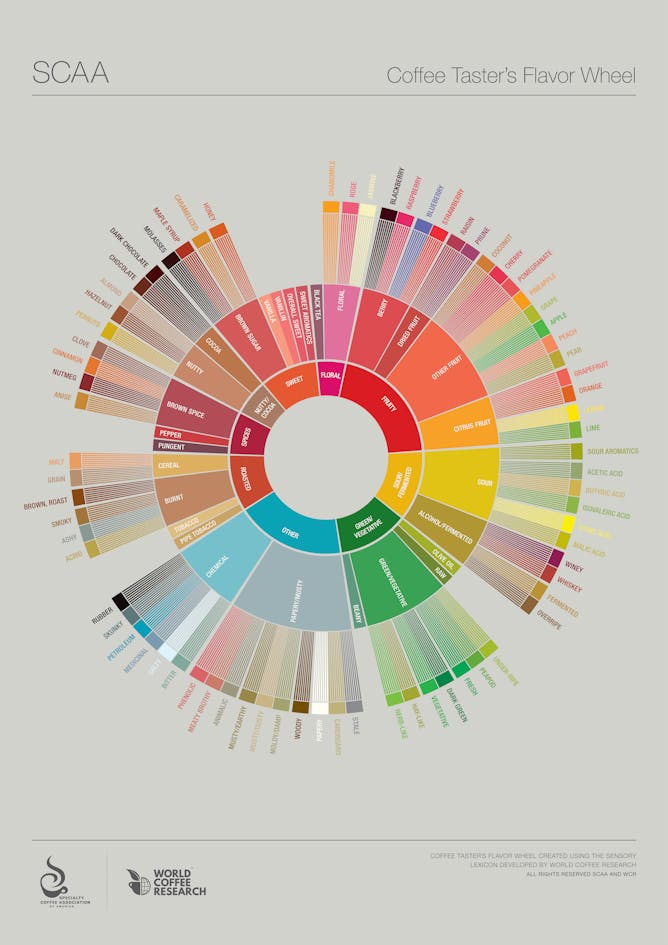
The Coffee Taster’s Flavor Wheel provides a way to name various tastes within the beverage.
Specialty Coffee Association of America, CC BY-NC-ND

A higher particulate temperature means that more of the tasty compounds trapped within the coffee particulates will be extracted. But higher temperature also lets more of the unwanted compounds dissolve in the water, too. The Specialty Coffee Association presents a flavor wheel to help us talk about these flavors – from green/vegetative or papery/musty through to brown sugar or dried fruit.

Pour-overs and other flow-through systems are more complex. Unlike full immersion methods where time is controlled, flow-through brew times depend on the grind size since the grounds control the flow rate.

The water-to-coffee ratio matters, too, in the brew time. Simply grinding more fine to increase extraction invariably changes the brew time, as the water seeps more slowly through finer grounds. One can increase the water-to-coffee ratio by using less coffee, but as the mass of coffee is reduced, the brew time also decreases. Optimization of filter coffee brewing is hence multidimensional and more tricky than full immersion methods.

What do they know that we don’t?
Redd Angelo on Unsplash, CC BY

Other variables to try to control

Even if you can optimize your brew method and apparatus to precisely mimic your favorite barista, there is still a near-certain chance that your home brew will taste different from the cafe’s. There are three subtleties that have tremendous impact on the coffee quality: water chemistry, particle size distribution produced by the grinder and coffee freshness.

First, water chemistry: Given coffee is an acidic beverage, the acidity of your brew water can have a big effect. Brew water containing low levels of both calcium ions and bicarbonate (HCO₃⁻) – that is, soft water – will result in a highly acidic cup, sometimes described as sour. Brew water containing high levels of HCO₃⁻ – typically, hard water – will produce a chalky cup, as the bicarbonate has neutralized most of the flavorsome acids in the coffee.

Ideally we want to brew coffee with water containing chemistry somewhere in the middle. But there’s a good chance you don’t know the bicarbonate concentration in your own tap water, and a small change makes a big difference. To taste the impact, try brewing coffee with Evian – one of the highest bicarbonate concentration bottled waters, at 360 mg/L.

The particle size distribution your grinder produces is critical, too.

Every coffee enthusiast will rightly tell you that blade grinders are disfavored because they produce a seemingly random particle size distribution; there can be both powder and essentially whole coffee beans coexisting. The alternative, a burr grinder, features two pieces of metal with teeth that cut the coffee into progressively smaller pieces. They allow ground particulates through an aperture only once they are small enough.

Looking for a more even grind.
Aaron Itzerott on Unsplash, CC BY

There is contention over how to optimize grind settings when using a burr grinder, though. One school of thought supports grinding the coffee as fine as possible to maximize the surface area, which lets you extract the most delicious flavors in higher concentrations. The rival school advocates grinding as coarse as possible to minimize the production of fine particles that impart negative flavors. Perhaps the most useful advice here is to determine what you like best based on your taste preference.

Finally, the freshness of the coffee itself is crucial. Roasted coffee contains a significant amount of CO₂ and other volatiles trapped within the solid coffee matrix: Over time these gaseous organic molecules will escape the bean. Fewer volatiles means a less flavorful cup of coffee. Most cafes will not serve coffee more than four weeks out from the roast date, emphasizing the importance of using freshly roasted beans.

One can mitigate the rate of staling by cooling the coffee (as described by the Arrhenius equation). While you shouldn’t chill your coffee in an open vessel (unless you want fish finger brews), storing coffee in an airtight container in the freezer will significantly prolong freshness.

The ConversationSo don’t feel bad that your carefully brewed cup of coffee at home never stacks up to what you buy at the café. There are a lot of variables – scientific and otherwise – that must be wrangled to produce a single superlative cup. Take comfort that most of these variables are not optimized by some mathematical algorithm, but rather by somebody’s tongue. What’s most important is that your coffee tastes good to you… brew after brew.

Christopher H. Hendon, Assistant Professor of Computational Materials and Chemistry, University of Oregon

This article was originally published on The Conversation. Read the original article.

The tomato growers

Once there were two tomato growers. One was called James and the other one Gordon.

Gordon was very disappointed with his tomatoes. Every day, he would go to them and water them and check how much they had grown. Sadly, his tomatoes stayed pitifully small. He would twist them and squeeze them to feel if they were at least ripening a little bit, and accidentally dislodge one from the vine on occasion. It would drop to the ground and rot away.

Gordon felt something had to be done. So he purchased the best fertilizer he could find, with the right amount of potassium and all the other nutrients a tomato could wish for, and placed it in front of his tomatoes. He told them: “If you grow really really well, I will give you this fertilizer as a reward. This shall be your motivation.” It seemed to have no effect on the tomatoes. If anything, they were only growing at an even slower pace.

Gordon became even more dissatisfied with his tomatoes and started withholding water to see if that would convince the tomatoes to grow. But all that happened was that the tomato plants became infested with pests and he had to spray them with pesticides. (“Damn, that stuff is expensive,” Gordon grumbled.) It was too late. The tomato plants turned yellow and started dying. Gordon got very frustrated and kicked at the plants.

James, on the other hand, adored his tomatoes. He loved them! Every day, he went to them, and removed all those little sprouts from the armpits of the tomato plants and enjoyed that typical spicy tomato smell. That way, all the nutrition went to the little tomato fruits, not into making sprouts. He watered them every day, and made sure the quantity of water was just so.

He took care that they got the right amount of nice warm sunshine and on days without sunshine, he would provide artificial sunshine. He also gave them the right amount of fertilizer whenever they needed it. His tomatoes became famous. Everyone admired them. They were so beautiful, so healthy! His tomatoes seemed to be shining with joy. It was almost as if they loved James back and wanted to make him really really happy.

Gordon commented that life just is not fair and that there is nothing you can do about it and also that James had started growing his tomatoes a year earlier, hadn’t he, and that there were no pests at James’s location, and probably also a lot more sunshine. He knew it! Life ain’t fair! And he had never liked James much anyway.

James was not aware of Gordon’s grumblings at all. He found more than enough joy in caring for his tomatoes.

—
The above is from my e-book FCQ. It’s available from Amazon and other retailers.

Will future parents need a license?

I ran into a discussion on Kialo, to which I quickly contributed the first paragraph below and penned what I have added below, all within about five minutes. I later edited it a bit, to make it easier to read.

I am so pleased someone started this discussion. I promote non-discrimination of embryos and fetuses. A child is not a consumer product but a human being who must be loved and encouraged to flourish. How can you love one child but not another if the latter is non-mainstream? I’ve been thinking about that and it’s made me wonder if it actually means that the parents aren’t fit to be parents. I haven’t dared say that out loud yet, but this discussion clears the road for me.

So yes, maybe parents-to-be should require vetting.

Within a few decades, we will no longer require sex to create babies, but will make our offspring in the lab, possibly on the basis of skin cells from each of the parents. We’ll probably look after our little gestating (incubating) children as if they are rare orchids that we want to bring to bloom.

(So by that time, women will no longer have a need for abortions and they won’t have to menstruate and experience PMS any longer either.)

I can imagine very well that you will require a license in the future in order to have a child. Somehow, that feels like an automatic consequence of the possibilities we will have then.

And also, indeed, why should adoptive parents be scrutinized but are natural parents free to do whatever they want?

And after all, in that distant future, anyone who wants can probably have a child (technically speaking). Even adoption may slowly become a thing of the past, that is, if we get to the point that we no longer succumb to illnesses and accidents and maybe even can choose when our lives end.

I hasten to add that at the moment, natural parents are not always free to do as they please either, of course. For example, in countries with a great deal of inequality, the state may step in on the basis of what is no more than prejudice in practice.

Nowadays, some children suffer horribly, either because of their parents or because of someone else. Sometimes before children are removed from their parents and sometimes afterward.

In practice, perhaps it won’t be an actual license but a training program that must be completed with good results. If that training is tough and long enough, that alone will already sort committed parents from parents who aren’t ready for a child.

Would they have to get a license or go through some kind of training program every time they want to have a child? Yes, I think so. Insights change.

It’s even possible that parenting will eventually become a profession.

PS
Unfortunately, Kialo may not work very well with Linux. I was able to post my contribution, but seem unable to comment on other people’s contributions. Maybe it’s part of the learning curve, but I did see the intro video and the comment option mentioned in it simply does not seem to exist for me.

My response to Dr Seidel’s post on the BMJ blog (Baby genome screening—paving the way to genetic discrimination?)

I just submitted the following comment, here:
http://blogs.bmj.com/bmj/2017/07/05/markus-g-seidel-baby-genome-screening-paving-the-way-to-genetic-discrimination/
It is still in moderation. has been accepted. Yes, it was far from flawless – I wrote most of it at the spur of the moment – but I think that what I mean is clear enough. I have done some editing in the version below.

Dear Dr Seidel, thank you for making these very important points.

I am taking the opportunity to offer a few suggestions for discussion and invite more views on these issues. Some of what I write below only emerged during the writing of this response and may not be watertight. Can you withhold initial judgement, think along with me and see it as an exercise in exploring the various angles?

But first of all, please forgive me my shortcomings; I phrase various concepts differently than you do as my background is not in medicine and I tend to shy away from jargon. Also, what I say is not limited to newborns, but that will be obvious to this audience. The principles largely remain the same, whether we are talking about a pre-embryo, a fetus or a newborn, and whether I call them person, individual or child. (Legally, this is currently much more complex, as you know.) My focus in this discussion does not extend to persons beyond the age of majority (likely not even beyond 8 or 10, in practice) and I am also keeping the concept of euthanasia out of the discussion even though it is related. Worst of all, I throw all techniques related to genetic material into one big pot because it enables me to see the bigger picture better.

I write from my own perspective of an opinionated white woman in the west, but when I say “we”, my intention is to refer to the human species. People from other cultures will undoubtedly spot biases in my western views; I would like those people to point out those biases.

You ask whether genome screening for newborns will pave the way to genetic discrimination. You also raise the question of the interpretation (and reliability) of such data and you have privacy concerns.

With regard to the latter, I think that we will slowly have to accept that the digital age comes with the loss of privacy in many ways. That does not have to be as dramatic as it sounds. Privacy is a changing concept anyway, which also has a cultural angle to it. The realization that people from different generations and from different cultures have slightly different views on what privacy is may add some perspective that can make us breathe easier. So we should probably become more relaxed about the loss of privacy as we knew it and focus more on preventing and ameliorating potential negative consequences of that loss, if any. The real issue is not the loss of privacy, but abuse of personal information.

In my opinion, what we need to do is ensure non-discrimination and make certain that genomic information will only be used to improve any individual’s (medical) care. (The data can become part of studies, anonymized or not; we also need to redefine consent, but I am going to leave that out of this discussion too.) In other words, genomic information must only be used to enable and allow human beings to flourish.

Even a word like “flourish” or “thrive” is highly ambiguous, though. I mean it in a non-materialistic manner, whereas some others do not at all. Perhaps I can break it all down into stages to show what I mean within this specific context. Perhaps I can break it down to show what I mean within this context.

You mention the Hippocratic Oath, which some define as “Do no harm”. Harm is another concept that we don’t agree on yet and that we – therefore? – haven’t been able to define well.

I think that we need to start applying the principle of non-discrimination to all new human life. I believe that we should consider every human individual is just as valuable – in a non-materialistic manner – as every other human individual.

When I toss this around, I run into a peculiar dilemma. While I must see a deaf or a blind person (as an example) as equally valuable as a hearing or sighted person, I cannot accept it when a hearing or sighted person is deliberately made (permanently) deaf or blind, for instance during a mugging or a work-related accident. This also applies with regard to so-called augmentations. I cannot take a human being against his or her wishes and carry out a nose reconstruction or even inject botox. That makes me realize that harm done to a human appears to be any interference or change that occurs against that human being’s wishes and is implemented by someone else.

For now, I have to limit this to physical changes because the area of psychological changes is too complicated. (Just think of schools; we do not take bad teachers to court for being bad teachers, but we do take bad surgeons and physicians to court for being bad doctors, also because the evidence related to the latter is often much clearer.) Physical interference that occurs against a person’s wishes can of course also result in psychological changes, but that does not actually matter for the concept of harm within this context.

The next problem I then run into is the fact that particularly an embryo, fetus or newborn has a very limited ability to express wishes, but and that also holds for young children. If I try to put myself in the shoes of a child, however, it becomes possible to define harm in spite of that limitation.

This – putting themselves in the shoes of the child, as adults – is what parents, guardians and other carers do all the time, of course. They sometimes have to make the decisions for the child and express the child’s wishes for the child, as if they were the child, using the knowledge they have as adults, knowledge that the child will have in the future but does not possess yet.

So, lLet’s step into a child’s feet, then. It is hard to imagine a sick or injured child that would want to get sicker and sicker and sicker or want to have a permanently festering wound resulting from an injury caused by a fall. So it is fair to say that anything we do toward remedying such a situation is in accordance with the child’s wishes, in essence, even in cases in which the child cannot even say “please make the pain go away”. It is what the child would want if it possessed the knowledge and abilities of an adult.

So, the first step in part of enabling a human – a child – to flourish is to attempt to prevent any deterioration of the child’s health.

We may have to start agreeing that this cannot be considered harm within this context, even if the chance of success is small, certainly in cases for which there are no alternative remedies. We may even have to decide that doing nothing constitutes harm when there is still an option of doing something.

If a child has appendicitis, a surgeon will have to cut into the child’s abdomen in order to remove the appendix to prevent deterioration of the child’s health or even death. Strictly speaking, cutting into a child’s abdomen constitutes inflicting an injury, but in this case, as it is done with the intention of preventing greater harm, namely the deterioration of the child’s health, it does not constitute harm within this context we do not see it as harm. (This may be be an example of where I display a western bias?)

(Of course, we can still take the surgeon to court if his or her work fails to meet professional standards, but that is a different type of harm. We certainly need professional standards.)

We can also take a child to the dentist and the dentist may have to inflict some discomfort in order to prevent deterioration of the child’s health.

By contrast, we should not, however, drag a child along kicking and screaming to have its ears pierced as this is not done with the aim of preventing a deterioration of health. (If a child asks to have its ears pierced, there is a clear wish on the side of the child.)

Note that the intention matters. When a procedure is carried out with the intention of wanting to prevent deterioration of health, we never have 100% certainty that the intended result will be achieved. (This may have implications for how we think about practices carried out in other cultures. Keep this at the back of your mind. Our own western views are not the only views that hold value.)

The second step vital part of enabling a human being to flourish is to do everything we can within a daily-life context to allow that person to thrive on the basis of the person’s given physical (and mental) situation.

We send children to playgrounds to let them play with other children and test their physical limits, we feed them, clothe them and provide shelter as well as love and all those other concepts that are hard to measure but easy to grasp. In essence, this is no different for children who are, say, blind or deaf or who have Down syndrome.

The BBC news site just highlighted a very nice albeit exceptional example of what I mean by flourishing within this context: http://www.bbc.co.uk/news/m…

To do everything we can to allow that child to thrive is also required for children who are born with a medical condition that requires some form of medication or extra nutritional care to prevent deterioration of health. This, I think, is where standard genomic testing of newborns can play a pivotal role. These days, parents still too often have to conclude that something is seriously genetically wrong with their child on the basis of the deterioration of the child’s health, which in some cases means that irreversible damage has already occurred to the child’s health.

So, failure to provide such testing (screening) from the point in the future at which we know how to do and use this properly and reliably could perhaps also be seen as harm as it could lead to the preventable deterioration of a child’s health and would not encourage the child to thrive.

The third step next level within this context of enabling someone to flourish – and this is where it gets even trickier – is interfering with the child’s genetic make-up.

We may feel that the child is flawed, whereas the child is actually viable and does will not suffer a deterioration of health or be at great risk of certain complications if we allow it to live. At the moment, we often prevent such a child from coming into the world. This is where, I think, we need to draw the line and have to take a step back. It is a discriminatory practice because it appears to express a value judgement.

I also think that because of limited resources, we may need to approach this in a stepped manner.

What I mean is that if we initially limit techniques like CRISPR and gene therapy to all situations in which a resulting child would have “a life not worth living”, then we might have a fairly just and affordable way to start implementing CRISPR, gene therapy and anything else that may come along. Once we’ve done that, we can slowly start to take it forward, extend it to other conditions. The costs of such techniques will come down. and if we start with rare diseases that are currently incurable, we also limit the initial costs of implementation.

The loss of privacy may actually become an advantage because openness makes it also much easier to detect abuse of information and to safeguard against discrimination.

One of the reasons why I strongly believe that we need to start implementing non-discrimination for all new human life is the following. Once humans start interfacing with technology, other so-called impairments – which are currently often either biased opinions or restrictions imposed by society – cease to be impairments, taking away much of the motivation for “correcting” these individuals.

Moreover, not only do we – the human race as well as society – need diversity, we may have future needs for abilities of which we currently don’t realize that some people possess them. Those may well be people who are currently considered “impaired” or “flawed”. Junk DNA was once considered just that, too.

As I already indicated, we need a workable definition of what constitutes a life not worth living and once we have one (I may have found one, by the way, based on the principle of humanity), we may end up concluding that these are the primary cases in which we actually have a duty to interfere with the child’s genetic make-up.

So I agree with you that we have to exercise restraint, in spite of all the enormously exciting developments we currently see around us. Discrimination is not the only concern and neither are interpretation and costs. We don’t know all the possible consequences yet of the application of any of those new developments, even if we think we do.

We have made many decisions in the past without asking questions that now are so blatantly obvious in hindsight. Did nobody foresee that insecticides might also affect bees and birds and amphibians, to name just one example of a past mistake, albeit a highly significant one that now also affects human fertility?

We have another reason to take it slow, namely the fact that laws and regulations lag behind, evolve in response to arising situations in real life, and rarely anticipate on what may happen in the future. Legal professionals, too, tend to think conservatively and in a geographically limited manner. It’s probably the UN and WHO who should start taking the lead in this area, and guide us into the future. Do they need a push? Should we apply pressure?

Because perhaps more than anything else, we need to work toward reaching a global consensus (including legislation) on such important matters, irrespective of how challenging and impossible that may seem. It was also once completely unimaginable that we’d have humans land on the moon, so if we did that, then we can accomplish so much more than we think we can.

How do we approach the future?

In the science, health and environment section of thehindu.com, an article appeared under the heading “Do we understand the genome well enough to let Big Pharma jump into it?”.

I left the following brief reply.

You make important points.

Markus G. Seidel, who works at the Department of Pediatrics and Adolescent Medicine of Medical University Graz in Austria, just wrote something similar on the site of the BMJ, with regard to babies. He asks whether genome screening for newborns will pave the way to genetic discrimination. He too raises the question about interpretation (and reliability) of such data. He also discusses privacy issues.

http://blogs.bmj.com/bmj/2017/07/05/markus-g-seidel-baby-genome-screening-paving-the-way-to-genetic-discrimination/

But I wanted to write more…

With regard to the latter, I think that humanity will slowly have to accept that the digital age comes with the loss of privacy in many ways. Privacy is a changing concept and there also is a cultural angle to it, so people from different generations and from different cultures have slightly different views on what privacy is. We probably should become more relaxed about the loss of privacy as we knew it and focus more on preventing and ameliorating potential negative consequences.

In my opinion, what we need to do is ensure non-discrimination and ensure that genomic information will only be used to improve any individual’s (medical) care. In other words, genomic information must only be used to enable and allow human beings to flourish. All human beings. In a non-materialistic way.

(Note that this is not the same as eradicating everything we may not like. But we seem to have a tendency to want to do that, unfortunately, and we need to curb that urge. We need a great deal of diversity to function well as a species and as a society, for many reasons. Good and bad cannot exist without each other – as cheesy as it may sound. There simply is too much we don’t know yet, and we therefore cannot foresee all possible consequences of everything we do. Eradicating everything that seems bad to us may be bad too.)

That will require two things: good legislation and regulations and a global consensus on these issues.

Particularly the latter is a major challenge. That is why we need to discuss these topics broadly and entice people to move out of their mental comfort zone, allowing them to explore other people’s views without instantly rejecting them. Our own views aren’t the only valid or even valuable views, but they tend to feel that way to us.

Legislation, however, also has a problem as it currently tends to display a big lag relative to what’s technologically possible. It does not anticipate (much), but responds after what is happening in practice forces it to respond. Also, legal scholars still tend to contemplate situations and consequences with regard to their own jurisdictions only.

So it looks like there is a great need for discussions pervaded by a spirit of tolerance (the willingness to step out of one’s mental comfort zone and listen to people from other cultures and generations) and a forward-thinking attitude.

By “forward-thinking”, I don’t mean “blindly embracing everything science and technology have to offer” because in the past, we’ve often forgotten to ask many questions we should have asked. That, for example, appears to have happened when we embraced pesticides. They seemed such a good thing, initially, that we never considered their obvious potential for bad.

Do you agree or do you see it differently? Do you think we also need to change big pharma, and if so, in which ways, and how could we approach that?

PS
I write from my own perspective of an opinionated white woman in the west without ties to big pharma.

How to deal with British police

Essentially, you don’t. You avoid them as much as you can because in Britain, you must consider police your enemy. They are not on your side. They are on their own side.

(Note: Anything I say on this page won’t stop me from, say, buying donuts for random police officers when they’ve all been called back from leave and are working very long days out on the streets. I do my best to see them as individual people.)

The only good reason for going to a police station in Britain is when you need to do that to be able to make an insurance claim.

Police in Britain stopped investigating crimes against individuals at least 10 years ago because they lack the resources to do so. The only crime against an individual that they are still bound to look into is when that individual has been murdered or if the individual is a supermarket owner or the like they like and someone has stolen a sandwich because he or she was hungry and was, say, caught red-handed or recorded on CCTV.

Other than that, forget it. That does not have to leave you stranded in all cases in which you’d normally expect to be able to get assistance from the police officers whose salaries you pay for through your council tax, after all.

Below are some tips, first for if you are a crime victim and second for if police are targeting you, for instance, because you are a crime victim.

Here is the GOLDEN RULE:

If police officers knock on your door, never ever open the door. Under no circumstances.

(You can still talk with them through the closed door, if you feel that it’s useful or required.)

1. Are you the victim of a crime?

Unless you need to do this for the sake of an insurance claim, do not go to the police. If you go to the police, the officers may tell you that they will use the information you give them as intelligence (though they won’t tell you that they are more likely to use it against you than against the perpetrator of the crime(s) you are reporting).

In almost all cases, they will also tell you to go to your council (civic offices) and to your GP. Don’t take it personally when they do this, even though it may sound like they are suggesting that you need mental health assistance. (After all, how on earth can a GP help solve a burglary, for instance?) They say this to just about everyone all over the country. It’s nothing personal; it‘s merely national policy.

You can investigate and try to stop crimes having been or being perpetrated against you but you have to proceed very carefully.

  • What you need to do first of all is print several copies of the Protection from Harassment Act 1997. Tuck one away in each of your bags or suit pockets.
  • Next, you write a letter to your local MP and any other politicians and/or journalists worth contacting. You explain to them what happened or is happening (the crime), in no more than one or two sentences, such as “My home was broken into” or “My daughter is being stalked. This has been going on for two years and last week the stalker broke into her home”. Then you write that you “will be approaching persons and taking actions for the purposes of preventing or detecting crime, pursuant to and in compliance with the Protection from Harassment Act 1997, Section 1, subsection 3, sub a.” and that you are sending this letter to him or her for his or her information. Send this letter or these letters by Special Delivery. Yes, that will cost you a few bucks but it’s worth it.
  • If the MP or anyone else you wrote to then asks or tells you to go to the police, ask the person in question to come with you.
  • Use Word or any other program to type up the following text: “Pursuant to and in compliance with the Protection from Harassment Act 1997, Section 1, subsection 3, sub a, I am approaching you for the purposes of preventing or detecting crime.”
  • Print several copies of that text and always have them with you during your crime investigation. Before you say anything else, say this and hand the printout to anyone you want to speak with in relation to the crime in question.
  • Also begin all your e-mails with that sentence if the e-mail is sent for the purposes of preventing or detecting crime.
  • Remain reasonable at all times. That means, do not behave as if you are a police officer, do not get rude and do not lose your temper. You can certainly be firm. You are standing up for your rights. That is perfectly normal in many other countries and it’s a cry and shame that police in Britain don’t help you protect yours.
  • Never undertake any of your crime investigation activities on your own, but always ensure that you have at least two witnesses, not from your family, but perhaps a colleague from work, a fellow member of a sports club you belong to or a neighbour or a client.
  • If you do go to police, tell them as little as possible. They will use anything you report to them as “intelligence” and while they may inform you of that, what they won’t do is let you know that they may well use any information you give them against you. Police officers may act very friendly and reassuring, and talk about the action they will take, but when they do, they are usually just lying to you, unfortunately.
  • The Protection from Harassment Act 1997, Section 1, subsection 3, sub b also means that it is very good (essential) to know the nature of the crime you are investigating, in legal terms. Look up which law applies to what happened, and why what someone did or does was or is a crime according to the law. You can go to the CAB or any other advice organisation, make some calls, see solicitors for a free half-hour consultation, drop in on a law clinic from your local law school and of course research it online and in books.

2. Are you being targeted by police?

British police officers these days seem to go after just about any person that they perceive as easy prey for their arrest (and prosecution) records and whose name and address they have. This could be someone who is probably poor or lower-class, someone who they suspect has a mental health problem and also someone who lives on his or her own or will likely only have kids in the house. So that there won’t be a partner who says “wait a minute!” and they only have to deal with one adult who police officers think will be intimated. Police officers know very well what effect they have on normal citizens and they exploit it when it serves them.

They also are more likely to go after people they don’t like, such as people who report serious crimes and are inexperienced enough to keep asking police officers what they are doing about it, particularly if the person lives on his or her own or will likely have only kids at home.

The problem with reporting a crime is that in the process, you give police officers a lot of information about yourself. They have your name and address now and know what you look like. By contrast, they very likely do not know the identity of the person who committed the crime or is committing the crimes you are reporting. They do now know also some of your personal circumstances, such as that you just broke off your relationship, got fired, just started a new job, whether you rent or own your home and things like that.

If you become the victim of a crime, no matter what cause of action you take (go to the police and/or investigate yourself), it raises the probability that police will start targeting you.

Under no circumstances report a crime and then keep calling to ask what the police officers are doing about it, even if a police officer has told you to do so. (Don’t investigate and report on your investigations either, not even if they have specifically asked you to do so.) All of this is bound to annoy them so much that you may well find them knocking on your door on Sunday morning at 7 am, when you innocently open the door and then find the door slammed into your face and yourself crushed onto the floor and arrested, your kids watching scared and helpless.

Unfortunately, that is the reality in Britain. It happened to Michael Doherty, for instance.

If you’re a woman, it may be more likely that police officers will call the local mental health hospital behind your back and suggest that you are mentally unwell. They may also pay your employer a visit and anyone else who suggesting to that you are not well in the head may disadvantage you.

That too is the reality of Britain today.

Do not open the door if police officers (are targeting you and) knock on your door. You do not have to open the door if police officers knock on your door, no matter what they tell you (with very few exceptions and in those cases, it makes no difference whether you open the door or not, so, don’t). That’s right.

Police officers can sound very convincing when they tell you all sorts of bullshit. Some of them are genuinely convinced that they know the law because they have this law book specifically for police in which they can look things up. If it says anything that does not suit them but would be to your advantage, they won’t tell you that. It will almost never come back to bite them anyway. In practice, police officers in Britain rarely have to adhere to the law, let alone administer it appropriately.

If you ever get arrested, don’t trust whoever shows up as duty solicitor either. He or she will not be interested in your rights. He or she will either want to get out of the police station as soon as possible or milk the circumstances for whatever reason. Of course, there are exceptions – GOOD and HONEST lawyers do exist; in fact, a few of your personal heroes may be lawyers – but under no circumstances assume that a duty solicitor will look out for you.

If you are investigating crime committed or being committed, someone may still call the police and say that you are harassing him or her. This is more likely if that person is the person who committed or has committed the crimes you are investigating, of course, because he or she knows that your powers are nowhere near those of police officers and may have more experience with police than you. He or she will want to make you go away and complaining about you is a possible approach to that.

That is particularly why you need to know what the Protection from Harassment Act 1997, Section 1, subsection 3, sub a says so that you can say that and maybe even show the printout of that law. Do not count on a duty solicitor to do that for you!

The fact that you are investigating crime on your own already indicates that you are not a person in power, after all. It makes you easily dismissible in the eyes of the police and in the eyes of the duty solicitor. Stand your ground. Don’t let them walk all over you. (You were doing what police officers should be doing. It is not your fault that, as a rule, they no longer deal with crimes committed against individuals these days.)

Also, you have informed several persons such as for example your MP about what you were going to do and you have witnesses.

Last but not least, a bit of a warning. Shana Grice, a young woman who reported being stalked to police was accused by police of wasting police time police (and fined, I believe) before her stalker killed her. There are other women in Britain who were killed by their stalkers, and they too were often not taken seriously by police.

I know a woman who was in similar circumstances, in the Netherlands. Her ex-boyfriend started stalking her and strangled her almost to death one day. In stark contrast to British police, Dutch police did not dismiss her but were very helpful. They advised her to relocate to a town in which she did not know anyone so that her ex was least likely to look for her there.

She took the advice, even though it meant breaking off her Master’s. She moved to a town at quite a distance from where she used to be and also from where her family was, enrolled in a lower-level educational program, then enrolled in another Master’s and after that started a PhD track. She got that PhD and she’s also a mother now.

(He eventually tracked her down in her new town too, but it took him a long time, and by then, he was less angry. One of her house mates or neighbors found him on the doorstep one day, and convinced him to go back and leave the woman alone.)

If you are being stalked in a way that seriously worries you, do not investigate or try to stop it by yourself (and certainly don’t bother reporting it to British police, also because they are likely to inform your stalker of everything you told police, whether on purpose of accidentally). Do what Dutch police advised this young Dutchwoman.

Hopefully, you’ll never need to know any of the above.

If you do use any of the above, and you end up killed, stabbed, bullied, hacked, arrested or anything else that you would have preferred to avoid, then note that you cannot hold me liable for any of that. I am not a lawyer, certainly not within this context, and I am not in a position to shield you from all risk.

Like the woman I mentioned above – no, it wasn’t me; it concerns a much younger woman whose acquaintance I made when she was working on her PhD – I too have only very positive experiences with Dutch police, even in sensitive circumstances that could have easily created friction and for which the officers in question had no training. Hats off!

I have worked with Dutch police in a neighbourhood crime prevention initiative. I also have positive experiences with American police, but race riots broke out in the US city where I used to live only shortly after I left. As we all know, American police has its troubles too because there had been too many incidents in which innocent black persons were killed by police officers in that city.

I think such incidents are often the result of irrational fears on the side of the police officers who often work under a lot of tension. I have personally witnessed in the US that when I had to call police in highly suspicious circumstances, they seemed much more scared and nervous than I was (presumably because I was living in a Florida neighbourhood that didn’t have a good reputation at the time). They were also looking out for my safety extremely well and I noticed that with gratitude.

I wish I could be more positive about British police.

I post the following from the work of Dr Lorraine Sheridan, as this can be vital information to have.

Typology 4: Sadistic stalking (12.9%)

Characteristics

· victim is an obsessive target of the offender, and who’s life is seen as quarry and prey (incremental orientation)
· victim selection criteria is primarily rooted in the victim being:

(i) someone worthy of spoiling, i.e. someone who is perceived by the stalker at the commencement as being: – happy – ‘good’ – stable – content and
(ii) lacking in the victim’s perception any just rationale as to why she was targeted

· initial low level acquaintance

 · apparently benign initially but unlike infatuation harassment the means of intervention tend to have negative orientation designed to disconcert, unnerve, and ergo take power away from the victim

– notes left in victim’s locked car in order to unsettle target (cf. billet-doux of infatuated harassment)
– subtle evidence being left of having been in contact with the victim’s personal items e.g. rifled underwear drawer, re-ordering/removal of private papers, cigarette ends left in ash trays, toilet having been used etc.
– ‘helping’ mend victims car that stalker had previously disabled · thereafter progressive escalation of control over all aspects (i.e. social, historical, professional, financial, physical) of the victim’s life

· offender gratification is rooted in the desire to extract evidence of the victim’s powerlessness with inverse implications for his power => sadism
· additional implication => self-perpetuating in desire to hone down relentlessly on individual victim(s)
· emotional coldness, deliberateness and psychopathy (cf. the heated nature of ex-partner harassment)
· tended to have a history of stalking behaviour and the controlling of others · stalker tended to broaden out targets to family and friends in a bid to isolate the victim and further enhance his control
· communications tended to be a blend of loving and threatening (not hate) designed to de-stabilise and confuse the victim
· threats were either overt (“We’re going to die together”) or subtle (delivery of dead roses)
· stalker could be highly dangerous

– in particular with psychological violence geared to the controlling of the victim with fear, loss of privacy and the curtailment of her social world

· physical violence was also entirely possible

– especially by means which undermine the victim’s confidence in matters normally taken for granted e.g. disabling brake cables, disarming safety equipment, cutting power off

· sexual content of communications was aimed primarily to intimidate through the victim’s humiliation, disgust and general undermining of self-esteem
· the older the offender, the more likely he would have enacted sadistic stalking before and would not be likely to offend after 40 years of age if not engaged in such stalking before
· victim was likely to be re-visited after a seeming hiatus

Case management implications

· should be taken very seriously
· acknowledge from outset that the stalker activity will be very difficult to eradicate
· acknowledge that there is no point whatsoever in appealing to the offender – indeed will exacerbate the problem
· never believe any assurances, alternative versions of events etc. which are given by the offender
· however, record them for use in legal action later
· the victim should be given as much understanding and support as can be made available
· the victim should not be given false or unrealistic assurance or guarantees that s/he will be protected
· the victim should carefully consider relocation. Geographical emphasis being less on distance per se, and more on where the offender is least able to find the victim
· the police should have in mind that the sadistic stalker will be likely to:

(i) carefully construct and calculate their activity to simultaneously minimise the risk of intervention by authorities while retaining maximum impact on victim,
(ii) be almost impervious to intervention since the overcoming of obstacles provides
(iii) new  and potent means of demonstrating the victim’s powerlessness (ergo self-perpetuating) and,
(iiii) if jailed will continue both personally and vicariously with the use of a network.

http://www.le.ac.uk/press/ebulletin/archive/speaker_sheridan.html

http://www.le.ac.uk/ebulletin-archive/ebulletin/features/2000-2009/2007/07/nparticle.2007-07-17.html

http://news.bbc.co.uk/1/hi/uk/6300291.stm

http://www.le.ac.uk/press/stalkingsurvey.htm

Northern Ireland abortion refugees: Supreme Court — UK Human Rights Blog

R (o.t.a A and B) v. Department of Health [2017] UKSC 41, 14 June 2017 – judgment here. Sometimes The Law comes to the rescue. And by this I do not mean constitutional law versus populism or the rule of law versus raw-knuckled fighting. It just happens that, occasionally, litigation drawn from ordinary life encapsulates more political […]

via Northern Ireland abortion refugees: Supreme Court — UK Human Rights Blog

Foreign criminals’ deportation scheme ruled unlawful — UK Human Rights Blog

R (Kiarie) v Secretary of State for the Home Department; R (Byndloss) v Secretary of State for the Home Department [2017] UKSC 42 In a nutshell The Government’s flagship scheme to deport foreign criminals first and hear their appeals later was ruled by the Supreme Court to be incompatible with the appellants’ right to respect for […]

via Foreign criminals’ deportation scheme ruled unlawful — UK Human Rights Blog

Human rights for just a few, that’s discrimination. Human rights apply to all human beings.

It has just been the 6th anniversary of an important human rights case, that of Mark and Steven Neary. Steven, who is autistic, was detained in local authority care for over a year before his dad used the Human Rights Act to get him home. RightsInfo has made a powerful short film to mark the […]

via A powerful new human rights film  — UK Human Rights Blog

Abortion

Writing the first version of my essay “We need to talk about this” – the updated is in the works – forced me to think about issues I had never thought about before in great depth and I had to leave many of them untouched at the time.

For example, I am a feminist and I have always believed in a woman’s right to abortion. While I was considering how we could regulate the new eugenics, I ran into boundaries. It included having to think about how to fit abortion into the topic. That was a significant hurdle.

I was no longer able to say “of course women should be able to have abortions” – which I had always done in the past – but had to think about why and when they should, regardless of my own personal feelings. Because what I was writing about selecting pre-embryos and fetuses clashed with the general ideas that I had always entertained about abortion but had never examined in detail.

Legislation and protocols can sound very cold to people, but it’s not enough to just state something like “we think this is very very good” or “we think this is very bad”. That wouldn’t work in practice. If you want to make sure legislation is solid and leaves little room for abuse (deliberate misinterpretation), you end up with language that can come across as heartless. But that does not mean that the legislation (or protocol) is heartless or that the people who wrote it are!

It can be difficult to get that across, I have seen in various online comments (on for example the Groningen Protocol). It works the same way for traffic rules or rules for building skyscrapers. The law can’t just say something vague like “drivers should be careful” and “buildings should be safe” and leave it at that.

When Obamacare was introduced, a staunch Republican (and stauncher Libertarian) wrote to me that it was ridiculous that its legislation was taking up more than 2,000 pages or something like that. (Who would ever read that?)

I replied to him that I knew a jurist who works in precisely that area in the Netherlands and explained what that kind of legislation has to include. Fortunately, he listened to that explanation.

Unfortunately, I have found that even people who see themselves as the voice of reason (and sometimes as having absolute wisdom, too) aren’t always willing to listen to what someone “from the other side” is saying.

A certain brand of callousness

In my essay “We need to talk about this” I mention that I have on occasion been shocked by a certain brand of callousness that I have seen (too) often in Britain (both in the media and in real life). Here is one example of what I mean.


You can only justify such occurrences by applying a tweaked form of utilitarian reasoning. One person was suffering, but “wasn’t really harmed” and the number of people who were enjoying what was being done to George Cheese was greater than 1, hence these occurrences “increased overall happiness”.

The fact that utilitarianism was associated with the higher classes may have given this type of reasoning or events an unfortunate aura of “cleverness”. It could also explain why anyone who condemns the sort of things that were being done to George Cheese is seen by some as “naïve” and “not quite with it”.

Utilitarianism also attached little importance to individual persons’ rights. It would have stopped short from, say, stabbing someone like George Cheese as opposed to setting his clothes on fire and stuffing him into the trunk/boot of a car. This is the kind of background, I think, that enabled Simon Wright to say “It did not go too far.”

In reality, abuse targets like George don’t get to LIVE. All they are allowed to do is wait for their natural deaths. George Cheese said “FUCK THAT!” and stood up for himself in the only way he had left.

At least there is an inquest. That’s good.


The Charlie Gard case

Ouch.

I ran into the story a while ago, and couldn’t find too much information about it back then. However, the parents have just been turned down by the next court and now apparently plan to take the case to the Supreme Court. That’s resulted in more attention for the story, with more background.

Here are two places where you can read more about the case if you’re not familiar with it:
http://www.bbc.co.uk/news/uk-england-london-40047485

https://researchingreform.net/2017/04/12/london-live-interviews-researching-reform-on-charlie-gard/

http://www.bailii.org/cgi-bin/format.cgi?doc=/ew/cases/EWHC/Fam/2017/972.html

In the online discussions, I see something that I also recently mentioned in an essay I wrote and I feel the need to say something about that. (I have also submitted a comment elsewhere.)

Yes, it is true that the British medical profession can be extremely arrogant. As a Dutchwoman who previously lived in the US and is now based in Britain (in Ashya King’s city, I might add), I too feel that the medical profession generally still has that ridiculously old-fashioned god status in Britain. I’ve for instance been ridiculed by an ophthalmologist for asking about possible side effects of a medication, only to find that it did cause serious problems for me. (Thankfully, we have the internet now, which can help us solve such relatively minor problems and bypass physicians who don’t like assisting emancipated patients.) Some people have mentioned Ashya King’s case within this context.

Having said that, Charlie Gard’s case – heart-breaking and difficult – also has a strong element of the opposite. We are now in an era in which doctors are increasingly often perceived as “playing God” when they do NOT do everything in their power to prolong a baby or an adult’s life artificially, no matter how high the cost to the individual in question.

Charlie Gard’s case is not comparable with Ashya King’s case.

Charlie was born with a condition that normally means the infant won’t live very long. I understand that of the few children with his condition, his situation is the worst. Ouch. One can ask whom prolonging Charlie’s life benefits, Charlie or his parents. This will sound incredibly harsh to many and I understand that. It is okay to be very angry with me for that comment.

(I understand, really. I grew up with illnesses and deaths in my very close surroundings; it concerned my mother, one of her sisters and one of her brothers. They died of different kinds of cancer. My mother suffered greatly and for many years, after having been misdiagnosed twice. My youngest sister almost died after she was misdiagnosed when she was 4 or 5. She ended up in critical condition and had to be cooled with ice to keep her fever alone from killing her.) If it hadn’t been for the persistence of my dad, she would never have had the chance to develop into the successful business owner she is today. So, yes, I do know about losing people and wanting to hold on to them.)

On the other hand, allowing Charlie the experimental treatment in the US could yield very important information that may not benefit Charlie but could benefit future infants with mitochondrial DNA depletion syndrome or even other conditions. Could that be worth it? Hard to say.

What would Charlie want? Can you place yourself in Charlie’s situation for even a moment?

Ashya King, by contrast, was a healthy and much older kid who developed a brain tumor. Even with the traditional treatment, Ashya had a fighting chance and treating Ashya as well as possible was certainly going to benefit Ashya (even though there is never a 100% guarantee).

And it has.

One of our problems is that we badly need global regulations for all kinds of medical situations, regulations that people from all sorts of backgrounds all over the world can agree with. The lack of it currently not only causes medical tourism but also the kind of heartbreak we now see in the Charlie Gard case.

If I put myself in the parents’ shoes, I say that most of the hurt and upset for them is currently coming from the legal process. The uncertainty. Even possibly the knowledge that every day they spend in court is one day on which he is not getting the experimental treatment in the US. Unassisted, nature would have already allowed Charlie to cross the rainbow bridge and be at peace and the parents could have had a more normal mourning process.

Is Charlie at peace now? Is he not? How can we know?

It might be possible to avoid this kind of agony if we had much more clarity about what to do to limit harm to such a child as much as possible. Such regulations will have to be a compromise, obviously, and can never avoid heartbreak (but heartbreak is also a normal part of life; life does not come with guarantees and the losses make us cherish what we have).

Conditions like Charlie Gard’s also play a role in the new eugenics, currently particularly in the selection of embryos for IVF procedures, a rapidly growing practice, and soon in the creation of designer babies. It is an incredibly difficult topic that is screaming for attention. So I just wrote a rather provocative essay on it, in a hurry. It is called “We need to talk about this” (the second edition is already in the works) and includes a definition of what constitutes a life not worth living. I have based it on the principle of humanity, namely that every human being has the right to a life in dignity. During the writing of that essay, I grew very depressed a few times, because it is such a hard and dark topic. But we really do need to talk about this, sooner rather than later.

I wish the judges and the parents wisdom and strength and little Charlie lots of eternal sunshine of every possible kind.


It’s time to re-evaluate our relationship with animals

From the description (6 May 2014):

Lesli Bisgould is Canada’s first animal rights lawyer. For ten years, she acted for individuals and organizations in a variety of animal-related cases in the only practice of its kind in the country. She has fought for the rights of students who objected to dissection in science class, for critics of facilities where animals are held captive, and for changes in the law to ameliorate the legal status of animals. Lesli is an adjunct professor at the University of Toronto’s faculty of law where she instructs a course on animals and the law. Lesli is the author of “Animals and the Law”, the only Canadian law text on the subject, published by Irwin Law. Lesli was the 2012 international law lecturer for Australian animal protection institute, Voiceless – she undertook a 12-stop lecture tour of Australia, comparing the commercial hunts for seals in Canada and kangaroos in Australia. In recent years, Lesli’s full-time work has been in the human rights and poverty law fields, and she is currently the Barrister at Legal Aid Ontario’s Clinic Resource Office.

People with problems

“Nothing is more difficult than having to deal with people who have problems or who have lost hope. A sincere heart will not here alone suffice, and in such cases it is necessary to possess keen powers of perception in order to see into the other’s spiritual condition so that one may then join with it. A deep heart of love is required in dealing with those who ‘have lost’.

The basic problem, then, is how to nurture such powers of observation and perception, and how to develop a deep, loving heart of one’s own. A person who is simply good and sincere might easily end up thinking the same disgruntled thoughts as the person who is complaining, and might be pulled down by stories of other people’s misfortunes. People might find some sense of relief in complaining or fulminating but in time this habit of complaining takes root and, without even being aware of the weakness that caused them to fall into despair, they choose a way of life that hampers further uplifting of their spirit.”

Masahisa Goi, in The Spirit of Lao Tsu Continue reading →