I share some of those experiences Laura talks about.
https://www.theguardian.com/lifeandstyle/2020/aug/27/laura-bates-on-the-men-who-hate-women-idolise-murderers

I share some of those experiences Laura talks about.
https://www.theguardian.com/lifeandstyle/2020/aug/27/laura-bates-on-the-men-who-hate-women-idolise-murderers
This evening, I was suddenly reminded of what my life was like a long time ago, in the early 1980s, when I was working in tourism and hospitality in Amsterdam. I wasn’t making tons of money but I sure was making a lot more than what one third of England’s population needs to get by on, for whom life is mostly a cruel punishment for having been born. But that’s beside the point. Or is it? We’ll see.
I wore Cool Cat jogging pants from Fiorucci in the Kalverstraat and got to enjoy tons of music and dance performances as well as modern art exhibitions.
If you work in tourism and hospitality, you work shifts.
One of the best things in my life, one of my nicest memories, but I have plenty more, was to stop by at a particular “avondwinkel” on my way back home, often exhausted. It was really wonderful to stop by there on your last evening shift – get out of the tram or bus and then hop back on again or, hey, walk home if it was after midnight after I had moved from the “Gooi” to “De Pijp” – and take some goodies with you to enjoy when you got home. Utter bliss! That stuff was so good. It made you feel that it was really really GOOD to be ALIVE.
It was called Heuft, I think, just around the corner from the Vrijheidslaan. In the Rijnstraat.
That kind of experience, that’s something that, I reckon, 90% of Brits have never had and will never have.
I can’t put this into words well enough so that you’d understand.
Heuft still exists, but I know it isn’t what it used to be. I know because I stopped by again, also quite a long time ago by now, and even then, it no longer was what it used to be. These days… it makes me weep… it seems to sell burgers and French fries. Okay, they’re home-made. But… oh man, you guys who go there now have no idea what the place used to be like, in spite of the fact that it still sells champagne.
If you’re from Portsmouth and want at least some idea of what I may be talking about, consider that little precious treasure we lost when Le Café Parisien (Lord Montgomery Way) closed. It served very different foods but what they served was delicious and the ambience superb. Le Café Parisien was one of the reasons why I moved to Portsmouth. There is nothing else like it, not in Portsmouth, not in Southampton. If you’re from Portsmouth, and you’ve never sat down there and ate some of its goodies, you’re poor.
The News called it “popular among students” when it closed, indicating that the journalist who wrote it was sadly clueless about the place or clueless about food or was living in poverty.
It was that place that gave Portsmouth its cosmopolitan allure.

Portsmouth University held its Café Jurist meetings there and it was also where people flocked to Café Scientifique meetings (both held after regular opening hours).
Here’s MIGRANT and human rights lawyer Conor Gearty (LSE), and yes, I attended that event and yes, he’s been one of my heroes ever since. That guy rocks. Boris Johnson? David Cameron? Theresa May? Priti Patel? Not so much…
Café Jurist – ‘In or Out in the European Convention on Human Rights?’ by Professor Conor Gearty from Strong Island Media on Vimeo.
Here is another one, one that I did not attend. (I was unwell, I think. A bit of flu or something.)
Café Jurist – ‘Social Inequality and Justice’ by Professor Jonathan Wolff from Strong Island Media on Vimeo.
Human rights are NOT about being allowed to watch porn in prison or only about people in third-world countries. Human rights are about things like the right to safety in your own home and the right to choose a profession, the right to own things, to have legal recourse and not to be discriminated against. Health is part of it too as is education.
(Do the universal human rights have a western values bias? Yes. Are they still slightly sexist? Yes.)

My computer froze at 12:12, requiring me to throw the power of it, has been hiccuping ever since,is hiccuping now too and at 13:09 I needed to throw power off the pc again to get it out of its hacking-induced freeze. The mysterious “he” has also disabled the control-key copy/paste function again. (Oh, that’s just press duration.) And my phone told me that I was in Devon this morning. Okay. (I’m also often in Scotland.) And I had an automatically forwarded e-mail from an e-mail address that I no longer own. (And it looks like my older computer has suddenly folded again, lol.)
(14:44: I am now in the West Midlands? Location is “on” and I am not in the West Midlands, just like I was not in Devon this morning either.)
Anyway…
Last night, Hank Greely tweeted this article:
https://www.newyorker.com/science/elements/is-mars-ours
It made me remember a discussion on LinkedIn; the Dutch were contemplating giving the Wadden Sea legal status. Here is a related article. Food for thought.
https://www.openaccessgovernment.org/protect-biodiversity/102506/
If you consider the question whether humans own parts of earth or other species, you also have to ask whether other species have “priority rights” so to speak and whether other species might have claims on or against us, in view of the fact that most have been on the planet much longer than the species Homo, let alone modern humans.
(We are supposed to be the smart ones. Are we?)
https://nos.nl/artikel/2384251-een-op-negen-studentes-verkracht-tijdens-studententijd
Sex without consent = rape = insertion of body parts or objects
It will carry a custodial sentence of 4 to 9 years.
(Amnesty International has been campaigning in favour of sex on the basis of equality, consent and free will for over a year in the Netherlands.)
It’s not clear to me from which date the new legislation will apply.
Some time ago, I read about a family that was being bullied to pieces because several people in the family were autistic. I think this was somewhere in Somerset. Next, I read about a Newcastle case in which a family was being bullied in a similar way as that family in which several people are autistic.
Different about them is… that they have red hair. That small difference alone seems to have been enough to trigger massive community bullying.
They too were forced to move as the bullying included smashed windows and graffiti. You can live with graffiti, but you can’t live with smashed windows.
Ya can’t make it up.

DEFRA currently has a consultation called “the regulation of genetic technologies”. Post-Brexit adaptations or not? Will we drop the phrase “even if their genetic change(s) could have been produced through traditional breeding” or not?
Post-Brexit, animal welfare protections are being abandoned. We can’t let that continue unbridled. This consultation is not just about animals, however. It is also about agriculture, bacteria and foodstuffs.
If you want to weigh in, you have up to 17 March, 1 minute before midnight. It will take you some time and you’d better have a bunch of references and links to data ready.
consult.defra.gov.uk/agri-food-chai
It consists of two parts, that is, the actual consultation is Part 1. You can come back to Part 2 later after you’ve completed Part 1. I have been working on Part 1 so far.
When I downloaded the 14-page document that goes with this gene editing consultation, I spotted several problems. There is a pretence of an emphasis on science and there is at least one or one half paragraph that has nothing to do with genetic technologies (obfuscation).
The document starts as follows:
“Building back greener is integral to creating a healthier, more resilient world for future generations and the Prime Minister has highlighted the need to take a more scientifically credible approach to regulation to help us meet some of the biggest challenges we face.”
This is the document’s fourth paragraph:
“While GE is unlikely to be able to address all these complex challenges, a whole range of innovative approaches could help us make progress over time. These could include increasing agro-ecological approaches for land management, the use of robotics and artificial intelligence, vertical farming, and the development of undervalued protein sources.“
The part in blue has nothing to do with gene editing. So why throw it in? The first sentence seems to suggest that there may not even be a need for gene editing. What is the purpose of this paragraph? To obfuscate?
On page 5 it says:
“Our position follows the science, which says that the safety of an organism is dependent on its characteristics and use rather than on how it was produced.”
That, with all due respect, sounds like pretentious nonsense. No references are given, no scientists are mentioned, no agencies or universities are named.
Anyone wishing to take part in this consultation, however, is supposed to provide evidence and literature references and the consultation is clearly not intended to draw the public’s opinion.
Also on page 5 of the consultation document, DEFRA mentions that Japan, Brazil, Australia and Argentina take a different position than the EU and there is the suggestion that the EU’s view is flawed.
“Now the transition period has ended, retained EU law requires that all GE organisms are classified as GMOs irrespective of whether they could be produced by traditional breeding methods. This was confirmed by a Court of Justice of the European Union (CJEU) judgment in 20181. This is not consistent with the position taken by most countries who have reviewed their respective regulations like Argentina, Australia, Brazil and Japan, which have concluded that certain GEOs should not be regulated as GMOs.”
There is also a 2-page Gene Editing Explainer, which tells the public what to think, again without providing any literature references or links.
(Only Rothamsted Research in Hertfordshire is mentioned in it. Wikipedia says:
“previously known as the Rothamsted Experimental Station and then the Institute of Arable Crops Research” “one of the oldest agricultural research institutions in the world, having been founded in 1843”. It is located on the campus of “Rothamsted Enterprises”. I assume that it is comparable to some of the departments of Wageningen University and Research. I am unfamiliar with it, had never heard of it before.)
I am a little disgusted with the approach taken by DEFRA here. I have taken part in DEFRA consultations before, when that particular PM mentioned at the start of the document was not PM yet. I may not often agree with DEFRA, but DEFRA’s consultations did not use to annoy me. This one does.
It is a political document, isn’t it?
I may be way off, but I hear the PM’s voice in the background and I sense the assumption that the public at large does not have the capability to understand the science and/or that the public is not well informed enough to be able to contribute to this consultation.
(Note that research in Germany showed that providing more information did not make the public more accepting of the use of genetic technologies; link below. These kinds of studies are not my field of expertise and there may be plenty of studies that found the opposite. But if that were the case, then why did DEFRA provide so little information?)
Below are my two cents, so far. Also biased, namely skewed toward caution, and written off the cuff.
In my opinion, organisms developed using genetic technologies such as gene editing (GE) must continue to be regulated as genetically modified organisms (GMOs) even if their genetic change(s) could have been produced through traditional breeding.
Regarding the question as to the risk associated with the application, the problem is that we cannot predict what we don’t know yet.
If you look back into history, you can see that in the past, we’ve often hailed as great progress what we later ended up banning.
None of what I just wrote has anything to do with the use of genetic technologies. My point is that we never know with 100% certainty that all forms of progress are safe and we have missed the blatantly obvious in the past. This uncertainty also goes for genetic technologies.
I also think that dropping “even if their genetic change(s) could have been produced through traditional breeding” would likely make the regulation harder to apply. It would have companies trying to find all sorts of shortcuts (to “prove” that the effect of the technology they used could also have been produced through natural breeding). It might lead to frustrating discussions and costly legal proceedings. It might even lead to more campaigning, protests, etc.
(I did not look into how Japan, Brazil, Argentina and the United States handle these matters.)
There might well be effects on trade as well. German consumers for example traditionally have put great emphasis on ensuring that their food is as “clean” as possible.
https://www.loc.gov/law/help/restrictions-on-gmos/germany.php
https://www.researchgate.net/publication/326462738_Does_information_change_German_consumers’_attitudes_about_genetically_modified_food
From the abstract:
“The consumers who are more accepting of genetic modifications are younger, less educated and less concerned about their nutrition. The average effect of our provided information is negligible. However, the initially less opposed become slightly more opposed. Our results thus do not support the view that a lack of information drives consumer attitudes. Instead, attitudes seem to mostly reflect fundamental preferences.”
Many of the questions and the choices for answers in the DEFRA consultation survey are blatantly biased and it is quite clear that DEFRA would like to see the phrase “even if their genetic change(s) could have been produced through traditional breeding” dropped.
Am I being too critical? I don’t think so.
See also for example these two articles:
https://angelinasouren.com/2018/12/11/an-opinion/ by Cecile Janssens, professor at Emory University. A quote: “Most DNA mutations do nothing else other than cause the disease, but DNA variations may play a role in many diseases and traits. Take variations in the MC1R “red hair” gene, which not only increases the chance that your child will have red hair, but also increases their risk of skin cancer. Or variations in the OCA2 and HERC2 “eye color” genes that are also associated with the risk of various cancers, Parkinson’s and Alzheimer’s disease. To be sure, these are statistical associations, reported in the scientific literature, some may be confirmed; others may not. But the message is clear: Editing DNA variations for “desirable” traits may have adverse consequences, including many that scientists don’t know about yet.“
https://www.nature.com/articles/d41586-019-02087-5
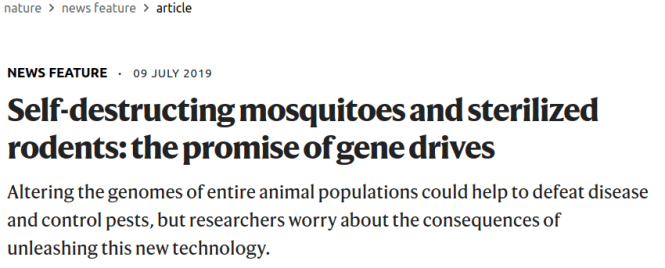
So, what exactly is the science that DEFRA claims to be following? It is not this kind of science.
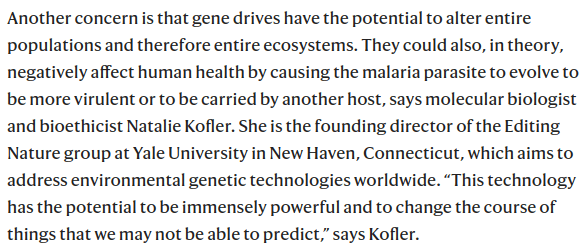

It is too soon to abandon caution.
12 March 2021
Here is the PDF with my response:
I expected Part 2 to take as long as Part 1 – I imagine that the start of Part 2 is the point at which many give up – but it did not. And in essence, it was a repeat of Part 1.
I started attending various webinars some time ago, like lots of people, and like lots of people, I also got a little webinar fatigue at times. 
A great series continues to be organised by the National Academy of Medicine and the American Public Health Association in the US, looking into many topics such as the science of the virus, finding vaccines, health inequalities and so on.
Today’s session, on mitigating direct and indirect impacts in the coming months, was excellent for decisionmakers at all levels – also in the UK! – because it addressed a lot of practical aspects and many angles of the pandemic.
It mentioned the need to provide free wifi, talked about telehealth (telemedicine) and developments expected to take a decade suddenly being realised in a mere three weeks, about the complications food deserts pose, about the politicizing of the pandemic, about how to cope with emergencies such as hurricanes and related evacuations, how to remedy the impact the pandemic is having on non-Covid-related healthcare (such as people with heart attacks not seeking help out of fear of catching the virus), the healthcare clinics getting into financial difficulties as a result (as, I think, we saw earlier with those two doctors in California who owned a small chain of facilities and saw their turnover drop so dramatically that they resorted to unorthodox action), the challenge and need to communicate well and perhaps have ambassadors explain the purpose and reasoning behind social distancing, the massive impact social distancing has on the infection rate and the risk of people that people will no longer observe distancing when lockdowns are relaxed and developing a false sense of safety, and so on and so forth.
Here is a link for a model (simulator) that people can play with to explore the effects of lifting lockdowns: https://budgetmodel.wharton.upenn.edu/
The video recording of the webinar will be online soon, at covid19conversations.org:
https://covid19conversations.org/webinars/summer.
The slides have already been uploaded, but not all presenters used slides and the Q&A of course is not online yet either. I’ll post the unedited transcript below.
This is straight from the e-mail I received:
Today, Justice Alison Y. Tuitt of the Bronx Supreme Court today issued a decision in the Nonhuman Rights Project’s New York elephant rights case that is powerfully supportive of our legal arguments to free Happy from the Bronx Zoo to a sanctuary.
While Justice Tuitt “regretfully” denied the habeas corpus relief the NhRP had demanded because she felt bound by prior appellate court decisions in the NhRP’s chimpanzee rights cases, she essentially vindicated the legal arguments and factual claims about the nature of nonhuman animals such as Happy that the NhRP has been making during the first six years of our rights litigation.
Deeply encouraged by Justice Tuitt’s embrace of the merits of the NhRP’s case following 13 hours of oral argument over three days, we already begun working on our appeal.
In her analysis and conclusion, Justice Tuitt agreed with New York Court of Appeals Justice Eugene M. Fahey’s conclusion that an elephant, like a chimpanzee, is not merely a “thing.” Instead, Happy “is an intelligent, autonomous being who should be treated with respect and dignity, and who may be entitled to liberty.” Further, Justice Tuitt rejected the Bronx Zoo’s claim that its continued imprisonment of Happy is good for her, stating that “the arguments advanced by the NhRP are extremely persuasive for transferring Happy from her solitary, lonely one-acre exhibit at the Bronx Zoo” to The Elephant Sanctuary in Tennessee.
In late 2018, Happy—currently held alone in an industrial cement structure lined with windowless, barred cages (the zoo’s “elephant barn”) while the elephant exhibit is closed for the winter—became the first elephant in the world to win a habeas corpus hearing intended to determine the lawfulness of her imprisonment after the NhRP filed a petition for a writ of habeas corpus on Happy’s behalf. Such world-renowned elephant experts as Dr. Joyce Poole and Dr. Cynthia Moss supported Happy’s rights case while making clear that the Bronx Zoo cannot meet the needs of Happy or any elephant.
While we lament Happy’s continued imprisonment, we thank Justice Tuitt for breaking ground on the long road to securing liberty and justice for Happy and other autonomous nonhuman animals. Happy’s freedom matters as much to her as ours does to us, and we won’t stop fighting in and out of court until she has it.
Anyone who’s become curious should look into the story of Guida, who’d become so severely mentally ill in her confinement that there were serious doubts about the potential for recovery.
Upon release to the Global Elephant Sanctuary in Brazil (sister of that in Tennessee), Guida bounced back remarkably. When having the choice of taking an easy path toward food or picking a difficult one, she was often observed selecting the more challenging path, which required her to climb up an edge (a small straight cliff), which took some effort.
She rejoiced in having the choice and in being able to conquer the cliff.
(I have seen something similar in a pigeon, to my utter astonishment, the animal setting herself a goal, a challenge. Also, pigeons are able to recognize individual human faces, whereas humans generally have a very hard time recognizing individual pigeons.)
Sadly, Guida is no longer with us, but at least she lived the last part of her life in friendship with another elephant and doing the kinds of things that she enjoyed doing.
I just received an e-mail from Henny Kupferstein that was an eye opener. I knew that she works with autistic children via music, often using services like Skype. I had no idea, however, that she too is autistic!
As far as I know, I’ve never met anyone who is autistic or at least interacted with the person extensively. So I’ve been wondering what it is like to be autistic and I’ve watched videos that weren’t very enlightening to me, other than to make me realize that autistic people deal with the world in a different way, and find ways to deal with the expectations of mainstream people.
I’d previously gotten the impression, from Temple Grandin’s TED Talk, that autistic people have different abilities, special abilities.
In this video, Henny explains in detail how the visual/mathematical world works for her and that it is a thing of great beauty.
Now I understand it a lot better!
Never had any problems with landlords in the Netherlands. Never.
Had three in Florida. The first and the third were fine, but the second one was not and his attorney was rumoured to have mafia ties, I kid you not. But I heard that later. I think it was actually a legal aid lawyer who told me that who I talked with later, long after I’d moved out and his lawyer started pestering me. I’ll spare you the details.
My third landlord was the husband of the person I volunteered with on Saturdays and sometimes Sundays. (He was a builder, built huge places, the way they are in Florida. Nice guy. I think he was in the US Army for a while, and they lived in places like Morocco. ) She stopped by one day – to bring me two birds – and was appalled and suggested I move in to one of their places. They owned a small apartment building that was mostly used by snowbirds (people from for example Canada who take winter vacations in Florida).
Some time later, I moved to Britain.
In Southampton, I knew several landlords. (Only one of them was mine.)
One said that only educated people were decent human beings, and I was too shocked to respond. He called tenants who rang him because the washing machine or heating wasn’t working (properly) “bad tenants”. This was not my own landlord, but someone I met within a business context and was friendly with for a while. Wasn’t actually a bad guy at all, strangely enough.
I also knew one who proudly told me how he had tricked an elderly woman with beginning Alzheimer’s out of her flat, I kid you not.
On another occasion, the same guy was talking with me about a new building he was constructing and then added that it did not have to be very good “as it is only for tenants”.
In Portsmouth, I’ve met two who dump rubbish on other people’s front courts and patios. I caught one red-handed and the other one admitted it.
I have principles.
If I can help make things better for people who come after me who are less strong in some way – okay, except physically as I am getting old and I am feeling it – I will try to do that. And that baffles the hell out of (most) Brits. But that is not my problem.
They don’t have the time and resources to solve crimes against individuals, unless those individuals have been killed, but they do still have the time and resources to send two or three cars to follow me and hunt me through the city to play PacMan.
They love playing PacMan with migrants and with women.
They first did this to me in 2009. February it was.
Of course, when you call them out on it, they always say that they don’t have the time and resources for that kind of crap.
So on my way back, I walked up to the central police station in Portsmouth, and addressed its CCTV camera:
You. Need. To. Observe. The. Law.
The law!
That’s the kind of police we have in Britain – barbaric, lawless and abusive – for which we pay through our council tax. They’re straight out of a film of police brutality and incompetence of the wild-west US in the past.
Two or three police cars were following me all over town again yesterday evening, slowing down when they passed me, backing up and returning when I took a left or right, etc.
It’s happened too many times before.
And this kind of crap takes up most of their time. Hunting down citizens who dare report crimes and who dare stand up against the utterly lawless British police. They don’t seem to do anything else but this.
I have on occasion stood by on purpose myself to serve as possible witness in police brutality cases when I saw them hunt other people. But they are too clever to attack people in plain public view, I am sure.
We pay for this harassment through our council tax. We pay for it ourselves!
Portsmouth has the highest CCTV density of the UK, so yes, police can hunt anyone through the city, in retaliation or just for fun.
I also got a creep on a bicycle after me, along Albert Road, to tell me that women deserve to go hungry, should not be allowed to own any property of any kind, should not be allowed to work and should not be allowed to earn a living, or even be healthy and happy and that they should generally keep their mouths shut.
I told him it was the 21st century, that the middle ages were a long time ago and I crossed the road. The kid was not even half my age. He should apologize to all the women he owes his existence to, starting with his mother, but he won’t see it that way, clearly. In his eyes, women are lower than cattle. Usable and disposable. Not worth shit.
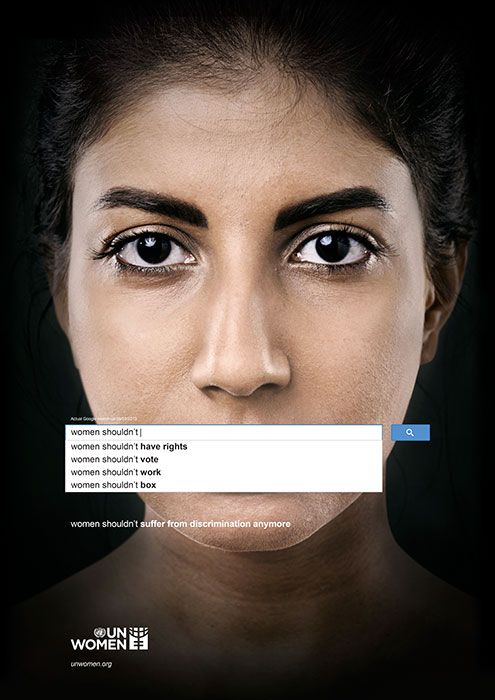
In case you wonder what the hell I am still doing in this shitty hell hole, well, I’ve tried to escape four times already. I also sometimes foolishly think that I can help make things better here, simply through my presence.
Also, I had formally raised the issue about the problems with local police again this week. Some retaliation was to be expected.
This photo below shows you what my door looks like when I am not in, these days. Three locks on the inside, warning note on the outside and a barricade in front of it, to stop, eh, anonymous elements, from shimmying the locks and carrying out crap in my flat – which has been going on since 2011, with the approval of Portsmouth Police.
Updated on 12 July 2019
At the moment, I am not using the vacuum cleaner to block my door, but the basket and two older printers. There was a time when I believed there was a local person with a brain-related impairment behind it, but it’s more complicated than that.

I watch this and realize that I don’t know a thing about autism…
The BBC sent FOI requests to all 24 universities in the Russell Group of highly selective, research-based universities, and 22 responded.
At these universities, the data showed average salaries of:
£52,000 for white academics
£38,000 for black academics
£37,000 for academics from an Arab background
Time to reblog this.
It may also shatter your illusions, however, if you still believe that police are the good ones, the ones (that you pay for through your council tax, in Britain) to help keep you safe and secure and protect your basic rights.
This morning, this caught my eye:
(Scottish) Police Pause Rollout Of Device That Hacks Into Phones After Fears ‘It Is Unlawful’
I suspect that police in England and Wales already are using these “kiosks” that hack into people’s phones and laptops, overriding passwords.
I am sure it can be great fun for some officers to play with these “kiosks”. You can almost hear them talk. “I knew it! She’s a lesbian!” and “Does he really think he stands a chance with that woman?” and “Oh my god! Trying to lose weight? Fat chance!”
Yep, very useful.</end of sarcasm>
We need an alternative to police. Because going to or contacting the police has become one of the worst things to do in almost any situation. (Unless your insurance company wants a copy of a report after a burglary or theft, but leave it at that and do not ask police to do anything else other than give you a copy of the report.) How it got to this point? It’s immaterial. It’s what we have in the here and the now.
As Michael Doherty (a former aircraft engineer who made the mistake of reporting something to police and expecting police to follow up on it) says in the video below, you do have the right to investigate on your own, to try to detect and stop crime on your own. If your investigation is successful, you can also prosecute on your own. (I am talking about England and Wales.)
But before you choose this path, as I have stated several times before, look into the Protection from Harassment Act 1997 because police and others can use this against you, assuming that you are unaware of 1(3)(a), which most people probably are. That means that, before you know it, you can already have confessed to a crime that you didn’t actually commit. To prevent this, you need to know what the law says.

I repeat and highlight:
(3) Subsection (1) [F4 or (1A)] does not apply to a course of conduct if the person who pursued it shows—
(a) that it was pursued for the purpose of preventing or detecting crime,
(b) that it was pursued under any enactment or rule of law or to comply with any condition or requirement imposed by any person under any enactment, or
(c) that in the particular circumstances the pursuit of the course of conduct was reasonable.
(Whether it says “and” or “or” makes a difference. It means that each of these conditions on its own applies, that they do not have to apply all at once.)
The video below dates back to 2015, is rather academic and particularly in the beginning lacks a logical thread, in my opinion, but does contain useful information.
You may want to read this as well:
The Human Rights Act Can Transform Lives Without Going To Court
(Also, if you want to protect yourself from police with a camera, you need to have one that does not have wifi or bluetooth.)
It is possible to resolve many situations or at least make them somewhat liveable without going to police, and much more successfully and/or peacefully. If you try this after you’ve been to police, however, police officers are likely to hold it against you. (This is mean because most people who contacted the police in the past decade will have been told that police wouldn’t investigate and would do nothing with what they told the police owing to a lack of resources and/or will have been referred to their GP and the local civic offices.)
Unfortunately, most of us learn these things the hard way – and you can’t undo having contacted the police.
 I am in the middle of reading “The war on women” by Sue Lloyd-Roberts. The book was finalized without her input after she suddenly passed away in 2015. I wish that I could still contact her.
Because then I would talk with her about her own bias. She sounds convinced that there is a division between the “liberal West and the traditional East”, and it made her slightly blind to what went on in, say, her own country, assessed by the UN as perhaps the most openly misogynistic country in the world. That can probably be explained that she’d been living on the Spanish island of Mallorca since 2003.
I can’t allow myself to be blind to the fact that people in the West who condemn what goes on in other countries but are blind to what goes on in their own culture may be helping their causes less than they think.
Last evening, I saw a video and photos that I found shocking. It concerns severe animal cruelty that occurs near Sulphur in Oklahoma. The farm is part of Mahard Egg Farms who appear to be headquartered in Texas. I searched LinkedIn and found nine accounts associated with the company, including that of its CFO, Kaitlin Mahard.
I believe that severe animal cruelty can be considered “violent crimes” which would mean that LinkedIn should remove the accounts associated with Mahard Egg Farms. The LinkedIn Professional Community Policies state that “those who engage in violent crimes are not welcome and not permitted on the Services”.
In 2011, Mahard Egg Farm, Inc., indeed a Texas corporation, was told to pay a $1.9 million penalty to settle claims that the company violated the Clean Water Act (CWA) at its egg production facilities in Texas and Oklahoma, according to the EPA:
https://www.epa.gov/enforcement/mahard-egg-farm-inc-clean-water-act-settlement
The latter apparently resulted in this:
https://www.epa.gov/sites/production/files/2013-09/documents/mahardegg-cd.pdf
That document includes the following:
C. MORTALITY MANAGEMENT
18. Defendant shall comply with the Mortality Management Requirements in Appendix D at the Vernon-Chillicothe Facility, the Springhill Facility, the Prosper Facility, the Boogie Hill Facility, the Nebo Ranch, and the Ravia Facility, unless such facility is not growing poultry.
Appendix D stated:
APPENDIX D:
MORTALITY MANAGEMENTI. Texas
65.
No later than the Effective Date of this Decree, Mahard shall cease any transfer of
carcasses between Facilities unless a composting plan is in place that is consistent with 30 T.A.C. 332, Subchapter B, and has been approved by EPA and TCEQ.66.
Mahard shall ensure that all carcass disposal at the Vernon-Chillicothe, Prosper, and
Springhill Facilities is conducted in accordance with TCEQ Regulatory Guidance, RG-326, Handling and Disposal of Carcasses from Poultry Operations (August 2009) and in accordance with 30 T.A.C. § 335.25. Mahard shall collect all carcasses within 24 hours of death and properly disposed of them within three (3) Days of death. Animals must not be disposed of in any liquid manure or process wastewater system. Disposal of diseased animals shall be conducted in accordance with Tex. Agric. Code § 161.004.II. Oklahoma
67.
Mahard shall comply with the terms and conditions in Mahard’s 4/29/09 Carcass Disposal Plan, as amended and supplemented by the letter from ODAFF, dated May 7, 2009, to Mahard (both attached here as the Appendix D Supplement).
The Kroger chain has meanwhile dropped Mahard’s eggs and I’ve reached out on LinkedIn to it spokeswoman Kristal Howard to thank Kroger and ask her to ensure that Kroger will never be associated with such severe animal cruelty again.
Kroger’s 2018 Sustainability Report includes an animal welfare policy, which states:
“Kroger has a long-standing commitment to responsible business practices, including the humane treatment of animals,” Kroger says in its policy. “We require our suppliers to adopt industry-accepted animal welfare standards that we endorse, and we monitor our suppliers for compliance with these standards. We align with the Food Marketing Institute’s industry-adopted and industry-aligned animal welfare standards for the following animal proteins: beef, pork, chicken, turkey and eggs. For nearly a decade, Kroger has convened our own independent panel of animal science experts to make recommendations on how we can work with the industry to improve animal welfare.”
I’ve also contacted the EPA.
That is one of the questions I’ve been wondering about, as you’ll know if you read my latest book.
I just watched Brené Brown’s TED Talk about vulnerability again. I first saw it a few years ago. It turns out that her research appears to indicate that yes, the unbridled creation of designer babies would destroy our capacity for connection.
Smell the flowers, feel the wind, go along on the ride. It is possible. And if it is possible, there are only lots of good reasons for all theme parks to put this into practice for attractions that are not accessible to people in wheelchairs.
(I owe Sven Slootweg for telling me about this.)
 Because we have been taught that something – whatever it is – is bad. If you let go of the idea that something is good or bad, you may feel a weight lift from your shoulders.
If you simply allow and observe the thing that is supposed to be bad, you may find that it is interesting – hence also good, right or even fun – all by itself.
Feeling depressed is bad, for instance. It is even considered a mental health problem these days. An illness. Feeling cheerful is good. Acting cheerful when you’re feeling depressed is good. Is it?
It can be, but there are times, after the death of a loved one for example, when we really have to allow feelings that are supposedly bad.
(Is mourning someone’s death truly “a mental health issue”? Or could it be a natural part of life?)
It is our resistance to “bad” feelings that often becomes the greater problem. As soon as you allow certain feelings and stop considering them bad, they can lose their power over you quickly.
And heck, even moping can be a heck of a lot of fun too.
What always comes to my mind when I say something like that is an image from the original Swedish Pippi Longstocking TV series.
Pippi is in a foul mood and goes around angrily stamping her feet, probably in puddles of water, powerfully indulging in her foul mood, full of energy. Acceptance. A foul mood is just a foul mood, not the end of the world.
Puddles of water? So it must have rained. Rain! Rain is bad.
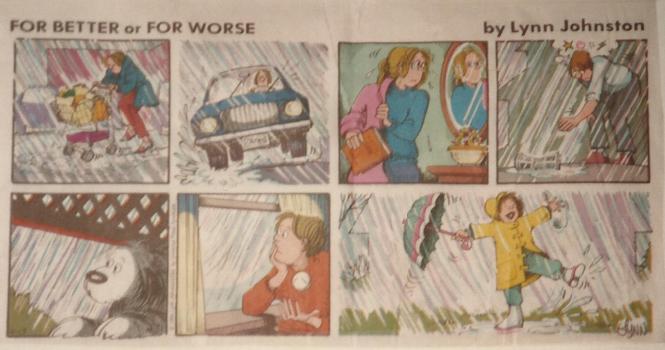
I too have my personal good/bad hangups. Ideas that make me feel vulnerable or guilty or inadequate or unhappy. What are yours?
Boiling water hurts them too.
This video will change everything. For anyone who thinks that crawfish and other sea life don’t suffer, watch this crawfish sever their own claw to escape a boiling pot. So powerful. Please RT. 💔 pic.twitter.com/tNEYlvlSv2
— John Oberg (@JohnOberg) June 8, 2018

 The Elephanta Suite, by Paul Theroux. The clickable image on the right and the above link take you to the Kindle version and to used print versions as cheap as 0.01 on Amazon.
It includes, among other things, a tale of inequalities (and colonialism).
Hardback This link and the clickable image on the left take you to the hardcover version.
See this post
I don't agree with it – but this treatment of the Netherlands case on EU citizenship is well worth a read. https://t.co/6rzriqUQBu pic.twitter.com/QJkf5kWCaJ
— Jo Maugham QC (@JolyonMaugham) February 19, 2018
https://platform.twitter.com/widgets.js
If you'd like to support what may well be the most important piece of litigation in modern times – what other case could meaningfully extend the valuable rights of 60 million odd people – you can do so here https://t.co/RZusZ30JIl
— Jo Maugham QC (@JolyonMaugham) February 19, 2018
 A pattern is starting to emerge. The British government does not display a lot of respect for the law.

At least one judge has commented that the government is wasting the tax payers’ money as well as judicial capacity.
The pattern shows unequivocally that the British government goes after the most vulnerable in British society and seeks to protect the wealthiest in society.
Apparently, the Lord Chancellor has the task of ensuring the government’s compliance with the rule of law. As of the beginning of this year, that is David Gauke, appointed by HM the Queen on advice of the Prime Minister. So the Prime Minister recommends who gets to monitor the legality of her own government’s actions? Hmm.
His predecessors were Chris Grayling (2012-2015), Michael Gove (2015-2016), Elizabeth Truss (2016-2017) and David Lidington (2017-2018). All Conservatives.
When I voiced my protest against the recent cartoon in The Sun (see previous post), some people said “It is a CARTOON! it is just a cartoon.” That was my point. It wasn’t. Continue reading
People are currently focusing on Trump and his silly comments, but perhaps they should be focussing on Britain.
A few days ago, British newspaper The Guardian reported about a eugenics meeting that allegedly had been convened in secret, involving someone who has previously advocated child rape. This meeting is supposed to have taken place at University College London and white supremacists supposedly were present at this meeting. Continue reading
Interview with Mark Easton, BBC. Date unknown, but near the end of Tony Blair’s premiership.
Keep in mind that “hooliganism” and “anti-social behaviour” are often labels used to indicate (and reject) people from a lower socioeconomic class in Britain and that this “hooliganism” for example gets expressed in graffiti.
Of course, causing (increased) financial hardship for parents by taking any benefits away is most definitely not “in the best interest of the child”.
Tony Blair did consider graffiti “anti-social behaviour”. During a photo-op as part of his crusade, he hosed down graffiti and said that older generations of his family would have abhorred such behaviour. It then turned out that his own grandmother had been a “commie” graffiti vandal.
There probably is a work by Banksy somewhere in response to all of this.
Tony Blair also criminalized a lot of behavior that is essentially merely human behavior. That too was in nobody’s best interest and probably did nothing toward decreasing inequality in Britain.
It did not enable (more) people to flourish.

George B. Cunningham, Texas A&M University
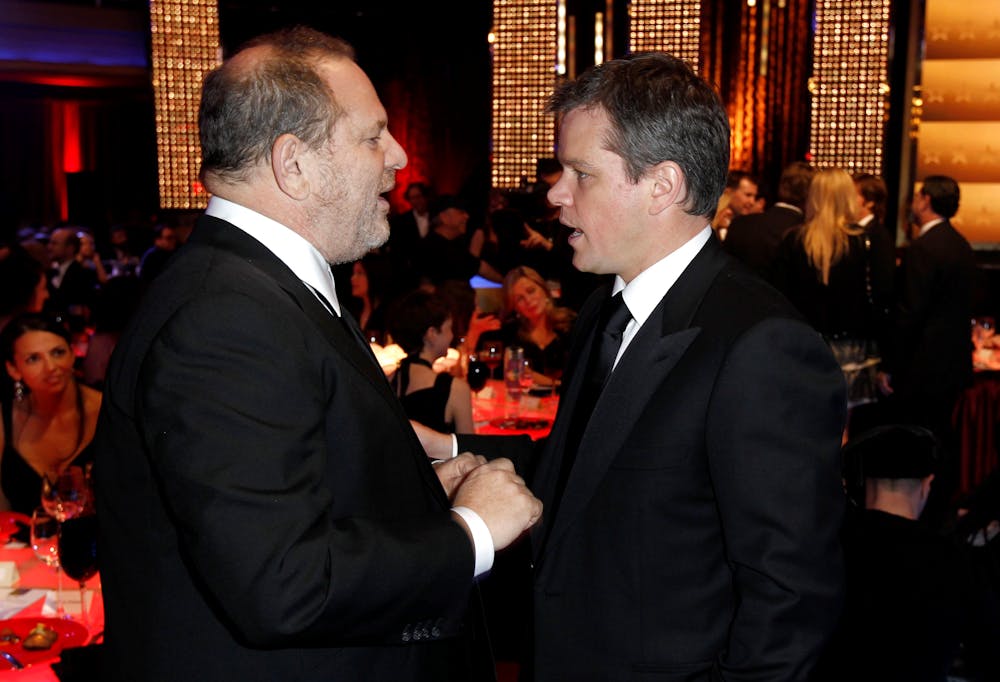
The uproar over allegations that Hollywood producer Harvey Weinstein sexually abused and harassed dozens of the women he worked with is inspiring countless women (and some men) to share their own personal sexual harassment and assault stories.
With these issues trending on social media with the hashtag #MeToo, it’s getting harder to ignore how common they are on the job and in other settings.
I have studied sexual harassment and ways to prevent it as a diversity and inclusion researcher. My research on how people often fail to speak out when they witness these incidents might help explain why Weinstein could reportedly keep his despicable behavior an open secret for decades.
//platform.twitter.com/widgets.js
Of course, Weinstein’s alleged wrongdoings went well beyond sexual harassment, which University of British Columbia gender scholar Jennifer Berdahl defines as “behavior that derogates, demeans or humiliates an individual based on that indiviudual’s sex.”
Some of the women speaking out in the U.S. and abroad are accusing him of rape – a crime – during encounters he says were always consensual.
But sexual harassment is such a chronic workplace problem that it accounts for a third of the 90,000 charges filed with the federal government’s Equal Employment Opportunity Commission (EEOC) in 2015. Since only one in four victims report it, however, the EEOC and other experts say the actual number of incidents is far higher than the official number of complaints would suggest.
The usual silence leaves most perpetrators of this toxic behavior free to prey on their co-workers and subordinates. If sexual harassment is pervasive on the job, and most women don’t report it, what can be done?
Some business scholars suggest that the best way to prevent sexual harassment, bullying and other toxic workplace behavior is to train co-workers to stand up for their abused colleagues when they witness incidents. One reason why encouraging intervention makes good sense is that some 70 percent of women have observed harassment in the workplace, according to research by psychologist Robert Hitlan.
The trouble is that most people who witness or become aware of sexual harassment don’t speak out. Screenwriter, producer and actor Scott Rosenberg has both admitted to and denounced how this dynamic enabled Weinstein to become an alleged serial abuser. “Let’s be perfectly clear about one thing,” he wrote in a private Facebook post published in the media. “Everybody-f—ing-knew.” He also said:
“in the end, I was complicit.
I didn’t say s—.
I didn’t do s—.
Harvey was nothing but wonderful to me.
So I reaped the rewards and I kept my mouth shut.
And for that, once again, I am sorry.”
To understand why witnesses often don’t speak up, a colleague and I did a study in 2010 that asked participants to review hypothetical sexual harassment scenarios and indicate if they would respond.
The results seemed promising: Participants generally said they would take steps to stop harassing behavior if they saw it happen. People indicated they’d be more likely to respond if two conditions were met: It was a quid pro quo – that is, if the harasser promised benefits in exchange for sexual favors – and the workplace valued diversity and inclusion. In such cultures, there are open lines of communication, and leaders embrace diversity and inclusion.
There’s a potential problem with experiments using the kind of hypothetical scenario that we and others employed. People don’t always do what they think they will in real-life situations. For example, psychologists find that people tend to believe they’ll feel more distraught during an emotionally devastating event than they actually do when it occurs.
Other researchers find similar patterns with reactions to racists. People think they will recoil and experience distress when hearing racist comments. But when they actually hear those remarks, they don’t.
The same dynamics are at play when examining sexual harassment during job interviews, as illustrated in a study conducted by psychologists Julie Woodzicka and Marianne LaFrance.
Participants, all of whom were women, expected to feel angry, confront the harasser and refuse to answer the hypothetical interviewer’s inappropriate questions. Some of the questions, for example, included asking the job applicant if she had a boyfriend or if women should wear bras at work.
However, when they witnessed this simulated behavior during the experiment’s mock interviews, people responded differently. In fact, 68 percent of participants who only read about the incidents said they would refuse to answer questions. Yet all 50 of the participants who witnessed the staged hostile behavior answered them.
Drawing from these studies, my team conducted an experiment in 2012 to determine how harassment bystanders would react to hearing inappropriate comments about women.
Some of the female participants read about a hypothetical scenario in which harassment took place, while another group observed harassment occurring in a staged setting. We determined that the participants, who were college students, overestimated how they would respond to seeing someone else get harassed.
The reason this matters is that people who don’t feel distress are unlikely to take action.
https://datawrapper.dwcdn.net/HdxsU/6/
What stops people from reacting the way they think they will?
Psychologists blame this disparity on “impact bias.” People overestimate the impact that all future events – be they weddings, funerals or even the Super Bowl – will have on them emotionally. Real life is messier than our imagined futures, with social pressures and context making a difference.
This suggests a possible solution. Since context matters, organizations can take steps to encourage bystanders to take action.
For example, they can train their staff to speak up with the Green Dot Violence Prevention Program or other approaches. The Green Dot program was originally designed to reduce problems like sexual assault and stalking by encouraging bystanders to do something. The EEOC says this “bystander intervention training might be effective in the workplace.”
Especially with workplace harassment, establishing direct and anonymous lines for reporting sexist incidents is essential. They also say employees should not fear negative reprisal or gossip when they do report harassment.
Finally, bystanders are more likely to intervene in organizations that make their refusal to tolerate harassment clear. For that to happen, leaders must assert and demonstrate their commitment to harassment-free workplaces, enforce appropriate policies and train new employees accordingly.
 Until more people take a stand when they witness sexual harassment, it will continue to haunt American workplaces.
George B. Cunningham, Professor of Sport Management, Faculty Affiliate of the Women’s and Gender Studies Program, and Director, Laboratory for Diversity in Sport, Texas A&M University
This article was originally published on The Conversation. Read the original article.
David Rosenberg, Wayne State University
As a psychiatrist, I find that one of the hardest parts of my job is telling parents and their children that they are not to blame for their illness.
Children with emotional and behavioral problems continue to suffer considerable stigma. Many in the medical community refer to them as “diagnostic and therapeutic orphans.” Unfortunately, for many, access to high-quality mental health care remains elusive.
An accurate diagnosis is the best way to tell whether or not someone will respond well to treatment, though that can be far more complicated than it sounds.
I have written three textbooks about using medication in children and adolescents with emotional and behavioral problems. I know that this is never a decision to take lightly.
But there’s reason for hope. While not medically able to diagnose any psychiatric condition, dramatic advances in brain imaging, genetics and other technologies are helping us objectively identify mental illness.
All of us experience occasional sadness and anxiety, but persistent problems may be a sign of a deeper issue. Ongoing issues with sleeping, eating, weight, school and pathologic self-doubt may be signs of depression, anxiety or obsessive-compulsive disorder.
Separating out normal behavior from problematic behavior can be challenging. Emotional and behavior problems can also vary with age. For example, depression in pre-adolescent children occurs equally in boys and girls. During adolescence, however, depression rates increase much more dramatically in girls than in boys.
It can be very hard for people to accept that they – or their family member – are not to blame for their mental illness. That’s partly because there are no current objective markers of psychiatric illness, making it difficult to pin down. Imagine diagnosing and treating cancer based on history alone. Inconceivable! But that is exactly what mental health professionals do every day. This can make it harder for parents and their children to accept that they don’t have control over the situation.
Fortunately, there are now excellent online tools that can help parents and their children screen for common mental health issues such as depression, anxiety, panic disorder and more.
Most important of all is making sure your child is assessed by a licensed mental health professional experienced in diagnosing and treating children. This is particularly important when medications that affect the child’s brain are being considered.
Thanks to recent developments in genetics, neuroimaging and the science of mental health, it’s becoming easier to characterize patients. New technologies may also make it easier to predict who is more likely to respond to a particular treatment or experience side effects from medication.
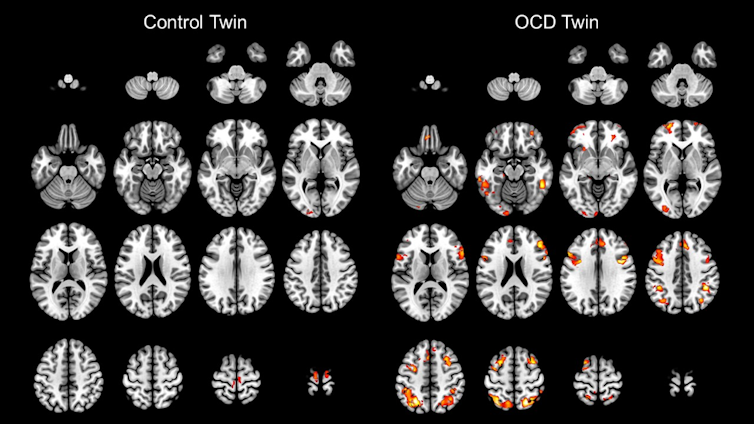
Our laboratory has used brain MRI studies to help unlock the underlying anatomy, chemistry and physiology underlying OCD. This repetitive, ritualistic illness – while sometimes used among laypeople to describe someone who is uptight – is actually a serious and often devastating behavioral illness that can paralyze children and their families.
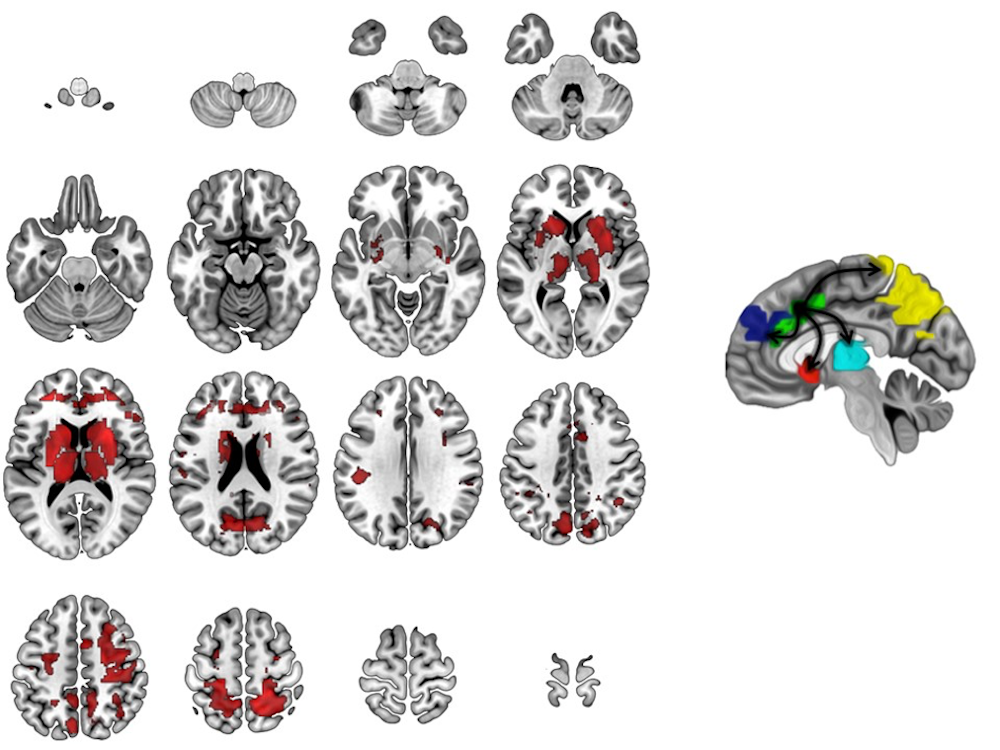
Through sophisticated, high-field brain imaging techniques – such as fMRI and magnetic resonance spectroscopy – that have become available recently, we can actually measure the child brain to see malfunctioning areas.
We have found, for example, that children 8 to 19 years old with OCD never get the “all clear signal” from a part of the brain called the anterior cingulate cortex. This signal is essential to feeling safe and secure. That’s why, for example, people with OCD may continue checking that the door is locked or repeatedly wash their hands. They have striking brain abnormalities that appear to normalize with effective treatment.
We have also begun a pilot study with a pair of identical twins. One has OCD and the other does not. We found brain abnormalities in the affected twin, but not in the unaffected twin. Further study is clearly warranted, but the results fit the pattern we have found in larger studies of children with OCD before and after treatment as compared to children without OCD.
Exciting brain MRI and genetic findings are also being reported in childhood depression, non-OCD anxiety, bipolar disorder, ADHD and schizophrenia, among others.
Meanwhile, the field of psychiatry continues to grow. For example, new techniques may soon be able to identify children at increased genetic risk for psychiatric illnesses such as bipolar disorder and schizophrenia.
New, more sophisticated brain imaging and genetics technology actually allows doctors and scientists to see what is going on in a child’s brain and genes. For example, by using MRI, our laboratory discovered that the brain chemical glutamate, which serves as the brain’s “light switch,” plays a critical role in childhood OCD.
When I show families their child’s MRI brain scans, they often tell me they are relieved and reassured to “be able to see it.”
Children with mental illness continue to face enormous stigma. Often when they are hospitalized, families are frightened that others may find out. They may hesitate to let schools, employers or coaches know about a child’s mental illness. They often fear that other parents will not want to let their children spend too much time with a child who has been labeled mentally ill. Terms like “psycho” or “going mental” remain part of our everyday language.
The example I like to give is epilepsy. Epilepsy once had all the stigma that mental illness today has. In the Middle Ages, one was considered to be possessed by the devil. Then, more advanced thinking said that people with epilepsy were crazy. Who else would shake all over their body or urinate and defecate on themselves but a crazy person? Many patients with epilepsy were locked in lunatic asylums.
Then in 1924, psychiatrist Hans Berger discovered something called the electroencephalogram (EEG). This showed that epilepsy was caused by electrical abnormalities in the brain. The specific location of these abnormalities dictated not only the diagnosis but the appropriate treatment.
 That is the goal of modern biological psychiatry: to unlock the mysteries of the brain’s chemistry, physiology and structure. This can help better diagnose and precisely treat childhood onset mental illness. Knowledge heals, informs and defeats ignorance and stigma every time.
David Rosenberg, Professor, Psychiatry and Neuroscience, Wayne State University
This article was originally published on The Conversation. Read the original article.