What Exactly Are ‘Nature-Based Solutions’?

In my inbox today, from Global Citizen

By Victoria MacKinnon

August 8, 2024

The fight against the climate crisis has sparked a host of ambitious ideas, some seemingly straight from science fiction. From technologies that directly capture carbon dioxide from the air to the planet-bending goals of geoengineering, no idea seems too far-fetched in the race to cool down our burning planet. With good reason: the accelerating climate and biodiversity crises impact the world’s poorest countries hardest, and urgent action is necessary.

But what if the answer to climate change was as simple and timeless as nature itself? That’s the philosophy at the heart of nature-based solutions. If supported properly, nature could hold the key to stabilizing the climate, all while addressing socio-economic challenges such as food security and pandemic prevention

That’s why supporting them is a key part of Defending the Planet. Let’s dig into the concept so that we can identify the solutions that will work best to protect people and the planet. So, what are nature-based solutions, and how can we unlock their full potential?

Let’s Nail Down the Basics: What Exactly Are Nature-Based Solutions? 

Simply put, a nature-based solution is a project that works in harmony with the natural forces of an ecosystem to strengthen it, creating positive ripple effects for people and the climate. When successful, these projects protect, manage, and restore the environment. While nature-based solutions can take many forms, they all share a core principle: by working with the Earth rather than against it, we can build a more resilient and sustainable world. That’s why Global Citizen is calling for $1B in investments to protect and restore the Amazon, including investing in regional Indigenous-led, nature-based solutions. 

Projects that focus solely on minimizing human impact, like recycling or conserving water, are not considered nature-based. Instead, nature-based solutions encompass a more proactive, holistic approach to enhance a healthy ecosystem, like land conservation or wildlife habitat restoration.  

Why Have I Been Hearing So Much About Them Lately?

The truth is, nature-based solutions are far from new. Indigenous communities have successfully safeguarded the Earth’s ecosystems for centuries using conservation methods that work with nature; today, Indigenous people protect 80% of the world’s biodiversity. Now, more and more countries are incorporating nature-based solutions into their national climate, biodiversity, and restoration goals.

Nature-based solutions have gained momentum in both the public and private spheres. Companies have recognized that integrating them throughout their supply chains offers not only environmental and economic advantages, but also reputational benefits. This is significant, as private investment will be needed to secure the additional capital to bridge climate financing gaps.

Can You Give Some Examples of Nature-Based Solutions?

Here are just a few inspiring ones we love: 

Bringing Nature into Cities

Creating green spaces in cities moderates heat waves and improves air quality, which is critical for the health of an increasingly urbanized world where an estimated 4.2 million premature deaths can be attributed to outdoor air pollution. Megacities are incorporating more green infrastructure projects, such as Mumbai’s initiative to create a 3.2-acre urban forest to mitigate its urban heat island effect. These green spaces also offer additional and much-needed recreational space for residents. 

Restoring Coastal Wetlands

Wetlands provide many services such as flood protection and water filtration, and deliver an estimated $47 trillion in economic benefits annually. For example, a lake and marshland restoration project in Chennai, India, boosted the city’s water storage capacity​​, offered residents flood damage prevention, and improved water quality for native wildlife. 

Natural wetlands are also cost-effective: Restoring wetlands naturally can be 2 to 5 times cheaper than building artificial barriers, like sea walls, against wave impact. 

Mangrove wetlands are also superstars for cheaply and effectively preventing storm surges and sequestering carbon. In the Seychelles alone, they store about 2.5 million tons of CO2 (the equivalent of removing 500,000 cars from the planet for an entire year). 

Although the rate of mangrove loss is declining, more than half of all mangrove ecosystems are still considered vulnerable to collapse by 2050. But there are reasons to be hopeful — in some countries, such as Pakistan, the number of mangroves are increasing after successful widespread community planting and conservation efforts took root. 

Planting Trees

It may sound simple, but ambitious tree-planting programs are critical in ensuring the world’s forests can continue to function as a carbon sink. 11 countries across Africa are backing the “Great Green Wall, a regional initiative to expand arable land in the Sahel and reduce desertification. As an added benefit, it’s projected to create 10 million local jobs by 2030. National-level projects include this one in Burundi, where intentionally built tree terraces combat soil erosion on steep hillsides, reducing landslides while improving carbon storage and local agricultural productivity. 

Are There Any Drawbacks?

Like any intervention, nature-based solutions need to be designed thoughtfully to avoid unintended harm. Researchers and activists have raised alarms about greenwashing, arguing organizations might exaggerate these solutions’ benefits without properly monitoring their actual impact.

For example, without careful planning, large-scale tree-planting initiatives could actually harm native ecosystems and local communities. This happened in Somaliland after fast-growing, drought-tolerant mesquite trees from Central America were introduced in the 1980s to combat deforestation. The program worked a little too well: the foreign species outcompeted local vegetation, spreading quickly and depleting water sources across the country. Now, the Food and Agriculture Organization (FAO) and other groups are working to reverse the damage by assisting local communities in managing these trees at more sustainable levels.

How Can We Best Support Nature-Based Solutions?

We can’t hope to halt and eventually reverse global warming without embracing natural climate solutions. If used to their full potential, nature-based solutions could cut carbon emissions by 12 gigatons each year (the estimated equivalent of all coal-fired power plant emissions). 

Delaying investments in nature will only diminish its capacity to heal and recover over time, yet many countries have only slowly integrated them into their climate plans. Rapidly expanding nature-based solutions to fight climate change requires site-specific assessments to best identify community needs and the leadership of local and Indigenous people to steer planning and implementation. 

More funding for these solutions is also needed. Policymakers tend to favor resource-intensive engineering projects — in 2022, less than 10% of climate adaptation funding in least-developed nations went to nature-based solutions. 

The good news? Nature can be forgiving. We’ve seen how when given the chance, rewilding can reverse the damage caused by pollution and human activity. Governments must prioritize what’s good for the planet by incentivizing investment in nature — before it becomes too little, too late.
People like me

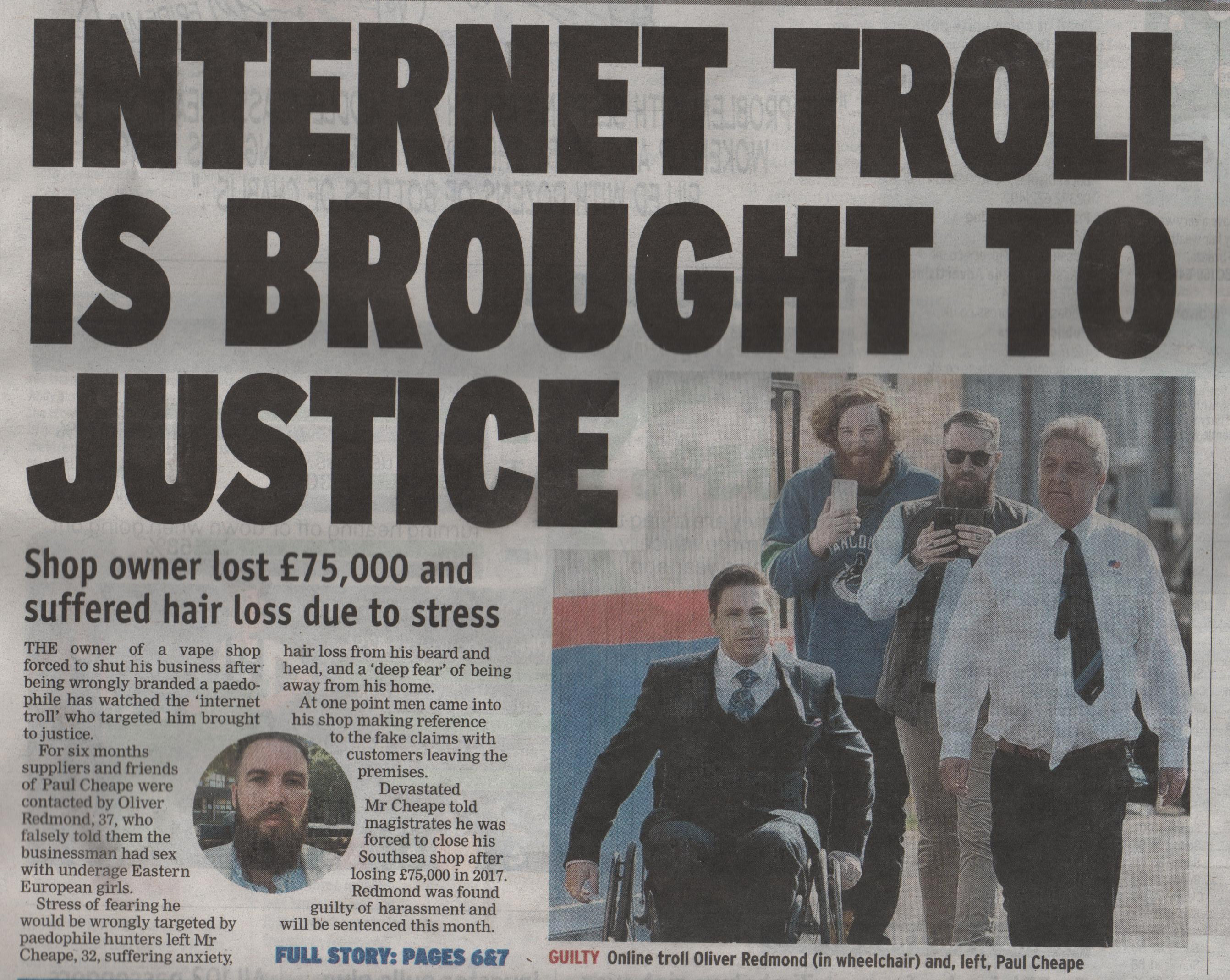
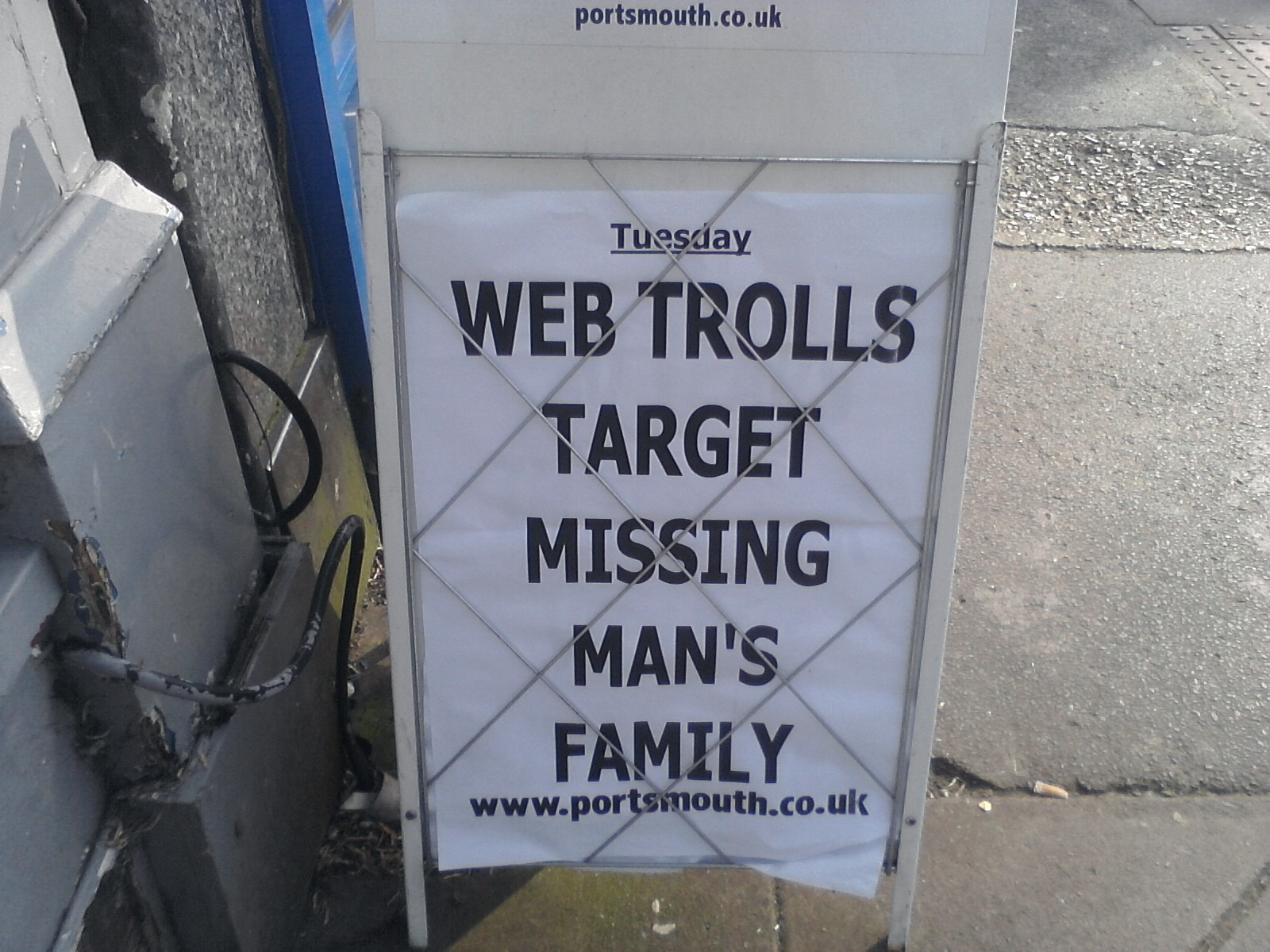
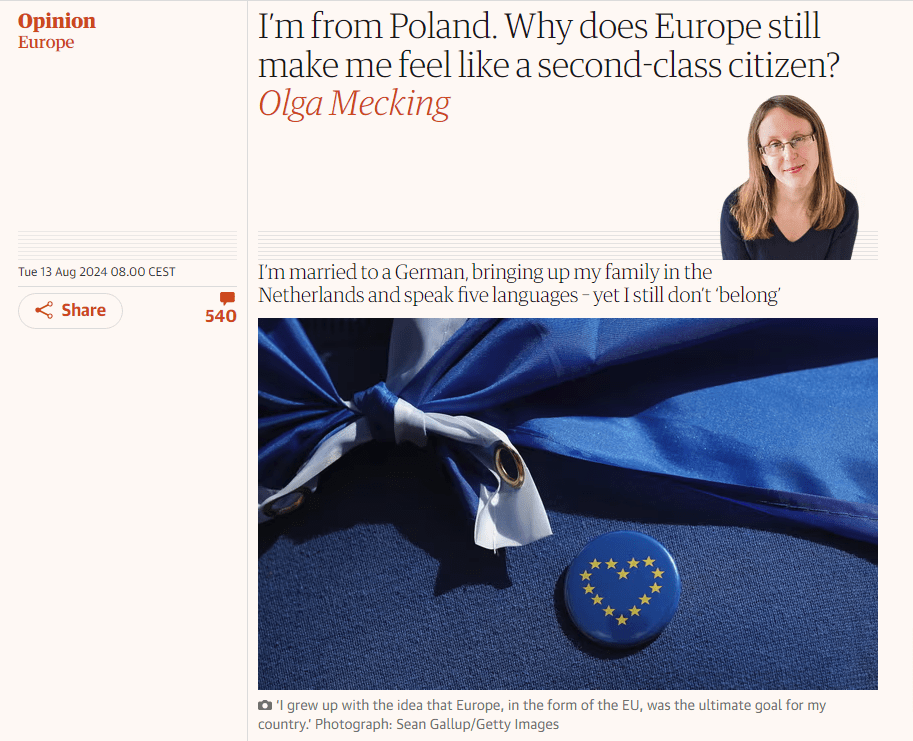
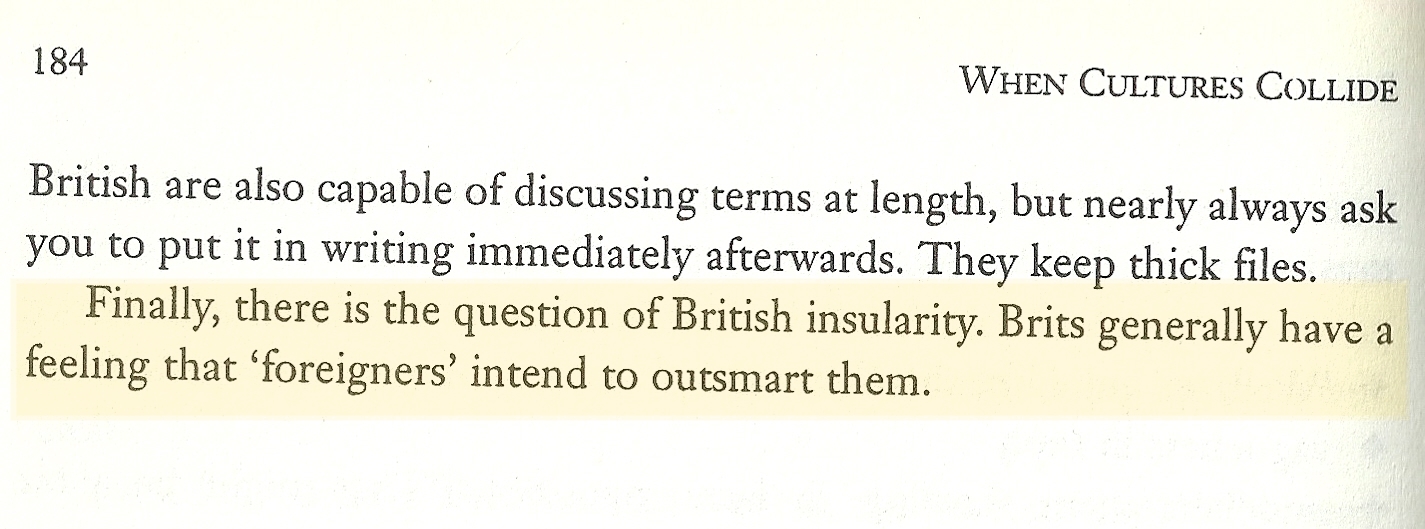
Apparently, there was a lot of rioting about people like me again in the UK. While there’s definitely a particularly strong resistance against people of color and people who appear but don’t even need to be Muslims, the main sentiment behind this shit is anti-immigrant and anti-foreigner. It’s part of the cultural makeup.

Bioethics in fiction

I just went to see if I could find an extra (used) VGA cable. Instead, I found three books (in English), to my delight, two of which are related to bioethics. One involves infertility and a sperm donor and the other one a couple who are trying to avoid a serious genetic disorder and end up at a veritable “designer” of babies.

Interesting coincidence.

The third one is a detective (Adam Stubo).

The rest on the shelf was non-fiction.

The “completed life” concept

Some years ago, Dutch political party D66 raised the worrisome idea of euthanasia for people who are old and fed up.

It infuriates me because the feeling that life is no longer worth living is too often the direct result of being treated as if your life is no longer worth living and you no longer hold any value.

  • I too am over 55 these days and soon I will be over 75, which is the age limit in that proposal.
  • Yes, I often really feel like giving up on life too.
  • This happens when I am being (mis)treated as if I am no more than trash that is in the way, when my life is rendered devoid of meaning and substance when I am marginalized, shoved away, as if I am no more than trash that is in people’s way! It’s atrocious!
  • Heck, I was in my 30s when Dutch people already started telling me that it was time to make way for younger folks, professionally. Up to that point, I often got overlooked (dismissed) because I looked so much younger than I actually was.

Wijngaarden, Els van, Leget, Carlo and Goossensen, Anne (2015) Ready to give up on life: The lived experience of elderly people who feel life is completed and no longer worth living. Social Science & Medicine 138, 257-264. Available at https://ac.els-cdn.com/S0277953615002889/1-s2.0-S0277953615002889-main.pdf?_tid=80f432e0-edcd-11e7-993c-00000aab0f26&acdnat=1514685434_0b38f23b28ec70c2cd53776218c61c43

Humans are the greatest threat to life on the planet

I’ve said that a few times before. It’s even truer than I thought. Yesterday, someone sent me the following.

Elephants had lots of relatives. Then humans came along

Today, three kinds of elephants walk the Earth. But hundreds of thousands of years ago, they had many kin. Nearly 200 species in the order Proboscidea, including mastodons and mammoths, have been described. Paleontologists have long wondered why so few of these usually massive mammals are still around. Now, a reexamination of fossil data suggests another group of mammals played a major role in dooming elephants’ relatives to extinction: humans.

With a little help from AI, researchers explored possible explanations for changing speciation and extinction rates of proboscideans over the past 35 million years, as estimated from fossil data. While their analyses, which leveraged neural networks to rank possible factors, identified connections to major environmental changes, the effects of humans were enormous. Extinction rates jumped five-fold when early humans emerged some 1.8 million years ago and climbed even more sharply—17-fold—when our species started spreading around the world roughly 129,000 years ago.

“The primary driver of proboscidean extinction was inferred to be the overlap with the human lineage, aligning with the growing body of evidence indicating humans’ severe impact on recent extinctions and on megafauna in particular,” the team concluded. “If early humans had not appeared, the number of species would probably still be increasing,” first author Torsten Hauffe told New Scientist.

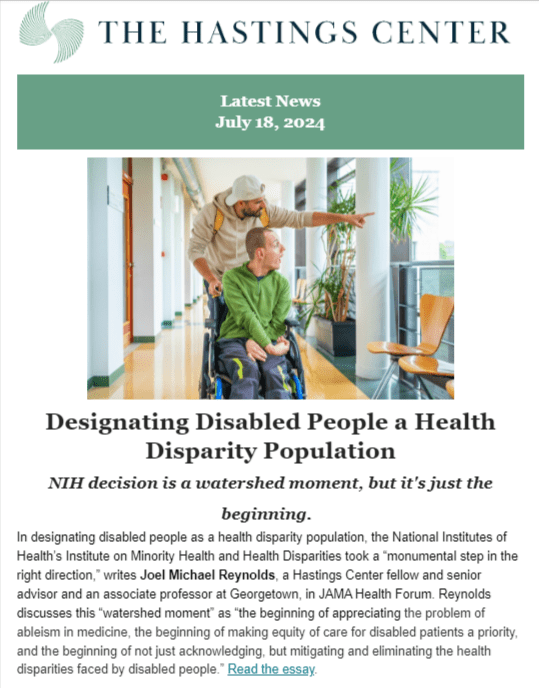
Health disparities and disabilities: New developments in the US

https://jamanetwork.com/journals/jama-health-forum/fullarticle/2819894

I lean toward applauding any move that seeks to address ableism. Biases – with regard to any property, whether it is a physical difference, poverty, age, skin or hair color or anything else – do so much damage.

Partly at work is the focusing illusion:

  • Someone is of a certain age, “hence” probably has dementia.
  • Someone has a physical disability, “hence” is already in bad health and does not deserve the same level of care and consideration as others.
  • Someone has a physical disability, “hence” is miserable all the time.
  • Someone is of a certain age, “hence” is no longer interested in anything and needs to be warehoused, wither away and be enabled to pass away out of sight of the rest of society.
  • Someone is black, “hence” is extra-ordinarily strong and does not need the same level of healthcare as whites.
  • Someone does not talk, “hence” is of low intelligence.
  • Someone is poor, “hence” is genetically flawed and/or mentally impaired.

And so on and so forth.

All other aspects of someone’s life and personality are casually dismissed, usually not even looked at.

Continue reading

Planning to try to force people to become aware that the planet is in peril resulting in 4- and 5-year prison sentences… Ouch. No more Zoom calls for Just Stop Oil, then.

https://www.theguardian.com/environment/article/2024/jul/18/five-just-stop-oil-supporters-jailed-over-protest-that-blocked-m25

Whether you agree with their approach or not, our future on the planet is very uncertain and these are the kinds of protests that I’ve heard about since my teenage years.

Back then, it was mostly missiles (and apartheid) that people in my native country were protesting against, I remember, and back then… because of the OPEC Oil Crisis, we actually had Sundays with complete DRIVING BANS! Emergency services excepted.

Rollerskating and cycling in the streets was so much fun on those days.

https://en.wikipedia.org/wiki/Car-free_days

Isn’t it crazy that we insist on ruining our own future on the planet for the sake of making money?

No, I am not planning any protests, no worries. But I often shake my head at the foolhardy stupidity of humankind and am also astonished to have to admit that I didn’t used to see either that the way in which we are living and behaving in the west is pretty crazy.

It’s not just about oil. It’s just about everything.

Strides for autism in the UK

In my inbox today
“Yesterday, the new Government announced their plans for the year in the King’s Speech. We are pleased to hear they plan to finally go ahead with reforms to the Mental Health Act. This inclusion is an opportunity to change the law so autism is no longer defined as a ‘mental disorder’ and autistic people will not be detained in mental health hospitals just for being autistic.     Last year, over 18,000 of you signed an open letter to Rishi Sunak saying its #TimeToAct on the Mental Health Bill but despite this huge demand for action, it was shelved. We’ve been campaigning on this for years and we want to take the time to celebrate this success with everyone who has campaigned to end the human rights scandal of autistic people being stuck in mental health hospitals. We will work with this parliament to strengthen the Mental Health Bill before it is passed into law to make sure we have better mental health and social services in the community to prevent autistic people from reaching crisis point in the first place.
The Government also announced plans for a new Education Bill which will include a focus on teacher recruitment. Only 26% of autistic pupils say they feel happy at school, so it is vital that this comes with proper training on autism for both school and council staff so they can fully meet the needs of autistic children being let down by insufficient support.”

“Common law” is a legal term

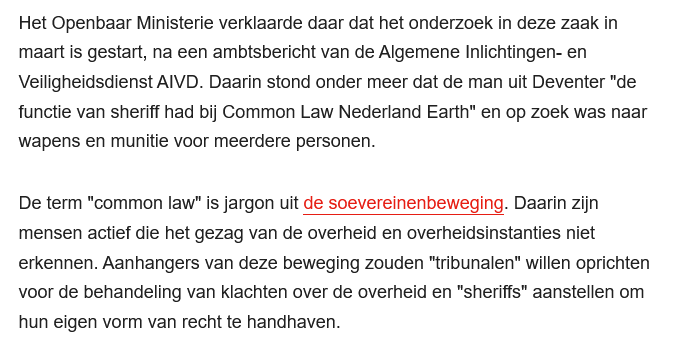
I just spotted an article in the Dutch news about groups of people who want to overthrow the government or whatever – called “soevereinen”. In the article, “common law” is described as jargon exclusive to these Dutch circles.

That’s incorrect.

This is a potentially dangerous mistake by this journalist, in my view.

You can for example be someone’s common law wife and that has nothing to do with wishing to overthrow the government.

https://nos.nl/artikel/2528098-aivd-waarschuwde-om-twee-verdachten-in-soevereinenzaak-langer-vast

I notice that I have a tendency to mix up AIVD and IND. Probably a good thing.


“Common Law Nederland Earth”? Really? These particular Dutchies sound like nutcases to me. Unfortunately, apparently they’re also dangerous nutcases. They must be folks quite like the crazy lunatics who still continue to pester me, for whatever reason. These dangerous Dutchies use code words, such as “bananas” for “weapons”. The lunatics who are after me do that too.

Tory rule has ended, for now

At least that’s something.

I hope that the horrific vilification of foreigners in the UK will now finally start to subside again. I’m not a fan of Labour but it’s better than the Tories.

Fareham MP Suella Braverman still MP? Hopefully not.
(Fareham is the next town to the northwest of Portsmouth.)

I checked. She’s retained the seat, that is, it now includes Waterlooville right to the north of Portsmouth. I’ve walked to Waterlooville once or twice. I wouldn’t want to walk to Fareham.
“Former Home Secretary Suella Braverman won the newly-created Fareham and Waterlooville constituency in the 2024 UK general election.”
Source: https://www.ndtv.com/world-news/uk-election-results-suella-braverman-under-fire-for-immigration-remarks-wins-in-uk-polls-6038310

“dog” in urban or hacker slang

What is it? What am I still missing about that?

Does “walking the dog” have a sexual connotation? I first wondered years ago when this kept cropping up in Portsmouth. I was also called a cat once and there was a lot of talk about cats at times.

(Almost everything that was flung at me in Portsmouth had a sexual meaning and if not, then it was just regularly abusive or even plain sadistic.)

I want this horrible nightmare to be over. I want my life back.

It’s definitely got nothing to do with this, in any case:

Merde

Most of my ancestors on both sides of the family are from there. I still have close family there on both sides of the family. Our department head was from there (Jacques Touret). I’ve spent time in the geology there. I’ve interviewed a scientist and former minister there (Claude Allègre). I traveled through it. I’ve been at hotels and other facilities in places like Paris, Perpignan and Toulouse. I know two Dutch women who live there.

I started learning French when I was still in primary school.

Don’t do this. Please don’t do this. Get your act together.

The world’s become a really shitty place. Don’t make it even shittier.

Did you know that asbestos is a geological material?

I’m a geologist, among other things. That’s also how I know that asbestos is not invisible and that it doesn’t have a smell. You can’t remove invisible asbestos; that only exists in some people’s imagination.

I remember sitting in an office at the Westergasfabriek while the terrain was being remediated. We were talking about the cyanide pollution on the site. The guy I was talking with clearly knew that I knew what’s what because when someone came in and hesitated, he got the nod. They’d found an asbestos pipe. It was under water.

Btw, some cardboard pipes look like asbestos, but aren’t.

(There was a major panic at the Westergasfabriek one summer day, when the sunshine caused the release of actual cyanide gas. I missed it. I think I was in the States at the time. See https://www.researchgate.net/publication/259841685_Living_with_cyanide/ Cyanide and manufactured gas plants or MGPs go hand in hand, but people were very sensitive about it.)

My dad had a cooling facility that was clad with Eternit plates sheets (siding, cladding). I remember that the plates sheets were cut into shape on site. At our home. We didn’t know much about asbestos yet in these days, so I doubt that protective measures were taken.

I’m sure I would have remembered, you see. There is a photo of the huge garage being built, years earlier, with me standing there in a red-and-white knitted – or crocheted – dress, sticking my nose into everything, wanting to know what was going on. I was what? 2, or 3? That curiosity is also how I once burned my hand. My dad was showing an uncle how well the fire was going in the wood stove in the kitchen and I wanted to see what was going on and put my hand on the stove surface to prop myself up so that I could see for myself.

I was born with a great deal of scientific curiosity. I observe. I analyze. I’ve always asked questions. Why this, why that? My dentist of many years sometimes had to laugh because I kept asking questions to which he didn’t always know the answer. To me, that is part of the fun in life. Finding out how stuff works. Finding out what is going on.

To come back to asbestos and Eternit, which some people might freak out about… there is a lot of cancer in my family on my mother’s side, but it’s all very different cancers. There’s no heart disease, only some high blood pressure, and no dementia. One uncle had a fatal stroke, I think, and another one had or has Parkinson’s, both on my dad’s side. Health-wise, our family is truly blessed. None of the “youngsters” have a huge chance of getting anything specific. We are all going to die eventually, but in our family, we have a lot of control over how healthy we are, because of the choices we are free to make and because no genes are destined to mess things up for all of us.

Some of us, in our family, have a negligible deformation in our spine. I have it too. It comes from my mother’s side.

I’ve worked with toxic substances (bromoform and osmium tetroxide) as well as with very hot acids in the lab. I’ve had training for how to deal with radioactive substances in the lab, both in the US and in the UK. Asbestos does not freak me out, invisible or real.