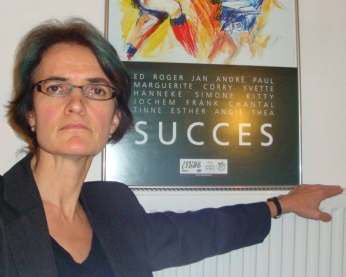
The best three decisions of my life:
- Quitting my job in tourism & hospitality in Amsterdam in my mid-twenties to go to university
- Moving to Florida for my PhD after having obtained my MSc, with distinction
- Becoming self-employed after funding for the PhD fell through
I’m going to talk a little about the latter on this page. I provided services for over two decades. I had no brick-and-mortar business. That matters. Brick-and-mortar business come with a lot of obligations. Providing services from the comfort of your home offers a lot of flexibility and is a highly enjoyable endeavour.
In case you wonder about my professional background, I was a geologist and marine biogeochemist who also happened to have excellent language and writing skills. I left the labs in 2005, however, and I began exploring bioethics topics about a decade ago. This has a lot to do with diversity, (in)equality, inclusivity and otherization. I’ve always been quite versatile, which is both a blessing and a bit of a curse. I have a tiny little bit of PR in my background as well as IT skills. I’ve been a Wikipedia editor since 2011, but not an exceptionally active one. In addition, I have a good grasp of many legal concepts (English and American law) and was successful as a LIP (pro se) in a case that I settled for over GBP 10,000 with the lawyers for two insurance companies. I shared that settlement with another party who had also been disadvantaged by what had happened; this was part of my motivation to bring this case but that party wasn’t aware of that until after I negotiated the settlement.
One of the reasons why I really like being self-employed is that it helps me control various factors in my life much better, such as the humidity of the air that I breathe in. Another one is the freedom, the fact that if I wanted to or needed to, I could work until 4am, but could also do my laundry or shop for groceries or go for a lovely walk in the middle of the day. It did away with age barriers as well. It does not matter what your age is if you’re self-employed, as long as you do what’s required of you. I liked the variety of projects and clients. I learned so much from my self-employment, also about myself because being self-employed quickly confronts you with your weaknesses and with new challenges all the time.
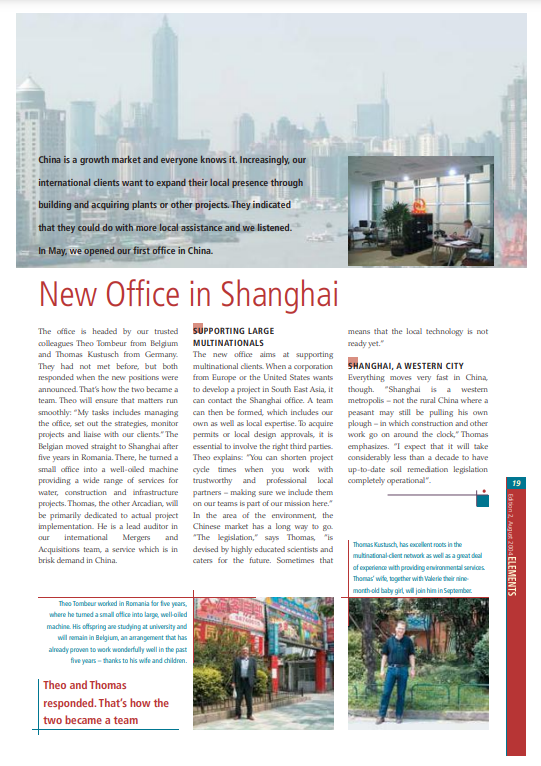
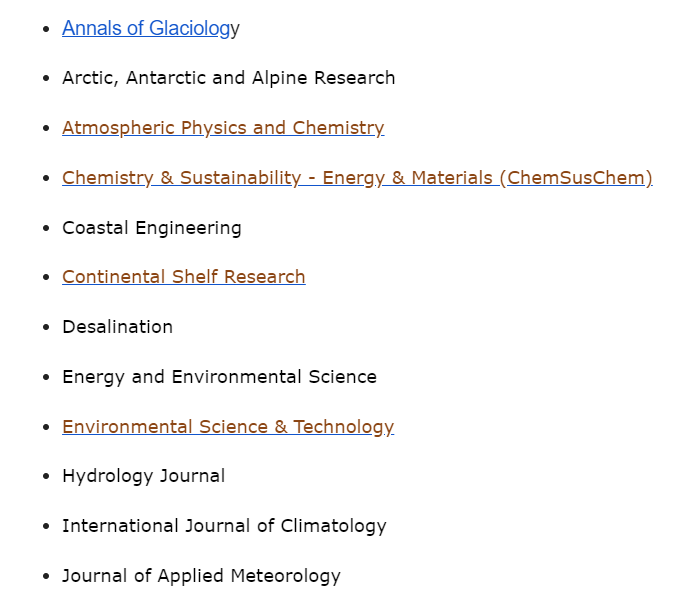
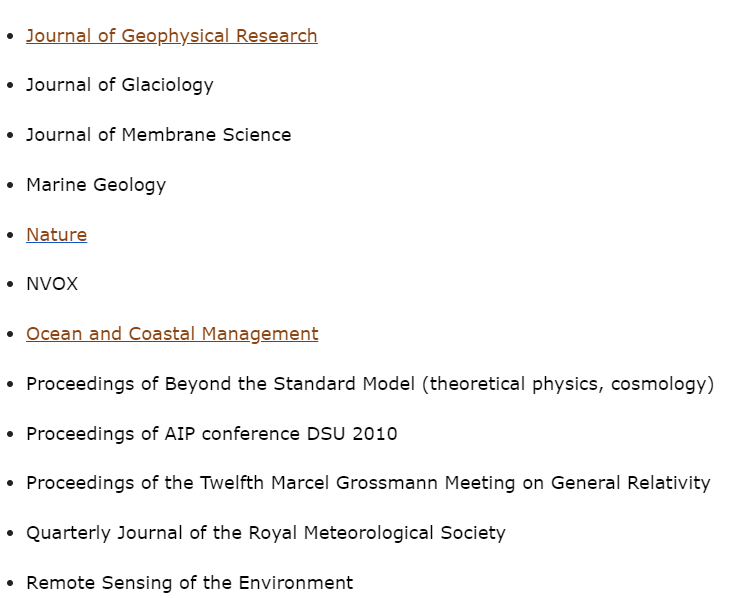
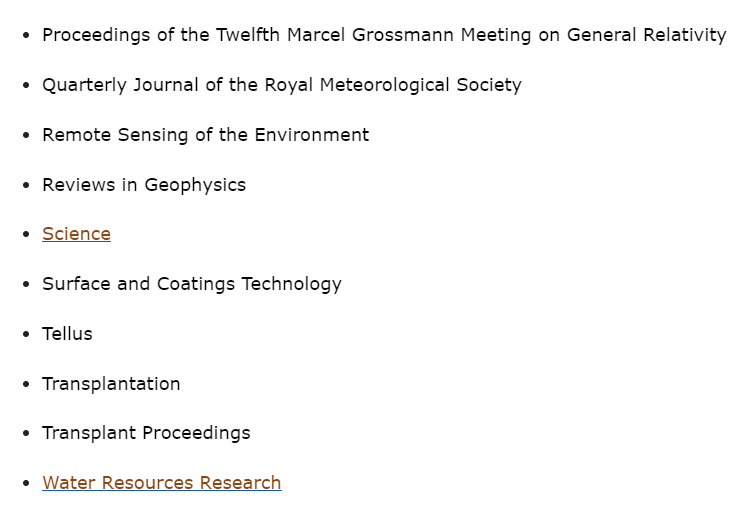
Together with my international network of associates, I served clients who deal with and/or create scientific knowledge. It enabled me to do many things that I also would have been doing as a professor. I lightened the load of scientists at universities by taking on some of their tasks. After a while, publishers, patent attorneys, engineering companies and a foundation or two as well as individual scientists and also translation agencies and other small businesses began finding their way to my virtual door too.
It was my aim to offer one-stop shopping so when someone for example needed a Spanish translation of a mining report, I would find someone who I could outsource that to. I did have the rule that I had to be able to assess any outsourced work. This one-stop-shopping principle meant that I also offered presentation skills workshops for scientists for a while. I was ahead of the curve with that; NATO C3 remained the only party who was interested in this for its scientists (besides a PhD student in Britain when I Iater offered the workshop at a conference there). They literally contacted me the day after I’d removed the information from my business website. Of course, I then quickly restored it, but there weren’t any more takers. It was inspired by my membership in Toastmasters of The Hague, which I got into via the Amsterdam-American club network.
offered the workshop at a conference there). They literally contacted me the day after I’d removed the information from my business website. Of course, I then quickly restored it, but there weren’t any more takers. It was inspired by my membership in Toastmasters of The Hague, which I got into via the Amsterdam-American club network.
I was not in it to make a helluva lot of money. I merely wanted to support myself doing things that I enjoyed and in a way that I liked. This meant that I needed a good mix of projects and clients. There is a natural seasonal influx of certain types of projects, so you need to make sure that you have different projects when, for example, many scientists are away on fieldwork.
After the business and I relocated from Amsterdam to England, the situation changed profoundly. Having relocated to England made me more attractive for certain clients in the Netherlands, but many parties there could no longer hire me once I had left the Netherlands. Another setback came when EU rules ended up forcing Dutch universities to have bidding and other procedures for even the smallest projects. Some ended up having to pay a lot more for the work that I used to do for them, they told me, and could no longer hire me (though they tried to work around the rules). In retrospect, this also tells me that I should have charged more. 😎
Working with universities can be complicated. Their budgets are limited. Because projects for scientists are often bespoke, it can be hard to know what to charge. I later found out that someone who I have cooperated with repeatedly over the years had been approached for a project that I ended up carrying out for a fraction of the other person’s proposed fee. That too clearly was a case of me having been too modest during my negotiations. On top of that, the project turned out to be substantially more time-consuming relative to how it had initially been presented to me. On the positive side, the feedback I got – and not just from the client – was pretty good.
Working with large businesses can be easier in the sense that they are far less fussy about your fees than university scientists. I was once contacted by an American scientist who’d found my business website and asked me to work on a grant proposal for him. He had been in the habit of letting his nextdoor neighbour work on his proposals, but wanted to hire a professional this time. When I told him my fee, he wrote back that his neighbour charged far less. Okay, then. I don’t argue with that. There’s no point. My clients’ grants usually concerned a lot of money, starting at about 100,000 bucks running into millions. My fee was peanuts relative to the funds they stood to gain. If anything, I should have charged more, certainly not less.
The year 2008 was the beginning of the end of that business, and of life as I knew it. There are a lot of both evil and really stupid people (who can be filled with prejudice or simply make unfounded assumptions) and such people can do anything to you if you’re a migrant. Or over 45. Or a migrant and over 45. Nobody knows you, so you simply don’t exist. It’s a long story that no longer matters. Those were difficult days for many people all over the world, after all. I still get a little bit of turnover on the basis of projects done a long time ago, but I formally shut down the business in 2024, at the end of the British tax year. A few hundred bucks a year – at most – isn’t a business.
I haven’t really been able to support myself since 2009, when I moved from Southampton to Portsmouth. I couldn’t have been happier back then because a dream suddenly seemed to materialize. Instead, my turnover collapsed to near zero in such a short time that it was impossible to recover. I had found a wonderful home in a dream location, was about to have a great turnover, my expenses were going down and I had just wrapped up paying off my study loans, too. Instead, I ended up collecting and processing acorns as a food source and losing a lot of weight.
I couldn’t apply for housing benefits right away because I had no way of printing the required documentation. When I finally did manage, they assessed my business as a cash business and consequently ruled that arrears weren’t expenses, which made them assess me as having more money to spend than I did. Years later, I discovered that the eviction attempt that followed had likely been illegal, but didn’t know enough about housing law yet to know that. I was unable to get good advice because it simply was not available locally; all I was told was that I wasn’t breaking any criminal laws. Not only that, I also later learned that my housing benefits had not been going to my landlady.
arrears weren’t expenses, which made them assess me as having more money to spend than I did. Years later, I discovered that the eviction attempt that followed had likely been illegal, but didn’t know enough about housing law yet to know that. I was unable to get good advice because it simply was not available locally; all I was told was that I wasn’t breaking any criminal laws. Not only that, I also learned that my housing benefits had not been going to my landlady.
Many other things had gone mysteriously awry too after I moved to Portsmouth. (Unbeknownst to me at the time, I had become the target of a phenomenon known as sadistic stalking in the year before I moved to Portsmouth. This included a lot of hacking activity, likely with the aid of 4chan. 4chan or whoever exactly it is did its best to wreck as many things in my life as it could. I filed the first related police report in October 2008, having no idea what on earth I was dealing with.) My address had disappeared from the databases so I was unable to get business broadband for some time and there was no mobile phone signal at my address.
Years with a lot of deprivation followed. Most people simply don’t want to know. They don’t want to hear about you picking up food from the streets and rummaging through bins to survive. They don’t want to know that you’re losing weight because you can no longer feed yourself. People have this fantasy that before something like this can happen to a person, all sorts of mechanisms will kick in that will lift them up, lift them out of deep poverty before it can even start. That’s hogwash.
I think it is fair to say that when I lost my income, I essentially lost my humanity, my significance as a human being, in the eyes of many people, even though I was still the same person. Some – too many – people even feel that they can abuse you physically and/or verbally because they fear no repercussions. They see you as powerless and seem to consider you deserving of abuse. I never saw that coming. It took me by surprise, but if I am honest, then I have to admit that I probably look at many people this way too, without being aware of it. What is it that makes us assess others on the basis of their business success and the size of their bank account? Shouldn’t there be other criteria that are just as important? Where do we draw the line?
I think it’s also fair to say that more than being vilified as a migrant abroad, courtesy of Tories and others, the vastly different sentiments in the Netherlands have shocked me. The fact that I spent many years abroad seems to cloak me in a veil of suspicion now too?
I could talk about specifics of my situation, but what would be the point? People don’t want to know. They want to think about buying a Tesla. They want to gain more votes in the elections. They want to invest in NVIDIA shares. Alternatively, they want to believe that the world is a beautiful fairy-tale fantasy land. Who am I to disrupt their sweet dreams?
My biggest regret? I should have killed myself in 2015. Sorry for sounding so dramatic. It serves no purpose. I didn’t. It’s not in my nature to give up easily. Like I said, it’s a long story. I really should have left in 2013, but I had no way of foreseeing what would follow (and I would have not known that I shouldn’t just leave but disappear off the face of the earth, become untraceable, but explaining that well would require me to be a forensic psychologist, which I am not). Back then, in 2015, I promised myself that I’d give myself five years to get out of the situation that I was in and if I had not done that by then, then that’s when I would give up and end it. Because by then, I’d have suffered more than enough (and, yes, I asked for help all over the place). Then the pandemic arrived. So many things changed that it didn’t seem fair to myself to kill myself because of a promise that I had made five years before. I had hope again. Like I said, most people don’t want to know details. They want their Teslas and their votes, their fantasies and their fairytales. I get that. Unfortunately, many want their contempt, too. Many can’t survive without contempt, apparently.
I’ve always loved learning, but I’ve learned far too much now.
The best thing that I have done recently was leave the penal colony for the over-55s that I had accidentally gotten myself into – and getting into it was the biggest mistake of my entire life. I still find it hard to believe that I was that stupid. In my defence, I admit that I had no idea of the level of hate and contempt there is for older adults in some places. That has been the scariest discovery of my life, so far.
There is far too much hate and destruction in the world. A lot of that hate and destruction comes from straight men and their damn dicks. (I’m thinking of people like Trump, of course.) However, there now also appears to be a great deal of cold contempt that comes from (often highly materialistic) young women. It strikes me as new. I find it a worrisome development. Is it a Gen Z thing?
Me, I am just another Tai Chi Zen Queen wannabe now. Yes, I once wanted to be a full professor, but I had no desire to “rule the world”. I enjoyed working with students, seeing them grow, and I relished the idea of developing a new research area. It was like a giant cake that for some reason was being overlooked by all but literally a handful of marine microbiologists. I wanted to explore the (biogeo)chemical side of that. If you want to open up a new field, you need to surround yourself with the best people, facilitate their work and support them as well as possible. It’s mostly your grad students who will make it happen. They are the ones who take their newfound knowledge around the world and spread it.
That is my take, anyway. You don’t need to agree with me. I don’t need you to agree with me on that. We all do our own thing our own way and that’s as it should be. Me, I tend to be a catalyst in the background, at best. I don’t need the limelight. (I was not afraid of it either, however.) I’m mostly motivated by curiosity (an eagerness to learn), a striving for excellence (not perfectionism but simply the joy of doing something well) and also a drive for justice and fairness. I don’t mind sticking my neck out when it’s required. I see that as an obligation that strong people have.
That said, there are limits to what the human body can handle so it’s important to look after oneself, too. That is what I am focusing on exclusively now. I have to.
Also, I take no (more) abuse from anyone, but I will rarely let people know if that is the case. Most abusive people aren’t worth even a second of my time. Others are far too insecure for me to want to say anything. I pick my battles. I have always picked my battles. I have always tended to ignore silly pettiness, but the people who it concerned didn’t know it and sometimes believed that I was too insecure to bark back at them and start arguing with them. That doesn’t bother me. It still doesn’t bother me, but I have a lot less patience with people nowadays than I used to have a long time ago.