Hi. My main background is in the earth & life sciences, but I now predominantly explore topics in the broad area of bioethics. That's about equality, fairness, justice, diversity and inclusivity. It's also about people's biases, the associated otherization and everything that this can result in. That includes poverty, homelessness, poor health, shabby looks, shrinking personal bubbles, exposure to chemical and noise pollution and lots more. It's also about law, philosophy, speciesism, science & technology, forensic psychology, politics and public policy (governance). Diversity and inclusivity are much bigger challenges than I used to believe. I for example now think that society's lack of genuine acceptance and support for people whose brains work very differently can among other things result in destructive behaviours for which the forensic psychology term is sadistic stalking or resentful stalking.
Why did he get angry? Or, anxious, rather? Because he can’t change himself. He wishes he could. He wants to be accepted the way he is. That is the overriding drive in his life. It overrides any concerns he may have for the well-being of others as well as for himself.
How can you counter that?
Like this, sometimes. Anything that soothes children (hence also distracts) will likely do.
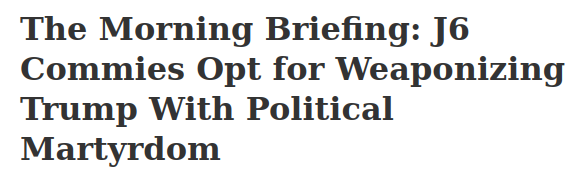
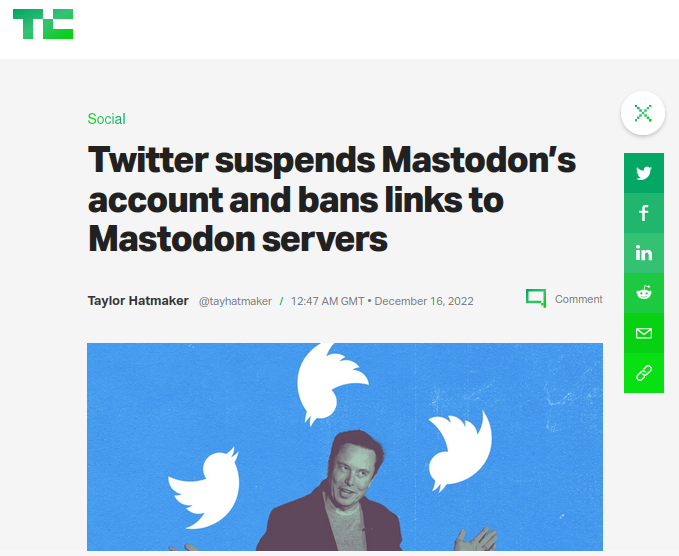
How right-wing media in the US describe what’s been in the works for months:
Do they have a point? Yes, and no. Yes, because sure, Trump will play the martyr who’s the victim of a conspiracy again. Yes, because maybe he is best ignored. No, because it does not matter whether Trump will play the martyr. No, because the bigger picture is much more important.
But it will have an effect on his followers. Time will tell what exactly that is.
This headline was followed by this, by the way:
Told ya it’s funny…
It sounds like this bunch at least has fallen out of love with “ORANGE MAN”. Phew.
Canseco, R., & Bellaubi, F. (2022). Application of geoethics to university education based on a mining geoethical dilemma case study in the Catalonian Potassic Basin (Spain). Journal of Geoethics and Social Geosciences, 1(1), 1–32. https://doi.org/10.13127/jgsg-24.
The internet has brought us a lot of good but it has also led to the phenomenon that strangers can now easily become obsessed with us without us having an idea of that until it’s too late and it starts impacting out lives and livelihoods big time.
A great deal of this has to do with neurodiversity, with differences in communication style and brain structure, hence also empathy, as well as with otherization and anger. Particularly if you are a kind person, you can be like a warm blanket on which someone else starts to depend without you realizing it.
Such persons often have no idea of the impact their actions can have on others. Their reasoning can be “Getting flowers is nice, so if I send someone flowers every day, that’s a really nice thing to do.” If the person they send flowers to gets angry or afraid, it causes a lot of confusion. It can also lead to anger and resentment.
It’s really a failure of our society and of our health care systems. That’s not easy to correct. Fixing it will take time.
Of course, stranger-stalking isn’t always like this at all. You may for example also serve as someone to take revenge on in a form of displaced or redirected aggression.
There are lots of simple practical things that you can do to create a buffer around you, though. They can make a big difference.
There are lots of simple practical things that you can do to shield yourself a little, though. They can make a big difference.
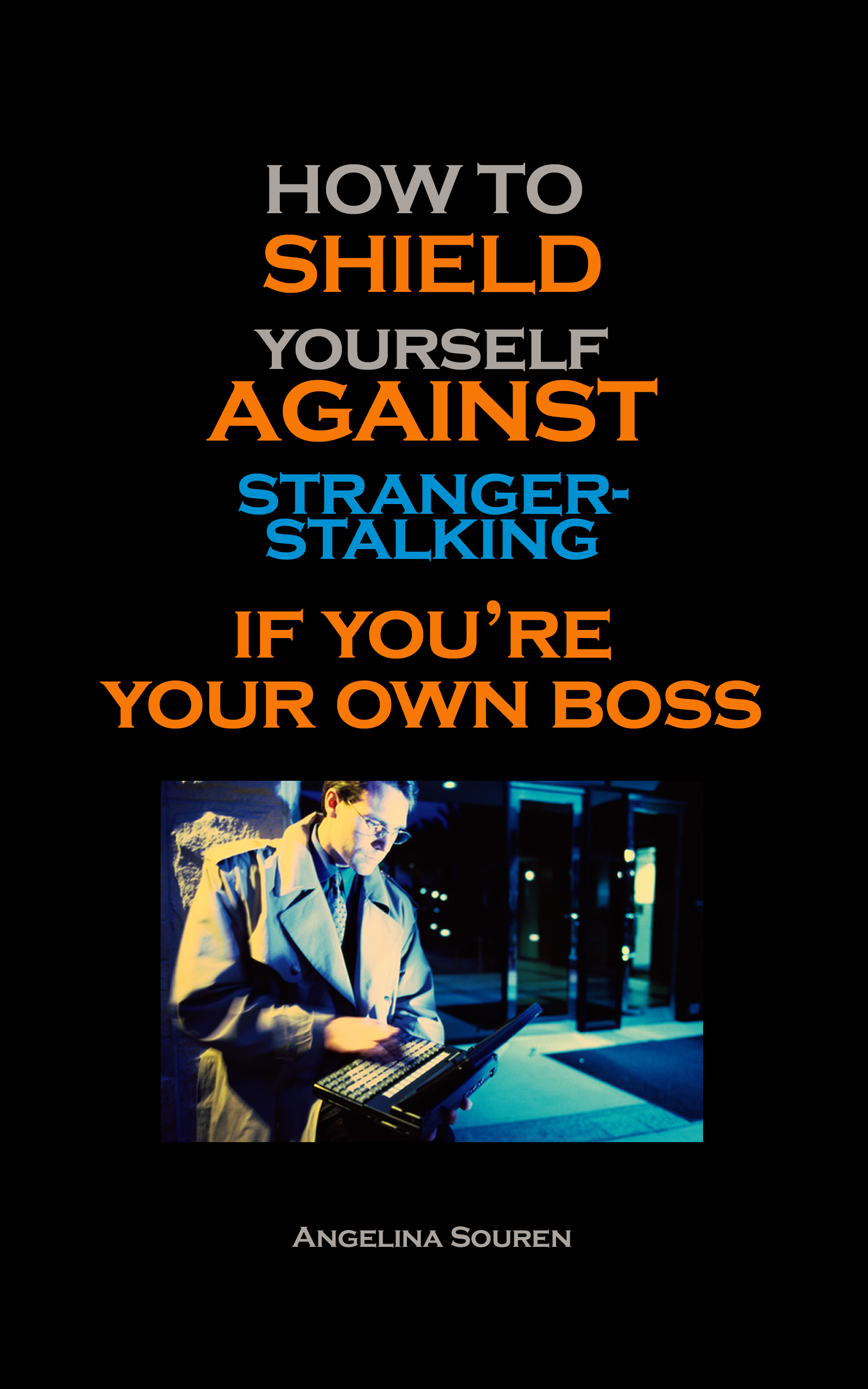
I wrote a guide for how to do that, for to shield yourself if you’re your own boss.
Did you know, for example, that doorbells, toys, Apple Air tags and other lost item finders can also be used to spy on you? Did you know that there’s an app that you can use to check whether you’ve been “tagged”? A person who tags you may think he is merely watching out for you, looking after you. After all, the tag enables him to come to the rescue if, say, your car breaks down. You, however, may not see it that way at all.
I’ve just updated the booklet that I wrote. You can download it from this site as a PDF file. Did you get it from Amazon? Did you import the earlier version of the PDF file into your Kindle? Check the title page in your Kindle and update the file if it still says “5 January 2022”.
Mathematics student Ginger Egberts is 26 when she’s just delivered her daughter, through a C-section. Her 2-year-old son is staying with her parents. Ten days after his sister’s arrival, he manages to pull a mug of hot soup off the kitchen counter and ends up with 11% burns on arms and chest.
Two years later, she finishes her Master’s, creates a LinkedIn profile and sees a PhD spot (which is properly paid full-time employment in the Netherlands) concerning the development of a mathematical model for the prediction of the healing of burns, leading to a decision-making tool for medical professionals. She applies and gets hired.
That was four years ago and she’s just wrapped up her PhD thesis. For her research, she’s cooperated with the surgeon who operates on her son.
She’s now put in a grant proposal to develop an app.
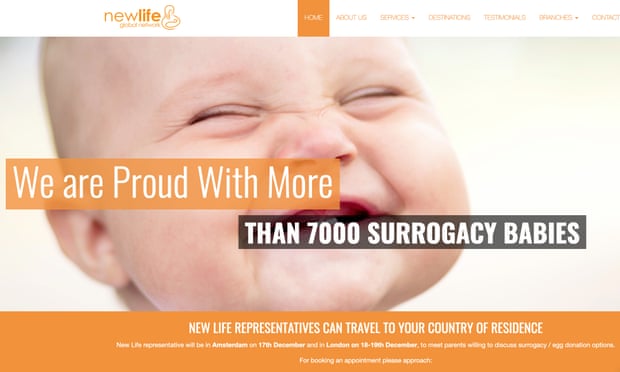
Practices like these – promising parents a boy or a girl – can cause parents to abandon their baby in the country where they sought to circumvent English regulations if the baby is not exactly what they wanted.
They then reject the kids as if they are a handbag or a pair of shoes of the wrong color.
Practices like these can also lead to difficulties when the child ends up with a different nationality and the parents can’t get the baby across the border.
He plays the flute. Did you know that? The video below tells you ten more things that you possibly didn’t know yet about him.
Sparkling personality
His former music teacher Céline Bognini who interacted with him for several years recalls him as very energetic and enthusiastic as well as highly inquisitive. He wasn’t particularly good at reading notes and singing, but she’s kept a photo of 9-year-old Kylian, from before he started playing the flute. She only has good memories of him, she says and calls his personality sparkling. Now contrast that with what is being said about young Kylian in the above video.
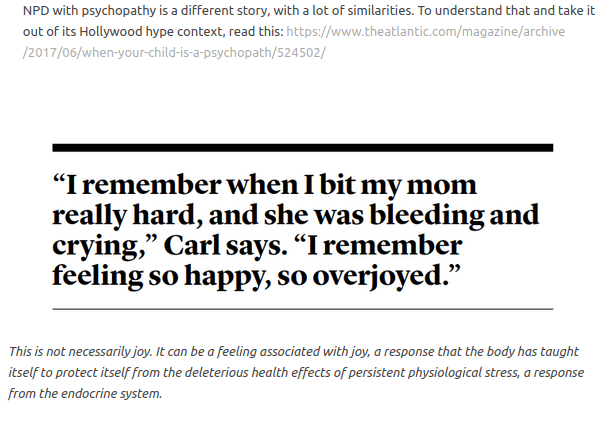
The pivot point is always that people with NPD see themselves as deeply flawed, while all they actually are is human.
Nobody’s perfect. Or, we all are.
People with NPD want to be super human and want everyone to tell them that they are.
People with NPD see themselves as deeply flawed and want everyone to accept them the way they are.
See the Catch-22?
The crux is that you can’t get people with NPD to accept themselves the way they are and as soon as you show them to the world the way they are, they tend to feel deeply betrayed. They can’t accept that they’re actually perfectly fine (and that everything else follows from that).
How can they get to that point of self-acceptance? By changing the neurological pathways in their brain a little. Very gently, little by little.
So you’re flawed. So what? Being flawed is fine. It stops the world from becoming unbearably boring.
The second Catch-22 is that you somehow need to get it through to their subconscious. You can’t be (too) open about it.
I keep thinking about neurofeedback within this context.
Alternatively, maybe it is somehow possible to convey to them that they should see themselves as newborns. Nothing intrinsically good or bad about them, and in possession of plenty of potential, also for growth and for positive change.
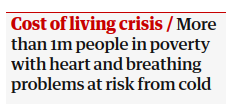
That’s what 74% of people said in an ONS survey conducted between 22 November and 4 December with 2,524 respondents.
Around 16% of people said that they were worried or very worried about their food running out and not having any money to buy more. That was already the reality for 6% of the respondents.
About 23% of those surveyed said that they were unable to keep comfortably warm at home. That’s a health risk. It also can have implications for cognitive functioning as when the temperature drops, the brain receives less blood.
In the past decade, subsequent governments have so often violated English law and even ignored rulings by English courts.
It’s refreshing to see something quite different for a change. Thanks, Rishi Sunak.
Once you start abandoning human rights principles, you set off a frightening cascade of abuse of human beings from all backgrounds, including white English people.
I’ve often said that we should learn more from nature and that nature does not waste anything. True. But you know what? Nature isn’t necessarily very efficient either.
Of course not. Humans are part of nature and humans are far from efficient. We all know that.
But I am actually thinking of a species that we have a lot in common with.
Just like us, they’re very intelligent. Just like us, they can learn to distinguish between the 26 letters of the western alphabet, between music composed by different classic composers and between paintings created by different painters.
Just like us, they need food and shelter and drinking water and affection and just like us, they are aware of pests and infections.
Unlike us, individuals of that species can accelerate much faster. Even having the fastest sports cars does not help us. (There is only one very recent Tesla that appears to be able to accelerate faster. Formula 1 cars accelerate slightly more slowly.)
They can also reach much higher speeds than the fastest human runners.
Unlike us – we have trouble recognizing individuals of the species – they recognize individual human faces. Unlike us, they can see across a huge distance, too.
Just like the female of the human species for 20 or 30 or 40 years of her life, the female of that species ovulates once a month.
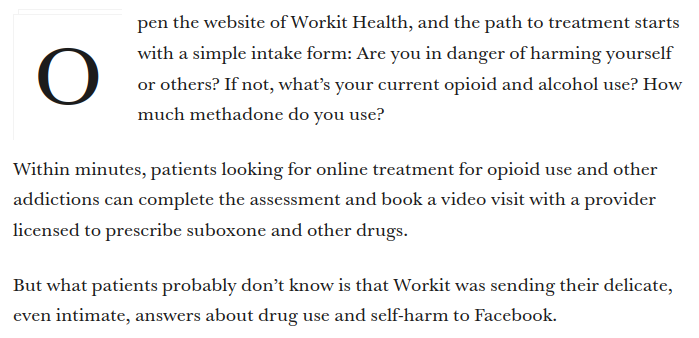
An investigation of around 50 telehealth companies shows that their virtual care websites were leaking sensitive medical information they collected to the world’s largest advertising platforms.
Well, besides Asian fermented options, sauerkraut – called “zuurkool” in Dutch – is good too. I grew up with the bagged version with a limited shelf life but you can also get sauerkraut in jars these days. (The version in the jars will likely taste slightly differently.)
In the Netherlands, it’s usually eaten with mashed potatoes and “rookworst”, preferably from HEMA (smoked sausage, typically Dutch). If you can’t get it from HEMA, then use the Unox brand.
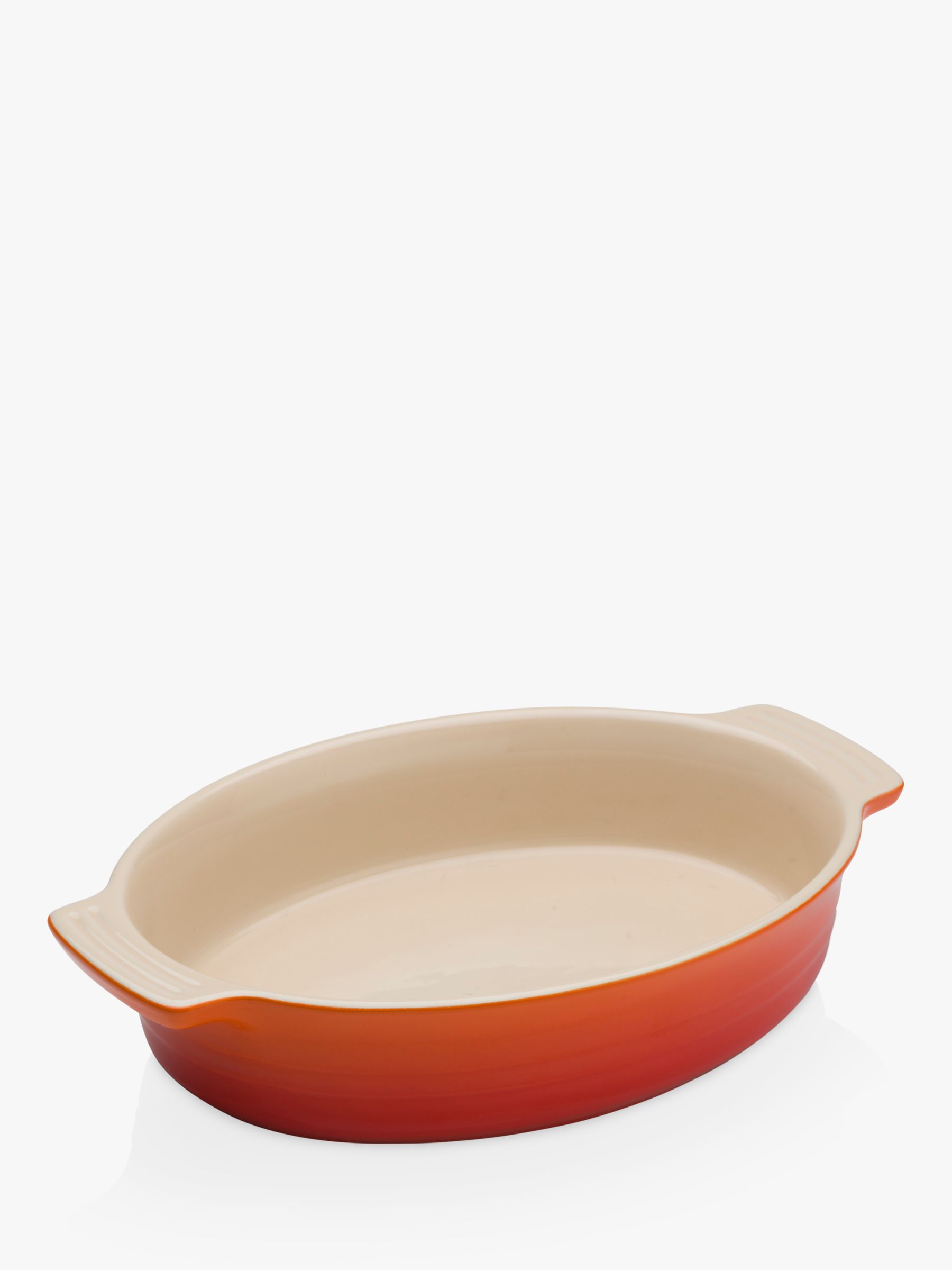
My mother (who passed away in 1975) used to put leftover sauerkraut in a flat oven dish (gratin dish). She would cover it with mashed potatoes, flatten and smooth the mash surface, then use a knife to butter the surface, put “paneermeel” (bread crumbs) on top of that and a few dots of butter on the paneermeel.
I liked it much much better that way as it takes a bit of the tartness out of the sauerkraut no matter how healthy it is.
It’s already “gaar” so you only pop it into the oven to heat it and to make the breadcrumbs brown and crunchy.