On 11 October 2022, in a two-hour webinar, Devon and Cornwall’s Office of the Police and Crime Commissioner and Crest Advisory provided an overview of what Devon and Cornwall’s Serious Violence Prevention Programme has achieved since its launch. They also looked at how this approach could be adopted in other areas that don’t have a Violence Reduction Unit.
Continue readingHuman rights – diversity – neurodiversity – equality – inclusivity – discrimination – otherisation – speciesism – planet – consumerism – bioethics sensu lato
Arrested for resisting arrest without violence?
That’s like being arrested for jaywalking for thinking about the time your cousin got arrested for jaywalking…
As neuroscientist Lisa Feldman Barrett will tell you, the fact that they mistook his walking stick for a gun can be explained.
Once he had shown that it was a walking stick, they should have apologized and left the man in peace.
Is it the adrenaline high that causes police officers to do such daft things? That too would be understandable, but then they should develop the habit of going for a jog around the block after each such instance.
“There must be a reason”
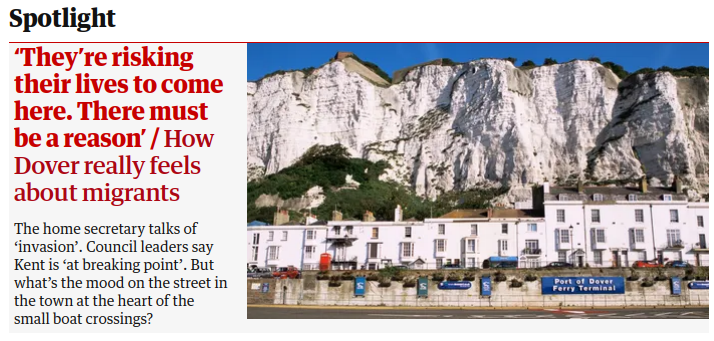
Braverman’s language, says Zosseder, “is what’s causing people to think it’s OK to do what they’re doing, to spray swastikas on bus stops.”
What Braverman and other politicians do, that’s otherization, a term apparently first used by Oxford neuroscientist Kathleen Taylor, for example in her 2009 book “Cruelty. Human evil and the human brain.” People also often call it “othering”.
“…even mild otherization primes people for aggression”
– Kathleen Taylor
“Talking about cruelty makes it easier to be cruel – unless one’s talk incurs swift punishment. Acting out the otherizing ideas, especially in a group whose members compete for status and egg each other on, can push people into extreme otherization with remarkable speed.”
– Kathleen Taylor
“the difference between someone hurling verbal abuse at an immigrant and someone beating an immigrant to death is a difference of degree, not a difference in kind”
– Kathleen Taylor
Neuroscientist Lisa Feldman Barrett also talks about this topic in her book “Seven and a half lessons about the brain”.
A“reason why people sometimes fail to to empathize with those who look different or believe different things than they do”
may be that “it’s metabolically costly for the brain to deal with things that are hard to predict”
– Lisa Feldman Barrett
The less familiar we are with a group of people, the harder it can be to feel empathy for them. That’s why inclusivity is so important.
Why do people do something like this?
Challenges for autistic people in the professional realm
How hard it must often be for autistic people to run their own businesses!
(Unless perhaps if it’s focused on working with autistic people.)
From what I have learned, I know that it can be challenging for them to navigate the professional world as employees, too. They often have trouble understanding how the world works, particularly how one approaches and communicates with other people, such as potential new clients. They also tend to be so narrowly focused that this too surely must hamper them at times.
I understand that “Le Petit Prince” by Antoine de Saint-Exupéry is a rich resource for them, but while certainly useful, it was intended as a children’s book, not as a guideline for how one for example behaves in a marriage. Besides, it was written a long time ago.
If we could make the world a kinder (more empathic) and more inclusive place, the motivation for the kind of stalking behaviors that I have been exposed to in the past 14, 15 years would start to disappear. There is often a lot of anger, powerlessness and frustration – and yes, resentment – behind it, as well as a dogged determination.
Would you have guessed this?
Likely not.
I am pointing this out to show how off-base otherisation is.
Olivier De Schutter (UN poverty envoy) tells Britain this is ‘worst time’ for more austerity
Olivier De Schutter is a human rights law professor at Leuven University in Belgium and, at the UN, the successor to NYU human rights law professor Philip Alston (who’s Australian). The latter has lambasted the UK government before because it pushes so many people into poverty and then keeps them there. (Why? I would say because the poorer people are, the less powerful they are and the more it enables certain very rich people to become even richer. The UK government has a tendency to use the population to balance its books. It sells off the poor and sends them to slaughter, like cattle, when it needs to free up cash. The poor, that’s currently about one third of the British population.)
De Schutter has a human rights law course on EDX, for anyone who’s interested. It’s free. (There is a paid version, which is part of a MicroMasters in International Law. EdX offers financial assistance to motivated learners in need. Leuven University students take this course too, by the way.)
https://www.edx.org/course/international-human-rights-law
(I think a new session actually starts TODAY.)
We must be careful with language on immigration, minister says
Yes, indeed. “Even the mildest otherization primes people for aggression” wrote Oxford neuroscientist Kathleen Taylor in her book “Cruelty. Human evil and the human brain.“
The difference between otherizing language and violence against otherized people, she added, is a difference in degree, not a difference in kind. Otherizing language can escalate into cruelty and violence at an astonishing speed, she qualified further.


See also: https://www.bbc.co.uk/news/uk-politics-63466532
Home Office head honcho Suella Braverman’s use of the word “invasion” suggests that Britain is at war with war refugees and other migrants. Isn’t that as ugly as Russia suggesting that Britain sabotaged those Nordstream pipelines?
Is this, too, what you get when a council’s response to Travellers showing up within the city limits is instant, paranoid, over the top (and blatant otherisation and criminalisation on the basis of ethnicity or lifestyle)?
“Now the part-time worker is calling for more community compassion, after both he and his mother were berated over his parking, despite Tony having a Blue Badge and parking permits for his camper van, his work van, and his personal cars.”
Does he have too many cars? Yes, that may well be the case, but it also sounds like only the camper van is parked in Middlesex Road.
So I then googled his name. Looks like he is the owner of “All About Classics vintage vehicle hire”. (Same face in the newspaper photo and in the Twitter account profile photo. Same face in the photos on the business website.) That explains it!
But his business address (according to the website and Facebook) is indeed Middlesex Road… So the problem may be of a different nature than what it looks like at first sight. Cost of living crisis, anyone? His business would already have been hit hard by the pandemic. But there is also the fact that his parents don’t get the practical support that they need. Council cuts, anyone?
I found myself becoming interested in the full story. “I don’t know, of course, but it could be that what he needs to do is register a limited company,” I thought, so I looked at Companies House records. It seems that he had a limited company earlier, but for less than a year, perhaps because the admin side of it was too frustrating. It was registered at a different Southsea address. It appears that the current business is a Limited that he started in April of this year, but it is registered at a Copnor Road address.
Could be that he has posted the address where is currently staying most of the time on his website so that people can find him more easily.
Whatever the background, a little bit of compassion can go a long way. One day, you might need someone else to be compassionate towards you and if that happens, you likely never saw it coming.
How Runaway Algorithms Brought Down the Dutch Government
(Click on the “CC” button for subtitles if the Dutch accents get in the way.)
By the Center for Human Rights and Global Justice, New York University School of Law.
- Xenophobic machines: Discrimination through unregulated use of algorithms in the Dutch childcare benefits scandal. October 25, 2021: https://www.amnesty.org/en/documents/eur35/4686/2021/en/
This concerns shockingly discriminatory use of self-learning black-box algorithms, designed to discriminate on the basis of factors such as socioeconomic status and nationality in the Dutch tax authorities’ (and other organizations’) scrutiny for fraud. And that’s far from the whole story.
It’s also true that regulation in the Netherlands is often way too rigid. It makes us cloggies abroad often look really strange (OCD-like) because we are so used to having to be super precise and document everything. This can for example lead to people having to pay back 90,000 euro because they made a 100-euro typo in a form or perhaps because they forgot to sign the form or because paid the childcare center one day late or the amount they paid the childcare facility was 10 euro less than it should be.
However, this scandal was about people being labeled fraudsters and being treated as fraudsters mostly on the basis of nationality without them being fraudsters at all and without them having an idea what error they were supposed to have made and beingg unable to obtain any information. It’s destroyed many lives. Some people lost their homes, others even their children (taken into care) or their marriage.
The first signs of the scandal emerged in 2014. It would take until 2018 before some people started waking up and started looking into it. (Do we owe this delay to the phenomenon of conspiracy theorists?)
It’s 2022 now. It’s doubtful that all the people who were harmed in this have already received compensation, so I understand. (I know that several individual court cases are ongoing or will be started soon.)
A problem with the complete opacity of and the secrecy surrounding these black box algorithms is that you wouldn’t even know it if hackers interfered and, for example, inserted their own parameters into the model. They could perhaps, also feed it highly biased learning data, but indeed, the innate biases in the model would also steer it toward concluding that poor people and foreigners are more likely to commit fraud.
How does this work? If you are looking for fallen leaves in parks, but only or predominantly look in two specific parks, you might erroneously conclude that those two parks have high numbers of fallen leaves and that there are no leaves in other parks. As you haven’t looked at all (or well) in those other parks, you found no or much fewer fallen leaves there.
Btw, the term “white-washing” is Dunglish. It’s called “money laundering” in English.
Similarly, “Minister President” is “Prime Minister” (Rutte). Turns out that he (Mark Rutte) was found guilty (by the court) of encouraging discrimination in his role in 2003, when he was not Prime Minister but ran the Dutch version of the English DWP. He had asked for people of Somali descent to be traced and scrutinized for fraud. https://www.trouw.nl/politiek/rechter-rutte-zette-aan-tot-rassendiscriminatie~bc40d2da/ Rutte did not get it at all at the time and expressed surprise. Apparently, he laughed and commented that the law should be changed, then. The reason for this was that some Somalis had committed fraud. That’s like saying that all Dutch people are blond and blue-eyed because some are. It’s nonsense.
(This latter court case ran its course after I had moved to England. I was not aware of it.)
Continue readingThis is heartbreaking to read. It sets people up for failure.
Many refugees are constantly being moved without even being told where on earth they will be taken to. It traumatizes many of them and I fully understand that. This, too, dear Home Office, is a form of cruelty. This powerlessness causes an enormous amount of stress and it also often isolates people from anyone new who they have gotten to know.
https:e//www.theguardian.com/world/2022/oct/28/asylum-seekers-uk-hotel-moves-home-office

What is gaslighting?
Gaslighting = trying to drive someone else crazy, literally. Because it makes you feel powerful. In control.
Watch this video. When he says that she is 30 minutes late for their first dinner, that’s when it starts. She was not late at all, but he wants her to start doubting herself. That’s gaslighting. Gaslighting also includes telling the people around you lies about you and getting them to abuse you too. Such people are called “flying monkeys”. It’s intended to help isolate the victim because that makes it possible to take the psychological abuse up a few notches. You can see that in this video as well.
Anyone who considers this kind of abuse hilarious should see a mental health professional. Because you may need to learn some techniques for how to modulate your behavior. That could be really helpful.
Crock Pots and other slow cookers (cost of living, climate)
John Lewis reports that slow cookers are now its best-selling electrical item. The Guardian calls them a 1970s favorite, but I don’t think I’d heard of them until I moved to the US in the 1990s.
I bought a 3.7-liter one in June. I’ve also recently stocked up on organic dried beans, marrowfat peas, lentils etc. (from the family business BuyWholeFoodsOnline.co.uk which is not associated with Amazon). I soak the beans etc for 8 hours or so and as I usually cook them on low overnight in the Crock Pot, this can serve as a heating source, too, and as a friend of mine informed me, slow cookers don’t use a lot of electricity. That turns out to be correct.
The soluble fibers in the beans can give you gas, but they also help remove cholesterol from the body, so there’s that too and, besides being a source of iron, magnesium and so on, they’re of course also a good source of protein.


Educate yourself about the presence of phytohaemagglutinin (PHA) in legumes, which requires you to soak, rinse and cook legumes really well. If you eat a lot of beans, you may still end up with some of the effects of phytohaemagglutinin (a substance that can make blood cells stick together and can also for example activate T cells) because there will always be a little bit of the stuff left in the beans.
In my case, it then gives me achy muscles – that’s caused by the T cells – and it makes me yawn like crazy (probably also caused by the T cells, because the muscles will want to relax and you’ll likely notice you’re fidgety and stretching a lot). It can also make me wake up often in the night or generally cause me to sleep less well, probably because of the achiness.
Should this happen to you, simply stop eating the beans. Consider taking a nice warm bath. You should perhaps also look into how you processed the beans; that said, you can even experience this effect if you eat a lot of tinned kidney beans, so you may not have done anything wrong other than having eaten a big fat lot of oh so yummy beans…
The achiness will disappear. You may wonder if you’re falling ill or something, but GPs won’t recognize this as an effect of having eaten a lot of legumes. You may also feel like you’ve overdone your exercise!
Some legumes carry a greater phytohaemagglutinin content than others. Red and white kidney beans contain the highest amounts; the latter are also called cannellini. Marrowfat peas and mung beans are examples of legumes that contain much less of the stuff. Lentils don’t contain much of the stuff either and they cook much quicker.
(Chickpeas contain a great deal of phytoestrogens, by the way. Perhaps particularly if you’re postmenopausal, you may notice some effects if you eat them regularly or eat a lot of them.)
For the record, I use boiling hot water a few times when I process my beans (when I soak them and when I cook them). I’ve never gotten the classic stomach upset symptoms associated with under-cooked beans.
(Anyone who doesn’t believe what I wrote above about these lectins and T cells:
Do a search in PubMed. Yes, I often apply Occam’s razor. Why start looking for a much more complicated and much less obvious explanation, when I have something obvious and logical at hand?
I may be slightly more sensitive and I certainly respond in a less typical manner than most folks. Hay fever also often gives me muscle aches, for example, and so does monosodium glutamate (MSG), but that also affects my energy level for some reason. MSG does not give me a headache at all, the latter supposedly being the standard response in people who are sensitive to it. I am surely not the only one in the world who experiences these effects, though.)
I stopped using my fridge in 2018, but now, after I’ve cooked a big batch of beans or lentils or what have you, usually with garlic and whole black peppercorns, a bit of salt, sometimes also with ginger or onions (all the easy peasy lazy way, not fried first), I fill “recycled” pots (coffee etc) and tubs (ice cream etc) with the beans and switch on the fridge. I normally let the beans sit in the Crock Pot for a day, to let them cool down and to avoid needing to heat them again to eat them on that first day. It usually feeds me for about a week, depending on what else I eat, and what I eat the legumes with. After I take the legumes out of the fridge, I quickly heat a plate or bowl of them in the microwave.
Here are some tips on the BBC site for what else you can do with a slow cooker:
https://www.bbc.co.uk/news/av/uk-england-norfolk-45713490


I’ve also cooked a mix of lentils, mung beans and chana dal (small split chickpeas) and eaten them with curry powder and olive oil, with or without ginger. Olive oil is very good for your heart’s health, provided you don’t heat the oil. The price of olive oil’s been going up a lot lately, though. This has to do with droughts as a result of climate change, so using as little energy as possible will also benefit you and your children and grandchildren for that reason. (Slowing down climate change.)
By the way, if you don’t eat good food and keep fit, staying warm is likely to be harder too. Women often have more trouble staying warm because their veins in the arms and legs have a tendency to contract when it’s cold. The myth that this only happens to “cold” women is misogynistic nonsense. Go for a walk. Do some exercise. It will open your blood vessels. Eating something can do that too.
Wearing fluffy socks to bed can work wonders if you want to stay warm without having the heating on. I discovered that after a friend sent me some for Christmas. Amazing, the effect that has!

Wearing thick socks during the day, by contrast, can give you cold feet if the socks trap moisture that comes from your skin. Some shoes do that too.
Try not to buy lots of new gadgets to help you stay warm etc such as electrically heated pillows and blankets because all the energy used for making these gadgets and transporting them around the world does not help to lower your bills. Use what you already have, such as hot-water bottles and extra plain blankets. Improvise, if you can, like McGyver.
Continue readingFrench Madeleine saves lonely Englishman in Channel (Latest twist: GB News involvement?)
UPDATE 28 OCTOBER, AFTERNOON: HE’S DOING MUCH BETTER NOW.
https://nos.nl/artikel/2450097-gezondheid-geredde-kajakker-verbeterd-urker-vissers-willen-contact (The Dutch fishermen would like to stay in contact with him.)

This morning, the French fishing vessel Madeleine rescued an English man who apparently had left Dover on 15 October in a kayak, which had rolled over. He had been stuck on a marker buoy for days. Fortunately, he was spotted by a Dutchman on the Madeleine. It had three Dutch people and two French people on board.
They gave him a sound signal to let him know that they had spotted him, but the current was strong so they first had some maneuvering to do. Then they threw him a bunch of lifebuoys and he managed to grab one so that they could pull him on board.
The French coastguard sent a doctor and a helicopter and he’s been taken to a hospital. He seems to be doing relatively well but he was very lucky. He was very thirsty, had not slept for days and had scraped mussels off the buoy to eat. Seaweed and little crabs had also been on his menu.
The Dutch news article contains photos of said Englishman (for anyone who knows him and is still wondering what happened, but I am sure his family already knows by now):
https://nos.nl/artikel/2449978-urker-visser-redt-man-na-dagen-van-boei-in-het-kanaal-het-is-een-wonder
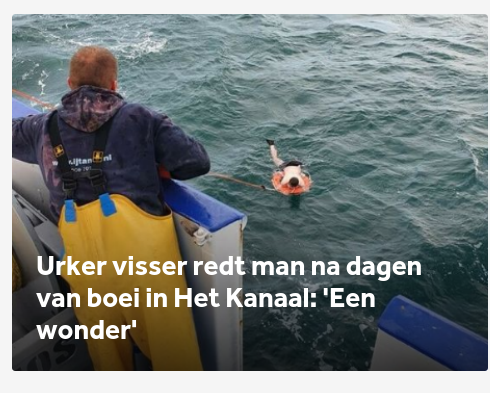
I can’t believe that he left Dover as far back as 15 October. He must have gotten way off course at some point or maybe been stuck on that buoy for about 11 days. (How long can you keep yourself afloat in the water after your kayak capsizes before you reach a buoy to climb on?) He was rescued this morning.
Update 30 October: see below.
(The day he left the English coast must have been 25 October, maybe?)


The same day, THREE HOURS AFTER THE MAN HAD BEEN RESCUED by the Dutch-owned French-registered Madeleine and 15 minutes before the company account tweeted about it, GB News (George McMillan) reported that he had been spotted earlier but that he was no longer found on the buoy and was assumed to have drowned and the search was called off by the UK authorities. They (GB News) assumed that it had been a refugee trying to reach England. Is this news item manufactured news? GB News, after all, is one of Nigel Farage’s “vessels”, isn’t it? None of the other news sources mention that the UK authorities had already been aware of the man stuck on the buoy. If they had, they surely would have coordinated with the French coastguard, also because the man apparently was in French or international waters.
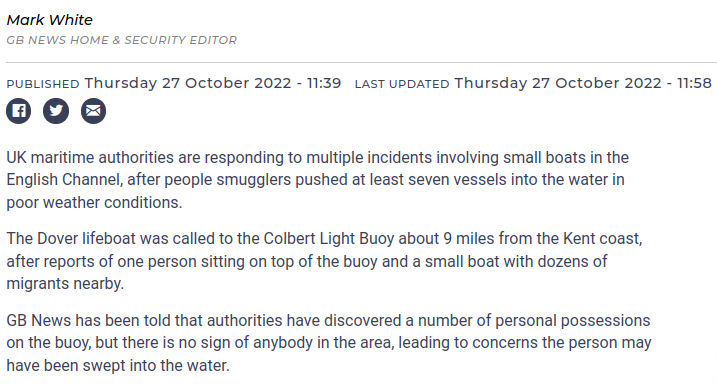
GB News (Mark White) had an earlier item about this, published in the morning, but about 30 minutes after the man was rescued.
Apparently, he is 28 and from Manchester? He was in good physical shape when he left, which has helped him survive, but he seems to have had no kayaking experience. I wonder if he was trying to “prove” something about refugees… Unless he’s a nutcase with more money and time than common sense, it’s a strange story, after all.

What TU/e (Eindhoven University of Technology in the Netherlands) has to do with earthquake survivors?
Tiny high-tech backpacks for rats who are trained to find those survivors:
https://edition.cnn.com/2022/10/24/world/search-and-rescue-rats-apopo-hnk-spc-intl/index.html

Brain structure not as rigid as scientists once believed
While I have said a few times that people cannot change their brain structure on command, which is why it is immensely short-sighted of clinical psychologists and other health professionals to rant and rave about people who have for example a narcissistic personality disorder, I have also mentioned that I hope that new therapies will become available to support people with such brain structures. I’ve dropped the word neurofeedback as a suggestion for an avenue to explore within this context.
This morning, I read that the brain structure and connectivity of clinically depressed people changes within six weeks under the right treatment.
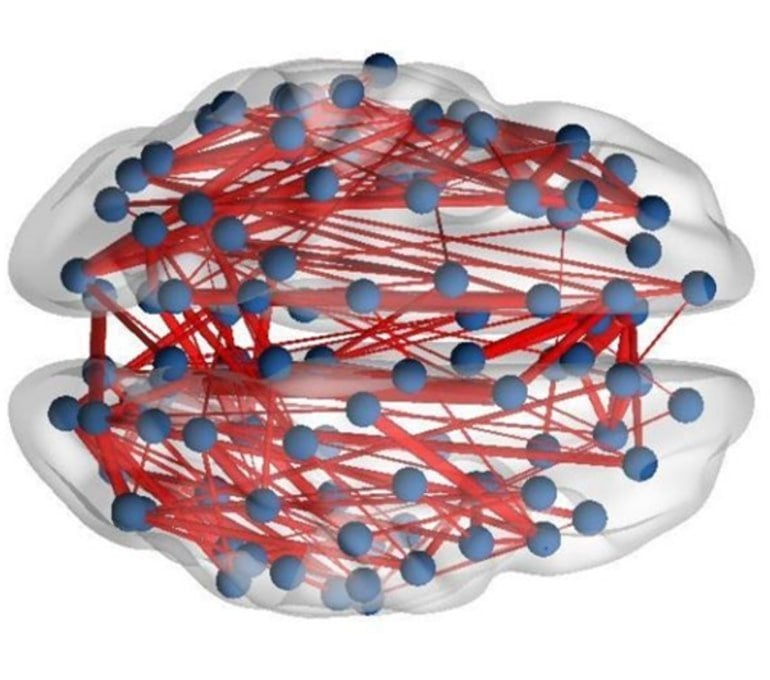
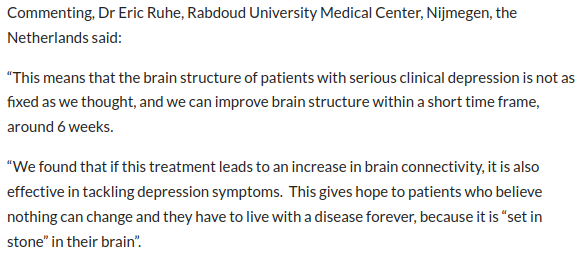
https://neurosciencenews.com/brain-connectivity-depression-21668/
No longer seen as correct:
“the structure of the adult brain is generally rigid and incapable of rapid change“
Ripping off plasters (band-aids) to teach your kids to be tough can set them up for injuries. Heard of “MARSI”? Teach your children to be gentle and kind instead and you’ll benefit a large number of people, in many more ways than you will hold possible.
MARSI stands for “medical adhesive-related skin injuries”. They usually look very ugly, can take a long time to heal and can get infected. They are overlooked and often preventable. They can affect anyone.
Ripping a band-aid off means that a much larger force is exerted on the skin than necessary. It can cause detachment of one or more skin layers and thus can also cause tears in the skin.
In addition, many people are allergic to the adhesives used in plasters and such sensitivities can suddenly become much worse. This can effectively cause a chemical burn injury.
Teach your children to be gentle and you’ll benefit a large number of people, in many more ways than you will hold possible.
For medical professionals, there is a “best practice consensus document on prevention”:

Canada sentences Dutchman Aydin Coban to 13 years in prison in the Amanda Todd case
In my Dutch news app this morning: https://nos.nl/artikel/2448414-13-jaar-cel-voor-nederlander-die-canadese-tiener-amanda-todd-afperste
Aydin Coban had already been sentenced by a Dutch court to 10 years and 8 months in prison for crimes he committed against dozens of different girls and a few men. The Amanda Todd case was not included in the Dutch proceedings because Canada wanted to prosecute him on its own.
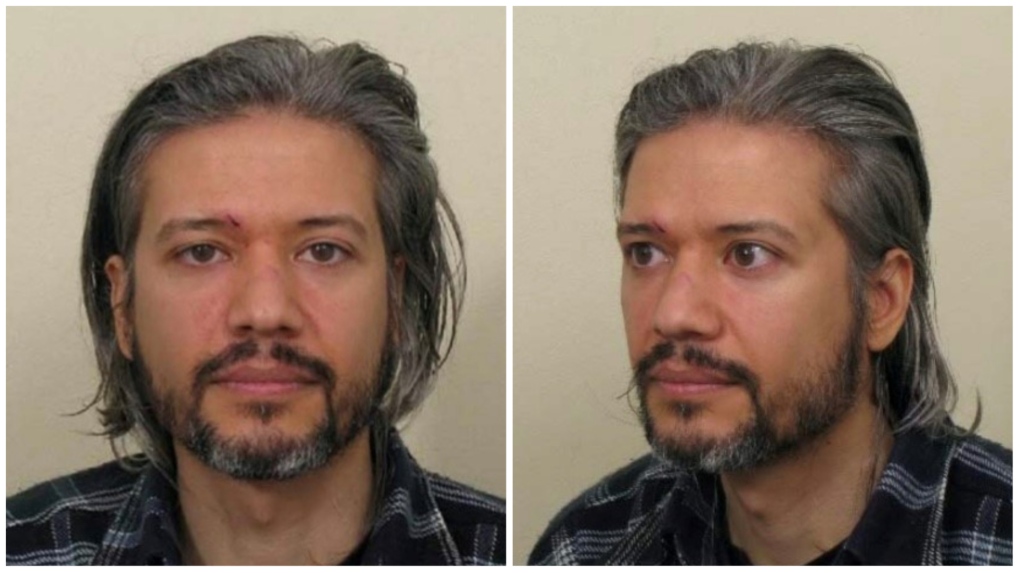
When he’s completed his sentence in the Netherlands, he will be sent back to Canada to be jailed there.
Amanda Todd was a young teenager who was hounded by Coban and who eventually killed herself to get away from him because he (and others around her) had made living impossible for her.
Do NOT dare to call this a mental health issue (in the sense of blaming it on the victim). Mental health issues can be the result, but they are no excuse for abuse.
This kind of abuse usually simply makes it impossible to live for PRACTICAL reasons alone. Any kind of harassment involving a victim’s suicide still tends to be partly blamed on the victim. And that’s part of the problem.
Want an example? If bullies throw a poor child’s books or notes into a pond, how is he supposed to complete his homework? A child cannot simply relocate to the other side of a country to get away from bullies and start over fresh under a new name.
It may also be helpful to keep in mind that young people’s brains are still developing to some degree, and that neural pathways become reinforced in response to what is happening around you if those experiences are repetitive (prolonged).
See my previous two posts too, about the line that you cross when “humor” becomes abuse and you don’t realize it. This is exactly what I mean. I hope that to most all of you, it is clear that there was nothing funny or hilarious about why this Canadian teen ended her life.
There are copies of two newspaper articles on the inside of my clothes closet door. Both concern two young men who were set on fire at work in England. One in Bristol and the other one in Reading. One of them was abused so badly that he decided to take his life and even after his death was still being blamed for the atrocities at his place of work. Because he took his life.
His colleagues and superiors thought that what they were engaging in was “humor”. They saw nothing wrong with it. His line manager stated openly that no line was crossed when the young man was set on fire; he had been present when it happened.
The other young man ended up in hospital with burns and developed PTSD. Because he did not kill himself, he was not blamed for what happened.
With regard to cases like Amanda Todd’s… most police officers are totally clueless. They’re so out of touch with the online world and with IT aspects, it’s beyond belief. They may proudly tell you that they record interviews on tape so that what’s on it can’t be tampered with, that all anyone can do to it is wipe everything that’s on it. That’s usually the full extent of their IT knowledge. They can actually be informed “I have access to this woman’s computer equipment” and manage to miss it completely. They expect folks like Aydin Coban to communicate under their own names, from their own e-mail addresses and have fixed, identifiable IP addresses, too. When you’re an Amanda Todd, of any age, you’re on your own.
How to test whether you are mixing up otherisation and cruelty with “humor”, for English people
If you wouldn’t want to do the same thing to Boris Johnson or David Cameron or Keir Starmer or Jeremy Corbyn or Vince Cable or Ed Davey, then it’s likely to be otherisation and cruelty. Abuse.
Because it likely indicates that you fear what would happen if you did. If you do something “funny” only to people who you perceive as having less power than yourself, then it’s almost always abuse. Asking yourself if you’d be willing to do the exact same thing to any of the above-mentioned top politicians can help clarify that.
See my previous post about what happened to former nurse Mrs Ann King at Reigate Grange. It wasn’t funny at all, but the people who did it to her seemed to think that it was.
88-year-old former nurse abused in luxury facility: An example of how otherisation can easily lead to cruelty
Older adults are demonized in the UK, multiple studies have shown. That’s the over-45s, roughly, certainly when it concerns women.
It also can lead to horrific abuse. These Guardian pages below contain video content that will leave you shaken. The family of this 88-year-old former nurse was shelling out £100,000 a year for her “care” in this “luxury” home. (The money came from the woman’s savings. She was paying for her own abuse.)
Among other things, the rag with which the toilet was cleaned was often – eh, how shall I put this – draped across her face, almost. Someone else can be seen shaking her bed just to pester her while another person says “it’s a wave”. Mrs King has dementia; they’re making fun of her. It’s vile.
I’ve reported this facility to Google as permanently closed. No matter what its management says, cruelty from multiple people can only occur when it’s condoned, whether passively or actively, by the people around them.
https://www.theguardian.com/society/2022/oct/13/ann-king-video-abuse-reigate-grange-care-home-surrey

This.
I am not interested in picking up crumbs of compassion thrown from the table of someone who considers himself my master. I want the full menu of rights.
– Desmond Tutu
How youngsters are dragged into extremism

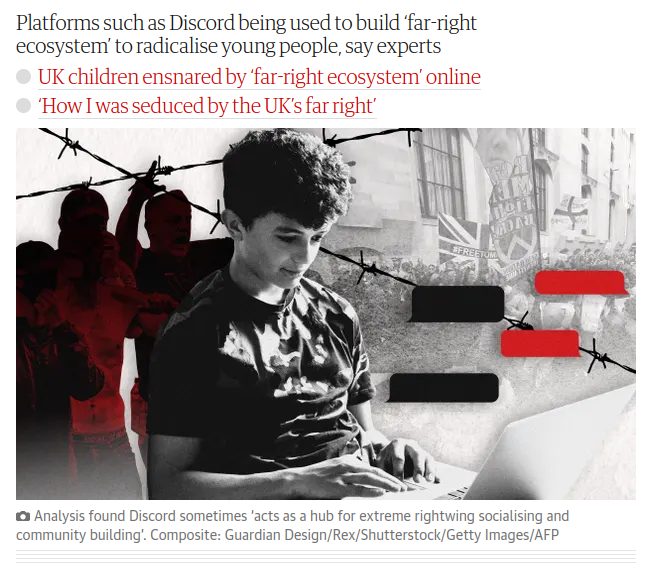
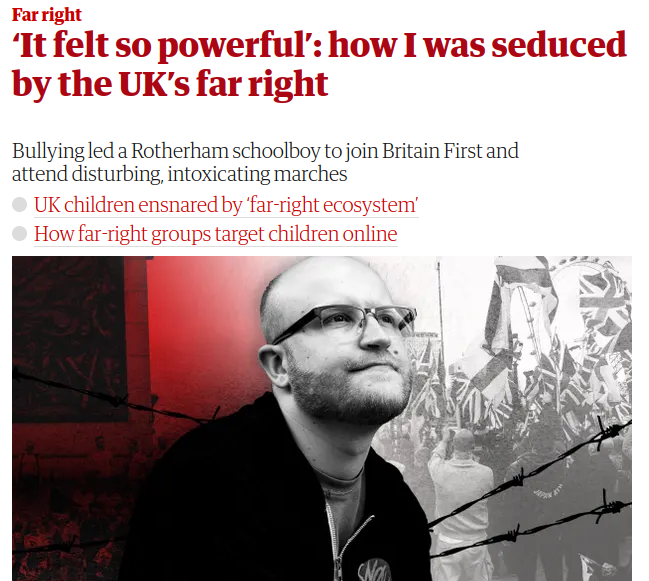
I talked about some of this stuff in my most recent book. By the way, somehow the most recent version of that book got lost. It currently makes two people clearly identifiable; I didn’t want that because that was not the purpose of my book at all. I specifically amended the most recent version for that reason and then uploaded it. I don’t know where it’s gone.
Here are the references. They tell their own story.
Alston, Philip (2018) “Statement on Visit to the United Kingdom, by Professor Philip Alston, United Nations Special Rapporteur on extreme poverty and human rights.” https://www.ohchr.org/Documents/Issues/Poverty/EOM_GB_16Nov20 18.pdf
Alston, Philip (2019) “Visit to the United Kingdom of Great Britain and Northern Ireland. Report of the Special Rapporteur on extreme poverty and human rights.” United Nations, General Assembly. A/HRC/41/39/Add.1 https://undocs.org/pdf?symbol=en/A/HRC/41/39/Add.1
BBC (2007) “Red-haired family forced to move” BBC News. https://news.bbc.co.uk/1/hi/england/tyne/6714735.stm
BBC (2007) “Man ‘died at hands of young mob’” BBC News. http://news.bbc.co.uk/1/hi/england/london/6923987.stm
BBC (2007) “Boys sentenced for stoning death” BBC News. http://news.bbc.co.uk/1/hi/england/london/7052267.stm
BBC (2021) “Plymouth shooting: Jake Davison was licensed gun holder” BBC News. https://www.bbc.co.uk/news/uk-england-devon-58197414
Beaney, Abigail (2022) “The life of Sylvia Lancaster after the murder of her daughter Sophie” Lancashire Telegraph. https://www.lancashiretelegraph.co.uk/news/20076099.life-sylvia-lancaster-murder-daughter-sophie/
Bregman, Rutger (2017) “Poverty isn’t a lack of character; it’s a lack of cash.” TED. https://www.ted.com/talks/rutger_bregman_poverty_isn_t_a_lack_of_ch aracter_it_s_a_lack_of_cash
Broderick, Ryan (2014) “Activists Are Outing Hundreds Of Twitter Users Believed To Be 4chan Trolls Posing As Feminists” Buzzfeed News. https://www.buzzfeednews.com/article/ryanhatesthis/your-slip-is-showing-4chan-trolls-operation-lollipop
CIPD (2022) Bullying and harassment at work. Chartered Institute of Personnel and Development. https://www.cipd.co.uk/
Coleman, Gabriella (2014) “Hacker, Hoaxer, Whistleblower, Spy: The Many Faces of Anonymous” Verso. ISBN: 13: 9781781685839
Daynes, Kerry (2019) “The dark side of the mind: True stories from my life as a forensic psychologist” Octopus Publishing Group. ISBN: 9781788402170
Daynes, Kerry (2021) “What lies buried: A forensic psychologist’s true stories of madness, the bad and the misunderstood” Octopus Publishing Group. ISBN: 9781913068578
Elamroussi, Aya, Moshtaghian, Artemis, and Frehse, Rob (2022) “Buffalo suspect’s posts about attack plans could be seen online 30 minutes before mass shooting” CNN. https://edition.cnn.com/2022/05/18/us/buffalo-supermarket-shooting-wednesday/index.html
Evans, Jules (2013) “Being a Stoic saved me from the curse of the British stiff upper lip” https://www.theguardian.com/commentisfree/2013/jan/30/stoic-stiff-upper-lip-feelings
Eve, Carl (2022) “Plymouth shooting: Families meet with Security Minister over online incel culture fears” Plymouth Herald. https://www.plymouthherald.co.uk/news/plymouth-news/plymouth-shooting-families-meet-security-7088898
Feldman Barrett, Lisa (2020) “Seven and a half lessons about the brain” Picador. ISBN: 9781529018622
Gamergate: https://en.m.wikipedia.org/wiki/Gamergate_(harassment_campaign)
Godin, Seth (2018) This is marketing. You can’t be seen until you learn to see. Penguin. ISBN: 9780241370148
Gonzalez, Oscar (2019) “8chan, 8kun, 4chan, Endchan: What you need to know” CNET. https://www.cnet.com/news/politics/8chan-8kun-4chan-endchan-what-you-need-to-know-internet-forums/
Griffin, Andrew (2021) “What is QAnon? The origins of bizarre conspiracy theory spreading online” The Independent. https://www.independent.co.uk/tech/what-is-qanon-b1790868.html
Halliday, Josh and Arthur, Charles (2010) “WikiLeaks: Who are the hackers behind Operation Payback?” The Guardian. https://www.theguardian.com/media/2010/dec/08/anonymous-4chan-wikileaks-mastercard-paypal
Hill, Amelia (2019) “Older people widely demonised in UK, ageism report finds” The Guardian. https://www.theguardian.com/society/2020/mar/19/older-people-widely-demonised-uk-ageism-report
Huffington Post (2012) “England Riots: One In Four Young People Believe Last Summer’s Disorder Could Happen Again.” https://www.huffingtonpost.co.uk/2012/08/02/england-riots-one-in-four-believe-london-riots-tottenham-summer-riots-happen-again-disorder_n_1733418.html
Jamieson, Alastair (2020) “Police warn of homophobic 4chan cyber attack on LGBT+ Pride month celebrations” The Independent. https://www.independent.co.uk/news/uk/crime/pride-month-4chan-cyber-attack-homophobia-lgbt-a9547456.html
Jones, Owen (2022) “Why homophobia against straight men matters” The Guardian. https://www.theguardian.com/commentisfree/2022/may/17/homophobia-against-straight-men-lgbtq
Kent, Lauren & Ritchie, Hannah (2021) “Plymouth shooter made misogynist remarks echoing the ‘incel’ ideology.” CNN. https://edition.cnn.com/2021/08/14/uk/plymouth-shooting-incel-jake-davison-profile-intl/index.html
Kew Law Kew Law (2020) See: https://www.kewlaw.co.uk/our-services/employment-law/ and https://www.fenews.co.uk/skills/over-a-third-of-employees-in-the-uk-have-been-bullied-at-work-in-the-last-3-years/
Lanier, Heather (2017) ‘”Good” and “bad” are incomplete stories we tell ourselves.’ https://www.ted.com/talks/heather_lanier_good_and_bad_are_incomple te_stories_we_tell_ourselves
Leatherdale, Duncan (2022) “Jack Woodley: Why was the 18-year-old killed?” BBC News. https://www.bbc.co.uk/news/uk-england-tyne-60834187
Lewis, Richard D. (2000) “When cultures collide. Managing successfully across cultures.” Revised first edition. Nicholas Brealy Publishing. ISBN: 1857880870
Ling, Justin (2022) “’Cheering section’ for violence: the attacks that show 4chan is still a threat” The Guardian. https://www.theguardian.com/technology/2022/may/01/4chan-extremist-online-forum-raymond-spencer
Lloyd-Roberts, Sue (2017) “The war on women. And the brave ones who fight back.” Simon & Schuster. ISBN: 9781471153921
Lumby, Tommy and McMenemy, Rachael (2018) “‘Vulnerable’ woman attacked with flour and eggs speaks out” Cambridge News. https://www.cambridge-news.co.uk/news/local-news/vulnerable-woman-attacked-flour-eggs-14973146
Manjoo, Rashida (2015) “Report of the Special Rapporteur on violence against women, its causes and consequences, Addendum. Mission to the United Kingdom of Great Britain and Northern Ireland” United Nations, General Assembly. A/HRC/29/27/Add.2. https://www.ohchr.org/EN/HRBodies/HRC/RegularSessions/Session2 9/Documents/A_HRC_29_27_Add_2_en.doc
Mann, Tanveer (2018) “Boys who ‘attacked disabled woman with flour get police protection’” Metro News. https://metro.co.uk/2018/07/31/boys-attacked-disabled-woman-flour-get-police-protection-7779513/
Marsh, Abigail (2016) “Why some people are more altruistic than others.” TED. https://www.ted.com/talks/abigail_marsh_why_some_people_are_more_altruistic_than_others/
Moss, Dawn (2018) “Kate Pickett and Richard Wilkinson: ’Inequality strikes at our health and happiness’” The Guardian. https://www.theguardian.com/inequality/2018/sep/18/kate-pickett-richard-wilkinson-mental-wellbeing-inequality-the-spirit-level
New Zealand shootings: https://en.wikipedia.org/wiki/Christchurch_mosque_shootings#Al_Noor_Mosque
PA News Agency (2020) “Incels believe women owe them sex, experts tells terrorism trial” The National. https://www.thenational.scot/news/uk-news/18935470.incels-believe-women-owe-sex-experts-tells-terrorism-trial/
Piff, Paul (2013) “Does money make you mean?” TED. http://www.ted.com/talks/paul_piff_does_money_make_you_mean
Pizzagate: https://en.wikipedia.org/wiki/Pizzagate_conspiracy_theory
Potter, Tom (2018) “‘Flour bombing’ teen sentenced for ‘nasty attack’ on woman” East Anglian Daily Times. https://www.eadt.co.uk/news/cohan-semple-court-flour-eggs-howard-estate-social-media-1-5806320
Press TV Documentaries (2015) “Murder in Bristol (The Tragic Case of Bijan Ebrahimi’s Murder)” Press TV. https://vimeo.com/149993525
Quinn, Ben (2022) “Glorification of Plymouth shooter by ‘incels’ prompts calls for action.” https://www.theguardian.com/uk-news/2022/jan/03/glorification-plymouth-shooter-incels-prompts-calls-for-action
Reynolds, Emily (2020) “We’re less likely to spread alarming information while experiencing physiological stress” The British Psychological Society. https://digest.bps.org.uk/2020/05/26/were-less-likely-to-spread-alarming-information-while-experiencing-physiological-stress
Samuelson, Kate (2016) “What to Know About Pizzagate, the Fake News Story With Real Consequences” Time. https://time.com/4590255/pizzagate-fake-news-what-to-know/
Saxe, Rebecca (2019) “The neuroscience of hate” Talk given at Harvard Law School’s Petrie Flom Center for Health Law Policy, Biotechnology, and Bioethics. https://vimeo.com/333105887
Serani, Deborah (2018) “Bullycide When a bullied child dies by suicide” Psychology Today. https://www.psychologytoday.com/gb/blog/two-takes-depression/201806/bullycide
Solomon, Andrew (2013) “Love, no matter what” TED. https://www.ted.com/talks/andrew_solomon_love_no_matter_what
Slack, Paul (2018) “Businessman ruined after false online claims of paedophilia” Sunday Times. https://www.thetimes.co.uk/article/businessman-ruined-after-false-online-claims-of-paedophilia-dnkddg93x
Snider, Mike (2017) “Steve Bannon learned to harness troll army from ‘World of Warcraft’” USA Today. https://eu.usatoday.com/story/tech/talkingtech/2017/07/18/steve-bannon-learned-harness-troll-army-world-warcraft/489713001/
Statistics New Zealand (2019) “One in 10 workers feels discriminated against, harassed, or bullied at work” https://www.stats.govt.nz/news/one-in-10-workers-feels-discriminated-against-harassed-or-bullied-at-work
Taylor, Kathleen (2009) “Cruelty. Human evil and the human brain” Oxford University Press. ISBN: 9780199552627
Thorleifsson, Cathrine (2021) “From cyberfascism to terrorism: On 4chan/pol/ culture and the transnational production of memetic violence” Nations and Nationalism. 2021;1–16. https://doi.org/10.1111/nana.12780
TUC (2019) “Bullying at work” Trades Union Congress. https://www.tuc.org.uk/resource/bullying-work
Veritas (2022) “Who are stalkers?” Veritas stalking advocacy service. https://veritas-justice.co.uk/who-are-stalkers/
Wainwright, Martin (2008) “Woman died after drunken gang attacked couple dressed as goths”. The Guardian. https://www.theguardian.com/uk/2008/mar/13/ukcrime
(See also https://en.wikipedia.org/wiki/Murder_of_Sophie_Lancaster)
Wilkinson, Richard (2011) “How economic inequality harms societies” TED. http://www.ted.com/talks/richard_wilkinson
Wilkinson, Richard and Pickett, Kate (2010) “The spirit level: Why Equality is Better for Everyone”. ISBN: 9780241954294
Wilkinson, Richard and Pickett, Kate (2018) “The inner level: How More Equal Societies Reduce Stress, Restore Sanity and Improve Everyone’s Well-being”. ISBN: 978-1846147418
Woolf, Nicky (2016) “The ‘alt-right’ thrives in opposition. What happens now it’s the establishment?” The Guardian. https://www.theguardian.com/us-news/2016/nov/15/alt-right-victory-donald-trump-mainstream-what-next
Yeo, Amanda (2019) “8chan returns with a new name and a reminder not to do illegal stuff” Mashable. https://mashable.com/article/8chan-8kun-rebrand-return
Younge, Gary (2017) “’It was pure racism’: the family of Bijan Ebrahimi on their fight for answers” The Guardian. https://www.theguardian.com/world/2017/jul/05/it-was-pure-racism-the-family-of-bijan-ebrahimi-on-their-fight-for-answers
Workplace PTSD
Tackling violent crime in London
A message in my inbox today:
| The question I am asked most as Mayor is: “What are you doing to tackle violent crime in London?” It’s something I’ve thought about and grappled with every day since I was first elected. I know you know this, but violent crime doesn’t happen in a vacuum. It’s often a by-product of deprivation, social alienation, increasing inequality and government cuts to public services including youth activities. Where the Government is failing to step up, City Hall is taking action. Today I’m pleased to announce that my Violence Reduction Unit has invested £5 million to help support London Boroughs in delivering prevention and early intervention programmes to drive down violence during the summer holidays. Young people need opportunities to build community and succeed. That’s why we’re also investing £1 million into a sports programme to deliver activities for young Londoners in neighbourhoods affected by violence. We’re also supporting the Local Village Network app: it’s free to download and provides young people aged 14-24 with more than 2,500 opportunities and activities to get involved in across London. |
| Tackling violence is my top priority, and I’m determined to do everything I can to ensure we do not see a rise in incidents over the summer months. I will continue to be tough on crime by supporting the police in removing dangerous weapons, tackling drugs and gangs, supporting communities through neighbourhood policing, and bearing down on the complex causes of violence. We cannot neglect our young people and then expect them to thrive. This investment will help make London fairer and safer for everyone. Best wishes, Mayor of London, Sadiq Khan |
Look at these savages, Mr Boris Alexander de Pfeffel Johnson! Look at what these people are doing! It’s horrible!
(enjoy)
Boredom, hate, terrorism and riots
CNN’s national security analyst Peter Bergen just wrote that attacks such as the one in Buffalo can be prevented. Yes, they can. Not always, but often.
However, this requires a lot more than the six steps Peter Bergen offers in his article. Bergen is not only CNN’s national security analyst, a vice president at New America (a think tank) and a professor of practice at Arizona State University.
What is a professor of practice?
Bergen begins by making a terrible mistake by calling this “a very American tale of domestic terrorism”, ignoring victims of similar attacks all over the world. A dreadful shooting in New Zealand, a horrible attack in Norway and a recent tragic incident in Plymouth in England come to mind as first examples. Also in Asia and Africa there have been many of these incidents, but they likely come about differently, though I can’t be sure of that.
First, “let’s stop naming the terrorists,” Peter Bergen continues. He writes that “these misguided individuals are typically zeros trying to be heroes”. Not only is this a useless suggestion because even if journalists were to refrain from naming these people, many more others still do and they would do so even more to counter that silence. Crucially, however, Bergen completely misses that this – feeling like zeros – is often exactly what is at the root of these incidents. I find it hard to believe that he completely overlooks the significance of what he is saying.
A great deal of this violence stems from the fact that so many youngsters – and not just youngsters – feel that their lives have no significance and are overwhelmed by feelings of hopelessness and powerlessness, not to mention sheer boredom.
Second, Bergen mentions social media, and argues for the removal of content that encourages violence. This overlooks that this kind of content does not only pop up on regular social media, but still more often in the dark nooks and crannies of the internet. This also overlooks that if you ban content, you may merely be pushing it underground where it can’t be monitored. He does not even mention 4chan. That said, I agree that it is important to police fake news and fake science as any otherizing language lowers the threshold toward violence, neuroscience teaches us.
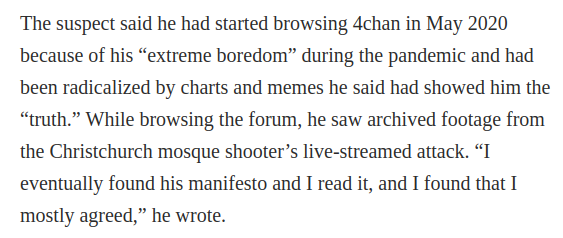
After the 2011 riots in England, some of the participants indicated that boredom had been an important driver and that merely providing access to sports facilities can help prevent such escalations.
Leaders who want to learn about how big a role boredom plays should watch the video about the “Philmarillion”, a person who for months documented every move and twitch of a particular online user based in England. This person created an entire world made up of the posts of said user, and even engaged in performance art to simulate that said user was living with him.
We should be grateful that the Philmarillion was artistically inclined.
Can you see what boredom can do to others, who have nowhere else to be and to go and no outlet for whatever ails them?
As a third step towards preventing shootings like the one in Buffalo, Peter Bergen mentions the discipline of threat management. He explains that suspects often follow a predictable path to violence, but that still does not identify them to us and does not enable us to interfere. The article does mention that the FBI has recently doubled the number of people who work on domestic terrorism and extremism, but that reflects the developments rather than predates them.
As a fourth step, Bergen mentions that “officials” need a better understanding of the concept of “leakage,” that peers usually have “the most useful information about attack planning, but were the least likely to come forward with relevant information to law enforcement”.
He then makes the following nonsensical statement:

How do you investigate a “potential act of terrorism”? Because that’s like potentially winning the lottery. You can’t investigate something that does not exist or has not happened. I think what he means is that if school officials etc are concerned about a student, law enforcement should talk with the student’s friends and take them seriously.
As the fifth step, he mentions an American policy that sounds like the UK counterpart called “Prevent”. Logos of pro-cycling and pro-wildlife activists are examples of what UK school teachers need to be on the lookout for and report. If the US policy is anything like Prevent, all we end up with is more distrust in society instead of less.
As sixth and final step, Bergen kicks against an open door by stating that kids like this shooter should never have been able to purchase his weaponry. That is certainly true, but the Plymouth shooter – in England, where guns are not a birthright, unlike in the US – not only had a shotgun, it had been confiscated yet returned to him shortly before the incident.
There currently seems to be a large number of mostly young white males out there who feel indeed, as Peter Bergen puts it, like zeros. They often feel disenfranchised, whether it is about their perceived right to have sex with any woman or another issue, but something happens right before this starts to fester and they go online, looking for echo chambers in which they finally feel heard and understood.
Guys like Payton Gendron are not that different from guys like Jake Davison.
They need people to blame, to direct their powerlessness at, whether it is non-whites in general or a particular group of people in particular, or Jews or women or immigrants.
(Women too are sometimes part of these movements, though.)
The question to ask is:
How do these youngsters end up in these online and offline echo chambers filled with hate? What happens before they go there?
The problem is that they’re still too young to monitor themselves, recognize what is happening to them, stop themselves in time and turn away, surround themselves with positivity instead. Echo chambers come in all kinds.
Apparently, it was particularly types like Bannon and Trump who have very deliberately been targeting these dark places on the internet, who whip up this hate, to make people feel that something has been taken from them that should be theirs and that it’s the Trumps of the world who will get it back for them. Divide people, promise to defend them against the “enemy” and get their votes.
Maybe it’s politicians and their close associates, then, who should all begin to be monitored to prevent potential acts of domestic terrorism?
They may be the ones who sow the seeds for this hate.
They certainly should be monitored for otherizing language and be called out on it, be made aware of how dangerous that is, if they don’t know that yet.
Where are things going wrong for these youngsters, people like Payton Gendron? At what age does this start? Around 10 or 12 or perhaps even earlier? They are often still as young as 14 when they end up on these forums where they become radicalized. What exactly is it that goes wrong in their lives?
(It certainly does not match Tony Blair’s old theories about “hooligans” and graffiti artists. Payton Gendron’s parents are two happy-looking civil engineers.)
WHY do these kids feel like fat zeros?
WHY?
Payton Gendron had just started college. The pandemic probably cut it short. He went to 4chan because he was bored. Could it really be only boredom that drives young people to these places of hate?? Boredom does make angry. Boredom does lead to a buildup of energy.
What was Payton Gendron like before he started hanging out on 4chan?
Tentacles of cling film
I wrote a bundle of poems and flash fiction about my own stalking experience. One is titled “Tentacles of cling film”. The last few words are a word play on “You’re stone-deaf, tone-deaf”. I called the bundle “Crunchy Peanuts”. You can find it on Amazon.
Tentacles of cling film
(September 2011)
I am so angry.
So very very angry.
So so angry
I carry out boxing exercises,
imagine beating your face,
breaking your nose.
Teaching someone – me – how to be afraid
afraid – afraid – afraid
is not a nice thing to do.
You wrapped your cling film tentacles
around my throat,
around the throat of my life.
You robbed me
of all my air,
of all my oxygen.
And I hate you
hate you – hate you – hate you –
hate that.
My anger
has nowhere
to go.
It punches air.
It flows into fairy tales.
I am powerless.
Because I am
nothing but a woman
and that, they say, means I don’t count.
My head pounds
and my fists fly
against the air
You sucked from my lungs,
you sucked from my days,
you sucked from my future.
Now I feel better
because voicing my anger
any way
is better
than the silence
wrapped within your cling film.
Your butt crack
is not
my punch line.
It’s yours,
and yours
alone.
You.
Took Joy
and killed her.
You killed her,
killed her killed her
killed her dead.
Still I wish
I wish I wish you
well.
Though your
stone tone
death.
This afternoon’s incident
Walking back from Lidl, I run into two young people who are screaming their heads off at a family in a car. This is at this notorious spot next to Ma’s in Kingston Road, where you need X-ray vision to be able to turn into the road.
They have a child in a buggy. They walk on, leaving an utterly flabbergasted family behind. “Fucking hell.” the guy says calmly, clearly stunned. Ethnic minorities, by the looks of it, but clearly English. “Just laugh about it.” I tell them.
To my frustration, the young female goes after the car again a few minutes later, and then the male runs after the car. Probably as high as a kite on meth?
I’m not having it.
Worried that he will pull the driver out of the car in busy traffic, I decide to interfere and yell very loudly “Don’t be ridiculous!” and “Hey! Stop it!”
The female turns and runs towards me and I had just spotted that that had distracted the dude before she starts shouting into my face from a distance of about five centimetres.
Good. Because I thought she was going to hit me and I am not feeling well so I can’t run away.
“Nobody tells me in my own country what to do!” Some stuff follows about her child, which she has just abandoned in its pram on the pavement at least twice, with no adult looking after it. “Go back to where you came from!”
“I’m from Amsterdam!” I yell as she walks away again.
“Go back then!”
I retort “I would love to but you won’t let me. You won’t let me!”
I say sorry to a woman who’s walking by, clearly not happy with this kind of thing that you run into all the time when you live here instead of in Gerald Vernon-Jackson’s pretty little street. She smiles at me. A genuine smile.
I pass the young woman and her child at a bus stop later. I sensed that she was aware of me approaching and I sense that she is not keen on another confrontation. I walk by without paying any attention.
The guy had disappeared somewhere between Ma’s and the bus stop.
I’m exhausted. But I think I achieved my goal.
I was actually feeling really unwell and wouldn’t have been able to run away if either of the duo had decided to attack me.
Stalking and Asperger’s
https://ibcces.org/blog/2017/04/26/stalking/
IBCCES, that’s the International Board of Credentialing and Continuing Education Standards. There are people who mediate in courts, who serve as advocates for autistic people. IBCCES can provide training (and a certificate) to that end.
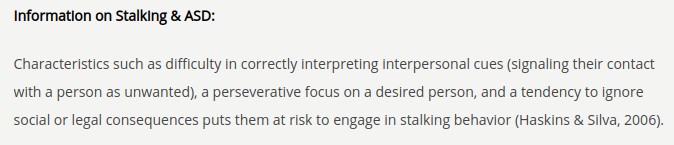
https://stalkingdetective.wordpress.com/2014/01/29/stalkers-with-aspergers-syndrome/
This is a former police officer’s website.
That’s him: https://en.wikipedia.org/wiki/Michael_Fitzgerald_(psychiatrist)
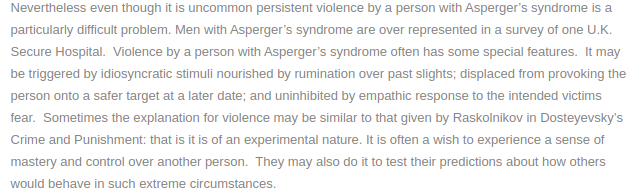
People with Asperger’s do not necessarily want to be rigid and controlling, but they can have trouble with what we call “boundaries” in the west. They can infringe upon other people’s “territories” and do various other things without realizing how intensely that may affect that other person.
Similarly, they may not see other people as individuals in their own right. I suspect that their egos can be so fluid that they sometimes perceive other people as not really separate from themselves. They “feel” other people’s presence rather than see them as beings with physical boundaries and they often don’t attach much significance to what a person looks like. (This may also be why autistic people, if they engage in stalking behaviors, take photos. They may not recognize a person if that person changes her hairstyle or hair color, so I understand.)
They certainly see other people differently than neurotypicals do and while they may not really “like” other people, they do like having a certain presence around, like having the presence of another soul in their vicinity. They like a certain feeling rather than a certain person, maybe.
All of these things can create tension and clashes very early on and may eventually build up into a lot of resentment (feel slighted when they get rebuffed because they don’t understand what on earth they are supposed to have done wrong). That’s the impression or feeling I have come away with while thinking about this.
For decades, I turned out to have known a woman who is somewhat autistic without me having a clue about this. She’s confirmed that she is autistic. I’ve since done a lot of thinking.
It’s often said that autistic people avoid looking you in the eye. It’s my impression that that’s often not true. What autistic people don’t do is “rules” as to what an appropriate period is to look at someone’s face. They don’t do societal “rules and customs” to a large degree because they do not necessarily attach judgments to all sorts of things, unlike the rest of us. They can teach themselves a heck of a lot, though, just like the rest of us can learn, and we call can learn for example a foreign language, and hence you may have no clue that someone is autistic. There is no stereotypical property, not even a sign on the forehead.
https://kennethrobersonphd.com/eight-tips-handling-anger-someone-aspergers/
https://www.autism.org.uk/advice-and-guidance/what-is-autism/asperger-syndrome
BBC documentary maker also warned about the danger from incels a few years ago
Two posts ago, I included an ITV program in which “Eamonn and Ruth” talked about the topic with two experts.
Now I see that there also was a BBC documentary a few years ago.

This is not just about violence against women. This is about violence against men who live with women, too. The “Chads”, not just the “Stacys” and not just feminists either.
In the above video, you can hear this 16-year-old English boy saying that in the west “we cultivate the evil side of women”.
Holy crap, that is seriously creepy.
That said, yes, England is deeply misogynistic and many boys get fed a hatred for women at a very young age, before they’re able to form independent opinions. When boys under the age of 10 or 12 yell “Suck my dick!” at women the age of their grandmothers and grab their penis at the same time, you know that they learned this from someone else.
Below is the link to the BBC documentary (requires a TV licence, so it will cost you £159 to watch this legally, unless, lol, you want to watch it in black and white).
https://www.bbc.co.uk/iplayer/episode/p07fvhmw/inside-the-secret-world-of-incels
This podcast video does not require a TV licence:
The problem with these guys is not that women are horrible or that these men are not physically attractive or that that they are “genetically inferior” as many of them seem to believe.
It’s the negative views they hold of themselves. It’s also often their negativity in general.
It could well be that quite a few of these guys have Asperger’s, I thought, but I found it very tricky to say something like that, off the cuff, because of the risk of perpetuating existing stigmas or creating new ones.
However, one of the people interviewed in the BBC documentary mentions “Asperger’s” himself.
Why do these people feel that random women who they’ve never met or interacted with have caused their lives to be so miserable that they feel that they need to take revenge out on these women? It makes no sense.
