Hi. My main background is in the earth & life sciences, but I now predominantly explore topics in the broad area of bioethics. That's about equality, fairness, justice, diversity and inclusivity. It's also about people's biases, the associated otherization and everything that this can result in. That includes poverty, homelessness, poor health, shabby looks, shrinking personal bubbles, exposure to chemical and noise pollution and lots more. It's also about law, philosophy, speciesism, science & technology, forensic psychology, politics and public policy (governance). Diversity and inclusivity are much bigger challenges than I used to believe. I for example now think that society's lack of genuine acceptance and support for people whose brains work very differently can among other things result in destructive behaviours for which the forensic psychology term is sadistic stalking or resentful stalking.
Human rights – diversity – neurodiversity – equality – inclusivity – discrimination – otherisation – speciesism – planet – consumerism – bioethics sensu lato
In December, 54,000 people in England had to wait more than 12 hours for an emergency admission. The figure was virtually zero before the pandemic, according to data from NHS England.
The average wait time for an ambulance to attend a “category 2” condition – like a stroke or heart attack – exceeded 90 minutes. The target is 18 minutes.
Data from November showed there were more than 7 million people on a hospital waiting list in England.
According to an IFS report, even after adjusting for staff sickness absences, there are 9% more consultants, 15% more junior doctors and 8% more nurses than in 2019.
Yet the NHS is treating fewer patients than before the pandemic.
According to analysis by health charity the Health Foundation, average day-to-day health spending in the UK between 2010 and 2019 was £3,005 ($3,715) per person per year – 18% below the EU14 [countries that joined the EU before 2004] average of £3,655 ($4,518).
During this period, capital expenditure – the amount spent on buildings and equipment – was especially low, according to the Health Foundation analysis. The UK has far fewer MRI and CT scanners per person than the Organisation for Economic Co-operation and Development (OECD) average, meaning staff often have to wait for equipment to become available.
Hospital beds are particularly scarce. Over the past 30 years the number of beds in England has more than halved, from around 299,000 in 1987 to 141,000 in 2019, according to analysis by the King’s Fund, an independent think tank.
Neville, a consultant in a hospital, judges 2008 the “best” he has seen the NHS in more than 30 years of working in it. By that time, the NHS had enjoyed nearly a decade of hugely increased investment. Waiting lists fell substantially.
Haven’t watched this yet, so I don’t know if this is any good, but the title will surely ring a bell for many. “TEDxYouth” makes it sound like it is especially suitable for young people.
Algorithms not only help some online traders trade, wrongly or rightly identify people are likely to commit fraud or tax evasion and identify – correctly or incorrectly – health risks and so forth, they can also determine whether you will be invited to an interview when you apply for a job.
Did you know that?
So if you are for example like me, highly educated but living in what may be one of the poorest parts of the country, it can be useful to ask a friend with a better address if you can use theirs for your job applications.
There are all sorts of databases in which addresses are linked to fraud risk etc. Councils use them too.
Also, leave your DOB (and marital status) off your CV. It was already considered irrelevant when I was living in the US in the 1990s.
My home country was still running behind on this, last time I checked. Five or six years ago, it was often impossible to apply without DOB, which was against Dutch law, but I don’t expect much to have changed since.
Including your DOB can lead to discrimination. Having a foreign-sounding name, of course, can too.
Free, five-day, high-energy, high-speed. Up for it?
You’ll always come away with a few good tips or some inspiration from these things, even though the situation in your country may be very different.
We are living in interesting times, as they say. Challenging times always mean “lots of opportunities, for thriving in the future and also for learning”.
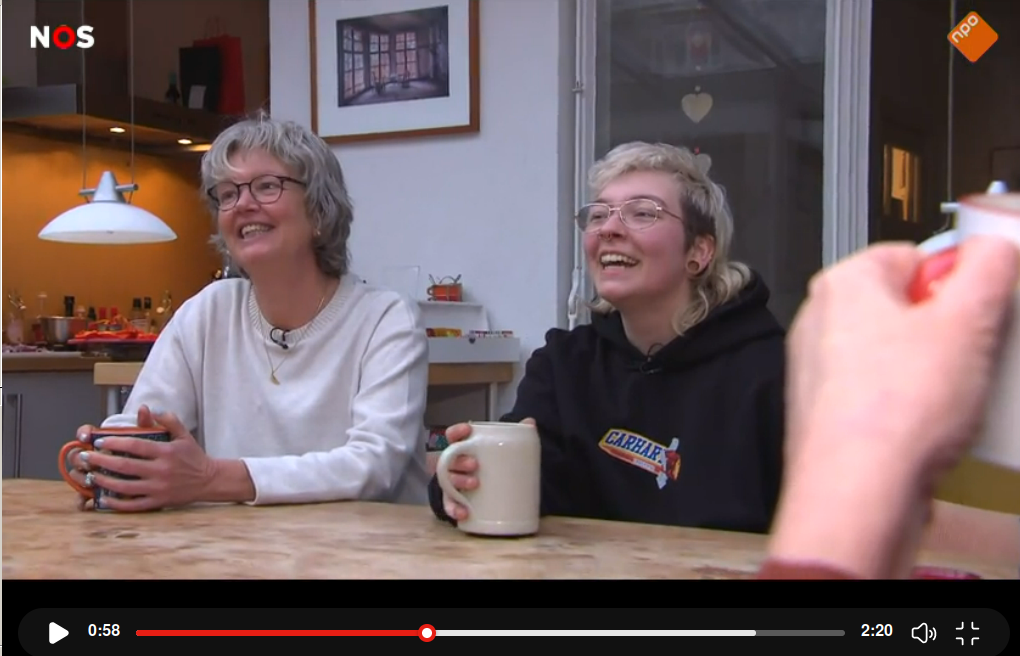
This morning, I spotted this video in my Dutch news app (NOS News).
Daphne (22) used to live with her mother and brother and sometimes with her dad. After her brother moved out, it was soon time for her to leave too.
Now she’s living with Peter and Wietske, who’ve given her a room in their house in The Hague. Daphne rents this room. No other housing options were available to her.
Peter and Wietske have been taking care of children for a long time and say that they always manage to find a click with their young “charges”. They thought it was odd that the organization that arranges these matches asked them if they had a problem with tattoos. “That’s about the exterior, it says nothing about the child.”
Daphne feels free, confident and welcome.
This screenshot below shows Daphne (right) and Wietske (left), the woman in whose house she’s living.
The reason why the birds were panicked when they saw all the dead fishes was also concern for their own safety. Birds are damn smart and if you, as a fish-eating bird, see loads of dead fishes, you know that there is something wrong that is likely to impact you too if you’re not very careful.
The likely problem? The probable cause? The United Utilities sewage works, apparently. United Utilities, however, refuses to release data. Instead, it targets or threatens campaigners with legal action. Why?
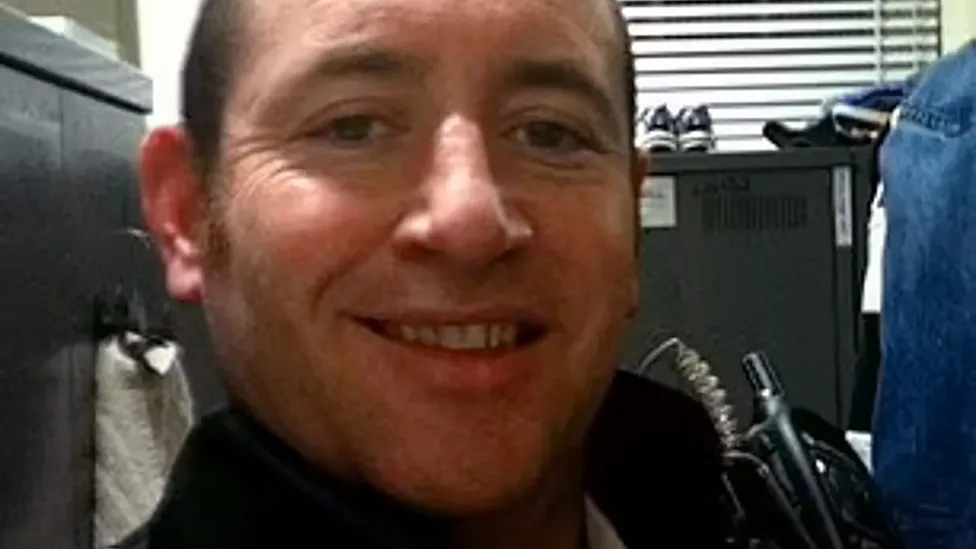
David Carrick ended up in the same unit as Wayne Couzens, namely the parliamentary and diplomatic protection command, guarding embassies, Downing Street and the Houses of Parliament.
A quote from within the CPS: “scale of the degradation Carrick subjected his victims to is unlike anything I’ve encountered in my 34 years with the Crown Prosecution Service”
“The scale of offending by Carrick, 48, spanning 17 years, makes him one of the worst sexual offenders in modern criminal history”
Now imagine that you’re a woman in London and you’re being stalked or have been raped. Would you still report this to the Met, already knowing that the police in England have admitted that they fail stalking victims as a rule and that police officers also often give rape victims a hard time?
I first saw Eddie Marsan on “Ray Donovan”. He’s quickly becoming one of my favorite actors.
In a 2018 interview with The Scotsman, he said: “I thought, the Americans think I can do anything, and the British see me as a thief with two lines. So that’s why I don’t work much in the UK.”
He’s now narrated this two-part documentary about Broadmoor for ITV, though.
It, too, is about diversity and inclusivity, about the need to create a more compassionate world, in which children don’t suffer. That’s not the whole story. I know. But do watch it, please.
ITV also got Eddie Marsan to play John Darwin in its four-part series “The Thief, His Wife and The Canoe” (2022). The story is a little depressing, but this series is brimming with brilliant acting, from everyone involved.
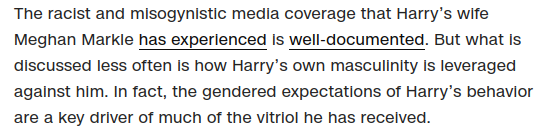
I think Harry is doing the right thing and I think that what he is doing will have a much broader impact than he imagines (because he moves in a small segment of society, I figured, but later in the interview, I realized that he does see that broader context very well).
He is right. Some things really need to change, how paparazzi behave being one of them. I sometimes see left-wing media do the same things that the tabloids do, twist things totally out of proportion and turn them into horror stories that get picked up abroad but that never really happened (not the way they were presented in those media). There’s too much mud-slinging and ethics are often absent.
He’s also on a healing journey. He is going through what some people go through after a horrendously bad relationship after they finally break away. He is owning his truth, his life. He’s choosing a life of his own.
I am one of the many many people who still remember what they were doing when his mother died. I was meeting a half-French friend of mine, in Amstelveen. I took the bus. I may have been late because of the news. I think so. (I think I called her before I left. Those were the days before mobile phones.) Together, we watched French TV. I don’t think we did much else than that that day, besides eat.
I too, until now, had always thought that the tunnel was a long one, like under the Meuse River or under the IJ.
I also still remember when my mother died. I was 14. Harry was 12 when his died. Mine had been ill for years. Harry’s perished because of a car crash.
Dads never know what to say, Harry. Mine woke me up, asked how I had slept and then said that my mother was asleep too (had fallen asleep?), something along those lines. I remember thinking “okay, that’s alright, then”, something like that. Next, my dad said that she was not merely asleep. “Oh.” I thought. “Oh.”
I went to school, stopped by at the office of the head of the school or whatever the guy’s role was, because I had been told to do so, and told him very calmly in a matter-of-fact tone: “ik kom u even vertellen dat mijn moeder vannacht is overleden”, sort of similar to how you and your brother felt when you had to shake all those people’s hands, I suppose.
(I think the guy was a little shocked because of my calm tone.)
(As if throwing a teary-eyed tantrum would have brought her back. Besides, she had been in a lot of pain and now all that pain was gone.)
One girl in my class asked me “maar vind je het dan niet erg dat je moeder is overleden?” and I thought to myself “how can you ask such a stupid question?”. (Did she ask that because I wasn’t crying non-stop?) My mother had been ill for years, seriously ill, but even then, it takes you a while to absorb it. That she’s really gone. It’s still sudden. The idea that someone close to you suddenly no longer exists is really odd when you’re still young. People have no idea. One of my mother’s sisters, my aunt, had passed away pretty suddenly shortly earlier. But she wasn’t part of our household. That’s different.
I didn’t go see her after she had died. At the funeral home. My sisters did. They were younger. I wanted to remember my mother the way she had been when she was still alive (and not ill). My sisters didn’t have the luxury of my memories.
But Harry needs to move on now, for his own sake. I think he knows that.
There are lots of people with the same (similar) story and there are lots of people who, like the paparazzi, just don’t get it. That’s life.
Maybe he can help change some things in society. Because of the impact he has, as a British prince.
Besides what I say in the video about fashion effects, could it even be that the more westernized a society is, the more emphasis it places on height? White people tend to be taller. Chinese people and other Asians have not only been undergoing surgery to become taller but also to make their eyes look more western (Caucasian).
There is also a north-south height difference within continental Europe. The southern countries tended to be poorer. People in prosperous egalitarian countries tend to be taller. But what about the Masai? As Majid Ezzati states, genetic factors also play a role. I’ll come back to that.
If you put too much emphasis on the belief that tall people are more capable, then you start disadvantaging shorter people. That way, the belief turns into reality. This is how discrimination works. It’s why black people suffered more during the pandemic than whites, for example.
Besides, having a lot of tall people carries a high environmental burden as tall people take up more space in transport and require more resources (bigger furniture, more fabric for clothes, more food).
For the record, I’m Dutch and my dad was a milkman until I was 12 or 13 or so, so I grew up on lots and lots of dairy. So did my two younger sisters, though it likely applied more strongly to me. I am as tall as Rishi Sunak. For a long time, I was the youngest and the tallest in my classes because I had relatively long legs (fast runner). As of my teens, that changed and I was no longer the tallest at all. Both my sisters are taller than I am. They are Nordic/Germanic types, whereas I have more southern European looks. We have French and Nordic as well as Germanic heritage in the family.
I remember the Dutch school milk program that Majid Ezzati mentions in item in The Guardian from when I was a child. I don’t think it’s still running. The UK should introduce it. Make it creamy Chocomel or the like. Then kids will see it as a treat, while they get important nutrients at the same time. They can have it during their 10:30 break or at the start of their classes in the morning. You can fortify milk too, can’t you? This way you get big benefits at a doable cost and it’s simple to implement. Lactose-intolerant kids can have oat milk instead.
Links
“Why no adult stunting penalty or height premium? Estimates from native Amazonians in Bolivia” by Ricardo Godoy, Oyunbileg Magvanjav, Colleen Nyberg, Dan T A Eisenberg, Thomas W McDade, William R Leonard, Victoria Reyes-García, Tomás Huanca, Susan Tanner, Clarence Gravlee (TAPS Bolivia Study Team) https://pubmed.ncbi.nlm.nih.gov/19766067/
“Reduction of excessive height in boys by bilateral percutaneous epiphysiodesis around the knee” by Roelof J Odink,Willem Jan Gerver, Minne Heeg, Catrienus W Rouwé,Willie M Bakker van Waarde and Pieter J Sauer https://pubmed.ncbi.nlm.nih.gov/16249931/
We still have a few dozen years to go, but we’ve already made a lot of headway.
Every four years, the American Meteorological Society assesses the situation, with support from the United Nations.
If the recovery continues at the same rate, then the thickness of most of this protective layer will be back at its 1980 values in 2040.
The Arctic and Antarctic will take longer, however. Over the Arctic, the ozone layer will take only five years longer to regain its former thickness, but the hole above Antarctica will take until 2066 to recover from our actions.
How did we damage the ozone layer? We used substances such as chlorofluorocarbons (CFCs) in air-conditioning units and refrigerators and also as propellant in aerosol containers, such as for hair spray and deodorant. After their use, they didn’t magically disappear and cease to exist. They rose up into the higher layers of the atmosphere.
I’ve just finally been able to activate that spare SIM card that I bought months ago.
The person I spoke – Iman – with sounded like the woman in the flat below me.
I am always buying new phones and other stuff and getting new SIM cards in an attempt to stay ahead of the relentless hacking.
Cash Converters used to think that I was constantly impulse-buying new stuff, such as that UPS before I discovered that my locks had already been getting picked for years. They had a bigger model, by the way, but it weighed too much for me.
Als je je stiefdochter jarenlang misbruikt, vanaf haar negende, en je ook nog kinderporno materiaal met haar erin maakt, en bovendien ARTS bent, moet je toch zeker voor 20 jaar de bak in!
Everyone’s been found. Four injured, one severely. The latter one is in hospital. Six escaped successfully.
Also, the total number of people affected was lower than initially assumed on the basis of videos. Some people reported in to the police that they were safe and sound.
About 200 rescuers had been digging for any missing people.
I am posting this because it is news that I haven’t seen on the home pages of the BBC, CNN, and The Guardian. It’s not local news. Lots of foreigners go to Lech to ski.
There’ve also been three or more incidents involving guns in the Netherlands in recent days, but that is local news. One was a home robbery, involving three kids; money and goods were taken. At least one was a police shooting. In a shooting in Amsterdam, a 17-year-old got killed and a 16-year-old arrested. Sadly, there is a lot more major crime activity there these days than there used to be. One of the latest new trends there is the use of explosions rather than shootings in cases of retaliation and intimidation.
13:02: I just spotted the avalanche news on The Guardian’s home page.
Those who have no good command of English should still be able to work with their fellow Ukrainians in the UK in their professional capacities of psychologists etc.
Many do speak English and some speak several other languages. While their expertise may not translate directly into the British practice, someone who for example was a lawyer or business person in Ukraine, can still serve well in Britain too by making use of their professional background, their insights, their brains.
They don’t necessarily all need to work as retail and restaurant staff or meat factory workers.
There is no more place for neo-colonial thinking. Colonial thinking belongs in the 19th century.
Remember… in terms of prosperity, Poland and Slovenia are about to overtake Britain. Many other EU countries have a great deal more prosperity already. Hence, Ukraine may not at all be as “backward” as some of you may be telling yourselves either, right?