Someone’s been messing with my HMRC data

  1. I logged in to file my VAT return – why hadn’t I gotten the usual e-mail from HMRC? – and found a message that TWO VAT returns were due! Did something go wrong with my previous return? No, turns out that the second return “due” is the one that I can submit as of 1 January 2022. That’s on HMRC.
  2. When I clicked on the link to file my return, I initially went to a http (no s) site that had nothing to do with HMRC. So I clicked back in my browser.
  3. Next, I started looking for where I can change my bank account for VAT refunds. I didn’t find it, but I did find a link for setting up direct debit so I did that.
  4. I noticed that my mobile phone number had been changed to something odd – not my number, but a number starting with 078 – and I also noticed that the email address for VAT-related messages from HMRC had been changed to an address that is no longer mine. WTF? I changed the phone number and I corrected the e-mail address and then when I had to wait for the confirmation code, it took so long that I logged out. I wish I had taken a screenshot but I was highly focused on correcting the information asap.
  5. When I then logged in again, I did find the opportunity to change the bank account for VAT refunds, but now I could no longer find where to enter the code for where to receive my VAT-related e-mails from HMRC and confirm my correct e-mail address and I can’t find where to change my password either. That’s on HMRC.
  6. The HMRC site also informed me that they only send out one e-mail confirmation code per 24 hours yet I received two different codes at 14:37.

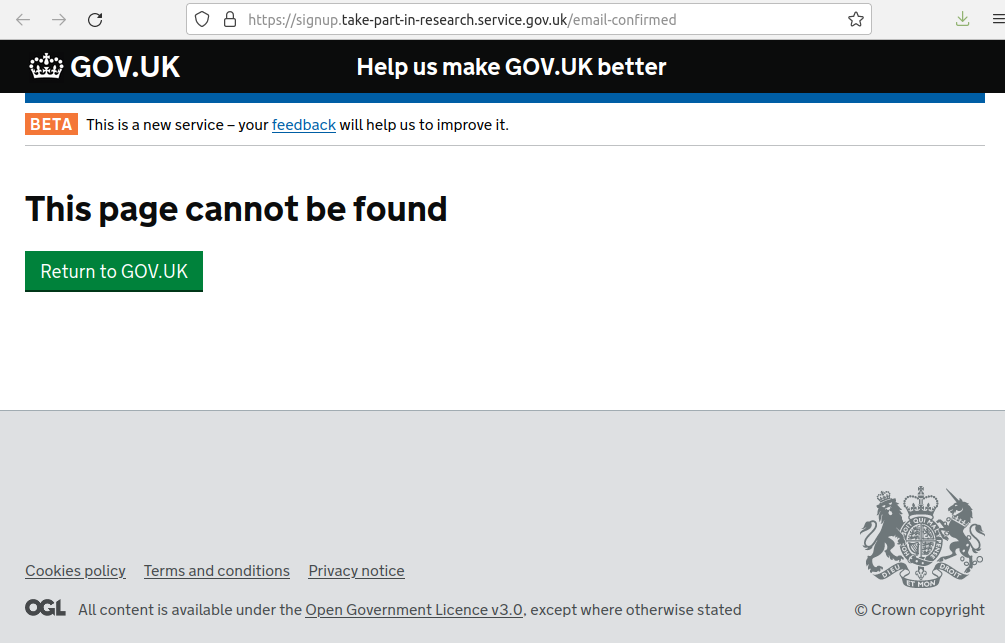
Next, when I wanted to sign up for usability research, and clicked on the link in the e-mail, I got this:

That’s the kind of thing that I also got with the Barclays business banking website a while ago, only worse (making clear that it had nothing to do with Barclays whatsoever). I’ve closed my account there.

Continue reading →

This afternoon’s incident

Walking back from Lidl, I run into two young people who are screaming their heads off at a family in a car. This is at this notorious spot next to Ma’s in Kingston Road, where you need X-ray vision to be able to turn into the road.

They have a child in a buggy. They walk on, leaving an utterly flabbergasted family behind. “Fucking hell.” the guy says calmly, clearly stunned. Ethnic minorities, by the looks of it, but clearly English. “Just laugh about it.” I tell them.

To my frustration, the young female goes after the car again a few minutes later, and then the male runs after the car. Probably as high as a kite on meth?

I’m not having it.

Worried that he will pull the driver out of the car in busy traffic, I decide to interfere and yell very loudly “Don’t be ridiculous!” and “Hey! Stop it!”

The female turns and runs towards me and I had just spotted that that had distracted the dude before she starts shouting into my face from a distance of about five centimetres.

Good. Because I thought she was going to hit me and I am not feeling well so I can’t run away.

“Nobody tells me in my own country what to do!” Some stuff follows about her child, which she has just abandoned in its pram on the pavement at least twice, with no adult looking after it. “Go back to where you came from!”

“I’m from Amsterdam!” I yell as she walks away again.

“Go back then!”

I retort “I would love to but you won’t let me. You won’t let me!”

I say sorry to a woman who’s walking by, clearly not happy with this kind of thing that you run into all the time when you live here instead of in Gerald Vernon-Jackson’s pretty little street. She smiles at me. A genuine smile.

I pass the young woman and her child at a bus stop later. I sensed that she was aware of me approaching and I sense that she is not keen on another confrontation. I walk by without paying any attention.

The guy had disappeared somewhere between Ma’s and the bus stop.

I’m exhausted. But I think I achieved my goal.

I was actually feeling really unwell and wouldn’t have been able to run away if either of the duo had decided to attack me.

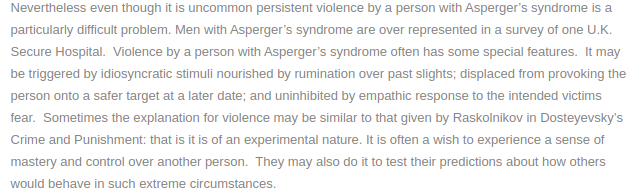
Stalking and Asperger’s

https://ibcces.org/blog/2017/04/26/stalking/

IBCCES, that’s the International Board of Credentialing and Continuing Education Standards. There are people who mediate in courts, who serve as advocates for autistic people. IBCCES can provide training (and a certificate) to that end.

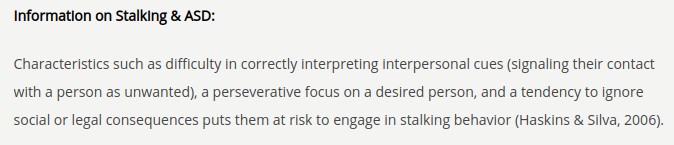
From the IBCCES site.

https://stalkingdetective.wordpress.com/2014/01/29/stalkers-with-aspergers-syndrome/

This is a former police officer’s website.

http://professormichaelfitzgerald.eu/autism-aspergers-syndrome-stalking-and-other-reasons-for-legal-contact/

That’s him: https://en.wikipedia.org/wiki/Michael_Fitzgerald_(psychiatrist)

From Michael Fitzgerald’s website…

People with Asperger’s do not necessarily want to be rigid and controlling, but they can have trouble with what we call “boundaries” in the west. They can infringe upon other people’s “territories” and do various other things without realizing how intensely that may affect that other person.

Similarly, they may not see other people as individuals in their own right. I suspect that their egos can be so fluid that they sometimes perceive other people as not really separate from themselves. They “feel” other people’s presence rather than see them as beings with physical boundaries and they often don’t attach much significance to what a person looks like. (This may also be why autistic people, if they engage in stalking behaviors, take photos. They may not recognize a person if that person changes her hairstyle or hair color, so I understand.)

They certainly see other people differently than neurotypicals do and while they may not really “like” other people, they do like having a certain presence around, like having the presence of another soul in their vicinity. They like a certain feeling rather than a certain person, maybe.

All of these things can create tension and clashes very early on and may eventually build up into a lot of resentment (feel slighted when they get rebuffed because they don’t understand what on earth they are supposed to have done wrong). That’s the impression or feeling I have come away with while thinking about this.

For decades, I turned out to have known a woman who is somewhat autistic without me having a clue about this. She’s confirmed that she is autistic. I’ve since done a lot of thinking.

It’s often said that autistic people avoid looking you in the eye. It’s my impression that that’s often not true. What autistic people don’t do is “rules” as to what an appropriate period is to look at someone’s face. They don’t do societal “rules and customs” to a large degree because they do not necessarily attach judgments to all sorts of things, unlike the rest of us. They can teach themselves a heck of a lot, though, just like the rest of us can learn, and we call can learn for example a foreign language, and hence you may have no clue that someone is autistic. There is no stereotypical property, not even a sign on the forehead.


https://kennethrobersonphd.com/eight-tips-handling-anger-someone-aspergers/

https://www.autism.org.uk/advice-and-guidance/what-is-autism/asperger-syndrome

BBC documentary maker also warned about the danger from incels a few years ago

Two posts ago, I included an ITV program in which “Eamonn and Ruth” talked about the topic with two experts.

Now I see that there also was a BBC documentary a few years ago.


This is not just about violence against women. This is about violence against men who live with women, too. The “Chads”, not just the “Stacys” and not just feminists either.

In the above video, you can hear this 16-year-old English boy saying that in the west “we cultivate the evil side of women”.

Holy crap, that is seriously creepy.

That said, yes, England is deeply misogynistic and many boys get fed a hatred for women at a very young age, before they’re able to form independent opinions. When boys under the age of 10 or 12 yell “Suck my dick!” at women the age of their grandmothers and grab their penis at the same time, you know that they learned this from someone else.

Below is the link to the BBC documentary (requires a TV licence, so it will cost you £159 to watch this legally, unless, lol, you want to watch it in black and white).

https://www.bbc.co.uk/iplayer/episode/p07fvhmw/inside-the-secret-world-of-incels

This podcast video does not require a TV licence:

The problem with these guys is not that women are horrible or that these men are not physically attractive or that that they are “genetically inferior” as many of them seem to believe.

It’s the negative views they hold of themselves. It’s also often their negativity in general.

It could well be that quite a few of these guys have Asperger’s, I thought, but I found it very tricky to say something like that, off the cuff, because of the risk of perpetuating existing stigmas or creating new ones.

However, one of the people interviewed in the BBC documentary mentions “Asperger’s” himself.

Why do these people feel that random women who they’ve never met or interacted with have caused their lives to be so miserable that they feel that they need to take revenge out on these women? It makes no sense.

Abundance. Immeasurable wealth. Human rights. Poverty.

This evening, I was suddenly reminded of what my life was like a long time ago, in the early 1980s, when I was working in tourism and hospitality in Amsterdam. I wasn’t making tons of money but I sure was making a lot more than what one third of England’s population needs to get by on, for whom life is mostly a cruel punishment for having been born. But that’s beside the point. Or is it? We’ll see.

I wore Cool Cat jogging pants from Fiorucci in the Kalverstraat and got to enjoy tons of music and dance performances as well as modern art exhibitions.

If you work in tourism and hospitality, you work shifts.

One of the best things in my life, one of my nicest memories, but I have plenty more, was to stop by at a particular “avondwinkel” on my way back home, often exhausted. It was really wonderful to stop by there on your last evening shift – get out of the tram or bus and then hop back on again or, hey, walk home if it was after midnight after I had moved from the “Gooi” to “De Pijp” – and take some goodies with you to enjoy when you got home. Utter bliss! That stuff was so good. It made you feel that it was really really GOOD to be ALIVE.

It was called Heuft, I think, just around the corner from the Vrijheidslaan. In the Rijnstraat.

They had the most delicious foods!

That kind of experience, that’s something that, I reckon, 90% of Brits have never had and will never have.

I can’t put this into words well enough so that you’d understand.

Heuft still exists, but I know it isn’t what it used to be. I know because I stopped by again, also quite a long time ago by now, and even then, it no longer was what it used to be. These days… it makes me weep… it seems to sell burgers and French fries. Okay, they’re home-made. But… oh man, you guys who go there now have no idea what the place used to be like, in spite of the fact that it still sells champagne.

If you’re from Portsmouth and want at least some idea of what I may be talking about, consider that little precious treasure we lost when Le Café Parisien (Lord Montgomery Way) closed. It served very different foods but what they served was delicious and the ambience superb. Le Café Parisien was one of the reasons why I moved to Portsmouth. There is nothing else like it, not in Portsmouth, not in Southampton. If you’re from Portsmouth, and you’ve never sat down there and ate some of its goodies, you’re poor.

The News called it “popular among students” when it closed, indicating that the journalist who wrote it was sadly clueless about the place or clueless about food or was living in poverty.

It was that place that gave Portsmouth its cosmopolitan allure.

Portsmouth University held its Café Jurist meetings there and it was also where people flocked to Café Scientifique meetings (both held after regular opening hours).

Here’s MIGRANT and human rights lawyer Conor Gearty (LSE), and yes, I attended that event and yes, he’s been one of my heroes ever since. That guy rocks. Boris Johnson? David Cameron? Theresa May? Priti Patel? Not so much…

Café Jurist – ‘In or Out in the European Convention on Human Rights?’ by Professor Conor Gearty from Strong Island Media on Vimeo.

Here is another one, one that I did not attend. (I was unwell, I think. A bit of flu or something.)

Café Jurist – ‘Social Inequality and Justice’ by Professor Jonathan Wolff from Strong Island Media on Vimeo.

Human rights under threat in the UK

Human rights are NOT about being allowed to watch porn in prison or only about people in third-world countries. Human rights are about things like the right to safety in your own home and the right to choose a profession, the right to own things, to have legal recourse and not to be discriminated against. Health is part of it too as is education.

(Do the universal human rights have a western values bias? Yes. Are they still slightly sexist? Yes.)

In The Guardian today.
Continue reading →

The rights of nature

My computer froze at 12:12, requiring me to throw the power of it, has been hiccuping ever since,is hiccuping now too and at 13:09 I needed to throw power off the pc again to get it out of its hacking-induced freeze. The mysterious “he” has also disabled the control-key copy/paste function again. (Oh, that’s just press duration.) And my phone told me that I was in Devon this morning. Okay. (I’m also often in Scotland.) And I had an automatically forwarded e-mail from an e-mail address that I no longer own. (And it looks like my older computer has suddenly folded again, lol.)

(14:44: I am now in the West Midlands? Location is “on” and I am not in the West Midlands, just like I was not in Devon this morning either.)

Anyway…

Last night, Hank Greely tweeted this article:

https://www.newyorker.com/science/elements/is-mars-ours

It made me remember a discussion on LinkedIn; the Dutch were contemplating giving the Wadden Sea legal status. Here is a related article. Food for thought.

https://www.openaccessgovernment.org/protect-biodiversity/102506/

If you consider the question whether humans own parts of earth or other species, you also have to ask whether other species have “priority rights” so to speak and whether other species might have claims on or against us, in view of the fact that most have been on the planet much longer than the species Homo, let alone modern humans.

(We are supposed to be the smart ones. Are we?)

Sex without consent about to become “rape” in the Netherlands (and 11% of female students at Dutch universities raped)

https://nos.nl/artikel/2384251-een-op-negen-studentes-verkracht-tijdens-studententijd

Sex without consent = rape = insertion of body parts or objects

It will carry a custodial sentence of 4 to 9 years.

(Amnesty International has been campaigning in favour of sex on the basis of equality, consent and free will for over a year in the Netherlands.)

It’s not clear to me from which date the new legislation will apply.

How crazy otherisation can get

Some time ago, I read about a family that was being bullied to pieces because several people in the family were autistic. I think this was somewhere in Somerset. Next, I read about a Newcastle case in which a family was being bullied in a similar way as that family in which several people are autistic.

Different about them is… that they have red hair. That small difference alone seems to have been enough to trigger massive community bullying.

They too were forced to move as the bullying included smashed windows and graffiti. You can live with graffiti, but you can’t live with smashed windows.

Ya can’t make it up.

https://www.bbc.co.uk/news/av/uk-england-tyne-56415117

DEFRA consultation on regulation of genetic technologies (closes 17 March)

DEFRA currently has a consultation called “the regulation of genetic technologies”. Post-Brexit adaptations or not? Will we drop the phrase “even if their genetic change(s) could have been produced through traditional breeding” or not?

Post-Brexit, animal welfare protections are being abandoned. We can’t let that continue unbridled. This consultation is not just about animals, however. It is also about agriculture, bacteria and foodstuffs.

If you want to weigh in, you have up to 17 March, 1 minute before midnight. It will take you some time and you’d better have a bunch of references and links to data ready. 
consult.defra.gov.uk/agri-food-chai

It consists of two parts, that is, the actual consultation is Part 1. You can come back to Part 2 later after you’ve completed Part 1. I have been working on Part 1 so far. 

When I downloaded the 14-page document that goes with this gene editing consultation, I spotted several problems. There is a pretence of an emphasis on science and there is at least one or one half paragraph that has nothing to do with genetic technologies (obfuscation).

The document starts as follows:
“Building back greener is integral to creating a healthier, more resilient world for future generations and the Prime Minister has highlighted the need to take a more scientifically credible approach to regulation to help us meet some of the biggest challenges we face.”

This is the document’s fourth paragraph:
“While GE is unlikely to be able to address all these complex challenges, a whole range of innovative approaches could help us make progress over time. These could include increasing agro-ecological approaches for land management, the use of robotics and artificial intelligence, vertical farming, and the development of undervalued protein sources.“

The part in blue has nothing to do with gene editing. So why throw it in? The first sentence seems to suggest that there may not even be a need for gene editing. What is the purpose of this paragraph? To obfuscate? 

On page 5 it says:
“Our position follows the science, which says that the safety of an organism is dependent on its characteristics and use rather than on how it was produced.” 

That, with all due respect, sounds like pretentious nonsense. No references are given, no scientists are mentioned, no agencies or universities are named.

Anyone wishing to take part in this consultation, however, is supposed to provide evidence and literature references and the consultation is clearly not intended to draw the public’s opinion.

Also on page 5 of the consultation document, DEFRA mentions that Japan, Brazil, Australia and Argentina take a different position than the EU and there is the suggestion that the EU’s view is flawed. 

“Now the transition period has ended, retained EU law requires that all GE organisms are classified as GMOs irrespective of whether they could be produced by traditional breeding methods. This was confirmed by a Court of Justice of the European Union (CJEU) judgment in 20181. This is not consistent with the position taken by most countries who have reviewed their respective regulations like Argentina, Australia, Brazil and Japan, which have concluded that certain GEOs should not be regulated as GMOs.”

There is also a 2-page Gene Editing Explainer, which tells the public what to think, again without providing any literature references or links.

(Only Rothamsted Research in Hertfordshire is mentioned in it. Wikipedia says:
“previously known as the Rothamsted Experimental Station and then the Institute of Arable Crops Research” “one of the oldest agricultural research institutions in the world, having been founded in 1843”. It is located on the campus of “Rothamsted Enterprises”. I assume that it is comparable to some of the departments of Wageningen University and Research. I am unfamiliar with it, had never heard of it before.)

I am a little disgusted with the approach taken by DEFRA here. I have taken part in DEFRA consultations before, when that particular PM mentioned at the start of the document was not PM yet. I may not often agree with DEFRA, but DEFRA’s consultations did not use to annoy me. This one does.

It is a political document, isn’t it?

I may be way off, but I hear the PM’s voice in the background and I sense the assumption that the public at large does not have the capability to understand the science and/or that the public is not well informed enough to be able to contribute to this consultation.

(Note that research in Germany showed that providing more information did not make the public more accepting of the use of genetic technologies; link below. These kinds of studies are not my field of expertise and there may be plenty of studies that found the opposite. But if that were the case, then why did DEFRA provide so little information?) 

Below are my two cents, so far. Also biased, namely skewed toward caution, and written off the cuff.

In my opinion, organisms developed using genetic technologies such as gene editing (GE) must continue to be regulated as genetically modified organisms (GMOs) even if their genetic change(s) could have been produced through traditional breeding.

  1. Genetic technologies can have side effects that are not necessarily instantly clear. An example could be that the changes that Dr He introduced in a pair of human twins in China to make them immune to HIV could also have resulted in “off-target” changes and scientists are largely still in the dark about this. (Natural breeding does not have the potential for unintended changes that CRISPR still has.)
  2. The application of genetic technologies may also impact animal welfare differently than when their genetic change(s) are produced through traditional breeding. 

Regarding the question as to the risk associated with the application, the problem is that we cannot predict what we don’t know yet.

If you look back into history, you can see that in the past, we’ve often hailed as great progress what we later ended up banning.

  • We gave a Nobel Prize in medicine for the development of DDT. It almost eradicated the American bald eagle and that is only one aspect of its many side effects. DDT causes nerve damage and affects the hormone-producing systems of many animals, among other things lowering their fertility. In the United States, it was the environmentalist and marine biologist Rachel Carson’s work that eventually led to a ban on DDT and other pesticides.
  • We didn’t even foresee the blatantly obvious consequences of insecticides, namely that their use would affect pollination as well as bird populations.
  • Should I mention thalidomide? DES? That ibuprofen may affect male fertility?
  • Many people are pushing to have other harmful pesticides banned, such as glyphosate and chlorpyrifos. That isn’t because they’re afraid of progress. It’s because these substances are not as harmless as we thought.
  • When I was still based in the Netherlands and a board member of the Environmental Chemistry (and Toxicology) Section of the Royal Netherlands Chemical Society, our section organised a symposium on brominated flame retardants. They were already being found in tissues of animals in the Arctic. Did we see any of that coming? No, we did not. Subsequently, there was a push to phase them out in favour of others that turned out to have similar problems.
  • Did we expect to do damage to the ozone layer when we introduced CFCs?
  • Should I mention PFAS? (You may want to look into the situation in the Netherlands, where PFAS in soil have caused major upheaval because the Dutch want very little of it in their soils and the stuff is everywhere. When permitted levels were lowered, construction ground to a halt all over the country.) But we all thought that non-stick coatings (also called Teflon, PTFE, polytetrafluorethylene etc) were the greatest thing since sliced bread. People with pet birds started noticing disastrous effects. Perfluorooctanoic acid (PFAO), also known as C8, dissolves well in water and does not decay. It is now globally present in the air and in seawater. In the Netherlands, discharges by the Chemours plant in Dordrecht led to increased PFOA concentrations in the Merwede river and in the groundwater along its banks. In the U.S., a former DuPont plant in West Virginia released more than 1.7 million pounds of C8 into the region’s water, soil and air between 1951 and 2003. C8 was phased out after a class-action lawsuit that alleged that it causes cancer. Chemours now makes a new compound called GenX instead, for which safety thresholds have yet to be established. Regular water treatment methods don’t remove it from drinking water. GenX may be safer than C8, but it is also alleged to have caused tumours and reproductive problems in lab animals.

None of what I just wrote has anything to do with the use of genetic technologies. My point is that we never know with 100% certainty that all forms of progress are safe and we have missed the blatantly obvious in the past. This uncertainty also goes for genetic technologies. 

I also think that dropping “even if their genetic change(s) could have been produced through traditional breeding” would likely make the regulation harder to apply. It would have companies trying to find all sorts of shortcuts (to “prove” that the effect of the technology they used could also have been produced through natural breeding). It might lead to frustrating discussions and costly legal proceedings. It might even lead to more campaigning, protests, etc.

(I did not look into how Japan, Brazil, Argentina and the United States handle these matters.)

There might well be effects on trade as well. German consumers for example traditionally have put great emphasis on ensuring that their food is as “clean” as possible.

https://www.loc.gov/law/help/restrictions-on-gmos/germany.php

https://www.researchgate.net/publication/326462738_Does_information_change_German_consumers’_attitudes_about_genetically_modified_food
From the abstract:

“The consumers who are more accepting of genetic modifications are younger, less educated and less concerned about their nutrition. The average effect of our provided information is negligible. However, the initially less opposed become slightly more opposed. Our results thus do not support the view that a lack of information drives consumer attitudes. Instead, attitudes seem to mostly reflect fundamental preferences.”

Many of the questions and the choices for answers in the DEFRA consultation survey are blatantly biased and it is quite clear that DEFRA would like to see the phrase “even if their genetic change(s) could have been produced through traditional breeding” dropped.

Am I being too critical? I don’t think so.

See also for example these two articles:

https://angelinasouren.com/2018/12/11/an-opinion/ by Cecile Janssens, professor at Emory University. A quote: “Most DNA mutations do nothing else other than cause the disease, but DNA variations may play a role in many diseases and traits. Take variations in the MC1R “red hair” gene, which not only increases the chance that your child will have red hair, but also increases their risk of skin cancer. Or variations in the OCA2 and HERC2 “eye color” genes that are also associated with the risk of various cancers, Parkinson’s and Alzheimer’s disease. To be sure, these are statistical associations, reported in the scientific literature, some may be confirmed; others may not. But the message is clear: Editing DNA variations for “desirable” traits may have adverse consequences, including many that scientists don’t know about yet.“


https://www.nature.com/articles/d41586-019-02087-5
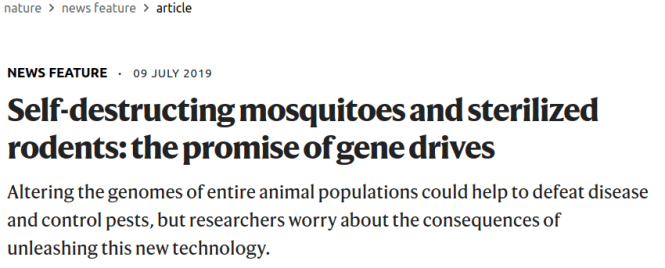
 

So, what exactly is the science that DEFRA claims to be following? It is not this kind of science.
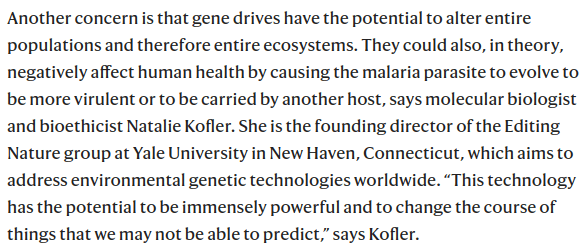

It is too soon to abandon caution. 
 

12 March 2021
Here is the PDF with my response: 

DEFRA-my_response

I expected Part 2 to take as long as Part 1 – I imagine that the start of Part 2 is the point at which many give up – but it did not. And in essence, it was a repeat of Part 1.
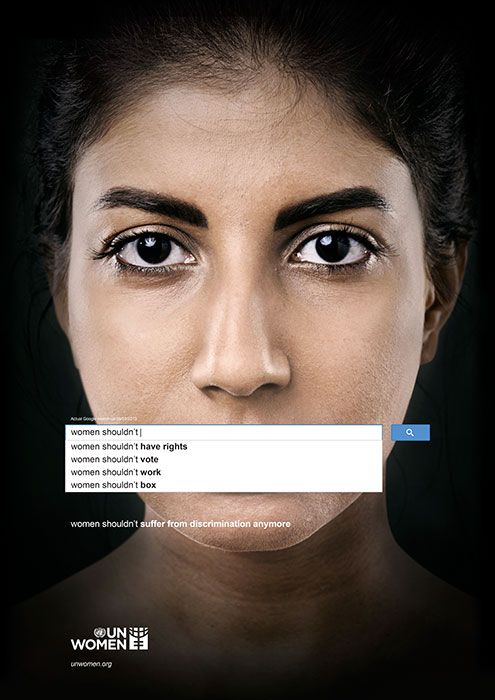
Homeless? You may soon no longer be breaking the law

Secretary of State for Housing, Communities and Local Government, Robert Jenrick MP, has told the House of Commons that the Vagrancy Act should be “consigned to history”.

Oh, that’s good of him, isn’t it?

At the same time, the UK government has quietly eroded the corona virus eviction protection – which was much less extensive than the one in the US to begin with – Lime Legal informed me this morning. It pointed me towards this article:

https://www.theguardian.com/society/2021/feb/28/eviction-orders-being-issued-despite-uk-government-covid-pledge

Here we go again

I am receiving account statements from companies where I don’t have accounts (Boost and BD Swiss), payments that were supposed to come in have not arrived (not yet, in any case, but they’re usually earlier; we’ll see how it goes) (royalties from Amazon and a repayment from HMRC), the browser buttons including the back button on my new phone’s screen have disappeared as had (yesterday) the bit of video that I shot of the UoP marine sciences building near the Hayling Island ferry (the day before yesterday). Or am I merely imagining this latter bit? Did I cut it from the file, myself, perhaps? Okay, maybe I did! (lol) Okay, I probably did. Yep. (I had to transfer it to the older computer to be able to rotate it by 180 degrees and then transfer it back again so I probably cut a lot from the file to speed it all up a bit.)

I am getting something else too.

The something else that I am getting confirms the position of slavery that I am considered to be in. The “I will break you, goddammit” signal.

No, you won’t.

Continue reading →

A reminder. How is workplace bullying affecting your business? Do you know?

(image from the NY Post)

Since the start of the first lockdown, the number of internet searches for “workplace bullying” went down. As of about July, the number began to increase again. This indicates that now is a good time to ensure that such practices do not flare up again once the bulk of the pandemic is behind us.

Because workplace bullying is costing businesses a lot of money and not just that, business owners are expected to deal with it. They must look after their employees.

I am aware of two cases in England in which employees were set on fire at work and Landrover / Jaguar has just experienced a landmark case of constructive dismissal to do with workplace bullying.

In the UK, the incidence of workplace bullying is around 30% (2015, Trades Union Congress), with 71% of disabled women reporting some form of abuse and 91% of workers stating that bullying in the workplace wasn’t being dealt with appropriately.

The Chartered Institute of Personnel and Development (HR professionals) found a percentage of 15 for the years 2017, 2018 and 2019 yet added that more than half did not report bullying.

  • Most bullying at work in the UK appears to take place in London and the southeast.
  • Most bullying is carried out by someone higher in the hierarchy.

In a study by Kew Law (employment law), 71% of the employees at 131 companies in the UK stated that they had either been bullied or witnessed bullying.

Are you sticking your head in the sand over it, ostrich-style?

Workplace bullying. Don’t pretend it isn’t happening when you know it is.


How is workplace bullying affecting your business?

(image from the NY Post)

Do you know?

In the UK, the incidence of workplace bullying is around 30% (2015, Trades Union Congress), with 71% of disabled women reporting some form of abuse and 91% of workers stating that bullying in the workplace wasn’t being dealt with appropriately.

The Chartered Institute of Personnel and Development (HR professionals) found a percentage of 15 for the years 2017, 2018 and 2019 yet added that more than half did not report bullying.

In a study by Kew Law (employment law), 71% of the employees at 131 companies in the UK stated that they had either been bullied or witnessed bullying.

Workplace bullying is very costly. Are you sticking your head in the sand over it, conveniently closing your eyes? Well then, with most staff still working from home, NOW may be the perfect time to wake up and address it. Workplace bullying. Don’t pretend it isn’t happening.


Excellent COVID-19 resource for decisionmakers at various levels

I started attending various webinars some time ago, like lots of people, and like lots of people, I also got a little webinar fatigue at times.

A great series continues to be organised by the National Academy of Medicine and the American Public Health Association in the US, looking into many topics such as the science of the virus, finding vaccines, health inequalities and so on.

Today’s session, on mitigating direct and indirect impacts in the coming months, was excellent for decisionmakers at all levels – also in the UK! – because it addressed a lot of practical aspects and many angles of the pandemic.

It mentioned the need to provide free wifi, talked about telehealth (telemedicine) and developments expected to take a decade suddenly being realised in a mere three weeks, about the complications food deserts pose, about the politicizing of the pandemic, about how to cope with emergencies such as hurricanes and related evacuations, how to remedy the impact the pandemic is having on non-Covid-related healthcare (such as people with heart attacks not seeking help out of fear of catching the virus), the healthcare clinics getting into financial difficulties as a result (as, I think, we saw earlier with those two doctors in California who owned a small chain of facilities and saw their turnover drop so dramatically that they resorted to unorthodox action), the challenge and need to communicate well and perhaps have ambassadors explain the purpose and reasoning behind social distancing, the massive impact social distancing has on the infection rate and the risk of people that people will no longer observe distancing when lockdowns are relaxed and developing a false sense of safety, and so on and so forth.

Here is a link for a model (simulator) that people can play with to explore the effects of lifting lockdowns: https://budgetmodel.wharton.upenn.edu/

The video recording of the webinar will be online soon, at covid19conversations.org:
https://covid19conversations.org/webinars/summer.

The slides have already been uploaded, but not all presenters used slides and the Q&A of course is not online yet either. I’ll post the unedited transcript below.

Continue reading →

And we have a posterboy !

Boris Johnson is in hospital (and to my surprise, I managed to tweet the news before most of the UK news sites posted it because a financial news popup on my screen beat them to it).
I wish him and his pregnant partner well. Of course I do!

The good news?

He may now become the posterboy for making people take this thing seriously and stop assuming that only “dumb people in other countries” and “old folks” get knocked down by it.

This is no time for cavalier attitudes, unless it is the kind of attitude that Captain Crozier displayed. He is the kind of hero we need now.

And the kind of heroes who work and volunteer on the front lines of all care as well as the people who continue to deliver postal mail, who are at work at the supermarkets, supply them with stock and all the others who continue to keep as many things working as possible.


Non-human rights: Update on Happy’s case

This is straight from the e-mail I received:

Today, Justice Alison Y. Tuitt of the Bronx Supreme Court today issued a decision in the Nonhuman Rights Project’s New York elephant rights case that is powerfully supportive of our legal arguments to free Happy from the Bronx Zoo to a sanctuary.

While Justice Tuitt “regretfully” denied the habeas corpus relief the NhRP had demanded because she felt bound by prior appellate court decisions in the NhRP’s chimpanzee rights cases, she essentially vindicated the legal arguments and factual claims about the nature of nonhuman animals such as Happy that the NhRP has been making during the first six years of our rights litigation.

Deeply encouraged by Justice Tuitt’s embrace of the merits of the NhRP’s case following 13 hours of oral argument over three days, we already begun working on our appeal.

In her analysis and conclusion, Justice Tuitt agreed with New York Court of Appeals Justice Eugene M. Fahey’s conclusion that an elephant, like a chimpanzee, is not merely a “thing.” Instead, Happy “is an intelligent, autonomous being who should be treated with respect and dignity, and who may be entitled to liberty.” Further, Justice Tuitt rejected the Bronx Zoo’s claim that its continued imprisonment of Happy is good for her, stating that “the arguments advanced by the NhRP are extremely persuasive for transferring Happy from her solitary, lonely one-acre exhibit at the Bronx Zoo” to The Elephant Sanctuary in Tennessee.

In late 2018, Happy—currently held alone in an industrial cement structure lined with windowless, barred cages (the zoo’s “elephant barn”) while the elephant exhibit is closed for the winter—became the first elephant in the world to win a habeas corpus hearing intended to determine the lawfulness of her imprisonment after the NhRP filed a petition for a writ of habeas corpus on Happy’s behalf. Such world-renowned elephant experts as Dr. Joyce Poole and Dr. Cynthia Moss supported Happy’s rights case while making clear that the Bronx Zoo cannot meet the needs of Happy or any elephant.

While we lament Happy’s continued imprisonment, we thank Justice Tuitt for breaking ground on the long road to securing liberty and justice for Happy and other autonomous nonhuman animals. Happy’s freedom matters as much to her as ours does to us, and we won’t stop fighting in and out of court until she has it.

Anyone who’s become curious should look into the story of Guida, who’d become so severely mentally ill in her confinement that there were serious doubts about the potential for recovery.

Upon release to the Global Elephant Sanctuary in Brazil (sister of that in Tennessee), Guida bounced back remarkably. When having the choice of taking an easy path toward food or picking a difficult one, she was often observed selecting the more challenging path, which required her to climb up an edge (a small straight cliff), which took some effort.

She rejoiced in having the choice and in being able to conquer the cliff.

(I have seen something similar in a pigeon, to my utter astonishment, the animal setting herself a goal, a challenge. Also, pigeons are able to recognize individual human faces, whereas humans generally have a very hard time recognizing individual pigeons.)

Sadly, Guida is no longer with us, but at least she lived the last part of her life in friendship with another elephant and doing the kinds of things that she enjoyed doing.

Moratoria no longer enough

Moratoria are sometimes seen as “knee jerk” responses.

But this is what Jennifer Doudna, one of the “inventors” of CRISPR, says:

https://platform.twitter.com/widgets.js

Autism, and the fourth dimension

I just received an e-mail from Henny Kupferstein that was an eye opener. I knew that she works with autistic children via music, often using services like Skype. I had no idea, however, that she too is autistic!

As far as I know, I’ve never met anyone who is autistic or at least interacted with the person extensively. So I’ve been wondering what it is like to be autistic and I’ve watched videos that weren’t very enlightening to me, other than to make me realize that autistic people deal with the world in a different way, and find ways to deal with the expectations of mainstream people.

I’d previously gotten the impression, from Temple Grandin’s TED Talk, that autistic people have different abilities, special abilities.

In this video, Henny explains in detail how the visual/mathematical world works for her and that it is a thing of great beauty.

Now I understand it a lot better!

WhatsApp flaw “puts words in your mouth”

https://www.bbc.co.uk/news/technology-49273606

This sort of thing has been possible since at least 2010.

Back in 2010, I knew it was happening on my equipment, but I couldn’t prove it and when you say something like that out loud, everyone assumes that you’re delusional. After all, accepting that I might be correct is a scary thought.

Too scary for most people. 

So when I finally got the proof, when I was able to compare a tweet on my phone with the same tweet on a friend’s computer, I could see that there were words in the tweet on my phone that were not present in the tweet on my friend’s computer… I didn’t show it to anyone. There was no point. Nobody was going to be interested.

The original tweet came from Portsmouth-based Maricar Jagger, but she had nothing to do with the digital mischief (other than that she was connected through her social circles).

I also knew about phone hacking via the invisible text message method before it became news – because I saw it happen on my own phone. (Same thing. Delusional cow who has difficulty grasping technology was the usual response.)


—

PS
And OUT goes a big chunk of police “evidence”, of course.


(See also this page.)

Landlords…

Never had any problems with landlords in the Netherlands. Never.

Had three in Florida. The first and the third were fine, but the second one was not and his attorney was rumoured to have mafia ties, I kid you not. But I heard that later. I think it was actually a legal aid lawyer who told me that who I talked with later, long after I’d moved out and his lawyer started pestering me. I’ll spare you the details.

My third landlord was the husband of the person I volunteered with on Saturdays and sometimes Sundays. (He was a builder, built huge places, the way they are in Florida. Nice guy. I think he was in the US Army for a while, and they lived in places like Morocco. ) She stopped by one day – to bring me two birds – and was appalled and suggested I move in to one of their places. They owned a small apartment building that was mostly used by snowbirds (people from for example Canada who take winter vacations in Florida).

Some time later, I moved to Britain.

In Southampton, I knew several landlords. (Only one of them was mine.)

One said that only educated people were decent human beings, and I was too shocked to respond. He called tenants who rang him because the washing machine or heating wasn’t working (properly) “bad tenants”. This was not my own landlord, but someone I met within a business context and was friendly with for a while. Wasn’t actually a bad guy at all, strangely enough.

I also knew one who proudly told me how he had tricked an elderly woman with beginning Alzheimer’s out of her flat, I kid you not.

On another occasion, the same guy was talking with me about a new building he was constructing and then added that it did not have to be very good “as it is only for tenants”.

In Portsmouth, I’ve met two who dump rubbish on other people’s front courts and patios. I caught one red-handed and the other one admitted it.

I have principles.

If I can help make things better for people who come after me who are less strong in some way – okay, except physically as I am getting old and I am feeling it – I will try to do that. And that baffles the hell out of (most) Brits. But that is not my problem.

Portsmouth Police breaking the law again

They don’t have the time and resources to solve crimes against individuals, unless those individuals have been killed, but they do still have the time and resources to send two or three cars to follow me and hunt me through the city to play PacMan.

They love playing PacMan with migrants and with women.

They first did this to me in 2009. February it was.

Of course, when you call them out on it, they always say that they don’t have the time and resources for that kind of crap.

So on my way back, I walked up to the central police station in Portsmouth, and addressed its CCTV camera:

You. Need. To. Observe. The. Law.

The law!


That’s the kind of police we have in Britain – barbaric, lawless and abusive – for which we pay through our council tax. They’re straight out of a film of police brutality and incompetence of the wild-west US in the past.

Two or three police cars were following me all over town again yesterday evening, slowing down when they passed me, backing up and returning when I took a left or right, etc.

It’s happened  too many times before.

And this kind of crap takes up most of their time. Hunting down citizens who dare report crimes and who dare stand up against the utterly lawless British police. They don’t seem to do anything else but this.

I have on occasion stood by on purpose myself to serve as possible witness in police brutality cases when I saw them hunt other people. But they are too clever to attack people in plain public view, I am sure.

We pay for this harassment through our council tax. We pay for it ourselves!

Portsmouth has the highest CCTV density of the UK, so yes, police can hunt anyone through the city, in retaliation or just for fun.

I also got a creep on a bicycle after me, along Albert Road, to tell me that women deserve to go hungry, should not be allowed to own any property of any kind, should not be allowed to work and should not be allowed to earn a living, or even be healthy and happy and that they should generally keep their mouths shut.

I told him it was the 21st century, that the middle ages were a long time ago and I crossed the road. The kid was not even half my age. He should apologize to all the women he owes his existence to, starting with his mother, but he won’t see it that way, clearly. In his eyes, women are lower than cattle. Usable and disposable. Not worth shit.

In case you wonder what the hell I am still doing in this shitty hell hole, well, I’ve tried to escape four times already. I also sometimes foolishly think that I can help make things better here, simply through my presence.

Also, I had formally raised the issue about the problems with local police again this week. Some retaliation was to be expected.

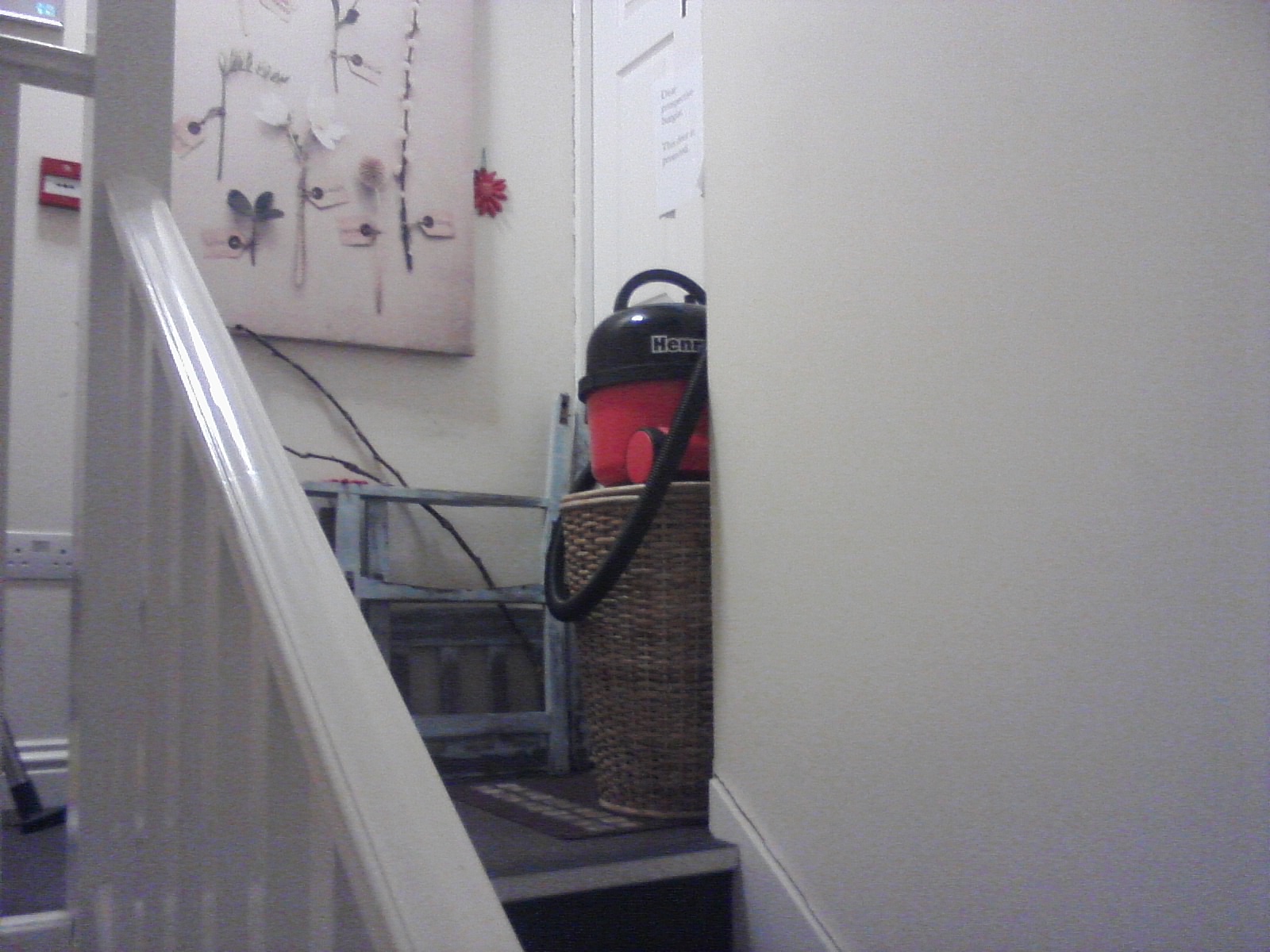
This photo below shows you what my door looks like when I am not in, these days. Three locks on the inside, warning note on the outside and a barricade in front of it, to stop, eh, anonymous elements, from shimmying the locks and carrying out crap in my flat – which has been going on since 2011, with the approval of Portsmouth Police.

Updated on 12 July 2019
At the moment, I am not using the vacuum cleaner to block my door, but the basket and two older printers. There was a time when I believed there was a local person with a brain-related impairment behind it, but it’s more complicated than that.


Highly interesting legal case!

Was this whistleblower’s sacking discrimination?

On paper, whistleblowers are often legally protected, but in practice, well, that’s a different story. Whistleblowers usually end up ruined. It takes guts to take a stand and also often sacrifice.

So a different approach is taken in this case. I shall be following this (to the extent that I can).

Sacked vegan claims discrimination:

https://www.bbc.co.uk/news/uk-46385597